Derek M. Hansen retweetledi
Derek M. Hansen
12K posts

Derek M. Hansen
@DerekMHansen
International sports performance and return-to-play consultant and educator.
Vancouver, BC, Canada Katılım Şubat 2012
422 Takip Edilen12.5K Takipçiler
Derek M. Hansen retweetledi

What will @DerekMHansen cover at the IUSCA International Conference 2026?
Derek’s session will focus on a key question in performance preparation:
📌How do we balance general and specific training for injury prevention?
He will break down:
• Why many injury prevention approaches do not transfer well to real performance environments
• How general physical preparation fits alongside sport-specific demands
• Practical ways to structure training without compromising performance outcomes
• Lessons drawn from experience in elite sport
Derek Hansen is an internationally recognised sprint and performance coach, having worked with athletes across multiple Olympic Games cycles, World Championships, and professional sport. He has extensive experience in speed development, injury management, and return-to-play, and is known for translating complex concepts into clear, practical coaching applications.
📍 Leeds Beckett University, United Kingdom
📅 Friday 5th June 2026
Join leading coaches, researchers, and practitioners for a day focused on applied science and coaching practice.
🎟️ Tickets available:
iusca.org/conference
English
Derek M. Hansen retweetledi

@DerekMHansen takes the lead feature in this week's Newsletter, alongside new research on coconut water and the menstrual cycle.
For our summaries and links to the original posts and studies, click the link below.
scienceforsport.com/newsletter/


English
Derek M. Hansen retweetledi

The one and only @DerekMHansen joined us in episode 6 of the Science for Sport podcast.
Derek discusses misconceptions in speed training for team sports, how to make athletes generally faster, and adding context to their sport.
scienceforsport.fireside.fm/6, or streaming platforms.


English

@timkettenring @coachngraham Agreed. Motor Learning > Max Output in training, especially for developing athletes. 100% effort rarely yields 100% performance in speed events.
English
Derek M. Hansen retweetledi

Here’s an entire great article @DerekMHansen wrote on how to periodize and use the High-Low Method.
Meaning how to actually balance speed days and capacity.
Learn and take notes! sprintcoach.com/blog/revisitin…
English
Derek M. Hansen retweetledi

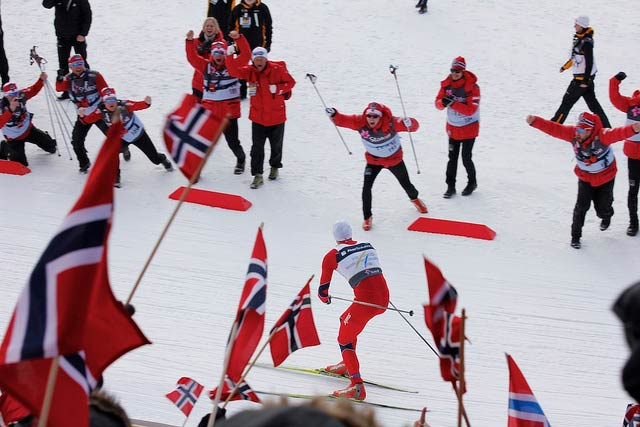
Norway consistently wins the most medals at the Winter Olympic Games, with a population of just 5.6 million people.
A big part of their success is how they treat youth sports—and it’s the opposite of what we do in the US. Here’s what we can learn from Norway:
1. Scorekeeping:
In the US: Youth sports tend to be hyper competitive even at early ages. Leagues almost always keep score.
In Norway: Scorekeeping isn’t even allowed until age 13.
Removing winners and losers keeps the focus on the process not outcomes. It keeps kids engaged longer because it minimizes pressure (and tears) and maximizes fun, learning, and growth. The goal isn’t to win a third grade championship. It’s to love sport and keep playing.
2. Trophies:
In the US: If you give everyone a trophy, you’re creating snowflakes who will never gain a competitive edge.
In Norway: Whenever trophies are awarded, they are handed out to everyone.
If getting a trophy makes young kids feel good, we should give them trophies. Maybe they’ll come back and play again next year!!
As for the creation of snowflakes with no competitive edge—Norway’s athletes are tough as nails and all they do is win.
3. Prioritizing Fun:
In the US: Far too often, the goal is to win.
In Norway: The national philosophy is “joy of sport.”
Youth sports in the US are driven by adults, ego, and money. Youth sports in Norway are driven by fun.
Only half of kids in the US participate in sports. The number one reason they drop out: because they aren’t having fun anymore. In Norway, 93% of kids participate in youth sports. Fun is the foremost goal.
4. Playing Multiple Sports:
In the US: There’s pressure to specialize early and play your best sport year round.
In Norway: Try as many sports as you can before specializing as late as college.
Norway encourages kids to try all types of sport. This reduces injury and burnout and increases all-around athleticism. It also helps promotes match quality, or finding the sport you are best suited for as your body develops, which is impossible if you commit to a single sport too early.
5. Affordability
In the US: There is increasingly a pay-to-play model with high fees for leagues, equipment, and travel. This excludes many kids from playing.
In Norway: It’s a national priority to keep youth sports affordable and therefore accessible for all.
Kids aren’t priced out, which creates opportunities for everyone to participate (and develop into athletes), regardless of their parents’ income level.
We could learn a lot from Norway:
In the US, 70% of kids drop out of youth sports by age 13. This not only diminishes an elite-athlete pipeline, but it also destroys an opportunity for healthy habits and all the character lessons kids can learn from sport.
In Norway, lifelong participation in sport is the norm. The goal isn’t to have the best 9U team. It’s to develop the best athletes. Those are two very different things. And Norway has the gold medals to prove it.

English
Derek M. Hansen retweetledi

🔥 The full speaker line-up for the IUSCA International Conference on Strength & Conditioning 2026 is here!
Join us on Friday 5th June 2026 at @leedsbeckett for an unmissable day of insight, innovation, and impact, featuring world-leading experts from elite sport, academia, and applied performance:
🔹 Joe Kenn – Dynamic Fitness & Strength @bighousepower
🔹 Tim Suchomel – University of Pittsburgh @DrTSuchomel
🔹 John Noonan – Oracle Red Bull Racing @JohnnoonanCoach
🔹 Alex Wolf – Strength and Conditioning Academy
🔹 Paul Comfort – University of Salford @PaulComfort1975
🔹 Derek Hansen – Sports Performance Consultant @DerekMHansen
🔹 Mark Campbell – International S&C Consultant
🎟️ Tickets: iusca.org/conference
🎯 Early Bird: £95 (until March 31)
💼 General Admission: £125
Headline sponsors: Carnegie School of Sport and @HawkinDynamics

English

This should be an annual celebration. January 21st.
NBA Cobwebs@NBACobwebs
January 21, 1993: American track & field icon and 9-time Olympic gold medalist Carl Lewis sings the national anthem before a Bulls-Nets game in New Jersey. The following day, ESPN’s Charley Steiner famously reacted to Lewis' performance on SportsCenter:
English
Derek M. Hansen retweetledi

I created a song using Suno AI on the Achilles Tendon epidemic in sports. This one's for you @jake_tuura - hope you're a Motown lover!
youtu.be/Xh-3XZwoUZQ

YouTube
English
Derek M. Hansen retweetledi

@spikesonly And hopefully implemented by coaches with aptitude, adaptability and nuance, not algorithms.
English

The best solutions for resisted sprinting are launching in 2026. They will be:
More Portable with Size and Weight
More Accurate with Human Output
More Versatile with resistance types
More Comprehensive Data with new metrics
More Affordable for High Schools
Exciting Times!
Exceed SPF@ExceedSPF
On-Ice testing with the @MuscleLabSystem Dynaspeed. Here is @ColoradoEagles @Cal_Burke11 doing some resisted and Non-resisted 30m sprints.
English

@spikesonly Fundamentals + Consistency + Informed Nuance = Success
English