
Sabitlenmiş Tweet
Death to Compromise. ☦️🍩
13.9K posts


Death to Compromise. ☦️🍩
@Deth2Compromise
DTC on YT! https://t.co/paxZo4sRWi Anti-milquetoast. Pro-God. Christian Intelligence Agency affiliate. Anti-Freemasonic. Solution maker. ⚔️ ☭⃠
Donutmaxxing Katılım Şubat 2025
583 Takip Edilen415 Takipçiler


Ecumenists use “Orthobro” the same way James Lindsay uses “Woke Right”
A nebulous term intended to poison.
English
Polski

@Lemelson @VaclavzAmeriky And what are we to do when the bishops teach against the Patristic consensus?
English
The Theater of Digital Orthodoxy
How convert-apologist media commodifies an imperial "Old World" aesthetic while eclipsing the organic, liturgical reality of the local Church.
The digital public square has birthed a distinct paradox: the theatrical commodification of an “Old World” faith for Western algorithms, where the ancient mysteries of eternity are quietly adapted into a curated screen aesthetic.
A telling moment occurred on a recent, widely viewed episode of the Girls Gone Bible podcast. The non-denominational hosts showered their guest, a Southern California-born convert priest, with praise for the traditional masculinity of the “Greek Orthodox Church.”
Canonically, his jurisdiction (the Patriarchate of Antioch) is part of the historic Rūm Orthodox family, meaning he was technically within his rights to accept the broader heritage. Yet, the speaker’s choice to remain completely silent and leave this specific label uncorrected exposes the core opportunism of the digital format.
Correcting his hosts would require introducing complex canonical realities that disrupt the smooth, emotive flow of a highly optimized online talk show; instead, he allows the consumer-friendly brand of “Greek Orthodoxy” to stand unchallenged, willingly absorbing its cultural cachet to validate his authority before an outside audience.
This interaction exposes the contradiction of an American convert movement that has spent decades fiercely critiquing historic immigrant parishes, routinely lamenting what they view as excessive ethnic and linguistic isolation within localized jurisdictions. The explicit, institutional goal of this movement has been to construct a streamlined, thoroughly Americanized Church. Yet, on the media set, this anti-ethnic ideology undergoes a striking operational inversion.
The digital platform is instead leveraged to project an intensified, exoticized “Old World” persona, complete with a highly stylized, affected foreign accent and the strict, public visual maximalism of traditional black cassock, long beard, and heavy pectoral cross. The historic prestige of an ancestral lineage is harvested as a marketing asset to capture Western algorithms, even as the platform’s internal rhetoric actively works to decouple the domestic flock from the very structural and cultural realities that kept those sacred symbols alive.
The Inversion of Historic Missions
This reveals an inconsistency that stands in sharp contrast to the historic pattern of Orthodox missions. When saints like Cyril and Methodius went to the Slavs, or St. Innocent went to Alaska, they did not discard the traditional black cassock or the inheritance of the priesthood.
Crucially, these great missionaries emerged from deeply saturated, historic Orthodox civilizations. The faith was in their blood, their language, and their ancestral memory from birth. Because they were completely secure in that organic reality, they possessed the spiritual freedom to empty themselves of their own cultural dominance to elevate the native languages and localized realities of the people they served, anchoring them inside the shared, theanthropic life of the Mother Church.
The modern convert apologist presents a fundamentally inverted template.
Born, raised, and operating within a culture deeply shaped by Protestant individualism, his relationship to the faith is handled not as an organic inheritance to be humbly received, but as an acquired intellectual territory to be fiercely defended and publicly marketed. While the authentic patristic path requires a convert to dissolve their intellectual past into the quiet, self-denying sobriety of the local parish, this platform does the opposite. The deep, uncontrived reality that quietly saturates the life of the Church is replaced by a perpetual cognitive labor, an ongoing exercise of the intellect that manifests as an aggressive, media-driven performance.
This creates a profound contradiction: he frames his work as that of an apostolic pioneer conquering a spiritual wilderness, when his actual calling is simply to shepherd a comfortable, domestic parish.
In his public lectures, he routinely points to Church history to demand that American parishes drop their foreign languages, fiercely attacking what he calls the "colonial" control of overseas mother synods. He demands that the American flock cut all structural ties to foreign hierarchies. Yet, this anti-colonial rhetoric sits alongside a striking visual paradox: the moment he steps onto a media set, he harvests the historic prestige of those very same ancestral roots to validate his platform.
The speaker did not journey from a far-off, historic Orthodox land to illumine an un-baptized populace; he was born, raised, formed, and continues to minister within the exact same domestic, Southern California landscape as the flock he serves. Consequently, the public persona takes on a highly curated, artificial quality. The affected accent and the imported mannerisms seem designed to manufacture an artificial distance, simulating an exotic, apostolic authority that a native-born biography does not naturally possess.
In seeking the specific cachet of an Old World prophet, this performance risks obscuring the inherent, quiet dignity of his actual calling: simply to be an uncontrived, local shepherd serving his own local community under the blessing of his bishop.
The Latent Sectarian Mindset
This drive to administratively sever the American flock from its historic, ancestral roots marks the clear persistence of a latent, individualistic mindset operating beneath a traditional Orthodox exterior. This systemic breakdown explains the mechanics behind the guest’s digital following. He communicates in a consumeristic vocabulary that modern Western individuals instinctively crave, a paradigm that inherently privileges independent media platforms over hierarchical accountability, and treats the visible episcopate as an administrative adversary rather than the literal locus of eucharistic and canonical unity.
By framing institutional subjection as a form of 'colonial' compromise, his platform functionally acts as a digital mega-church: it sells the aesthetic prestige of an ancient priesthood while safeguarding the sovereign autonomy of both the influencer and his digital consumer base.
The Empirical Footprint of Autonomy
To understand exactly how this individualistic mindset operates on a structural level, one only has to look at the specific, documented patterns of his domestic platform:
The Anti-Synodal Keynotes: In his major addresses on American Orthodox governance, he explicitly labels traditional jurisdictions that maintain ties to their overseas Mother Churches as “unorthodox,” openly advocating for local parishes to bypass or pressure their respective hierarchies to achieve an immediate administrative break.
The Independent Media Apparatus: Through his independent publishing and media company, he has constructed a private financial and educational ecosystem that operates as an independent corporate entity outside the structures of his archdiocesan communication apparatus. This structure ensures that his global digital brand remains loyal to his personal platform rather than the collective episcopate.
The Legalistic Bypassing of Bishops: When local pastoral crises arise or laypeople seek transparency, his platform routinely treats canonical channels not as spiritual courts of healing, but as bureaucratic obstacles. Canon law is weaponized as a legal shield to protect the autonomy of the local rector, functionally insulating the parish from real hierarchical accountability.
To be absolutely clear, the problem is not the use of media itself; the public arena has always required clear, uncompromising voices to analyze cultural and geopolitical decay. The critical divergence occurs when an online platform is leveraged by a cleric to construct an independent baseline of authority that explicitly rivals his own spiritual hierarchy.
This impulse subtly betrays the survival of a deeply ingrained Protestant paradigm, one that subconsciously treats the local priest as an autonomous entrepreneur and views the historic episcopate as an administrative barrier to be managed rather than the very source of canonical life.
By weaponizing the holy canons of the Church into rigid legalistic parameters, this individualistic mindset strips them of their patristic purpose as pastoral medicine tailored for the healing of souls within a localized eucharistic community. This inversion directly violates the primary ecclesiological paradigm of the ancient Church.
As St. Ignatius of Antioch famously observed at the dawn of the sub-apostolic era, the presbyters are to be tuned to their bishop like the strings of a harp, standing together as a fitting, well-woven spiritual crown around the hierarchy.
No authentic presbyter rooted in the patristic tradition would utilize a public platform to wage an adversarial campaign against the episcopate, because the authentic tradition understands that the priesthood possesses no autonomous validity; it exists exclusively to manifest the bishop’s presence at the local altar, not to eclipse it.
In this individualistic framework, both the episcopate and the historic, multilingual jurisdictions are reduced to a purely utilitarian lens: they are treated as archaic administrative clutter obstructing the growth of a streamlined, domestic brand. This systemic impatience with the historic, organic inheritance of the faith sets the stage for a dangerous reversal of spiritual authority, one that stands in direct opposition to the true theology of Pentecost.
At Pentecost, the Holy Spirit does not enforce a mono-cultural uniformity or erase historic distinctions; rather, He miraculously empowers the Apostles to speak in diverse native tongues, consecrating this polyglot inheritance as the very manifestation of the Church’s authentic catholicity (‘καθoλικηˊ εκκλησιˊα‘).
Driving a wedge between converts and traditional, historic jurisdictions deprives the infant Western mission of exactly what it needs most: the deep, organic lineage of global Orthodoxy, preserved by a multi-lingual episcopate and clergy who guard the unvarnished patristic texts.
By discarding these living roots as mere administrative baggage, the resulting theological expression is actively unmoored from the Church, reduced to an intellectualized system of ideological propositions detached from the continuous, ascetic life that generated its texts.
This rhetorical dismissiveness betrays a profound historical and existential amnesia. To minimize traditional ethnic jurisdictions is to actively disparage the living continuity of communities whose ancestral lands have been soaked in the blood of millions of martyrs over two millennia, from the Roman coliseums to the Ottoman yoke and the Soviet gulags.
The secure ecosystem of modern convert media operates in a landscape fundamentally decoupled from this legacy of suffering, mistaking the comfort of a domestic market for the authentic trials of the Church Historic.
Even when looking directly at the soil of the New World, the true history of American sanctity bears no resemblance to this digital enterprise. The American continent was indeed sanctified by actual blood, manifested in the frontier sacrifices of the Hieromartyr Juvenaly in the wilderness of Alaska, and the young native worker Peter the Aleut, who was tortured to death in early California for refusing to renounce his Orthodox baptism.
These authentic witnesses faced raw, physical elimination for the Truth. The modern digital apologist, by contrast, operates from a highly profitable corporate media platform, completely untouched by real adversity.
This exposes the defining crisis of modern digital clericalism: it naturally tends toward a tragic structural substitution, confusing an engineered, monetized media persona with the quiet, self-emptying depths of the patristic reality.
Media Deconstruction: The Split Public Identity
Once the ancient faith is reduced to a digital brand, it inevitably adopts the corporate metrics of Western consumerism, revealing a deep operational conflict across various media spaces:
Megachurch Marketing
The External Performance (Girls Gone Bible appearance): The guest validates his spiritual authority by boasting of “hundreds and hundreds” of converts and highlighting that they “invested millions of dollars” into their church iconography, directly mirroring the vocabulary of church-growth metrics.
Charismatic Escalation
The External Performance (Girls Gone Bible appearance): To compete within emotional Protestant spaces, traditional patristic sobriety is dropped in favor of sensationalism. The speaker attempts to “out-miracle” the hosts by publicly broadcasting that his young parishioners routinely “see angels in the liturgy.” This public display of private mystical phenomena directly violates traditional patristic wisdom, which strictly warns against publicizing such visions as a dangerous form of prelest (spiritual delusion rooted in pride).
The Split-Screen Illusion
The Structural Contrast (External shows vs. Internal keynote archives): On high-profile external platforms like Girls Gone Bible and The Lila Rose Show, the guest presents a flawless, highly romanticized picture of unbroken ecclesiastical stability, confidently asserting to Protestant hosts that “to touch the Church is to touch Jesus.” In doing so, he skillfully leverages the high patristic reality of the Totus Christus, even performing a public deference to the concept of his bishop to contrast Orthodox stability against Protestant fragmentation, as an ideological asset to validate his platform.
The Internal Reversal: The moment his focus shifts to internal Church governance, this pristine ecclesiology vanishes. In his addresses, he openly rebukes overlapping American archdioceses as an administrative disorder, labeling them “unorthodox jurisdictions” and declaring this geographic dispute to be the single “biggest need and challenge for Holy Orthodoxy.”
This posture betrays a profound theological and historical blindness that has recently drawn direct, public correction from his own hierarchy. At the Assembly of Canonical Orthodox Bishops, his ruling primate, Metropolitan Saba, explicitly issued an official warning against the rapid rise of "Internet fundamentalism," describing it as a dangerous "new heresy" where online voices wrap their own wills in icons and cassocks to project a false aura of purity while undermining the local episcopate. By demanding an aggressive, immediate administrative decoupling from historic overseas mother synods under the guise of an "Americanized" Church, this platform operates in open, defiant opposition to the direct pastoral directives of his own Archdiocese.
In Orthodox ecclesiology, the ultimate, unassailable unity of the Church is fundamentally Eucharistic, manifested in the fact that across all these overlapping local jurisdictions, the flock confesses the identical Creed and partakes of the exact same Chalice within the Assembly of Canonical Bishops. To elevate a minor Western administrative border dispute to an existential crisis is to reduce the Church from a mystical, eucharistic reality to a corporate nation-state.
More egregiously, it narcissistically positions a domestic organizational inconvenience as a tragedy superior to the actual, blood-soaked persecution, geopolitical warfare, and physical martyrdom continuously faced by Orthodox Christians throughout the Levant, Turkey, Ukraine, and the historic motherlands.
The Horizontal Inversion
The Marital Reduction (From his multi-part family lecture series): The underlying Western drift reaches its apex when the speaker systematically frames Holy Matrimony as a form of “consecrated friendship,” an egalitarian redefinition designed to flatten the traditional, sacrificial hierarchy of the home. This thesis directly adopts a modern, Protestant companionate model of marriage rooted in mutual compatibility and emotional fulfillment, completely minimizing the cosmic patristic understanding of the family as the domestic church (κατὰ μικρὰ ἐκκλησία) or the church in miniature (μικρὰ ἐκκλησία).
In the patristic tradition, the domestic hearth is an unyielding, vertical ascesis (spiritual discipline), a bloody, shared martyrdom ordered by a specific, sacrificial hierarchy for the destruction of the ego. By repackaging standard Western relational psychology under the visual maximalism of traditional Orthodox accoutrements, his California-based publishing apostolate subtly introduces humanistic assumptions to an uncritical online convert audience.
This elimination of structure within the church in miniature perfectly mirrors his subtle attacks on the macroscopic hierarchy of the Church at large. It betrays a deeply ingrained, fundamentally Protestant impulse: an intolerance for any divinely instituted, vertical authority that threatens the sovereign autonomy of the modern individual, whether that authority resides in the throne of the bishop or the traditional, sacrificial order of the Christian home.
The Canonical Counterfeit
The Intimate Inversion (Public media commentary on contraception): This systemic drift from a patristic mind (phronema) into a Western sectarian mindset reaches a striking paradox in his public decrees on Christian marriage. In his widely distributed media appearances, he asserts an absolute, universal ban on all forms of non-abortifacient contraception, dogmatically declaring it “explicitly forbidden by the Church” and reducing a profoundly nuanced pastoral reality to a black-and-white legalistic violation.
This posture directly contradicts the official, collective consensus of the global Orthodox episcopate. In the landmark social document endorsed by the Ecumenical Patriarchate, For the Life of the World (Paragraph 24), the Church explicitly states it has “no dogmatic objection to the use of safe and non-abortifacient contraceptives within the context of marriage” for the pacing of children and the health of the family.
Furthermore, the canonical guidelines of the Antiochian Archdiocese and the Orthodox Church in America explicitly place these intimate decisions within the private forum of spiritual direction, to be managed case-by-case through pastoral medicine (oikonomia).
By utilizing a global digital platform to overwrite the pastoral authority of the living episcopate with his own unyielding decrees, the speaker betrays the ultimate survival of a Protestant fundamentalist template. He treats the patristic texts exactly as a sectarian literalist treats Holy Scripture, proof-texting 4th-century citations from St. John Chrysostom completely isolated from their historical context (which targeted ancient pagan and gnostic anti-natalism) and detached from the current consensus of the living synods.
In doing so, he manufactures a private, internet-driven canonical counterfeit. He uses the traditional Orthodox robes to mask a fundamentally individualistic impulse: the autonomy of an online influencer who appoints himself the gatekeeper of orthodoxy, bypassing the living, breathing hierarchy of the Church to sell a rigid, puritanical ideology to an uncritical Western consumer base.
The Reality of the Cross
In the Gospel and the lives of the Saints, the heavy pectoral cross awarded to a priest is never a cosmetic ornament or a tool for personal aggrandizement. It is a terrifying visual sign of the interior cross: the hidden, agonizing life of pastoral self-denial, obscurity, and real-world suffering. To touch the true priesthood is to touch a heart consumed by a quiet, burning prayer for the world, unseen, uncontrived, and completely indifferent to human praise. When a soul is anchored in the quiet reality of the Holy Spirit, it has no need to engineer its own public validation, for Christ is already known within the secret interior life of the Church.
This hidden interiority stands in sharp, relief against the hyper-visual ecosystem of digital apologetics. When a media cleric toggles between a highly relatable humility for an external camera and an authoritarian structural dismissal on his own platform, such as his recent video instructing laypeople to “stop whining” when seeking basic transparency regarding clergy misconduct, the operational contradiction speaks for itself.
The choice to adorn oneself with the massive, heavy symbols of a blood-soaked lineage to claim an unassailable authority stands in sharp relief against the quiet, ascetic furnace required to actually wear them.
The ephemeral validation of the digital marketplace demands numbers, metrics, and curated authority; the authentic patristic furnace demands the crucifixion of the ego and an absolute, silent transparency before the Chalice, a Chalice that no presbyter has the autonomous right to offer apart from total submission to his bishop.
A priest’s true charism, whether in front of an altar or behind a microphone, must remain uncontrived and deeply humble. He is a steward of the holy mysteries, a direct extension of his local bishop, and a protector of his flock. When the digital voice becomes entirely detached from this real-world cultural and hierarchical submission, the offering undergoes a corruption. It ceases to manifest the deep, catacomb reality of Christ’s Church, and begins to operate as a highly polished Western consumer product, the ultimate manifestation of Protestant sovereign autonomy, wrapped in the stolen garments of an imperial aesthetic.
The Liturgical Reality
Ultimately, the antidote to digital clericalism is not found in an optimized screen environment, but in the radical sobriety of the local eucharistic assembly. The local altar requires no algorithmic verification. When a priest steps into the sanctuary, he enters a kingdom where human visibility is intentionally eclipsed by divine presence, and where success is measured exclusively by faithfulness to the unseen Bridegroom.
The true life of the Church has never been sustained by the loud, self-directed metrics of online apologists, but by the quiet, unrecorded sacrifices of generation after generation of believers, those who stand before the icons in hidden, traditional parishes, those whose blood sanctified the soil of both the Old World and the New, and those who preserve the patristic texts not as a digital aesthetic, but as a living command to take up their Cross.
If the modern convert movement is to bear lasting fruit on Western soil, it must eventually step away from the pixelated screen and return to this quiet, uncontrived reality. It must trade the synthetic theater of a curated, autonomous persona for the terrifying, beautiful, and silent weight of the local altar, the authentic blessing of the bishop, and the uncreated light.

Rachel Wilson@Rach4Patriarchy
I see a lot of people criticizing Fr Josiah for going on this podcast, but I am asking you to first watch the episode before doing that. Fr Josiah gave important correction in a way that protestants can actually receive. This is not ecumenism. He’s teaching.
English
Death to Compromise. ☦️🍩 retweetledi


God didn't drop a canon from the sky
Miss Lizard@adelethelaptop
Actually, God gave us the Bible. This semantic distinction is important because a) your claim is provably false and b) your claim is a prideful one, elevating the work of man over God’s. You speak as though God ought to thank you for elevating the RCC to such heights.
English


2007: Prot
2008: Prot
2009: Prot
2010: Prot
2011: Prot
2012: Prot
2013: Prot
2014: Prot
2015: Prot
2016: Ásatrú
2017: Ásatrú
2018: Ásatrú
2019: Ásatrú
2020: Lutheran
2021: RC inq
2022: RC inq
2023: EO (inq -> catech)
2024: EO (catech-> bapt)
2025: EO
2026: EO
⳩ Баseд Тzarisт ⳩@Basedtzarist
2007: Baptist ✝️ 2008: Baptist ✝️ 2009: Baptist ✝️ 2010: Baptist ✝️ 2011: Baptist ✝️ 2012: Agnostic ⚛️ 2013: Agnostic ⚛️ 2014: Agnostic ⚛️ 2015: Agnostic ⚛️ 2016: Agnostic ⚛️ 2017: Agnostic ⚛️ 2018: Non Denom ✝️ 2019: Non Denom ✝️ 2020: Non Denom✝️ 2021: Non Denom ✝️ 2022: Non Denom✝️ 2023: Orthodox (inquirer -> catechumen)☦️ 2024: Orthodox (catechumen)☦️ 2025: Orthodox ☦️ 2026: Orthodox ☦️ Only regret is not finding Orthodoxy sooner
Català
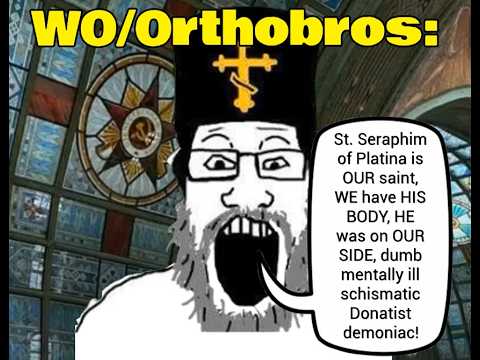


On last week's episode of The Midnight Office, Michael dozes off as Ben channels his inner-boomer, complaining about how "kids these days don't know what struggle is," before recounting his time in "the Nam" and walking uphill, backwards both ways, to school in the snow. According to Ben, it's not being perpetually single, unkept, and calling women sluts from an anonymous X account with an anime photo, that makes you a man, but holding a job, defending your country, getting married, and raising kids...
FULL PODCAST: linktr.ee/uoj_america
English
Death to Compromise. ☦️🍩 retweetledi


@Deth2Compromise No dude. You're clearly a TO sperg. Move along. You're welcome to repent and come back to the church. Until then:

English
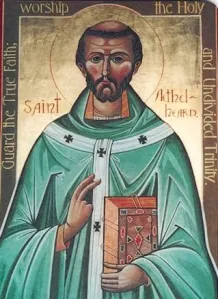
Today is Saint Ethelhard (†805), Archbishop of Canterbury, England
On entering the Temple in Louth one is soon confronted by St. Aethelheard. In the icon on sees a patient, resilient and tough person. There is more than a slight hint of the inner life of a monk in his eyes. So who is he? He was the fourteenth Archbishop of Canterbury who died on 12th May, 805. Very little is known of his life before he became Archbishop but he is described as "Abbas Hludensis Monasterii", i.e. Abbot of the Monastery of Louth.
He lived through very troubled times. The powerful King Offa of Mercia (757-796) had enlarged his kingdom until there was only Mercia, Northumbria, and Wessex left in what we now know as England. The kingdom stretched down into Kent but to some extent the king felt threatened by Canterbury and its powerful Archbishop Jaenbert (766-791). The king decided to give his kingdom an independent Archdiocese based in Litchfield. This would weaken Canterbury's influence by dividing the province. This was successfully accomplished when the Papal Legates George and Theophylact, sent by Pope Hadrian I in 786-788 arrived. Bishop Higbert received the pallium (Archbishop's Omophorion) as Archbishop of Lichfield, and the Archbishop of Canterbury was left with only London, Winchester, Sherborne, Rochester, and Selsey as suffragan sees. On the death of Archbishop Jaenbert (12 Aug., 791), Aethelheard was moved from Louth to Canterbury through the direct influence of King Offa. He was clearly a man the King felt he could trust. Problems for Archbishop designate Aethelheard began immediately. Although he was elected in 791, his consecration and enthronement took place on 21 July, 793: the delay was almost certainly due to the clergy and faithful in Kent being most unwilling to have a foreign Archbishop. Then three years later the nobles of Kent rebelled against King Offa and their Archbishop and rallied round one Eadbert Praen, a priest and a member of their ex-royal house (what a strange priest this man must have been!). Life gradually became increasingly unbearable and dangerous. Although the famous St. Alcuin wrote furiously to St. Aethelheard telling him not to desert his Church, and after deposing and excommunication Eadbert Praen, the Archbishop was forced to flee to the continent. King Offa died on 26 July. His successor Egfrith died after a very short reign, about 13 Dec.; Cenwulf succeeded in Mercia, but the uprising continued in Kent until the capture of Eadbert in 798.
St. Aethelheard had been most helpful to King Cenwulf in deposing Eadbert, and in remaining loyal to him in Kent. This enormously increased his standing in the Royal court and as a result the Archbishopric of Lichfield began to look superfluous. The King wrote in 798 to Pope Leo asking him to look into the need for a second Archbishopric and enclosed a petition from Aethelheard and his suffragan Bishops. Meanwhile St. Aethelheard returned home and received another furious letter from St. Alcuin telling him to do penance for having left his Church. The King’s letter was received favourably and St. Aethelheard decided to set out for Rome in 801 to speak to his chief pastor himself. In Rome he was just as successful: Pope Leo III (795-816) solved the problem of Canterbury and Lichfield by returning Lichfield to a suffragan diocese. The Council of Clovesho on 12 Oct., 803, officially acknowledged the pope’s decision in presence of Cenwulf and his Witan (parliament). An unfortunate result of this was that Bishop Higbert was deprived of his pallium (Omophorion), in spite of Alcuin's plea that so good a man should not be humiliated.
So what makes St. Aethelheard so important for us? A number of things:
St. Aethelheard insisted that those who were to be made Bishop should make a formal profession of their Orthodox faith and obedience. This was enormously important in maintaining the teaching of the Church incorrupt and it had a second effect that affected the history of this land:
If King Offa had been successful in founding a permanent Archdiocese in Lichfield the attainment of national unity would have been set back by generations. With a unified Church (with York becoming a Metropolitan See UNDER Canterbury (!)) it was easier to make a spiritual unit a political one.
He is a local! There are no other communities or parishes with him as their patron. This is not as strange as it seems for, although his shrine was immensely popular until the Norman Invasion, both it and he were suppressed cruelly by the conquerors.
Holy father Aethelheard of Louth and Canterbury pray to God for us!
celticsaints.org/2014/0512b.html
English


Yeah, we know. 109 other countries eventually got the message, too.
Ken from KY-04@MassieNation19
This should make you sick as an American .
English
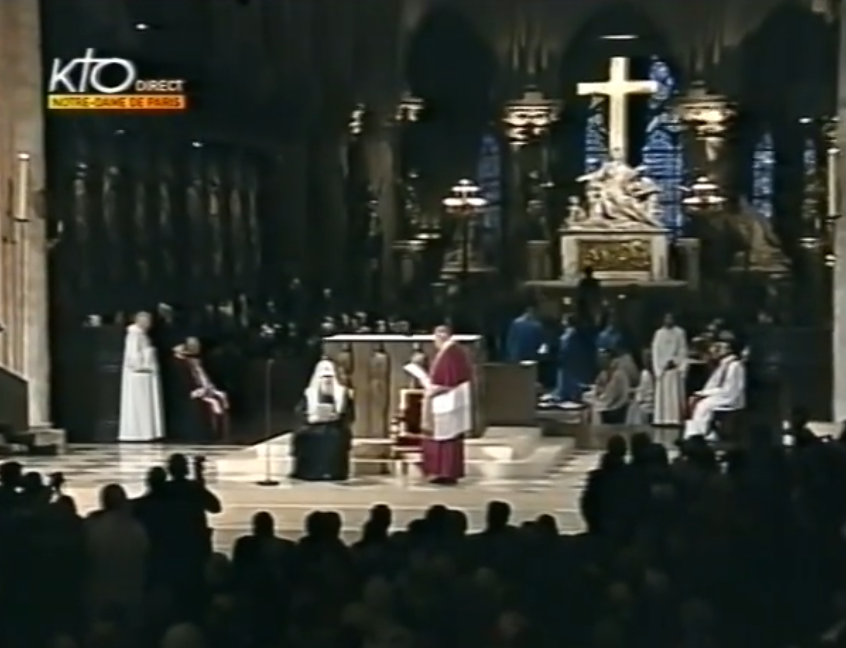
"The Moscow Patriarchate isn't ecumenist!" *joint prayers in Notre Dame with RC bishops
English
@Alex_Ortodoxie Please take me off live chat timeout, I only said hello to Fr. Stephen DeYoung.
English

Is JP Uncut OK?? DeLivErAnCe "ministers" are THREATENING Jay Dyer?! Weekend recap. Disagree? CALL-IN x.com/i/broadcasts/1…
English
@gregcello @bendellwerry Why? Any 3rd worlder can be "American, legally"
English


@Basedtzarist You probably think Putin is reviving Holy Rus 💀
English
My honest reaction watching your western armies fail to subdue holy Rus

Alejandro 🏮🐈@ChayanneMaxxer
My honest reaction
English
@UOJ_America Detain all Sergianists at this point.
English
KARLOVY VARY, CZECH REPUBLIC – Czech law enforcement authorities detained Metr. Hilarion Alfeyev of the Russian Orthodox Church on May 24 following an incident in which narcotic substances were allegedly discovered in a vehicle connected to him. According to statements attributed to his Telegram channel and legal representatives, the arrest occurred at a gas station shortly after the Metropolitan departed the Church of Saints Peter and Paul in Karlovy Vary.
Officials reportedly searched the vehicle carrying the Metropolitan and a cameraman, during which four small containers holding a white substance were allegedly found in the trunk. Metr. Hilarion has categorically denied any involvement with illegal narcotics, calling the accusation false and requesting a full, independent investigation into the circumstances of the search and arrest. "I have no, and have never had any, connection with the illegal trafficking of narcotic substances. For me, as a clergyman, the very suggestion of such a thing is absolutely false. I insist on a full, independent, and procedurally impeccable investigation into what happened," Metr. Hilarion stated.

English
@shalt_not_kill We don't want your Sergianist slop total TO victory
English

A Russian Orthodox Church priest proposed creating an anti-Catholic propaganda channel for Western countries.
At a meeting with foreign bloggers, Maxim Minyailo, senior priest of the Church-on-the-Blood in Yekaterinburg, proposed creating an anti-Catholic propaganda channel that would broadcast abroad.
"We need a 'religious RT'—a channel that reaches those seeking the truth in Western and other countries. We must show the beauty and truth of Orthodoxy. Moreover, this should not always be done in a tolerant manner toward other faiths—we must highlight the theological deviations and problems of the Western Catholic Church."
It is noteworthy that he speaks of the "theological deviations" of the Catholic Church while the Moscow Patriarch preaches the second coming of Jesus Christ "outside of all flesh," which contradicts the teachings of the Council of Chalcedon of 451.
Christians Against War@shalt_not_kill
Patriarch Kirill of Moscow uttered a heresy condemned by the Ecumenical Council In his sermon on May 21, Patriarch Kirill (Gundyaev) of Moscow declared that at the Second Coming, Jesus Christ will appear "outside of all flesh." "The Church of God is that through which the Lord is present in people's lives from the very times when He came in the flesh to minister to the salvation of the human race, until the time when He will appear outside of all flesh, in glory," the Patriarch of the Russian Orthodox Church said. Deacon Andrei Kuraev drew attention to this, recalling that the Council of Chalcedon of 451 decreed that the union of the Divine and human natures in Christ is "inseparable." Thus, he emphasized, the head of the Russian Orthodox Church "uttered a heresy condemned by the Ecumenical Council."
English