
Dholuo Spaces

4.9K posts

Dholuo Spaces banner
Dholuo Spaces

Dholuo Spaces

@DholuoSpaces

Luo & Kenyan Culture | Politics | Economics in that order || Mpesa Till 5976505

WRITING DESK Katılım Kasım 2022
115 Takip Edilen7.2K Takipçiler
Sabitlenmiş Tweet
Dholuo Spaces
Dholuo Spaces@DholuoSpaces·
Want to speak, read, and understand Dholuo confidently? Join our Virtual Dholuo Classes today guided by native speakers and cultural experts. Age Groups: 8–12 yrs (Pre-teens) 13–17 yrs (Teenagers) 18–55 yrs (Adults) Flexible online lessons perfect for learners in Kenya or abroad. Affordable fees, payable in instalments. If you value culture, language, and identity, this is for you. DM me or WhatsApp +254 710 122 472 to register for the next intake.

Dholuo Spaces tweet media
English
0
8
11
1.9K
Willis Evans Otieno
Willis Evans Otieno@otienowill·
EPRA has quietly turned electricity into another taxation machine. In May 2026 alone, Kenyans have been slapped with an extra Sh4.40 per kWh through forex adjustment, fuel energy charges, and water levies. This means every bulb switched on, every biashara running, and every family trying to survive now pays more, not because salaries increased, but because inefficiency and economic mismanagement must be financed by the ordinary citizen.
English
28
437
821
23.8K
Dholuo Spaces retweetledi
Willis Evans Otieno
Willis Evans Otieno@otienowill·
The FIST Agenda will increase your disposal income
English
3
11
21
734
Dholuo Spaces retweetledi
Willis Evans Otieno
Willis Evans Otieno@otienowill·
UDA sycophants like Cherargei think it's better to criticize a Governor like Orengo for an incomplete work yet it's correct not to criticize Ruto for his multi-billion theft and non existing projects, those are the breed of leaders we must sweep out.
English
25
348
1.2K
32.9K
Dholuo Spaces retweetledi
Willis Evans Otieno
Willis Evans Otieno@otienowill·
By the time fuel reaches Kenyan shores, its price is relatively moderate and largely aligned with global crude trends. Even with crude hovering around $80–90 per barrel, the landed cost remains within a manageable range. What transforms that manageable cost into an economic burden is the heavy layering of taxes and levies imposed domestically.
English
10
90
173
12.6K
Dholuo Spaces retweetledi
KENYA PETROLEUM OIL WORKERS UNION
The petroleum and energy sector is the backbone of Kenya’s economy yet the workers who keep it running are often unheard, under-protected, and under-represented. KPOWU exists for one purpose: to defend the dignity, safety, and rights of petroleum workers across the country.
English
7
10
18
1.6K
Dholuo Spaces retweetledi
Willis Evans Otieno
Willis Evans Otieno@otienowill·
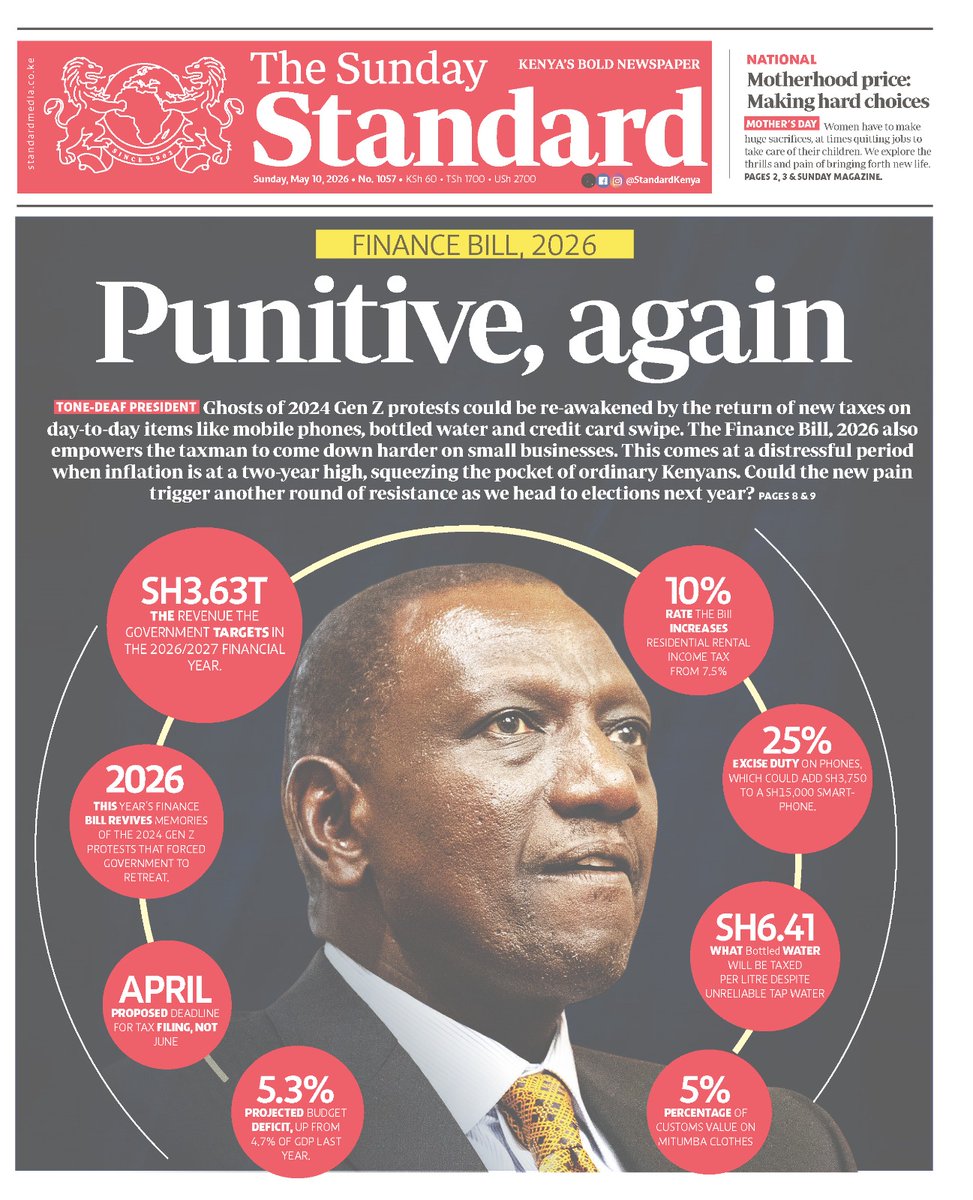
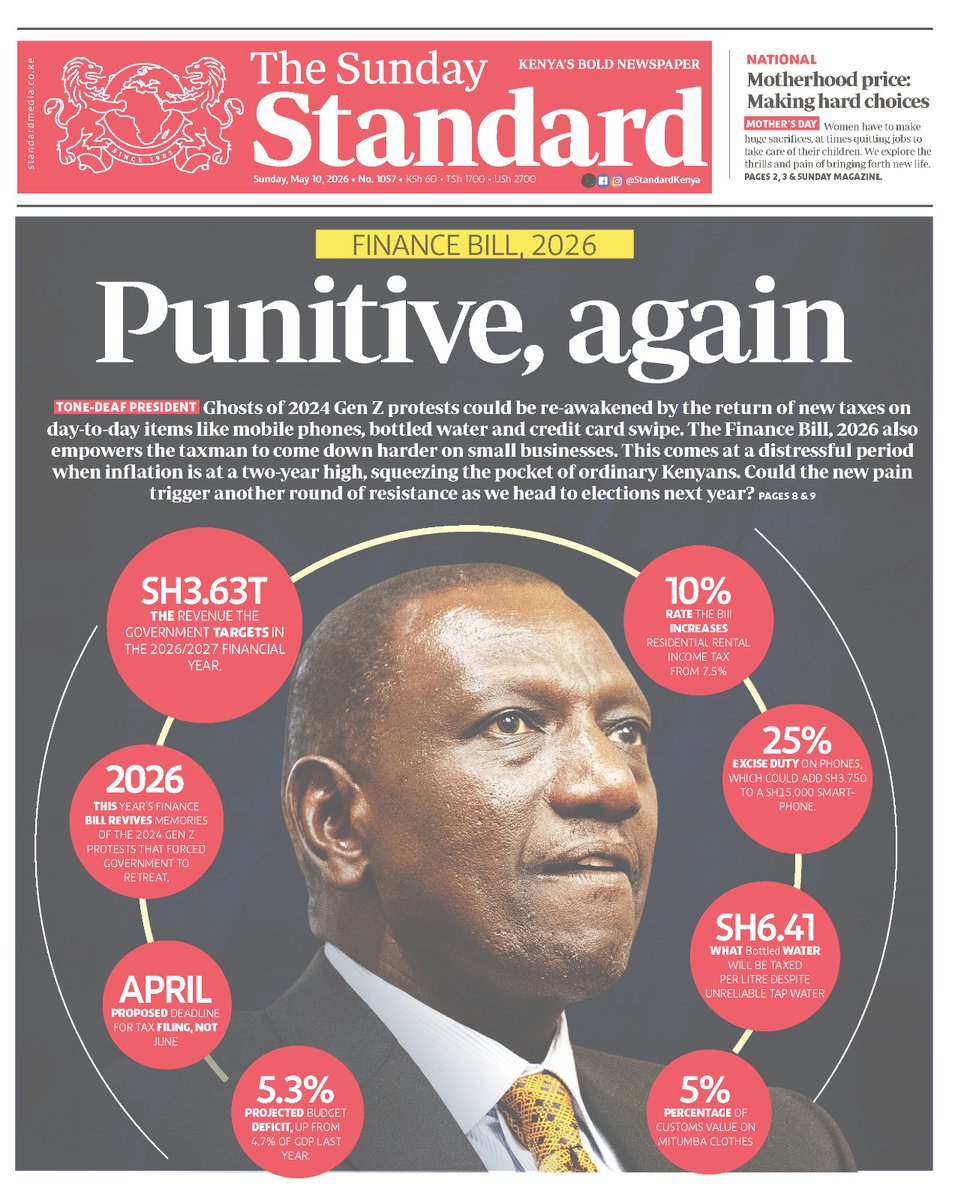
The proposed increase in Rental Income Tax from 7.5% to 10% may appear modest numerically, but its broader economic implications are far more significant than many people realize. Housing operates within a delicate economic ecosystem where taxes imposed on property owners are rarely absorbed entirely by landlords. In most cases, those costs are transferred downstream to tenants through higher rent prices. Although the government formally taxes landlords, the actual economic burden is often shifted to consumers, especially in urban areas where housing demand remains high and alternatives are limited. In cities like Nairobi, where demand for affordable housing already exceeds supply, landlords possess greater pricing power and can pass tax increases onto tenants more easily. The danger is that this proposal will contribute directly to cost-push inflation within the housing sector. Cost-push inflation occurs when the cost of production or operation rises, forcing suppliers to increase prices. Since rental housing is both a basic necessity and a major component of household expenditure, any increase in rent immediately reduces disposable income for millions of households. When disposable income shrinks, consumer spending across the wider economy also declines. Families are forced to spend more on rent inevitably spend less on food, transport, healthcare, education, and small businesses. Economists call this the crowding-out effect on household consumption , where rising fixed expenses suppress spending in other sectors of the economy. There is also a significant risk to housing investment itself. Property development depends heavily on expected returns. Increasing taxation on rental income reduces net profitability for investors and developers. Over time, this will discourage private investment in housing projects, slowing housing supply growth. Ironically, reduced supply can create even higher rents in the future due to persistent demand pressures.
Willis Evans Otieno tweet media
English
7
45
73
3.4K
Dholuo Spaces retweetledi
Willis Evans Otieno
Willis Evans Otieno@otienowill·
The removal of VAT exemptions on mobile money and digital transactions represents a major shift in how the government approaches Kenya’s digital economy. While it may appear to be a straightforward revenue-raising measure, the broader economic consequences could be profound because mobile money in Kenya is no longer a luxury service. Transaction costs are the hidden frictions that affect how efficiently economic exchange occurs. When the cost of sending, receiving, or processing money rises, economic activity itself becomes less efficient. This is particularly dangerous in an economy where millions rely on frequent low-value transactions. A small increase in transaction charges may seem insignificant to wealthier households, but for low-income users making multiple transfers daily, the cumulative burden becomes substantial. Economists call this a regressive tax effect, where lower-income individuals end up carrying a proportionally heavier burden relative to their income. There is also the danger of reducing the velocity of money within the economy. Digital payment systems increased economic efficiency by enabling rapid, low-friction movement of money across households and businesses. Higher transaction costs will slow this circulation as people reduce transfers, delay payments, or consolidate transactions to avoid fees. Small businesses and informal traders are likely to feel significant pressure as well. Many SMEs rely heavily on mobile money for daily operations because it is cheaper and more accessible than traditional banking. Increased transaction costs raise operational expenses, which businesses may eventually pass on to consumers through higher prices. This contributes further to inflationary pressure within the economy. The broader concern is that the government increasingly appears to be taxing economic efficiency itself. Instead of broadening productivity and growing the tax base through expansion of economic activity, the state is targeting systems that already enable growth and inclusion. In the long term, this risks weakening consumption, slowing digital adoption, and increasing the financial burden on ordinary citizens who rely on mobile money not as a convenience, but as a necessity.
Willis Evans Otieno tweet media
English
3
46
82
2.4K
Dholuo Spaces retweetledi
Willis Evans Otieno
Willis Evans Otieno@otienowill·
The proposed 25% excise duty on mobile phones represents far more than a simple increase in consumer taxation. It amounts to a fiscal penalty on digital participation, technological diffusion, and human capital integration within the modern economy. In contemporary societies, mobile phones, particularly smartphones, are no longer discretionary luxury commodities. They function as productive economic assets that facilitate communication, financial access, commerce, education, labor market participation, and integration into the digital economy. Taxing them aggressively therefore produces consequences that extend well beyond retail pricing. Smartphones now constitute a critical component of Kenya’s broader digital production infrastructure. Across both the formal and informal economy, mobile devices function as tools of production rather than mere consumption goods. Small traders rely on smartphones for mobile payments, inventory coordination, customer acquisition, and digital marketing. Farmers access market information and financial services through mobile platforms. Informal transport operators depend on mobile applications for navigation and transactions. Taxing such devices therefore increases the cost of economic participation itself. The proposed excise duty on phones illustrates a deeper structural contradiction within economic policy. Modern economies seeking competitiveness in the Fourth Industrial Revolution typically subsidize or expand digital accessibility because technological integration enhances productivity, innovation, financial inclusion, and economic resilience. By contrast, heavily taxing access devices risks creating a form of digital exclusion taxation, where the very tools required for economic advancement become increasingly inaccessible to large segments of the population.
Willis Evans Otieno tweet media
English
1
16
25
1.2K
Dholuo Spaces retweetledi
Willis Evans Otieno
Willis Evans Otieno@otienowill·
One of the less publicized but potentially far-reaching proposals in the Finance Bill 2026 is the introduction of a 10% excise duty on plastic packaging articles under tariff codes 3923.30.00 and 3923.90.90. At first glance, this may appear to target manufacturers or packaging companies alone. However, from an economic standpoint, the tax has significant downstream implications because packaging forms an essential intermediate input within the broader consumer goods supply chain. In modern production systems, packaging is not merely cosmetic. It is part of the overall cost structure of nearly every fast-moving consumer good. Milk, drinking water, cooking oil, bread, juice, pharmaceuticals, takeaway food, detergents, and numerous household products rely heavily on plastic packaging for preservation, transportation, storage, hygiene, and retail distribution. Taxing packaging therefore indirectly increases the production cost of a vast range of everyday commodities. I will classify this phenomenon as input cost inflation ; where taxation or rising costs on intermediate production inputs increase the overall cost of final goods. Because producers rarely absorb such increases entirely, the additional cost is usually transferred along the supply chain through what is known as cost pass-through mechanisms. Ultimately, the final consumer bears the burden through higher retail prices. This creates a classic case of cost-push inflation, where increases in production and operational expenses trigger broader price increases across the economy. Unlike demand-pull inflation, which arises from excessive consumer demand, cost-push inflation originates from supply-side pressures. In this case, the excise duty on packaging raises operational costs for manufacturers, distributors, wholesalers, retailers, and food processors simultaneously. The impact is especially concerning because packaging costs affect goods with highly inelastic demand. Consumers cannot easily stop buying water, milk, cooking oil, bread, or basic household essentials simply because prices rise. Economists refer to this as low price elasticity of demand for essential commodities. As a result, households ; particularly lower-income households are forced to absorb higher living costs regardless of their income constraints. The tax also carries strongly regressive characteristics. Since lower-income households spend a larger proportion of their income on basic consumable goods, they experience disproportionately greater welfare losses when prices rise. In development economics, this is referred to as a regressive consumption burden, where indirect taxes amplify inequality by disproportionately affecting vulnerable populations. Another critical issue is the potential for widespread inflationary spillover effects across multiple sectors. Packaging is deeply integrated into logistics, food distribution, pharmaceuticals, hospitality, and retail commerce. Once packaging costs rise, businesses across these sectors may revise pricing upward to preserve profit margins. This creates secondary inflationary pressures beyond the original tax target. While policymakers may justify the excise duty through environmental arguments or revenue generation goals, effective environmental taxation typically requires affordable alternative packaging infrastructure first. Without viable substitutes, businesses and consumers simply face higher costs rather than meaningful ecological transition. In such cases, the policy functions less as environmental reform and more as indirect consumption taxation. The most politically significant aspect of such taxes is their invisibility. Consumers rarely see a “plastic packaging tax” printed on receipts. Instead, the burden appears gradually through rising supermarket prices, smaller product quantities, and increasing household expenditure, sometimes described as embedded inflationary taxation
Willis Evans Otieno tweet media
English
3
36
58
3K
Dholuo Spaces
Dholuo Spaces@DholuoSpaces·
Koro oseyangore ni Team no mar PSG ema biro rakore gi team no mar Arsenal e adhula ma ibro go e boma no ma Budapest tarik 30-5-2026 e final mar UEFA champions league. Iparo ni team mane ma biro ting'o okombe no?
Indonesia
2
0
0
216
Dholuo Spaces
Dholuo Spaces@DholuoSpaces·
Team no mar Arsenal ochopo e fainol mar okombe mar UEFA Champions league bang rodho Athletico Madrid goal achiel kuom ling thi, goal mane olo gi jatugo Bukayo Saka. Arsenal koro bro ng'eyo kiny ka gibiro romo gi PSG kata Bayern e Boma ma Budapest.
Indonesia
0
0
0
205
Dholuo Spaces
Dholuo Spaces@DholuoSpaces·
@davidjesse_ Do you av a masidis like me? How can you advice a bilioneya on how to dress. Look for money first, stay guided!😅😅
English
1
0
5
1.9K
Cde,
Cde,@davidjesse_·
Terrible suit & tailoring. 1. Brass buttons don’t belong in suits, only blazers. 2. Don’t match your pocket square with your tie, compliment; if unsure, a white pocket square. 3. Shirt cuff should only pop slightly outside the jacket cuff. 4. Pants terribly tailored. 5 Suit jacket also poorly done. 6. The hat is inappropriate. >> escape the matrix of poor tailoring.
Onyango_tate@Wuodnyakach_

Escape the matrix

English
73
59
456
68.6K
Dholuo Spaces retweetledi
Willis Evans Otieno
Willis Evans Otieno@otienowill·
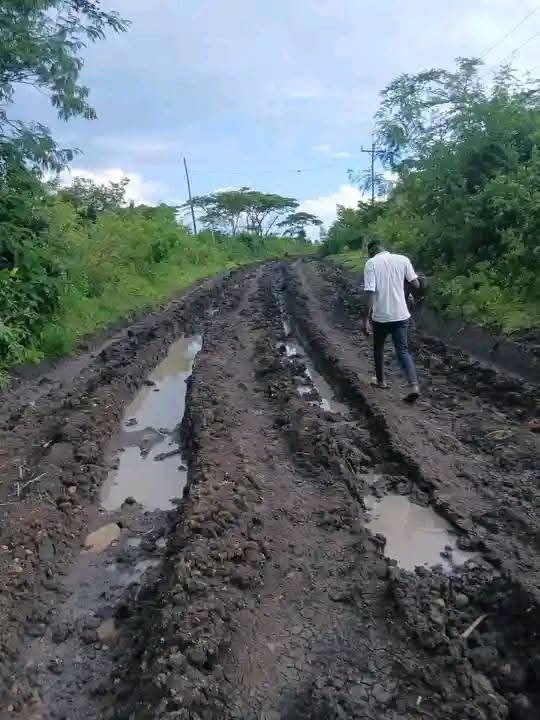
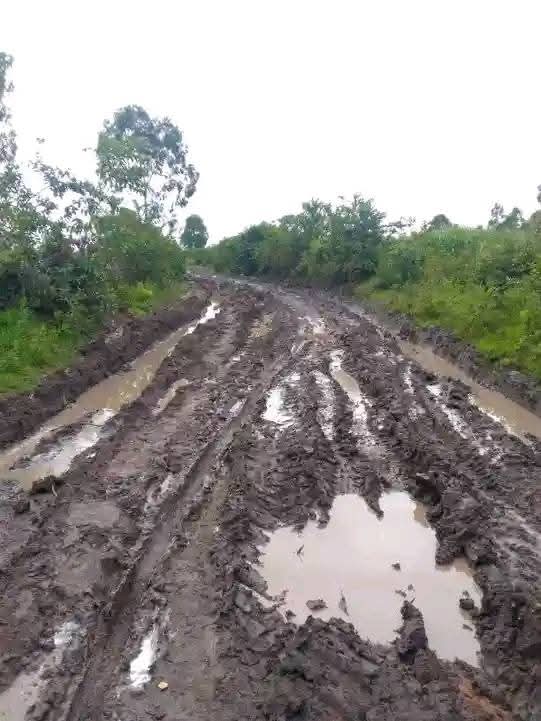
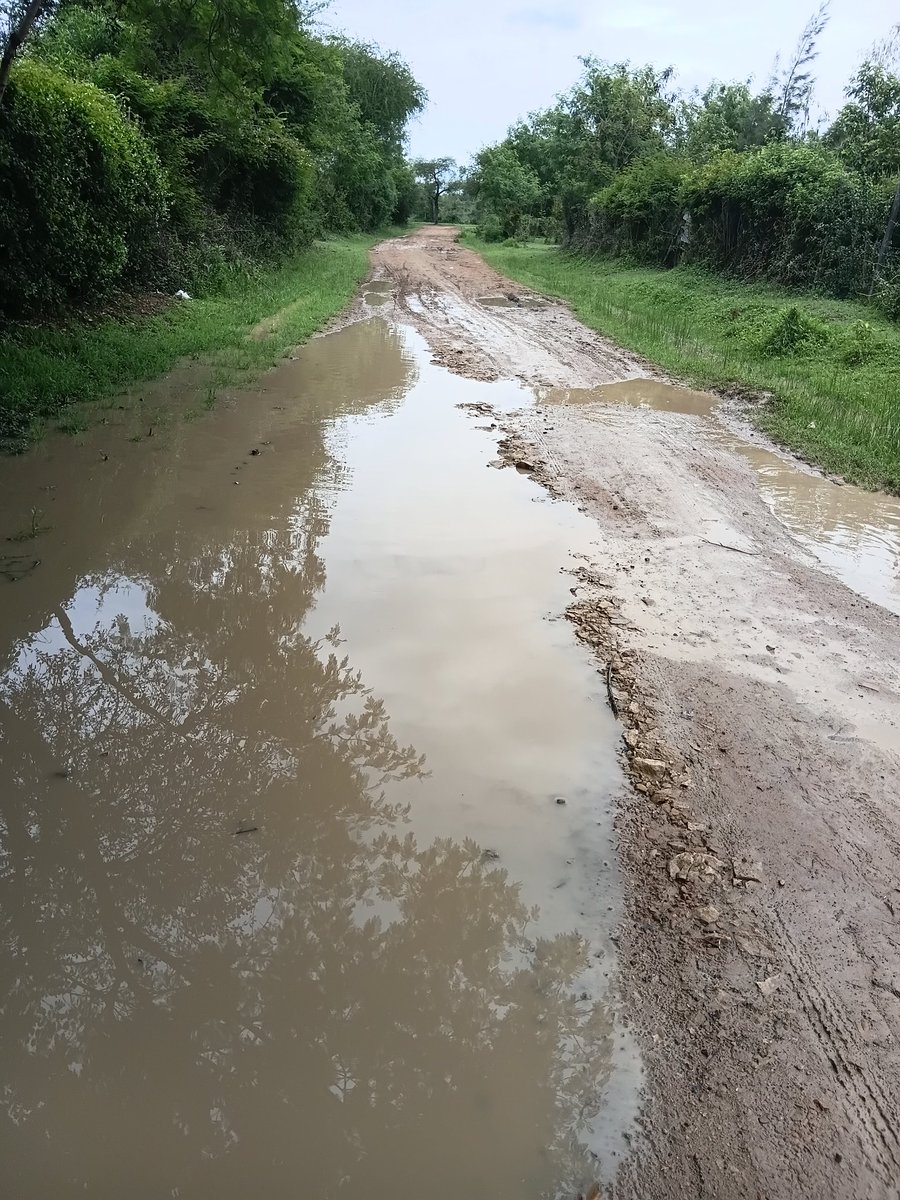
The Lwanda Magere–Osiri Road in Masogo-Nyang’oma Ward, Muhoroni constituency, Kisumu County. 13 years after devolution, and this is still the state of a major access road! Where is the promise of bringing services closer to the people?
Willis Evans Otieno tweet mediaWillis Evans Otieno tweet mediaWillis Evans Otieno tweet media
English
4
32
78
2.3K
Dholuo Spaces retweetledi
Willis Evans Otieno
Willis Evans Otieno@otienowill·
Kabondo East ward , Kabondo Kasipul constituency in Homabay county.
Willis Evans Otieno tweet media
Filipino
29
68
176
3.5K
Dholuo Spaces retweetledi
Willis Evans Otieno
Willis Evans Otieno@otienowill·
Roads in kologi ward Ndhiwa sub-county. Homabay county
Willis Evans Otieno tweet mediaWillis Evans Otieno tweet mediaWillis Evans Otieno tweet media
Filipino
28
39
153
4.7K
Dholuo Spaces retweetledi
Willis Evans Otieno
Willis Evans Otieno@otienowill·
A road in South Kabuoch , Homabay county. Does the community feels overlooked and disenfranchised?
Willis Evans Otieno tweet media
English
28
88
174
3K
Dholuo Spaces retweetledi
Willis Evans Otieno
Willis Evans Otieno@otienowill·
Kwabawai , Ndhiwa Constituency Homabay County. Sad state of affairs
Willis Evans Otieno tweet media
Filipino
124
299
839
15.5K
Dholuo Spaces retweetledi
Willis Evans Otieno
Willis Evans Otieno@otienowill·
The state of the road in North Nyakach, specifically the segment from Katito leading to Professor Okoth Ogendo's residence, remains a significant concern, demonstrating a clear failure in infrastructure maintenance and development.
Willis Evans Otieno tweet media
English
9
38
69
1.9K
Dholuo Spaces retweetledi
Willis Evans Otieno
Willis Evans Otieno@otienowill·
This is the state of Kanyimach Kogenya Road in South Kamagambo , Rongo Constituency. What have they gotten from broad based ?
Willis Evans Otieno tweet mediaWillis Evans Otieno tweet mediaWillis Evans Otieno tweet mediaWillis Evans Otieno tweet media
English
24
73
166
4.4K
Enthalpein
Enthalpein@Leaky_Mando·
@ojode_ojay @DholuoSpaces Octo isn't saying people should suffer; he’s asking who the development is for. Many of these projects end up being too expensive for the 'mama mboga' of Kibra.
English
2
0
0
25