
Sabitlenmiş Tweet
Digital Gold Foundation
300 posts


Digital Gold Foundation
@DigitalGoldOrg
A Self-Regulating Org for Crypto, Creating Fair Value Standards With Crypto Communities and Global Policy Makers, Making Digital Gold Assets Safe & Investable.
Naples, Florida Katılım Mart 2024
18 Takip Edilen445 Takipçiler
@DigitalGoldTalk This is going to be a great podcast.
English
Digital Gold Foundation retweetledi

DigitalGoldTalk Ambassadors Podcast DGD x.com/i/broadcasts/1…
Deutsch
DigitalGoldTalk Chills with @orangegooey of the Tang Gang x.com/i/broadcasts/1…
English
The Digital Gold Foundation has chosen the Tang Gang to help us with marketing. Stoked. Tune in and share this.
Digital Gold Talk@DigitalGoldTalk
DigitalGoldTalk Chills with @orangegooey of the Tang Gang x.com/i/broadcasts/1…
English
@DigitalGoldTalk Paul will be seeing a lot of this. Of course, he could just find a unique name and save his investors from court and loss and no listings. We shall see what happens. There’s always time for him to do the right thing.
English
Digital Gold Foundation retweetledi
BOOM.
Paul and his team are going to see this same reaction at all of the major CEXs and DEXs and Wallets. He's not going to pull others into his legal black hole.
Cain's Chronicles@caincurrency
@DigitalGoldTalk Even @X understands you can’t just try to steal another project’s brand. ecash:native is the only @eCash
English
@DigitalGoldTalk This will be the first court case action brought by the Digital Gold Foundation’s self-regulating organization.
You cannot have corruption and shady people in crypto if we are going to attract more people. It’s time to clear out the scammers.
English
Digital Gold Foundation retweetledi
DigitalGoldTalk Pod with Amaury & Paul regarding eCash x.com/i/broadcasts/1…
English
Digital Gold Foundation retweetledi
English
English
Digital Gold Foundation retweetledi
Time to help America First Candidates. We're doing a fundraiser for Austin Magee @AustinMage4660
Join @ElofsonJess Jess & @DigitalGoldTalk John as we throw our support behind a real American Patriot.
It's time to take our country back.
We do it in the primaries. SHARE THIS!!!

English
@DigitalGoldTalk @benKeath Another great podcast with another amazing guest.
This time from the state of Missouri.
English
Digital Gold Foundation retweetledi
DigitalGoldTalk with Missouri Rep @benKeath x.com/i/broadcasts/1…
English
@DigitalGoldTalk @GayleLammers Great legislation matters.
We are pleased to be helping Montana.
English
Digital Gold Foundation retweetledi
I had a great meeting in Montana with Senator @GayleLammers and the Blockchain Task Force.
They were all very receptive to the idea of protecting the citizens of Montana with legislation that promotes transparency, and how Montana could lead in the true Crypto Layer-1 Coin space.
Wyoming leads with stablecoins, and many states have legislation geared towards treasuries, and Senator @RealMarkFinchem has SB1649 focused on the Digital Gold Standard Benchmark and Crypto Fair Value, but no state has the lead currently on being THE place for the true L1 crypto space to find a home. Perhaps Montana could fill that role and see a MASSIVE exodus of companies around this space moving to the Big Sky state.
How Montana could do in this space to take that lead:
Industries that could relocate or set up shop
Layer-1 Coins mining operations — a natural fit given Montana's stranded natural gas, hydro capacity, wind resources, cold climate for cooling, and cheap land
Mining hardware businesses — ASIC distribution, immersion cooling manufacturers, containerized mining pod builders, repair depots
Self-custody and hardware wallet companies — manufacturing, firmware development, secure element R&D
Non-custodial exchanges and Lightning Network infrastructure — routing node operators, LSPs (Lightning Service Providers), channel liquidity providers
Layer-1 Coins-native financial services — collateralized BTC lending, multi-sig custody firms, inheritance/estate planning specialists, Bitcoin-denominated insurance Digital asset banks and trust companies — chartered to hold native crypto (similar to Wyoming's SPDI model but Bitcoin-focused)
Mining pool operators and protocol-layer R&D firms — Stratum V2 development, decentralized pool projects
Privacy tech companies — CoinJoin coordinators, Payjoin wallets, Cashu/Fedimint ecash mints
Layer1-focused media, education, and conference businesses — publishers, schools, annual summit hosts
Node hosting and infrastructure providers — sovereign node colocation, Umbrel-style appliance makers Venture capital and family offices specializing in Layer-1 Coins-native startups
Energy companies pairing generation with mining — flare gas capture, grid-balancing mining, microgrid operators
Legislative benefits the state could offer Zero state capital gains tax on native crypto held over a set period (e.g., 1+ year), explicitly excluding stablecoins to sharpen the positioning
De minimis exemption for small everyday Layer-1 Coins transactions so spending isn't a taxable event below a threshold
Accept state taxes, fees, and fines in Layer-1 Coins via a payment processor, with the state optionally retaining a portion on the balance sheet
Strategic Layer-1 reserve — authorize the state treasury to hold a small percentage of reserves in Layer-1 Coins
Right-to-mine protections — codify that local governments and HOAs cannot ban home or commercial mining based on noise/energy use alone, with reasonable standards (Montana already has some of this; it could be strengthened)
Right to self-custody and run a node — statutory protection against any requirement to use a licensed custodian
Energy partnership incentives — tax credits for mining operations that monetize flare gas, curtailed renewables, or provide demand response to the grid
Regulatory sandbox for Layer-1 Coin-native financial products, with a 2–3 year safe harbor from certain state-level money transmission rules
Special Purpose Depository Institution (SPDI) charter tailored to native crypto custody, with 100% reserve requirements
Money transmitter exemption for non-custodial software (wallets, Lightning nodes, coordinators) — clarify that writing code isn't money transmission
Property classification clarity — treat Layer-1 Coins unambiguously as intangible personal property for UCC purposes, with clear rules for secured transactions and collateralization
Anti-debanking protections — prohibit state-chartered banks from denying services solely based on lawful crypto activity
Accelerated depreciation and property tax abatements for mining data centers, especially those paired with new generation
Inheritance and trust law updates clarifying multi-sig and shared-custody arrangements
Workforce and university programs — fund a Bitcoin/cryptography research chair at MSU or U of M, plus trade programs for mining technicians and electricians
Sound money recognition — recognize BTC (and gold/silver) as legal tender for voluntary private transactions without triggering state sales tax on the conversion
The sharpest differentiator would be the native-only framing: explicitly carving stablecoins and tokenized securities out of the preferential treatment would signal that Montana is betting on decentralized, commodity-like digital assets rather than becoming another fintech hub.

English
Digital Gold Foundation retweetledi
DigitalGoldTalk with Montana Senator @GayleLammers x.com/i/broadcasts/1…
English
This will be an excellent podcast.
Everyone please join and share.
Digital Gold Talk@DigitalGoldTalk
DigitalGoldTalk with Montana Senator @GayleLammers x.com/i/broadcasts/1…
English
Digital Gold Foundation retweetledi
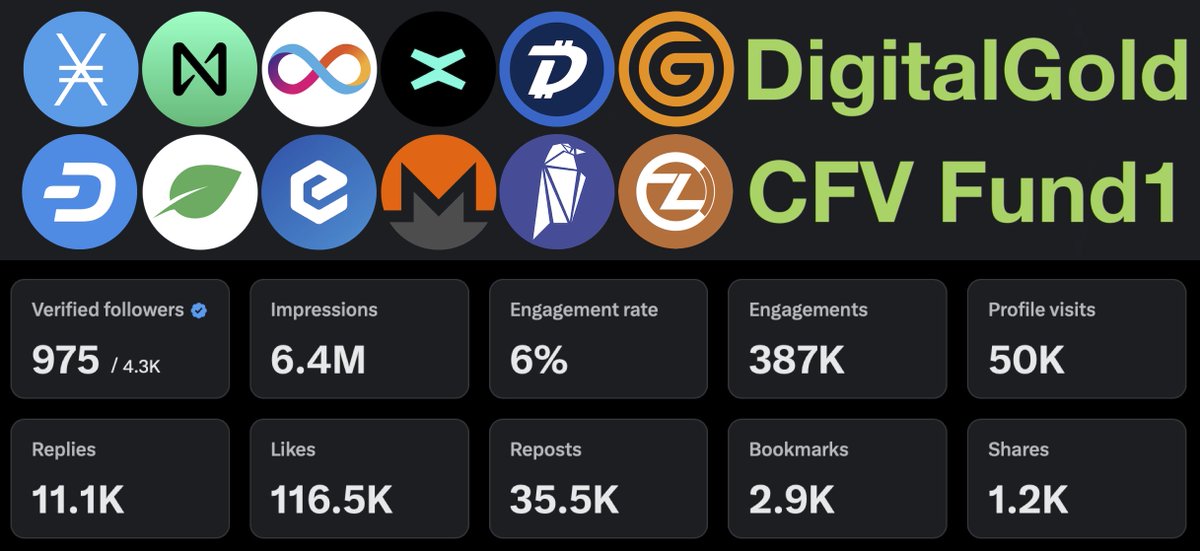
Amazing. We have reached 6.4 million impressions.
Thank you for sharing, liking and commenting.
Thank you for helping us go from 20 followers to 4,360.
We need to 218X that again. That would take us to ~1M.
Bring friends & family. I'll give 1 DGD to each follower.
Download a wallet at:
DigitalGoldX dot com
When we reach 1M followers we will reach 1M nodes. DGD will reach 1,838 USDC per DGD. We are now 4.18 USDC. That is amazing growth. LET'S DO IT!!!
Send me a DM with your DGD address. I will send one DGD. When we reach level 1,000 we reach parity to BTC, which puts DGD at 100,000 USDC per DGD.
English
Digital Gold Foundation retweetledi
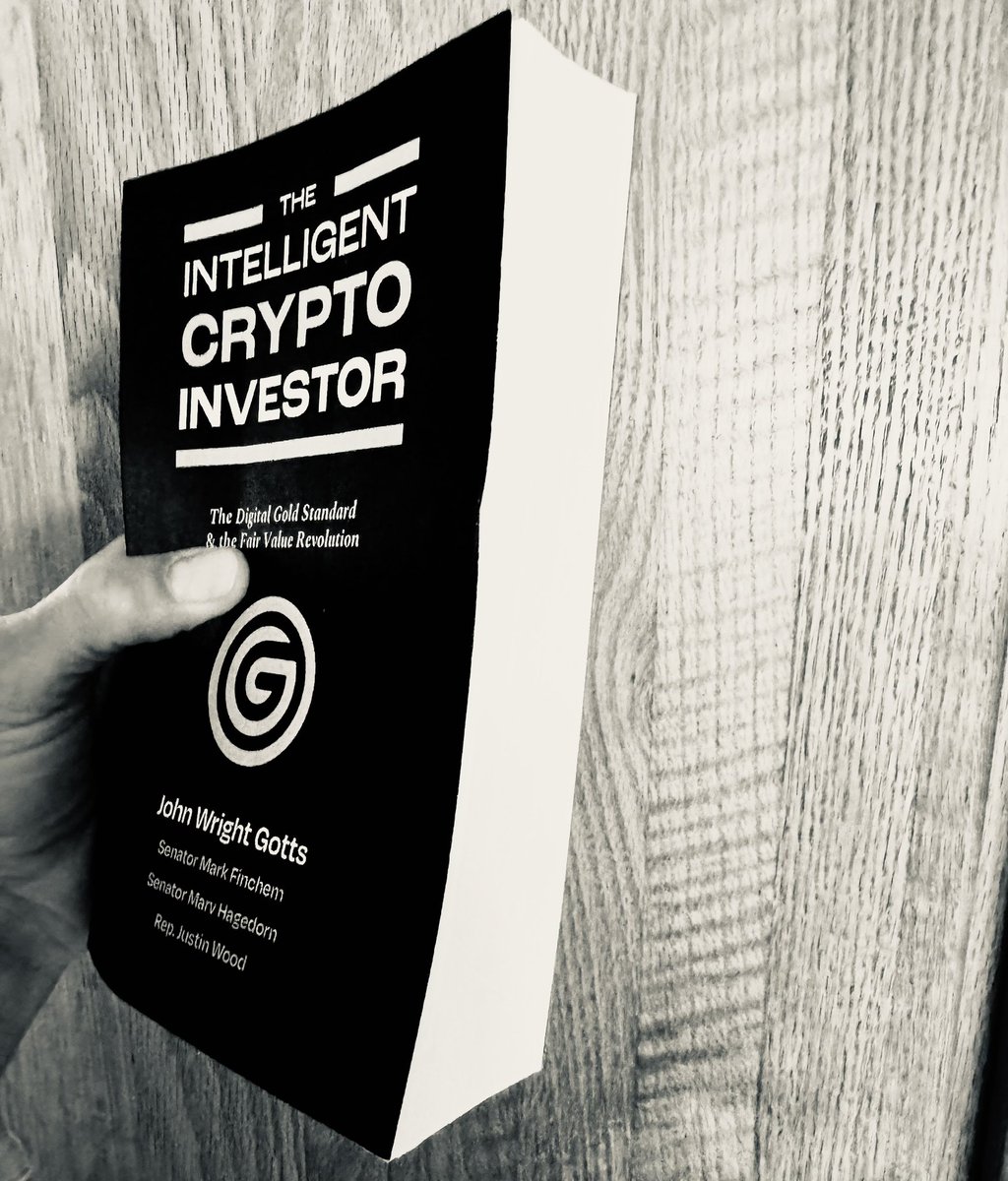
It feels good to have the first copy in my hand prior to the publisher.
English