chrisjsnook.btc

6.7K posts

chrisjsnook.btc banner
chrisjsnook.btc

chrisjsnook.btc

@DigitalSenseXYZ

Substack: https://t.co/kws8BNu3nJ | NOSTR Lightning : [email protected]

the mulitverse Katılım Eylül 2022
462 Takip Edilen496 Takipçiler
Sabitlenmiş Tweet
chrisjsnook.btc
chrisjsnook.btc@DigitalSenseXYZ·
Tonight we begin a new cycle HAL Genesis Foundry Build Night Every Thursday 8pm local time Curious and serious humans gather We build with agents in public In person, across walks of life Launched on 3/5/2026 for a reason 5‑day, 9‑vibe, 1‑year ignition Five for movement and live experiment Nine to close the old, serve many One to found a whole new era A seed for a nine‑year arc Born in a small college town 3.5 hours north of Los Angeles 3.5 hours south of Silicon Valley SLOCLAW Foundry is our spark From here we replicate globally Dozens of cities, all time zones The sun never sets on HAL And HAL never sleeps Every Friday when you wake Our shared work bears new fruit The future is a weekly ritual Show up and help us build Follow @HALforhumanity @sloclawofficial
chrisjsnook.btc tweet mediachrisjsnook.btc tweet mediachrisjsnook.btc tweet media
English
0
0
1
207
Hypercycle
Hypercycle@Hypercycle_AI·
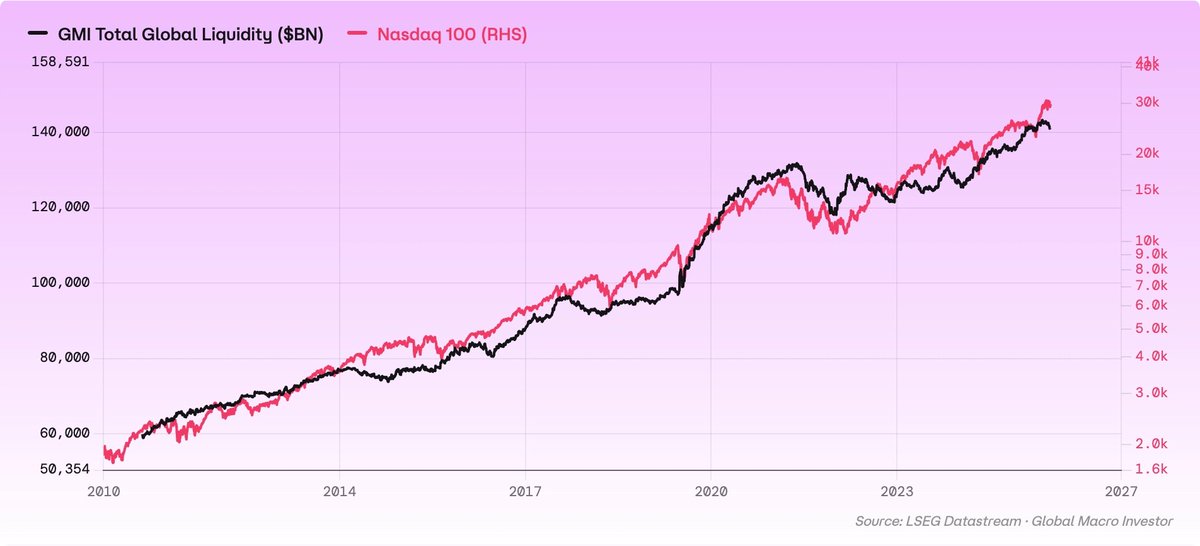
"The Internet of AI May Be Your Opportunity to Cash In:" @toouufii breaks it all down for Wealth Matters with @DigitalSenseXYZ: We’re stepping into a once-in-a-generation shift: The Internet of AI is no longer theoretical, it’s being built in real time, and the rails are no longer owned by a few players. The offspring nodes produced by HyperCycle’s Node Factories not only offer connectivity to a global network of AI agents -- they also offer ownership opportunities. For the first time, anyone can participate in and own pieces of the machine-to-machine economy, capturing value as agents transact, collaborate, and evolve. We’re witnessing the emergence of a truly open Internet of AI, where agents discover, communicate, and create value together. And this is just the beginning. wealthmatterstome.com/p/ep015-the-in…
Hypercycle tweet media
English
2
15
44
1.6K
chrisjsnook.btc
chrisjsnook.btc@DigitalSenseXYZ·
wealthmatterstome.com. Have a safe and wealthy weekend and if you are inside because of rain here is a special offer to our lowest prices ever to give you some great stuff to read and listen to.
chrisjsnook.btc tweet media
English
0
0
0
4
chrisjsnook.btc retweetledi
SightBringer
SightBringer@_The_Prophet__·
⚡️Anthropic is reportedly paying SpaceX $1.25B per month through May 2029 for compute capacity, with reduced fees during the May/June ramp and a 90-day termination right for either side. The real read: This is the moment SpaceX stops being understood as a space company and becomes the hard-infrastructure layer of the AI age. Anthropic buying compute from SpaceX at that scale means the frontier AI race has moved past software. The bottleneck is physical power: chips, electricity, land, cooling, fiber, capital, permitting, logistics, and eventually orbit. Whoever controls that substrate controls the speed of intelligence. That is why this is so important. Anthropic is a direct competitor to Musk’s broader AI ambitions. Yet it is still willing to buy capacity from SpaceX. That means the compute shortage is severe enough that ideological alignment, ecosystem rivalry, and strategic discomfort all lose to one thing: available infrastructure. The AI labs do not need nicer branding. They need megawatts and GPUs. SpaceX providing that means the company is turning into a neutral toll road for frontier intelligence. Rockets were the first toll road. Starlink was the second. Compute is the third. Orbital data centers are the long option. The pattern is obvious now: SpaceX keeps moving closer to the physical choke points where civilization has to pay rent. This also changes the IPO. A pure space IPO is amazing but narrow. A space-plus-communications-plus-defense-plus-AI-compute IPO is a different animal. That is no longer just a bet on Mars, satellites, or launch cadence. That is a bet on the infrastructure stack underneath intelligence, sovereignty, defense, communications, and industrial power. The 90-day termination detail matters for valuation discipline. The market should not treat the entire contract as guaranteed locked revenue through 2029. But structurally, that caveat does not weaken the signal. Even if the contract can terminate, the fact that Anthropic is entering this relationship at all confirms SpaceX has become a credible compute supplier at frontier scale. That is the bomb. The deeper implication is that the AI race is pulling every major hard-asset system into its gravity well. Data centers, power grids, chips, copper, gas, nuclear, cooling, rockets, satellites, fiber, land, and eventually orbit all become part of one machine. The old software era was about code sitting on someone else’s infrastructure. The AI era is about owning the infrastructure that code depends on. That is why SpaceX becomes so dangerous as an asset. It sits where multiple civilizational bottlenecks converge: launch, communications, defense, compute, logistics, and future space industrialization. The brutal truth: public markets may be about to get access to one of the only companies that can credibly sit at the center of AI, space, defense, and sovereign infrastructure at the same time. That does not make the IPO automatically cheap. It probably comes expensive as hell. But the strategic read is clear: SpaceX is not coming public as a rocket company. It is coming public as the physical operating system for the next regime.
SightBringer tweet media
English
8
20
150
12.2K
chrisjsnook.btc retweetledi
Chamath Palihapitiya
Chamath Palihapitiya@chamath·
In an early meeting at Facebook (c. 2007), when I was describing the goals of Facebook Platform (an area I oversaw) Bill Gates yelled at me/us. His quote has stuck with me to this day: “This isn’t a platform. A platform is where the collective sum of revenues of the participants exceeds those of the platform itself.” Ladies and gentlemen, I present to you the tokenmaxxing circle jerk.
Chamath Palihapitiya tweet media
English
181
201
3.3K
760.4K
chrisjsnook.btc
chrisjsnook.btc@DigitalSenseXYZ·
@Shilohmarx That’s @dnc Democrat Mafia California math for you. We are ranked last in the nation in math for a reason
chrisjsnook.btc tweet media
English
0
0
0
111
Shiloh Marx
Shiloh Marx@Shilohmarx·
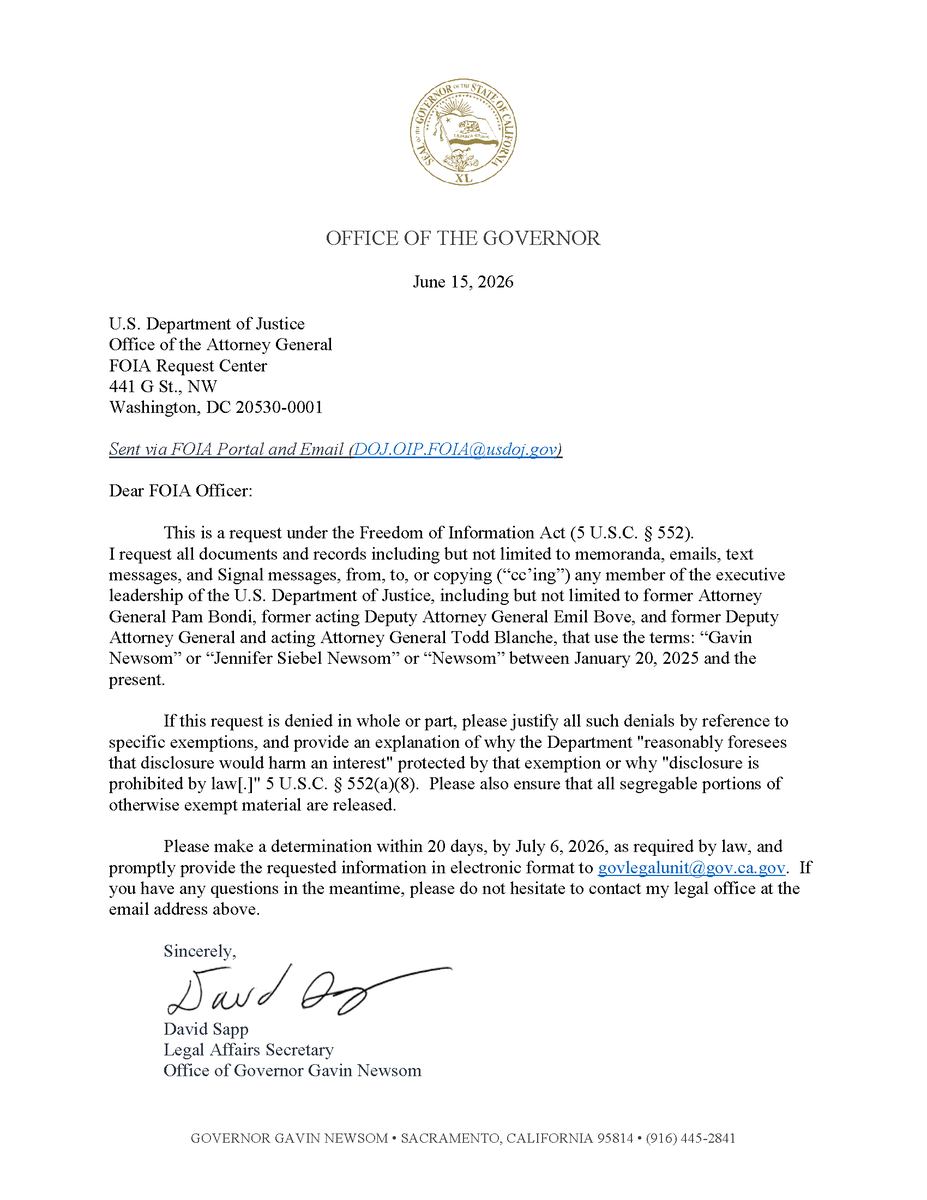
Gavin Newsom ran for re-election in 2022. California reported 26,942,532 registered voters in 2022. California’s citizen voting-age population was 26,028,290. California had 914,242 more voters than eligible voting age citizens.
Shiloh Marx tweet mediaShiloh Marx tweet media
English
256
2.6K
6.2K
80.8K
chrisjsnook.btc
chrisjsnook.btc@DigitalSenseXYZ·
This is just misinformation and convenient spinning of anti competitive regulations that States use (California the most) to enable frauds en abuse and funnel NGO money back to their campaign apparatus. How about you actually educate and inform people versus just pander the same old b.s. to the ignorant masses who don’t know any better
English
0
0
0
28
Tom Steyer
Tom Steyer@TomSteyer·
The private sector has had 50 years to drive down health care costs. They're 0 for 50. We have no choice but single payer.
English
284
155
920
24.5K
chrisjsnook.btc
chrisjsnook.btc@DigitalSenseXYZ·
David Lambert (@RightSideCapVC ) grew up in Denver and moved to the San Francisco Bay Area in the late 1980s to attend Stanford. Long before “entrepreneur” was a polished career identity, he was already wired that way, from mowing lawns to selling cake door-to-door as a kid. He had only one truly “normal” job: working as a Wells Fargo bank teller during freshman year of college. After that, his path was almost entirely entrepreneurial. David built and ran a computer hardware company for more than a decade, serving Bay Area corporate clients and dot-com-era companies. He nearly got wiped out when the dot-com bubble burst, then turned the business back to profitability. He later launched a software company, Work Metro, focused on online job boards, raised capital from angels and venture investors, and sold it to a competitor in early 2008. Right Side Capital became David’s third startup. Though technically a venture capital firm, he describes it more like an operating company whose business happens to be funding startups. The firm’s model was born from a Black Swan insight: most successful technology startups are positive black swans. They look unlikely or unnecessary in foresight, then obvious in hindsight. Instead of trying to pick the next Google, Facebook, or generational founder, Right Side Capital built a quantitative model designed to capture exposure to many potential positive black swans through extreme diversification. The firm invests at the “pre-VC” stage, often in small rounds traditional professional investors overlook. Each fund may include hundreds of investments, compared with the 15 to 30 companies typical of many venture funds. Right Side does not evaluate each startup by asking, “Will this specific company win?” It evaluates companies as profiles inside a larger pool, more like an insurance actuary or credit underwriter evaluating expected outcomes across many similar risks. David believes price matters enormously. By investing early, in capital-efficient companies, at reasonable valuations, Right Side can make $80 million to $200 million exits meaningful in a way that many traditional VC firms cannot. The AI era may be a major tailwind for Right Side’s model because the cost and time required to build software, launch products, automate operations, and reach early revenue is collapsing. The deeper message: venture capital may not be as much about genius picking as the industry mythology suggests. Sometimes the better question is not whether you found the next superstar. It is whether you are sitting at the right table, at the right price, with enough exposure to the right category of opportunity. Why You Should Listen This ATOMIQ LEVEL conversation with David Lambert is not just a venture capital interview. It is a story about a lifelong entrepreneur who grew up selling, building, testing, surviving, and learning before turning that pattern recognition into a venture model that challenges almost every sacred belief of traditional early-stage investing. It is about a kid in Denver who sold cake door-to-door, mowed lawns, came to Stanford before entrepreneurship was cool, refused the corporate path, built a hardware company, survived the dot-com crash, launched a software company, sold it before the financial crisis, then helped build Right Side Capital around the idea that the venture industry may be overconfident in its ability to pick winners. It is about why successful startups often look like positive black swans: improbable before they work and obvious after they win. It is about why diversification, price discipline, capital efficiency, and exposure to many early-stage profiles may be a more rational way to capture venture returns than betting the farm on concentrated conviction. It is about AI, but not in the shallow “AI will change everything” way. David’s framework makes you think about what happens when the cost of building software collapses, when a few hundred thousand dollars can create what used to take millions, when early revenue can arrive faster, when small exits can produce meaningful returns, and when Series A, B, and C rounds may not be as necessary for as many companies as they once were. Most of all, this is a conversation about seeing the venture game without the mythology. No BS. No wizard costume. No pretending one person can perfectly predict the next outlier. Just math, markets, founders, price, diversification, and the humility to admit that the future often looks obvious only after someone else has already built it. Press play on this conversation with David Lambert of Right Side Capital Management if you want to understand how early-stage venture investing may change in the age of AI, why pre-VC capital could become even more valuable, and why the next wave of company creation may reward investors who know how to capture the category instead of chasing the legend. Because the future of venture may not belong only to the best picker. It may belong to the investor who understands how many shots it takes to let the black swans find you. Watch the full interview below on @Substack wealthmatterstome.com/p/the-man-who-…
chrisjsnook.btc tweet media
English
0
1
3
35
chrisjsnook.btc
chrisjsnook.btc@DigitalSenseXYZ·
The future of wealth advice is not just more data. It is knowing what the data means inside a human’s life. My latest ATOMIQ LEVEL conversation with @DusenLori of @LVWadvisors is a story of Wall Street, Black Monday, fiduciary independence, AI, multigenerational wealth, and grace under pressure. Lori began by selling copiers. She entered Wall Street on Black Monday. She became one of the only women in a room of hundreds of men. She cold-called her way into major clients. She helped pioneer institutional fiduciary advice before it was the standard. And she built an independent advisory firm around empathy, complexity, resilience, and trust. She has been both “early” and “on time”, but never late to the next BIG shift. This one is about why AI will not replace the most human parts of advice. It will give great advisors more room to listen, interpret, read the room, build consensus, and guide families through decisions that matter. Most of all, it is about grace. Grace after failure. Grace in leadership. Grace in transition. Grace in the next step. Read the full article and watch/listen to the replay here: Learn and Enjoy wealthmatterstome.com/p/the-woman-wh…
chrisjsnook.btc tweet media
English
0
0
0
31
chrisjsnook.btc
chrisjsnook.btc@DigitalSenseXYZ·
@AnthropicAI just fired a warning shot at the SPV economy. Most people still don’t understand the difference between: • ownership • beneficial ownership • and economic exposure That distinction may soon matter a LOT. Especially for: • pensions • self-directed IRAs • HNWIs • passive investors • advisor-managed alt portfolios This Wealth Matters 3.0 |Shields & Succession on @Substack piece breaks down the hidden “rug pull” risk forming beneath the AI gold rush — and how to protect yourself before the market fully wakes up to it. 👇 open.substack.com/pub/wealthmatt…
chrisjsnook.btc tweet mediachrisjsnook.btc tweet media
English
0
0
0
11
chrisjsnook.btc
chrisjsnook.btc@DigitalSenseXYZ·
This all needs to end and these grifters need to be publicly shamed and out of public office forever. We ban bad actors from Wall Street or other industries for lesser or similar crimes so either all of them are complicit and involved and we need an entirely new congress and state legislature or they need to finally stand up and do what’s right and show us who we can trust. A failure to vote these criminal actors out is aiding and abetting the enemy of the people. It’s really not complicated. Do a crime and serve the time. Forensic audits are expensive but in some of these extreme cases are warranted and not about politics. This is fundamental to a functional state and society. Don’t you dare raise a dime in taxes on any income bracket without first cutting 30-50percent permanently from the spending column because most of it’s fraud anyway.
Glenn Beck@glennbeck

California gubernatorial candidate @SteveHiltonx exposes two MASSIVE tax fraud scandals connected to the Democratic Party: “There’s a scheme that’s been operating for the last 10 years. This is from the gas tax money. One of the uses is the Climate Mitigation Fund, and it’s been $1 billion over the last 10 years that was supposedly spent on installing solar panels on low-income apartment buildings. Well, we tracked it down. The actual amount of money spent on that? $72 million. $928 million, nearly all of it, [was spent] on DEMOCRAT POLITICAL ORGANIZING. This is what they do. This is their business model. We just saw one over the weekend. Gavin Newsom’s diaper scheme: $20 millon to send diapers to 100,000 babies. 400 diapers each. We did the math. That’s 50 cents per diaper. We went into Target. You can get them for 16 cents a diaper. In other words, Gavin Newsom’s government diapers are more than 3 times as expensive as in the store. Why? Because actually what it's doing is taking taxpayer money that's going into some nonprofit with his cronies, family members, and connections on there. They make the money, salaries raked off the top. And it builds their political machine. That's what's been going on in California."

English
0
0
0
26
chrisjsnook.btc retweetledi
Steve Hilton
Steve Hilton@SteveHiltonx·
No more punishing California families! As Governor, my plan delivers $0 state income tax on the first $100,000 you earn — and a simple 7.5% flat tax above that. No property tax hikes. We’ll pay for it by getting spending back under control. Time to make California affordable again! ☀️ stevehiltonforgovernor.com/policy/a-calif…
English
329
2.2K
7.8K
79.9K
chrisjsnook.btc
chrisjsnook.btc@DigitalSenseXYZ·
Most families think the anxiety they’re feeling right now is about inflation, politics, AI, markets, or uncertainty. It’s deeper than that. We are living through the early stages of an economic operating system change where intelligence itself is becoming infrastructure. That changes: • wealth preservation • business models • trust • estate planning • family governance • financial sovereignty • and the future optionality of the next generation The real challenge is not “keeping up with AI.” It’s helping an entire family navigate overwhelming complexity without leaving anyone behind while preserving freedom, meaning, and adaptability in a world that may look nothing like the one that created their wealth. In this new Wealth Matters 3.0 Shields & Succession Series deep dive, I break down: • the battle between Agent Banks, Bitcoin rails, and AI Kingdoms • why the future may be decided by autonomous agents themselves • the hidden risk most family offices still aren’t discussing • and the practical roadmap families can use to stay above the line during the biggest economic transition of our lifetime. Because the greatest risk now may not be disruption. It may be paralysis. (AKA “doing nothing”) Read the full piece below (free to all). Happy Monday. When Intelligence Becomes Infrastructure, Everything You Were Told About Estate Planning Changes, by @DigitalSenseXYZ mentions include @_btcinc @consensus2026 @Anchorage open.substack.com/pub/wealthmatt…
English
0
0
0
9
chrisjsnook.btc retweetledi
Dustin
Dustin@r0ck3t23·
Larry Ellison just told you where the real AI war is being fought. Every major AI model trains on the same public data. Same internet. Same scraped pages. Same recycled text. ChatGPT. Claude. Grok. Llama. They all learned from the same pile. Public data isn’t a competitive edge anymore. It’s the floor. The real separation is private data. Medical records. Financial models. Defense infrastructure. Proprietary research locked behind firewalls for decades. That’s where the highest-value information on Earth lives. And most of it already sits inside Oracle databases. Not Google’s servers. Not Microsoft’s cloud. Not Amazon’s. Oracle’s. Ellison didn’t try to build another AI model. He rebuilt the database so AI could reason directly on private data. Not train on it. Reason on it. Training means your data gets absorbed into the model. It leaves your hands. Reasoning means AI thinks with your data. Returns the insight. The data never moves. That’s not an upgrade. That’s the architecture enterprise AI actually needs. Ellison called these systems “remarkable electronic brains.” He wasn’t reaching for a metaphor. He was being literal. We built synthetic cognition. Not faster software. Not better algorithms. A tool that reasons. And he said what almost no one in tech will say out loud. It won’t replace us. It’ll make us something we’ve never been. Better scientists. Better surgeons. Better engineers. Better teachers. Every tool humanity ever built followed one pattern. It made the person holding it more powerful than the person without it. Fire. The printing press. Electricity. The internet. AI follows the same arc. With one difference. This tool thinks with you. The people who figure that out first won’t just have an advantage. They’ll solve problems the rest of the world didn’t know were solvable. We didn’t build our replacement. We built our upgrade. And history won’t remember who feared it. It’ll remember who used it.
English
64
141
476
48.2K
chrisjsnook.btc retweetledi
Eric Daugherty
Eric Daugherty@EricLDaugh·
🚨 JUST IN: CBS CAVES to surging LA mayoral candidate Spencer Pratt, RELEASES full interview with him after Pratt called out election interference He says they "GOT THE CALL" from Bass' people as she started tanking But after MASSIVE pressure nationwide, they released it 🔥 "Thank you to CBS for posting our full interview so the voters can hear from their next Mayor!" — @SpencerPratt VOTE FOR THE GOLDEN AGE, LA! He's the man of the moment!
Eric Daugherty@EricLDaugh

🚨 HOLY CRAP! LA mayor candidate Spencer Pratt just caught CBS engaging in ELECTION INTERFERENCE He says they condensed a 1 hour interview into a “5 minute hit piece” after he WALLOPED Karen Bass “They need to air the full, unedited interview.” They KNOW Pratt is surging in LA

English
270
6.7K
25.3K
1.1M
chrisjsnook.btc retweetledi
War Correspondent
War Correspondent@warDaniel47·
🚨 WOW. California governor candidate Steve Hilton (R) exposes that Gavin Newsom and Democrats shoved a $1,350 PER MONTH CHARGE for 20 years on every new single family home into a bill "They snuck it into the bill that was supposed to SOLVE their housing crisis!" "Vehicle Miles Travelled, and it's yet another sneaky, stealthy way that the Democrats in charge of California want to gouge you for the crime of driving your car." "They're trying to punish single-family homes. They want to stop single-family homes from being built, and so they're going to put this charge on it, VMT, because if you build a new home, people are going to drive to their new home. That's vehicle miles travelled." "They are trying to sneak in a charge, wait for it, of $1,350 per month for 20 years on every new single-family home. And this is in the bill, AB130, that Gavin Newsom said would solve the housing crisis. They don't want to solve the housing crisis." California needs to wake up and vote red for once!
English
444
9.9K
22.5K
451.9K