Owen Gregorian@OwenGregorian
How to Win Elections: Evidence-Based Principles of Effective Persuasion | David Myers
I can read your mind. I see your worried spirit. I sense that, when assessing today’s U.S. political divide and voter sentiments, you feel astonished at what so many others believe and embrace. If only you, and your preferred candidate, could persuade well-meaning but misinformed people to embrace truth and value decency.
If you support an incumbent, you and your kindred souls will want voters to perceive the economy as thriving, crime rates as falling, and leadership as effective. If you support a challenger, you will want voters to see a darker present—a government plagued by corruption, an economy languishing, a society in decline—and to long for someone who can make things great again.
So, how to win in 2024? Election triumphs require persuasion, which we social psychologists have long studied. Our experiments confirm ten strategies:
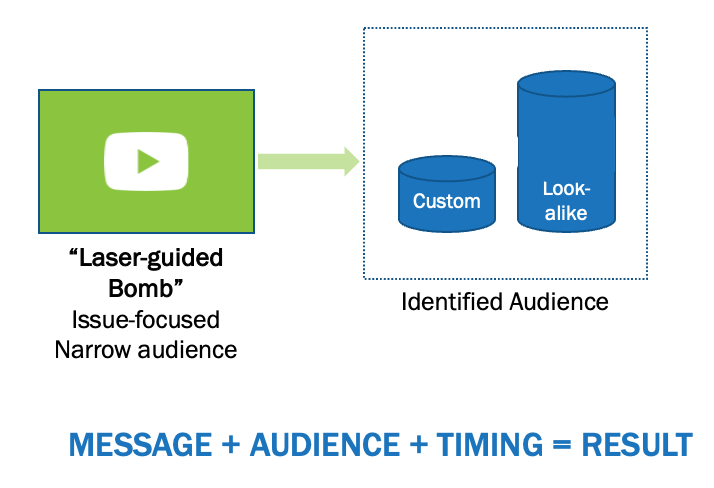
1. Frame messages that speak to your audience’s viewpoint and values. Associate your message with their preexisting perspective. “Don’t mess with Texas” says the effective litter-reducing signage aimed at the leading litterers—18- to 35-year-old macho males. For a business audience, a climate-protecting policy could explain its economic benefit. 📷
2. Harness the influence of multiple credible sources. Use communicators that your audience will regard as expert, trustworthy, and likable. And better three speakers each making one argument than one person making three arguments.
3. Exploit the power of repetition. Barack Obama understood what experiments have documented—repetition feeds an illusion of truth: “If they just repeat attacks enough and outright lies over and over again . . . people start believing it.” Donald Trump understands: “If you say it enough and keep saying it, they’ll start to believe you.” Even cliches, when repeated, will persist in people’s minds. So will repeated truths, crisply expressed: “The Biden Boom.”
4. Invite public commitments. Once people voice or sign their support, they tend not only to have stood up for what they believe, but also then to believe more fervently and durably in what they have stood up for.
5. Engage emotions. Appeal to the heart. Effective political appeals often elicit both negative emotions (warnings about a scary opponent) and positive emotions (patriotism, pride, and hope).
6. Create visual images. People have much better memory for scenes than words. Even an irrelevant photo—of, say, a thermometer alongside a claim that “Magnesium is the liquid metal inside a thermometer”—can make assertions seem more believable. If you describe falling unemployment or an increasing stock market, portray the spoken words visually, with rising or lowering arm motions.
7. Connect with people’s social identities. Present your candidate as one of “us,” as someone with whom your audience can identify.
8. Inoculate your audience against future opposing arguments. Effective persuasion not only debunks misinformation, it “prebunks” such. It defuses the other side’s case by acknowledging and refuting it, thus preparing people to hear the opponent’s message, and to counterargue.
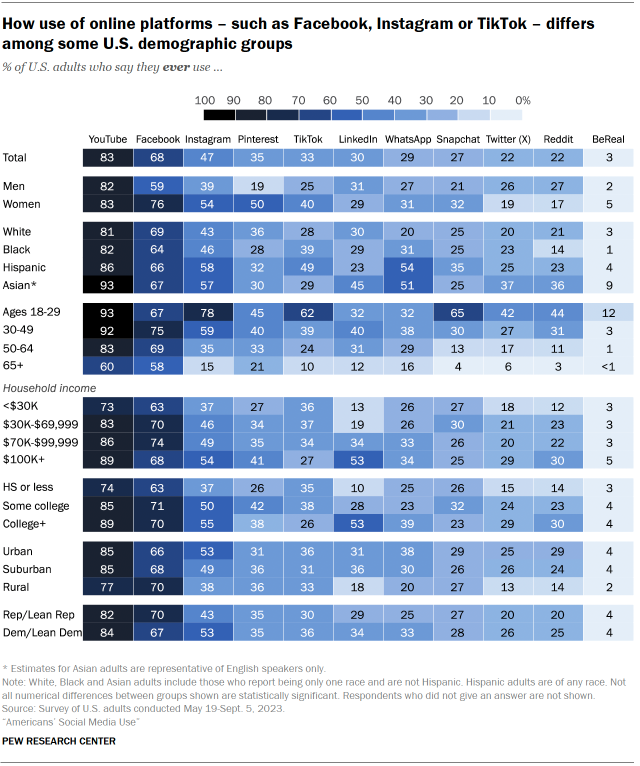
9. Focus communications on those undecided or disengaged. Don’t waste limited time and resources on those with strong preexisting views. The future is decided by the muddled middle.
10. Prioritize face-to-face appeals. In a mid-twentieth century field experiment, Michigan researchers Samuel Eldersveld and Richard Dodge divided citizens not planning to support an Ann Arbor city charter revision into three groups. Among those exposed to mass media appeals for the revision, 19 percent changed their minds and supported it, as did 45 percent of those who received four supportive mailings, and 75 percent of those visited personally.
Finally, and even more important than any of these ten evidence-based persuasion principles, is one more: the power of self-persuasion. Get people to rehearse and verbalize your argument.
When supporting a candidate, focus less on the crushing brilliance of your thinking than on what your audience is thinking. Remember: Your aim is not to score argument points, but to persuade.
Skilled teachers understand the power of self-education. They guide students not just to be passive information receptacles but active information processors. With rhetorical questions, lab activities, and in-class writing exercises, they get students to glean and verbalize answers for themselves. As a mountain of recent research shows (see here for an animation in which I apply this to student learning), people best remember ideas that they have articulated in their own words.
In the final days of the contested 1980 U.S. presidential campaign, Ronald Reagan, 8 points down in a late October Gallup poll, used two memorable and potent rhetorical questions to stimulate voters’ active processing. His presidential debate wrap-up statement began by asking: “Are you better off than you were four years ago? Is it easier for you to go and buy things in the stores than it was four years ago?” This rhetorical device proved so effective (most people privately answered “No”) that he repeated the questions over and again in his campaign’s final week, and won by a stunning 10 percent.
So, in the upcoming U.S. presidential debate, the candidates would be wise to pose alternatives, and ask people what they advocate. A U.S. Republican candidate or supporter might invite people to reflect on questions for which majority sentiment favors their position; for example, “Do you favor or oppose a more secure southern border to stop illegal immigration?” And a Democratic candidate or supporter might respond by asking people if they favor or oppose the bipartisan border protection act deep-sixed by Donald Trump, or they might ask, “Do you agree more with Donald Trump that climate change is a ‘hoax’ and that government should support more fossil fuel production, or with Joe Biden that government should prioritize clean energy?” When you know that most folks support your side of an issue, don’t just tell them what you think. Ask them what they think. If someone acknowledges a positive aspect of your candidate, invite them to elaborate.
Political “push polls”—negative campaigning and rumormongering in the guise of surveys—similarly attempt to nudge voter thinking. But they often do with obvious guile, as illustrated by a 2013 National Rifle Association pseudo-survey: “Would you knowingly vote to reelect a member of the U.S. House or Senate who supports the Obama gun-ban agenda?"
Read more:
community.macmillanlearning.com/t5/talk-psych-…