Dimple Notani retweetledi
Dimple Notani
415 posts

Dimple Notani
@DimpleNotani
Associate Professor@NCBS. Interested in signaling driven 3D chromatin dynamics and distal regulatory elements
NCBS, Bangalore, India Katılım Kasım 2019
540 Takip Edilen1.8K Takipçiler
Dimple Notani retweetledi

Excited to share this preprint from our team and collaborators at UCSD
Transcription initiation profiling defines the regulatory logic of astrocyte gene regulation biorxiv.org/content/10.648…
We asked how do astrocytes decide which genes to turn on during inflammation?
English
Dimple Notani retweetledi

A growing role for ER-Ca2+ release and store-operated Ca2+ entry in neuronal physiology and pathophysiology
now available at authors.elsevier.com/a/1mvCL3Q9h2Q4…
@NCBS_Bangalore @DBTIndia
English
Dimple Notani retweetledi

Last few days to register and submit an abstract!
Rajyaguru lab@LabRajyaguru
Registration deadline: March 31, 2026
English
Dimple Notani retweetledi

New Lab Alert! 🧬 labadelab.com
Thrilled to start the Labade Lab at @AshokaUniv! @TSB_Ashoka @KCDH_A
Join us to explore expansion microscopy, nanoscale spatial genomics, and the epigenetics of aging.
PhD Program at Ashoka for 2026-27 intake. Apply by 20 April 2026: ashoka.edu.in/programme/phd-…
We’re investigating how "inflammaging" alters the epigenome and how to decipher and ultimately reverse those changes.
We build new technologies to visualize genome & epigenome changes at the nanoscale and explore ways to make the genome more resilient to aging.
#PhD #SpatialGenomics #ExpansionMicroscopy #Inflammaging

English
Dimple Notani retweetledi

Happy to share our Current Opinion review on the key challenges in accurately predicting 3D distances between chromatin segments and computing their dynamics. Thanks to Daniel Jost @djost_physbiol & Luca Giorgetti for the invitation to write this review @DuttaShuvadip @BsbeIitb

English

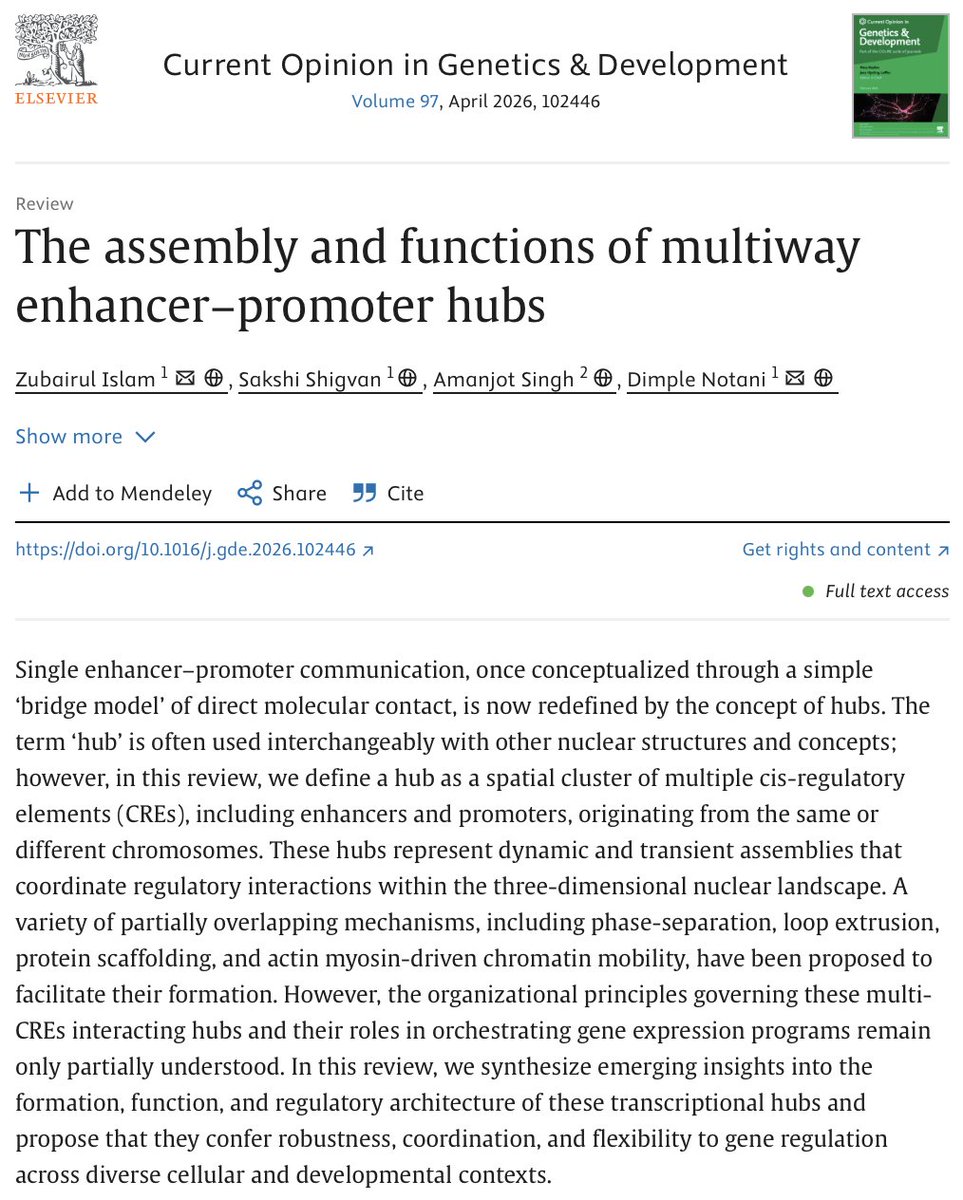
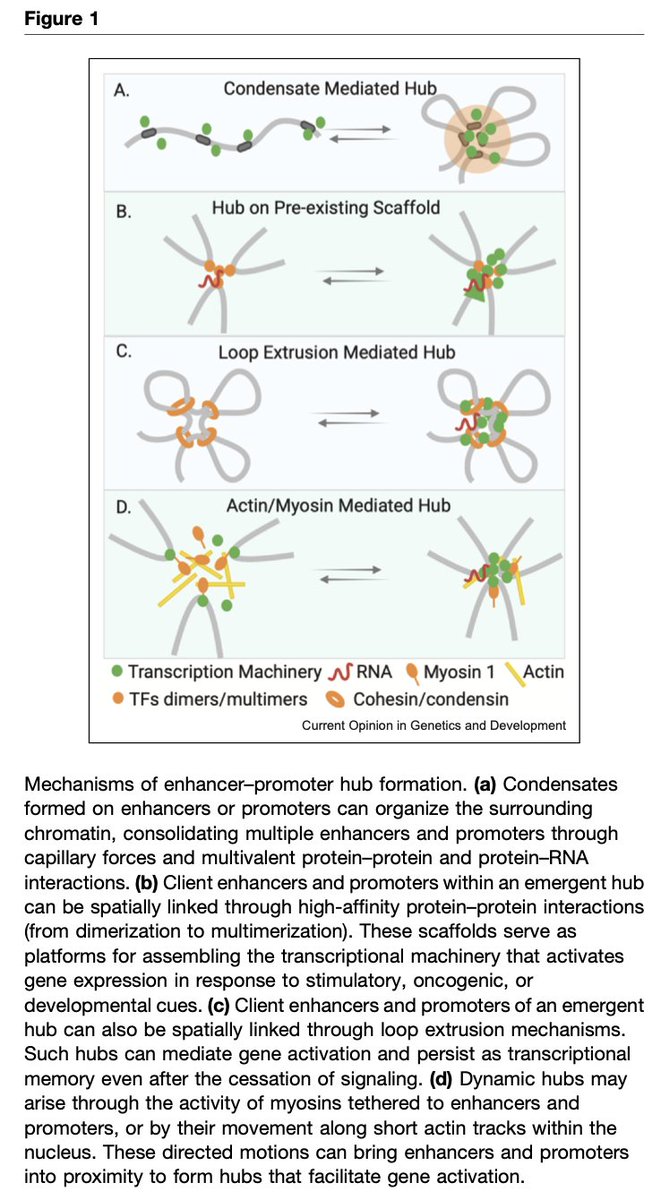
Exited to share Current Opinion review on how chromatin hubs involving multiple enhancers and promoters are formed, and their potential roles in gene regulation: sciencedirect.com/science/articl…. @zubi___ @Sakshi_Shigvan @Amanjsingh1996 @NCBS_Bangalore


English
Dimple Notani retweetledi

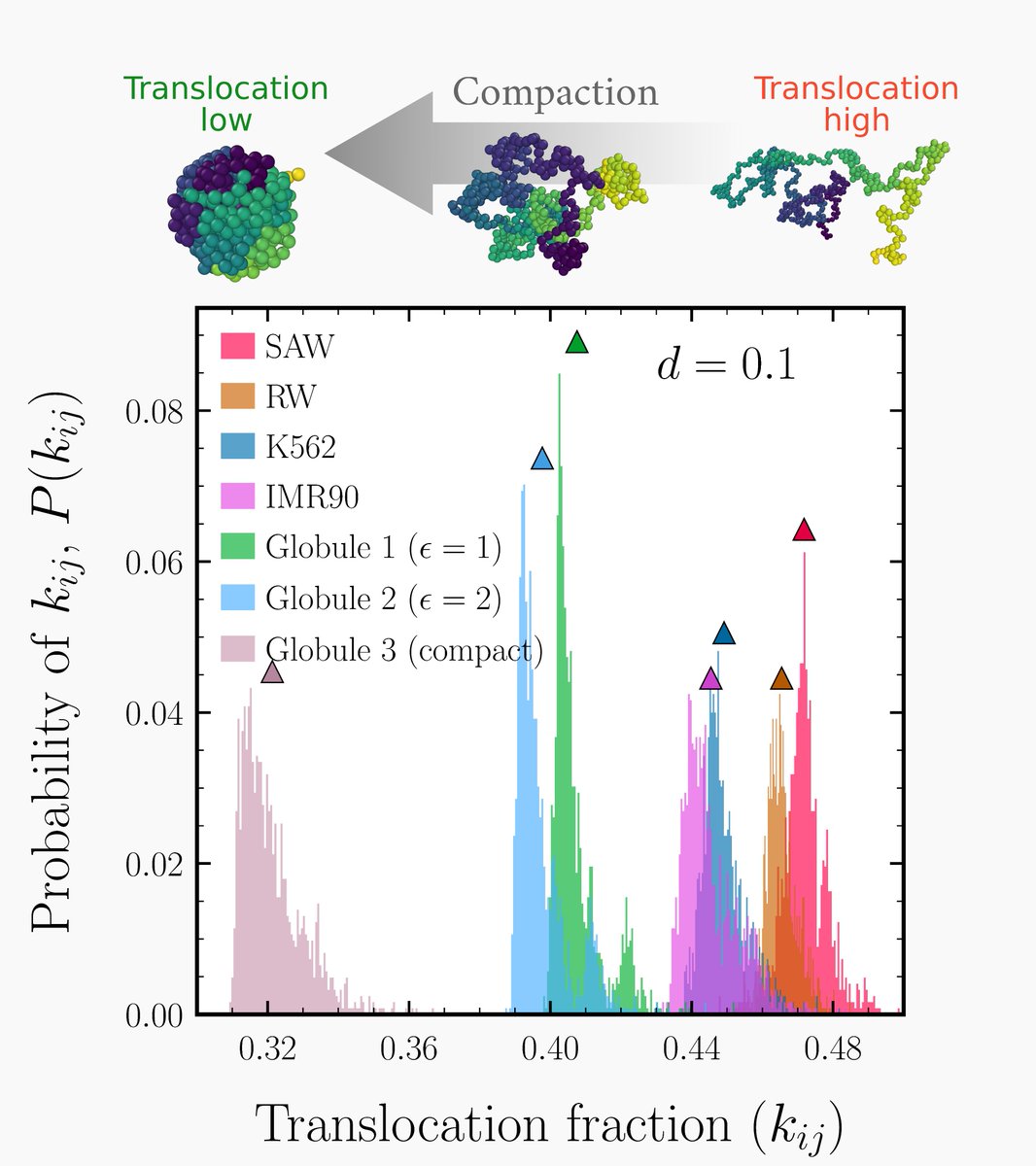
♦️Tightly packed chromatin ➡️ lower chance of a particular harmful translocation♦️
Latest article from @LabRanjith, led by Anirudh, on how chromatin compaction and DNA breaks⚡ govern translocation statistics.
🔗sl1nk.com/5x9Dz
(1/5)

English

Thank you @iiscbangalore for covering this news.
IISc Bangalore@iiscbangalore
We are delighted to share that Prof Dipshikha Chakravortty has been appointed Chair, ASM India Country Advisory Council (CAC), becoming the first Indian Chair in the international American Society for Microbiology (ASM). ✨
English
Dimple Notani retweetledi

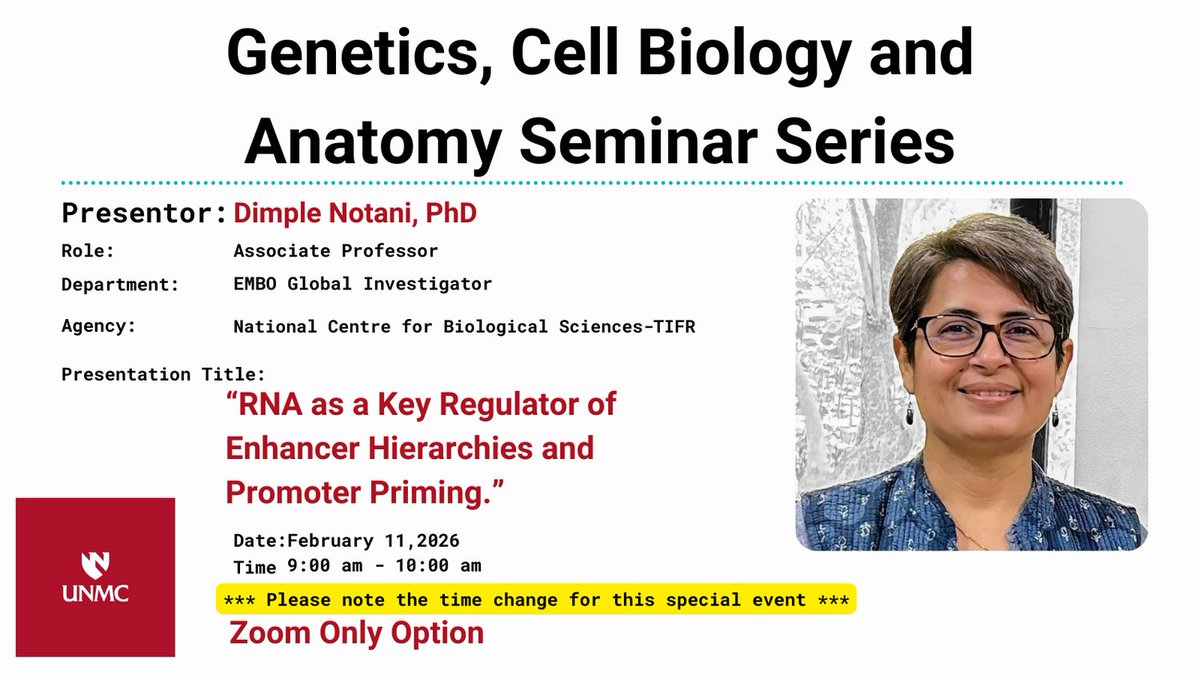
GCBA Seminar Series announces Dimple Notani, PhD, EMBO Global Investigator, National Centre for Biological Sciences - TIFR presenting "RNA as a Key Regulator of Enhancer Hierarchies and Promoter Priming." @DimpleNotani @UNMC_GCBA @UNMC_BISB

Română
Dimple Notani retweetledi

Check this new work on BRD4's role in preventing the premature activation of developmental transcription factors via #Polycomb, providing new mechanistic insights into the pathogenesis of neurodevelopmental disorder #CdLS #NDDs, #chromatinopathies biorxiv.org/content/10.648…
GIF
English
Dimple Notani retweetledi

Excited to share that my first-author PhD paper on genomic instability at CTCF/cohesin binding sites in cancer is finally published in @iScience_CP!
Huge thanks to @r_sabarinathan and @DimpleNotani for all the guidance and support throughout this journey
cell.com/iscience/fullt…
English
Dimple Notani retweetledi

🦈👀Eye-opening research about Greenland sharks — the longest-living vertebrate — may lead to new ways of preserving vision as we age! Learn more about this research by @DrDorotaSK at @UCIrvine School of Medicine. bit.ly/450mCYD

English
Dimple Notani retweetledi

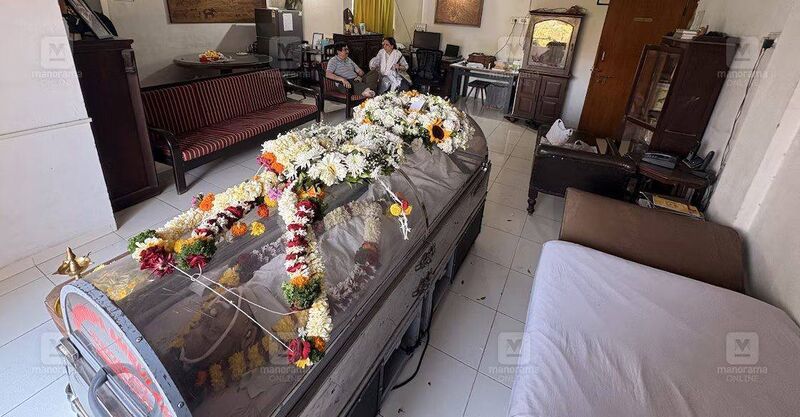
A lonely goodbye to Madhav Gadgil, one of the tallest environmentalists of our times.
Under the banyan trees of Navi Peth in Pune, Madhav Gadgil was taken for cremation last evening. The gathering was small, some forty, perhaps fifty people.
No ministers. No senior officials. No tricolour to drape the body. No guard of honour salutes. No ceremonial rifle volleys.
One expects a crowd, the usual press cameras and public mourning. Instead, there was a pause, a quiet uncertainty, as if this farewell were happening somewhere it wasn’t meant to.
State honours had been promised, but never quite arrived. Even the police escort lost its way. For nearly half an hour, Gadgil’s body lay waiting, wrapped in simple white, while the city carried on around it, indifferent.
For me, this was not the death of a distant public figure.
In the 1990s, when I was starting out as a science correspondent with the Press Trust of India in Bengaluru, Madhav Gadgil was already a towering presence at the Indian Institute of Science (IISc). At the IISc's Centre for Ecological Sciences, he stood out, not by volume or self-importance, but by intellectual rigour and moral clarity.
I walked into his office many a time in those years, notebooks open, deadlines close. He listened carefully, answered precisely, never spoke down. He believed knowledge carried responsibility, and that science without ethics was incomplete. Those conversations stayed with me, shaping how I understood both journalism and ecology.
This was also the man who later led the Western Ghats Ecology Expert Panel, producing a report that treated the mountains not as real estate or mineral stock, but as living systems. The Gadgil Committee Report spoke of ecological limits, decentralised governance, community rights, and long-term survival.
A Padma Bhushan awardee. A UN Champion of the Earth. A lifelong defender of forests, rivers, biodiversity, and uncomfortable truths. In death, he was treated as someone easily forgotten.
The trees were not.
The old banyans stood quietly, their leaves stirring in the afternoon air. Gadgil had given his life to them. Trees remember. Animals remember. They show up when people don’t.
Had this been a politician or an industrialist, roads in Pune would have been sealed, helicopters circling, television studios filled with tributes and theatrical grief. Power is never allowed to pass quietly.
But a man who tried to protect the land that sustains us all was sent off almost unnoticed.
The trees stood witness.
The rest of us moved on.
Goodbye, Madhav Gadgil.
Forgive us.
We did not know how to honour you.
(Photo Courtesy: R S Gopan)

English
Dimple Notani retweetledi

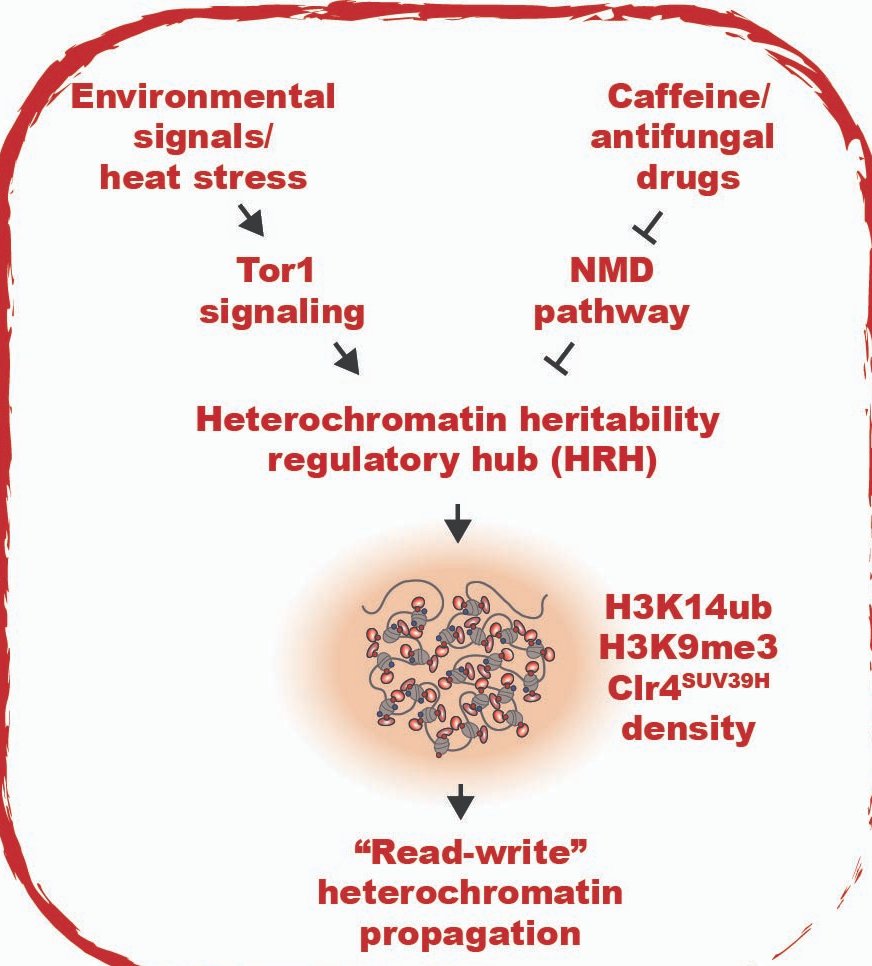
Stress controls epigenetic inheritance!
A histone ubiquitylation-based regulatory hub links stress/environmental signaling to heterochromatin self-propagation and epigenetic inheritance-reshaping how we think about development, drug resistance and cancer👉nature.com/articles/s4158…

English
Dimple Notani retweetledi

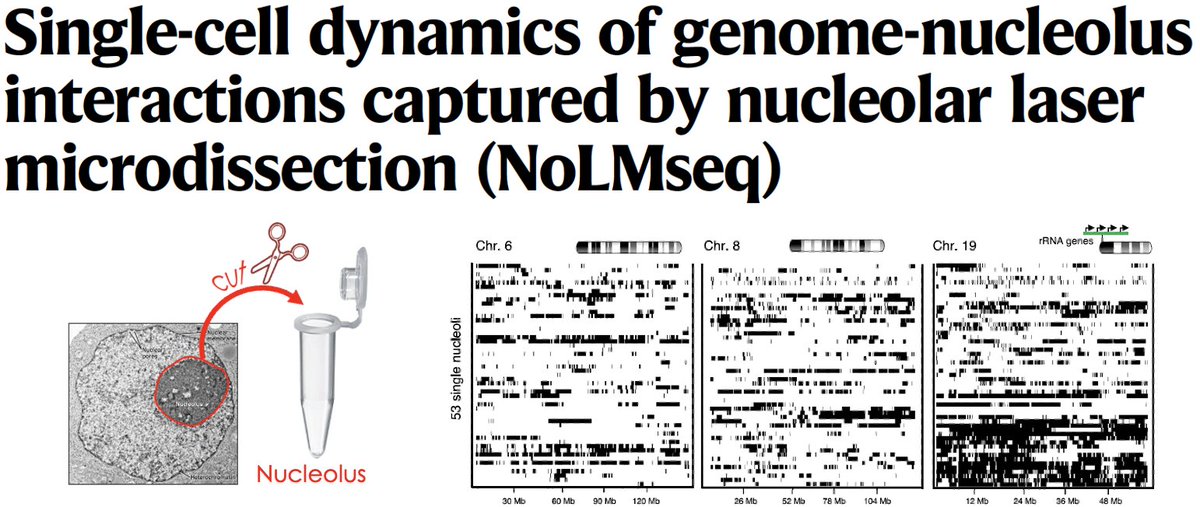
Finally out! We introduce NoLMseq, a #nucleolus laser microdissection method to capture single-cell genome-nucleolus interactions in normal and stressed nucleoli, revealing novel insights into genome organization & function. nature.com/articles/s4146…

English
Dimple Notani retweetledi

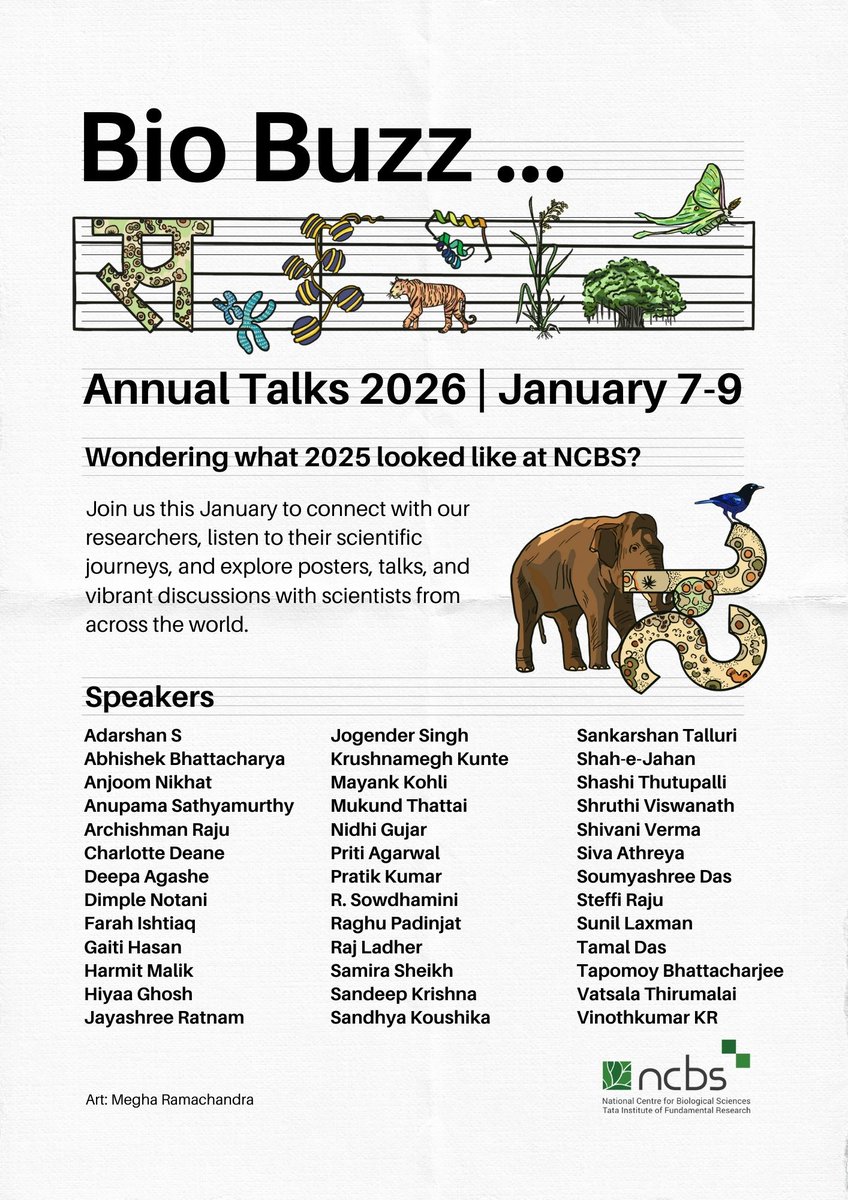
📢We are gearing up for NCBS’s Annual Science Carnival, BioBuzz- a celebration of exciting ideas, and fantastic science🎉
📡Live updates on X start tomorrow. Stay tuned!
#NCBSAnnualTalks2026 @NCBS_Bangalore
(1/n)

English
Dimple Notani retweetledi

🚨 Postdoc Position Open 🚨
Study protein-DNA interactions w/ cutting-edge single-molecule imaging in our lab!
Exciting projects perfect for ANRF-NPDF apps. Motivated postdoc candidates: Approach us!
Mahipal Ganji
ganji@iisc.ac.in
ganjilab.org
English

A huge thanks to the lead authors @rajat007_mann and @DeepanshuSoota and a great collaboration with @GunjanM43894285. This research was made possible by support from @India_Alliance and @NCBS_Bangalore @EMBO_YIP
English