The "Devil's Advocate"
You probably might be thinking that I mean.
This title wasn't just a movie trope.
In the canonization process for saints, the Church officially appointed an advocatus diaboli (Devil's Advocate) whose job was to poke holes in the candidate's case, find flaws, and argue against sainthood to ensure rigor.
@CatholicDrip___ Yet Roman Catholics question their salvation every single day, they don’t trust the sacrifice of Jesus Christ and do not believe the blood of Christ covers their sins, justification is a single event in the life of a Christian, not a process that continues even after death.
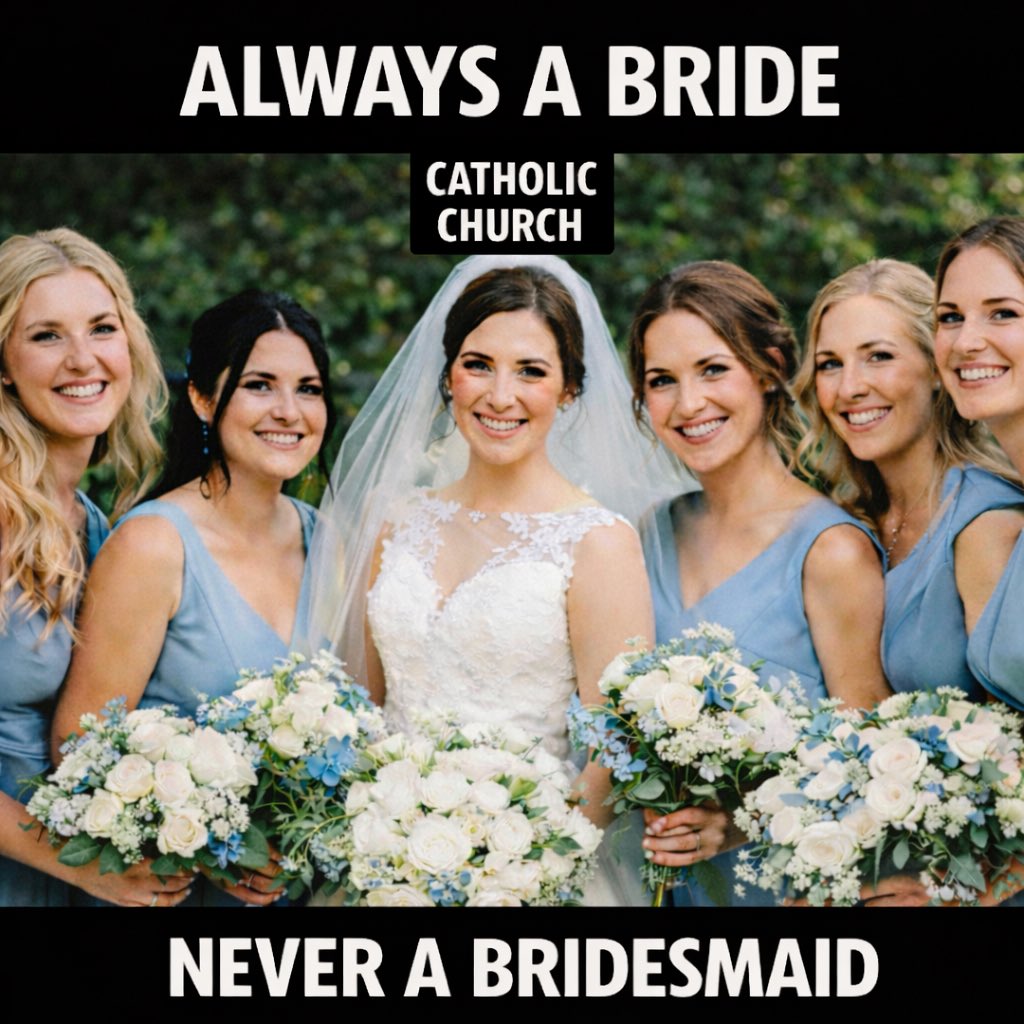
The Catholic Church is the Bride of Christ 💍
No divorce, He is always faithful
Through apostolic succession, His Church remains unbroken, 2000 yrs
It’s like Everyday is your Wedding day when you’re a Catholic ❤️💧
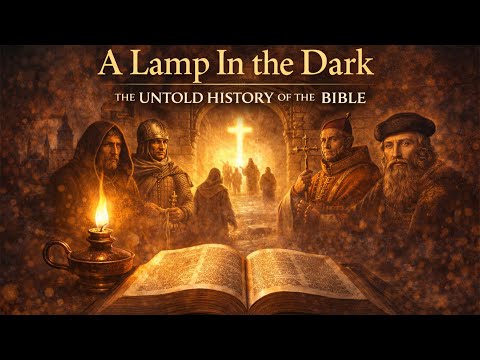
@garrettham_esq What does what you posted have to do with the Documentary I posted? Does this mean you agree with all the Popes who explicitly state thy are God?
Ok. I'm quite familiar with these claims. I spent years training to be a Southern Baptist minister and joined the Catholic Church while earning my M.Div.
The documentary gets some things right but the broader frame doesn't hold up.
Right:
Tyndale was executed in 1536, Wycliffe's Lollards were persecuted, and Byzantine vs. Alexandrian text families really do differ in meaningful places.
Wrong:
• Before Luther's 1522 NT, there were already 18+ complete printed German Bibles (starting with Mentelin in 1466), plus French, Catalan, and Spanish vernacular translations from the 13th century, most with Church approval.
• The "bans" (Toulouse 1229, Oxford 1407–08) were local responses to specific heresies (Cathars, Lollards), not universal prohibitions. Thomas More attested in 1529 that approved English translations existed before Wycliffe.
• Vulgata literally means "common": Jerome translated INTO the everyday tongue. Latin was the common language at the time of his translation.
• The Textus Receptus underlying the KJV was compiled by Erasmus, a Catholic priest, from ~7 late Byzantine manuscripts. Modern critical texts use thousands of witnesses, including 4th-century codices that predate the Jesuit order (founded 1540) by 1,000+ years.
• Much of the source-base traces back to Foxe's Acts and Monuments (1563), a polemic both Catholic and Protestant historians today treat with care.
The real history is more interesting than the conspiracy frame.
Reformed Protestants recite the Apostles' Creed, affirm the Nicene Trinity, and read the 27-book New Testament. They got all three from the same Church they've spent 500 years arguing wasn't really the Church.
@garrettham_esq Is that the only question you asked? The Documentary covers how we got our Bible, the history of the Roman Catholic Church, the persecuted Church, non Roman Catholics who preserved the Bible.,.
@garrettham_esq I submit, of up to 50 million Christians murdered by the Roman Catholic Church, try we’re not Bible translators, you got me there.
I suspect you did not watch the documentary, based on your claim that the well sourced historical record is half-truths.
Maybe, but I'm quite familiar with the Protestant claims in the documentary. Some of them are true, some of them are half-truths, and some of them are tenuous at best.
The factual assertion we were discussing, however, was not whether the Catholic Church did some bad things in the past—which it clearly did—but rather your claim that the Catholic Church killed millions of people for translating the Bible, which is simply untrue. That would have been 1% of the entire population of Europe. The literacy rate in Europe at the time was less than 20%, and that's just the people who could read their own language, much less translate Greek and Hebrew (or occasionally Latin) into the vernacular.
@garrettham_esq That’s funny, the documentary I provided has answers to all your questions, you may not like the answers; though, everything is well sourced and backed up by the evidence.
Your responses, name calling, you don’t want the truth, you want to justify the lies you believe.
@DoItAgainKen If you're going to take the flat-earther route and refuse to believe things that have been repeatedly verified by third parties, then there's really no room for a fruitful discussion.
The “Word of God” in John isn’t the Bible.
That’s impossible.
There was no New Testament canon yet.
No bound Bibles. No 66 book King James Bible.
John is describing Jesus Christ, not a book.
I'm not defending every action against translators. Tyndale's death was unjust, but he is the only person who was executed for translating the Bible—and even that's unclear.
But that's not the question. The question is whether the Church that produced the canon you read is the same Church the Reformers concluded wasn't really the Church. Sinful actors don't change ecclesiology.
@garrettham_esq Disagree, you said “they spent 500 years arguing wasn’t really the Church”, they were excommunicated and murdered by this very same church they dedicated their lives to.
@garrettham_esq It’s mind boggling how much you speak of man’s religion and little about God’s Word, it’s as if you don’t have a relationship with our risen LORD and Saviour Jesus Christ.
Sola scriptura needs (1) a tradition to tell us which books are the Bible, (2) an interpretation to tell us what the Bible means, and (3) a confession of faith to keep the interpretation from drifting. It needs everything it claims to be unnecessary.
@DoItAgainKen@MrCasey62 The word is used both for local gatherings of believers and (in a few cases) more generally or in non-Christian contexts. This matches its broader Greek usage for any formal assembly, but in most New Testament contexts (especially Acts and the epistles) it refers to the church.