
claire martin retweetledi

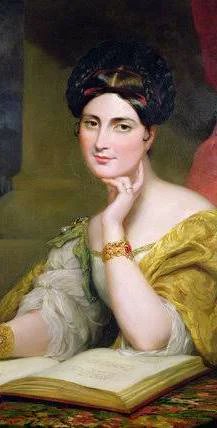
Woman of the Day feminist and author Caroline Norton born OTD in 1808 in London whose intense lobbying of Parliament and Queen Victoria was instrumental in the passing of three Acts of Parliament that gave married women long overdue legal rights for the first time.
It was the beginning of the end of coverture, the common law principle imported by those robbing Normans in 1066: that a married woman was no more than a chattel of her husband. Property. And property cannot own property.
Caroline married at 19. Her family, though well-connected, was penniless. It was a mistake. George Norton was happy to use his wife’s social connections to gain advancement but failed to earn money as a barrister. Hardly surprising. He was a nightmare: jealous, possessive, violent, abusive and a drunk. She left him when she 28, and managed to support herself and her children for a while by writing books and poems, but in those days, a woman’s earnings belonged to her husband. She was just a chattel, remember.
He confiscated Caroline’s income, leaving her in poverty. She fought back: running up bills in his name, and when creditors came to collect, telling them to go after him. He retaliated by kidnapping their three sons, hiding them with relatives in Scotland, and refusing to tell her where they were.
Children then were the legal property of their father and there was nothing Caroline could do to regain custody. A woman’s voice carried no weight. (You might think that’s still the case today but I couldn’t possibly comment).
Norton accused her of an affair with the Prime Minister, Lord Melbourne, and tried to blackmail Melbourne for £10,000 (£1.3 million in today’s money) to avoid scandal. The PM refused to pay so Norton took him to court. At the end of a nine-day trial, the jury threw out Norton’s claim, siding with Melbourne, but the publicity almost brought down the government.
The scandal eventually died, but Caroline’s reputation was ruined.
He still refused to let her see her sons and blocked her from divorcing him. When one of their sons died in an avoidable accident, he relented and let Caroline see her other children, but still refused her custody. She had no redress. He had complete power over her.
Parliament finally debated divorce reform in 1855 and Caroline submitted a detailed account of her own marriage to MPs, describing the obstacles faced by women as the result of existing laws.
An English wife may not leave her husband's house. Not only can he sue her for restitution of "conjugal rights," but he has a right to enter the house of any friend or relation with whom she may take refuge...and carry her away by force...”
“If her husband take proceedings for a divorce, she is not, in the first instance, allowed to defend herself...She is not represented by attorney, nor permitted to be considered a party to the suit between him and her supposed lover, for "damages."
“If an English wife be guilty of infidelity, her husband can divorce her so as to marry again; but she cannot divorce the husband ‘a vinculo’, however profligate he may be.”
Largely through Caroline’s intense campaigning, including writing to Queen Victoria, Parliament passed the Custody of Infants Act 1839, the Matrimonial Causes Act 1857, and the Married Women’s Property Act 1870.
Although Caroline did not herself benefit, those Acts gave married women - for the first time ever - a right to their own children and a law allowing divorce. By virtue of the Married Women's Property Act 1870, married women finally had the right to inherit property and take court action on their own behalf. It also granted married women, for the first time, a separate legal identity from their husbands.
Caroline was finally free of Norton when he died in 1875. She remarried in 1877 but died just three months later at the age of 69. I hope she found some peace and contentment in that too brief time.
“Those dear children, the loss of whose pattering steps and sweet occasional voices made the silence of my new home intolerable as the anguish of death...what I suffered respecting those children. God knows…under the evil law which suffered any man, for vengeance or for interest, to take baby children from their mother.”
Coverture, a Norman legacy, was finally knocked on the head in 1990 when married women were finally taxed independently on their own incomes and given their own personal allowances.
1990. It only took 924 years.

English