
NChapa

3.2K posts

NChapa banner
NChapa

NChapa

@DonMilagro

AR/VR Designer. Throws Coach. Gritty acolyte @donmilagro: ig

Stanford University/King City Katılım Haziran 2008
4.8K Takip Edilen1.2K Takipçiler
NChapa retweetledi
Ihtesham Ali
Ihtesham Ali@ihtesham2005·
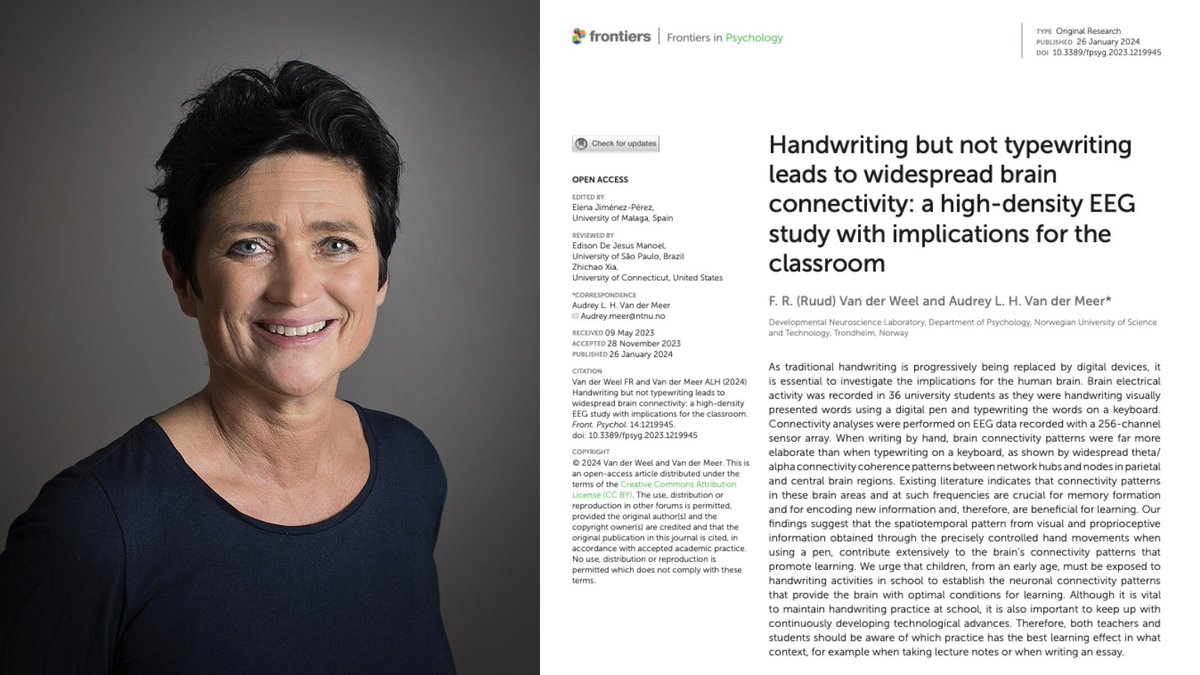
A Norwegian neuroscientist spent 20 years proving that the act of writing by hand changes the human brain in ways typing physically cannot, and almost nobody outside her field has read the paper. Her name is Audrey van der Meer. She runs a brain research lab in Trondheim, and the paper that closed the argument was published in 2024 in a journal called Frontiers in Psychology. The finding is brutal enough that it should have changed every classroom on Earth. The experiment was simple. She recruited 36 university students and put each one in a cap with 256 sensors pressed against their scalp to record brain activity. Words flashed on a screen one at a time. Sometimes the students wrote the word by hand on a touchscreen using a digital pen, and sometimes they typed the same word on a keyboard. Every neural response was recorded for the full five seconds the word stayed on screen. Then her team looked at the part of the data most researchers had ignored for years, which is how different parts of the brain were communicating with each other during the task. When the students wrote by hand, the brain lit up everywhere at once. The regions responsible for memory, sensory integration, and the encoding of new information were all firing together in a coordinated pattern that spread across the entire cortex. The whole network was awake and connected. When the same students typed the same word, that pattern collapsed almost completely. Most of the brain went quiet, and the connections between regions that had been alive seconds earlier were nowhere to be found on the EEG. Same word, same brain, same person, and two completely different neurological events. The reason turned out to be something nobody had really paid attention to before her work. Writing by hand is not one motion but a sequence of thousands of tiny micro-movements coordinated with your eyes in real time, where each letter is a different shape that requires the brain to solve a slightly different spatial problem. Your fingers, wrist, vision, and the parts of your brain that track position in space are all working together to produce one letter, then the next, then the next. Typing throws all of that away. Every key on a keyboard requires the exact same finger motion regardless of which letter you are pressing, which means the brain has almost nothing to integrate and almost no problem to solve. Van der Meer said it plainly in her interviews. Pressing the same key with the same finger over and over does not stimulate the brain in any meaningful way, and she pointed out something that should scare every parent who handed their kid an iPad. Children who learn to read and write on tablets often cannot tell letters like b and d apart, because they have never physically felt with their bodies what it takes to actually produce those letters on a page. A decade before her, two researchers at Princeton ran the same fight using a completely different method and ended up at the same answer. Pam Mueller and Daniel Oppenheimer tested 327 students across three experiments, where half took notes on laptops with the internet disabled and half took notes by hand, before testing everyone on what they actually understood from the lectures they had watched. The handwriting group won by a wide margin on every question that required real understanding rather than surface recall. The reason was hiding in the transcripts of what the two groups had actually written down. The laptop students typed almost word for word, capturing more total content but processing almost none of it as they went, while the handwriting students physically could not write fast enough to transcribe a lecture in real time, which forced them to listen carefully, decide what actually mattered, and put it in their own words on the page. That single act of choosing what to keep was the learning itself, and the keyboard had quietly skipped the choosing and skipped the learning along with it. Two studies. Two countries. Same answer. Handwriting makes the brain work. Typing lets it coast. Every note you have ever typed instead of written went into your brain through a thinner pipe. Every meeting, every book highlight, every idea you captured on your phone instead of on paper was processed at half depth. You did not forget those things because your memory is bad. You forgot them because typing never woke the part of the brain that would have made them stick. The fix is the thing your grandmother already knew. Pick up a pen. Write the thing down. The slower road is the faster one.
Ihtesham Ali tweet media
English
2.5K
44.7K
120.8K
10.2M
NChapa retweetledi
Kat ⊷ the Poet Engineer
Kat ⊷ the Poet Engineer@poetengineer__·
trying to use topological data analysis to map the shape of my x bookmarks through mapper + embedding extraction and generated 3 views: - density: where attention keeps gravitating - pca: the dominant axes of variation - centroid: center vs edge (typical -> outlier)
English
139
639
6.3K
769.5K
NChapa retweetledi
Baseball
Baseball@mlbelites_·
That one time when Justin Verlander got pissed and threw 102 in the eighth inning 😂🔥
English
12
95
4.1K
368.4K
NChapa retweetledi
Jared Carrabis
Jared Carrabis@Jared_Carrabis·
If MLB games were played with the same emotion and passion as WBC games, baseball would be the number one global sport in less than a decade.
English
761
1.1K
17.2K
574.8K
NChapa retweetledi
Adam Archuleta
Adam Archuleta@AdamArchuleta·
I first heard this 30 years ago at age 17, when my trainer Jay Schroeder DRILLED it into my soul. I still remember the day we met. He told me, “I don’t want you to squat 450 pounds in 3 seconds… I want you to squat 350 pounds in ½ second. THAT’S power.” To train with him, he forced me to write a daily training log that timed the concentric portion of EVERY rep, EVERY set, EVERY exercise with a stopwatch. I did this for 6 straight months before he allowed me to train at his gym. It took over an hour daily to write the log, but what I learned about my body and performance was invaluable. Training with this intent changes everything: to move max weights at high speed, EVERYTHING matters. Technique and position must be flawless, no power leaks. You learn to eccentrically LOAD, not just drop with gravity and momentum. My body awareness skyrocketed. Speed is king. Details and intention matter. I stopped caring about increasing my max and started caring about moving my max FASTER. It’s the primary reason I transformed myself from a walk-on who ran 4.8 to a first-round pick who ran 4.3.
Josh Bryant@joshstrength

Division 1 football players training in a compensatory acceleration style (CAT) upper body strength regimen were compared to a traditional regimen in their off-season. The CAT group was instructed to perform the positive rep as explosively as possible. The traditional group performed repetitions at a traditional tempo. At the end of both off-season training programs, both power and strength were assessed. Power was tested with a seated medicine ball throw and a force platform plyometric push-up test. Strength was assessed by a one rep max in the bench press. Both groups increased strength and power. The group that trained in a Compensatory Acceleration Training (CAT) style improved their bench press by nearly double the amount of the traditional group. Average power, as expected, increased significantly more in the group that trained explosively. Jones, K. K., Hunter, G. G., Fleisig, G. G., Escamilla, R. R., & Lemak, L. L. (1999). The effects of compensatory acceleration on upper-body strength and power in collegiate football players. Journal of Strength & Conditioning Research (Allen Press Publishing Services Inc.), 13(2), 99-105. Practical Application Fred Hatfield was ahead of his time advocating Compensatory Acceleration Training. It is simply superior! Training adaptations are not just a result of weight on the bar. Adaptations from training are a byproduct of tension and duration. You respond to how much force produced, how fast the force was produced, how long you produced it, and how many times you produced it. Force=mass x acceleration. More tension is result of greater bar speed. Maximal strength training and power adaptations can result from lifting weights with maximal force; one more reason to compensatorily accelerate weights.

English
46
147
2K
483.4K
NChapa retweetledi
FOX Deportes
FOX Deportes@FOXDeportes·
¡ARRANCA EL WORLD BASEBALL CLASSIC! ⚾🤩 No te pierdas desde el Tokyo Dome en Japón el juego entre China Taipéi y Australia en vivo por FOX Deportes. ¿Qué equipo es el favorito a llevarse todo en el #WBCenFOX? Disfruta la acción por nuestra pantalla.
Español
1
5
9
1.9K
NChapa retweetledi
Clara Bennett
Clara Bennett@CodeswithClara·
BREAKING: AI can now design like Apple-level creative directors (for free). Here are 10 Claude Opus 4.6 prompts that build complete design systems, brand guidelines & 47+ marketing assets in 6 hours: (Designers are already snapping this)
Clara Bennett tweet mediaClara Bennett tweet media
English
75
263
3K
536.1K
NChapa retweetledi
Ben South
Ben South@bnj·
We made a tool that lets you absorb the vibe of anything you point it at and apply it to your designs It's absurd and it just works Style Dropper, now available in @variantui
English
431
906
14.1K
3.4M
NChapa retweetledi
Jaeger Sports
Jaeger Sports@jaegersports·
If you are expected to be in great SHAPE when you return to school in January... and you aren't throwing AT LEAST 6 x a week now... you're kidding yourself. NOW is the time 4 your arm to be CYCLING into optimal shape so it isn't SHOCKED in January. PERIOD. #1Arm, #1Career
English
0
22
112
25.9K
NChapa retweetledi
Jerry Weinstein
Jerry Weinstein@JWonCATCHING·
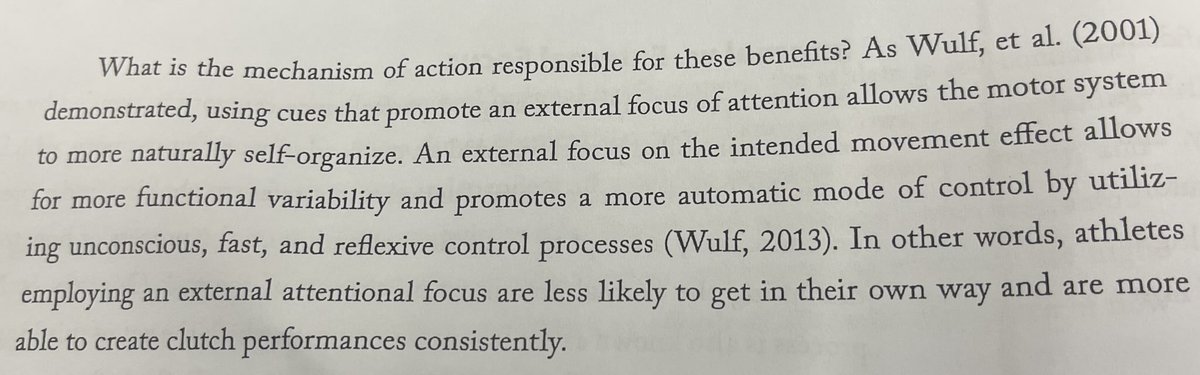
EXTERNAL FOCUS IN BASEBALL Whether you are a thrower or a hitter focusing on “ball flight” will give you your best performance return. In games we get what we focus on in practice. If we work primarily on body movements & mechanics, we will be less reactive & free in games.
Jerry Weinstein tweet media
English
2
12
87
14.1K
NChapa retweetledi
Boze Herrington, Library Owl 😴🧙‍♀️
Saw someone say, “Stop hoarding books, we don’t need paper books anyway” and I can’t express how misguided this is. Online libraries disappear, digital books can be altered, and with Big Tech seeking to destroy history and literacy, print media has never been more essential.
English
1.3K
26.9K
126.2K
1.5M
NChapa retweetledi
Steve (Builder.io)
Steve (Builder.io)@Steve8708·
cursor is now a figma-esque visual editor for your code
English
55
117
2.5K
421.7K
NChapa retweetledi
Jackson Sigman
Jackson Sigman@GetSiggyWithIt_·
Free Agent RHP Looking for an opportunity Began season in Atlantic League with Staten Island
Jackson Sigman tweet mediaJackson Sigman tweet media
English
1
8
29
4.4K
NChapa retweetledi
Andrew Hopper
Andrew Hopper@andrewhopper·
Anthropic quietly released one of the most powerful AI Agents yet. And it's hiding in plain sight. Claude 4 with MCPs can control your browser AND your desktop, working for hours like a human employee. Be prepared to have your mind blown... Here's how it works: 🧵
English
9
35
371
75.6K
Jackson Sigman
Jackson Sigman@GetSiggyWithIt_·
Rainy throwing sessions
English
2
1
23
3K
NChapa retweetledi
Thomas Bentley
Thomas Bentley@BentleY__ThomaS·
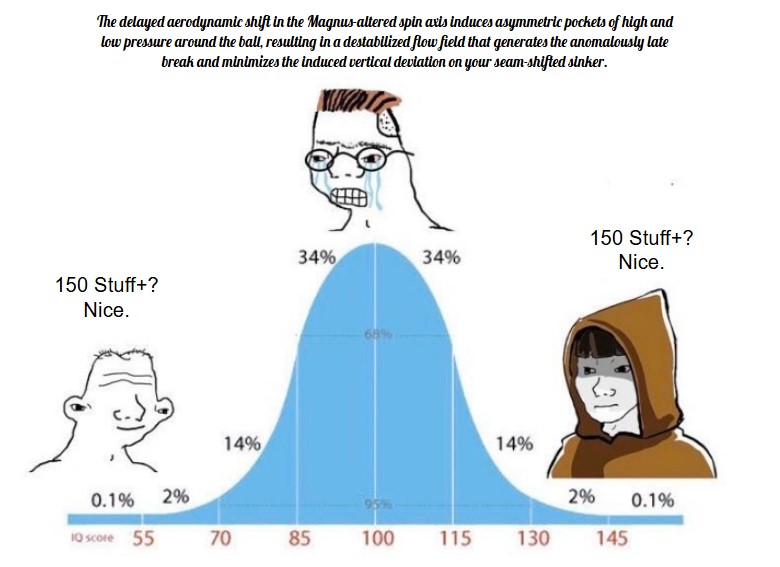
Those things are simply too important to overlook, and they matter far more than an 80-grade understanding of Location Run Values and Trackman pitch profiles (for an athlete).
Thomas Bentley tweet media
English
1
2
3
494
NChapa retweetledi
Luke Dziados
Luke Dziados@LDziados·
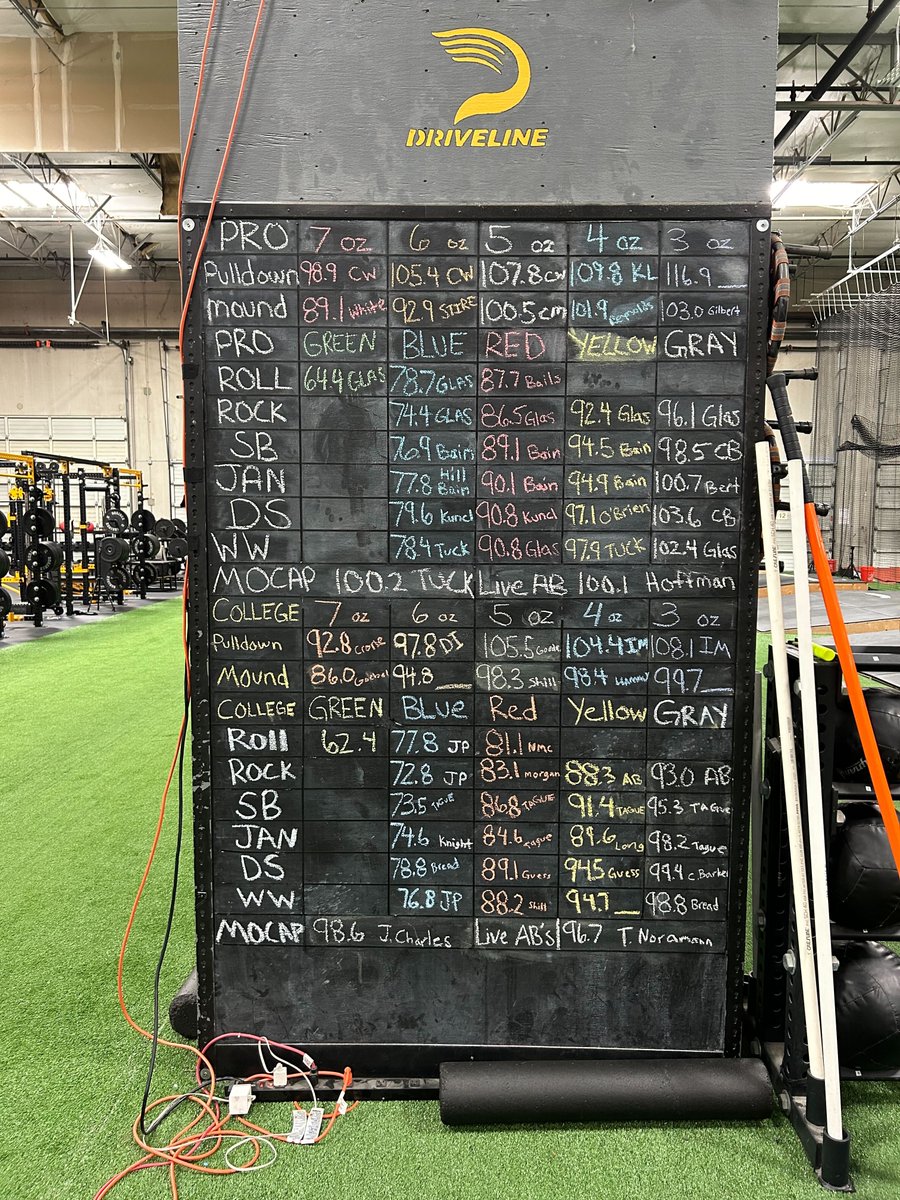
Every record is meant to be broken. Will you set the next one? @DrivelineBB
Luke Dziados tweet media
English
0
6
30
17.4K
NChapa retweetledi
Zac Bridger
Zac Bridger@BridgerBSB·
Building a resilient scapula is crucial for baseball players and athletes who perform constant overhead movements. Many programs focus too heavily on arm care without adequately addressing the need to challenge and mobilize the scapula in overhead positions. However, programming fluid overhead strength for an athlete is beneficial in multiple ways. Scapular strength and upward rotation are essential for achieving and maintaining ideal ranges of motion in Shoulder External Rotation, Abduction, and Horizontal Abduction, which are key components of throwing healthy gas. Incorporating exercises like loaded scapular rotations or presses challenges the scap to stabilize under resistance, strengthening important properties like the serratus anterior and other surrounding structures. These adaptations promote a more powerful engine and built-up capacity to handle larger workloads for overhead capacity.
English
0
2
6
1.6K