Doctor≠Provider

2.1K posts

Doctor≠Provider banner
Doctor≠Provider

Doctor≠Provider

@DontSayProvider

Dedicated to helping all Physicians fix this mess. And yes, I'm a real MD in private practice. My views are those shared by healers, not providers.

Doctors Lounge Katılım Eylül 2015
1.5K Takip Edilen1.4K Takipçiler
Doctor≠Provider retweetledi
Bradford Holland MD MBA FACS
Bradford Holland MD MBA FACS@DrBradHolland·
I endorse my friend Chip Roy for Texas Attorney General. @chiproytx He’s a cancer survivor and one of the most common sense congressman out there. His opponents have suggested physicians get bribes to give vaccines, and another sponsored the bill to let nonphysicians practice medicine. He’s smart, level-headed, and honest, and very hard-working. He’s a rare find but one which deserves our support. Don’t forget to vote! #txlege #TexasPrimary #TXGOP
Bradford Holland MD MBA FACS tweet media
English
2
7
41
3K
Doctor≠Provider retweetledi
Dutch Rojas
Dutch Rojas@DutchRojas·
Congress outlawed physician-owned hospitals in 2010. The American Hospital Association and the Federation of American Hospitals lobbied for it. CMS data shows 9 of the top 10 hospitals for quality, access, and cost are physician-owned. Charges are one-third lower than traditional hospitals for the same procedures. Congress banned the best model and now wonders why healthcare is expensive. And you’re wondering why your premiums are high? Kennedy and OZ could fix it tomorrow…
English
22
85
286
12.4K
Doctor≠Provider retweetledi
Adam Bruggeman, MD
Adam Bruggeman, MD@DrBruggeman·
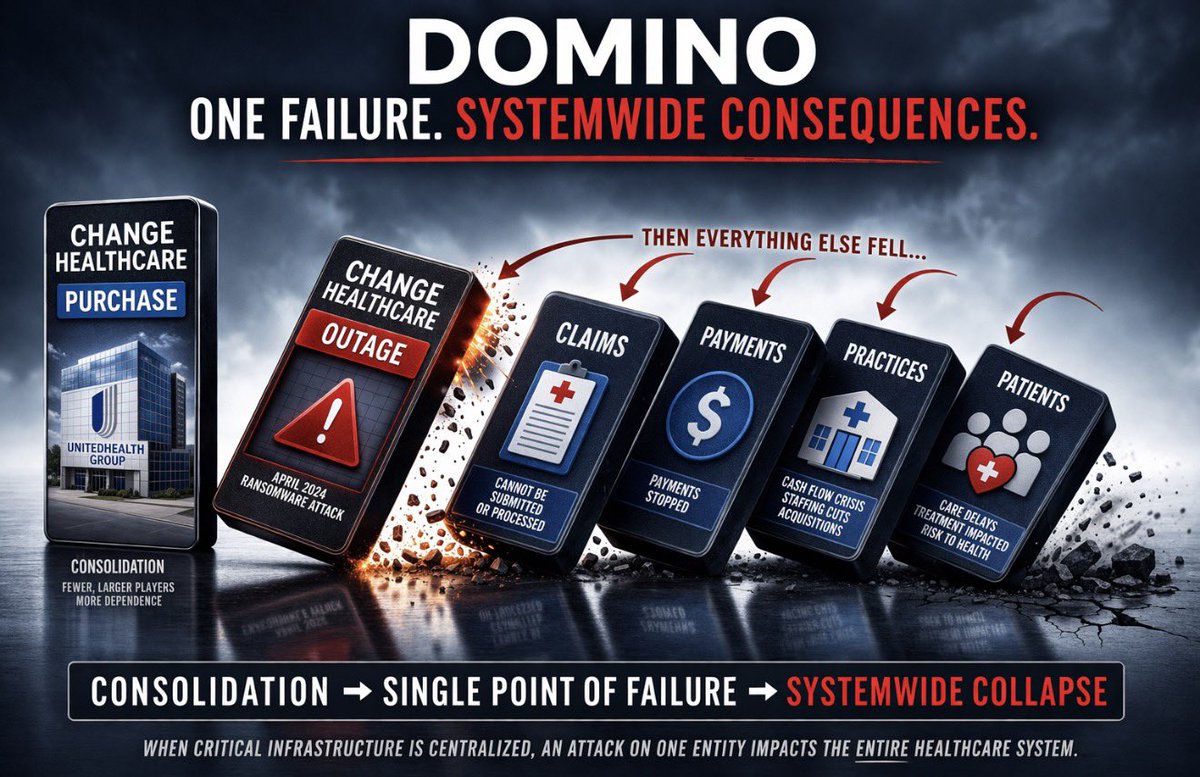
ACA-era policymakers argued that fragmentation was driving inefficiency, and that larger, integrated systems would coordinate care better and reduce unnecessary spending. For years, consolidation was sold as the cure providing better coordination, lower costs, and higher quality. More than a decade later, the empirical record shows consolidation reliably raises prices while quality improvements remain inconsistent or absent. It’s time to pull out the receipts and talk about the 8 ugly truths of consolidation. 1. Prices Rise Consistently and Predictably Increased hospital-physician financial integration is associated with higher commercial outpatient spending. In addition, hospital-physician integration changes coding intensity and spending patterns When hospitals merge, price increases range 3%–65%. Even when there are cross-market mergers with no direct local competition being brought together, the newly merged entities produce 12.9% higher prices six years later 2. Site-of-Service Shifts Inflate Costs Office visits billed in hospital-owned settings are 100+% more expensive than identical services in independent offices. 3. Patients Pay More Out-of-Pocket Higher negotiated prices and facility fees translate into increased deductibles and coinsurance, higher employer premiums, and greater patient cost-sharing in hospital-owned settings. 4. Referral Steering After Acquisition After vertical integration, physicians increase referrals to hospital-owned facilities by 6–10 percentage points, even when lower-cost alternatives exist. 5. Insurance Market Concentration Drives Higher Prices Physician and hospital consolidation is only part of the equation. In many states, the top two insurers control 60–80% of the commercial market. Higher insurer concentration is associated with higher premiums in employer-sponsored insurance markets. 6. Quality: Where Are the Gains? If higher prices were buying better outcomes, we would expect consistent improvements in national metrics but yet we don’t see them. GAO: “No consistent change” in most quality measures after consolidation. KFF (70+ study review): No reliable improvement in mortality, readmissions, or patient safety. 7. Access & Service Line Effects Mergers do not consistently prevent hospital closures. Even if they ultimately keep every hospital open, some merged systems reduce service lines, particularly less profitable lines like labor & delivery and behavioral health. High-concentration markets show reduced entry of new physician practices and ASCs typically through regulatory pathways like Certificate of Need laws. 8. Labor Market Effects Ironically, consolidation raises prices to payers while reducing pay to those providing the care. The Pattern Across vertical integration, horizontal mergers, and insurance concentration, the findings are remarkably consistent: Prices go up Out-of-pocket costs go up Referral steering goes to corporately controlled entities Market entry becomes more difficult Quality is flat to declining If consolidation were delivering transformative improvements in care, we would see it clearly by now. The evidence instead shows a transfer of negotiating leverage and ultimately dollars. @IndeMedAction
Adam Bruggeman, MD tweet media
English
6
15
30
1.9K
Doctor≠Provider
Doctor≠Provider@DontSayProvider·
A new ethics policy paper from the undefined American College of Physicians (ACP) argues that referring to physicians as “providers” undermines the ethical foundation of the patient‑physician relationship. Read the paper here: bit.ly/4tjIEQu
English
0
1
1
55
Doctor≠Provider retweetledi
Bradford Holland MD MBA FACS
Bradford Holland MD MBA FACS@DrBradHolland·
Had a wonderful evening with the Burnet, Lampasas, Llano County Medical Society in Marble Falls, TX on Jan 22. County President Dr. Kelly Green was so gracious and always sets such an excellent example of what being active in organized medicine should look like. #texmed #txlege #medstudent #surgeon @texmed
English
0
2
9
539
Doctor≠Provider retweetledi
Heath Veuleman
Heath Veuleman@HeathVeuleman·
Does a chef who owns a restaurant have a “conflict of interest”? Does an electrician who owns an electrical company have a “conflict of interest”? Of course not. We call that expertise plus accountability. But in healthcare, we’ve let the least clinically literate people in the ecosystem - politicians, lawyers, bureaucrats, consultants - redefine “conflict of interest” into a weaponized buzzword. They’ve made millions off a term that means absolutely nothing in the real world of patient care. Here’s the truth: The most important thing you want your physician to have is interest. Interest in your outcome. Interest in your continuity of care. Interest in the long-term relationship. A “conflict” is impossible when the physician’s incentives are aligned with the patient’s well-being. The entire conflict-of-interest narrative in medicine is a contrivance, total artifice - manufactured by people who profit from keeping physicians powerless and patients confused. If a doctor owning their production is a conflict of interest, then so is a pilot owning an airline, a lawyer owning a law firm, a farmer owning land, or a realtor owning a realty. Never cede competence to “conflict.” Stop the madness! Resuscitate the physician-patient relationship!
Ge Bai@GeBaiDC

"We've treated physician ownership as uniquely dangerous while largely ignoring the same incentives inside larger, more opaque corporate structures." —Dr. Ashish Vankara @ashishvankara "Profit motive exists for every player in the space. When you remove players, you just drive further power imbalance..." —Dr. Umbereen S. Nehal @usnehal 🧵1/5

English
27
101
388
29.1K
Doctor≠Provider retweetledi
Sharisse Stephenson
Sharisse Stephenson@drsharisse·
We eliminated independent physicians, banned physician-owned hospitals, and forced doctors into giant health systems. Costs exploded. Access collapsed. Outcomes worsened. The ONLY winners were the hospital monopolies — and the data proves it.
Heath Veuleman@HeathVeuleman

Does a chef who owns a restaurant have a “conflict of interest”? Does an electrician who owns an electrical company have a “conflict of interest”? Of course not. We call that expertise plus accountability. But in healthcare, we’ve let the least clinically literate people in the ecosystem - politicians, lawyers, bureaucrats, consultants - redefine “conflict of interest” into a weaponized buzzword. They’ve made millions off a term that means absolutely nothing in the real world of patient care. Here’s the truth: The most important thing you want your physician to have is interest. Interest in your outcome. Interest in your continuity of care. Interest in the long-term relationship. A “conflict” is impossible when the physician’s incentives are aligned with the patient’s well-being. The entire conflict-of-interest narrative in medicine is a contrivance, total artifice - manufactured by people who profit from keeping physicians powerless and patients confused. If a doctor owning their production is a conflict of interest, then so is a pilot owning an airline, a lawyer owning a law firm, a farmer owning land, or a realtor owning a realty. Never cede competence to “conflict.” Stop the madness! Resuscitate the physician-patient relationship!

English
12
45
218
8.4K
Doctor≠Provider retweetledi
Dutch Rojas
Dutch Rojas@DutchRojas·
Dear America: You may not know this, but in half of the U.S. states, you need gubernatorial approval to build a new ambulatory surgery center, open a radiology clinic, or expand a hospital wing. Not based on quality or price, but on whether existing hospitals think you’re necessary. Let that sink in. If Delta had to approve JetBlue’s flight plan, you’d still be flying Spirit. Welcome to the Certificate of Need (CON) law, a charming bit of regulatory gatekeeping in which health systems have a say in who can compete with them. It’s the healthcare equivalent of asking Blockbuster if Netflix should be legal. CON laws were invented in the 1970s under the belief that competition in healthcare might lead to duplication of services and unnecessary spending. It’s like saying: “If we let more chefs into the kitchen, people will overeat.” In the real world, competition doesn’t lead to gluttony. It leads to lower prices, better quality, and faster innovation. You know, that thing we like to call capitalism. So Who Wins With CON Laws? • Big academic health systems that don’t want competition and enjoy living on tax payer subsidies. • Insurance companies that prefer negotiating with one dominant supplier instead of hundreds of independent practices • Lobbyists who keep the protection racket going Who loses? • You • Your premiums • Every physician who wants to serve you at a better price You pay more for scans, surgeries, and hospital stays, not because they cost more, but because CON laws eliminate anyone who could deliver them better and cheaper. Welcome to Cartelcare! Supporters of CON say it protects rural hospitals. Spoiler alert: It doesn’t. States with CON laws have fewer rural hospitals, fewer ASCs, and worse access to care. But you know what they do have more of? Healthcare monopolies. And insurance premiums are 20–25% higher than in states without CON laws, not because of better outcomes, but simply because there’s no pressure to lower prices when there’s no one else in town. If You Want Lower Insurance Premiums Tomorrow. Don’t wait for a miracle drug. Don’t wait for Congress. REPEAL Certificate of Need. Let physicians open their own surgical centers. Let radiologists buy their own MRI machines. Let Americans choose their care the same way they select their coffee, based on price, convenience, and quality. If you can buy a $100k Tesla with the tap of a button, you ought to be able to get an X-ray without asking a governor, Blue Cross, and the local health system for permission. Repealing CON isn’t about cutting corners, it’s about cutting out the people who’ve built corners that trap you. The only people who benefit from a rigged game are the ones who wrote the rules. And in healthcare, they’ve been writing the rules for 50 years. Signed, Someone who believes healthcare is too essential to be run by middlemen, monopolies, or mediocre lobbyists. -Rojas out
Dutch Rojas tweet media
English
22
100
356
15.4K
Doctor≠Provider retweetledi
Adam Bruggeman, MD
Adam Bruggeman, MD@DrBruggeman·
Got a good chuckle this morning. @statnews wrote an article that the AI doctors are using to help them document and spend less “pajama time” doing work will likely increase premiums, staking corporate interests and patients against physicians. And why would this happen? Because doctors will be able to accurately code their visits to the maximum allowed. Coding and billing is incredibly complicated. As a result many doctors will be “conservative” and undercode their visits, leaving money on the table. This furthers the consolidation push as doctors look to outside, vertically integrated entities to fill in the gaps. Let’s stop chastising doctors for finally standing up and ensuring they are being paid appropriately. Let’s stop making them feel bad for finding tools to allow them to spend more time with their families. Let’s fight together against intrusive regulatory requirements that have led to administrative bloat and have cost the healthcare system far more money than any efficiencies gained by AI coding and scribing. I hope every doctor is paid what they deserve. I hope they spend less time at home charting. These are good things because it means they spend more time doing what they are trained to do - take care of patients. statnews.com/2025/08/20/ai-…
Adam Bruggeman, MD tweet media
English
4
9
25
1.3K
Doctor≠Provider retweetledi
Dan Choi, MD, FAAOS
Dan Choi, MD, FAAOS@drdanchoi·
Many thanks to the “Affordable” Care Act that destroyed competition in healthcare resulting in higher prices for all Bring back private practice Bring back physician owned hospitals Bring back fair competition Bring back the free market in US healthcare
Collin Rugg@CollinRugg

Mother left with a ~$70,000 bill for a 15-minute trip to the emergency room for her 6-month-old son. Absolutely insane. CA woman Jessica Farwell says she was forced by doctors to put her son in a helicopter, which ended up costing $90,000. The insanity doesn't end there. After the 15-minute helicopter ride, which was deemed necessary by the doctors because the hospital Farwell went to didn't have a burn unit, she was forced to put her son in an ambulance to get him from the helipad to the hospital. This was a 0.3-mile ride that they charged $10,200 for. The son, Brody, was treated with second-degree burns and was discharged the next day. The entire ordeal came to over $100,000. "You look at the bills, and it's absolutely enraging. We got hit for a $600 waiting fee... there's a fee for it being a nighttime service... there's just every single fee you can think of!" the mother said to ABC 7. Farwell said she was promised by doctors that her insurance would cover the costs. They didn't initially. At first, her insurance wouldn't even cover half of the bill, meaning she would owe nearly $70,000. "I've called the hospital, ambulance company, my insurance numerous times. It's been three years and then they wouldn't listen to me or talk to me. They just kept giving me the runaround..." she said. It wasn't until Farwell went public with ABC 7 that the insurance company finally gave in and waived the fees. Video: ABC 7.

English
69
513
1.9K
49.5K
Doctor≠Provider retweetledi
Adam Bruggeman, MD
Adam Bruggeman, MD@DrBruggeman·
17% Spoke today at the South Carolina Orthopaedic Association meetings on the myriad of new headwinds facing independent and employed physician practices. Most alarming was that the estimated percentage of Orthopedic surgeons in private practice in the state is down to the high teens (17% was estimated). Why? All of them pointed to two things: 1) declining reimbursement from both federal payers and private insurance 2) massively increasing overhead I’ll keep ringing the warning bells, I just hope people are listening. The canary is dead in the coal mine. It’s time to wake up to reality. We absolutely must create reform in our healthcare system and save independent practice to ensure access and quality care. The situation is dire.
Adam Bruggeman, MD tweet media
English
54
132
519
39.4K
Doctor≠Provider retweetledi
Ed Gaines
Ed Gaines@EdGainesIII·
Well said Dutch and the analysis is very good. The plans will not sit idly by and watch their execs stock options go deeper under water. Physicians and hospitals must be prepared for them potentially doubling down in advocacy & AI generated denials and downcoding.
Dutch Rojas@DutchRojas

1/ BREAKING: The Medicaid-insurer model is collapsing in real time. Centene: down 61% Molina: down 55% Humana: lost $300/share UnitedHealth: down 46% YTD and under federal investigation This isn’t just a sell-off. It’s the end of the myth. 🧵 Let’s go.

English
4
7
33
2.6K
Doctor≠Provider retweetledi
Dutch Rojas
Dutch Rojas@DutchRojas·
1/ BREAKING: The Medicaid-insurer model is collapsing in real time. Centene: down 61% Molina: down 55% Humana: lost $300/share UnitedHealth: down 46% YTD and under federal investigation This isn’t just a sell-off. It’s the end of the myth. 🧵 Let’s go.
Dutch Rojas tweet media
English
103
301
1.4K
229.1K
Doctor≠Provider retweetledi