Kate Roberts MD

2.5K posts

Kate Roberts MD banner
Kate Roberts MD

Kate Roberts MD

@DrKateEndocrine

Patient Centered Endocrinologist. My opinions are my own.

Williamsburg, VA Katılım Ekim 2020
530 Takip Edilen438 Takipçiler
Kate Roberts MD retweetledi

Massimo
Massimo@Rainmaker1973·
Outdated CPR training is putting women’s lives at risk. Women who suffer cardiac arrest outside hospital are significantly less likely to survive than men, and one overlooked reason is that CPR training almost never accounts for female anatomy. A Duke University analysis across 47 U.S. states found women are 14% less likely to receive bystander CPR. In the UK, the gap is similar: only 68% of women get CPR from bystanders compared to 73% of men, with many people citing fear of inappropriate touching or concern about injuring a woman’s chest. The problem is compounded by the tools we train on. A global survey revealed that roughly 95% of CPR manikins are designed with flat chests; only one widely available model includes visible breasts. As a result, most trainees never practice the slight technique adjustments needed for women and often hesitate in real emergencies. Research published in the Journal of Emergency Medical Services offers hope: when trainees used manikins equipped with realistic silicone breasts, they were almost twice as likely to feel confident performing chest compressions on a woman. Experts say updating training manikins to represent both male and female anatomy could eliminate hesitation, close the gender survival gap, and save thousands of lives.
Massimo tweet media
English
35
82
326
45.8K
Kate Roberts MD retweetledi
Sama Hoole
Sama Hoole@SamaHoole·
Bone broth was free with the meat. They sold you collagen sachets. Liver was cheap. They sold you a multivitamin. The yolk came with the egg. They sold you a choline supplement. Fermentation was free. They sold you probiotic capsules. Tallow was cheap. They sold you a seventeen-step skincare routine. Sunlight was free. They sold you vitamin D capsules. Walking was free. They sold you a step counter. Sleep was free. They sold you melatonin and an app. Silence was free. They sold you a meditation subscription. Cold water was free. They sold you a plunge barrel. Salt was cheap. They sold you electrolyte powder. Your great-grandmother had none of the products. She had none of the deficiencies the products are correcting. The deficiencies arrived with the products. The products arrived after the advice removed what she had.
English
24
636
2.3K
28K
Kate Roberts MD retweetledi
Kimiyah 💋
Kimiyah 💋@boujiebaddie·
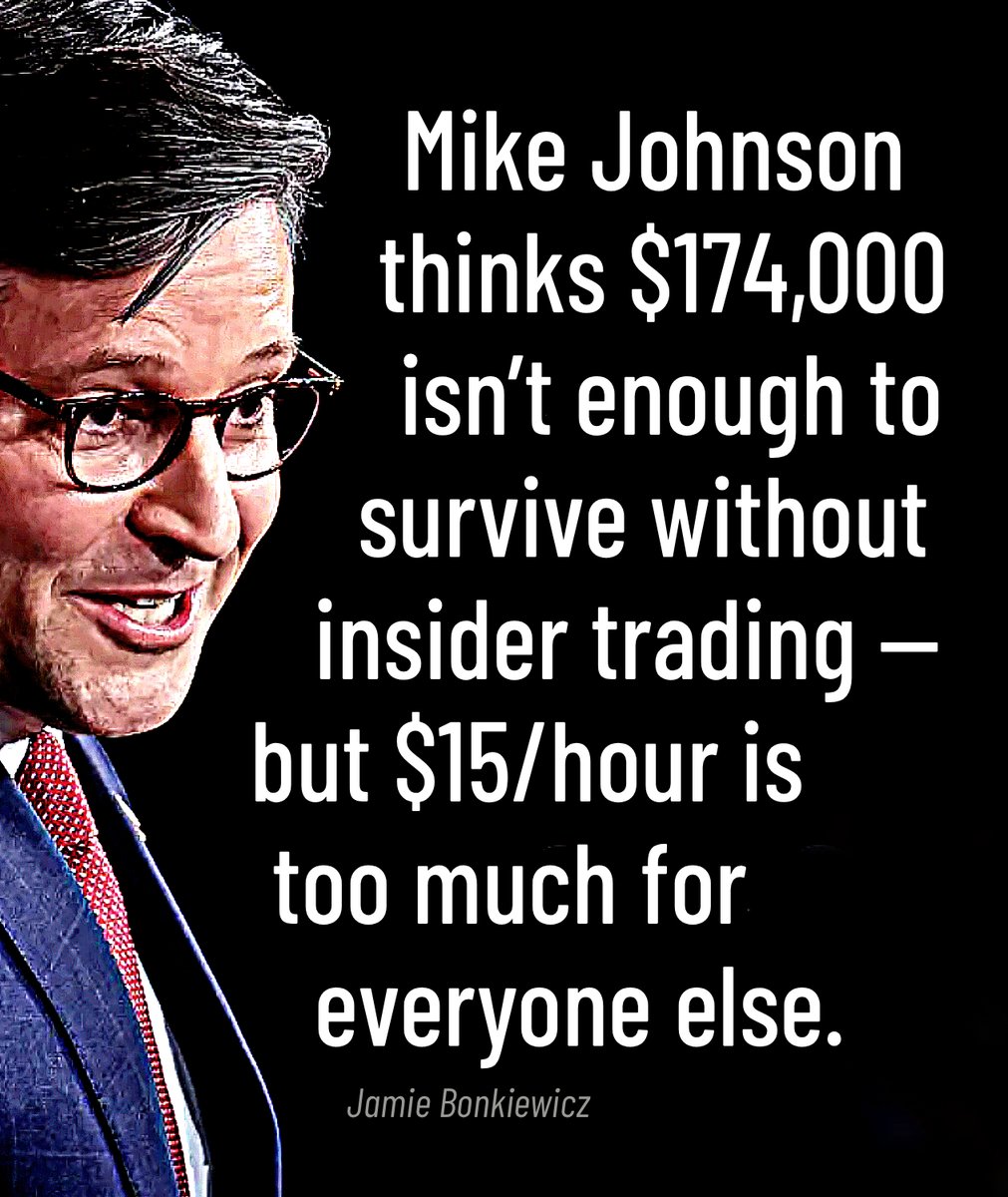
THE WEALTHY PLEAD POVERTY: Mike Johnson says we should have sympathy because Congress isn’t paid enough...so we should “allow” insider trading just so they can take care of their families. I don't think he understands that 70% of Americans could not afford a $1k emergency. Nearly 50% would be hard-pressed to afford a $500 emergency. We're that close to the bone. Spare us your "poverty" talk...you have NO IDEA!
Kimiyah 💋 tweet media
English
196
420
938
9.3K
Kate Roberts MD retweetledi
James Tate
James Tate@JamesTate121·
The more you know.
James Tate tweet media
English
59
1.7K
2.9K
21.4K
Kate Roberts MD retweetledi
Dutch Rojas
Dutch Rojas@DutchRojas·
In 1720, the British Parliament passed the Bubble Act, ostensibly to protect investors from fraudulent stock schemes. In reality, it was written by the directors of the South Sea Company to eliminate their competitors. American healthcare regulation follows the same pattern. Certificate-of-need laws don't protect communities. They protect incumbent hospitals from competition. Scope-of-practice restrictions don't protect patients. They protect physician staffing models from substitution. COPA agreements don't ensure fair pricing. They give merged monopolies regulatory cover. Every one of these regulations has a named author, a named beneficiary, and a traceable lobbying expenditure. The capture is not hidden. It's documented in SEC filings, lobbying disclosures, and Congressional testimony. The problem isn't that we don't know. The problem is that knowing doesn't seem to matter.
English
4
15
77
10.3K
Kate Roberts MD retweetledi
Anthony DiGiorgio, DO, MHA
@Henry_White1996 I implore you to learn about second order effects
Anthony DiGiorgio, DO, MHA@DrDiGiorgio

This is a terrible idea. Free primary care for all sounds great until you remember that free never means free. It means the bill moves from the exam room to taxes and new bureaucracy hired to ration what politicians just promised was unlimited. If car insurance covered tires at zero cost, demand would explode. People who truly needed tires would wait behind people getting upgrades because why not, it is free. Then the government would demand forms, approvals, documentation, denials, appeals, and entire departments to manage the mess. More primary care visits do not automatically mean better health just as free tires don’t reduce car accidents. More spending does not automatically mean better care. And making primary care “free” does not make doctors, nurses, clinic space, time, or judgment magically materialize out of the ether. It just removes price signals, politicizes what counts as essential, invites every interest group to lobby for inclusion, and leaves patients and physicians trapped under another layer of central planning. If you want universal access for primary care, which I do, then just people the money. Primary care visits are cheap and the median American will spend less on those than on food. We have food stamps for the latter, so let’s make a type of food stamps for healthcare. Let patients and doctors decide what care is actually worth it for that individual instead of creating yet another government promise that doesn’t work out.

English
1
2
42
1.3K
Kate Roberts MD retweetledi
Dr. Catharine Young
Dr. Catharine Young@DrCatharineY·
American science is at extraordinary risk. NIH has awarded less than half as many grants as it has compared to the past five fiscal years averaged together. 'I thought we were at rock bottom', the official said. 'We are below rock bottom now.'"
Dr. Catharine Young tweet media
English
26
215
484
103.5K
Kate Roberts MD retweetledi
Adam
Adam@adamemedia1·
“WE NEED TO LET THEM DO INSIDER TRADING TO FEED THEIR FAMILIES” That was the actual argument just made in defense of politicians trading stocks. Members of Congress make $174,000 a year. The median American income is roughly $63,000. (3x less) Meanwhile the federal minimum wage is $7.25 an hour… also unchanged since 2009. And you’re seriously being told politicians need access to insider trading to survive. The system is designed to lead earth to neo-feudalism. And it’s becoming more brazen by the year. Asset ownership consolidates upward. Living standards decline downward. The middle class gets squeezed from both ends and disappears while the elite class accumulates more wealth, more influence, and more protection. Leaving behind a permanent underclass. And a permanent political-financial aristocracy at the top…
English
2.6K
11.4K
25.1K
529.2K
Kate Roberts MD retweetledi
Kevin Pho, M.D.
Kevin Pho, M.D.@kevinmd·
60 percent of maternal deaths happen after a woman gives birth. The U.S. system sends mothers home from delivery and schedules the next appointment six weeks later. In those six weeks, a mother manages a healing body, a newborn, often a household, often other children, often a partner, almost always alone. She is told to call if she has a bad headache, blurry vision, or abdominal pain. She does not call. She assumes it is sleep deprivation, normal recovery, the price of having a baby. Dr. Phindile Chowa, an emergency medicine physician who runs a concierge practice in Atlanta focused on the fourth trimester, has been called to homes for a clogged duct or a routine C-section check and walked out the door with the patient en route to labor and delivery for postpartum preeclampsia. At least two or three mothers, by her count, who would have gone to bed that night and not woken up. France sends nurses to the house. Pelvic floor therapists. Lactation workers. Mothers are wrapped in a team for the entire fourth trimester. Here, mothers are handed a discharge sheet and a six-week follow-up slip. The fix is not exotic. It is integration: OBGYNs, midwives, doulas, lactation specialists, pelvic floor therapists, nurses, and community workers operating as one alliance, with home blood pressure checks, mental health screening that comes with an actual list of resources, and earlier follow-up for high-risk patients. Two design moves carry the model. Every team member is trained to screen outside their discipline, the lactation consultant who also checks a blood pressure and a mood screen. And every positive screen comes with an actual list of names, not a sentence telling the patient to find resources on her own. Dr. Chowa is candid about why this is personal. She scored as depressed on her own postpartum screen and was sent home with no referrals. A neighbor knocked on her door and told her what she needed. That is the maternal mortality system in the United States right now. The six-week appointment is the architecture of the problem. Treat the gap, and you treat the deaths. Listen to the full conversation on The Podcast by KevinMD. Link in the replies. What is the single change to fourth-trimester care that would have moved the needle most for the postpartum patients in your practice? #MaternalHealth #ThePodcastbyKevinMD
Kevin Pho, M.D. tweet media
English
2
5
8
719
Kate Roberts MD retweetledi
William Beckman
William Beckman@BillsPills·
340B is unacceptably awful. It allows, if not promotes fruad by cloaking medical monopoly in fake "not-for-profit" virtue. End 340B now.
Conservative War Machine@WarMachineRR

.@GerriWillisFBN reports on the tremendous fraud, waste, and abuse in the federal 340B woke hospital program: “…morphed into a windfall for hospitals and outpatient clinics, leaving behind those who can least afford it. The 340B program is almost unrecognizable from the safety net authorized by Congress in 1992 — just 50 hospitals were enrolled initially, but now over 55,000 hospitals and outpatient clinics operate under its provisions.”

English
0
1
1
45
Kate Roberts MD retweetledi
Adam Bruggeman, MD
Adam Bruggeman, MD@DrBruggeman·
Congress Created This Imbalance. Congress Has to Fix It. Every federal court that ruled in April 2026 delivered the same closing instruction to both sides: the remedy is Congress. Three courts said it to insurers trying to undo IDR outcomes. The Fifth Circuit said it to physicians trying to enforce them. The regulatory agencies operating in between have contested authority, limited enforcement history against large insurers on this specific issue, and no statutory mandate that would survive a determined legal challenge. Indiana and Iowa have demonstrated what legislative will looks like when applied to the right problems. Congress needs to act at the federal level before the insurer lobby writes the next chapter. What Indiana and Iowa did, and why it matters Indiana’s Senate Enrolled Act 189, authored by Sen. Scott Baldwin and signed in March 2026, made Indiana the first state in the nation to prohibit insurers from imposing financial penalties, reimbursement reductions, or administrative fees on hospitals and facilities when care involves an out-of-network provider. The bill targeted Elevance’s Facility Administrative Policy: a 10 percent across-the-board reimbursement cut on any hospital or outpatient facility where an out-of-network clinician participated in patient care. Elevance controls 68 percent of Indiana’s commercial insurance market. Without SEA 189, ten states remain subject to the same policy: Colorado, Connecticut, Georgia, Kentucky, Maine, Missouri, Nevada, New Hampshire, Ohio, and Wisconsin. The No Surprises Act already protects patients from surprise bills. This policy did not protect patients. It used patients and hospitals as leverage to force independent physicians into contracts they would not otherwise accept. Iowa’s House File 2635, which passed both chambers in 2026, enacted Iowa Code Section 514F.8D. A health carrier is prohibited from imposing any financial penalty, reimbursement reduction, or administrative fee, or terminating a provider from its network, based on that provider’s referral to or affiliation with an out-of-network provider. The statute also prohibits insurers from attempting to enforce a contract amendment without providing the provider an opportunity to negotiate. That last provision addresses the mechanism Elevance actually used: the policy was delivered as a contract amendment that hospitals had limited practical ability to resist given Elevance’s market position. Iowa’s statute closes both the penalty and the process used to impose it. What Congress must do The April 2026 rulings removed the insurer litigation weapon. They did not restore the physician enforcement right. Three things must follow from Congress. First, close the judicial enforcement gap on IDR award payment. IDR awards are binding in statute and unenforceable in practice in most circuits. The Federal Arbitration Act provides a confirmation mechanism for commercial arbitration awards that allows parties to seek judicial enforcement in district court. Congress chose not to incorporate that mechanism into the NSA. That omission has become an insurer asset. Congress must correct it by name, or create an equivalent statutory enforcement mechanism that does not depend on contested regulatory interpretation. Second, give the regulatory agencies explicit, unambiguous authority to impose significant civil monetary penalties on insurers for non-payment and late payment of IDR awards. There is genuine legal disagreement about what HHS, Labor, and Treasury can actually do to an insurer that ignores a binding IDR determination. That ambiguity is not neutral. It benefits the party with resources to litigate the question. Congress must resolve it by statute: defined per-violation penalties, mandatory response timelines for agency action, automatic interest on late payments, and enforcement authority that does not depend on interpretive latitude a future administration may choose not to exercise. Third, correct the penalty asymmetry explicitly and by name. Congress built a system where physicians face documented consequences for non-compliance, including ineligible filings and false attestations, and insurers face no comparable consequences for the equivalent offense on their side, which is not paying what an independent arbitrator determined they owe. The compliance risk sits with the weaker party. The payment discretion sits with the stronger one. That is the opposite of how an enforcement framework functions, and it is not defensible on the policy rationale that produced the NSA in the first place, which was protecting patients from a power imbalance between individuals and large institutions. The April rulings confirmed that the NSA’s dispute resolution structure is sound. What they also confirmed, read alongside the Fifth Circuit and the enforcement case record, is that the resolution means nothing if the payment side has no enforcement. Congress designed the dispute half of the system. It did not design the collection half. Indiana and Iowa understood that problem and acted on it for their states. The federal version of that problem is larger, and only one institution can fix it. The insurer lobby will arrive at Congress with proposals that would achieve through statute what they could not achieve in two federal courtrooms in the same week. Those proposals will include offer caps, volume limits, expanded judicial review, and new eligibility screening requirements. They are an attempt to win legislatively a case the courts already decided and a framework that Congress already rejected
Adam Bruggeman, MD tweet media
English
0
3
6
260
Kate Roberts MD retweetledi
Dutch Rojas
Dutch Rojas@DutchRojas·
@SenatorHick Millions of Americans are burdened by medical debt because you refuse to walk down to HHS. You are lucky Americans don’t know how healthcare works so you can keep pretending you want to help.
English
4
6
73
637
Kate Roberts MD retweetledi
Real Doc Speaks
Real Doc Speaks@realdocspeaks·
Insurance networks can shape where patients go and which doctors they’re allowed to see. Some believe healthcare works best when the relationship is directly between the doctor and the patient. This video is for educational purposes only and is NOT medical advice. #Healthcare #HealthPolicy
English
6
4
16
1.1K
Kate Roberts MD retweetledi
Massimo
Massimo@Rainmaker1973·
In a major medical breakthrough, South Korean scientists have successfully implanted the world’s first 3D-printed windpipe made entirely from a patient’s own cells. The groundbreaking procedure was performed on a woman who had lost part of her trachea after thyroid cancer surgery. Using advanced bioprinting technology, researchers created a personalized windpipe by combining the patient’s own living cells with a biodegradable scaffold. Because the implant was made from her own biological material, her body recognized it as natural tissue. This resulted in zero rejection and eliminated the need for lifelong immune-suppressing drugs — a common requirement in traditional organ transplants. The successful integration marks a significant step forward in regenerative medicine and personalized organ replacement.
Massimo tweet media
English
76
1K
2.7K
69.5K
Kate Roberts MD
Kate Roberts MD@DrKateEndocrine·
🔥🔥🔥🔥🔥🔥🔥🔥🔥🔥🔥🔥
Dr Terry Simpson@drterrysimpson

And of course the moment a physician points out the importance of training, evidence, and clinical experience, the response becomes: “There you go playing the credential card.” No — the credential is not the argument. The training is what allowed the argument to survive contact with reality. If your bridge collapses, you want an engineer. If your plane engine fails, you want a trained pilot. If your child develops meningitis at 2 a.m., you suddenly become very interested in credentials, residency training, board certification, and whether the person treating them has managed this before. Medicine is not a podcast opinion circle or a wellness influencer convention. It is a profession built around reducing the odds that human arrogance kills patients. Credentials are not proof someone is always right. Medicine evolves precisely because physicians challenge old ideas constantly. But the reason clinical training matters is because it teaches you how often intuition, anecdotes, and certainty are spectacularly wrong. The strange modern belief is that decades of clinical experience are somehow less valuable than a confident person with a ring light, a supplement affiliate link, and a persecution complex about “the establishment.” Curiosity matters. Skepticism matters. But at some point reality keeps score. Not getting the concentrated medical experience is a severe lack in the education of any physician.

ART
0
0
0
29
Kate Roberts MD retweetledi
salaryDr
salaryDr@SalaryDr·
Hot take: Private equity didn't enter medicine to fix it. They entered because physicians are bad negotiators sitting on cashflow goldmines. Until docs collectively learn to read a P&L, the rollups continue.
English
24
27
278
23.9K