Michael Levin

9.8K posts

Michael Levin banner
Michael Levin

Michael Levin

@drmichaellevin

Scientist at Tufts University; my lab studies anatomical and behavioral decision-making at multiple scales of biological, artificial, and hybrid systems.

Katılım Mayıs 2013
2.9K Takip Edilen76.2K Takipçiler
Sabitlenmiş Tweet
Michael Levin
Michael Levin@drmichaellevin·
Wordpress site is up - thoughtforms.life. Register to be notified of book progress, specific events, news, and new posts with photography, essays, interviews, & more. Unlike at drmichaellevin.org, here I will post ideas not fully baked yet, & academic-adjacent content.
Michael Levin tweet media
English
124
180
1.4K
299.5K
Michael Levin
Michael Levin@drmichaellevin·
@SurrealBlend That’s what the instructions say now but I think it should be reusable as long as the battery holds.
English
0
0
2
99
Michael Caporale
Michael Caporale@SurrealBlend·
@drmichaellevin Pretty cool, I would definitely try it. Is it intended to be single use (like one 24h cycle)?
English
1
0
1
241
Michael Levin
Michael Levin@drmichaellevin·
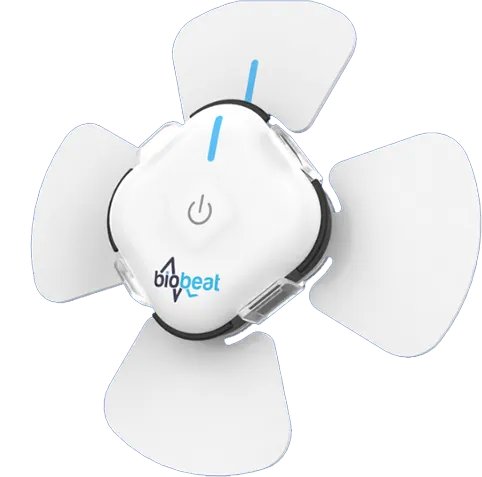
check this out - interesting new device: Biobeat bio-beat.com Non-invasive system for measuring blood pressure over a 24 hour period. Much more convenient than a cuff or arterial catheter line, and lots of useful information relative to activities during the day. They have FDA clearance with validation (testing shows +/- <5 mm/Hg difference compared to cuff or a-line). I tested it myself for 24 hours - very cool system, works well! Couple of published studies: nature.com/articles/s4137… frontiersin.org/journals/physi… (just an early user and fan of new biometric tech, not working for or paid by the company)
Michael Levin tweet media
English
18
28
297
22.9K
Michael Levin
Michael Levin@drmichaellevin·
@MicahZoltu I don’t know; you can email the company but I’m hoping it will be available readily. I guess that’s up to the regulatory bodies in each country.
English
1
0
1
118
Micah Zoltu
Micah Zoltu@MicahZoltu·
@drmichaellevin Can a person actually buy one of these, or is this yet another doctor gated device that requires a prescription from a GP in the US and diagnosis with a disease and insurance before you can get it?
English
2
0
4
334
Michael Levin
Michael Levin@drmichaellevin·
@madhavajay I don’t know; it’s easy to use so there’s no reason it couldn’t be sold directly but I am not sure what the regulations are etc.
English
0
0
2
139
Madhava Jay
Madhava Jay@madhavajay·
@drmichaellevin Wow that’s really brilliant! As someone who's had to do multiple 24-hr cuff tests that basically wake you up all night this looks great. I assume it’s for clinical use only and you can’t buy one as a consumer?
English
2
0
2
268
Michael Levin
Michael Levin@drmichaellevin·
@MarkGPatterson That’s what the instructions say but the battery lasted well past 24 hours for me, so perhaps it doesn’t have to be single use. You can get a replacement sticker thing, so I think it’s just up to the battery.
English
0
0
0
85
Michael Levin
Michael Levin@drmichaellevin·
I don't know about #2 and #3, but re. #1, check the studies I linked to - they did a lot of work on this and the data look good, compared to the gold standard method measurements taken at the same time. I don't think you could wear two at once, given where it needs to be located - can't fit 2 there; but I don't think you need to, given the testing.
English
2
0
4
594
Romeo Lupascu
Romeo Lupascu@RomeoLupascu·
Interesting. Though with any sensor of any kind there is the problem of calibration. If you wish to see just how precise and reliable is try wearing two of them at the same time (if possible in this case) then compare the outputs in few days of use. Then try again in a month or two (drift ossues). Second. Valid for all digital sensors with remote data collection (phone, wi-fi erc), is your data yours? Who can access your data? Third. Is the data digitally signed by the sensor itself?
English
2
0
1
670
Michael Levin
Michael Levin@drmichaellevin·
Just fyi, the effects of electromagnetics of all kinds on living cells has been known for a long time before that. For example, Slater, J. W. (1885) — "Influence of magnetism upon insect development," Proceedings of the Entomology Society of London, xv. Windle, Bertram C., (1895), "On the effects of electricity and magnetism on development", Journal of Anatomy and Physiology, 29: 346-351 Pearl, Raymond (1900) — "Studies in electrotaxis," American Journal of Physiology, 4: 96–123 Frazee, Oren E. (1909) — "The effect of electrical stimulation upon the rate of regeneration in Rana pipiens and Amblystoma jeffersonianum," Journal of Experimental Zoology, 7: 457–476 This is a pretty good book: Kholodov, Yu. A. (1966) — "Effect of Electromagnetic and Magnetic Fields on the Central Nervous System" And much more. You can download a massive bibliography of relevant studies here: thoughtforms.life/my-reference-l…
English
2
0
4
150
Amir Arsalan Soltani
Amir Arsalan Soltani@Amir_Arsalan_·
@drmichaellevin @AmmousMD Saw this video after people shared it in relationship to this paper (x.com/davidasinclair…). He had apparently warned us that EMFs can cause changes in our cells but people ignored him and his research was dismissed and funding stopped for his research x.com/the_no_mind/st…
no.mind@the_no_mind

In 1973, the U.S. Navy listed 2,300+ studies showing EMF harm, then buried them. Dr. Robert O. Becker, a pioneering MD and bioelectricity researcher, went on 60 Minutes to warn the public. He was punished: lab shut down, federal funding pulled, career ended.

English
1
0
1
163
Dr. Ammous
Dr. Ammous@AmmousMD·
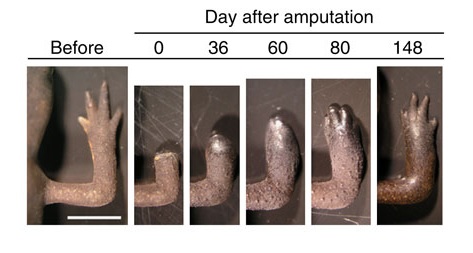
In the 1970s, surgeon Robert Becker demonstrated that electrical currents can stimulate bone and wound healing in humans. So why didn’t this field explode? Because his research also revealed the biological risks of constant electrical exposure. So it was buried.
Dr. Ammous tweet media
English
97
600
7.9K
662.4K
Michael Levin retweetledi
Josh Bongard
Josh Bongard@DoctorJosh·
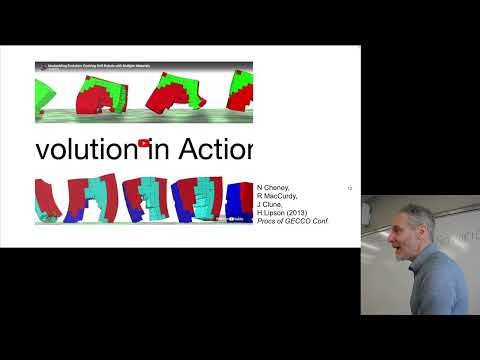
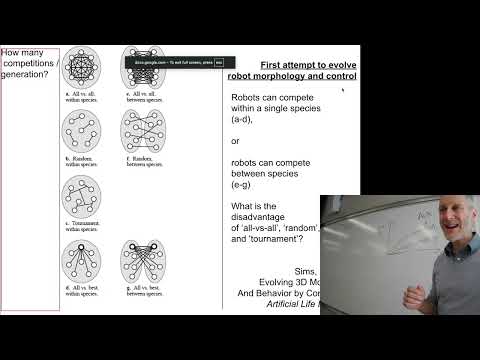
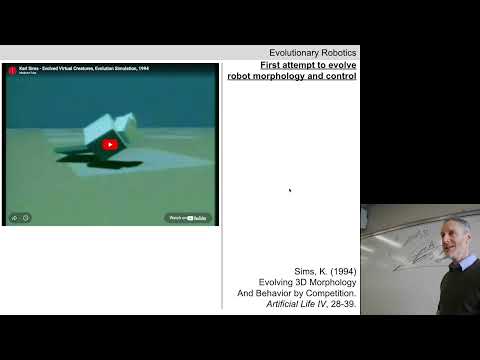
Lecture 24 of evolutionary robotics course: Differentiable robots. youtu.be/B56x986YQDw
YouTube video
YouTube
English
2
24
124
11.8K
Michael Levin
Michael Levin@drmichaellevin·
I’m not sure if you have a specific application in mind, or if you mean human data (which is not in vivo yet), but in general, almost of our bioelectric work is has been in vivo, not cell culture. Birth defects repair, whole organ induction, appendage regeneration, cancer normalization - all in vivo.
English
0
0
5
212
Fourth Grace
Fourth Grace@EuphrosMD·
@mike_lustgarten @drmichaellevin Epigenetic reprogramming already has mammalian proof-of-concept. Bioelectric signaling remains cell-culture elegant but unproven at organism scale. I'll take bench science with timeline implications over theoretical elegance.
English
2
0
1
194
Mike Lustgarten, PhD
Mike Lustgarten, PhD@mike_lustgarten·
Epigenetic reprogramming might make an impact on slowing/reversing age-related changes, but the biggest bang for the buck will be bioelectric signalling restoration via @drmichaellevin's approach
Brian Armstrong@brian_armstrong

Aging is arguably the root cause of most major diseases. Our cells lose function as we age, allowing various conditions to manifest, which is why most major diseases correlate with age. Yes, it is more complex than this, but this is a major component. @newlimit is working on treating a root cause of disease (aging) using epigenetic reprogramming.

English
5
0
24
2.3K
Gabe Masson
Gabe Masson@GabeMasson·
@drmichaellevin Oh! My comment about refs was directed towards Dr. Ammous and his comments, and not to you! Huge fan since 2014 here, btw. Just LOVE your dedication and consistency. 🙌 🔬
English
1
0
1
129
Michael Levin
Michael Levin@drmichaellevin·
Yep. I've read their books. I don't doubt for a minute that there was resistance to the data on potential harms of EMF. What I'm saying is that this is 1) largely irrelevant to the regenerative medicine work, and 2) with the exception of a few national security topics, "governmental agencies" don't stop you from doing research. They may not want to fund you, as for example NIH may need to reject 90%+ of applications in general, but no one stops you from doing research on these topics (including EMFs) if you find private, industry (biotech), foundation, or other $ for the work. There are many topics governmental agencies won't fund; and yes it's a nightmare to search for funding all the time. And yet, the answer isn't that anyone is suppressing regenerative therapeutics. We have many problems in how science is supported, but let's have a realistic picture of what those problems are and aren't.
English
0
0
5
143
Dr. Ammous
Dr. Ammous@AmmousMD·
@drmichaellevin I would suggest you read his and Andrew Marino's books. They discuss in detail how they had many interactions with governmental agencies that didn't want any information on the potential harms of EMF coming out.
English
2
1
6
568
Michael Levin
Michael Levin@drmichaellevin·
Well, what does "suppressed" mean exactly? He had a paper on this in Nature, which is often considered the top of the food chain. So it wasn't *too* suppressed... Now, I wasn't there to see his manuscript reviews or grant submission reviews - so I don't know how bad it was for him, but "suppressed" sounds like some shadowy cabal is trying to hide something. That's not what happens; what happens is that a new field, which doesn't make good contact with the mainstream ideas (i.e., doesn't give narrow and harried reviewers an incentive to dig in and get invested) has a very hard time. I could tell 1000 horror stories on this... But it's not because anyone is trying to hide anything. It's because people have limited time, limited attention spans, and they're fighting their own battles and have no time for anyone else's wild ideas. It makes for difficult reviews of manuscripts and grant proposals, which of course holds things back. But it's a natural limitation that's true of all new and unconventional ideas - we have to work extra hard to get buy-in. I don't know any way around it (because let's face it, bad crazy ideas greatly outnumber genius crazy ideas, so everyone bets accordingly) but if we work hard and connect to things others care about, eventually ideas shift and become "we knew it all along" while some new frontier is getting smacked down :-)
English
4
5
105
1.6K
Michael Levin
Michael Levin@drmichaellevin·
@NotDrAbeFroman In the sense of establishing voltage patterns that could persist? Possibly. We are checking.
English
1
0
3
117
Abe
Abe@NotDrAbeFroman·
@drmichaellevin if electroceuticals are a thing, then do there exist virus-like analogs in that solution space as well?
English
2
0
2
93
Michael Levin retweetledi
Josh Bongard
Josh Bongard@DoctorJosh·
Lecture 23 of evolutionary robotics course: Soft robots. youtu.be/_N20vZEhQ5I
YouTube video
YouTube
English
1
12
75
9.1K
Michael Levin retweetledi
Josh Bongard
Josh Bongard@DoctorJosh·
Lecture 22 of evolutionary robotics course: Evolving bodies and brains. youtu.be/Z7Ca0cmXyQs
YouTube video
YouTube
English
2
8
58
8.5K
Michael Levin
Michael Levin@drmichaellevin·
The only thing I can say more or less strongly is that I don't think a computational view of the world is sufficient (i.e., our formal model of computation doesn't match well to absolutely everything of importance in the world). After that, the answer is, I don't know because we don't have data on that yet. Is it infinite? is it dense or sparse? I can make conjectures but at this point it's not necessary for forward progress, and wouldn't be be based on much, so I don't do it. These questions are certainly on our list.
English
2
0
3
288
Michael Levin
Michael Levin@drmichaellevin·
New #preprint: @BeneHartl @LPiolopez arxiv.org/abs/2604.01932 "BraiNCA: brain-inspired neural cellular automata and applications to morphogenesis and motor control" Abstract: Most of the Neural Cellular Automata (NCAs) defined in the literature have a common theme: they are based on regular grids with a Moore neighborhood (one-hop neighbour). They do not take into account long-range connections and more complex topologies as we can find in the brain. In this paper, we introduce BraiNCA, a brain-inspired NCA with an attention layer, long-range connections and complex topology. BraiNCAs shows better results in terms of robustness and speed of learning on the two tasks compared to Vanilla NCAs establishing that incorporating attention-based message selection together with explicit long-range edges can yield more sample-efficient and damage-tolerant self-organization than purely local, grid-based update rules. These results support the hypothesis that, for tasks requiring distributed coordination over extended spatial and temporal scales, the choice of interaction topology and the ability to dynamically route information will impact the robustness and speed of learning of an NCA. More broadly, BraiNCA provides brain-inspired NCA formulation that preserves the decentralized local update principle while better reflecting non-local connectivity patterns, making it a promising substrate for studying collective computation under biologically-realistic network structure and evolving cognitive substrates.
English
27
86
438
22.1K