

Drew Russo
7.5K posts
Drew Russo
@DrewRusso781
HR Director, @TheCityofLynn. @massdems State Committee. @saintmichaels @jvcnation @reptierney @lynnmuseum alum. @ClarkUniversity MPA 2023. Tweets are my own.
Lynn, MA Katılım Ocak 2009
1.8K Takip Edilen1.2K Takipçiler

This guy went from being the governor of one of the largest states in America to an extremely non serious perennial candidate
Charlie Crist@CharlieCrist
I’m in! #stpete
English
When Breslow was making decisions on whom to fire, he forgot to consult his mirror first.
Tyler Milliken@tylermilliken_
Sam Kennedy makes it very clear that firing Alex Cora and the other members of the staff was Craig Breslow's recommendation.
English
Drew Russo retweetledi

I offer my support to those who advocate for the abolition of the death penalty in the United States of America and around the world. I pray that your efforts will lead to a greater acknowledgement of the dignity of every person, and will inspire others to work for the same just cause.
vatican.va/content/leo-xi…
English
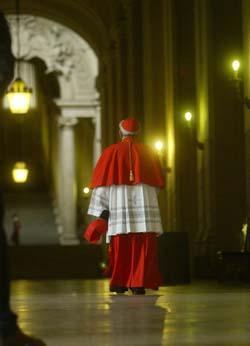
26 years later, RIP +Mansell: bit.ly/4u3bMLk
What none of today’s full-salaried folk/Leo-grifters could ever begin to grasp: +Henry was John Cardinal O’Connor’s desired successor as Archbishop of New York… while back-door $$$ helped guide JPII’s pref for +McCarrick.

English
Drew Russo retweetledi
Virginia, if you haven’t done it already, make a plan to vote YES on the redistricting referendum.
You can vote early by April 18 or on Election Day, April 21. Find your polling place at IWillVote.com/VA.
English
Drew Russo retweetledi

Worth recalling: The press did not invent a late-night post from the President of the United States declaring that the pope is "weak on crime" and accusing Leo of "catering to the Radical Left" and "hurting the Catholic Church."
Not sure how you could blame that on the press!
Bishop Robert Barron@BishopBarron
There is a way past the absurd and deeply divisive “war” between the President and the Pope, which has been enthusiastically ginned up by the press. And it is indicated in the Catechism of the Catholic Church, paragraph 2309 to be precise. After laying out the various criteria for determining a just war—proportionality, last resort, declaration by a competent authority, reasonable hope of success, etc.—the Catechism points out that “the evaluation of these conditions for moral legitimacy belongs to the prudential judgment of those who have responsibility for the common good.” The assumption is that the just war principles function, to use the technical term, as heuristic devices, designed to guide the practical decision-making of those civil authorities who have to adjudicate matters of war and peace. The role of the Church, therefore, is to call for peace and to urge that any conflict be strictly circumscribed by the moral constraints of the just war criteria. But it is not the role of the Church to evaluate whether a particular war is just or unjust. That appraisal belongs to the civil authorities, who, one presumes, have requisite knowledge of conditions on the ground. So, is the war in question truly the last resort? Is there really a balance between the good to be attained and the destruction caused by the war? Are combatants and non-combatants being properly distinguished in the waging of the conflict? Do the belligerents have right intention? Is there a reasonable hope of success? The posing of those questions—indeed the insistence upon their moral relevance—belongs rightly to the Church, but the answering of them belongs to the civil authorities. The Pope has said, on numerous occasions, that he is not a politician and that his role is not the determination of any nation's foreign policy. But he has just as clearly said that he will continue to speak for peace and for moral constraint. In making both of these claims, he is operating perfectly within the framework of paragraph 2309 of the Catechism. If we understand that the Pope and the President have qualitatively different roles to play in the determination of moral action in regard to war, we can, I hope, extricate ourselves from the completely unhelpful narrative of “Pope vs. President.”
English
Drew Russo retweetledi
In short, he was being the Pope. If Donald Trump and his crew were triggered by this, it is a reflection of their arrogance, hubris, and maybe even a small attack of conscience. Not everything is about them.
Vatican News@vaticannews_it
Il discorso pronunciato all’Incontro di preghiera per la #pace il 16 aprile, dice il #Papa, "era stato preparato due settimane prima", eppure, è stato interpretato come se stessi cercando di dibattere nuovamente con il presidente, cosa che non è affatto nel mio interesse”.
English
Essentially telling the Holy Father to “shut up and pray” doesn’t scream “world’s great champion of religious liberty”.
Bishop Robert Barron@BishopBarron
The statements made by President Trump on Truth Social regarding the Pope were entirely inappropriate and disrespectful. They don’t contribute at all to a constructive conversation. It is the Pope’s prerogative to articulate Catholic doctrine and the principles that govern the moral life. In regard to the concrete application of those principles, people of good will can and do disagree. I would warmly recommend that serious Catholics within the Trump administration–Secretary Rubio, Vice President Vance, Ambassador Brian Burch, and others–might meet with Vatican officials so that a real dialogue can take place. This is far preferable to the statements on social media. I am very grateful for the many ways that the Trump administration has reached out to Catholics and other people of faith. It has been a high honor to serve on the Religious Liberty Commission. No President in my lifetime has shown a greater dedication to defending our first liberty. All that said, I think the President owes the Pope an apology.
English
Drew Russo retweetledi

Pope John Paul II was fiercely anti-communist and allied with Reagan against the Soviets. He was also very vocal against the Iraq War.
In his Jan 2003 address to diplomats, he declared "No to war! War is not always inevitable. It is always a defeat for humanity" and specifically warned about the threat to "the people of Iraq, the land of the Prophets."
He sent a personal envoy (Cardinal Pio Laghi) to meet President Bush urging diplomacy and calling a preemptive strike "illegal" & "unjust."
Even after we went in, in their 2004 meeting, he pressed Bush to end the conflict quickly with UN involvement & restore Iraqi sovereignty.
I don't know if people are just purposely feigning ignorance on this or what, but it's getting ridiculous at this point.
The Pope is always trying to promote peace. The President lashed out at Pope Leo XIV because he was trying to promote peace, similar to Pope John Paul II in 2003. It's not okay. Bush didn't do that. Obama didn't do that. Really wish people would stop trying to defend the indefensible.
Sunny@sunnyright
John Paul II was a staunch opponent of communism and viewed its destruction as a spiritual imperative. He wasn’t going around condemning the west for not being nicer to the communist leaders while looking the other way for the west’s opponents.
English
Drew Russo retweetledi

He doesn’t seem to understand Just War theory. It doesn’t hold that war is ever good. It holds that it is necessary evil to avoid a greater evil. God does not “bless it”. It’s proponents hold that God tolerates it in a fallen world to avoid a worse evil.
English
@MattPetrusek @ReasonTheology It is interesting that @BishopBarron is so sensitive to any criticism, almost as if he feels imbued with a sort of infallibility. I also believe that if a minister compared AOC or Mamdani to Jesus Christ in his presence, he’d have a far more robust (and appropriate) reaction.
English

To those who are actually interested in the authentic good of the Church: This tedious, performatively hand-wringing, self-righteous, and self-promoting monologue, like so many others across social media, tells you nothing of value about Bishop Barron and his approach to evangelization.
If you really want to know who Bishop Barron is and what he thinks and how all of that animates Word on Fire, then please read his extensive library of books and articles and watch his thousands of hours of videos. You will find that there is nothing unorthodox about his theology or the way in which he conducts his work of evangelization. He is effective because he draws on the Catholic Church’s intellectual treasures and communicates them in a clear and compelling way, especially to secular audiences.
He is as mainstream and dogmatic a man of the Church as there is who has a charism for communicating the timeless truths of the faith.
Bishop Barron, to his credit, is also frequently in proximity with people, some of them high-profile and powerful, with whom he has significant disagreements. He is there to converse, not to endorse. He isn’t gesticulating behind a home-office microphone. He is in the world, and the world is messy and dangerous. It requires tact and nuance, and much of the hardest work is done in private to avoid spectacle and to build trust–trust that leads to actions and policies that protect all Christians.
To those harrumphing and tut-tutting for clicks from the sidelines, if you really care about the Church–if you’re not only interested in yourself–get out of your swivel chair and outside of your speaking circuit (if you’ve made it that far) and get into the physical fray. Do evangelical work that few will see and even fewer will appreciate. Be willing to suffer.
And for God’s sake, take an actual risk for the Gospel once in a while.
English

Bishop Barron Won’t Rebuke Trump—He Rebuked Me Instead
English
@VinnysCorner1 Also, ML Carr would have coached to an NBA championship if he had the rosters Phil Jackson did. Good coach but wildly lucky and significantly overrated.
English

Who is the GREATEST coach of all time?
A) Bill Belichick
B) Phil Jackson
C) Nick Saban
D) Joe Torre
E) John Wooden
F) Some other legend
English
@CBSNews Can you imagine if they name the baby Kennedy? There will be a TruthSocial post demanding that the airport be given the Kennedy Center treatment and the poor kid be renamed accordingly.
English

@ChristopherHale I got to the parish five minutes before Mass started and couldn’t find a parking space. That was not true a year ago.
English

The attendance at Holy Thursday Mass is upwards of 150%.
I went to the same parish four years ago on Holy Thursday, and it was half empty.
English
Drew Russo retweetledi
Grateful to be having lunch and the “hope of the resurrection” in the “halls of power” while they bomb and kill people with missiles. This is deeply flawed.
Bishop Robert Barron@BishopBarron
Grateful to have been invited to the White House this afternoon for a luncheon with religious leaders, where I offered an Easter prayer. Even in the halls of power, the hope of the Resurrection is proclaimed.
English
@RadioFreeTom @HQNewsNow And a prominent Catholic bishop just stood there and nodded. Good grief.
English
He has managed to make Palm Sunday about himself
Headquarters@HQNewsNow
Trump: On Palm Sunday, Jesus entered Jerusalem as crowds welcomed him with praise honoring him as king. They call me king now. Can you believe it?
English
Drew Russo retweetledi
How is a bishop absent so regularly from his diocese? And during Holy Week?
English