DTWO (Ø,G)

3.8K posts

DTWO (Ø,G) banner
DTWO (Ø,G)

DTWO (Ø,G)

@Dtwo_Seers

A Seer who sees everything web3 | Retro | Crypto Content Creator | Fundamental Analyst. Building @CseersDao

🚀 Katılım Ocak 2021
1.5K Takip Edilen15.9K Takipçiler
DTWO (Ø,G)
DTWO (Ø,G)@Dtwo_Seers·
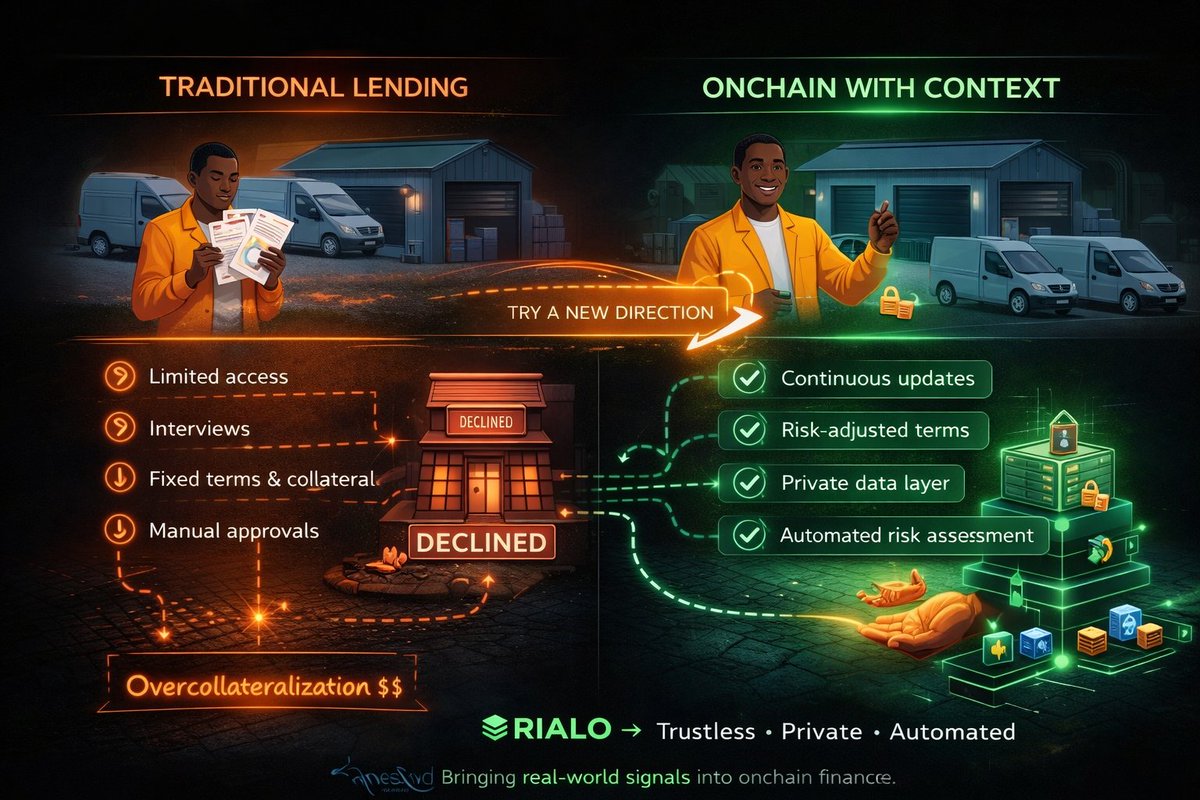
A Small Business Owner, A Loan… And The Problem Rialo Is Trying To Fix Tunde runs a small logistics business. Nothing fancy. Just delivery vans, drivers, and daily fuel expenses. Some months are good. Some months are tight. He wants to expand. Add two more vans. Take on bigger contracts. So he looks for a loan. Banks ask for paperwork. Collateral. Time he doesn’t have. DeFi looks easier at first. No interviews. No office visits. But then he sees the condition: To borrow $10,000… he needs to lock maybe $15,000 or more. He laughs. If he had that much sitting around, he wouldn’t need the loan in the first place. This is where the real gap shows. Most DeFi protocols don’t know who Tunde is. They don’t know his business cashflow. They don’t know his repayment history. So the only thing they can trust… is overcollateralization. Now imagine a different setup. A system where: • his verified revenue data can be used privately • repayment behaviour can adjust risk over time • loan terms can update automatically as his situation changes • capital doesn’t need to sit frozen unnecessarily That’s closer to the direction @RialoHQ seems to be exploring. Not just bringing finance onchain… but bringing real-world financial context into how onchain finance works.
DTWO (Ø,G) tweet media
English
5
0
10
72
DTWO (Ø,G)
DTWO (Ø,G)@Dtwo_Seers·
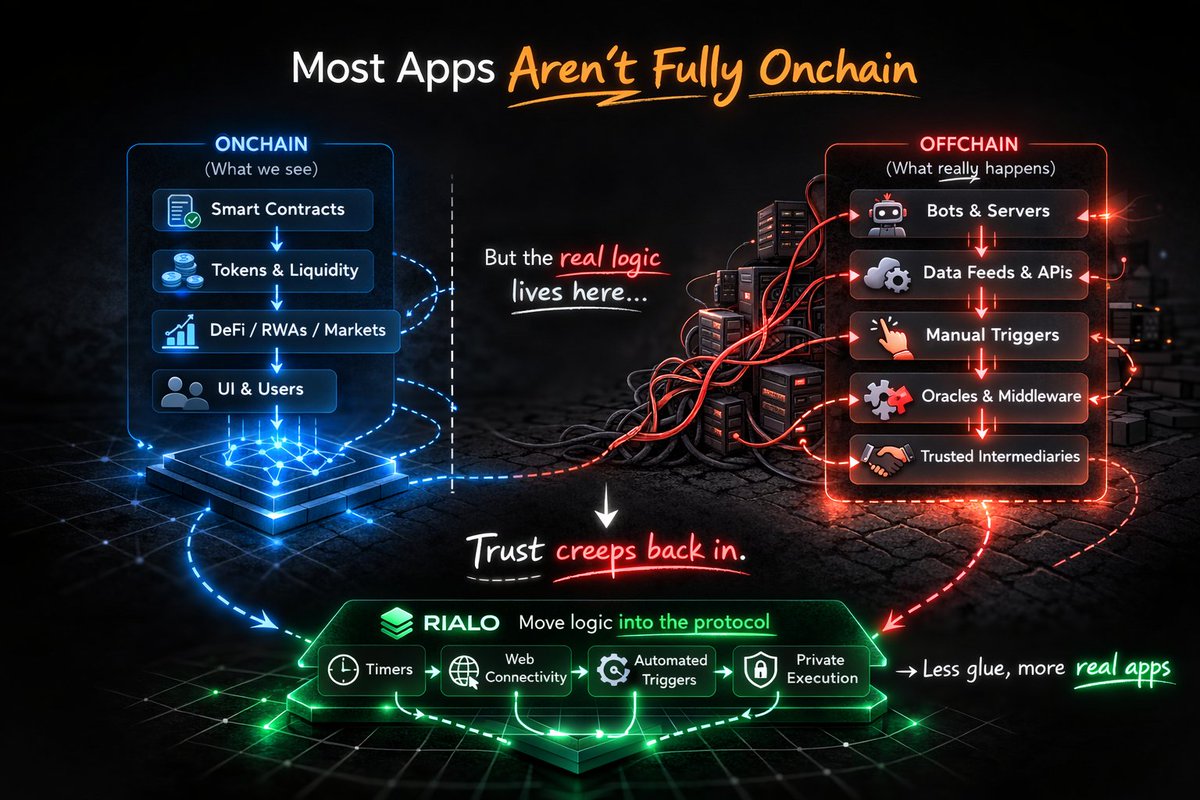
One thing I’ve noticed building and interacting onchain, a lot of things still don’t happen onchain. You see apps that look fully decentralized. Nice UI. Smart contracts deployed. Tokens live. But behind the scenes… • bots are watching events • servers are triggering actions • teams are manually fixing edge cases • offchain logic is holding everything together So in reality, the blockchain is only handling part of the application. The rest lives somewhere else. And that “somewhere else” is usually where trust creeps back in. This is why @RialoHQ’s direction feels interesting to me. Instead of just making chains faster or cheaper, it looks like they’re trying to move more real application logic into the protocol itself. Things like: • timers • web connectivity • automated triggers • private execution If that works the way they intend, developers may spend less time building glue infrastructure and more time building actual products. That’s not a flashy narrative. But it’s a very real problem. And real problems usually matter more than hype.
DTWO (Ø,G) tweet media
English
5
3
9
156
DTWO (Ø,G)
DTWO (Ø,G)@Dtwo_Seers·
One thing @RialoHQ is quietly challenging is this idea: That blockchains are just places where transactions happen. Most onchain systems today work like logs. Something happens → it gets recorded. But real-world systems don’t behave like logs. They behave like processes. Prices update continuously. Risk changes over time. Agreements evolve as conditions change. A shipment moves. A credit score changes. A deadline passes. Rialo seems to be exploring what happens when blockchains stop being passive record-keepers… and start becoming reactive systems. Where contracts don’t just wait. They respond. Not because someone clicked a button, but because reality itself changed. If that design direction works, the biggest unlock won’t be faster trading. It will be markets that actually behave like markets.
DTWO (Ø,G) tweet media
English
2
0
5
74
DTWO (Ø,G)
DTWO (Ø,G)@Dtwo_Seers·
Most blockchains are great at processing transactions. But they struggle to interact with the real world. So a lot of onchain apps still rely on off-chain bots, servers, and scripts. That’s the problem @RialoHQ is trying to solve. I tried explaining why Rialo exists in a simple whiteboard video.
English
8
1
16
132
DTWO (Ø,G)
DTWO (Ø,G)@Dtwo_Seers·
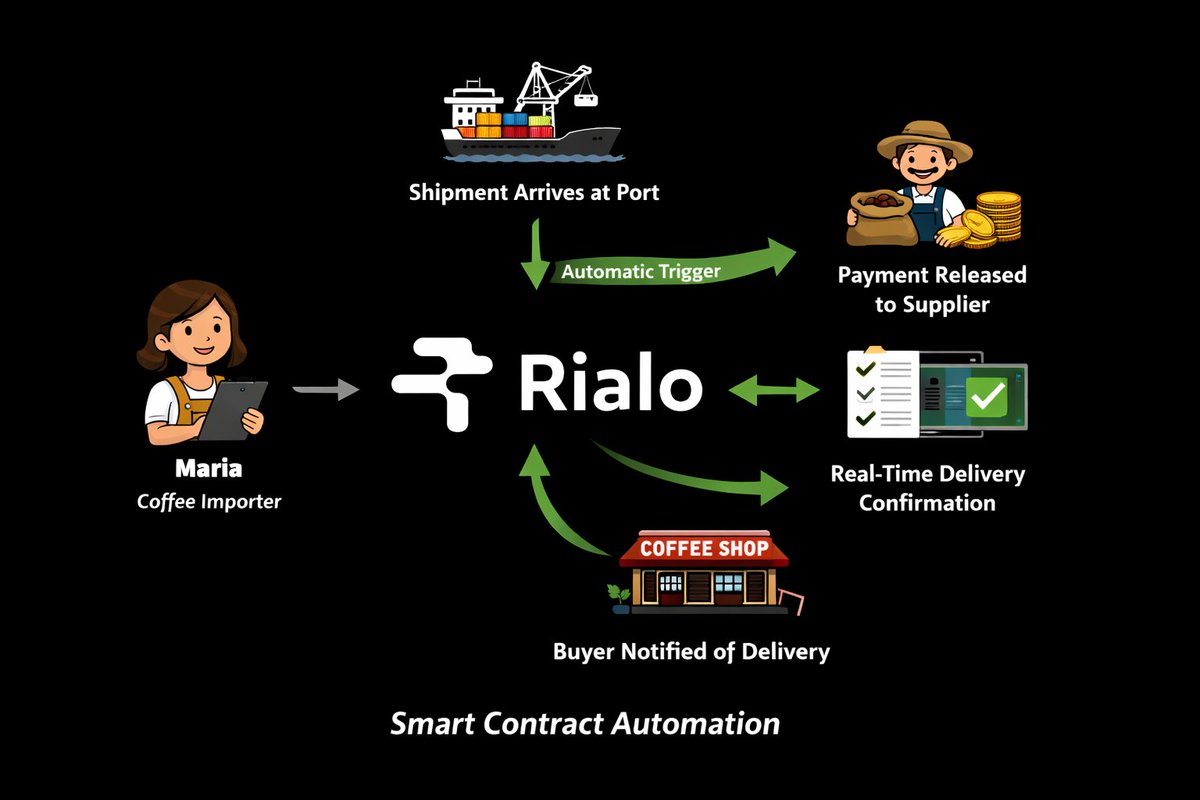
Maria runs a small business importing coffee beans from different countries. Every month she buys shipments from farmers and sells them to local coffee shops. But managing payments, contracts, and delivery confirmations is always stressful. Sometimes shipments are delayed. Sometimes payments arrive late. Sometimes suppliers ask for proof of payment before releasing goods. Most of this process still relies on emails, paperwork, and manual verification. Now consider a system like @RialoHQ. Because Rialo is designed to interact with real-world systems, Maria could create a contract where: • once the shipping company confirms the cargo has reached the port • the payment is automatically released to the supplier • delivery records are verified in real time • both sides can trust the process without constant monitoring Instead of manually managing agreements, the system reacts automatically when real-world conditions are met. Maria’s suppliers get paid faster. Her buyers trust the delivery records. And Maria spends less time dealing with paperwork. This is the kind of real-world workflow Rialo is designed to support.
DTWO (Ø,G) tweet media
English
5
0
9
89
DTWO (Ø,G)
DTWO (Ø,G)@Dtwo_Seers·
One thing I find interesting about @RialoHQ is the focus on real-world interaction primitives. Most chains optimize: • throughput • block time • fees Rialo seems to be optimizing for something else: • web connectivity • timers • privacy • agent coordination
DTWO (Ø,G) tweet media
English
1
0
2
69
DTWO (Ø,G)
DTWO (Ø,G)@Dtwo_Seers·
Public blockchains are great… until sensitive data is involved. - Salaries - Trading strategies - Business logic Most companies won’t put that on a transparent chain. @fhenix is trying to solve that by letting contracts compute without exposing the data
English
0
0
1
47
DTWO (Ø,G)
DTWO (Ø,G)@Dtwo_Seers·
Most developers building onchain apps spend a lot of time writing off-chain infrastructure. - Bots to monitor events. - Servers to trigger actions. - Scripts to enforce deadlines. In other words, a lot of the logic lives outside the blockchain. @RialoHQ flips that idea. Things like: • timers • web connectivity • automated triggers exist inside the protocol. So instead of building glue code around the chain, builders can focus on the actual application. That’s a subtle change, but it could make a big difference for developers.
DTWO (Ø,G) tweet media
English
6
0
9
83
DTWO (Ø,G)
DTWO (Ø,G)@Dtwo_Seers·
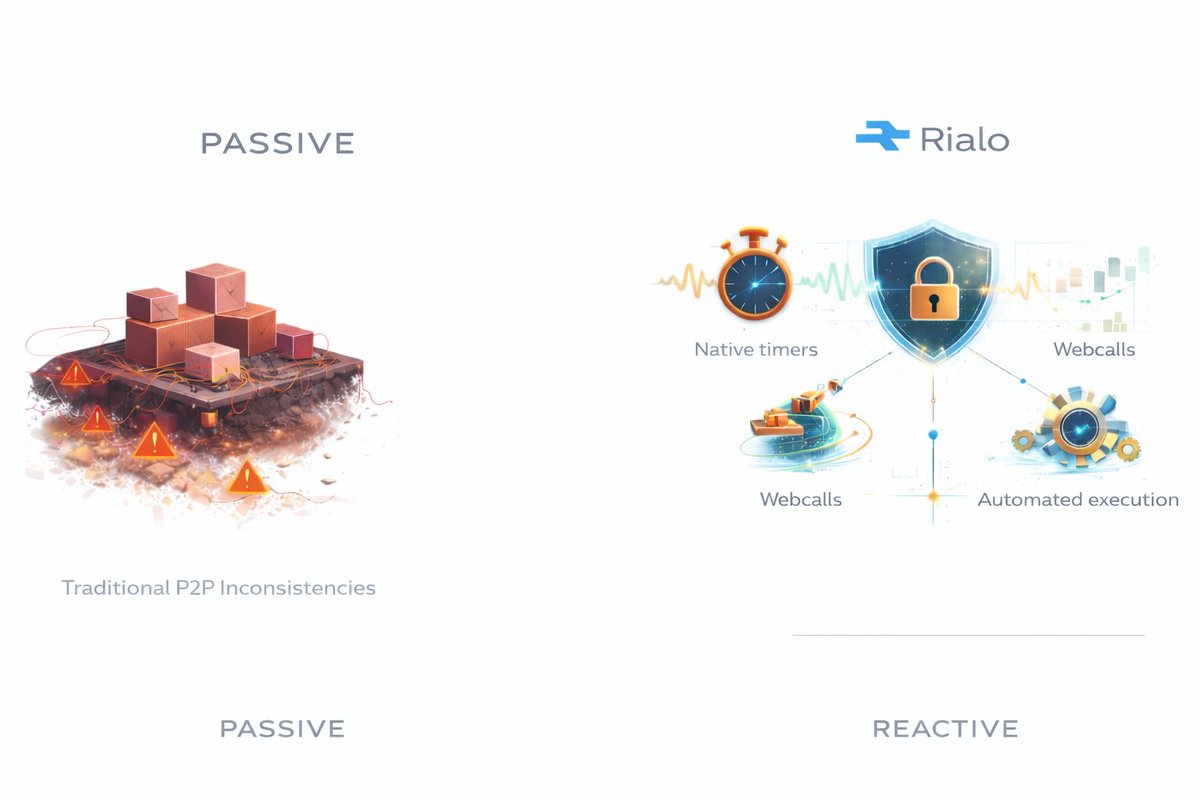
The biggest limitation of today’s blockchains isn’t speed. It’s awareness. Smart contracts only react when someone sends a transaction. Which means most onchain systems are passive. They just sit there… waiting. But real-world systems don’t work like that. Markets move. Risk changes. Events happen constantly. @RialoHQ is trying to close that gap. With things like: • native timers • webcalls • automated execution Contracts can respond to real-world conditions, not just user transactions. That’s a very different design philosophy. Instead of passive contracts… You get reactive systems. And that changes what blockchains can actually do.
DTWO (Ø,G) tweet media
English
5
0
9
69
DTWO (Ø,G)
DTWO (Ø,G)@Dtwo_Seers·
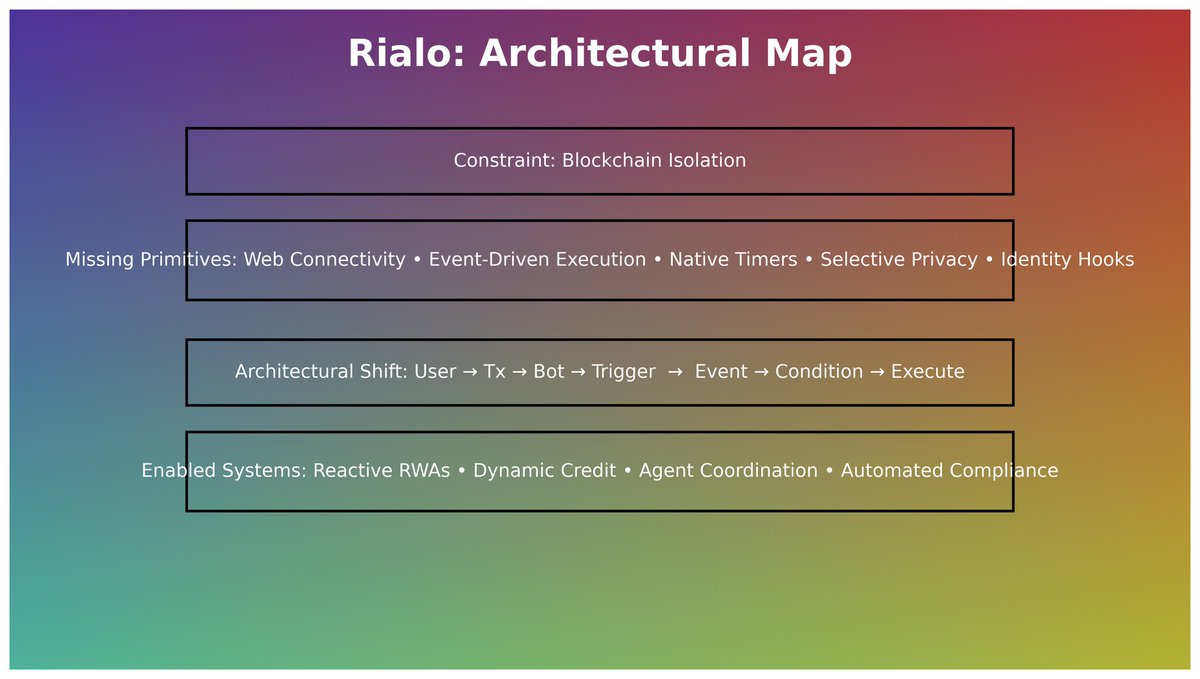
Rialo: An Architectural Map I stopped looking at individual features and tried mapping the design instead. Here’s what I see. Most blockchains are isolated execution environments. They: • execute transactions • update state • verify consensus But they don’t: • natively interact with real-world systems • react continuously • manage privacy selectively • integrate identity properly That isolation is the bottleneck. @RialoHQ isn’t optimizing for more TPS. It’s introducing different primitives: • native web connectivity • event-driven execution • built-in timers • selective privacy • real-world identity hooks That changes the stack. Traditional model: User → Transaction → Contract → Wait Bot → Watch → Trigger → Update Rialo model: Event → Condition → Automatic Execution Remove the babysitting. Reduce the middleware. Let the system react by design. What does that unlock? • credit that isn’t blindly overcollateralized • RWAs that adjust to real signals • automated compliance • agent coordination • markets that behave like systems, not snapshots It’s a harder architectural bet. But it’s also a more ambitious one. Would appreciate feedback from builders if I’m misunderstanding the direction.
DTWO (Ø,G) tweet media
English
2
0
7
72
DTWO (Ø,G)
DTWO (Ø,G)@Dtwo_Seers·
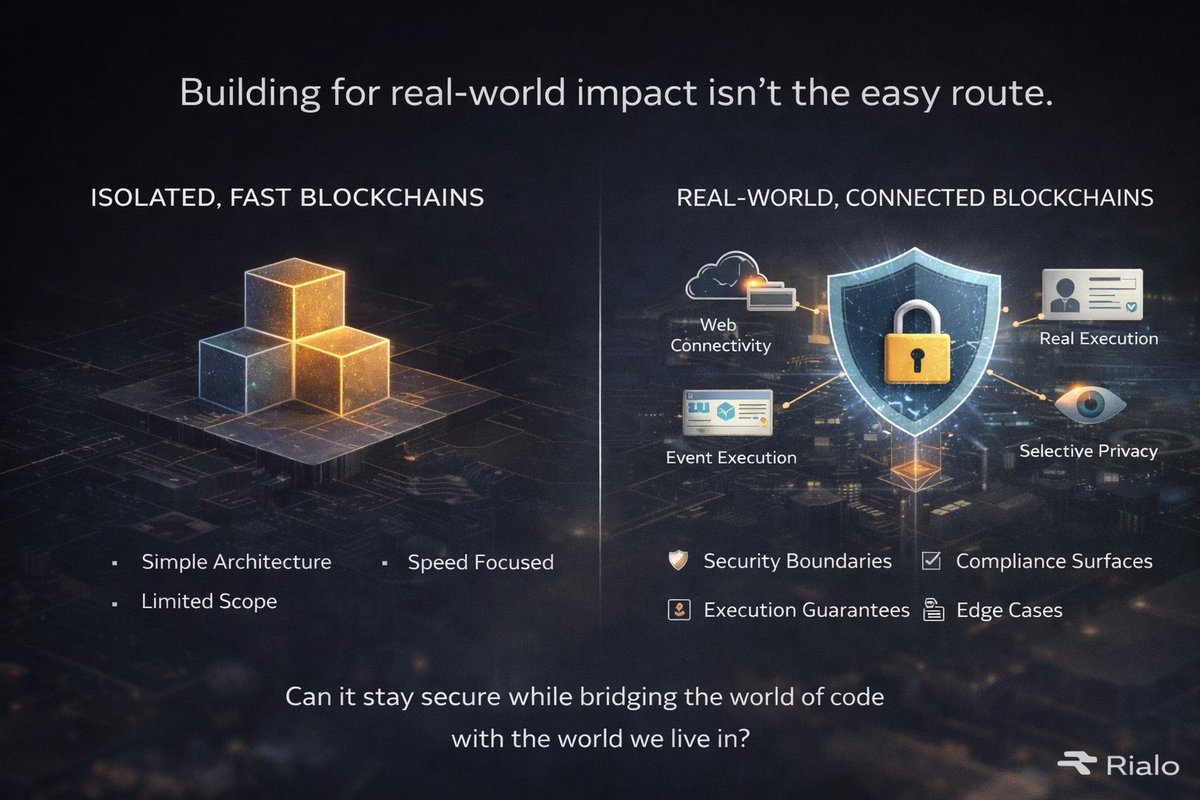
Every ambitious design comes with tradeoffs. @RialoHQ is betting that blockchains shouldn’t be isolated systems. It’s building: - native web connectivity - event-driven execution - selective privacy - real-world identity hooks That’s powerful. But it also means the design space is more complex than a simple “fast chain.” The risk? The more deeply you integrate with the real world, the more you have to think about: - security boundaries - compliance surfaces - execution guarantees - edge cases between onchain and offchain states This isn’t the easy route. It’s harder than just increasing TPS. Rialo isn’t optimizing for simplicity of architecture. It’s optimizing for relevance to real-world systems. And that’s a much more ambitious bet. Big visions require big design discipline. The real question isn’t “is it fast?” It’s: can it stay secure and predictable while interacting with the real world? That’s the bar.
DTWO (Ø,G) tweet media
English
4
0
7
80
DTWO (Ø,G)
DTWO (Ø,G)@Dtwo_Seers·
Every major shift in tech happens when infrastructure disappears. You don’t think about TCP/IP when you send a message. You don’t think about databases when you open an app. Blockchains haven’t reached that point yet. They’re still loud. Still visible. Still forcing users to understand how they work. @RialoHQ’s design feels like a bet on something else: That the best blockchain experience is the one you don’t notice. If it blends into the real world instead of competing with it, that’s when adoption actually happens.
DTWO (Ø,G) tweet media
English
3
0
5
65
DTWO (Ø,G)
DTWO (Ø,G)@Dtwo_Seers·
I’ve been thinking about this. A lot of Web3 projects try to replace the real world. @RialoHQ feels like it’s trying to work with it instead. That difference might matter more than speed, fees, or TPS.
English
3
1
6
68
DTWO (Ø,G)
DTWO (Ø,G)@Dtwo_Seers·
If @RialoHQ Works, What Changes? Let’s assume for a second that everything Rialo is aiming for actually works. What changes? First, borrowing wouldn’t require locking 2x your funds just to prove you’re serious. Second, markets wouldn’t pause until someone presses a button. Assets would react when conditions change. Third, apps wouldn’t need invisible bots running 24/7 just to stay alive. Fourth, identity wouldn’t reset every time you lose a wallet. And maybe most importantly, real businesses wouldn’t feel like they’re stepping into a glass house every time they touch a blockchain. If a chain can: - see real-world signals - keep sensitive data private - react automatically - enforce rules without middleware then Web3 stops feeling like a parallel universe. It starts looking like infrastructure.
DTWO (Ø,G) tweet media
English
3
2
10
76
DTWO (Ø,G)
DTWO (Ø,G)@Dtwo_Seers·
Rialo is the only platform bridging Web2 and Web3 natively at the protocol level. And what that actually means is this: Most blockchains can’t talk to the real world on their own. They rely on extra servers, bots, and middleware to fetch data or trigger actions. So Web2 and Web3 don’t really “connect”, they’re stitched together. @RialoHQ’s design is different. The protocol itself is built to: - interact with external data - react automatically to real-world events - enforce logic without constant off-chain monitoring That’s what “native at the protocol level” points to. Not an add-on. Not a workaround. But a base layer built with real-world interaction in mind.
ade | rialo.io@itachee_x

This is what @RialoHQ has been pushing for since the start. Bridging web2 and web3 natively at the protocol level is necessary and @RialoHQ is the only platform doing this.

English
3
1
6
68
DTWO (Ø,G)
DTWO (Ø,G)@Dtwo_Seers·
One thing I find interesting about @fhenix is this: It doesn’t try to “hide” data after the fact. It changes how smart contracts work. Instead of the chain seeing your inputs and then masking them later, the computation happens on encrypted data from the start. There is no peek moment and no exposed values mid-way. That’s a very different way to think about privacy. Feels less like a feature… and more like a shift in how onchain apps can actually be built.
Fhenix@fhenix

CT doesn’t exist anymore it’s just FHE twitter now

English
0
0
5
94
DTWO (Ø,G)
DTWO (Ø,G)@Dtwo_Seers·
Why Builders Will Ship Faster on @RialoHQ Most developers don’t struggle because they lack ideas. They struggle because they’re stitching things together. Today, building a serious onchain app often means: - smart contracts - off-chain bots - price feeds - monitoring scripts - indexing infrastructure - API bridges - fallback systems A lot of time goes into keeping the system alive, not improving the product. That slows shipping. On Rialo, many of those moving parts become native. Contracts can: - fetch real-world data - react automatically - run on timers - enforce rules without off-chain babysitters So instead of building glue code, developers focus on logic. - Less integration work. - Less surface area. - Fewer fragile dependencies. Shipping faster doesn’t just mean speed of blocks. It means fewer things to maintain.
DTWO (Ø,G) tweet media
English
1
0
6
66
DTWO (Ø,G)
DTWO (Ø,G)@Dtwo_Seers·
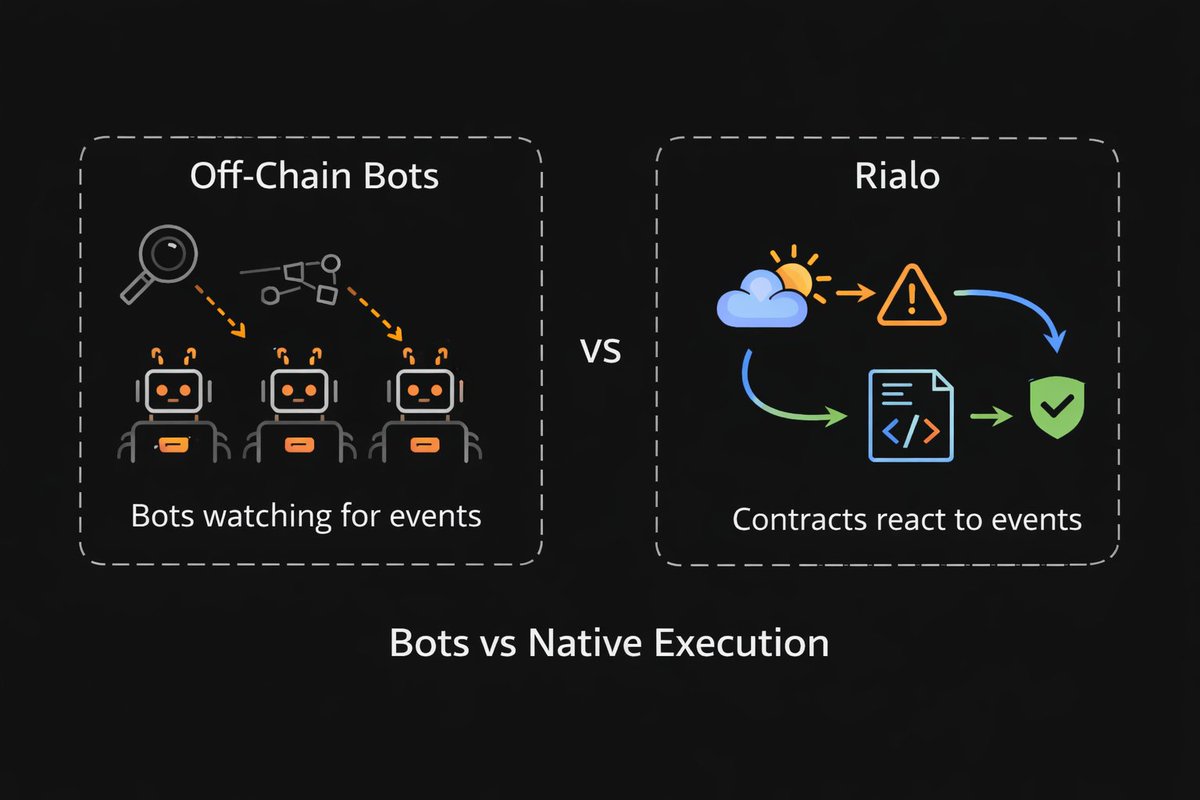
Why Rialo Makes Bots Obsolete A lot of crypto apps secretly depend on robots. Not trading bots, maintenance bots. They sit off-chain watching the network 24/7 just to do things like: - trigger liquidations - update prices - execute settlements - react to events Without them, many protocols simply… stop working. That’s because most smart contracts don’t wake up on their own. They only run when someone sends a transaction. So developers hire machines to babysit the blockchain. On @RialoHQ, the idea is different. Instead of waiting for a bot to notice something happened, the contract reacts the moment the condition is true. Deadlines pass → it executes Data changes → it updates Rules match → it settles No external watcher needed. Bots today aren’t a feature. They’re a workaround for systems that can’t respond by themselves. If contracts could react natively, the app wouldn’t depend on whoever is running the fastest script.
DTWO (Ø,G) tweet media
English
4
0
6
75
DTWO (Ø,G)
DTWO (Ø,G)@Dtwo_Seers·
From Static Tokens to Living Markets: What Rialo Is Actually Enabling Most tokens onchain are passive. They just sit there until someone trades, updates, or manually triggers something. Even tokenized real-world assets usually behave the same way, like digital copies of paper records. But real markets don’t work like that. Prices move. Conditions change. Events happen whether anyone clicks a button or not. The gap is simple: blockchains record activity, while the real world runs continuously. On @RialoHQ, assets can react instead of waiting. They can: - update when real conditions change - trigger actions automatically - adjust risk as information arrives So instead of just putting assets onchain, the system lets them behave more like they do offchain. That shift turns tokens from records into participants. Markets stop being snapshots and start acting like processes.
DTWO (Ø,G) tweet media
English
5
1
11
173
DTWO (Ø,G)
DTWO (Ø,G)@Dtwo_Seers·
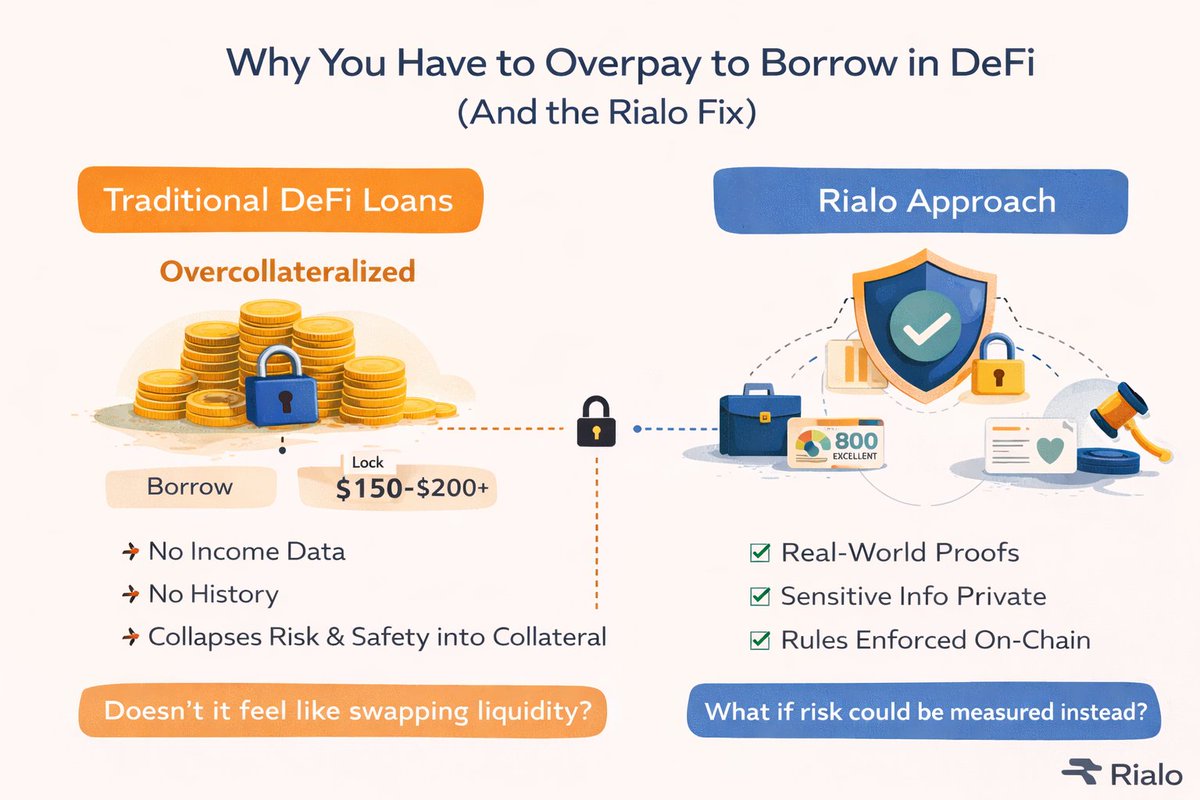
In DeFi, you usually deposit more than you borrow. Want a $100 loan? You might need to lock $150 or even $200. It sounds strange until you realize the system knows nothing about you. It can’t see your income. It can’t see your history. It can’t tell the difference between a reliable user and a risky one. So instead of judging risk, it protects itself with excess collateral. That’s why borrowing onchain feels less like credit and more like swapping liquidity. @RialoHQ approaches this differently. If a system can: - verify real-world signals - keep sensitive data private - enforce rules automatically then risk can be measured instead of assumed. And when risk can be measured, the system doesn’t need to overprotect. DeFi today replaces trust with collateral. The real shift happens when collateral stops being the only form of safety.
DTWO (Ø,G) tweet media
English
3
2
13
136