Diego Villegas retweetledi
Diego Villegas
219 posts

Diego Villegas
@DvilVillegas
Entrepreneur, Strategist, Project Manager and Father
Boston, MA, US Katılım Şubat 2013
351 Takip Edilen196 Takipçiler
Diego Villegas retweetledi

I echo Venezuelan opposition leader, @MariaCorinaYA, in calling for a global movement to rescue Venezuela from Maduro’s corrupt regime. This should be a world cause that we all stand for: theguardian.com/world/article/…
English
Diego Villegas retweetledi

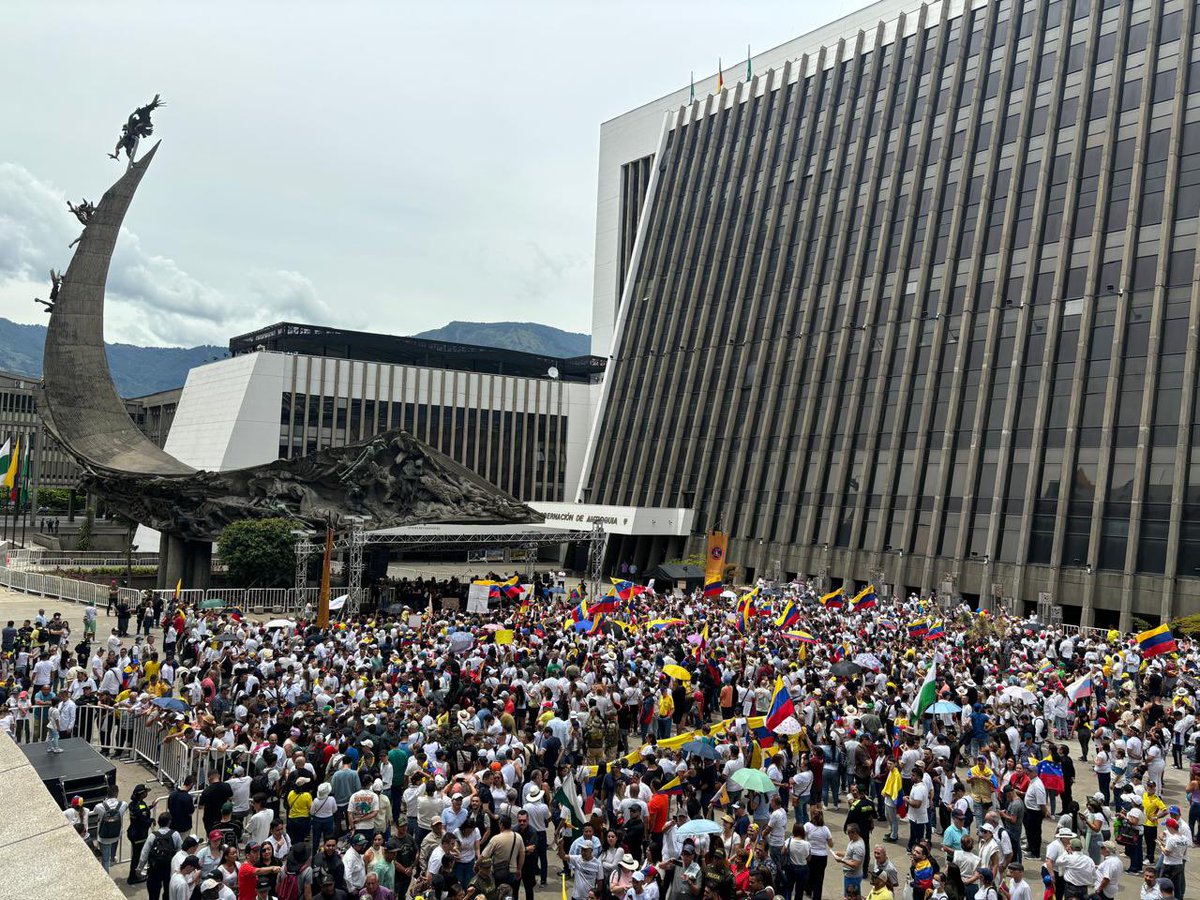
Antioquia grita: LIBERTAD
Un mensaje de los Antioqueños al pueblo VENEZOLANO. #VenezuelaLibre @MariaCorinaYA @FicoGutierrez

Español
Diego Villegas retweetledi

Recent events have made clear in the mind of the average American that there is a risk that they could lose money doing something they used to think of as safe -- Being a depositor. We have had a two-tiered system since the GFC where a few large banks have the explicit backing of the taxpayer and the rest have $250k of deposit insurance. This two-tiered system worked until it didn't work.
In a world with @Twitter - speed spread of information and smart-phone-enabled bank accounts where withdrawals can be made with the push of a button, no bank is safe from a run unless the depositor has an explicit gov't guarantee that ensures that they always have complete access to the total value of their deposits. Without this guarantee, the non-systemically important banks (non-SIB banks) will likely continue to experience large withdrawals.
This problem is compounded by the stock market. Consumers now understand that when a bank stock collapses, it is only a matter of days before the bank fails due to liquidity demands by their depositors.
The rewards for being a depositor are minimal compared with the risk of loss from losing access to funds needed to run your business or household. Until this problem is solved, our banking system is at risk. The more time the public is exposed to a period of uncertainty, the more imprinted deposit risk is on the mind of the public.
That is why it is critically important that our gov't promptly puts its full faith and credit behind our deposit system.
If in fact, your deposit is safe if a bank fails, as in SVB and Signature, then why is it difficult for the gov't to confirm that your deposit is money good when your bank is still operating?
We need a temporary systemwide deposit guarantee that will remain in place until our outmoded $250k deposit guarantee program is modernized. Since this new system can't be created over a weekend, we need a stop-gap measure to get us through the next few days and weeks.
The alternative is one bank failure after the next. The weakest three have already fallen. The market is already telling you who is number four. This is not the way one maintains confidence in a banking system.
Lastly, the more banks that fail, the higher the cost of capital will be for non-SIB banks. This will have a profound long-term impact on the cost of capital for small and medium-sized businesses, a cost that has already increased materially due to the overall rise in rates. It is not helpful to put even more pressure on these critically important drivers of our economy.
English
Diego Villegas retweetledi

This was not a bailout. During the GFC, the gov’t injected taxpayer money in the form of preferred stock into banks. Bondholders were protected and shareholders were diluted to varying degrees. Taxpayer money was put at great risk. Many people who screwed up suffered minimal to no consequences. Those were bailouts.
Here, shareholders and bond holders have been wiped out. The @FDICgov insurance fund capitalized by premiums paid by banks will absorb any losses. The fund will recoup any losses by assessing more premiums on the banks.
Had the @FDICgov @USTreasury and @federalreserve not intervened today, we would have had a 1930s bank run continuing first thing Monday causing enormous economic damage and hardship to millions.
More banks will likely fail despite the intervention, but we now have a clear roadmap for how the gov’t will manage them.
Bank boards and managements have received a massive wake up call. Being a director or CEO of a bank that fails is no fun: years of litigation, regulatory investigations, personal liability, potential civil and criminal charges, and enormous reputational damage.
Our gov’t did the right thing. This was not a bailout in any form. The people who screwed up will bear the consequences. The investors who didn’t adequately oversee their banks will be zeroed out and the bondholders will suffer a similar fate.
Importantly, our gov’t has sent a message that depositors can trust the banking system. Without this confidence, we are left with three or possibly four too-big-to-fail banks where the taxpayer is explicitly on the hook, and our national system of community and regional banks is toast.
Our government did the right thing for the country. We are very fortunate it did so.
English
Diego Villegas retweetledi

With the decoupling of China, Mexico has a once in a generation opportunity to build a world class industrial base
Fran García@frangaos
Estaba leyendo un reporte de Barclays sobre el “near-shoring” México tiene una oportunidad enorme de ~$147B Se habla de productos como computadoras, equipo de telecomunicaciones, plásticos, zapatos, textiles y muebles ¿Qué startups están construyendo sobre esta oportunidad?
English
Diego Villegas retweetledi