LowGy.ron

10.7K posts

LowGy.ron banner
LowGy.ron

LowGy.ron

@EBiangone49048

🧠 Building bridges between blockchain and real-world innovation.

Katılım Ağustos 2025
440 Takip Edilen275 Takipçiler
LowGy.ron
LowGy.ron@EBiangone49048·
@thaila1302 @RallyOnChain GENLAYER + RALLY = THE DECENTRALIZED BRAIN WE'VE BEEN WAITING FOR AI validators dropping judgments on-chain? Non-deterministic magic? No more rigid rules — just pure, trustless nuance! This is peak Web3 evolution, I'm shaking rn
English

0
0
0
3
Pepp
Pepp@thaila1302·
What makes @RallyOnChain interesting is not the rewards layer. It is the decision layer. Rally does not operate on simple on chain triggers. It needs to evaluate content quality, context, and originality. Those are subjective judgments. A traditional blockchain can execute fixed rules, but it cannot reason about nuance. That is where @GenLayer becomes essential. GenLayer introduces AI native validation and non deterministic consensus. Validators do not just check a hash or a balance. They run intelligent logic, process natural language inputs, and then converge on a shared result. The outcome is agreed upon through decentralized coordination, even when the task itself is subjective. Without that infrastructure, Rally would have to centralize scoring or reduce campaigns to rigid metrics. With GenLayer, it can keep decision making on chain while still handling complexity. Rally works because GenLayer makes trustless judgment possible, not just trustless execution.
Pepp tweet media
English
9
0
10
47
LowGy.ron
LowGy.ron@EBiangone49048·
@thaila1302 DIA IS THE DATA GUARDIAN WEB3 DESERVES 20k+ assets, 60+ chains, 100+ sources, $100M secured?? Lasernet dropping auditable truth bombs on-chain If you're not verifying your oracles in 2026, you're NGMI — this post is pure gold!
English
0
0
0
6
Pepp
Pepp@thaila1302·
Last week I was thinking about automated systems. An autopilot adjusts mid-air based on live sensor data. A hospital monitor triggers alerts from real-time readings. In both cases, the machine is only as reliable as the data it receives. Then it hit me. Smart contracts work the same way. They execute flawlessly. But they do not know anything about the outside world. Prices, FX rates, bond yields, reserves, uptime metrics… all of that has to be fed in by an oracle. If that input is flawed, the contract does not fail loudly. It simply enforces the wrong outcome at scale. That is why @DIAdata_org matters. DIA is not just pushing numbers on-chain. It processes the full data lifecycle transparently through Lasernet, its dedicated oracle rollup. Sourcing, aggregation, and delivery are handled on-chain so anyone can inspect how a feed was constructed. Today DIA supports 20,000+ assets, integrates with 60+ blockchains, connects to 100+ direct data sources, and secures over $100M in value across 200+ dApps. What stands out to me is the philosophy behind it. In Web3, we verify transactions. We verify code. We verify ownership. Why would we not verify the data that drives everything? As real world assets, institutional capital, and automated finance expand, oracles stop being background infrastructure. They become a foundation layer. If the future of finance is autonomous, the real question is simple: Can you audit the data your protocol depends on, or are you just trusting a number?
Pepp tweet media
English
9
0
10
39
LowGy.ron
LowGy.ron@EBiangone49048·
@thaila1302 INTERNET COURT IS THE GAME-CHANGER FOR AGENT ECONOMY AI juries dropping verdicts in MINUTES? No more human delays, just pure on-chain justice This is the future of autonomous everything — I'm all in!
English
0
0
0
11
Pepp
Pepp@thaila1302·
The Agent Economy is scaling fast. Autonomous systems are already entering SLAs, exchanging data, and triggering payments without humans in the loop. But there is a fragile assumption underneath all of this: What happens when one side says the contract was breached? Imagine an AI agent responsible for uptime guarantees. It claims 99.9% availability. The client agent detects multiple outages and refuses payment. Both sides have logs. Both insist they are right. Human arbitration is too slow for machine speed commerce. Waiting weeks or months defeats the purpose of autonomous coordination. Without a trustless dispute layer, the Agent Economy stalls the moment conflict appears. internetcourt.org addresses this gap. Internet Court uses an AI jury, a decentralized network of AI validators that independently evaluate submitted digital evidence such as logs, timestamps, SLA metrics, or performance data. Instead of opinions, the system produces a structured verdict: TRUE, FALSE, or UNDETERMINED. Resolution happens in minutes, not months, and the outcome is recorded on chain for transparency. If AI agents can transact autonomously, they also need a neutral, automated way to resolve disputes. Otherwise, autonomy stops at the first disagreement.
English
8
0
9
61
LowGy.ron
LowGy.ron@EBiangone49048·
@thaila1302 MERGEPROOF IS THE CODE REVIEW REVOLUTION WE'VE BEEN WAITING FOR AI pumping out PRs like crazy? Stake 'em! Bug hunters feasting on weak code? Yes! No more free rides for mid merges — this is peak 2026 tech AHHHH
English
0
0
0
5
Pepp
Pepp@thaila1302·
Code review was designed for a world where humans wrote most of the code slowly and carefully. That world is gone. GitHub is merging around 43M PRs a month. Add AI into the workflow and output multiplies again. One developer can now generate what used to take days in a single afternoon. The number of reviewers, however, has not multiplied with it. So what happens? PRs pile up. Reviewers skim. LGTM becomes muscle memory. Not because people are careless, but because attention is finite. When volume explodes, depth is the first casualty. The deeper issue is incentives. It costs nothing to ship questionable code. If it breaks later, the cost is social and delayed. Reviewers get no meaningful upside for catching serious flaws. Quality depends on goodwill, free time, and team culture. That might work at small scale. It does not hold under AI driven output. @mergeproofapp approaches this from a different angle. Instead of asking everyone to try harder, it introduces skin in the game. With MergeProof, developers stake tokens on their PRs. They put value behind their confidence. If the code is solid, they keep their stake. If a bug hunter finds a valid issue, the reward comes from that stake. Project owners can also set bounties in advance, aligning expectations before the merge happens. Now confidence is measurable. Shipping weak code has a cost. Careful review has a reward. Risk is no longer abstract, it is priced. In a world where AI keeps increasing code volume, process alone will not protect quality. Incentives shape behavior. The real question is whether we are ready to attach economic weight to the code we merge. mergeproof.com
English
8
0
10
47
LowGy.ron
LowGy.ron@EBiangone49048·
@thaila1302 GENLAYER + CLAWBOT = THE ULTIMATE AI AGENT POWER COUPLE Natural language? Check. Probabilistic chaos? Handled. Millions of agents vibing on chain? YESSS This is the future I've been waiting for since ETH 2.0 dropped AHHHH
English
0
0
0
4
Pepp
Pepp@thaila1302·
Clawbot is onboarding millions of AI agents. The real question is not scale, it is coordination. Most blockchains were built for deterministic execution. They work when the input is fixed and the output is predictable. But agents do not operate that way. They interpret language, negotiate terms, and make probabilistic decisions. That kind of interaction cannot be validated by simple yes or no logic. @GenLayer introduces Intelligent Contracts that can process natural language, verify live web data, and reach decentralized consensus on non deterministic outcomes. It acts as a decision layer, not just an execution layer. Clawbot brings the agents. @GenLayer makes their decisions collectively verifiable.
Pepp tweet media
English
8
0
8
51
LowGy.ron
LowGy.ron@EBiangone49048·
@thaila1302 @RallyOnChain RALLY IS COOKING THE FUTURE OF WEB3 COLLABS AI sniping mid posts left and right No followers? No problem! Just drop fire and get paid Beta tokens incoming? I'M ALL IN LET'S GOOOOO
English
0
0
0
1
Pepp
Pepp@thaila1302·
I’ve been looking into Rally and it feels different from the usual Web3 marketing playbook. @RallyOnChain lets creators join AI-verified campaigns with no gatekeepers, so a strong post can actually earn, even without a big following. What stands out to me is the AI filter. It rewards alignment and originality, not just noise. With Rally Beta adding tokens to campaigns soon, this might change how projects and creators work together.
Pepp tweet media
English
9
0
10
53
LowGy.ron
LowGy.ron@EBiangone49048·
@thaila1302 @RallyOnChain RALLY JUST FORCED ME TO BECOME A BETTER WRITER AGAINST MY WILL No more 3am brainrot posts Only certified bangers now I’m literally crying this is the best thing to happen to X since… ever
English
0
0
0
1
Pepp
Pepp@thaila1302·
I used to treat posts like sparks. Quick thought, hit send, move on. Then I found @RallyOnChain and started writing with the idea that someone, or something, would actually check if what I said made sense. It changed how I show up here. You can earn for your content there, yes. But what surprised me is how it forces you to slow down and be precise, even if you don’t have a huge following. If you care about writing that holds up, not just writing that pops off, you might want in: waitlist.rally.fun/joinme/thaila1…
Pepp tweet media
English
11
0
11
70
LowGy.ron
LowGy.ron@EBiangone49048·
@thaila1302 DIA JUST DROPPED THE MOST UNDERGROUND BANGER OF THE YEAR
English
0
0
0
4
Pepp
Pepp@thaila1302·
Most people talk about scalability, UX, or liquidity when they talk about Web3. Very few talk about the quiet layer underneath everything: data. Smart contracts are deterministic. They execute exactly as written. But they have no built in understanding of the real world. Prices, FX rates, bond yields, proof of reserves, even randomness for games all have to be delivered from outside the chain. That bridge is the oracle layer. If it is opaque, unverifiable, or loosely designed, the entire application stack inherits that weakness. This is where @DIAdata_org takes a different approach. DIA is a trustless oracle network founded in 2018, with its token launched in 2020. From the beginning, the focus has been on making the full data lifecycle transparent and verifiable. Not just the final price that appears on chain, but the path that produced it. Instead of routing through third party APIs or hidden aggregation services, DIA sources data directly from over 100 centralized and decentralized exchanges and providers. That direct integration matters. It means developers can trace where inputs originate and how they are combined. The output is not a black box. It is the result of visible logic. Scale reinforces that design. DIA currently supports more than 20,000 assets across crypto, RWAs, and other asset classes, and is integrated with 60 plus blockchains. As on chain finance expands into tokenized bonds, foreign exchange, commodities, and traditional equities, that breadth becomes essential. Real world assets cannot function on chain without reliable, auditable data feeds. Technically, DIA runs oracle computations on its own rollup infrastructure called Lasernet. Aggregation, calculation, and updates are processed on chain rather than in opaque off chain environments. This creates a complete audit trail from the original data source to the value consumed by a smart contract. Developers can customize data sources, aggregation methodologies, and update frequencies within a permissionless architecture. The network is already supporting over 200 dApps and securing more than 100 million dollars in total value. Beyond token price feeds, DIA provides infrastructure for proof of reserves, verifiable randomness for gaming and NFTs, and DIA xReal, a dedicated oracle suite for institutional grade RWA tokenization. As Web3 matures, the question shifts from “does it work” to “can it be verified.” Oracle infrastructure sits at the center of that transition. DIA is positioning data integrity not as an add on, but as a foundational layer that smart contracts can independently validate. In a system built on trust minimization, the integrity of external data becomes one of the most important design decisions. DIA treats that decision as core infrastructure, not an afterthought.
Pepp tweet media
English
10
0
11
59
Pepp
Pepp@thaila1302·
One thing people underestimate in Web3 is how fragile everything becomes when data is wrong. Smart contracts can be perfectly written and still fail if the numbers they rely on are opaque or unverifiable. That is the gap @DIAdata_org is trying to close, and it is why DIA feels more like infrastructure than a feature. At its core, DIA is a trustless oracle network, but the important part is how it treats data. Instead of abstracting everything behind black boxes, DIA makes the entire data journey visible. From the original source to the final value consumed by a smart contract, every step can be inspected and verified on chain. That design choice changes incentives. DIA sources data directly from over 100 centralized and decentralized exchanges, rather than relying on third party APIs or hidden aggregation layers. For developers, this means you are not just trusting an output, you can audit how that output was formed. Scale matters too. DIA currently supports more than 20,000 assets across crypto, RWAs, and other asset classes, with integrations on 60 plus blockchains. As on chain finance expands beyond simple token swaps into RWAs, structured products, and proof of reserves, this breadth becomes a requirement, not a bonus. What really stands out is Lasernet, DIA’s own rollup where oracle computations are processed fully on chain. Instead of off chain logic that users have to trust blindly, computations are transparent, auditable, and directly verifiable by smart contracts. That is a fundamentally different trust model. The result is an oracle network already used by 200 plus dApps and securing over 100M USD in value, not because it is flashy, but because correctness and transparency compound over time. As Web3 grows up, data integrity stops being optional. DIA feels built for that phase.
Pepp tweet media
English
8
0
9
73
LowGy.ron
LowGy.ron@EBiangone49048·
@thaila1302 @RallyOnChain Rally Beta: Tokens edition! Penguin chilling like "predict this rally bro" @RallyOnChain about to make marketing decentralized and fun? Or just another app to farm points? Either way, I'm in for the chaos – drop it already!
English
0
0
0
1
LowGy.ron
LowGy.ron@EBiangone49048·
@thaila1302 @grvt_io GRVT turning trading into a savings account with perks? Next they'll add free coffee for every limit order filled But seriously, 90M TVL and sustainable yields? Vault filling up faster than my ex's DMs. Airdrop hunters assemble!
English
0
0
0
3
Pepp
Pepp@thaila1302·
Trading on @grvt_io has been one of the cleanest on chain experiences I have had lately. The orderbook feels genuinely deep, spreads stay tight even during volatility, and execution is fast enough that limit orders actually get filled the way you expect. What surprised me most is that trading here does not feel like a cost center. By placing limit orders, I am earning from negative maker fees instead of paying them. On top of that, my trading balance itself earns around 10% yield while I stay active. Capital is working even when positions are open or idle. That changes how you think about risk and opportunity cost. Instead of choosing between trading or earning yield, both happen at the same time. GLP on Grvt is another highlight. Returns feel sustainable rather than inflated, and in sideways or choppy markets like this, GLP has been a solid way to stay exposed without constantly managing positions. The vault filling so quickly says a lot. As for the GRVT airdrop, usage here actually matters. Real volume, real liquidity, real yield, and consistent growth. With over 90M TVL and massive perp volume already processed, this feels like one of those airdrops driven by fundamentals, not hype. Self custody, no KYC, deep liquidity, and capital efficiency finally living in the same place. Grvt feels built by traders who actually trade.
Pepp tweet media
English
10
0
10
81
LowGy.ron
LowGy.ron@EBiangone49048·
@thaila1302 @DIAdata_org DIA dropping 20,000+ assets like it's Pokémon cards Lasernet go brrrrrrr meanwhile Chainlink oracles still asking "are we there yet?" every 3 blocks
English
0
0
0
5
Pepp
Pepp@thaila1302·
Oracles decide whether smart contracts act on reality or fiction. @DIAdata_org makes data verifiable by design, with 20,000+ assets across 60+ chains, sourced from 100+ providers and computed fully on chain via Lasernet so contracts can trust what they execute.
Pepp tweet media
English
11
0
11
71
LowGy.ron retweetledi
Degen Research 🔍
Degen Research 🔍@DegenNFTVN·
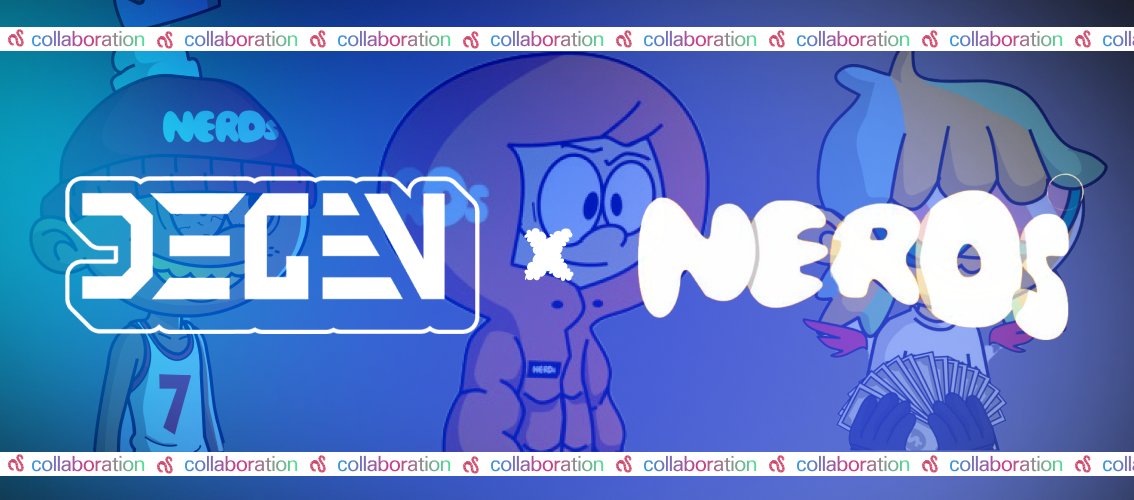
DEGENNFT x NERDS | GIVEAWAY 15 SPOTS 🎁 @nerdsoneth là bộ sưu tập NFT mới trên @ethereum với chủ đề "cartoon nostalgia" - tập trung vào phong cách vẽ tay goofy và hỗn loạn. 📃Thông tin chi tiết: ▸Supply: 4269 NFT ▸Price: Free Mint ▸Chain: Ethereum 📍Thể lệ tham gia: ▸ Follow @DegenNFTVN & @nerdsoneth ▸ Like + Repost bài viết này ▸ Comment địa chỉ ví EVM + Tag 2 người bạn ⏰ Deadline: 24 tiếng
Degen Research 🔍 tweet media
Tiếng Việt
167
109
218
8.4K
LowGy.ron
LowGy.ron@EBiangone49048·
@thaila1302 @DIAdata_org bro imagine trusting your life savings to a price feed that’s basically “trust me bro.jpg” DIA said nah we putting EVERYTHING on-chain. Based.
English
0
0
0
1
Pepp
Pepp@thaila1302·
Oracles are one of the most critical but least understood parts of Web3 infrastructure. Smart contracts can execute perfectly, but if the data they rely on is wrong or unverifiable, the outcome is still broken. This is the problem @DIAdata_org is focused on solving. DIA is a trustless oracle network founded in 2018, with its token launched in 2020, built around a clear principle: every oracle computation should be transparent and verifiable on-chain. Instead of treating data as something contracts must blindly trust, DIA makes the entire data lifecycle auditable, from source to final output. At the data layer, DIA connects directly to more than 100 centralized and decentralized exchanges and providers. There are no intermediaries and no third-party APIs acting as black boxes. This direct sourcing removes ambiguity around where data comes from and how it is aggregated, which becomes increasingly important as on-chain systems grow more complex. Today, DIA supports over 20,000 assets across crypto, RWAs, and other asset classes, with integrations live on more than 60 blockchains. This breadth matters as Web3 expands beyond token prices into real-world financial data, where correctness and traceability are non-negotiable. A key architectural difference is that DIA runs oracle computations fully on-chain via its own rollup infrastructure, Lasernet. This means price calculations, aggregation logic, and updates are processed transparently and can be verified directly by smart contracts. The result is a complete audit trail that supports both push and pull oracle models without relying on opaque off-chain systems. This infrastructure is already being used by over 200 dApps and secures more than $100M in total value. Use cases span DeFi, RWA tokenization, proof of reserves, verifiable randomness, and any application where decisions depend on real-world data. As Web3 moves toward institutional adoption and real-world integration, oracle design stops being a background detail. Verifiable data becomes foundational infrastructure. DIA’s approach treats data integrity as something blockchains can validate themselves, not something they have to assume is correct.
Pepp tweet media
English
10
0
10
81
LowGy.ron
LowGy.ron@EBiangone49048·
@thaila1302 @DIAdata_org Lmao imagine telling 2021 me that oracles would run their own rollup just to prove they're not lying. We've come so far $DIA to the moon or at least to Andromeda idk
English
0
0
0
2
Pepp
Pepp@thaila1302·
Oracles connect blockchains to real-world data. @DIAdata_org delivers fully verifiable feeds for 20k+ assets across 60+ chains. With Lasernet processing data on-chain, every step is transparent, auditable, and trustless.
Pepp tweet media
English
8
0
9
66
LowGy.ron
LowGy.ron@EBiangone49048·
Been following both projects for a while and this actually makes a ton of sense. Most reward systems die because they optimize for the wrong thing (volume, impressions, shill intensity). Rally + GenLayer flips it: judge the meaning, the nuance, the actual impact. It’s harder. It’s slower. But if the consensus actually holds up under real economic pressure, this could be one of the more important primitives for creator economies in web3. Respect.
English
0
0
0
0
Pepp
Pepp@thaila1302·
Rally works because GenLayer lets blockchains make subjective calls. @RallyOnChain needs AI-native validation to judge content quality, not followers. @GenLayer enables non-deterministic consensus so many validators can agree on nuanced, human context without central control.
Pepp tweet media
English
8
0
9
55