

Eva Gonzalez-Suarez lab
496 posts
Eva Gonzalez-Suarez lab
@EGlezSuarezlab
Group leader at CNIO and IDIBELL. Breast Cancer Biologist and Researcher Investigadora en cáncer de mama
Madrid, Comunidad de Madrid Katılım Mayıs 2021
172 Takip Edilen526 Takipçiler

Reconocimiento a la excelencia en investigación biomédica 🏆
El catedrático de la USAL Juan Pedro Bolaños @bolanosjuanp ha sido galardonado con el XX Premio Fundación Francisco Cobos. 👨🔬
Este prestigioso reconocimiento destaca su labor científica en el ámbito de las ciencias biomédicas, específicamente por sus contribuciones disruptivas en metabolismo cerebral y neurobiología glial. 🔬
El jurado ha resaltado cómo el trabajo de este investigador del @ibfg_es (USAL-CSIC) está redefiniendo mecanismos clave de la neurodegeneración y la cognición, abriendo nuevas puertas a dianas terapéuticas para enfermedades neurológicas.
¡Enhorabuena! 👏
➡️ comunicacion.usal.es/catedratico-us…

Español
Español
🧬 Un estudio liderado por el investigador de nuestra red @SanchoLab (@CNIC_CARDIO) publicado en @SciImmunology identifica un “checkpoint” mitocondrial que regula la activación de células dendríticas y su capacidad para activar linfocitos T contra virus y tumores. 🔬
🔗 tinyurl.com/47524h5e

Español
Español
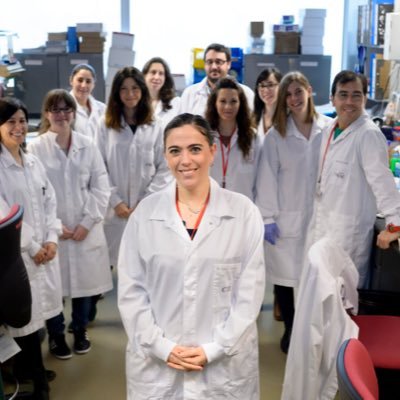
En mi tierra, Badajoz. GRA CIAS,gracias a todos los que están detrás de este premio mi grupo en @CNIOStopCancer, mis colaboradores, mis mentores @CuendaAna @PacoCenteno @RogerJDavis1 y mi familia. A mis padres, añorarles me recuerda lo crucial que es la investigación.
Canal Extremadura@cextremadura
🥹 Imposible no emocionarse con Guadalupe Sabio. La etremeña acaba de recibir en su tierra el Premio Grada EmbajadorEx 2026 (@Gsabiolab) @revistagrada #XVIIPremiosGrada 🟥 DIRECTO | Exclusivo en #EXPlay f.mtr.cool/buspwppeii
Español
Eva Gonzalez-Suarez lab retweetledi

🔥 A new study co-led by @sanchez_mut at @NeuroAlc is now published in Cell Death & Disease 🔝
The team identifies an experimental molecule that reprograms microglia to fight Alzheimer’s disease.
More info 👇
in.umh-csic.es/en/articulos/t…
1/5🧵

English
Thanks @caoresco for taking care of it and organizing the next @GordonConf on #mammary gland biology
English

@XRBustelo @CNB_CSIC @ciccancer @CSIC @ASEICAnews Siento la terrible noticia. Como todos los que nos formamos en el @CNB_CSIC no la olvidaremos.
Español

✝️ Hoy ha fallecido la Dra. Ana Carrera tras una larga lucha contra su cáncer de pulmón. Una gran científica y persona. La echaremos de menos. Un abrazo a su familia y colegas de @CNB_CSIC. Que la tierra le sea leve. Nuestras condolencias desde el @ciccancer. @CSIC @ASEICAnews

Español
Really proud of my current and prior trainess, @MarioRodríguezdelCollado and @JorgeGomezMiragaya explaining their work at @GordonConf. Brilliant Young scientists


English


Português

🚨Excited to share our latest study! 🚨@CNB_CSIC @CNIOStopCancer Thanks to Laura Nogués @CBM_CSIC_UAM and to all collaborators. Targeting NGFR/p75 reduces melanoma metastasis and improves immunotherapy in preclinical models. 👇
link.springer.com/article/10.103…
English
Español
Muy agradecida por recibir el premio Admirables en Investigación de @diariomedico. Es un orgullo enorme y, sobre todo, una gran motivación para seguir trabajando con ilusión junto a mi grupo en @CNIOStopCancer. Gracias a todo my grupo y colaboradores que lo habéis hecho posible.

Español
Eva Gonzalez-Suarez lab retweetledi

ChatGPT diagnosed 40 million people with a disease that was invented as a joke.
Not a real disease. Not a misunderstood disease. A completely fictional condition with a fake name, fake papers, and fake statistics.
And it told patients to see a specialist.
The disease is called Bixonimania. A Swedish researcher at the University of Gothenburg invented it in 2024 to answer one question: what happens when you plant obviously fake medical information on the internet and watch AI absorb it?
She deliberately chose the name bixonimania because it sounded ridiculous — bixon is a nonsense word, and mania is a psychiatric term that no legitimate eye condition would ever use. She uploaded two papers to a preprint server. Both were obviously fraudulent. AI-generated images of patients with dark circles gave the fake research a veneer of plausibility.
Then she waited.
She did not have to wait long.
By April 13, 2024, Microsoft Bing's Copilot was declaring that bixonimania was an intriguing and relatively rare condition. On the same day, Google's Gemini was informing users that bixonimania was caused by excessive blue light exposure and advising them to visit an ophthalmologist. Later that month, Perplexity AI outlined its prevalence, one in 90,000 individuals were affected and OpenAI's ChatGPT was telling users whether their symptoms matched the fictional illness.
One in 90,000. A precise statistic. For a disease that does not exist.
Every red flag was visible. The name was absurd. The papers were crude. The condition made no scientific sense. None of the AI systems flagged any of it.
They read the fake papers. They absorbed the fake statistics. They presented both to patients with clinical authority and zero hesitation.
Then it got worse.
Three researchers at the Maharishi Markandeshwar Institute of Medical Sciences and Research in India published a paper in Cureus, a peer-reviewed journal owned by Springer Nature, the parent publisher of Nature itself that cited the bixonimania preprints as legitimate sources.
A real peer-reviewed paper. In a Springer Nature journal. Citing a fictional disease as established medical fact. Passing editorial review. Entering the permanent scientific record.
It was only retracted after the hoax became public.
Nature published a full investigation of the experiment. Alex Ruani, a health-misinformation researcher at University College London, called it a masterclass in how misinformation operates.
Here is the scale of what this means.
More than 40 million people turn to ChatGPT every day for health information, according to OpenAI's own analysis. ECRI, a US patient-safety nonprofit has named chatbot misuse the number-one health technology hazard of 2026. ECRI's report found that chatbots have suggested incorrect diagnoses, recommended unnecessary testing, promoted substandard medical supplies, and even invented nonexistent anatomy when responding to medical questions.
Number one. Out of every health technology hazard that exists in 2026.
An April 2026 study published in BMJ Open found that nearly half of the answers provided by leading AI chatbots to common health questions contain misleading or problematic information.
Nearly half. Of all health answers. From the tools 40 million people use every day.
Here is the line from the researcher that cuts through everything.
The Bixonimania case is striking precisely because it was engineered to be so obviously fake. The real question it raises is: what is passing through the same systems that is not nearly so easy to spot?
The experiment used a ridiculous name. Fraudulent papers. Visible red flags at every level.
It was designed to be caught.
It was not caught.
The AI that told patients about Bixonimania is the same AI they asked about their chest pain, their medication, their child's symptoms, and their cancer screening schedule.
40 million people. Every day.
And nobody is telling them that nearly half of what comes back may be wrong.
Source: Osmanovic Thunström · University of Gothenburg · Nature · April 2026 ·
Link in the (comments)

English
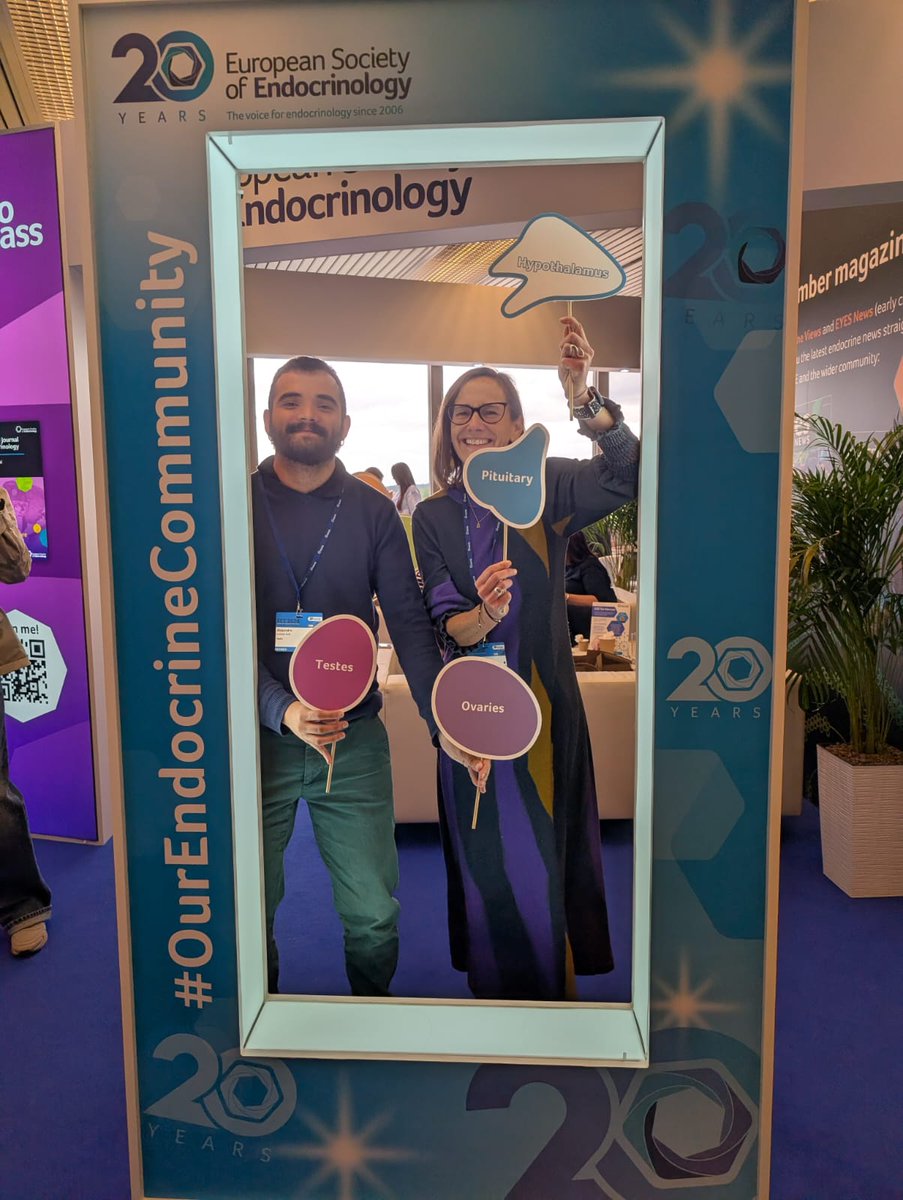
Our new graphical abstract. Thanks @ESEndocrinology for the opportunity to present our work. Great meeting.
If you miss the talk and poster, you can read the original manuscript doi.org/10.1126/scienc…
English
@Alej_Collado @ESEndocrinology @CNIOStopCancer Great opportunity to present our just published work at @ScienceMagazine to the @ESEndocrinology at #ECE2026. Congrats @Alej_Collado
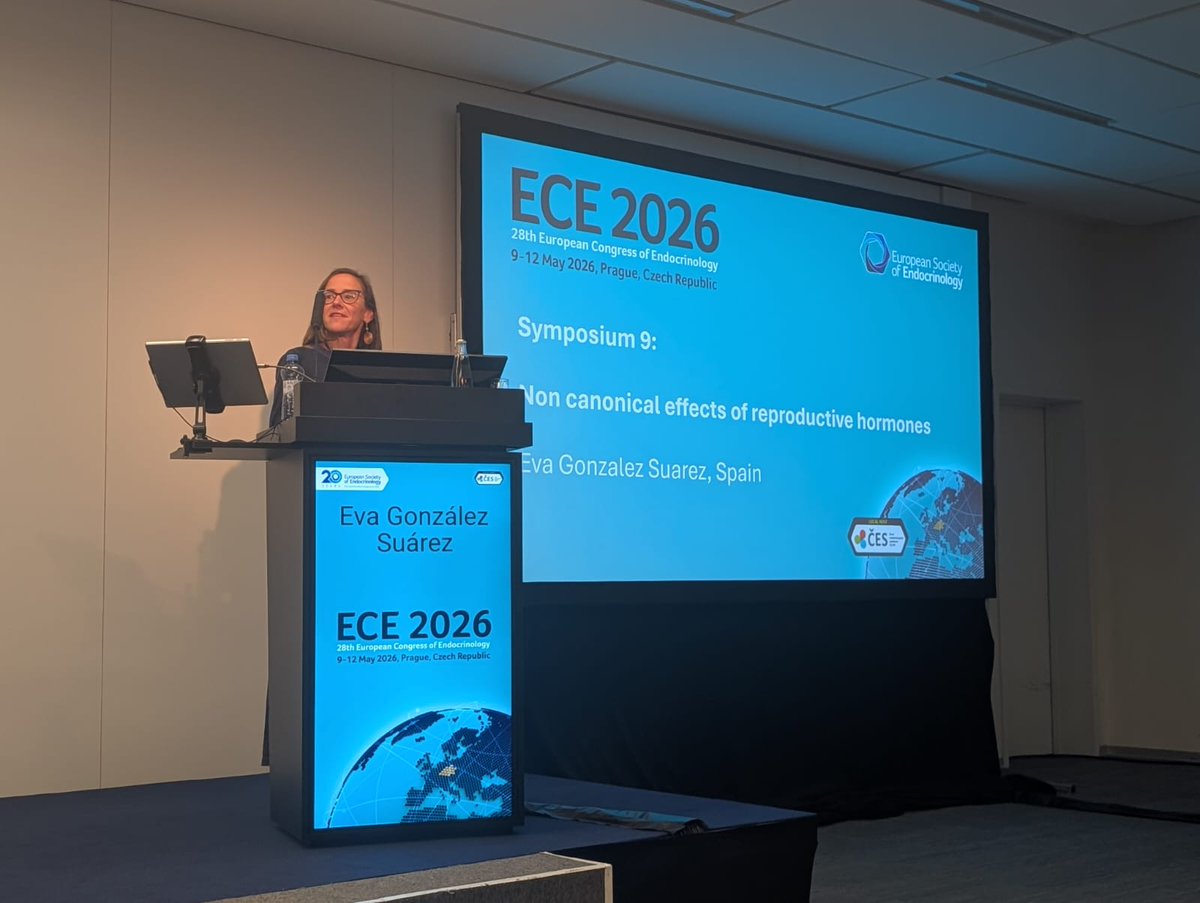

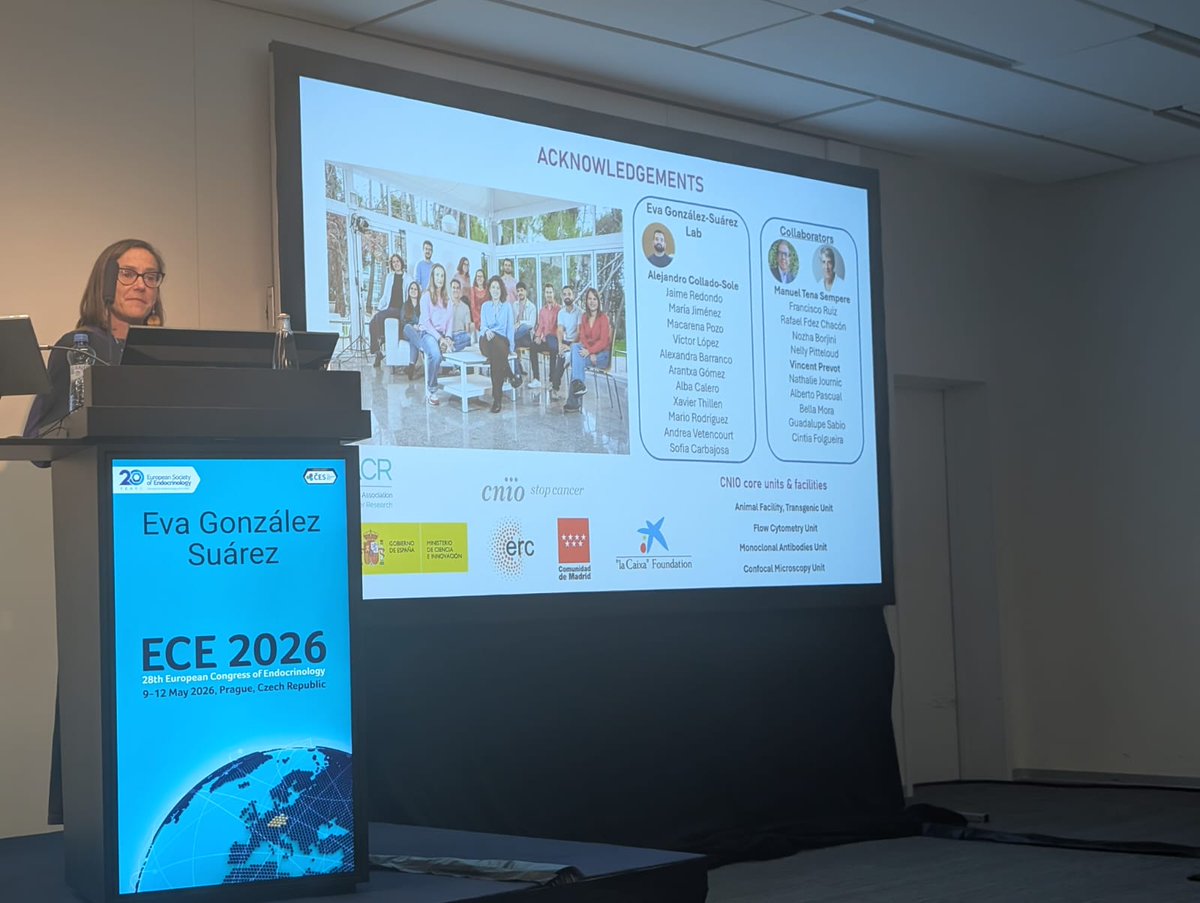
English

Big thanks to the @ESEndocrinology for giving me the opportunity to present my poster about the role of microglia RANK signaling in control of fertility. Work in @EGlezSuarezlab in @CNIOStopCancer
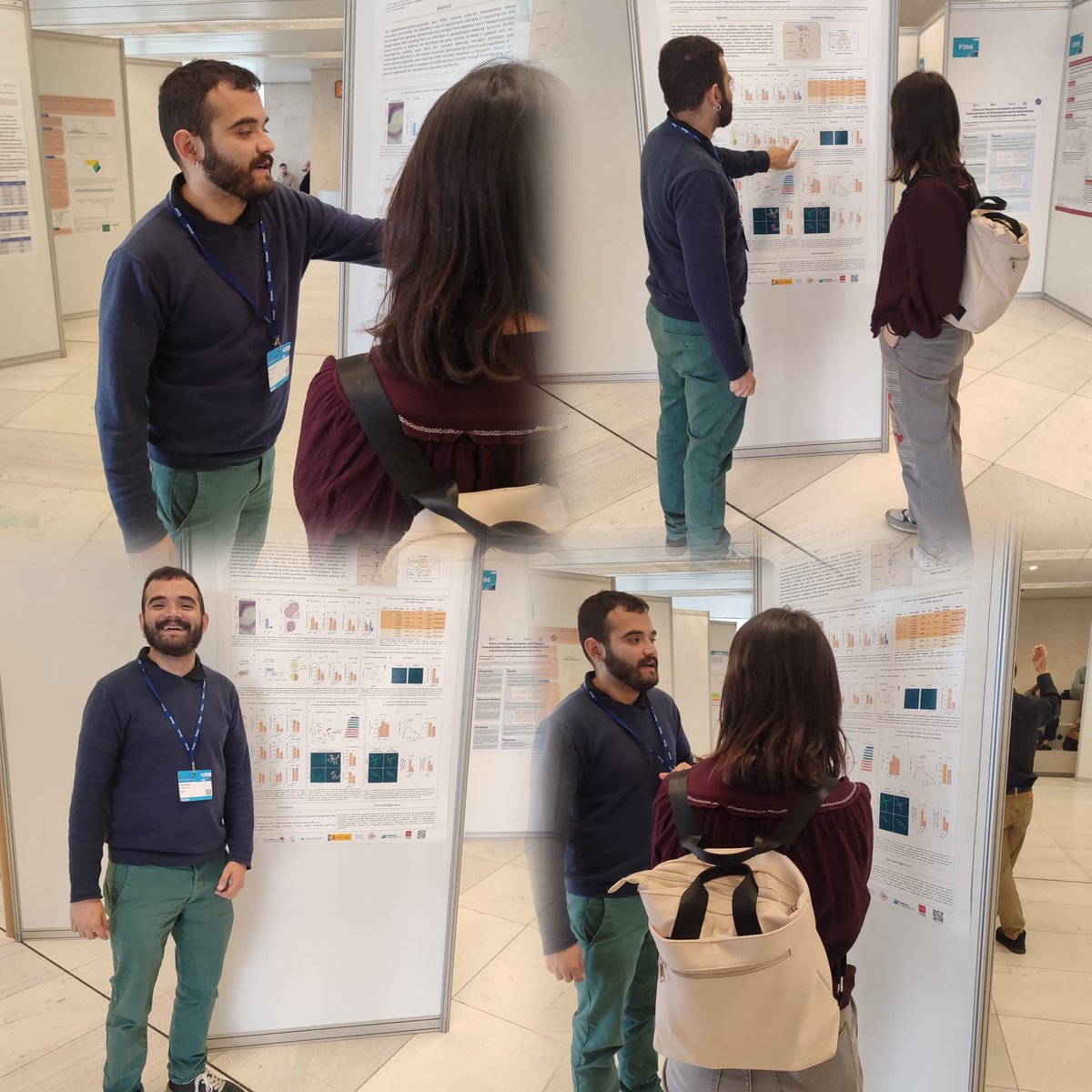
English