E J Fisher
38.6K posts
E J Fisher
@EJFisher2
I'm a teacher who writes screenplays and novels. I live with my husband, two sons and three socially maladapted cats in a house with tufted carpets.

Wirral, UK Katılım Ekim 2010
3.9K Takip Edilen3.3K Takipçiler
Sabitlenmiş Tweet
E J Fisher retweetledi

#Missing: Layla, aged 16.
Police are concerned for her safety & urgently want to hear from anyone who's seen her.
Layla was last seen in the Wollaton area of #Nottingham around 2:15pm on Sunday 03/05/26.
If you've seen Layla or know where she is, please call #Notts Police on 101.

English
E J Fisher retweetledi

#MISSING | Reece, 35, is missing. He is a tourist from Australia who has been staying in central London and last contacted his family on Monday, 20 April. If you see him please call 101 quoting CAD 5929/2MAY.

English
@Steven_Swinford @oliver_wright Stick that one on the incompetents that encouraged Brexit.
English

Exclusive from @oliver_wright
Brussels has told Sir Keir Starmer that Britain will have to make annual payments into European budgets for the first time since Brexit, as part of the prime minister’s reset with the bloc
European negotiators have made it clear that paying the cash, expected to amount to about £1 billion a year, is a condition of further access to the EU’s single market
They want Starmer to make the concession in principle at a summit between the prime minister and European leaders this summer before detailed negotiations on more integration.
“If the UK wants further integration they must ‘pay to play’,” one European diplomat said. “That is not unusual.”
thetimes.com/uk/politics/ar…
English
E J Fisher retweetledi

The replies to this person's tweet lack a nuanced understanding of aesthetics. Let me tell you why I don't think this room works.
First, the gold decorations make the room look like an ersatz Versailles. Go to Getty Images and type in "Oval Office." Then zoom in on the gold decor. You'll notice that the lines are very blunted and muddied; they lack the sharp lines and fine detailing that you'd expect on something made by an artisan. Hence why some people have suggested these decorations are from Home Depot (true or not, that's the impression).
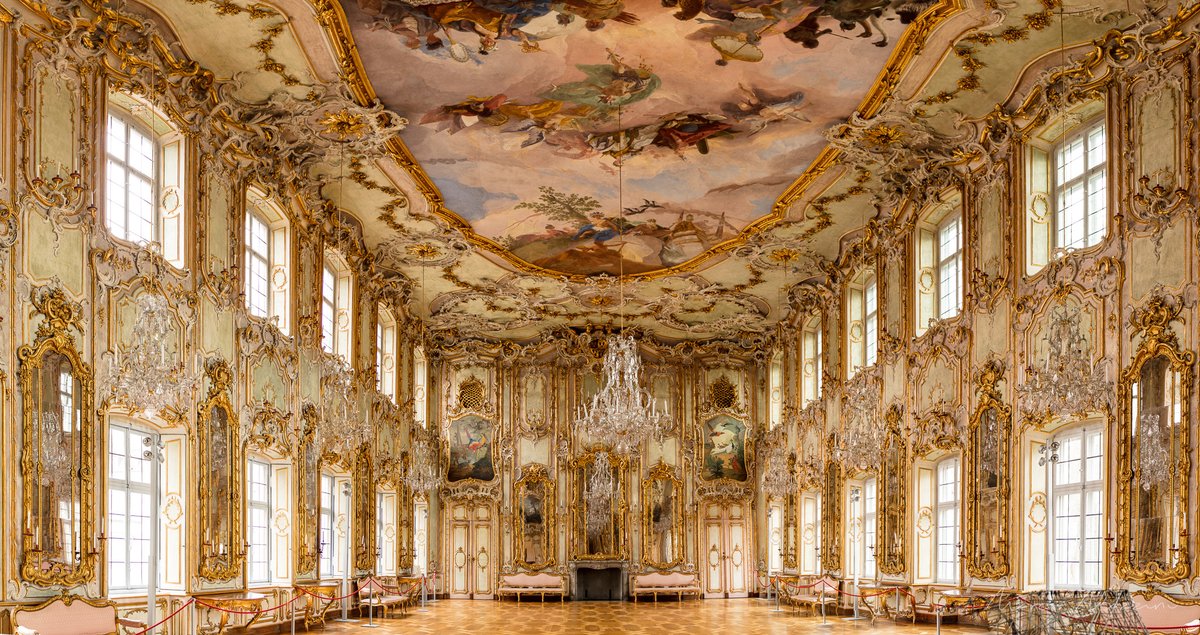
You can see the difference between the first and second photos. The first, of course, is of the Oval Office; the second is the reception room from the Hotel de Cabris in France, which was made during the 18th century under the direction of Louis XVI. Even at this distance, the second image looks much better because it was designed and executed by artisans working within a coherent visual language. You can really see the crisp lines and detailing.
Second, the White House was designed by James Hoban, an Irish architect who migrated to the US for economic opportunities (what a great American story!). He originally designed it in the Neoclassical style, drawing on Palladian and Georgian influences.
Neoclassicalism was a reaction against the Rococo movement, which reactionaries saw as overly ornate and frivolous. A bit of gold used sparingly and strategically can look fine in a Neoclassical building, but the amount Trump used has so radically encrusted the room that it's now in Rococo territory, making it look like a mismatch of aesthetics. You can see an example of gilded Rococo architecture in the third slide. Although it's not my thing, the effect is totally different because it's coherent.
IMO, architecture sets the terms for you can decorate a space. Modernist furniture looks best in modernist buildings, just as Craftsman furniture looks best in Craftsman homes (see fourth slide). You don't have to do period recreations — sometimes mixing two aesthetics, or old and new, can make a space feel more natural — but having a sense of aesthetic history (art, architecture, furniture, fashion) can help you create better aesthetics.
The Oval Office offends on at least three levels: the ersatz nature of the decor, the way it grates against Hoban’s Neoclassical vision, and the way it misunderstands the classical-republican symbolism that the White House was meant to project in the first place. As others have noted, this is the kind of decor you'd expect from dictators who rob their own country.


Scott Barber@thescottbarber
Words literally cannot express how utterly insane and tasteless this aesthetic really is.

English
@stuzi_pants Morning Sunshine. Bank holiday weekend so lazy time for me. 😘
English
@dieworkwear It’s also about framing. There is exquisite organisation and proportion in the French state rooms. Space between the details is exactly right. Trump’s is disorganised and cluttered.
English
E J Fisher retweetledi

Let’s keep banging on about this because God knows nobody else is.
Kevin Maguire@Kevin_Maguire
Nigel Farage secretly accepting a FIVE MILLION POUNDS gift from a Thai-based crypto tycoon is one of the biggest political financial scandals of this or any era. Farage, for himself not the many. theguardian.com/politics/2026/…

English

‘Sun’s out, tongue’s out’
So this little lady was a feral cat here in Fuerte who wore me down over months until I succumbed and apparently became her Mum (much to Alfie’s consternation 🐶)
Still not given her a name yet
Ideas welcome
I keep calling her Kitty 🤦♂️
#Caturday

English
@MrPitbull07 Untrained but her scientific method is impeccable as is her empathy.
English

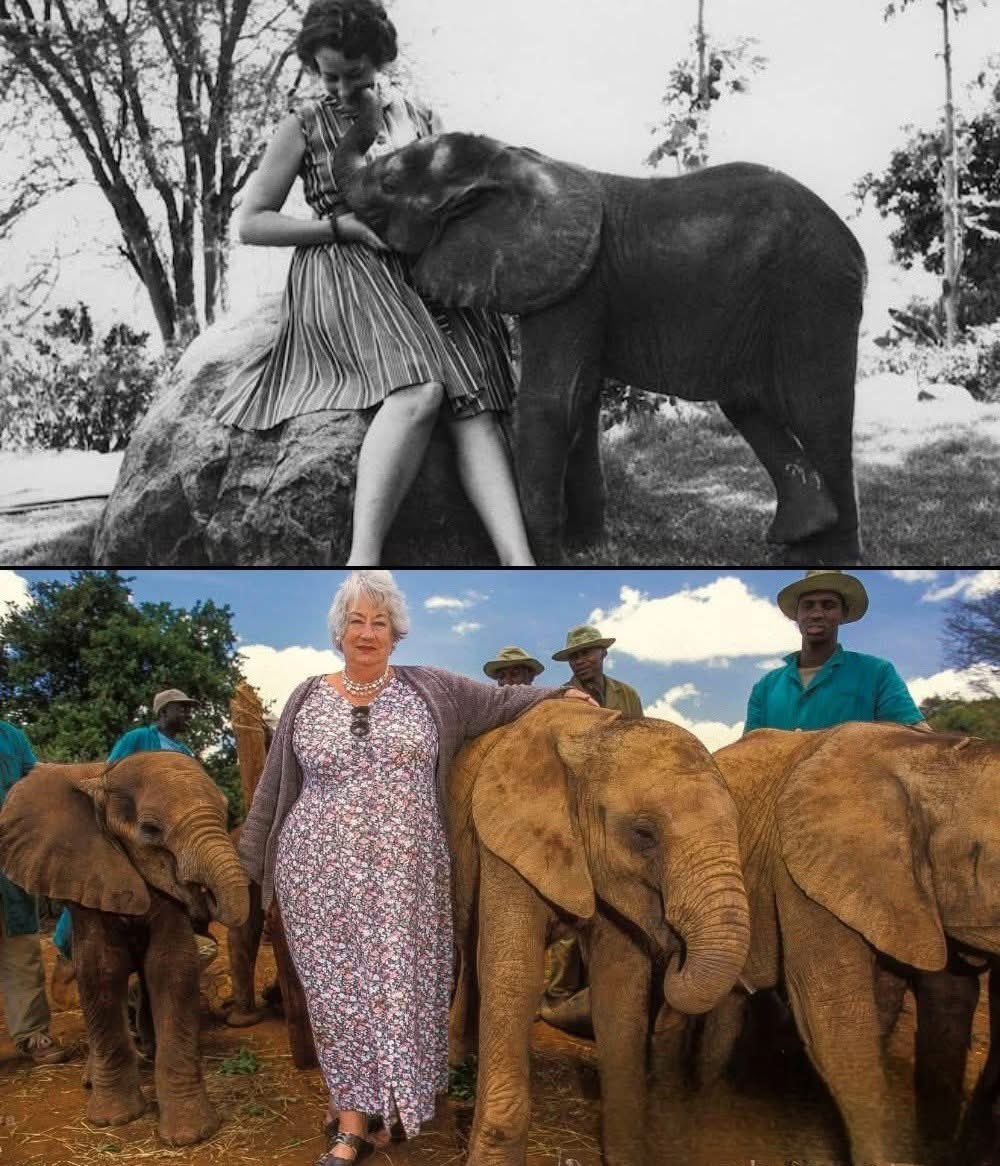
For decades, every orphaned elephant died within a matter of weeks. Then a woman with no scientific training decided that wasn’t good enough.
Daphne Sheldrick received baby elephants at her center in Tsavo National Park, Kenya. They arrived after poachers had killed their mothers. They were only a few weeks old, confused, and still dependent on milk.
The pattern was always the same.
They were fed cow’s milk, the only alternative available. At first, they drank it. Then their bodies began to reject it. Diarrhea, dehydration, weakness. Within days, they died.
That was the case everywhere.
Experts considered it inevitable. Elephant milk had a composition too specific to be replicated. Without the mother, there was no solution.
Daphne had no formal academic training in biology or veterinary medicine. She had learned by working in the field, alongside animals. And she decided not to accept that conclusion.
She began to experiment.
She adjusted the milk formulas. Added cream. Used goat’s milk. Introduced different oils, one at a time. She recorded everything in a notebook. Every attempt was tested on a real calf.
Many died.
And from that point on, her work changed.
Every mistake became data. Every loss became a clue about what did not work. She continued for years. Then for a decade. Then two.
In the meantime, she identified several key factors.
Coconut oil worked better than other fats. Mineral proportions had to be precise. Stress was also a decisive factor: the calves needed constant contact, not just nourishment.
The keepers began sleeping beside them. Caring for them day and night. Partly replacing the presence of the mother.
Results came slowly.
First they survived for a few weeks. Then months. Then years.
In the late 1970s, after the death of her husband, she founded the David Sheldrick Wildlife Trust. She gathered everything she had learned and turned it into a method.
Feeding, medical care, daily management. Everything was organized into clear protocols.
The calves began to grow.
Some were reintroduced into the wild. Then they integrated into herds. Then they had calves of their own.
What had seemed impossible became achievable.
When Daphne Sheldrick died in 2018, more than 230 orphaned elephants had survived thanks to the system she had developed.
She had no academic titles.
She had started with a problem everyone believed had no solution—and kept working on it for nearly thirty years.

English
E J Fisher retweetledi