
European Society of Preventive Medicine

3.7K posts

European Society of Preventive Medicine banner
European Society of Preventive Medicine

European Society of Preventive Medicine

@ESPM_org

Fellowship for Preventive Medicine and Systems Biology. Our journal: @Longevity_ESPM. Director @drmichaelsagner

Oxford, England Katılım Haziran 2013
391 Takip Edilen2K Takipçiler
Sabitlenmiş Tweet
European Society of Preventive Medicine
We're excited to launch our new journal @Longevity_ESPM, a new initiative to promote longevity science and all related fields. All open acess publication fees will be waived for the first year! Submit your publications today: tandfonline.com/journals/tpml2… Our editors are @Rcmsiow @DrMichaelSagner. With @NathanPriceSci @geochurch @isbsci #Aging #PreventiveMedicine @tandfmedicine @ARK_KCL @ELSA_Study @longescience @LongevityTech @BuckInstitute
English
2
11
19
3.2K
European Society of Preventive Medicine retweetledi
Eric Topol
Eric Topol@EricTopol·
Getting your real-time heart rhythm monitored for 10 days now requires an ECG technician to review and notify your doctor of a critical arrhythmia. A new study showed A.I. did better than technicians (98.6% vs 80.3%) for identifying these abnormalities nature.com/articles/s4159… @NatureMedicine
English
0
156
565
121.2K
European Society of Preventive Medicine retweetledi
Jose Antonio PhD
Jose Antonio PhD@JoseAntonioPhD·
What's the best place to learn the latest sports nutrition science? If you answered, the "ISSN Conference," go to the head of the class. Register now at ISSN.net Here is our current list of speakers: Jose Antonio PhD FISSN Darren Candow PhD FISSN @darrencandow Katie Emerson MS RD CISSN Guillermo Escalante DSc FISSN Violette J. Gibbs MS Douglas Kalman RD PhD FISSN (Mel Williams Memorial Lecture) @dougkalmanphdrd Jennifer Kurtz PhD CISSN Kworweinski Lafontant MS Gianna F. Mastrofini MS Jamie McAllister-Deitrick PhD Brandon Roberts PhD Michael Roberts PhD - Keynote - (Roger Harris Memorial Lecture) Michael Sagner MD @DrMichaelSagner Antonella Schwarz PhD Madelin R. Siedler PhD Landon Shannahan MS Valentina Rodriguez Da Silva MS K. Michelle Singleton PhD Danielle Sterner PhD(c) Jeffrey Stout PhD FISSN @ExphysPhD - Special Lecture in Memory of Roger Harris PhD Matthew Stratton PhD CISSN Richard Swinbourne PhD Grant Tinsley PhD CISSN Katie Vasenina PhD Laurel Wentz PhD
English
1
8
18
1.9K
European Society of Preventive Medicine retweetledi
Siim Land
Siim Land@siimland·
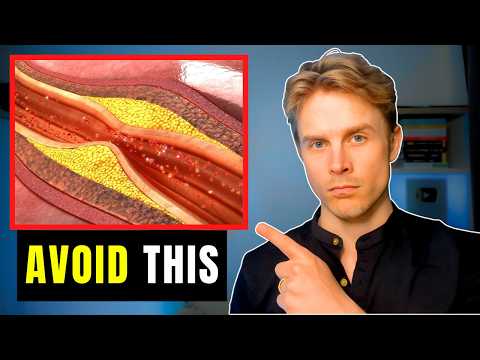
Regular exercise reduces the likelihood of plaque accumulation in the arteries However, many long-term exercisers appear to have coronary artery calcification, indicating atherosclerosis progression The fascinating thing is that despite the higher plaque, those people still have lower rates of cardiovascular disease events and mortality Full video youtu.be/S-NKPZSkbXg Graph: academic.oup.com/eurheartj/adva…
YouTube video
YouTube
Siim Land tweet media
English
41
277
1.3K
177.5K
European Society of Preventive Medicine retweetledi
Professor Azeem Majeed
Professor Azeem Majeed@Azeem_Majeed·
The NHS is lowering the bowel cancer screening age in England from 60 years to 50 years with the aim of detecting cancer at an earlier stage. The change involves sending home-testing kits which can identify signs of bowel cancer before symptoms appear to people aged 50 to 52.
English
224
346
3.1K
285.5K
European Society of Preventive Medicine retweetledi
Howard Luks MD
Howard Luks MD@hjluks·
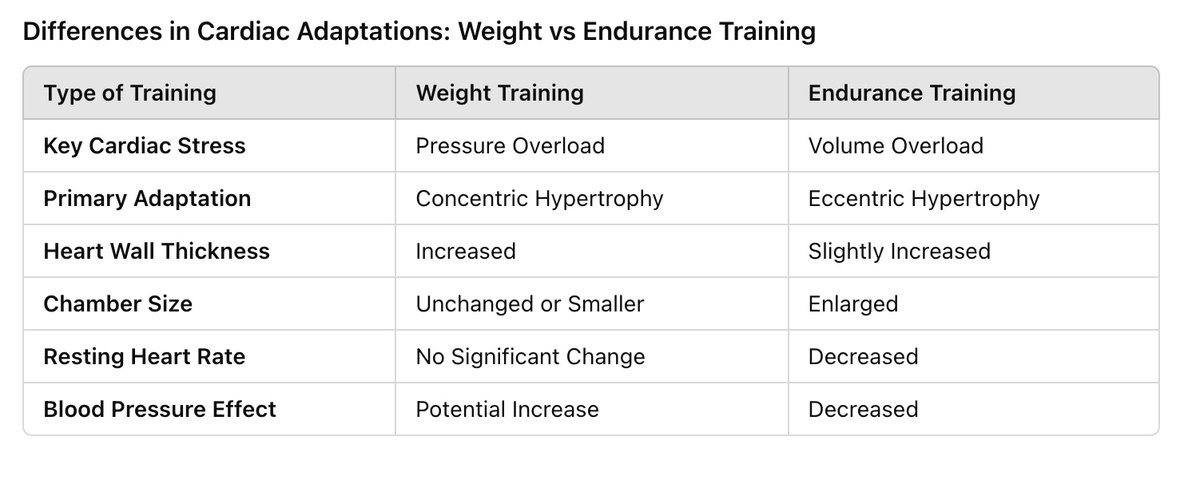
Weight training vs. aerobic training, or both?... It's the cardiac adaptations that matter. How do various exercises affect the heart? Let's explore how weight training and endurance training shape your heart differently. Weight Training: Resistance exercise creates pressure overload, leading to CONCENTRIC hypertrophy, where the heart's walls thicken, but the chamber size remains unchanged. This enhances force generation (power) but may reduce filling efficiency if overdone without aerobic activity. This is important because it doesn't affect stroke volume or the amount you pump with each beat. Furthermore, the thickening can decrease compliance of the tissues and also lead to stiffening of the major vessels leaving the heart. Endurance Training: Aerobic exercise causes volume overload, resulting in ECCENTRIC hypertrophy, where the chamber enlarges while walls thicken slightly. This improves cardiac efficiency, lowers resting heart rate, and boosts cardiovascular health, though excessive training may have risks. More importantly... a larger chamber (to a point) increases your stroke volume. That, in turn, is a contributor to improving your VO2 max. The more blood you pump (larger stroke volume), the more oxygen can be delivered to your tissues. This is why we need to combine bone resistance and aerobic training. Weight training strengthens muscles and metabolism but lacks the heart chamber adaptations of aerobic exercise. Adding aerobic training enhances arterial health, lowers blood pressure, and boosts heart efficiency. For the best results: Weight train 2–3 times weekly. Include 150 minutes of moderate aerobic activity weekly. Your heart thrives on variety. Aerobic conditioning can balance out some of the less advantageous adaptations that resistance training brings. keep in mind... this is an orthopedist talking about the heart ;-). So take it for what it's worth
Howard Luks MD tweet media
English
28
70
451
77.2K
European Society of Preventive Medicine retweetledi
The Lancet
The Lancet@TheLancet·
Irritable bowel syndrome (IBS) is a common disorder of gut–brain interaction. It is estimated to affect 5% to 10% of the global population at any one time. Read a new Viewpoint on the personalisation of therapy in @LancetGastroHep ⤵️ hubs.li/Q030LZRz0
English
0
55
157
20.3K
European Society of Preventive Medicine retweetledi
Jose Antonio PhD
Jose Antonio PhD@JoseAntonioPhD·
This is for the “exercise doesn’t promote fat loss” crowd. Depends how much you exercise 🤷🏾‍♂️ 🏋🏻‍♀️🤼🤾🏻‍♂️⛹🏿‍♂️🤺🏄‍♂️🚣🏿🚴🏻
Nick Krontiris@nick_krontiris

This systematic review and meta-analysis finds that exceeding 150 minutes of aerobic exercise per week at moderate intensity or greater may be needed to achieve clinically important reductions in measures of adiposity among adults with overweight or obesity.

English
6
12
126
14.6K
European Society of Preventive Medicine retweetledi
Andrew Flatt
Andrew Flatt@andrew_flatt·
Data showing that genetic predisposition to high blood pressure and its complications can be partially offset by healthy lifestyle. High genetic risk + healthy lifestyle = >30% reduced risk for CVD vs. high genetic risk + poor lifestyle.
Andrew Flatt tweet mediaAndrew Flatt tweet media
English
0
7
19
2.6K
European Society of Preventive Medicine retweetledi
Giuseppe Maltese
Giuseppe Maltese@docmaltese·
Prediabetes is associated with elevated risk of clinical outcomes even without progression to diabetes. Via @DiabetologiaJnl Prediabetes is not a waiting room for diabetes, it is a wake-up call. A more proactive approach is needed. link.springer.com/article/10.100…
Giuseppe Maltese tweet media
English
1
18
30
2.1K
European Society of Preventive Medicine retweetledi