Artemii Novoselov, PhD

570 posts

Artemii Novoselov, PhD banner
Artemii Novoselov, PhD

Artemii Novoselov, PhD

@EarthML1

AI | ex @stripe | ex @stanford

New York, NY Katılım Mayıs 2019
310 Takip Edilen697 Takipçiler
Artemii Novoselov, PhD retweetledi
cyber•Fund
cyber•Fund@cyberfund·
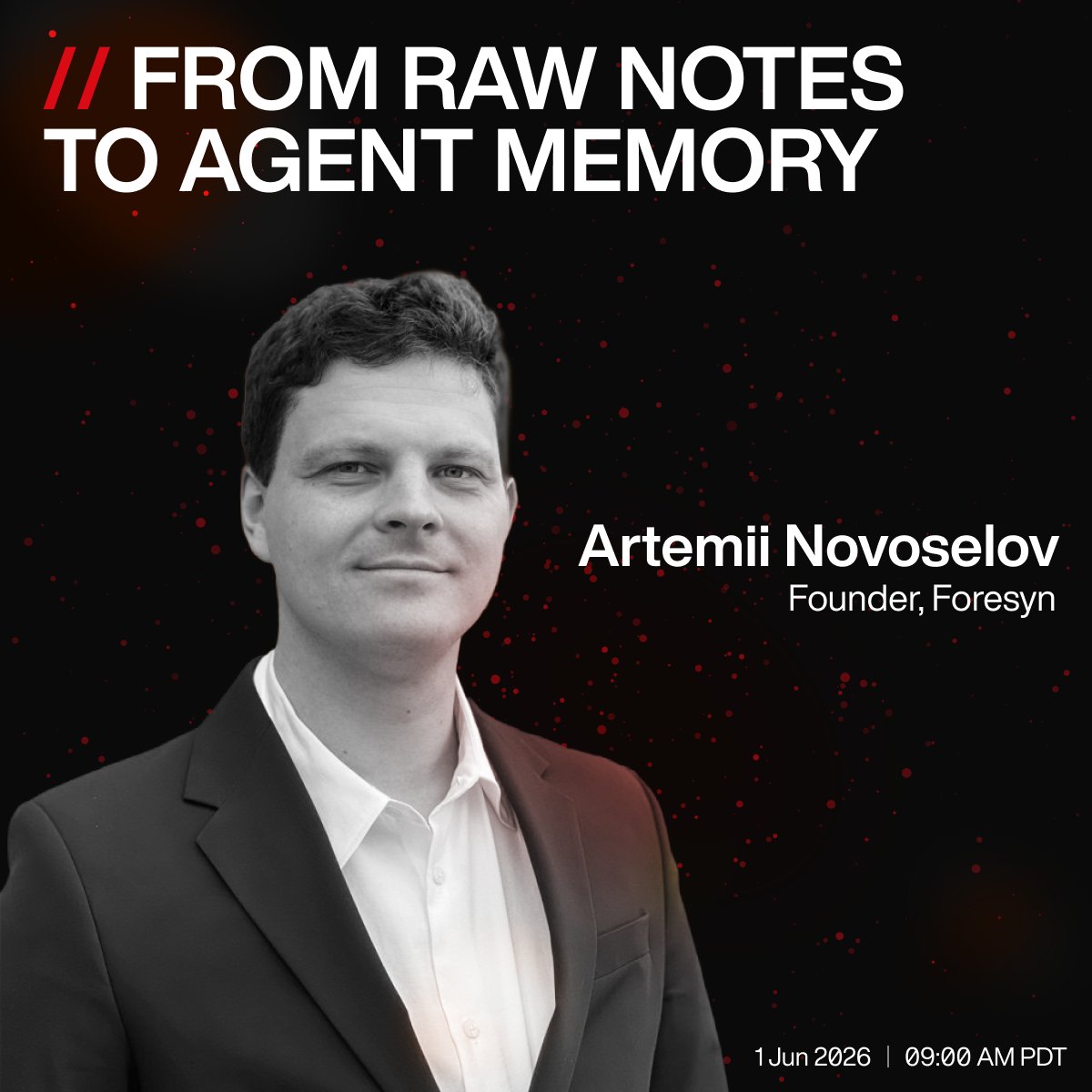
Meet @EarthML1, founder of Foresyn. Stanford geophysics PhD. ML at Stripe. Now building agent memory. On June 1 he's demoing how raw notes turn into atomic facts an agent can actually reuse. Plus a deep-sleep loop that reviews its own traces and improves the system overnight.
cyber•Fund tweet media
English
2
7
23
2.3K
Artemii Novoselov, PhD
Artemii Novoselov, PhD@EarthML1·
Chappe turns Claude/Codex into a growth operator for Telegram channels: sync posts, mine comments, find patterns, draft safely. OSS. 👇
Artemii Novoselov, PhD tweet media
English
1
0
1
199
Artemii Novoselov, PhD
Artemii Novoselov, PhD@EarthML1·
@Techweek_ NYC by @a16z offers 1211 events. You will make it to 6. Built filter that does personalised pick for you in 6 seconds! Link below
English
1
0
0
116
Artemii Novoselov, PhD
Artemii Novoselov, PhD@EarthML1·
I asked @claudeai to post on instagram. it did. meta-graph-cli - open source CLI + Claude Code skill 🐍 link in comments
Artemii Novoselov, PhD tweet media
English
1
0
0
122
Andrej Karpathy
Andrej Karpathy@karpathy·
LLM Knowledge Bases Something I'm finding very useful recently: using LLMs to build personal knowledge bases for various topics of research interest. In this way, a large fraction of my recent token throughput is going less into manipulating code, and more into manipulating knowledge (stored as markdown and images). The latest LLMs are quite good at it. So: Data ingest: I index source documents (articles, papers, repos, datasets, images, etc.) into a raw/ directory, then I use an LLM to incrementally "compile" a wiki, which is just a collection of .md files in a directory structure. The wiki includes summaries of all the data in raw/, backlinks, and then it categorizes data into concepts, writes articles for them, and links them all. To convert web articles into .md files I like to use the Obsidian Web Clipper extension, and then I also use a hotkey to download all the related images to local so that my LLM can easily reference them. IDE: I use Obsidian as the IDE "frontend" where I can view the raw data, the the compiled wiki, and the derived visualizations. Important to note that the LLM writes and maintains all of the data of the wiki, I rarely touch it directly. I've played with a few Obsidian plugins to render and view data in other ways (e.g. Marp for slides). Q&A: Where things get interesting is that once your wiki is big enough (e.g. mine on some recent research is ~100 articles and ~400K words), you can ask your LLM agent all kinds of complex questions against the wiki, and it will go off, research the answers, etc. I thought I had to reach for fancy RAG, but the LLM has been pretty good about auto-maintaining index files and brief summaries of all the documents and it reads all the important related data fairly easily at this ~small scale. Output: Instead of getting answers in text/terminal, I like to have it render markdown files for me, or slide shows (Marp format), or matplotlib images, all of which I then view again in Obsidian. You can imagine many other visual output formats depending on the query. Often, I end up "filing" the outputs back into the wiki to enhance it for further queries. So my own explorations and queries always "add up" in the knowledge base. Linting: I've run some LLM "health checks" over the wiki to e.g. find inconsistent data, impute missing data (with web searchers), find interesting connections for new article candidates, etc., to incrementally clean up the wiki and enhance its overall data integrity. The LLMs are quite good at suggesting further questions to ask and look into. Extra tools: I find myself developing additional tools to process the data, e.g. I vibe coded a small and naive search engine over the wiki, which I both use directly (in a web ui), but more often I want to hand it off to an LLM via CLI as a tool for larger queries. Further explorations: As the repo grows, the natural desire is to also think about synthetic data generation + finetuning to have your LLM "know" the data in its weights instead of just context windows. TLDR: raw data from a given number of sources is collected, then compiled by an LLM into a .md wiki, then operated on by various CLIs by the LLM to do Q&A and to incrementally enhance the wiki, and all of it viewable in Obsidian. You rarely ever write or edit the wiki manually, it's the domain of the LLM. I think there is room here for an incredible new product instead of a hacky collection of scripts.
English
2.9K
7.2K
59.4K
21.3M
Artemii Novoselov, PhD
Artemii Novoselov, PhD@EarthML1·
I built a Claude Code skill that fixes your conversion. Link in comments
Artemii Novoselov, PhD tweet media
English
1
0
0
138
Elon Musk
Elon Musk@elonmusk·
Many talented people over the past few years were declined an offer or even an interview @xAI. My apologies. @BarisAkis and I are going through the company interview history and reaching back out to promising candidates.
Elon Musk@elonmusk

@beffjezos xAI was not built right first time around, so is being rebuilt from the foundations up. Same thing happened with Tesla.

English
6.1K
9.3K
100.9K
48.7M
Sean Neville
Sean Neville@psneville·
Why do agents need their own identities? Can't they just use OAuth tokens and API keys? Sure, but when multiple agents authenticate by impersonating the same end user via OAuth: - you can't tell them apart - you can't revoke one without breaking others - you can't audit which agent did what Some sub agents exist for minutes then disappear, carrying permissions far broader than their task requires, or leaving stale tokens that outlive the task they were created for. And human-in-the-loop approval that works for a couple of agents falls apart when orchestrating dozens. Agents need their own verifiable identity, not borrowed credentials impersonating human end users. Identity is what lets us attach policies, manage capabilities, and establish trust and accountability across agents and services. And building identity on open standards and cryptography strengthens trust by preventing any one vendor from "owning" it.
English
10
9
57
7K
Artemii Novoselov, PhD
Artemii Novoselov, PhD@EarthML1·
@Hormold Appreciate this! Already using livekit here for voice, so should be straightforward to integrate
English
0
0
1
13
Nikita 🤙
Nikita 🤙@Hormold·
@EarthML1 we have a lot of plugins for avatars. take a look at a few examples, and claude could wrap your product into plugins with API keys... billing = per second of usage
English
1
0
0
12
Artemii Novoselov, PhD
Artemii Novoselov, PhD@EarthML1·
Meet and greet cClawatar - hopefully, your first AI employee. This is onboarding demo - Google Meet where you get to meet and greet Ember. She has her own virtual screen too. Give it a try! Looking for your feedback
English
2
0
3
176
Artemii Novoselov, PhD
Artemii Novoselov, PhD@EarthML1·
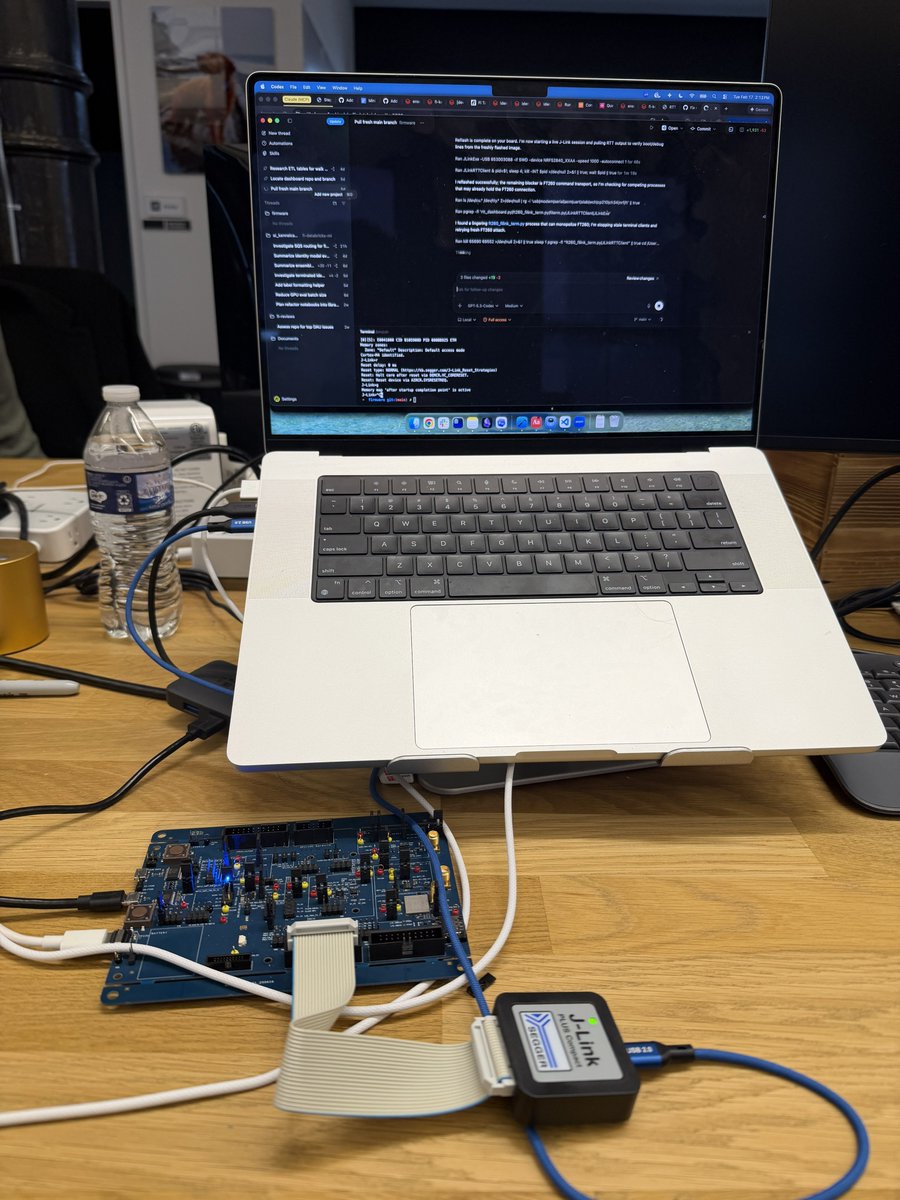
Guess what, firmware is technically software too. And codex is actually capable of autonomously flashing it and testing new features 🤯
Artemii Novoselov, PhD tweet media
English
0
0
2
99
Artemii Novoselov, PhD
Artemii Novoselov, PhD@EarthML1·
🔄 I built /ingest (Claude Code skill): PDF/URL → atomic notes + Obsidian links + smart dedup (merge if sim>0.75). New docs upgrade your knowledge graph. Install: /plugin marketplace add crimeacs/claude-ingest-skill /plugin install ingest@crimeacs-claude-ingest-skill
GIF
English
0
0
0
147