Edoardo Lecce

57 posts

Edoardo Lecce banner
Edoardo Lecce

Edoardo Lecce

@EdoardoLecce

PhD | Human and Exercise Physiology | University of Rome 'Foro Italico'

Rome, Lazio Katılım Ekim 2021
346 Takip Edilen147 Takipçiler
Edoardo Lecce retweetledi
Andrea Casolo
Andrea Casolo@AndreCasolo·
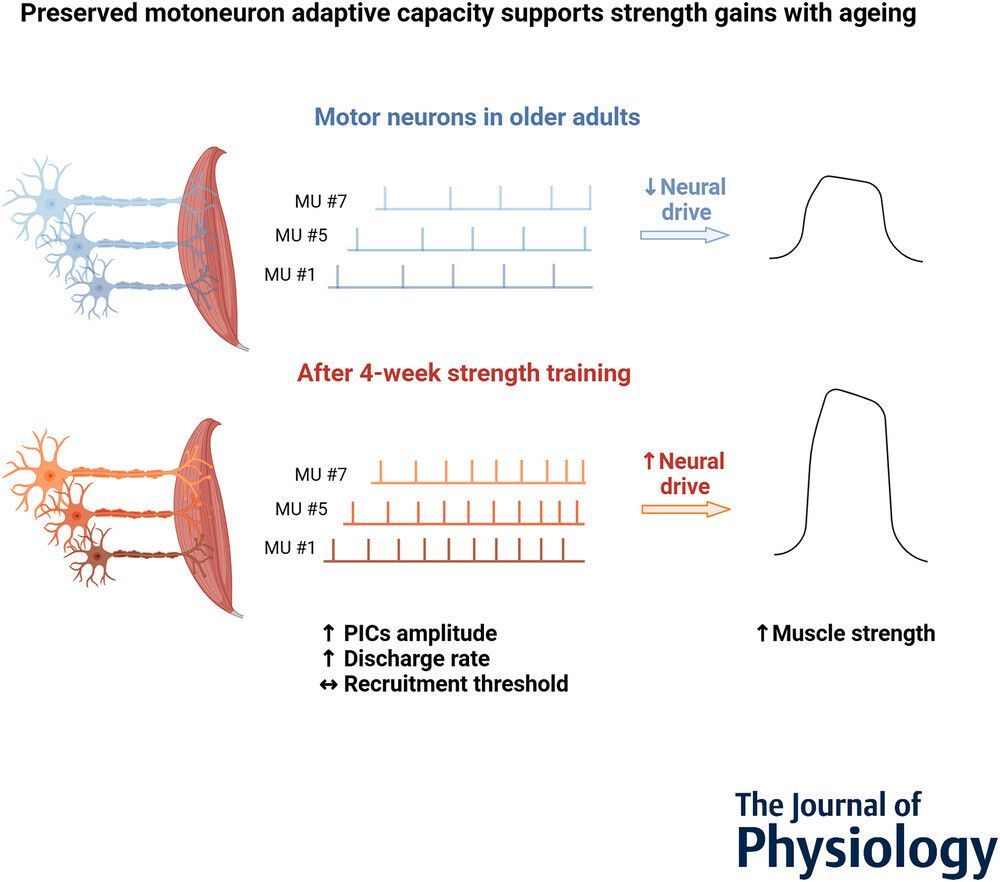
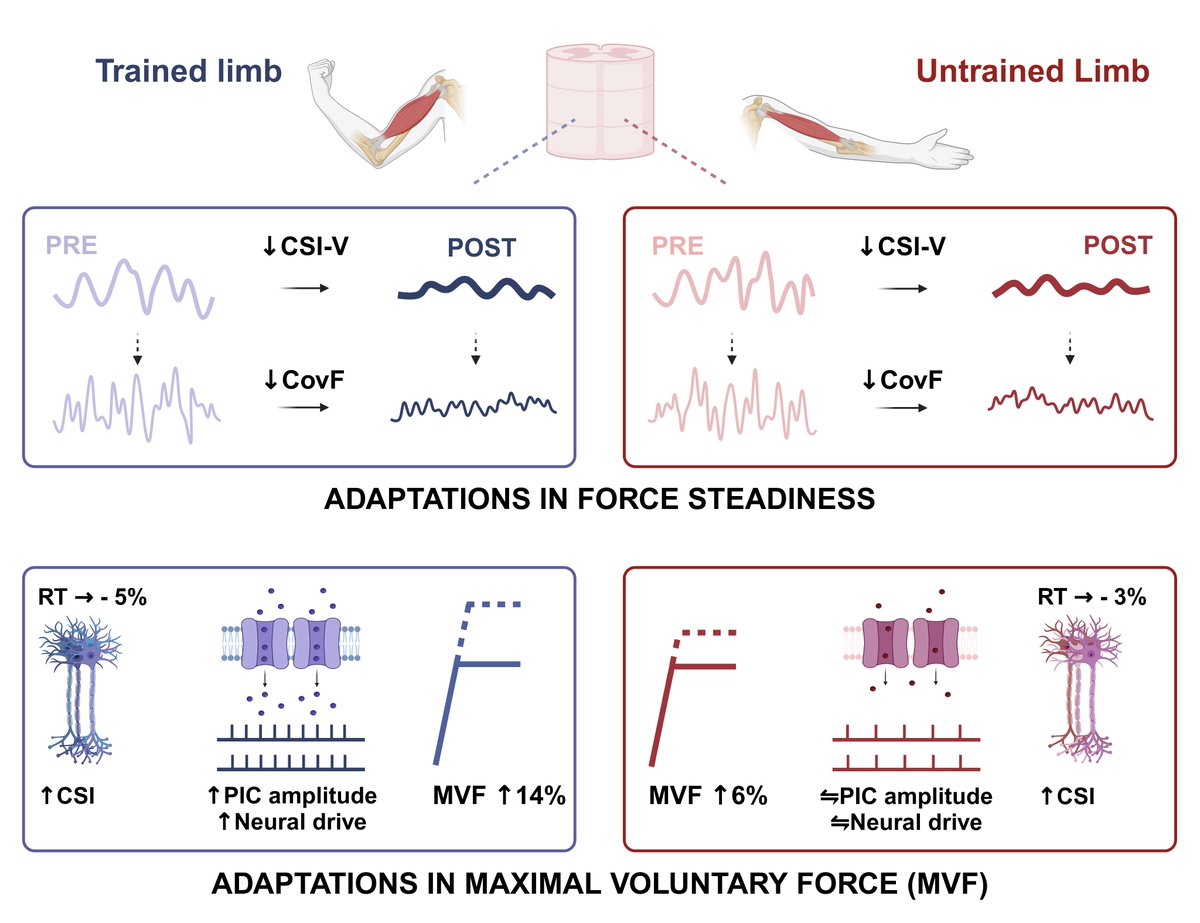
How does strength training improve force in older adults? Using HDsEMG and motor unit tracking, we show that 4 weeks of training ⬆️ discharge rate and PIC estimates. Adaptations were similar in pattern but attenuated vs young adults. New in @JPhysiol physoc.onlinelibrary.wiley.com/doi/full/10.11…
English
2
6
24
2.4K
Edoardo Lecce retweetledi
ISEK
ISEK@ISEKCongress·
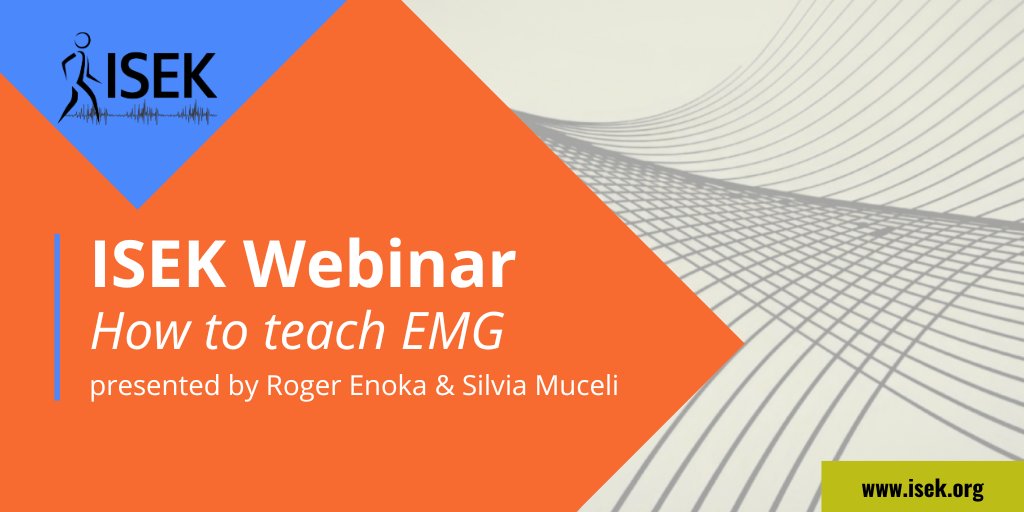
Want to learn how to teach EMG? Join us to gain insights from @RogerEnoka and @SilviaMuceli on March 18 3:00pm MDT - March 18 10:00pm CET - March 19 6:00am JST Register here: isek.org/isek-jek-tutor…
ISEK tweet media
English
0
8
19
2.4K
Edoardo Lecce retweetledi
Journal of Physiology
Journal of Physiology@JPhysiol·
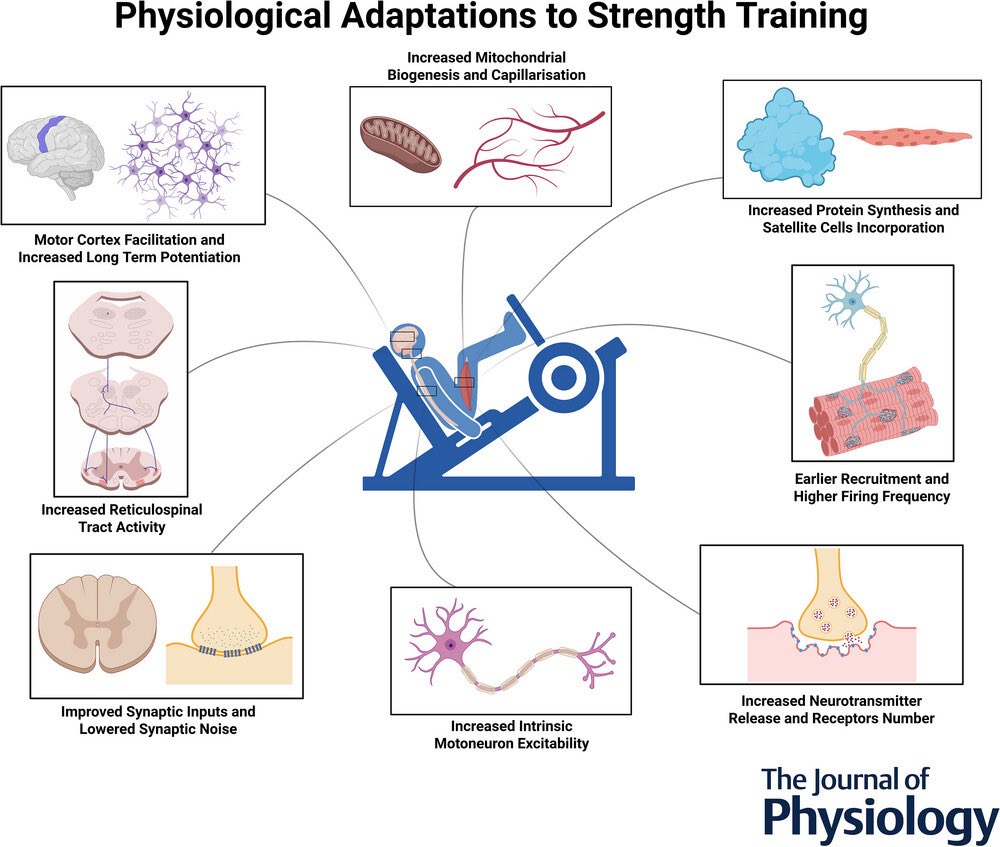
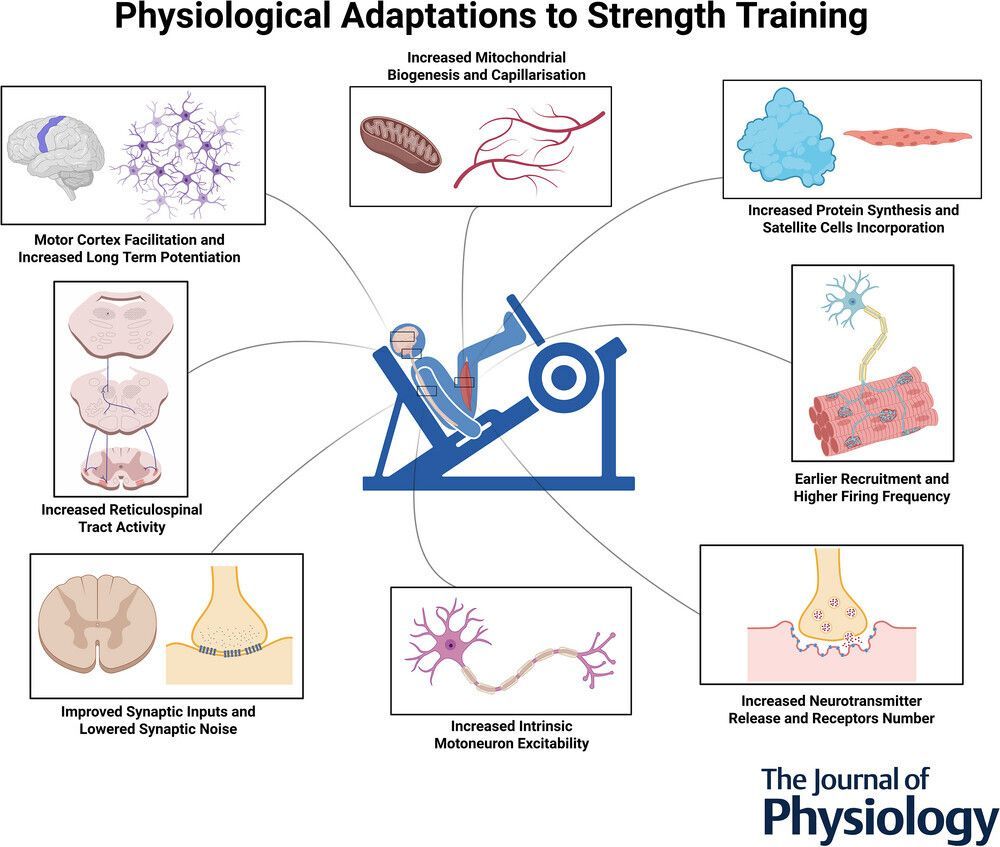
Read our latest special issue '#Neuromuscular mechanisms associated with deconditioning in #ageing and #pathological conditions'! This was organised and edited by Dr Christoph Centner, Prof Ramona Ritzmann, Prof Uroš Marušic and Prof Luke Hughes. 📖 🔗 buff.ly/cEg8m2q
Journal of Physiology tweet media
English
0
2
3
618
Edoardo Lecce retweetledi
J Greig Inglis, Ph.D. 🏴󠁧󠁢󠁳󠁣󠁴󠁿 🇨🇦
Call it a St Paddy’s Day miracle but it’s finally out on this special day. Very proud of this team effort. This also represents my first paper for my @MSCActions PDF as we also address short comings in the identification of MU behaviour in underrepresented populations.
J Greig Inglis, Ph.D. 🏴󠁧󠁢󠁳󠁣󠁴󠁿 🇨🇦 tweet media
English
3
4
22
1.6K
Edoardo Lecce retweetledi
Michael Okun
Michael Okun@MichaelOkun·
Do we need to rethink near-death experiences? What’s really happening in the brain? NDEs might be a hardwired coping strategy: the dissociation, calmness, and detachment when facing death may actually be an evolutionarily protective response. For decades, people have asked me: "Is there something happening in the brain when people have a near-death experience?" How does the brain, at the edge of life, produce the powerful, often mystical experiences so many people describe. New insights on the topic have just been published in Nature Reviews Neurology by Martial and colleagues. Key Points: - This study by Martial and colleagues offers a compelling neuroscientific model of near-death experiences (NDEs). - The authors try to move us from spiritual speculation toward biological plausibility. - If we rethink these experiences, we might also learn something crucial about human consciousness itself. - NDEs seem to involve a cascade of neurophysiological and psychological processes. - These events can be triggered by physiological crises like a cardiac arrest (heart attack). - These experiences seem to be linked to massive releases of neurotransmitters (serotonin, dopamine, noradrenaline, GABA, endorphins). - The default mode network, temporoparietal junction, and brainstem arousal systems may all play key roles. - Serotonin (5-HT1A, 5-HT2A) and glutamate are particularly implicated in the peaceful feelings and vivid hallucinations. - The authors review the newly proposed NEPTUNE model that actually frames NDEs as "evolutionarily conserved responses." - These episodes may not just be 'brain failures.' Should we be thinking of them as potential survival mechanisms. My take: Why does this matter? This paper bridges what we once pictured as the mystical with the medical. It helps us understand that NDEs are not a supernatural anomaly, but rather a biological response to an extreme crisis. These NDEs may have evolved to help the brain cope, survive, and even encode memory in the final seconds of life. My 5 Key Takeaways: 1- NDEs may reflect a brain in survival mode. In other words, these experiences likely originate from complex brain activity, not from flatlining or from brain inactivity. 2- REM intrusion, not just hypoxia, plays a role. The features of REM sleep (like atonia and vivid dreams) can possibly intrude into waking consciousness, helping explain out-of-body sensations. 3- Neurotransmitter surges may create mystical content. The massive releases of serotonin and dopamine can produce hyper-reality, hallucinations, and euphoria. These effects are similar to what is observed when using psychedelics. 4- NDEs might be a hardwired coping strategy. Think about it: the dissociation, calmness, and detachment when facing death may be evolutionarily protective responses. Ever heard the terms: playing dead or thanatosis. 5- We must rethink brain death and consciousness Brain activity may persist or surge briefly after cardiac arrest, suggesting we have much more to learn about when and how consciousness truly ends. What is the bottom line? As we edge closer to understanding the neural basis of NDEs, we also open doors to new insights into the biology of consciousness. What we once attributed to metaphysics may now be understood as neurophysics. Let’s keep asking bold questions. Because understanding near-death may bring us closer to understanding what it means to be fully alive. nature.com/articles/s4158… #Consciousness #Neuroscience #NearDeathExperience #Neurology #Serotonin #NDE #BrainScience #NatureNeuro #NEPTUNEModel
Michael Okun tweet media
English
23
225
930
66.9K