"A smoker is an individual who smokes. A lung cancer patient is a patient with lung cancer." 💬 @ellakaz Read more in the #ACRBulletin screening special issue 👉 bit.ly/39ZivyV 👈
Ella Kazerooni 〽️
3.3K posts


"A smoker is an individual who smokes. A lung cancer patient is a patient with lung cancer." 💬 @ellakaz Read more in the #ACRBulletin screening special issue 👉 bit.ly/39ZivyV 👈


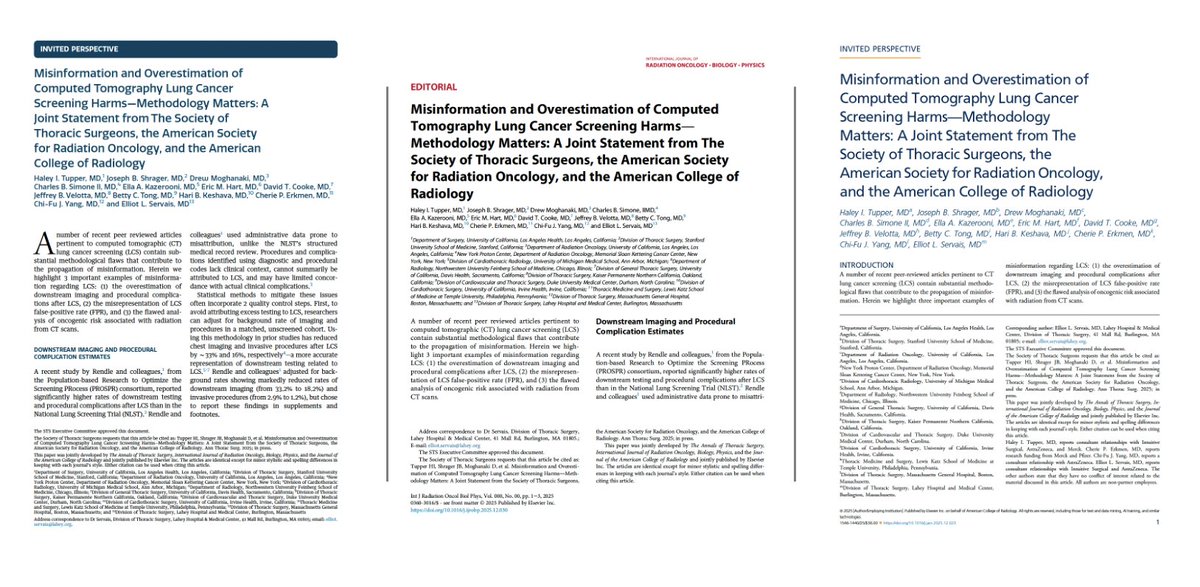
Every now and then, history calls us to stand up for justice and protect patients from relentless systemic misinformation campaigns that are literally killing them. This includes those originally funded by tobacco companies, which did everything legally possible to interfere with and obscure promising clinical data showing the life-saving efficacy of lung screening. Their key tactic? Introducing terms like “overdiagnosis” and “harms of screening” into the medical literature, which led generations of trained physicians to believe screening does more harm than good. Their highly effective strategies—carried out through influential epidemiologists in the 1980s who received large direct payments from tobacco and insurance companies to engineer doubt about early lung cancer detection—successfully delayed the implementation of annual low-dose chest CT for decades. The doubt they created persists to this day regarding the value of lung cancer screening, despite multiple NEJM publications confirming that early detection reduces lung cancer mortality more than any FDA-approved drug or device (NLST 2011, 2019; NELSON 2020). Today marks a triumphant moment in our history in tackling this decades-old issue: three (3) professional medical societies representing thoracic surgeons, radiologists, and radiation oncologists united to endorse simultaneous publication of an editorial that Annals of Internal Medicine refused to publish because it criticized a flawed paper they had published. That publication generated not only angst, but also national attention that further perpetuated concerns about the “harms of screening” in a study that was clearly designed to make lung screening appear harmful and was methodologically flawed. The societies - @STS_CTsurgery, @RadiologyACR, and @ASTRO_org - deserve commendation for their executive boards' support of this powerful message demanding higher standards for reporting the true safety of lung screening to save more lives. Annals of Thoracic Surgery authors.elsevier.com/a/1mTlgovKl6Av JACR authors.elsevier.com/a/1mTlg5VZMrOT… IJROBP redjournal.org/article/S0360-…