
Sabitlenmiş Tweet
Em35/M78/V22
2.7K posts


Em35/M78/V22
@Em35V22
🧬 الحساب الرسمي لمشروع التحور E-V22 الجيني 🧬في FTDNA رابط مباشر للانضمام إلى المشروع👇
EM35-EM78-EV22 Katılım Ekim 2020
132 Takip Edilen2.9K Takipçiler
تم رفع عينة أسرة Weisel الألمانية العريقة وظهرت في سقف التحور E-CTS567 وهو أكبر تحورات #EV22 بجوار عينة من جنوب إيطاليا و رفات الفينيقيين في أخزيب بفلسطين و ألميريا في اسبانيا .
لتؤكد على الهجرة القديمة للفينيقيين عبر سواحل المتوسط إلى أسبانيا و إيطاليا ووصولهم لاحقًا إلى عمق أوروبا من خلال مشاركتهم في جيوش الإمبراطورية الرومانية.
تعتبر أسرة Weisel أسرة قديمة في ألمانيا حيث ظهرت لأول مرة في السجلات الألمانية بين القرنين 13 ميلادي و 16 ميلادي. فأول ذكر كان لنيكولاس وفيرنر فايسل عام 1308م في منطقة هيسن في ألمانيا.
تعود العائلة بجذوروها إلى قرية Weisel في غرب ألمانيا.
وهي من أبرز عائلات اليهود الأشكناز في ألمانيا ربما تكون العائلة أساسا من اليهود أو أن بعض سكان قرية Weisel اعتنقوا اليهودية و لاحقا أطلق عليهم اسم القرية التي يسكنونها.
هاجر العديد من أفراد هذه العائلة في القرن التاسع عشر الميلادي إلى الولايات المتحدة الأمريكية وخصوصا ولاية ويسكونسن و آيوا.
بعد فحص عدد من أفرع عائلة Weisel ظهرت أصرح نتائج هذه الأسرة من مدينة هيسن الألمانية على التحور #EV22.
نشكر لهم هذه المساهمة المميزة


العربية
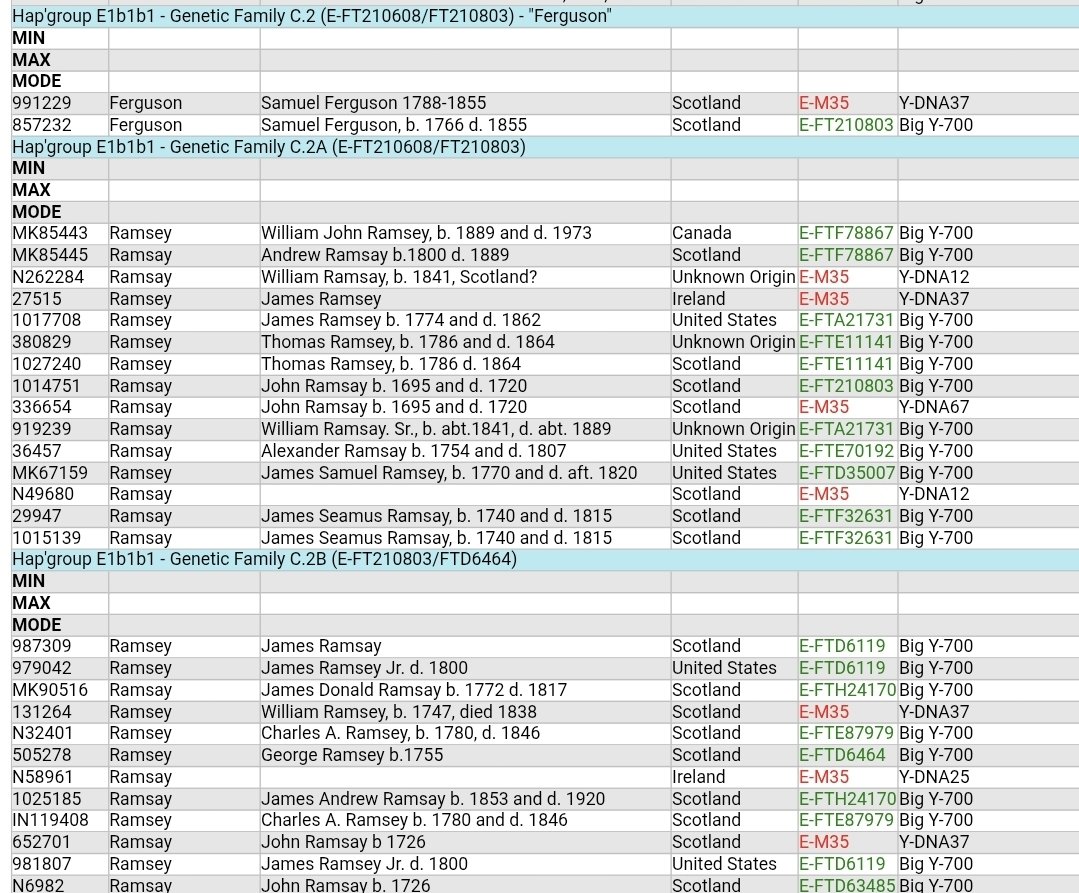
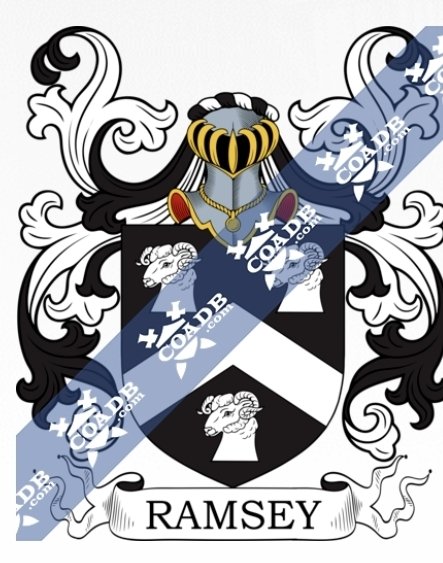
نبلاء اسكتلندا وويلز التاريخيين آل Ramsey
متكتلين بقوة على التحور #EV22
تعود جذور النبلاء آل رامسي الى القرن الثاني عشر الميلادي حيث ذكرت السجلات الملكية خلال فترة حكم ديفيد الأول عام 1140 م ذكرت اسم سيمون رامزي وهو أول شخصية موثقة في السجلات الملكية الاسكتلندية.. وتعود جذور هذه العائلة إلى النورمان الذين غزو إنجلترا في القرن 11 ميلادي سيطروا عليها و أسسوا ممالك واقطاعات محلية.
والنورمان هم سكان شمال فرنسا.
قامت أصرح 5 فروع في هذه العائلة بعمل فحص جيني و ظهرت جميعها على التحور #EV22 وظهرت بقية العائلات خارج هذه الفروع على سلالات مختلفة.
والملفت أنهم التقوا زمنيا بعمر 850 سنه وهو مقارب لما ذكرته السجلات الملكية لأول ذكر لرجل من هذه العائلة ويبدو أنه جدهم فعلا.
والملفت أيضاً أنهم يلتقون مع عينات من فرنسا وهو يثبت قصة قدومهم من شمال فرنسا.
والأهم من ذلك كله التقائهم بعينة رفات من النمسا تحمل مكونات قريبة من الشعب البلجيكي وهو ما يثبت صحة رواياتهم بأنهم من شعوب شمال أوروبا الذين غزوا فرنسا ثم بريطانيا.
وعلى النقيض فإن العينات الإيطالية التي تعود لرفات فينيقية في أعلى الخط الجيني لعائلة رامسي قد تدل على أصول رومانية قديمه فسواحل جنوب أوروبا شهدت قيام مستعمرات للفينيقيين ولا حقاً انضموا للامبراطورية الرومانية.. كما تذكر السجلات الرومانية أن جيش روما اجتاح اسكتلندا حوالي القرن الأول الميلادي.


العربية
Em35/M78/V22 retweetledi
اليمن ١٣ عينه
سوريا ٥ عينات
مصر ٣ عينات
العراق ٨ عينات
المغرب ٢ عينتين
المملكه العربيه السعوديه ١٠ عينات
البحرين ١ عينه
قطر ١ عينه
الاجمالي الي تم تطوير وبانتظار النتائج ٤٣ عينه bigy+wgs.
قيد التطوير ٨ عينات.
eng FaisalAL-Hashash@bin7ashash
على بركة الله هناك عدد عينات تعدت ال٣٠ عينة على التحور E-V22 تم ترقيتها بالكامل خلال هذا الاسبوع وبانتظار نتائجها. #EV22 #الجينات
العربية
Em35/M78/V22 retweetledi

على بركة الله
هناك عدد عينات تعدت ال٣٠ عينة على التحور E-V22
تم ترقيتها بالكامل خلال هذا الاسبوع وبانتظار نتائجها.
#EV22
#الجينات
العربية
🧬 عينة فينيقية (~650 ق.م) من الشام على التحور E-V22 (الخط الأساسي)
📌 تمثل أصل التحور قبل تفرعاته الحديثة
📌 وتؤكد وجوده في جنوب بلاد الشام منذ آلاف السنين
#E_V22
A.T.M. Saeb@DrAmrSaeb
Comprehensive Genetic and Historical Analysis of Sample I22253 #3rd #MTA Summary of the Individual This analysis concerns Sample I22253, a male Phoenician from Achzib, an ancient coastal city in present-day northern Israel near Acre. He lived around 650 BC, during the height of Phoenician maritime trade and while Phoenicia was under the Neo-Assyrian Empire. 1. Historical Context Around 650 BC, Phoenicia was a thriving hub of commerce and culture. Cities like Achzib served as critical ports in the eastern Mediterranean. Despite political domination by Assyria, the Phoenicians maintained control of their seafaring networks, establishing colonies as far west as Carthage, Sicily (Mozia), and Sardinia (Tharros). The man from Achzib likely lived in a cosmopolitan society influenced by Greeks, Egyptians, Israelites, and Assyrians. His identity was shaped by this dynamic cultural exchange, yet genetically he remained part of the long-standing Levantine continuum, descending from the earlier Canaanite populations. 2. Genetic Admixture and Ancestry This individual’s DNA reflects the typical Iron Age Levantine genetic profile a deep-rooted local ancestry enriched by earlier migrations from neighboring regions. About two-thirds of his ancestry came from Levant Pre-Pottery Neolithic B farmers (8500–6500 BC), showing strong continuity with the earliest agricultural communities of the Levant. Roughly one-fifth derived from the Kura-Araxes culture of the Caucasus and eastern Anatolia (c. 3400–2000 BC), which entered the Levant during the Bronze Age. Around 13% traces back to Iranian Neolithic farmers from the Zagros region (c. 8000 BC), also introduced through Bronze Age expansions. A tiny fraction (~0.05%) resembles Dinka-like East African ancestry. This could be statistical noise or a signal of ancient Afro-Levantine gene flow, likely mediated by long-standing cultural and trade contacts with Egypt and beyond. Overall, this genetic blend aligns closely with what researchers call the Canaanite genetic cluster—the core of ancient Levantine identity. 3. Genetic Relatives: Ancient and Modern Ancient DNA comparisons show that I22253 clusters tightly with other Phoenician individuals from Achzib and from western Mediterranean colonies like Mozia and Tharros. While colonial Phoenicians occasionally mixed with local populations, their core ancestry remained distinctly Levantine. Modern populations closest to this individual include Palestinians, Jordanians, Lebanese, Syrians, and certain Jewish groups (such as Libyan and Tunisian Jews, and Samaritans). PCA analysis places him within the modern Levantine cluster, highlighting the remarkable genetic continuity in the region despite millennia of cultural and political upheavals. 4. Haplogroups Paternal (Y-DNA): E-V22, a lineage widespread in the Levant, Egypt, and the Horn of Africa. Its presence indicates ancient connections between these regions dating back to the Neolithic and earlier. Maternal (mtDNA): R0a1+152, common in Arabia, the Levant, and parts of East Africa, reflecting deep Near Eastern roots. Both haplogroups are fully consistent with what is expected for Iron Age Levantine populations. 5. Temporal Perspective Mesolithic Roots If modeled against Mesolithic populations, over 90% of his ancestry traces to Natufians, the hunter-gatherers of the Levant who transitioned into early farmers. Additional small inputs from Anatolia and the Caucasus likely came later during the Neolithic and Bronze Ages. Modern Context Today, his closest genetic relatives are Palestinians, Jordanians, Lebanese, and Syrians—populations that still carry the legacy of the ancient Canaanite-Phoenician gene pool, despite later historical admixtures.
العربية
Em35/M78/V22 retweetledi

Comprehensive Genetic and Historical Analysis of Sample I22253
#3rd #MTA
Summary of the Individual
This analysis concerns Sample I22253, a male Phoenician from Achzib, an ancient coastal city in present-day northern Israel near Acre. He lived around 650 BC, during the height of Phoenician maritime trade and while Phoenicia was under the Neo-Assyrian Empire.
1. Historical Context
Around 650 BC, Phoenicia was a thriving hub of commerce and culture. Cities like Achzib served as critical ports in the eastern Mediterranean. Despite political domination by Assyria, the Phoenicians maintained control of their seafaring networks, establishing colonies as far west as Carthage, Sicily (Mozia), and Sardinia (Tharros).
The man from Achzib likely lived in a cosmopolitan society influenced by Greeks, Egyptians, Israelites, and Assyrians. His identity was shaped by this dynamic cultural exchange, yet genetically he remained part of the long-standing Levantine continuum, descending from the earlier Canaanite populations.
2. Genetic Admixture and Ancestry
This individual’s DNA reflects the typical Iron Age Levantine genetic profile a deep-rooted local ancestry enriched by earlier migrations from neighboring regions.
About two-thirds of his ancestry came from Levant Pre-Pottery Neolithic B farmers (8500–6500 BC), showing strong continuity with the earliest agricultural communities of the Levant.
Roughly one-fifth derived from the Kura-Araxes culture of the Caucasus and eastern Anatolia (c. 3400–2000 BC), which entered the Levant during the Bronze Age.
Around 13% traces back to Iranian Neolithic farmers from the Zagros region (c. 8000 BC), also introduced through Bronze Age expansions.
A tiny fraction (~0.05%) resembles Dinka-like East African ancestry. This could be statistical noise or a signal of ancient Afro-Levantine gene flow, likely mediated by long-standing cultural and trade contacts with Egypt and beyond.
Overall, this genetic blend aligns closely with what researchers call the Canaanite genetic cluster—the core of ancient Levantine identity.
3. Genetic Relatives: Ancient and Modern
Ancient DNA comparisons show that I22253 clusters tightly with other Phoenician individuals from Achzib and from western Mediterranean colonies like Mozia and Tharros. While colonial Phoenicians occasionally mixed with local populations, their core ancestry remained distinctly Levantine.
Modern populations closest to this individual include Palestinians, Jordanians, Lebanese, Syrians, and certain Jewish groups (such as Libyan and Tunisian Jews, and Samaritans). PCA analysis places him within the modern Levantine cluster, highlighting the remarkable genetic continuity in the region despite millennia of cultural and political upheavals.
4. Haplogroups
Paternal (Y-DNA): E-V22, a lineage widespread in the Levant, Egypt, and the Horn of Africa. Its presence indicates ancient connections between these regions dating back to the Neolithic and earlier.
Maternal (mtDNA): R0a1+152, common in Arabia, the Levant, and parts of East Africa, reflecting deep Near Eastern roots.
Both haplogroups are fully consistent with what is expected for Iron Age Levantine populations.
5. Temporal Perspective
Mesolithic Roots
If modeled against Mesolithic populations, over 90% of his ancestry traces to Natufians, the hunter-gatherers of the Levant who transitioned into early farmers. Additional small inputs from Anatolia and the Caucasus likely came later during the Neolithic and Bronze Ages.
Modern Context
Today, his closest genetic relatives are Palestinians, Jordanians, Lebanese, and Syrians—populations that still carry the legacy of the ancient Canaanite-Phoenician gene pool, despite later historical admixtures.
English
يسرّ مشروع التحور E-V22 أن يعلن عن وجود نتائج جديدة عددها ٣٠ قيد الفحص حالياً في المختبر، وبانتظار اكتمالها .
وسيتم الإعلان عنها قريبًا بإذن الله عبر الحساب.
ترقّبوا التحديثات القادمة…
#الجينات
العربية
يسر مشروع التحور E-V22
عن اعلان نتيجة من فلسطين 🇵🇸
ومن مدينة غزة لأسرة بكير
على التحور E-V13
برقم عينة 758410
××× من الملاحظ قوة التواجد الشاميه
أولاً: الشرق الأوسط (القسم الأكبر)
جنوب بلاد الشام (Southern Levant): 91% 👉 يشمل:
فلسطين
الأردن
جنوب سوريا
أجزاء من شمال الجزيرة العربية
🔵 ثانياً: شمال أفريقيا (<3%)
(المغرب + مصر)
🔎 التفسير:
نسبة بسيطة جدًا (أثر قديم)
غالبًا نتيجة:
هجرات تاريخية
تداخلات قديمة عبر التجارة أو الفتوحات.
#الجينات


العربية
أسرة مشروع التحور
E-V22
تتقدم اليكم بأسمى آيات التهاني والتبريكات بمناسبة حلول شهر رمضان المبارك
أعاده الله عليكم بالخير واليمن والبركات
#E_v22
العربية
Em35/M78/V22 retweetledi
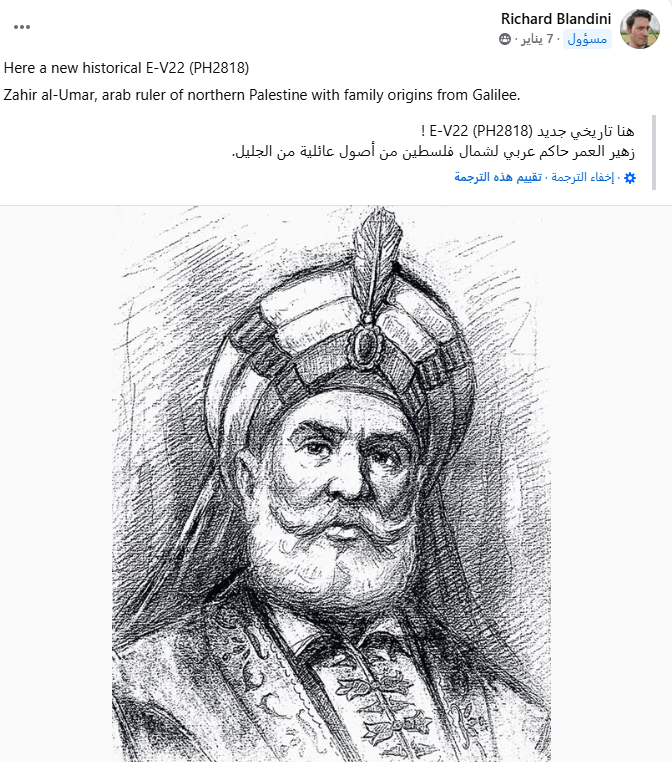
نتيجة حديثة لأحد رموز الزيادنه في شمال فلسطين على التحورE-V22 (PH2818)
العربية
Em35/M78/V22 retweetledi
Em35/M78/V22 retweetledi
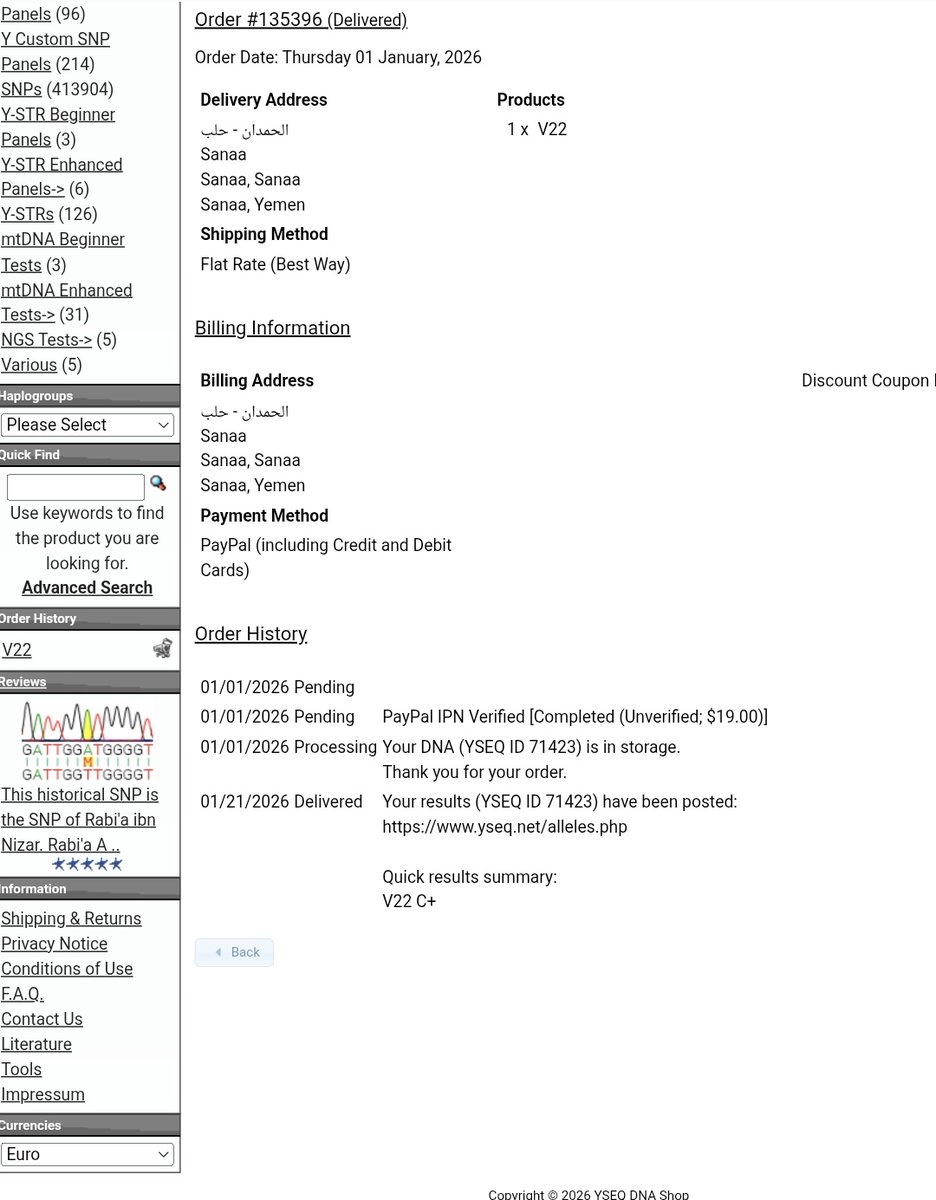
بعد مراجعة العينة وطلب فحص تأكيد تحور بالتعاون وبإشراف الاخ العزيز بوصالح
تم تأكيد النتيجة تحت التحور E-V22
Ing. Yahya Alalie (م. أبو صالح العليي)@Y_Alalie
37 العينة رقم: 71423 في YSEQ من عائلة الحمدان من مدينة حلب - سوريا السلالة العامة: E-M35 السلالة الفرعية المرجحة: V22 #المسح_الجيني_لبلاد_الشام_والعراق
العربية
ظهرت نتيجة ترقية عينة
عائله عليا من الكسوه في الغوطه الغربيه في سوريا
على التحور
BY198417
بتكل خليجي
ومتوقع تكون بسقف هذا التحور
#EV22

العربية