Sabitlenmiş Tweet
Emma Cramp
4.3K posts

Emma Cramp
@EmmaCramp
Pharmacist. Member of @theQCommunity and @UKCPA Aprendo español. QSIR Practitioner. DPharm student at Keele Uni.

Market Harborough Katılım Kasım 2012
357 Takip Edilen1.3K Takipçiler
Emma Cramp retweetledi

Question: How can we build a link to purpose that improves performance for all employees?
Answer: Activate the power of frontline (team) leaders in making purpose meaningful in daily work.
A study of 57,000 employees across 469 organisations showed that when team leaders have regular conversations with their teams about organisational purpose ("purpose dialogue") it has a significant impact on performance. Commitment grows when people feel the organisation’s wider goals are meaningful, relevant & openly discussed. A 1 point increase (on a 6 point scale) in team-level purpose dialogue boosted team commitment scores by 10%, which in turn led to improvements in team performance, lower turnover & more innovation.
Two other factors amplified the impact of purpose dialogue:
-Relationship quality: where every team member experienced respect, trust, & fair access to support & opportunities
-A sense of agency & control: where teams were felt they were granted real autonomy to act on organisational purpose.
Three ways to “operationalise purpose”:
1. Build purpose dialogue into the operational fabric: Make deliberate, two-way conversations about purpose a standard part of organisational routines, role modelled by leaders at every level.
2. Ensure balanced relationships: Support all team members to experience purpose-driven leadership & receive equitable support and recognition.
3. Encourage ownership and initiative: Seek to give teams autonomy in how they achieve strategic objectives, reinforcing accountability and engagement.
Sustaining organisational performance is not about grand purpose statements but the everyday work of connecting, engaging & enabling teams around shared goals. Team leaders are critical agents for achieving this:
sloanreview.mit.edu/article/the-mi…. By @rudyOrg & colleagues @mitsmr

English

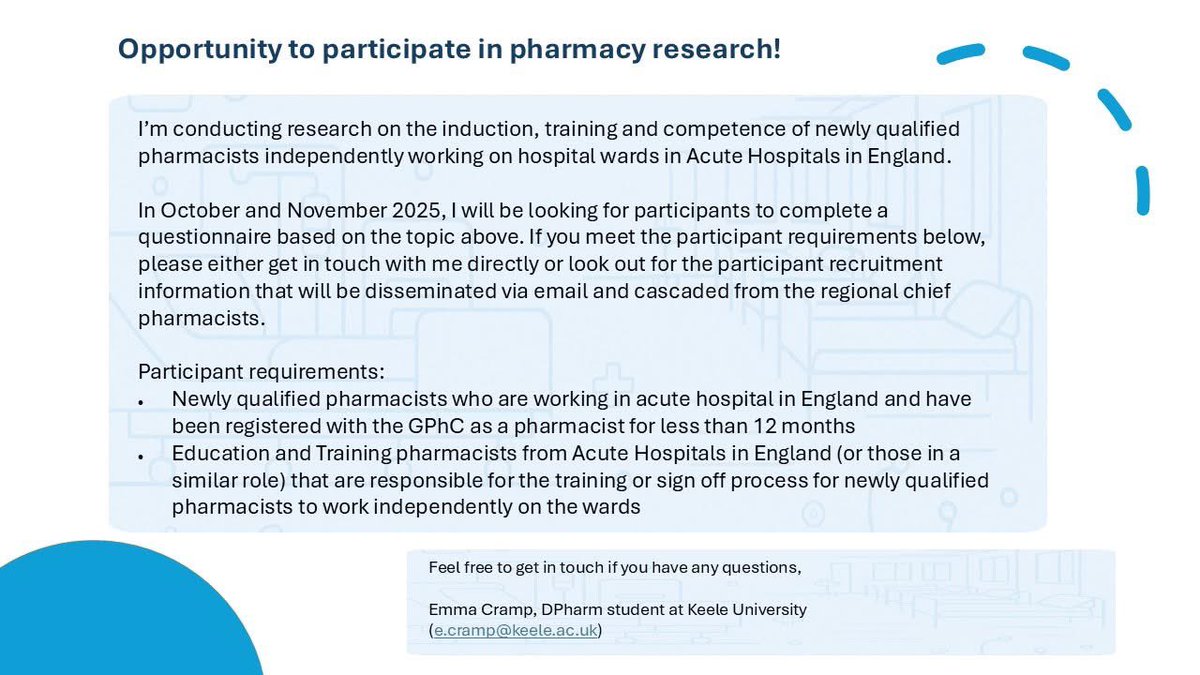
Feel free to get in touch if you have any questions,
Emma
DPharm student at Keele University
(e.cramp@keele.ac.uk)
English
Emma Cramp retweetledi

#AngliaRuskinUniversity is looking for a Professor or Associate Professor to lead on the development of a Pharmacy programme within its School of Medicine 📖 🏫 🎓
#pharmacyjobs #pharmacyprofessor #pharmacyeducation
jobs.pharmaceutical-journal.com/job/93817/prof…

English
Emma Cramp retweetledi

As leaders of change we need to grow our own “change confidence”. We are leading increasingly complex change in increasingly tough environments. It might make us less certain about what can be achieved by when. It can lead to us questioning our own judgement, decisions or instincts, or feeling anxious about how others perceive our change leadership capability.
@GiselaWendling defines change confidence as the capacity to understand how change works, remain emotionally present, internally resourced & connected to purpose in the midst of uncertainty. She describes four dimensions:
1) Change Literacy: Understanding how change works, developmentally, emotionally & structurally, gives us orientation and helps us make meaning, even when our plans fall apart.
2) Emotional Fluidity: Ability to work with emotion, rather than avoid or suppress it, allows us to stay connected, honest & human, inviting trust & deeper participation from others.
3) Somatic Awareness: Tuning into physical signals, like tension, fatigue or activation, helps us recognise early signs of stress or misalignment & make grounded, wise choices.
4) Inner and Outer Guidance: Drawing from intuition, values & trusted sources of support which strengthens our connection to what matters most & offers orientation when logic alone is not enough.
Change confidence helps us appreciate how disruption, if we engage with it consciously, can create new insights, an evolving identity, possibilities & a new direction. It serves as a reminder that as change leaders, to quote misattributed Gandhi, we have to “be the change we want to see in the world”.
thegrove.com/blog/change-co…. Via @TheGroveConsult.

English
Emma Cramp retweetledi

Why, when wise, experienced leaders make collective decisions, do they often make really bad decisions? In his new paper “A theory of collective stupidity in organisations - and possible remedies,” @geoffmulgan challenges conventional wisdom about leadership failure. He says that “collective stupidity” emerges not from incompetent individuals, but from behaviours that are rational & co-operative but resulting in destructive outcomes.
He identifies a key factor as “the tendency to conserve cognitive energy”. Intelligent thought is costly & requires energy & attention. So we save it by adopting narrow habitual thinking & routines. In addition, we are social animals who seek acceptance & approval from others. This causes us to align our thinking with the group, copy behaviours & conform—often at the expense of independent judgement. Excessive respect for overconfidence also plays a part. Lack of diversity in the group makes us even more prone to collective stupidity because there is more pressure to conform, reducing the chance of challenging flawed assumptions.
Remedies for collective stupidity:
1) Divide roles & tasks among different people or groups to encourage multiple perspectives & reduce the risk of groupthink.
2) Orchestrate triangulation & doubt to provide alternative perspectives; how would I know if this wasn’t true? What would someone else think?
3) Organise loops – looping back repeatedly to question, think, debate, challenge.
4) Slow down decision-making processes to allow time for reflection & critical thinking.
5) Expose people to a variety of viewpoints & help them understand how others think, countering the tendency to assume everyone shares the same perspective.
6) Seek to achieve a healthy balance of diversity and integration; a variety of views, backgrounds & cognitive styles AND a capacity to integrate with shared languages, frames & ways of thinking.
7) Listen to unwelcome information & unwelcome ideas, creating routines for honest reporting & for mavericks, dissenters & whistleblowers to have a voice.
discovery.ucl.ac.uk/id/eprint/1021….
With thanks to Stella O'Brien for an accessible link.

English
Emma Cramp retweetledi

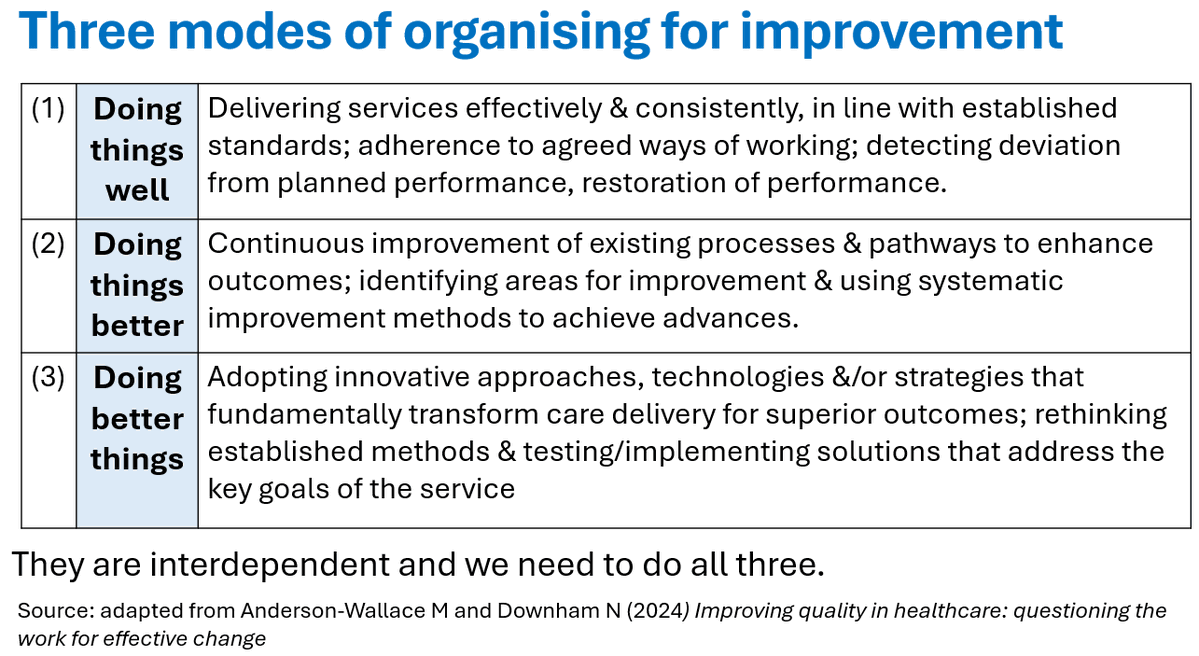
Three modes of organising for improvement:
(1) Doing things well
(2) Doing things better
(3) Doing better things
An organisational improvement strategy should focus on all three. Many organisations currently are overfocussed on (1) & (2) and under focussed on (3). This is risky because we can end up focused on improving the "wrong" or suboptimal things. The environment of change that we find ourselves in means that we have to focus increasingly on (3). It won't happen unless we build in the time & space for connection, collaboration, experimentation & learning into daily work.
I adapted this table from content in "Improving quality in healthcare: questioning the work for effective change" by Murray Anderson-Wallace & Nick Downham. I really like this book, written by highly experienced practitioners: us.sagepub.com/en-us/nam/impr….

English
Emma Cramp retweetledi

If we seek significant, sustainable change in health and care outcomes, we need to change the underlying systems (& leadership thinking) that generate those outcomes. We need to become as skilled in system change practice as we are in project & programme management & quality improvement. Here's a couple of great resources:
1) A definition of systems change by @AnnasQuestions @DarcyRiddell & @laurachaosmilk, via Joss Colchester: systemschangeeducation.com/portfolio-item…
2) "Highlights from the literature on changing social systems": part of a work in progress on leadership for large scale change from @AspenInstitute & the Higher Ambition Leadership Alliance. Aimed at leaders & practitioners, it recommends multiple resources for systems change practice: static1.squarespace.com/static/67c1309….
"Systems change" doesn't mean that every change initiative needs to become massive, all embracing & overwhelming. It means building in the space to challenge our own thinking & ways of operating & starting with a bigger picture of how we go about change & what might be possible.

English
Emma Cramp retweetledi

Workplaces where people are engaged do significantly better in productivity & performance. If we want to build better staff engagement, we need more conversations, not "engagement campaigns".
Too often, leaders who want to improve staff engagement build “campaign-style” interventions: analysing levels of engagement, having listening sessions, broadcasting messages & creating dashboards. Yet engagement isn’t a tool or a project - something you can "install" top down. It’s a daily, ongoing practice, rooted in the rhythms of conversation.
The single force that shapes day-to-day engagement more than any other is line managers. (In the NHS, it is the frontline leaders, around band 7 level, who line manage >60% of the NHS workforce & who have an outsized influence on NHS productivity & performance). Consistent, authentic dialogue between managers & teams creates the psychological safety people need to speak up, take risks & challenge the status quo.
If we want better engagement, we need to support front line leaders to develop skills for conversation-based leadership & build in routines that enable regular conversations to happen: @kylejones_47003/the-importance-of-employee-engagement-why-culture-lives-in-conversations-not-campaigns-027cbf15bee0" target="_blank" rel="nofollow noopener">medium.com/@kylejones_470…. By Kyle Jones on @Medium, via @LauraJYearsley.

English

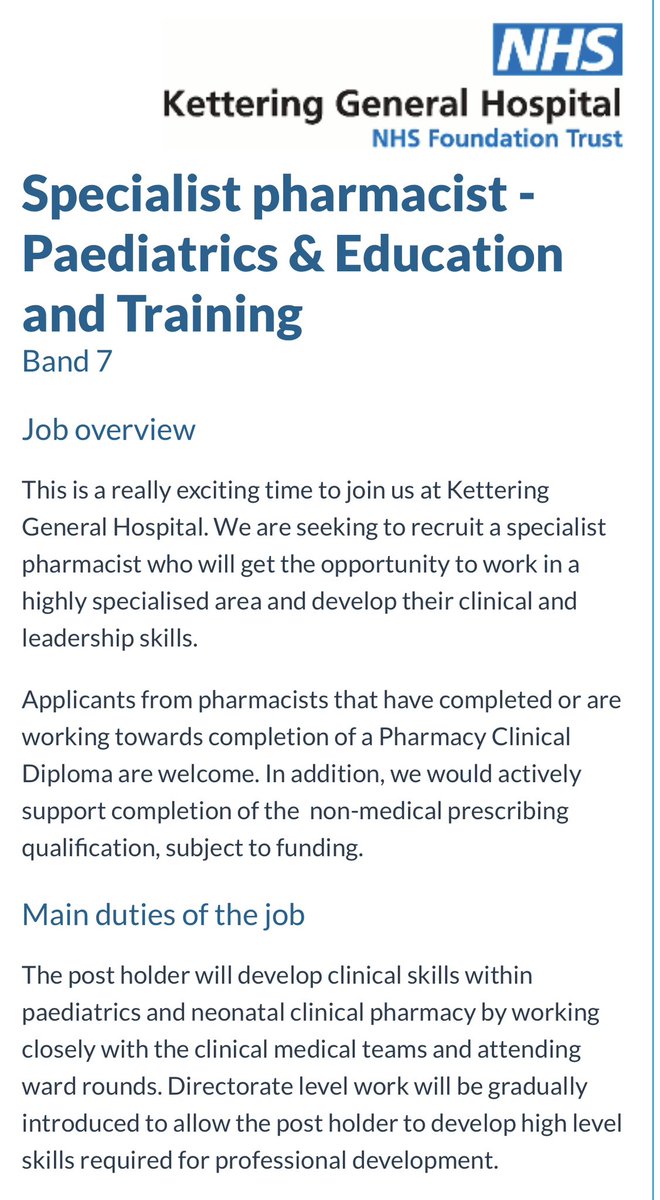
There is a rare opportunity to join our team! A perfect combination of E&T and Paediatrics for an enthusiastic band 7 pharmacist. The closing date is 7th May with the interview on 10th June. Take a look 👀 healthjobsuk.com/job/UK/Northam…

English
Emma Cramp retweetledi

A new article by Harvard's Michael Beer & collaborator Johanna Pregmark identifies "seven silent killers" - leadership or organisational barriers that are publicly undiscussable yet consistently block the delivery of strategy & change. It builds on Beer's previous research that set out six such "killers":
1) A top-down or "hands-off" senior management style - top leaders who fail to confront conflict & actively lead change.
2) Unclear strategies & values - &/or or conflicting priorities
3) An ineffective senior management team that cannot effectively balance focus on the whole & the parts.
4) Poor coordination & collaboration across functions, units & borders, representing an inability to effectively organise, manage & lead the work.
5) Inadequate leadership skills & development, particularly the lack of investment in "down-the-line" leaders.
6) Poor vertical communication - insufficient engagement from top leaders to help people understand the strategy & lower-level leaders feeling unable to speak truth to power
The new research confirms these six "killers" & suggests a seventh barrier essential to an organisation’s agility in a rapidly changing world:
7) Poor delegation of authority of decision rights - primarily related to the possibility for people across the organisation to make decisions to initiate & test new ideas & to innovate at their own level.
There are some fantastic insights in this article: journals.aom.org/doi/full/10.54….
It's behind a paywall so here's Beer's earlier paper for those who can't access the article: openaccessgovernment.org/wp-content/upl….

English
Emma Cramp retweetledi

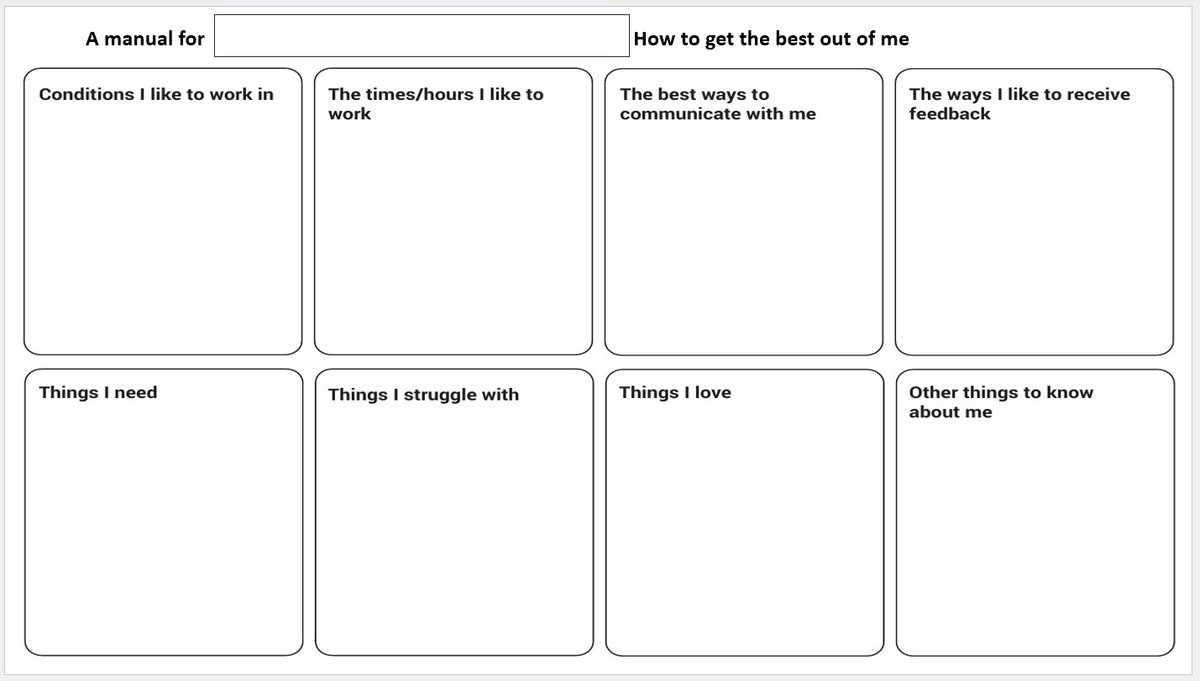
There are many tools for effective teambuilding. One I use often when working with teams is called a "Manual of Me" or a "Personal User Manual". If we want to get the best performance from an appliance or equipment, we might consult a user manual & whilst people are more complex, the same the same principle appears to work.
We ask team members to each fill in a big paper template about their needs & preferences. It helps us to communicate to others the conditions we need to do our best work. Evidence suggests it can accelerate trust, understanding & the valuing of difference in teams.
There are many different templates & headings you can use. I use the version in the graphic below from @CassieRobinson.
Incorporating "manuals" into a culture development strategy: sloanreview.mit.edu/article/rto-ma…
Some basic principles for "manuals": futureforum.com/2022/07/15/per… Via @mitsmr

English
Emma Cramp retweetledi

There's so much change happening at present. It's easy to feel powerless & overwhelmed. That's why I have gone back to sharing the classic Stephen Covey "circle of control" model with many of the teams I work with. There are lots of big changes happening that are in our "circle of concern" & we don't have the power to do much about them. But we can still make a significant difference in the world in our "circle of control" & "circle of influence". Lets put our energies into what we can control & influence.

English
Emma Cramp retweetledi

Consultant Pharmacist, Frailty and Overprescribing
South East London
👀👇
healthjobsuk.com/job/v7064133?r…
English