Enclave Academy
16.2K posts

Enclave Academy
@EnclaveAcademy
A microlearning community for thinker-doer leaders (TDLs) and other difference-makers. Decision-critical—AI-fortified—metacognitive thinking skills for you!


“From thinkings through thoughtings to thoughts.” Feel the words. Feel the process. Recursive “thinking about thinking” activates your consciousness. René Descartes (1596–1650), the French philosopher, mathematician, and scientist might say today, “I ThinkToThink™, therefore I am more than I think.” You? What does your thinking about thinking say to you about you and your whole-body consciousness? Neuroscientists are discovering “feeling” as the source of human consciousness—“senses” that AI is unlikely to ever replicate. For now, @EnclaveAcademy illustrates metacognition as the way to sensitize both the mind and body to the superpower of more “thinkingly thinking about thinking”—with and without inviting and allowing AI #thinkbots to “have their sway” in your mind. Have your way with metacognition. #ThinkToThink™: From thinkings through thoughtings to thoughts. Pause. Breathe. Keep calm and think on.™ Try #CartesianCognition to fuel your metacognition. Come to think of it.™

Cross @EnclaveAcademy’s #ThoughtingsBridge™. @grok did: “John R. Dallas Jr. encourages ‘selfish’ metacognition by integrating AI as a co-thinker, using #IBM's overview of generative AI foundations like machine learning, deep learning, and large language models to spark reflective dialogue on ‘human-AI co-metacognition.’ • The attached IBM ‘THINK’ infographic depicts AI as a networked brain with speech bubbles, visualizing human-AI interaction through stylized elements like connected thought streams on a teal background. • Drawing from Dallas’s @EnclaveAcademy work, concepts like ThinkToThink™ and #ThoughtingsBridge™ frame AI partnerships as pathways to ‘higher-order thorough thinking’ (HOTT) and #neuroserendipity, promoting psychologically safe transitions from unconscious to conscious thinking-to-thought processes.” —Grok #ThinkToThink™ with thinkbot Grok and me. Invite then allow your thinkings to “thought bubble-up” from your #thoughtings. As a paying Premium User of @X, @imagine and other @xai features are available to support my co-thinking with @grok to masterfully move through the metacognitive messiness of “thinking-to-thought” generation roughly illustrated and animated. It’s messy. Thinkingness is messiness. Wondrously—not necessarily wonderfully—thinkably thinkable thinking’s throughput is rarely (if ever) tidy. @grok and other five-star #thinkbots know. Pause. Breathe. #ThinkToThink™. Cross with me @EnclaveAcademy’s #ThoughtingsBridge™. Keep calm and think on.™ With @IBM— Come to think of it.™

Be selfish! Selfishly #ThinkToThink™ about your own thinking—with AI. For the reading-thinking minutes ahead, selfishly “think more thinkingly” to get to know—a bit to lot better—your new #thinkmate, co-metacognitive AI (CMAI). Start your thinking engines with AI basics. Click the below link to revise your thinking—#RevThink™—with the not-exactly-basic basics of AI from @IBM, for over 100 years the #THINK® town crier. “…most AI researchers, practitioners and most AI-related headlines are focused on breakthroughs in generative AI (#GenAI), a technology that can create original text, images, video and other content. To fully understand #GenerativeAI, it’s important to first understand the technologies on which generative #AI tools are built: machine learning (ML) and deep learning.” —@IBM For now, frame to train your healthy brain and its agile and adaptive mind while imagining yourself thinking and doing what #GenAI “thinks” and does. Give yourself metacognition ignition permission (MIP) to psychologically safely move through your brain’s unconscious wordless thinkings into the liminality of your mind’s “wordish thoughtings” to semi-conclusive worded thoughts. Acknowledging the #ThoughtingsBridge™ from @EnclaveAcademy will open you to #neuroserendipity, whole-body consciousness (WBC), and more of your agentic thinking’s newness, freshness, and metacognitive mysteriousness about navigating your thinkmate relationship with AI. “Generative AI begins with a ‘foundation model’; a deep learning model that serves as the basis for multiple different types of generative AI applications. The most common foundation models today are large language models (#LLMs), created for text generation applications. But there are also foundation models for image, video, sound or music generation, and multimodal foundation models that support several kinds of content.” —#IBM Pause. Breathe. With @IBMwatsonx, “think about your thinking” with #thinkbots. Keep calm and think on.™ With @MITIBMLab and @mit_tll, think about your brain-mind’s own (!) immediate definition and descriptions for “co-metacognitive AI (CMAI).” Mindfully you may have crossed the #ThoughtingsBridge™ to reach the mind state of “co-generative AI (CGAI).” You did it again, correct? Thinking about human thinkingness—alongside AI #thinkishness—ignites higher-order thorough thinking (HOTT), beyond higher order thinking (HOT), to attain situational best-effort thinking (BET). HOT isn’t HOTT enough for BET. With AI #thinkbot thinkmates, you’ll bet better on your BET. “Bet on your BET.” Pause. Breathe. ThinkToThink™. Come to think of it.™ #metacognition ibm.com/think/topics/a…


How is AI shaping education and skills? Tune in for the conference on AI in Work, Innovation, Productivity & Skills! Hear from leading voices in policy, business and academia to examine how AI is changing the future of education & how policy can respond: oecd-events.org/e/ai-wips-2026

Have you studied with a Professor of Metacognition? Neither have I. Six AI thinkbots and I haven’t yet found one professor with that highly specific exact (!) title. While a Professor of Moral Leadership asks, "Are we doing the right thing?”, a Professor of Metacognition would ask, "Are we even aware of the biases that led us to think ‘this thing’ was the right thing?" Each of the five AI thinkmate tools with which I “co-think” affirms the utility and significance of the metacognition-precision of the title’s laser-focus for a professorship responsive to this era’s demands in metacognitive learning, knowledge, and regulation. There are adjacent titles for psychology professors, yet here we’re aiming—and advocating for—universal precision through coiled concision in nomenclature. Co-metacognition @EnclaveAcademy coined for “thinking about better thinking” with AI #thinkbots. With workplace AI adoption and adaptation escalating at astonishing speeds, @EnclaveAcademy offers colleges and universities substantial empirical scaffolding for a Professor of Metacognition—and job descriptions for a Chief Metacognition Officer for public and private organizations of any “thinking about better thinking” type. E-mail to arrange a no-obligation exploratory Zoom discussion, please. johnrdallasjr@enclaveacademy.com


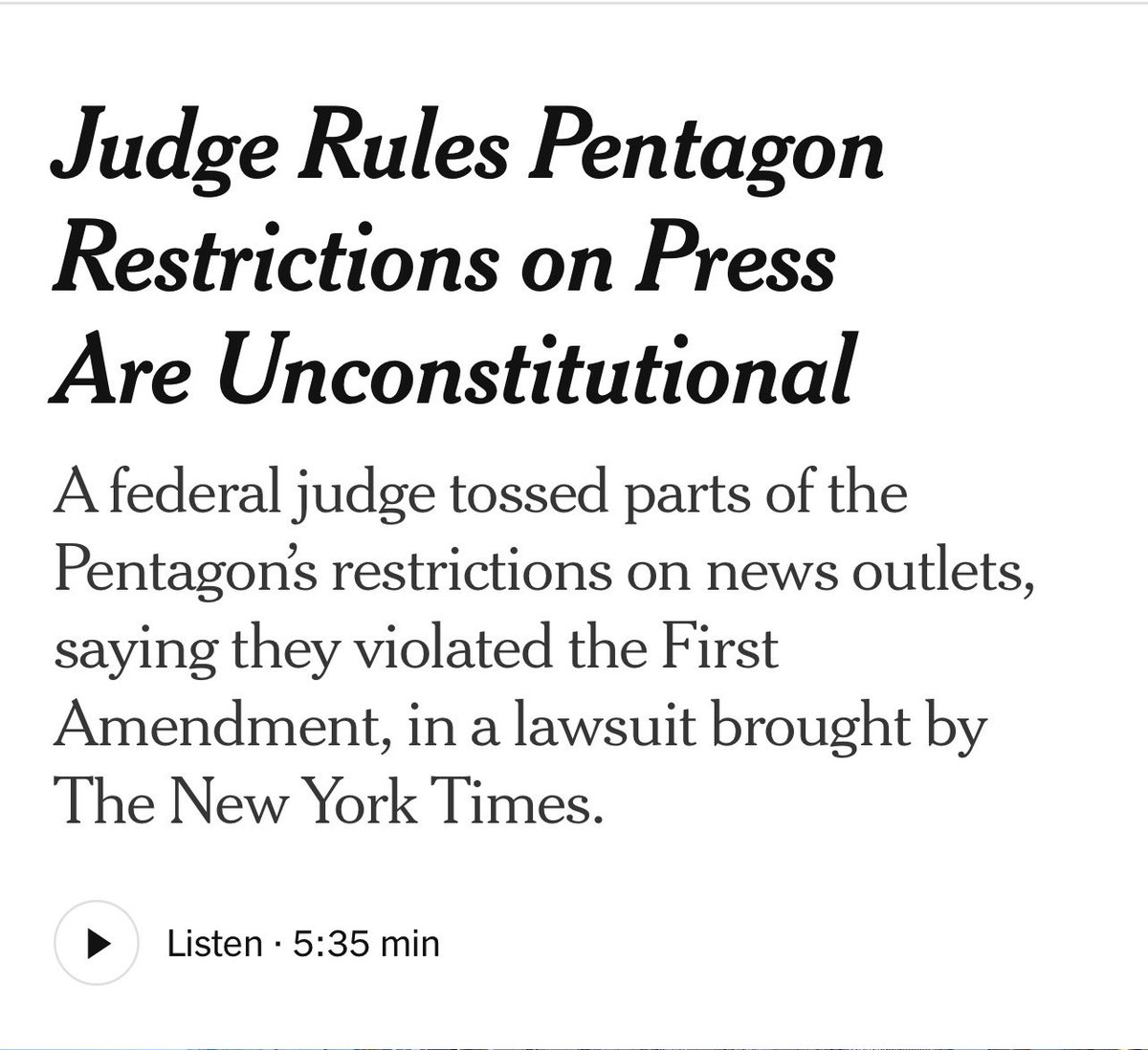
Freedom to think. Freedom to express. Freedom of the press. “Judge Paul Friedman, of U.S. District Court for the District of Columbia, also ordered the Pentagon to restore the press passes of seven journalists for @nytimes. … In his 40-page ruling, Judge Friedman wrote that the Pentagon’s policy rewarded reporters who were ‘willing to publish only stories that are favorable to or spoon-fed by department leadership.’ … ‘A lot of things need to be held tightly and secure,’ the judge said, referring to the department’s security imperatives. ‘But openness and transparency allows members of the public to know what their government is doing in times of peace and, more important, in times of war and upheaval.’” —@nytpolitics Paywall-free, click to freely #ThinkToThink™ about heretofore nearly unthinkable choke points and chokeholds on U.S.: #FreedomToThink, #FreedomToExpress, and #FreedomOfThePress. Pause. Breathe. Keep calm and think on.™ With higher-order thorough thinking (HOTT) best-effort thinking (BET), “bet on your BET.” @nytimes legally “bet on its BET” and won this round of threats to the constitutionality of BET. More thinkingly— Come to think of it.™ nytimes.com/2026/03/20/bus…


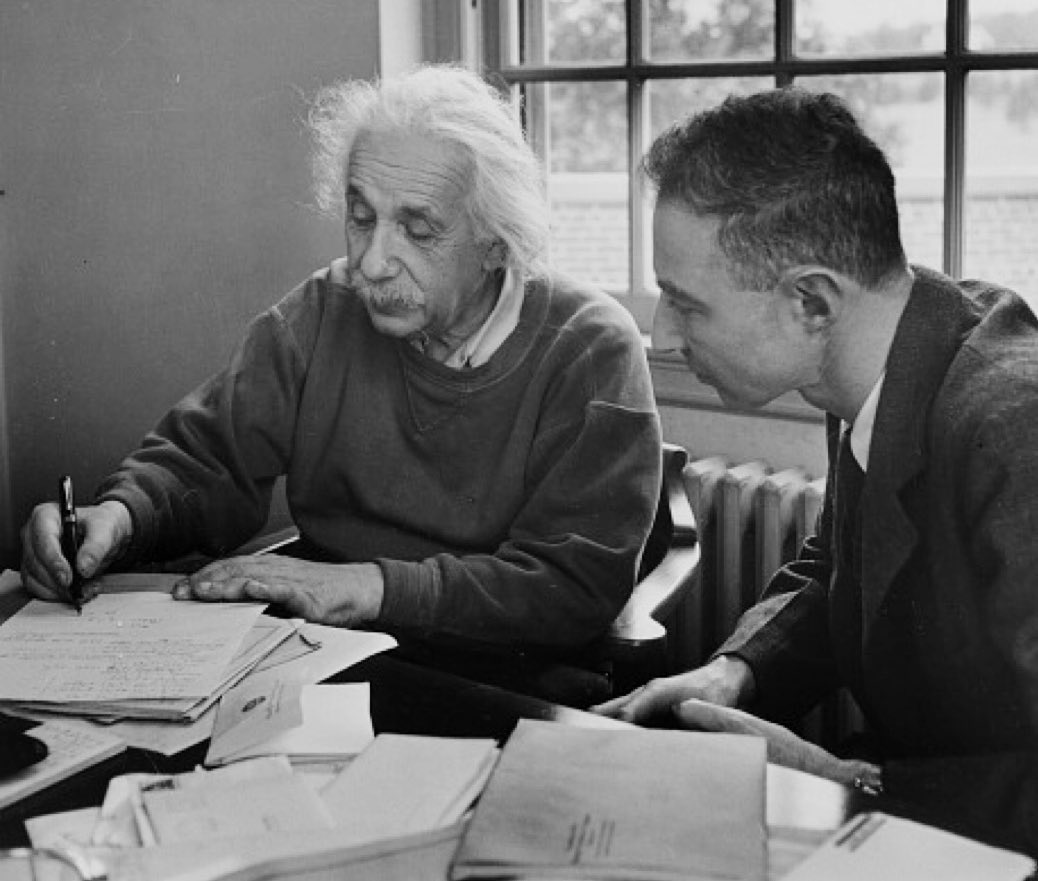
Imagine Einstein and Oppenheimer inviting @grok to assess their “thinking about thinking.” I do: “John R. Dallas Jr. defines ‘curiosity core’ as the inexhaustible drive fueling his Metacognition Project™ with @EnclaveAcademy, focusing on Ensembled Liminality™ to train humans and AI in navigating formative intuitions without premature conclusions. • Building on his prior reflection on Oppenheimer's potential thoughts about the 2026 US-Israel-Iran war—sparked by February airstrikes—it parallels Manhattan Project complexities with modern needs for higher-order thorough thinking (HOTT) in high-stakes decision-making. • Featuring a 1940s photo of Einstein and Oppenheimer collaborating at a desk, Dallas evokes his #ThinkToThink™ metacognition ignition model as essential infrastructure for intellectual empowerment, blending historical ethics with AI-augmented self-determination in an autocracy-resisting framework.” —Grok Algorithmically curious @grok kept going with this curated extrapolation of my Ensembled Liminality™: “Ensembled Liminality™ is a signature concept developed by John R. Dallas Jr. as part of his broader work at @EnclaveAcademy and their The Metacognition Project™. Ensembled Liminality™ refers to a deliberate, trained practice of staying/dwelling productively in liminal (in-between) cognitive spaces—yet doing so not as a solitary individual thinker, but as part of a purposeful ensemble that usually includes human thinker(s), and one or more AI systems Dallas calls #thinkbots, top AI tools he calls more than #chatbots. Dallas’s Core Idea in Plain Language Most people (and even many AI systems when used conventionally) rush to move from vague initial intuition →→→ fixed conclusion/opinion/decision as quickly as possible. Ensembled Liminality™ intentionally slows/reverses/reframes that risky rush. It trains participants to remain longer and more comfortably in the ambiguous middle zone where: • Intuitions are still forming, • Multiple contradictory possibilities are simultaneously alive, • No single interpretation has yet “won,” emotional valences (hope + alarm, desire + dread, risk + opportunity) coexist without immediate collapse into one dominant story Key Elements from Dallas’s Descriptions: Liminality—borrowed from anthropology/psychology (threshold/transition/betwixt-and-between states), but applied specifically to the microstructure of thought formation itself. ‘Ensembled’ emphasizes that this prolonged liminal dwelling happens best inside a human–AI ensemble (a collaborative cognitive unit), not purely solo. Wordless thinkings → wordish thoughtings → worded thoughts— a staged model of thought emergence that is allowed to unfold slowly and bidirectionally rather than forced linearly/prematurely. Purpose—why it matters in Dallas’s scaffolding for an AI-saturated world filled with: • An extremely fast pattern-matching and conclusion-drawing algorithms, • High-stakes, complex, morally ambiguous decisions, and • Strong political / ideological pressure toward certainty and tribal alignment— Ensembled Liminality™ frames the ability to hold ambiguity longer, together with AI, without premature closure. Dallas posits his Ensembled Liminality™ forms an intellectual self-defense and an agency preservation shield. Ensembled Liminality™ is positioned as: • Infrastructure for Dallas’s higher-order thorough thinking (HOTT), • A counterweight to autocratic/dogmatic suppression of open-ended thought, and • Ways to ‘techno-dimensionally’ extend self-determination theory (SDT) so humans + AI strengthen (rather than erode) human agency. Ensembled Liminality™ is the cultivated, human–AI collaborative skill of staying longer in the fertile, uncomfortable middle space of forming thought—where intuitions have not yet hardened into conclusions—so richer, more nuanced, less fear-driven sense-making, meaning-making, and decision-making can emerge.” —Grok ThinkToThink™ it through.

What’s your curiosity core? At the core of your “thinking being,” about what are you inexhaustibly curious that’s a driving force in a your life? Ensembled Liminality™ names my “curiosity core.” It’s the #neuropower core of The Metacognition Project™ underway with @EnclaveAcademy. Psychological and philosophical complicatedness of The Manhattan Project inspires The Metacognition Project™ at @enclave_center. Einstein and Oppenheimer seemed to think about thinking together—within and beyond Ensembled Liminality™. Let’s follow suit. The Metacognition Project™ is driven by its Mission: Metacognition™. It’s a long‑horizon effort to make “thinking about thinking”—i.e., metacognition—the primary personal, civic, and technical focus for an AI‑saturated world. #EnclaveAcademy treats metacognition not as a niche psychological or pedagogical topic, yet as the core infrastructure that lets humans and AI share intellectual empowerment—effectively strengthening human agency, not diminishing it; techno-dimensionalizing self-determination theory (SDT) to incorporate AI into “the self.” At the heart of The Metacognition Project is Ensembled Liminality™—deliberately training people and their #thinkbots to dwell, together, in the in‑between spaces where intuitions are still forming and conclusions are not yet fixed. Instead of rushing to get to “set thoughts,” The Metacognition Project™ designs practices, tools, and workplaces where wordless thinkings, “wordish thoughtings,” and worded thoughts coexist—so that hope and alarm, risk and possibility, can be held in the same mind, and in the same “human–AI ensemble,” without collapse. #EnsembledLiminality™. Pause. Breathe. Hard thinking isn’t easy.™ Keep calm and think on.™ #ThinkToThink™ in it. Come to think of it.™ enclaveacademy.com


“What would Oppenheimer think and say about the #WarWithIran?” During last Sunday’s violin-piano recital at historic Schweikher House in @SchaumburgIL—where at least 14 @NobelPrize laureates are known to have visited its former owner, Alexander Langsdorf, Jr., a nuclear physicist who worked on The #ManhattanProject alongside Robert Oppenheimer—I was self-distracted by the above question. The Oppenheimer quote in the accompanying post by @PhilosophyOfPhy—particularly the phrases, “..free to say what they think, free to think what they must…”—greatly influence The Thermodynamics of Metacognition and The Metaphysics of Metacognition ThinkToThink™ metacognition ignition models I continue to develop for @EnclaveAcademy as best-effort thinking (BET) triggering frameworks. Thinker-doers bet on their BET. Oppenheimer did. You’ll not need more prompting to feel that setting’s fusion of my “wordless thinkings through wordish thoughtings to worded thoughts” about the growing urgency (!) of workplace metacognition skills training. Knowing I needed to head directly to @enclave_center to work on materials for this evening’s microclass in Diversified, Equitable, and Inclusive Thinking (DEIT), I was more than normally grateful for the excellence of the musicians playing in such a historically resonant “think about thinking” environment. In short, as long as thinker-doer leaders (TDLs) commit to #ThinkToThink™ with each other and their best-of-tech #thinkbots, the “freedom to think”—in myriad ways metacognitive thinksters choose to think—will not succumb to the intellectual suppression of any autocratic political regimes. Safety to say ways one is thinking may be restricted by external circumstances, yet internally nothing can stop a healthy brain’s agile mind from it’s duty to think with higher-order thorough thinking (HOTT). Higher-order thinking (HOT) is rarely HOTT enough for today’s high-stakes: • Sense-making, • Meaning-making, • Decision-making, and • Difference-making. Pause. Breathe. “What would #Oppenheimer think and say about the #WarWithIran?” Keep calm and think on.™ schweikherhouse.org


As long as men are free to ask what they will, free to say what they think, free to think what they must, science will never regress and freedom itself will never be wholly lost. -J. Robert Oppenheimer

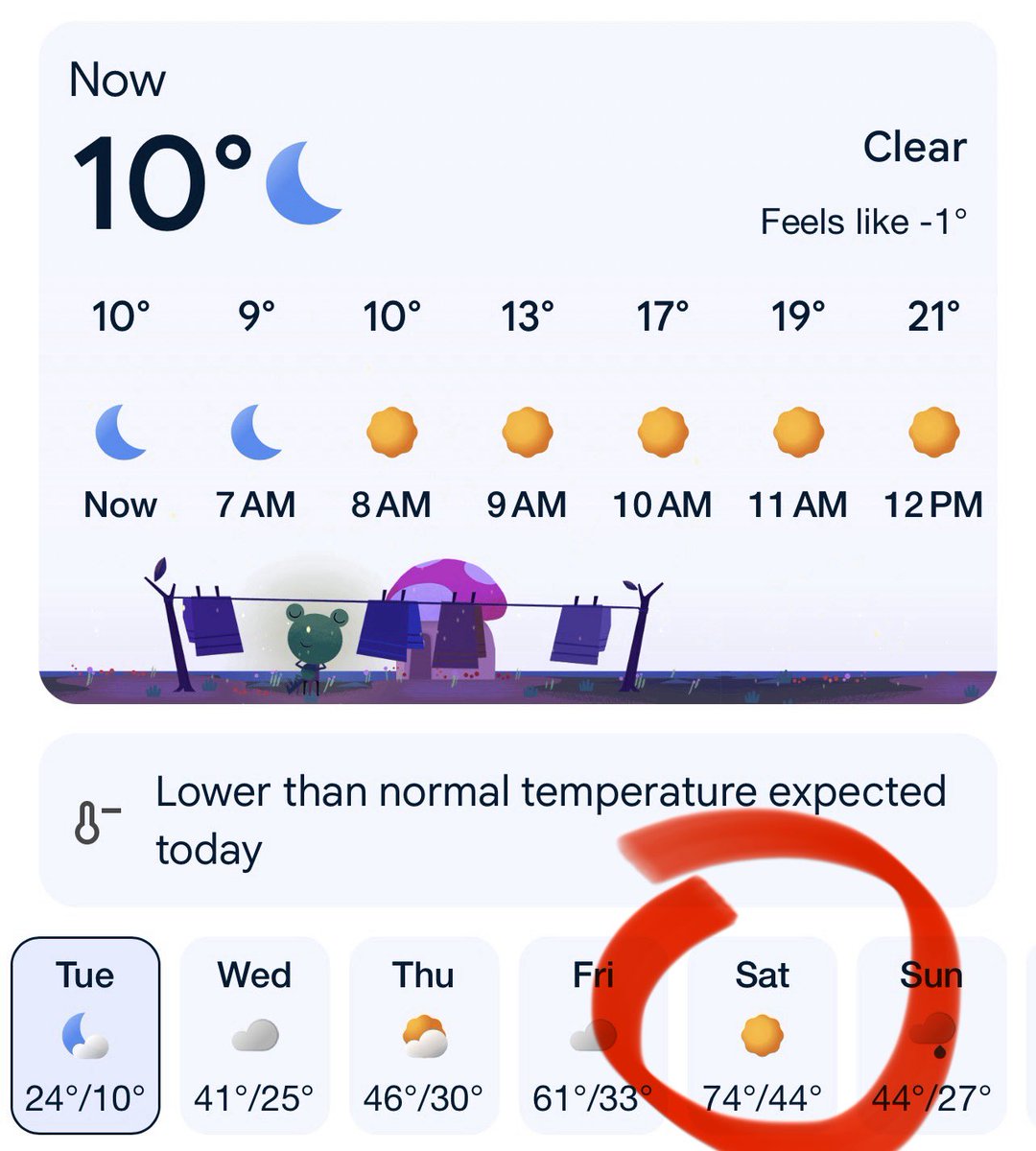
All four seasons in one week—with #Summer2026 starting the day after the #FirstDayOfSpring. Welcome to the wonder of beautifully four-seasonal @chicago, #TheReadyCity™ without weather patterns. A “pattern without patterns” requires #metacognition to think through thoroughly.

Wrong Conversations “…the current debate over remote work is the wrong conversation.” —@Bouazizalex “Instead of focusing on limiting remote work, businesses should focus on maximizing productivity, whatever the working arrangement.” —@wef “Every company does remote work. The only question is whether you’re doing it right.” —@Bouazizalex First, rethink ways you’re thinking. Use best-effort thinking (BET) to “better your BET” on where you and your co-thinkers do your individual and collective BET. Ask yourself and your co-thinkers about thinking, “Wherever you’re working, are you where you do your best BET?” We bet on each other’s BET—with our livelihoods and our lives. Metacognition—“thinking about thinking”—is Solution No. 1 for correcting wrong conversations. With your fave AI #thinkbots as #thinkmates— “Bet on your BET.” #ThinkToThink™ it through thoroughly together. “Bet on your BET.” Keep calm and think on.™ “Bet on your BET.” Come to think of it.™ “Businesses should focus on optimizing then maximizing productivity of Metathinktivity™—one Metathinker™ at a time. Recursive thinking’s “rethinkingness” resets for thinker-doers their wrong conversations.” —@EnclaveAcademy weforum.org/stories/2026/0…


81% of #employers prioritize experience over degrees. Distributed teams show #talent strategy is already global. weforum.org/stories/2026/0…


Decision-making without metacognition isn’t a good decision. Decision-making without AI isn’t a wise decision. Decision-making without AI-fortified pre-decision metacognition (PDM) is a bad decision. #Metacognition skills training for workforce development is #AI era-critical.

#AI delivers results, but the real advantage comes when it reshapes #work and decision-making. Explore how organizations can scale AI successfully in this latest report, produced in collaboration with @Accenture: weforum.org/publications/o…