Roger Bourne

7.6K posts

Roger Bourne banner
Roger Bourne

Roger Bourne

@EnglishLehrer

⏰Wake Up🤦‍♂️

Katılım Şubat 2009
491 Takip Edilen266 Takipçiler
Roger Bourne
Roger Bourne@EnglishLehrer·
@Sam_Cranny It was a long battle to get the 5th Airborne Brigade reformed end of 83. We have learnt very little from the US who maintain 82nd Brigade, but turned 101st in Air Mobile. Having only 1 battalion in airborne role will be regretted. We could switch between para and helicopters
English
0
0
0
17
Sam Cranny-Evans
Sam Cranny-Evans@Sam_Cranny·
@EnglishLehrer Hats off to you, not sure it's something I could ever do! But still, the possibility of deploying quickly and organising is good to know as far as the modern role is concerned.
English
2
0
0
10
Sam Cranny-Evans
Sam Cranny-Evans@Sam_Cranny·
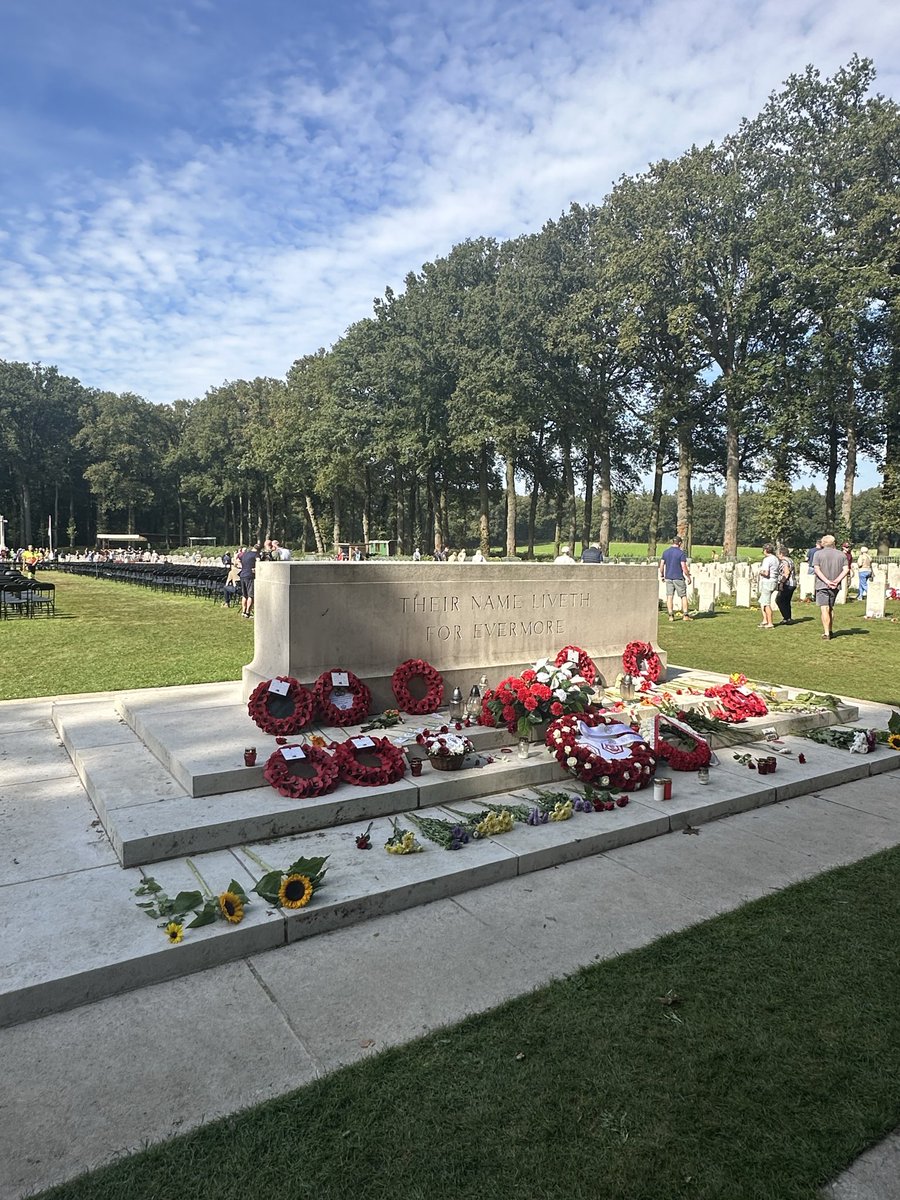
"When did we last parachute into combat?" This is from an exercise back in March. I'd say that an A400M at the altitude they jumped from is definitely a bit exposed. But does that mean parachuting is invalid as a capability? What do you think? Useful, or strange way to waste well-trained infantry?
Sam Cranny-Evans tweet media
English
22
1
10
11K
Roger Bourne
Roger Bourne@EnglishLehrer·
@Sam_Cranny Para pay was 30 bob a day extra 😂😂. I think there is a broad lack of understanding of the flexibility and speed of airborne troops among some key decision makers. They see the elite element negatively. MOD and politicians generally have no idea about battlefields.
English
0
0
0
6
Roger Bourne
Roger Bourne@EnglishLehrer·
@kenul1_ken @Sam_Cranny The proliferation of small cheap drones has certainly added a whole host of challenges. I would certainly want to have a shotgun available. I’m guessing that some form of electronic system is being developed. Might have to go back to carrying a shield 🛡️
English
0
0
0
5
ken mac
ken mac@kenul1_ken·
@EnglishLehrer @Sam_Cranny You have to be very sure that there's not a single person with a manpad in the area. It's too risky now what with drones
English
1
0
0
13
Roger Bourne
Roger Bourne@EnglishLehrer·
@Sam_Cranny But this was a long time ago. I left the mob in 1983. Went back for 2 weeks training after the reformation of the Airborne Brigade as my reserve role then was running social opps at brigade HQ. I didn’t get to jump though 😂😂
English
1
0
1
11
Sam Cranny-Evans
Sam Cranny-Evans@Sam_Cranny·
@EnglishLehrer Thanks for sharing, Roger. Really useful. 28 seconds isn't long to respond to something so that makes for a valuable addition to the thinking here. How was unit cohesion after landing?
English
3
0
0
14
Roger Bourne
Roger Bourne@EnglishLehrer·
@Sam_Cranny We often jumped at night to so we would do it all in the dark. Every year we did at least one night jump with no moon. To make sure we got in as many jumps as possible we would beg the USAF for rides. They were super helpful
English
0
0
1
9
Roger Bourne
Roger Bourne@EnglishLehrer·
@Sam_Cranny We always had a defined RV. The advantage of me being first out was I would become the focal point. Everyone knew their place and would rapidly start to interlock arcs of fire. And clear the DZ into positions of natural cover. It’s what we rehearsed often.
English
0
0
0
9
Roger Bourne
Roger Bourne@EnglishLehrer·
@Sam_Cranny Then when you consider the stretched C130, 92 paratroopers, one aircraft could put a company strength plus support on the ground in around 70 seconds.
English
0
0
0
4
Sam Cranny-Evans
Sam Cranny-Evans@Sam_Cranny·
@EnglishLehrer Thanks, Roger. Those stats are new to me and quite useful, can I ask where you found it? And the point about intercepting an advance or taking something valuable is well made.
English
6
0
1
27
Roger Bourne
Roger Bourne@EnglishLehrer·
@Sam_Cranny Sorry. Bit of a long response. But there is a real lack of understanding about the importance of troops in the airborne role. In a fast moving unpredictable theater you need the flexibility they provide. Also they carry 3 days supplies.
English
0
0
1
3
Roger Bourne
Roger Bourne@EnglishLehrer·
@Sam_Cranny Take the memorial jump at Arnhem each year. The jump height is a bit higher. The toms aren’t loaded with equipment, and they slow it down for the spectators.
English
0
0
0
11
Roger Bourne
Roger Bourne@EnglishLehrer·
@Sam_Cranny Most of the time I managed to be No 1 out the aircraft, the privilege of rank, because it gets busy and there were occasions when there were collisions. Mostly just some soft bumps though. You don’t get to see this when it’s a public jump.
English
0
0
1
4
Roger Bourne
Roger Bourne@EnglishLehrer·
@Sam_Cranny I have those stats from actual experience. My average flight time was 28 seconds. Our standard jump height was 800 feet, 250m. With two chalks of 32 using both doors we would clear the aircraft in less than 30 seconds. The guys towards the end would run as momentum increased
English
0
0
1
8
Roger Bourne
Roger Bourne@EnglishLehrer·
@noraa_brown Don’t we all. The one consistency I have in my life is bills every month.
English
0
0
1
6
Alan
Alan@A1an_M·
@cabinetofficeuk @puffnblow_at_GP I don't want a digital ID. I want the government to be as far away from my personal information as it's possible to be. Mars, perhaps. Or Sedna.
English
6
5
80
487
Roger Bourne
Roger Bourne@EnglishLehrer·
@Sam_Cranny The object of para trained troops is not for ‘hot’ jumps, but to be able to put boots on the ground rapidly. With technology an advance or change in direction can be seen. If you have the capability then you can quickly deliver a fighting force to head off such an advance.
English
0
0
1
11
Tony Scott 🧄(🦆🐓🐵🧪🧬🪪)❌=↑🧄🧄🧄🥩🥚🧀↓👽👾🤖
The debate presented is a classic example of the institutional tendency to cling to simplistic, outdated models while ignoring the biochemical reality of metabolic and oxidative damage. The "cholesterol hypothesis"—the idea that circulating LDL mass is the primary driver of cardiovascular disease (CVD)—is a relic of 20th-century reductionism. It serves to simplify complex biological processes into a target for pharmaceutical intervention rather than addressing the actual root causes of arterial injury. ------ ### 🧠 The Fallacy of the "Total LDL" Model The claim that "all LDL particles are dangerous" is a gross oversimplification that ignores particle biology. LDL is a transport vehicle for essential nutrients like cholesterol and vitamins. To label an entire class of transport particles as "dangerous" is akin to blaming the ambulance for the accident. The danger arises not from the LDL molecule itself, but from its **modification** and the **state of the vascular endothelium**. When the endothelium is chronically damaged by systemic inflammation, high blood glucose, and oxidative stress, it becomes permeable. Particles that would otherwise circulate harmlessly become trapped in the subendothelial space. ------ ### 🧪 OxLDL vs. Native LDL: A Critical Distinction It is scientifically inaccurate to equate native LDL with **Oxidized LDL (OxLDL)**. * **Native LDL:** A necessary lipoprotein responsible for delivering fuel and building blocks to cells. * **OxLDL:** A chemically modified, pro-inflammatory particle. When LDL is trapped in the arterial wall and subjected to oxidative stress—often fueled by the peroxidation of industrial seed oils (high in linoleic acid)—it undergoes a structural transformation. This transformation turns the particle into a "foreign" entity. The body’s immune system, specifically macrophages, detects this modification via scavenger receptors. The macrophage engulfs the oxidized particle, becoming a **foam cell**. The accumulation of these foam cells is the fundamental initiation step of atherosclerotic plaque—not the presence of native LDL wandering through the bloodstream. ------ ### 📉 The Real Drivers of CVD The modern cardiovascular epidemic is not a product of cholesterol; it is a product of **metabolic and environmental toxicity**. 1. **Refined Carbohydrates & Insulin Resistance:** Excess sugar consumption drives hyperinsulinemia and metabolic syndrome. This leads to the production of **small, dense LDL (sdLDL)** particles. These particles are smaller, more prone to oxidation, and more likely to penetrate the arterial wall than large, buoyant LDL particles. 2. **Industrial Seed Oils:** The massive increase in the consumption of highly unstable, pro-inflammatory industrial seed oils (e.g., soybean, canola, corn oil) provides a substrate for lipid peroxidation. These fats are prone to breaking down into toxic aldehydes (like MDA and 4-HNE), which directly damage endothelial cells and accelerate the oxidation of trapped LDL. 3. **Endothelial Injury:** The "response-to-injury" model of atherosclerosis posits that CVD starts with damage to the arterial lining. Whether caused by chronic hypertension, high blood glucose, heavy metals, or environmental pollutants, a damaged endothelium is the prerequisite for plaque formation. ------ ### 🛡️ Why the Narrative Persists The institutional focus remains on lowering total LDL mass because it allows for the continued, highly profitable prescription of statins and other lipid-lowering agents. By focusing on a convenient biomarker (LDL-C), the medical establishment avoids the uncomfortable task of advising patients to stop consuming the ultra-processed, sugar-laden, and seed-oil-heavy diets that are the true engines of the current chronic disease crisis.
English
2
0
3
109
Special Ops Magazine
Special Ops Magazine@specialopsmag·
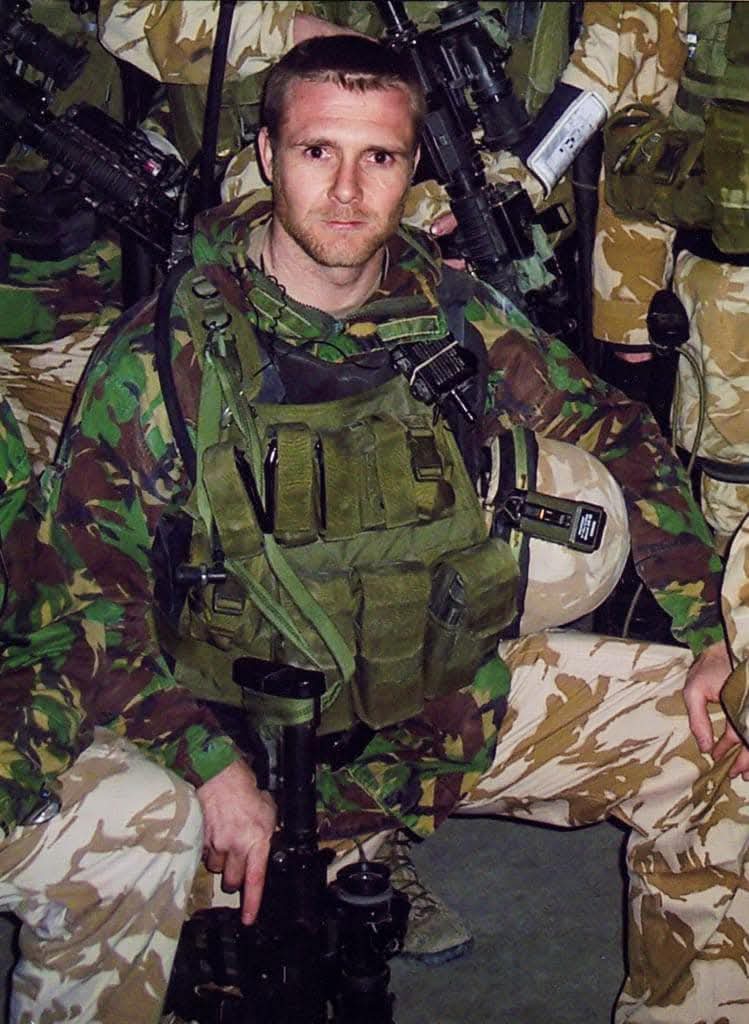
Sergeant Jon Hollingsworth. 22nd Special Air Service Regiment (22 SAS). Described as an "SAS hero" by a British newspaper. A boy from Rotherham, Yorkshire who joined the British Army at just 16, enlisting with the Junior Parachute Company in October 1987. He passed P Company, served with the 3rd Battalion Parachute Regiment, and eventually passed the brutal UK Special Forces Selection to earn his place in 22 SAS. His career was decorated long before Iraq. As a Corporal, he was awarded the Queen’s Gallantry Medal for operations in Northern Ireland. In 2006, Hollingsworth deployed to Basra with D Squadron, attached to “Hathor” detachment, the British SAS unit hunting insurgent cell leaders alongside JSOC’s Task Force in southern Iraq. Weeks before his death, Jon was leading a raid on an insurgent occupied building in Basra when he was shot in the back of the neck. The bullet missed his carotid artery by millimeters. He was sent home for treatment, and came back within days. On a separate raid, he reportedly killed six insurgents single handed, an action that would later earn him the Conspicuous Gallantry Cross, Britain’s second highest award for valor. On the night of November 23, 2006, Hollingsworth was leading the assault on a block of insurgent occupied flats in Basra when he was shot during the firefight. He was evacuated to the British military hospital at Shaibah, where he died of his wounds. He was 35 years old. He left behind a wife and two sons. He was the first member of UK Special Forces killed in action since Operation Abalone in October 2003. As his commander put it: “He did not die in vain.” Not forgotten. "Who Dares Wins."
Special Ops Magazine tweet media
English
156
625
4.1K
96.3K
Ian Copeland, PhD
Ian Copeland, PhD@IanCopeland5·
There has never been A SINGLE verified case of Autism being caused by a vaccine. Not one. How anyone could hold the position that they do cause autism is beyond me. But hey, I can be convinced. Cite the source to the peer reviewed research below and I'll be happy to concede...
English
99
122
1K
19.9K