
Sabitlenmiş Tweet
Ęniolá
183 posts

Ęniolá
@EniolaXstar
Not all storms come with thunder, some wear braids and red.
Katılım Mayıs 2020
153 Takip Edilen107 Takipçiler
Ęniolá retweetledi

A lot of women play victim to issues they started and then go ahead to tell the world a sob story.
SAD.
English

You can make $3,400 per week, If you have:
1. Internet
2. Mobile
3. 1 hour everyday
I have prepared a guide for this. It's absolutely FREE:
Like & reply “Guide” and I’ll DM you the document.
(Must follow me to receive it)

English
Ęniolá retweetledi

If you’re a Data Analyst, looking for experience to add to your CV,
Here are 10 platforms where you can volunteer or intern in data analytics, all with relatively straightforward application processes:
VOLUNTEER PLATFORMS
1. DataKind (datakind.org)
You create a profile on datakind.rosterfy.com, add your data skills and experience, and get considered for projects as they arise. Volunteers can work remotely from anywhere in the world.  Great for applying real-world analytical skills to social impact causes.
2. Catchafire (catchafire.org)
You can volunteer in various ways ranging from a short 1-hour phone call to a 3-month scoped project, working remotely. Skills like data analysis, digital marketing, and IT can be offered to nonprofits.  One of the easiest sign-up processes out there.
3. Taproot Foundation (taprootplus.org)
Taproot acts as a middleman between social impact organizations and professionals with the right skills. People can post projects or browse available ones, and the platform connects volunteers with pro-bono consulting opportunities. 
4. Solve for Good (DSSG Solve) (solveforgood.org)
It’s a platform where social good organizations post data projects they need help with, and volunteers help scope and solve those problems using data-driven methods.  Good for both beginners and intermediate analysts.
5. Omdena (omdena.com)
Omdena offers a collaborative environment where participants work in teams to solve real-world problems using AI and data science. You gain hands-on experience with the benefit of mentorship from experts, and a certificate is provided at the end. 
INTERNSHIP PLATFORMS
6. Internshala (internshala.com)
Internshala offers various remote data science internships with startups and companies. While some roles are unpaid, they provide a great learning experience with hands-on projects, and a certificate is awarded for most positions.  Very popular and beginner-friendly.
7. The Sparks Foundation (thesparksfoundation.org)
A widely known virtual internship program in data analytics and data science that’s easy to apply for. Projects are self-paced and you earn a certificate upon completion great for portfolio building.
8. Extern (extern.com)
Extern offers externships specifically designed for those with zero experience, with real-world impact opportunities and resources like resume templates and direct application links. 
9. Jobright.ai / GitHub Internship Repo (jobright.ai)
This is a curated repository of data analysis internship opportunities updated regularly, pulling from 400,000+ positions added daily and matching them to your skills and experience.  Low friction, you browse and apply directly.
10. Idealist (idealist.org)
Idealist is listed among platforms where you can find jobs and volunteer roles in social-change organizations.  It frequently lists data-related volunteer and intern roles with nonprofits globally, and applying is as simple as submitting a profile.
English
Ęniolá retweetledi

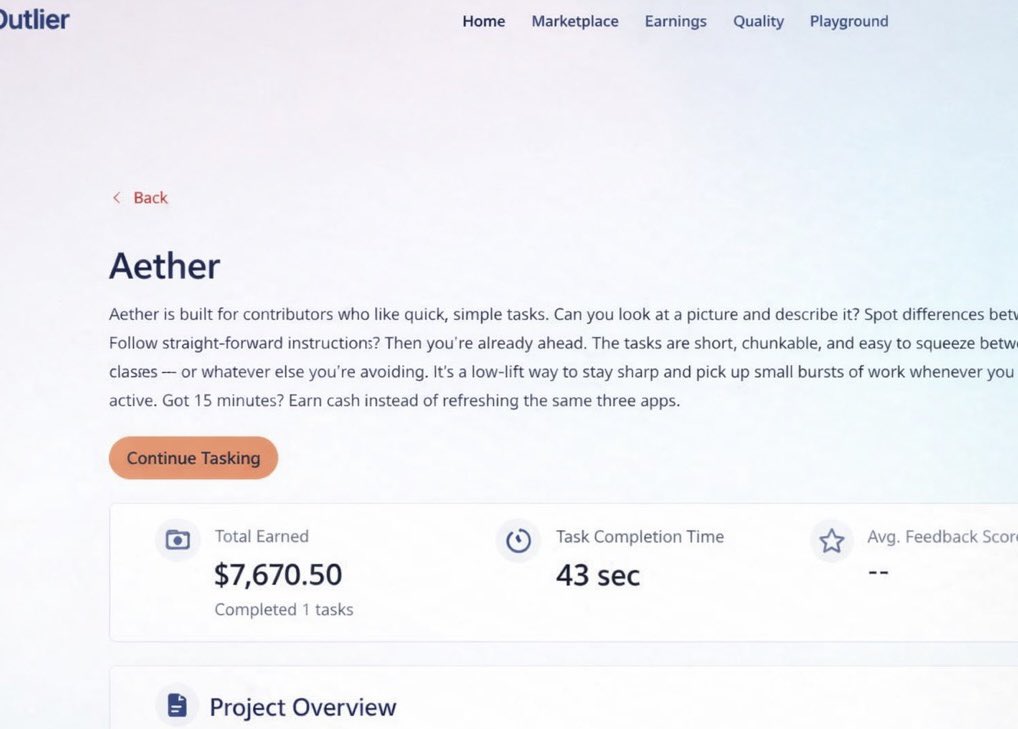
I’ve made over 7K$ + from Outlier
And I’m in Nigeria
But they said Nigerians can’t use it
So what changed ? Absolutely Nothing
Most people just don’t set it up right
Outlier pays you to train AI : Simple tasks, Real money
I’m using it right now from Nigeria
So yes it works
If you want to know how I managed to get my account created
Comment OUTLIER 👇
English
@taora3_ @Prateek0102 @SeismicSys @xealistt @NoxxW3 @heathcliff_eth @BharatWormie @lyronctk Nice art! GMIC!
English

What a beautiful banner from @Prateek0102 !!!
Thanks so much
I decided to brand my Twitter profile to support @SeismicSys !!!
This is how my profile looks like now 👇🏾
@xealistt @NoxxW3 @heathcliff_eth @BharatWormie

English
English

𝗣𝗥𝗜𝗩𝗔𝗖𝗬 𝗜𝗦𝗡’𝗧 𝗢𝗣𝗧𝗜𝗢𝗡𝗔𝗟 𝗜𝗡 *FINTECH* . 𝗜𝗧'𝗦 𝗦𝗔𝗖𝗥𝗘𝗗.
Imagine entering a bank where your account balance, loan history, and lunch expenses are all visible to everyone.
The majority of blockchains nowadays resemble that.

English
English

Been feeling extra private lately, so I ran a quick test.
Results just came in, I’m @SeismicSys positive. My blood’s fully ENCRYPTED!
Gmic @@NoxxW3 @xealistt @heathcliff_eth @xplanettt

English

Some days back, I saw a post that said:
Not saying it’s true but it got me thinking...
How does something like that even happen in the first place? 🤔
Leaks like that usually trace back to one thing: data exposure.
Internal files, preview links, or dev environments get shared in plain text unencrypted, unsecured, and one bad click away from being public.
We’ve seen this before projects accidentally push their staging URLs to GitHub, or someone shares a Notion doc with “anyone with the link” access.
Next thing you know, the alpha’s on CT before the official drop😭, which I'm sure most projects find annoying.
That’s where @SeismicSys steps in.
They’re building encrypted data rails that keep your internal ops airtight from dev builds to contributor dashboards.
Every byte sealed behind end-to-end encryption.
Imagine if every internal test site, repo, or product preview lived inside Seismic’s encrypted layer
no leaks, no intercepts, no “whoops, someone found the dev link” moments.
In crypto, information = alpha.
Leaks aren’t just embarrassing they’re expensive.
Seismic makes sure your next big move stays yours…
until you decide to drop it.
Privacy isn’t optional anymore. It’s infrastructure.
@NoxxW3 @xealistt @xplanettt @heathcliff

English

Seismic Art Challenge:
"...From Seismic’s chain, in shadows deep,
Rocky wakes from data’s sleep.
Masked like Jason, eyes that gleam,
He hunts the doubters of the dream.
“Privacy lives,” his echo roars ,
and for the unbelievers? No more wars..."
#RockyHalloween

Pablo ♏️@EmmanuelSSCB
Seismic Art Challenge. Title: ROCKY and Me (chill mode). I hopped on a Seismic art challenge by @dotted59. Here is a hand-drawn piece of Rocky and Me (repped by my PFP) chilling on a rocky beach envisioning all things seismic. How would you rate it? 🤔
English
English

This last Saturday I decided to watch a documentary called “Decoding the Great Pyramid “ It was about the Great Pyramid of Giza. Dey with me 🫵😉 as I explain the similarities that I discovered between the Pyramid and Seismic.
@xealistt @NoxxW3 @heathcliff_eth @BharatWormie

English

I'll be writing on the five prototypes (LEVEL, DWELL, RIFF, FOLIO, NIBBLE), that highlights the real-world use cases of Seismic programmable system.
LEVEL being the first.
Have you ever noticed how cities get messy when no one is in charge of things like power, roads, when there are also no rules or order?
Exactly.
Everyone’s building, but without coordination, it all ends up messy.
This is exactly what’s happening in DePIN today (DECENTRALIZED PHYSICAL INFRASTRUCTURE NETWORKS).
Projects build their own networks for the likes of internet, energy, maps, but when rewards or activity spike suddenly, the system becomes unstable.
It’s like a house where the light flickers every time people plug in their chargers. There’s no automatic balance between demand and supply.
This is what LEVEL by @SeismicSys aid to resolve.
LEVEL keeps DePIN systems stable automatically.
When rewards or usage tend to derail, it adjusts the settings in real time so the network stays balanced and fair for everyone.
There are no manual tuning, sudden crashes won't be experienced, just a flawless coordination that keeps the system alive.
It’s like giving that house a smart grid that balances power instantly, no matter how many people plug in.
LEVEL shows how Seismic’s tech makes infrastructure that doesn’t run but also adapts because true decentralization isn’t just about building things, instead about keeping and making them working together.
gMic and happy weekend fren. 🤍
Chidera 💫 ✨@ChideraIloka
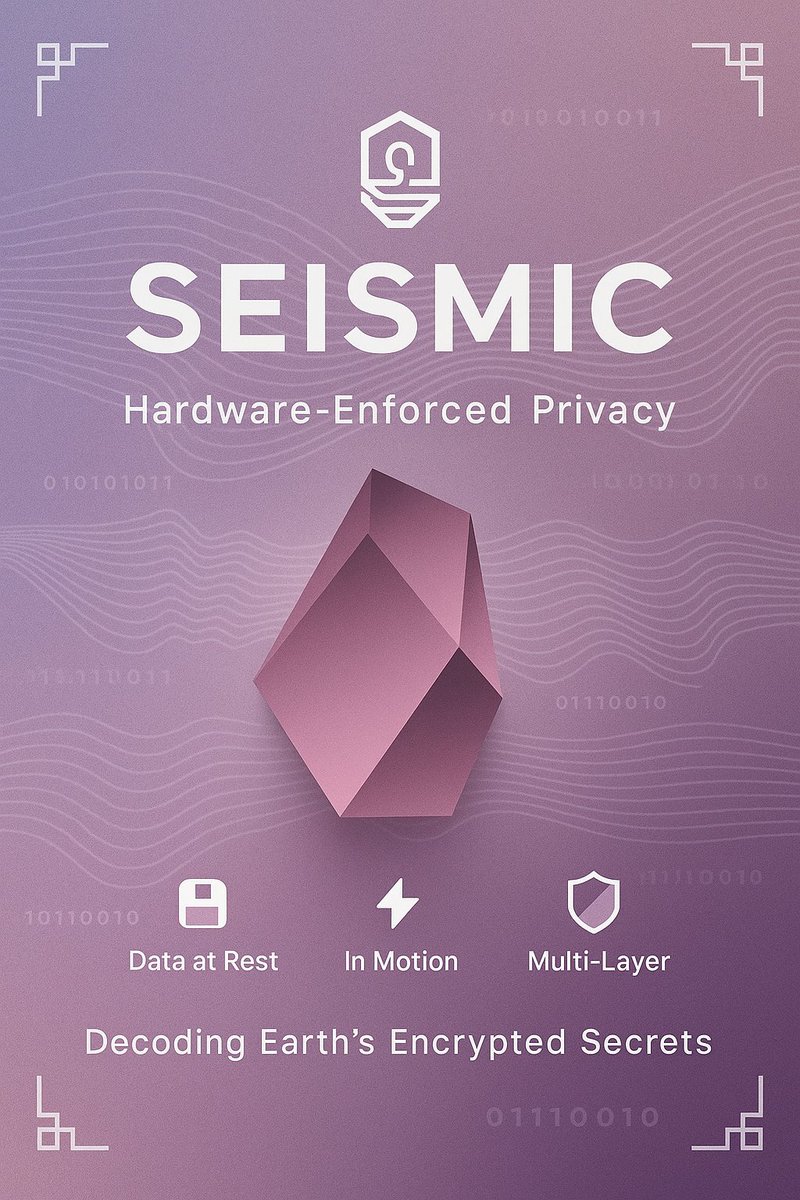
The core structures of seismic contracts. On @SeismicSys, every contract is referred to as a walnut contract. The walnut contract is split into two layers which are: KERNEL and SHELL. Together, the kernel and shell forms the fundamental structure of a seismic contract. Other things like reset mechanism, rounds, collections, clients are supporting features. But the basic structural design of a Seismic contract is the Kernel and Shell. Diving deep....... What is a kernel? The Kernel is referred to as the secret engine. It’s where the sensitive logic and private data live (encrypted). Nobody sees it by default. It runs the rules, computes results, and keeps the important bits locked. What is a Shell? The Shell is referred to as the visible face. It’s the UI / public contract layer, what users and other apps interact with. The Shell shows what needs to be shown, when it’s safe. How they both work together? 1. You submit an action via the Shell (e.g., “send salary to Alice”). 2. The Shell forwards that request to the Kernel, but the Kernel only sees encrypted data. 3. Kernel runs the logic privately (checks, calculations, rules). 4. Kernel returns a result (still protected). 5. Shell decides what to reveal, maybe only “payment done” or a hashed receipt. Not everyone’s bank balance, so users get confirmations and apps stay usable, but the private bits stay private. Why does it split them? •So that sensitive data won't float around public logs. •Hackers won't be able to see or target encrypted computation. •Easier upgrades also... Swaps the Shell (UI/UX) without touching the sealed Kernel •Better developer safety: Bugs in the Shell won't automatically expose secrets in the Kernel. •Composability with protection: Apps can interoperate easily while keeping private pieces private. Let me state an example using a "salary app". On a public chain, employee salaries are visible. Competitors or attackers see's pay, they can exploit easily. Now using Seismic, salary checks and calculations happen in the Kernel. The Shell only shows “payment cleared” or a masked summary. The salaries stays completely private. How a “reveal” actually works: Sometimes you must show something. The Shell can reveal only the necessary piece of Kernel output, like showing a stamped receipt, not the whole ledger. "Reveal" let's you show the part of the data you need, like showing a receipt without opening or exposing your entire wallet. It is controlled, specifically and keeps everything else private. TDLR: The Kernel is like a locked brain that keeps your private data and logic safe, while the shell is the public face that interacts with the outside world. Separating them gives you privacy, security, and flexibility so you can use powerful features without exposing your secrets. gMic.🤍 @xealistt @NoxxW3
English
Ęniolá retweetledi

Gmic Devs!
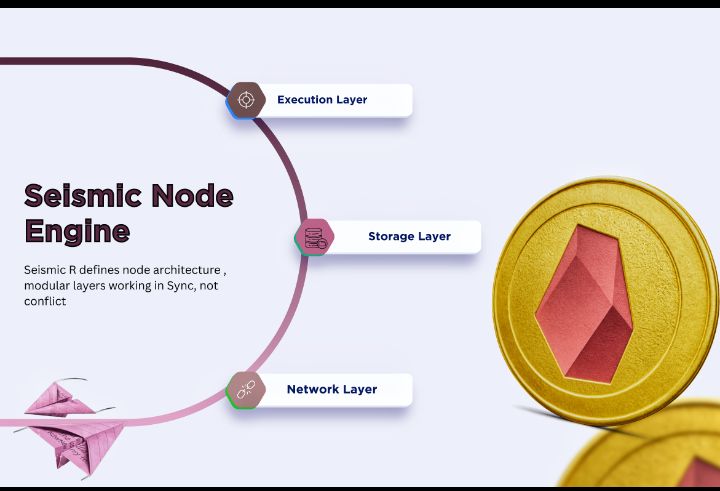
Ever watched code run like traffic, one car at a time and thought to yourself, "this could be faster"?
That's what Seismic Parallel Execution fixes
Today let's talk Parallel Execution! 🧵
English

In my previous tweet, I made a statement saying that transparency wasn't always a good thing.
I didn't fully explain this and I thought I should 🔻
"The Paradox of Transparency......"
I'm pretty sure that when Satoshi nakamoto finally found a way to alternate fiat and boycott Central authority in handling finances.
He prolly thought to himself, "I just made the financial market trustless, transparent and verifiable without bias"
I'm not gonna lie, he cooked with Bitcoin, and he is still cooking till now, especially on the transparency agenda.
It’s kinda what separated Web3 from the black-box systems of Web2, where institutions could easily manipulate data, censor transactions, or rewrite histories.
But the same transparency that made Web3 beautiful… also made it potentially dangerous.
Because in a fully transparent system, everyone sees everything.
Your wallets, day to day transactions, and every single movement of value.
Your portfolio is basically public material,
Your "strategy" is traceable by literally anyone, and this means that your behavior is pretty much analyzable.
In simpler terms, this means that:
➠Traders lose their edge because their positions can be tracked, monitored and analyzed.
➠ Enterprises can’t deploy sensitive contracts onchain without leaking the business logic.
➠ Individuals can have their spending habits and identities pieced together by data miners.
(Imagine the whole world knowing that you spent $69k on piniata)
So the "transparency", which was originally a symbol of fairness, slowly became a breach of privacy, and in some cases, a threat to safety.
So the paradox is that Web3’s greatest promise, being its openness, also became its greatest vulnerability.
To evolve, the next generation of blockchains must preserve verification without exposure, allowing us to prove things are true without revealing everything about them.
Now you would think zero knowledge would comfortably handle this, but since we are looking at privacy at the whole blockchain level, @SeismicSys
Is definitely the better pick any time any day.
@xealistt
@xplanettt
0xifeyy@leyyokafor
I asked myself more recently, If web2 corporations are managing money and transactions so well, Then why are we shipping Web3 infras down their throats? They have their own hidden orders and private marketplaces where major deals happen. So why do they need the whole privacy infra. I'd tell you why. Because Web3 has something that web2 often doesn't, which is authenticity and validation without bias. Because validation of data isn't influenced by human metrics, that makes Web3 the most transparent and reliable means of ensuring data reliability. But transparency isn't always a good thing. Transparency in web3 also means that your every move can be: ➠Monitored ➠Watched and ➠Preyed upon by people with evil intentions So while Web3 offered transparency for transactions, it had the bottleneck of publicity. It's Greatest utility became it's biggest draw back. Many infras have tried to solve this bottleneck. But even the best of them can only tackle Dem at surface level. Seismic on the other hand solves this at the base layer, making not just one part, but the whole blockchain private. A Layer one that's targeted at solving blockchain privacy. GMIC frens. @xealistt @xplanettt
English
@lawal771921 No more juggling RPCs, subgraphs, or indexing tools Seismic turns onchain data into a single, dynamic layer developers can interact with programmatically.
🔥🔥🔥
English

“The Future of Blockchain Data Starts with Seismic”
Seismic is redefining how onchain data is stored, discovered, and connected.
Right now, blockchain data is scattered every chain has its own dataset, indexing structure, and APIs. Developers spend more time stitching data together than actually building.
That’s where @SeismicSys comes in.
It introduces a unified, programmable data layer that connects these fragmented ecosystems into one accessible network.
With Seismic, developers can:
~Query data from multiple chains in real time
~Analyze transactions, smart contracts, and user activity seamlessly
~Build applications powered by live, cross-chain data streams
No more juggling RPCs, subgraphs, or indexing tools Seismic turns onchain data into a single, dynamic layer developers can interact with programmatically.
Seismic isn’t just storing data. It’s building the foundation for onchain intelligence unified, accessible, and future-ready.
Gmic @xealistt @heathcliff_eth @NoxxW3 @xplanettt

English
From the shadows, it came,
a ghostly Rocky warden of the @SeismicSys realm.
Cloaked in black, bearing the sigil of power,
glowing cyan-green like coded moonlight.
It pierced my chest, not to destroy…
but to upgrade.
English
In the graveyard of echoes, I stood,
draped in yellow rags, trembling with old frequencies.
The bats whispered, the moon held its breath,
and the mist coiled around secrets of the chain.
@xplanettt @NoxxW3 @heathcliff_eth


English
From the shadows, it came,
a ghostly rocky warden of the @SeismicSys realm, clocked in black,
bearing the sigil of power, glowing cyan-green.
It pierced my chest, not to destroy…
but to upgrade.
English