

Eric Allwardt
12.5K posts


White House spokeswoman: Trump plans to host China's Xi for a reciprocal visit later in 2026.
I will not be surprised if Trump tries to get both Xi Jinping and Putin attend at the same time in Washington.
English

@KobeissiLetter I bet the Democrats are advising Iran to be difficult until after the midterms.
English

BREAKING: President Trump responds to Iran's response to the US' 14-point peace proposal:
"I have just read the response from Iran’s so-called 'Representatives.' I don’t like it," he says.
Futures open in under 2 hours.

English
Eric Allwardt retweetledi

Trump wants to build golf courses and hotels in Russia @BrettErickson28
That's all you need to know about US policy.

Brett Erickson@BrettErickson28
While everyone is focused on Iran, Russia is quietly continuing to rake it in month after month as a result of the war of choice President Trump decided to launch. Secretary Scott Bessent only further aided in this by authorizing ridiculous sanctions waivers on Russian energy products, allowing them to be sold at far higher prices. But how MUCH has Russia been able to increase their revenues, and what is the likelihood they will continue to do so in the future? Last month, I published an op-ed in The Hill titled, "Washington’s self-induced energy crisis leaves Moscow as the only option". In this piece, I address the harsh reality that, as a result of the global energy supply shock, it is highly unlikely (despite Bessent's comments, which have proved to be... unreliable) that the United States will allow the sanctions waiver GL-134B to expire without, once again, being renewed. As a result of the rapid increase in prices in the global energy markets, the unsanctioning of certain Russian energy products, and no end in sight for the Iran War, Russia has seen their oil and gas tax revenues increase by more than DOUBLE. In January 2026, Russian oil and gas tax revenues reached their lowest point in 6 years (source: Russian Finance Ministry), at a paltry $5.3B. February was not much better, only bringing in $5.83B. But then the United States attacked Iran on February 28th, and here we can see the impact that the unsanctioning of Russian energy from Treasury Secretary Scott Bessent, and rapidly rising global energy prices really drive up Russia's ability to replenish their war chest. In March, immediately following the US/Iran conflict kicking off, Russia saw their oil and gas tax revenues rise to $8.32B, a 56.98% increase compared to January. April only got worse, with Russia bringing in $11.53B in oil and gas tax revenues, earning more than January and February COMBINED. Then, just a few days ago, Russia announced that it would raise the price used to calculate their revenues from a price of $77/barrel in April, to $95/barrel in May. This equates to an increased revenue of 23.4% per barrel. Projecting for the month of May, Russian is now projected to earn around $14.23B, an increase of 168.5% compared to revenues earned prior to the conflict in January. The unfortunate reality the world is now faced with, is that the United States is likely to continue extending, or perhaps even EXPANDING, the Russian sanctions waiver for at least the next several months until the mid terms, all while Russia is seeing a rapid replenishment of their war chest that will only further enable them to wage their war of aggression against Ukraine. thehill.com/opinion/energy…
English
BREAKING: President Trump says the EU has until July 4th to implement the US-EU trade deal or their tariffs will “jump to much higher levels.”

English

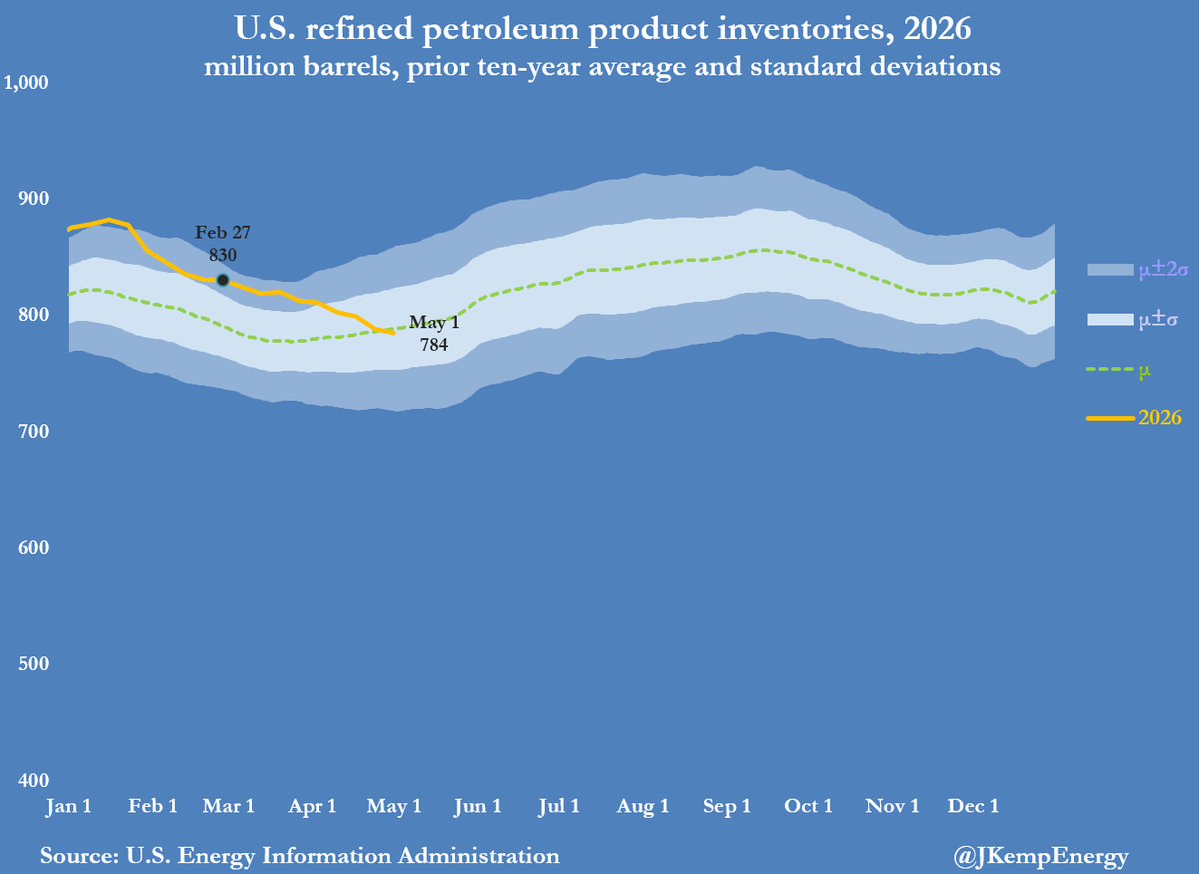
U.S. refined petroleum stocks slump at fastest rate on record
U.S. refined oil stocks are falling at the fastest rate on record for the time of year as refiners prove unable to meet strong export demand stemming from the closure of the Strait of Hormuz while maintaining supply to domestic customers.
Combined stocks of gasoline, diesel, jet fuel and other refined products at refineries, tank farms and in pipelines have depleted by 45 million barrels since the war between the United States and Iran started at the end of February.
During the previous ten years, stocks depleted by an average of just 2 million barrels over the same period, and never by more than 25 million, according to weekly data from the U.S. Energy Information Administration ...
English

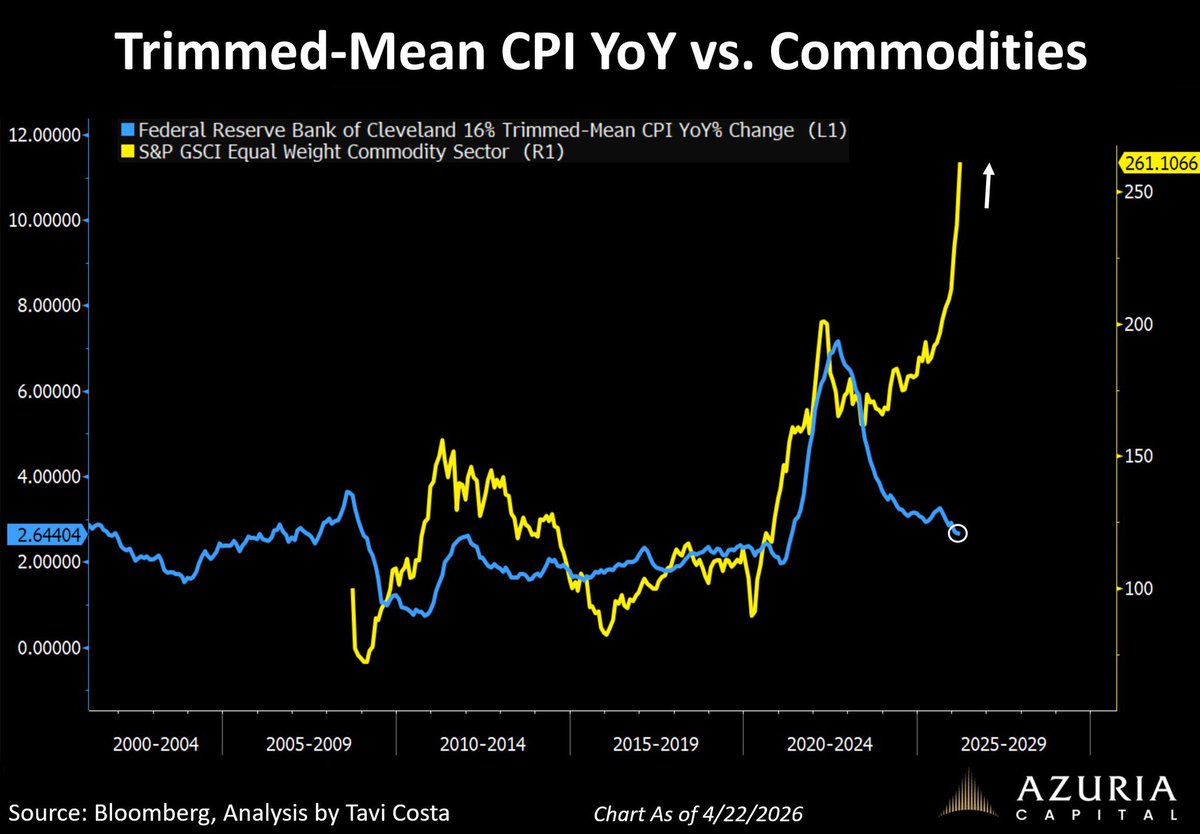
The St. Louis Fed now posting Kevin Warsh’s useless inflation metric.
That’s how far these guys have to go to justify cutting rates while inflation is picking back up.
open.substack.com/pub/tavicosta/…
St. Louis Fed@stlouisfed
The trimmed mean PCE inflation rate ticked up to 2.36% for the 12 months ending in March, up slightly from 2.35% in February. For more on the @DallasFed alternative measure of core inflation, see FRED: bit.ly/3OB9cxn
English
@aeberman12 Stupid question: Could you blend Canadian heavy sour and American light sweet to get somewhere in the happy middle?
English
This is all you really need to know about oil
U.S. oil is too light
Canada and Venezuela oil is too heavy
Middle East oil is JUST RIGHT!
#OilMarkets #CrudeQuality #Refining #EnergyIsTheEconomy #Commodities #Macro #Diesel #JetFuel

English
@vtchakarova Europe can't make nice with US until Trump is out.
English
Don’t say I didn’t warn you my fellow Europeans.
Velina Tchakarova@vtchakarova
If Europe doesn’t join the US amid the Cold War 2 between America & the Dragon-Bear, it will be the biggest victim of “self-cannibalization” within the West in the context of the great power competition and the Bifurcation of the Global System. Europe‘s decline will be systemic.
English

NYT: “You’ve been talking on your show about whether Trump is the Antichrist”
Tucker Carlson: “I have not said that”
NYT: *plays clip of him saying that*
English
@JavierBlas "It's going on too long" = "My approval ratings keep getting worse"
English

Speaking late yesterday, Trump said “maybe we’re better off not making a deal at all” with Iran, without elaborating.
“We can’t let this thing go on, you know, it’s going on too long,” he said
English
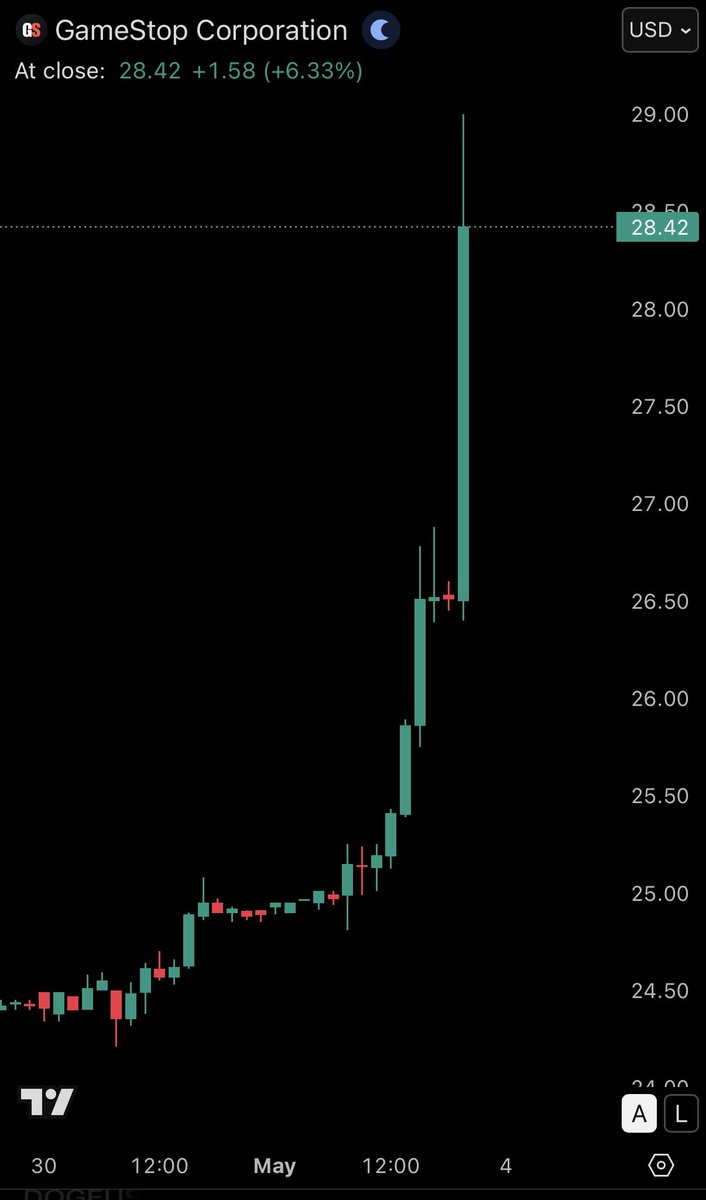
BREAKING: GameStop stock, $GME, surges over +9% on reports that the company is looking to acquire eBay.
English
@TaviCosta On the other hand, I wouldn't want to live in Argentina right now.
English
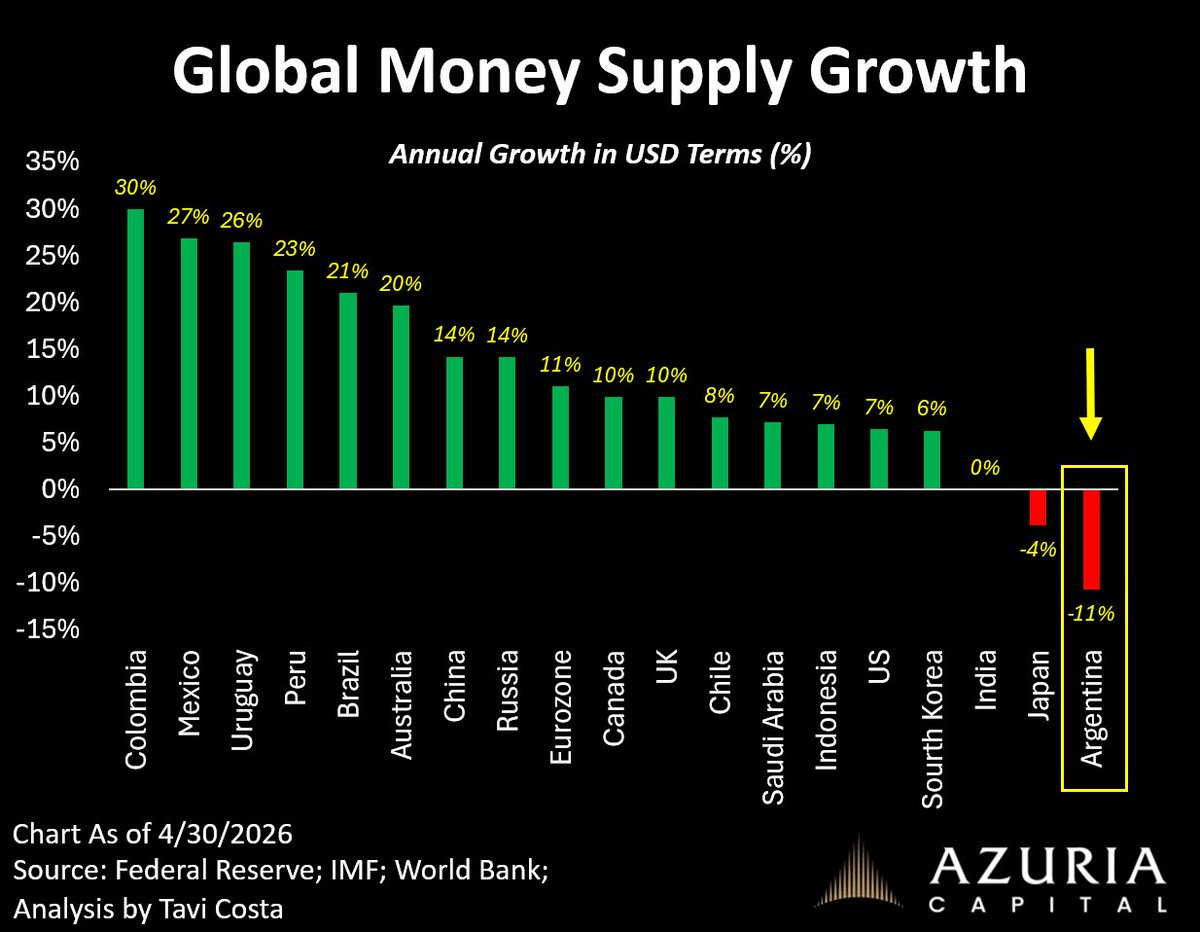
Argentina is the only country where money supply is contracting at a double-digit rate.
Meanwhile, the rest of the world continues to expand credit with little to no monetary discipline.
None of us own enough hard assets.
tavicosta.substack.com/p/macro-update
English

the iran war is the first time of trump’s presidency—in either term—that he is responsible for a major economic downturn.
i don’t see any capacity (and, for now, even any intent) to turn this around before midterm elections in november.
English
Eric Allwardt retweetledi


@GasBuddyGuy Good call. Our gas prices jumped 30 cents overnight. (Wisconsin)
English

getting chills thinking this but I rarely if ever do I see wholesale gasoline prices doing what they’ve done for the Great Lakes states in the last week- MI, IN, IL, WI- retailers for the second day are getting absolutely obliterated. Expect the jump soon. Likely in ~12hrs.
English
@JavierBlas Our local gas prices just jumped 30 cents overnight.
English
The world is calling on the barrel of last resort — and it’s brutal for the US.
American total petroleum exports (crude and refined products) surged last week to an all-time high >14m b/d.
The price? US total inventories plunged at ~3.5 million b/d last week. Unsustainable.
English
@aeberman12 @Rory_Johnston Our local gas prices just jumped 30 cents overnight.
English
There are so many critical insights on oil oil & the global economy here by @Rory_Johnston
"It's gonna be a catastrophe. It will be devastating."
The Iran shock shows how fragile global energy flows really are, especially for poorer countries,
It marks a lasting break in trust & assumptions about stability.
#OilMarkets #Hormuz #EnergyCrisis #Geopolitics #SupplyChains
Nate Hagens@NJHagens
In this episode, I’m joined by oil market analyst @Rory_Johnston to discuss how the Strait of Hormuz closure has led to the largest oil supply shock in history, and what the exact numbers and cascading effects are.
English

PENTAGON ESTIMATES THAT FORMALLY RENAMING THE DEPARTMENT OF DEFENSE AS THE 'DEPARTMENT OF WAR' WILL COST $52,000,000 IN TAXPAYER MONEY.
English
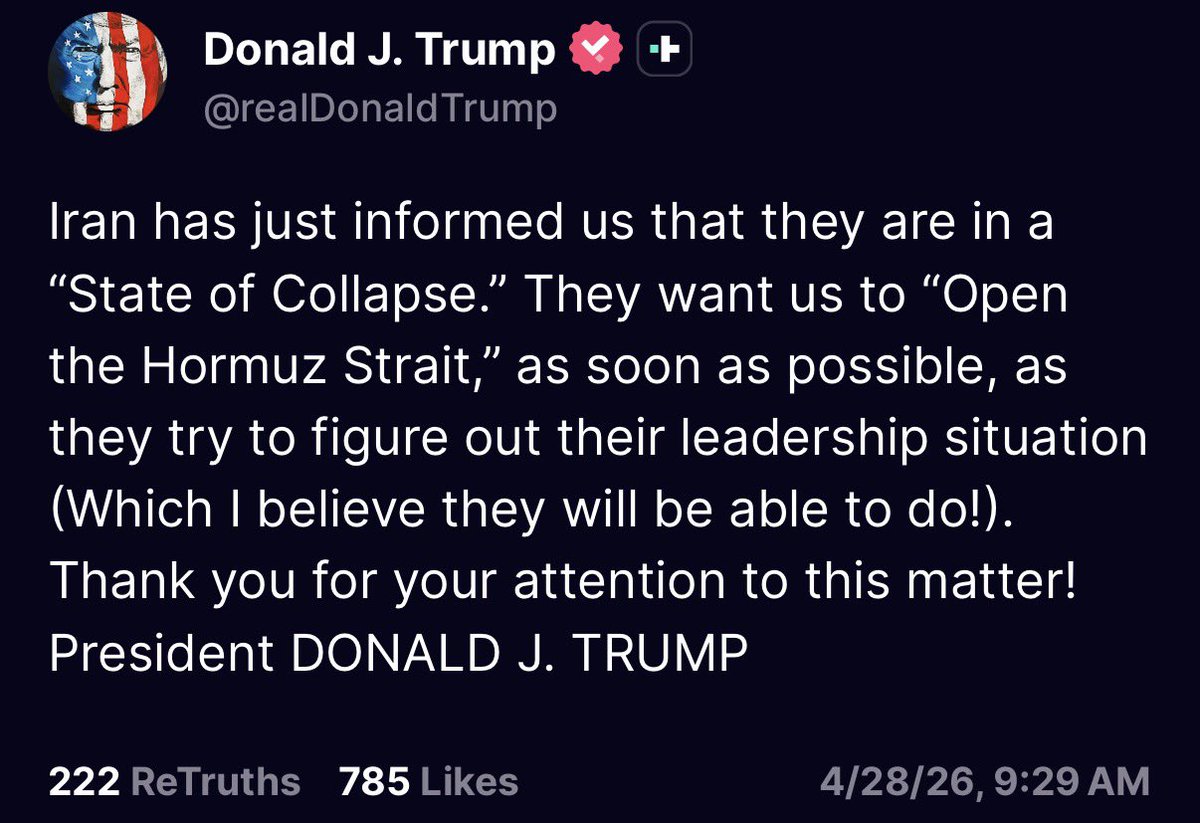
BREAKING: President Trump releases a statement on Iran as US oil prices rise above $100/barrel.
English
@InsidePolitics @mkraju Those guys have a boat anchor rope around their necks. His name is Donald Trump.
English

#New: "What the hell, were we asleep at the wheel?" @mkraju talks to Rep. Troy Nehls (R-TX) and Rep. Don Bacon (R-NE), who warn there is a good chance Republicans could lose the House in the midterms. @InsidePolitics
English