
Eric Rupango retweetledi
Eric Rupango
118 posts


Eric Rupango
@EricRupan
football is a way of life. politics is the art of the possible, the attainable!!!
Katılım Mart 2026
80 Takip Edilen43 Takipçiler



Eric Rupango retweetledi

BREAKING NEWS: Former Minister of Tourism and Hospitality Industry (and several other portfolios), Dr Walter Mzembi, has been acquitted of corruption charges by the High Court.
English
Eric Rupango retweetledi

Mzukulu wami, @ProfMadhuku neither raised a "core concern" nor proved any CAB3 flaw to engage him on. Instead he charged without any evidence besides his mere say-so that those pushing CAB3 are "committing a crime against humanity". That's an outrageous charge, and U'm choosing to engage him on that outrage against reason. It's out of the ordinary in an extraordinary way for a respected professor of law, a senior member of the bar and a leader of a political party who has contested the presidency over at least two decades; to take to the media to claim that those pushing for CAB3 [who are his opponents in an important national debate] "are committing a crime against humanity". That's not just hyperbolic Mzukulu, it's way, way below the rational test; and this is being done by someone who is highly respected and whose politics should be way, way above that test!
English
We in the endgame now the people have spoken and are still speaking its only a matter of time before the bill passes but before that happens the engagement phase is still on with day 86/90, so send your submissions to parly before the deadline day. #CA3BHOO ##Vision2030

English
Eric Rupango retweetledi
Constitutional Amendment Bill No. 3 is heading to Parliament, and its passage is not in question.
The consultation process has spoken. Across Zimbabwe's provinces, citizens engaged the reform agenda on its merits - affirming stability, continuity and the Vision 2030 development framework. Whatever noise opponents generated on social media bore no resemblance to the reality on the ground. It was of no consequence - it still is.
ZANUPF enters Parliament with a commanding majority, unified structures and an unambiguous mandate. The legislative arithmetic is settled.
CAB3 is not merely a constitutional amendment. It is a nationally-backed instrument for protecting Zimbabwe's development gains, anchoring policy consistency and advancing economic transformation under President Mnangagwa's leadership.
Critics have had their platform. They used it poorly. Democratic processes, however, do not wait on the unconvinced - they produce outcomes. This one is inevitable.
Zimbabwe is not pausing for those determined to obstruct its progress. The Bill moves forward, Parliament will deliver, and Vision 2030 remains firmly on course.
Zvaendwa maCdes.
Ndatenda.

English
Eric Rupango retweetledi
@ProfMadhuku’s charge that those pushing CAB3 are committing a “crime against humanity” would ordinarily deserve nothing but contemptuous silence. Yet it is an outrage against reason—because it plummets far below the minimum threshold of rationality and responsibility expected of a respected Professor of Law, senior member of the Bar, and veteran political leader who has contested the presidency in every general election for decades.
Such reckless hyperbole cheapens the gravity of true crimes against humanity!
English
Eric Rupango retweetledi

Dear @AnnahBengesai
My argument in my article was centred on one fundamental question: what electoral system can best serve Zimbabwe in light of the country’s repeated cycle of disputed presidential elections?
Most of the responses I received were not necessarily about the merits or weaknesses of indirect presidential election itself, but about the process of changing the Constitution to effect such a system. That, however, demonstrates why constitutional process and policy issues are related but separate conversations.
A constitutional process answers the question: how should a proposed system be structured, designed, adopted, limited, and implemented within the constitutional framework of the state?
Policy issues answer the question: what should government do with that power once it is constituted?
The Constitution is the architecture of the state. Policy is what happens inside that architecture.
For example, whether a President is elected directly by citizens or indirectly through Parliament is a constitutional design question. It concerns legitimacy, stability, dispute resolution, accountability, succession, and the mechanics of political power.
Whether government should improve healthcare, reduce taxes, build roads, or subsidise agriculture are policy questions. Those are choices made within the constitutional framework.
The mistake many make in political debates is collapsing the two into one conversation.
A person may disagree with indirect presidential election because they fear elite capture. Another may support it because they believe it reduces disputed elections and political instability. Both are debating the structure and design of power, not whether government should provide jobs or improve service delivery.
Constitutions are designed to manage political behaviour, conflict, succession, and stability over generations. Policies change from administration to administration.
That is why countries with completely different policy directions can still operate under the same constitutional framework.
In simple terms, the Constitution decides how the game is played. Policy decides what players do during the game.
If we fail to separate those conversations, we end up judging constitutional design emotionally through current political frustrations rather than asking the deeper institutional question:
“What constitutional arrangement best produces stability, legitimacy, accountability, and governability over time?”
Annah Bengesai@AnnahBengesai
@glenmpani Glen, help me understand how constitutional process and policy issues are separate conversations.
English
Eric Rupango retweetledi
Dear Chofamba @Chofamba
The question is not whether people are clamouring for a political system. The real question is whether that system resolves a political problem. My intervention is anchored on a simple but critical reality. Zimbabwe has endured a perennial cycle of disputed presidential elections. That is the political problem I am interrogating.
Serious constitutional and political reforms are not born from noise or popularity contests. They are born from the need to create stability, legitimacy, and public confidence in governance systems.
History shows that many political systems across the world were not initially demanded by the masses. They emerged because political actors recognised structural weaknesses that threatened national cohesion and institutional legitimacy. My reflection on the proposed amendments is therefore straightforward. Do they meaningfully address the recurring crisis of disputed presidential outcomes or do they merely preserve the status quo?
To argue that political reform should only be guided by what people are currently clamouring for is to reduce statecraft to sentiment instead of problem solving.
Leadership is not only about responding to public emotion. It is also about anticipating and resolving structural political risks before they become national crises.
Chofamba@Chofamba
.@glenmpani one key question you should have no problems answering: When did Zimbabweans ever clamour for a change in how they elect their President? This “debate” you’re “contributing” to - where among Zimbabwean citizens has it arisen from? Ndepapi uye ndiriini ruzhinji rweZimbabwe parwakati tiri kunzwa shungu yokushandura masarurirwo emutungamiri wenyika? Of course, the question is redundant, because this is a contrived debate. It is not organic; it’s imposed by E.D’s cabal and fuelled by his consultant narrative builders - yourself, @ProfJNMoyo and others - to try and make it a real thing.
English
The countdown is still on but now only 5 days remain before public engagements are closed. Day 85/90 tick tock. Send your submissions to parly.

English
Eric Rupango retweetledi

CAB3: Zimbabwean opposition now leaderless, rudderless and tactically opportunistic
By Lucky Ndlovu
There is a pattern worth naming in Zimbabwe's current constitutional debate.
The loudest voices opposing Constitution Amendment Bill No. 3 (#CA3) are not constitutional scholars acting on principle.
They are political actors responding to circumstance.
And the circumstance in this case is that the opposition is broken, leaderless, rudderless and strategically paralysed at precisely the moment that #CA3 is moving through public consultations to Parliament.
This is not a coincidence. It is the context.
The 2023 harmonised elections did not just produce a disputed result. They produced a fractured opposition.
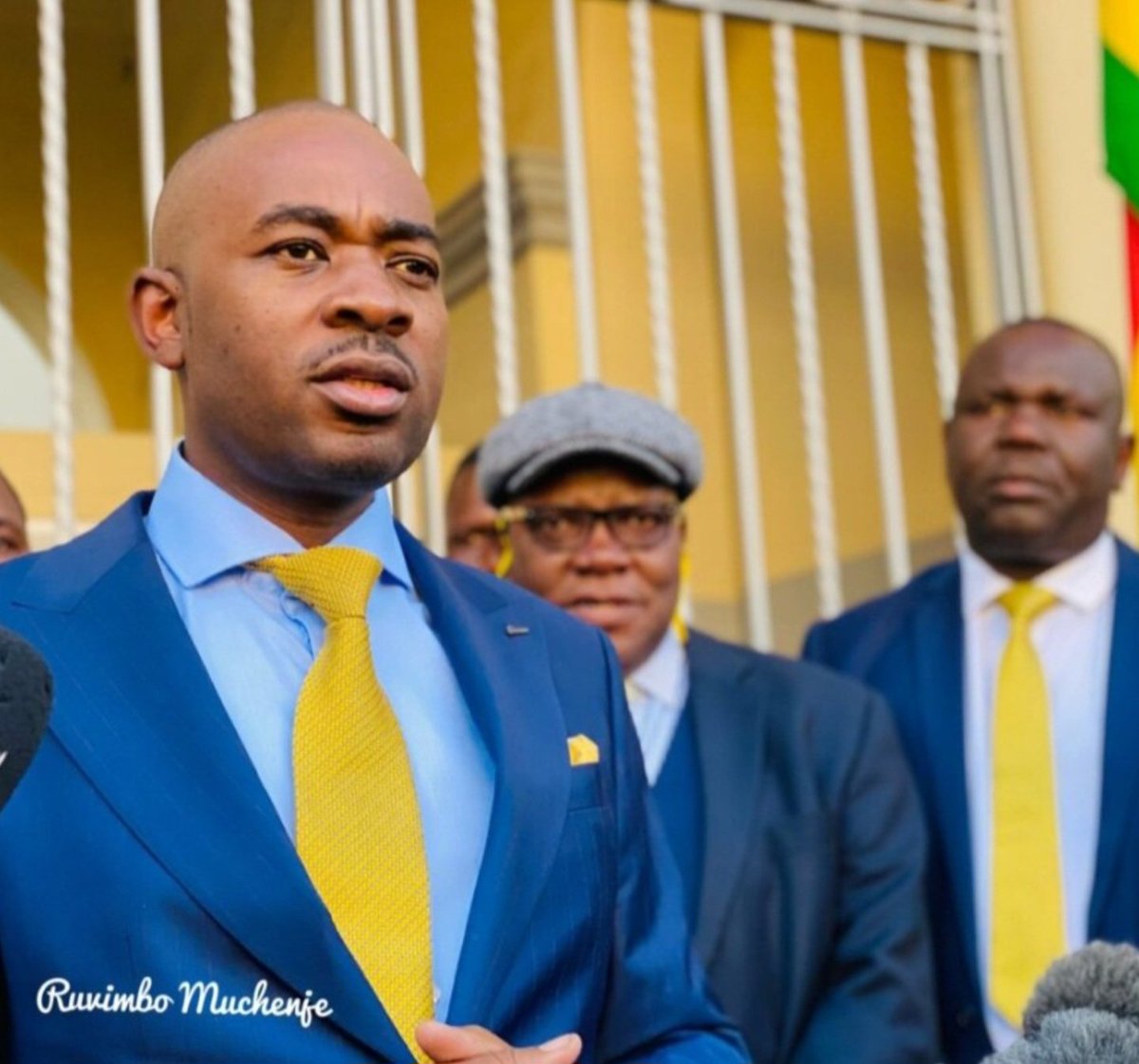
What followed was a period of recalls, court battles, leadership challenges and ultimately the withdrawal of Nelson Chamisa from formal opposition politics. The Citizens Coalition for Change, (CCC) once the most energised opposition movement in a generation, imploded and remained directionless.
Now CCC is captured and virtually dead.
The opposition that should be engaging this Bill through policy, legal argument and democratic participation is instead engaging it through Twitter threads, WhatsApp petitions and doomsday scenarios that include military coups on public scenario lists, not on the ground at grassroots level.
The honest question that nobody in the opposition is asking is this if their house were in order and is not acting out of circumstance, would they still oppose #CA3 for the sake of opposing it and with this intensity?
The answer is almost certainly no. Because many of the changes in #CA3 are reforms the opposition itself demanded for sometime, including reform of the powerful executive presidency.
The opposition's own PREPARE document called for credible voters rolls, delimitation reform, reduction of the Zimbabwe Electoral Commission control ocer the electoral process and stronger institutions.
Their own spokespersons at the time, including former Chamisa's former spokesperson Dr Nkululeko Sibanda, have publicly stated that the one man one vote argument against the Bill is poor and misleading.
Changing how the president is elected does not remove Zimbabweans' right to vote.
It only changes how their vote is expressed; from direct voting to doing so through their elected representatives, which is one form of electing a President, just a different electoral system.
Claiming that changing how the President is elected takes away one one vote, universal adult suffrage or the right to vote is the height of dishonesty and falsehood.
Even voices sympathetic to the opposition like Bla B known on X as @bla_bidza (Brighton Musonza)
have acknowledged that the parliamentary method of electing a presidential opens meaningful institutional pathways for historically marginalised regions.
It also open real possibilities for the opposition to get into power.
If we had that electoral system in 2008, for instance, the late MDC-T leader Morgan Tsvangirai would have been President.
He didn't because of the rigging of the direct executive presidency contest, which sits at heart of Zimbabwe's current problems.
The opposition does not oppose #CA3 because it is bad law in its entirety.
It truth be told, it has some good things for them; some reforms they has been demanding, including changing the executive presidency and the diaspora vote which will come from subsequent consequential legal amendments.
They oppose it because it arrives at a moment when they cannot benefit from it because they are weak on the ground.
Where is no opposition party to talk about at the moment since Chamisa abandoned the CCC and its voters, almost two million voters.
A parliamentary method of electing a president requires a strong, organised and viable political party in the ground, and leading parliamentary presence.
English
Eric Rupango retweetledi

You have nothing to offer.
So you are now monitoring how people reply mave monitor weX - thats so low.
You failed with your mandla thing and the money that you misappropriated from numerous go fund me run through you. You lie about being a so called - Tech Guru while you know nothing.
People trusted you with your mandla failed project. First fix that then we can listen to you.
Hapana asina manudes even yours tinawo so bring it on!!!!
Freeman@freemanchari
It wasn't really that hard to figure the nexus between Glen and trolls. In the 3 documents he did for the regimes in Tanzania, Lesotho and the Breaking Barriers Document for Mnangagwa he was talking about troll farms, social media war rooms, drowning other narratives etc. Unfortunately we think they are not that sophisticated. For a few days we have been monitoring the activities of the trolls and his own. Unfortunately, because the trolls are not broadcast-primed they have to respond contexually and it has to be manual. Looking at the timestamps of responses which are usually 3-5 minute interval, with similar stylometric signature we concluded that this was manually done. The range is different during the week and during the weekend showing limited hands. The next steps are going to be very fun. Hope havana ma nudes😊
English
Eric Rupango retweetledi

Ana @freemanchari are operating 100s of Ghost accounts posting ANTI-GVT stuff and they think we don't see it 🤣🤣
I saw the desperate “investigations” by Solomon Harudzibwi and Freeman over a few new accounts posting about #CA3 and nearly choked from laughing. The same people who spend their days amplifying anonymous anti-government propaganda suddenly pretending to be digital forensic experts. Incredible.
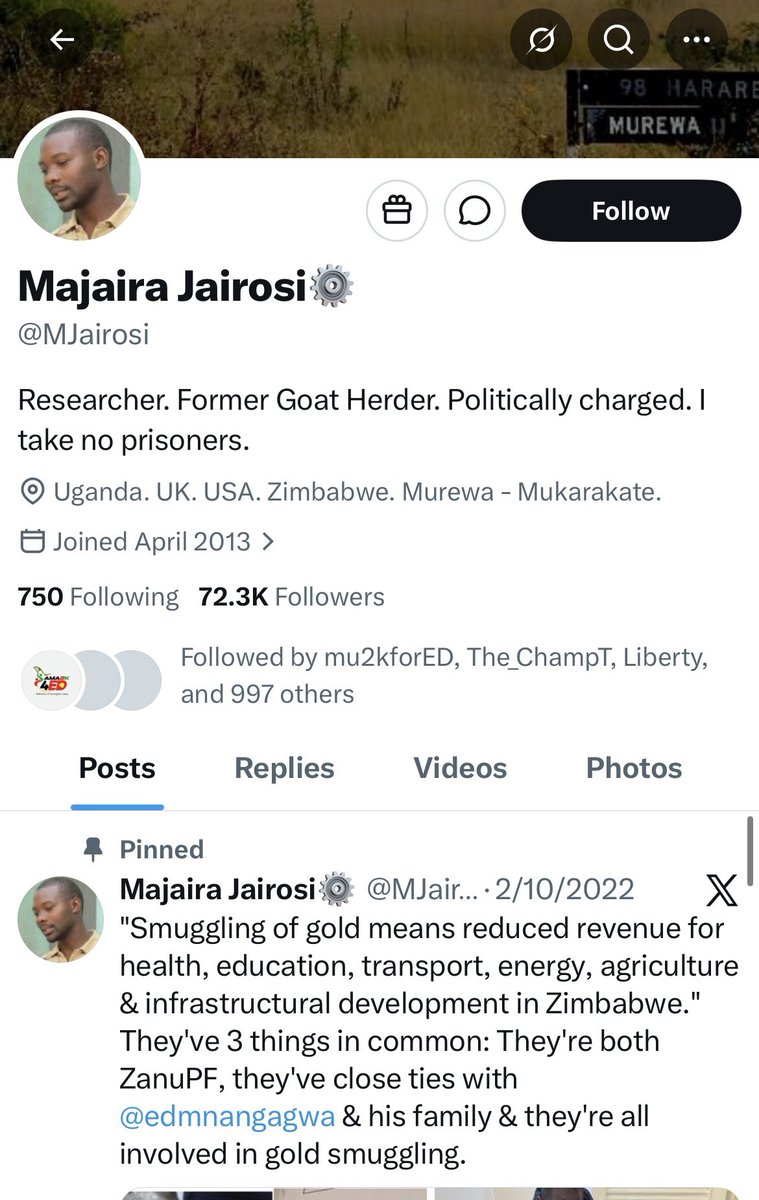
Then there is @MJairosi account, probably the most notorious anti-government ghost account on this app using a picture of a dead Ghanaian man while pushing recycled outrage 24/7. Funny enough, this Ghost account uses an ID also being used by Freeman.
A simple AI comparison tool yamashandisa also shows similarities in digital handwriting and activity patterns between @MJairosi and your accounr @freemanchari . But of course, we are supposed to ignore that part.
So let me understand this stupidity correctly, when your side operates ghost accounts, it is “activism,” but when others post about #CA3, suddenly makubaka baka and hell wakes up? 🤣🤣🤣
The hypocrisy is so shameless it deserves an award. 🤣
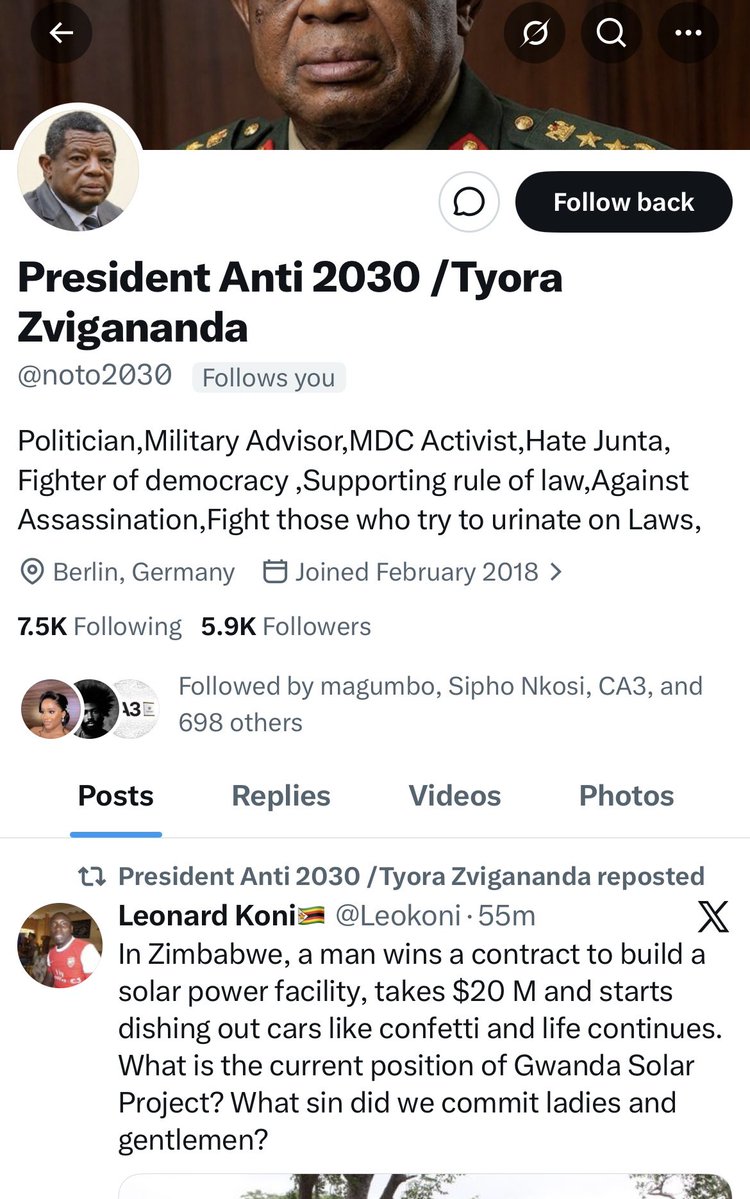
Kamwe ka struggling account nde aka kanoshandisa same ID naLynne @noto2030 hakana basa hako but have you heard us say anything?
English

@wicknellchivayo @KudzaisheMrb Chazunguza yawanirwa nyasha. Mukuru wemazuva tinotenda!!!!
हिन्दी

HONOURING THE GLAMOUR BOYS...⚽️🏟️
The weekend fixture between DEMBARE and MAKIPEKEPE was nothing short of sporting EXCELLENCE at play, and I extend my congratulations to CAPS United for your victory. Football is about COMPETITION and celebrating the BEAUTY of the game !!!
HOWEVER, what genuinely SURPRISED me during the match was the level of RIDICULE, and UNNECESSARY MOCKERY directed towards my promise to Dynamos if they WON the match against CAPS UNITED, which I made during my interview on Capitalk FM last week. A PASSIONATE Dynamos supporter had requested that in the event DEMBARE wins, I should buy the club a BRAND-NEW BUS. Whilst the result unfortunately did not go their way, I APPRECIATED the overwhelming love shown by the Dynamos supporters. More importantly, most of close relatives and friends are passionate Dynamos supporters, and for me this matter goes beyond football. DYNAMOS is a HOUSEHOLD NAME and part of Zimbabwe’s football history. It is NEXT BEST THING to be formed in 1963, after ZANU PF. I therefore REFUSE to reduce myself into someone who only stands by his word when circumstances are FAVOURABLE.
Accordingly, I say a BIG CONGRATULATIONS to the GLAMOUR BOYS !!! I will STILL proceed with purchasing a BRAND-NEW 65 seater BUS for Dynamos Football Club. In addition, I will also give the players USD$50,000 for trying hard as motivation and encouragement despite the defeat. Please note that this is NOT sponsorship of any sort, but just APPRECIATION to supporters who demonstrated and displayed genuine love by filling up stadium. The Club Management can IMMEDIATELY contact my Lawyer MR SIKHUMBUZO MPOFU and deliver the bus registration details.
I must say it's actually SURPRISING how outside Zimbabwe, the "BIG" name “CHIVAYO” is received with RESPECT and treated to RED CARPET receptions. As the saying goes, “a PROPHET is not without HONOUR, EXCEPT in his own HOMETOWN. Unfortunately, some people struggle to celebrate one of their own simply because he is successful or WEALTHY. None of that will ever change who I am or the values I stand for. PUT SOME RESPECT ON MY NAME !!! Football must UNITE US and inspire healthy competition rather than hatred and division. At the end of the day, this was never about proving a point to anyone. It was about HONOURING my word and appreciating GENUINE supporters who showed me overwhelming love and respect.
#The_Glamour_Boys
#Dynamos_FC
#Mukuru_We_Mazuva
#Dembare_Bhora
Batu Ampar, Indonesia 🇮🇩 English
Eric Rupango retweetledi
The statement by Prof. Lovemore Madhuku is a powerful piece of political rhetoric, but it relies on highly charged language—"crime against humanity" and "constitutional coup"—to frame a legal and political debate.
To provide a balanced counter-argument, one must look at the principles of parliamentary sovereignty, the legality of the amendment process, and the intent behind governance reforms.
1. The Legality of the Process
A "coup" implies an illegal, often violent, seizure of power that bypasses the law. However, if Constitutional Amendment Bill No. 3 (CAB3) follows the procedures laid out in the existing Constitution (such as Section 328 of the 2013 Constitution of Zimbabwe), it is a legal legislative process.
The Argument: Amendments are a standard feature of any living constitution. If the required majority in Parliament is reached and the public is consulted as mandated by law, the change is a constitutional evolution, not a "coup."
2. Parliamentary Sovereignty vs. Direct Democracy
Prof. Madhuku’s critique often stems from the idea that certain "basic structures" of the constitution should only be changed by a national referendum.
The Counter-Argument: Many stable democracies operate on the principle of representative democracy, where elected Members of Parliament are entrusted to make legislative adjustments. Proponents of CAB3 would argue that the mandate given to the ruling party during general elections includes the authority to refine governance structures to ensure efficiency.
3. Governance Efficiency vs. "Crime Against Humanity"
The term "crime against humanity" is a specific legal definition under the Rome Statute involving widespread or systematic attacks against a civilian population (e.g., murder, enslavement, or torture).
The Counter-Argument: Labeling a governance restructure—such as changing how judges are appointed or how the Vice President is selected—as a "crime against humanity" is a significant legal overreach.
The Goal of Reform: Supporters of such amendments often argue they are necessary to:
Reduce the bureaucratic burden of constant elections.
Ensure the executive branch can function without internal deadlock.
Align the constitution with the practical realities of governing the nation.
4. The Role of the "Living Constitution"
Constitutions are not intended to be static documents frozen in time. They must adapt to the socio-political climate of the day.
The Argument: Future generations may not see it as a "coup" but as a necessary correction to a document that may have been too idealistic or impractical in its original 2013 form.
Praise Chekururama@praisechox
“Those pushing #CAB3 are committing a crime against humanity. Future generations will call it a constitutional coup.” — Prof. Lovemore Madhuku
English
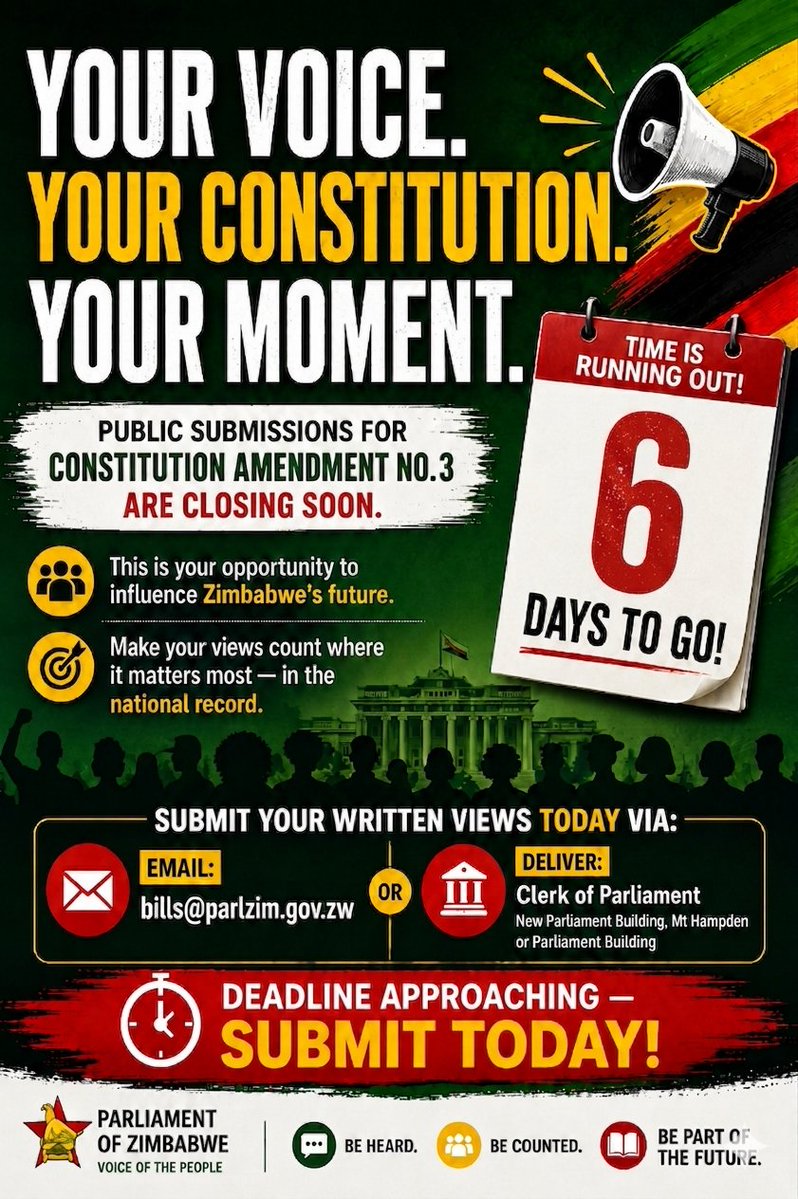
The engagement phase is still on, with only 6 days left written submissions are still being accepted send yours before the deadline day.
English
@mtakagogoe @glenmpani Indeed Prof, the problem with this charlatans is they are consuming information with the intent to reply, rather than to comprehend. Glen put a masterpiece of an article.
English
Well said @glenmpani the level of intellectual laziness we see in these corridors is so shocking!
Glen Sungano Mpani@glenmpani
I rarely respond to posts that are malicious, intellectually dishonest, or authored from behind faceless profiles masquerading as serious commentary. What is striking here is not the critique itself, but the inability to distinguish between two completely separate discussions. My article was never intended to be a constitutional law thesis on the procedural mechanics of amending presidential election systems. It was a political and policy reflection on the merits and implications of direct versus indirect presidential elections, and whether an indirect system may, in certain contexts, better serve Zimbabwe. To attack an article for not addressing a question it never set out to answer is not intellectual rigour. It is either careless reading or deliberate misrepresentation. One would expect an award-winning journalist of Blessed’s supposed calibre to appreciate the elementary difference between a policy argument and a constitutional analysis. Conflating the two is not sophisticated criticism. It is analytical laziness dressed up as commentary. The constitutional process of effecting such a change is indeed an important discussion. It deserves its own serious and technically grounded article. Perhaps that is the article he should focus on writing instead of shadowboxing arguments that were never made @bbmhlanga
English
Eric Rupango retweetledi
Blessing, one of the greatest crises in public discourse today is the inability to read for comprehension before rushing to perform outrage. I clearly outlined the categories of critics I rarely engage, and unfortunately your response positioned itself perfectly within that category.
You completely missed the central thrust of the article and instead constructed arguments around issues that were never being debated. That is not intellectual engagement. It is intellectual carelessness disguised as analysis.
More importantly, your certainty on whether the Bill withstands constitutional scrutiny is itself part of a deeply contested legal and political debate. Serious constitutional questions are rarely as simplistic and absolute as social media commentators like to imagine. Unfortunately, Zimbabwe’s discourse has increasingly rewarded noise over nuance, confidence over competence, and performance over depth.
Political campaign practitioners fully understand the point the article was making because they appreciate the distinction between analysing political systems and analysing constitutional procedure.
There is a reason why serious practitioners often say, “mastery has boundaries.” The tragedy begins when individuals wander far outside their area of competence while still convinced they are authorities on every subject.
My advice to you is simple. Finish your law degree. Travel more. Read wider. Expose yourself to how political systems evolve across different jurisdictions before presenting yourself as the final authority on complex constitutional and political questions.
One of the tragedies of our generation is how mediocrity has been elevated to the point where individuals with very shallow engagement suddenly believe they possess complete mastery of complicated subjects. Read the article again carefully. You may yet learn something from it.
I suspect I have already afforded this exchange far more time than it deserves.
Have a great day. Adeus. @bbmhlanga
Dhara Blessed Mhlanga@bbmhlanga
@glenmpani Nhai Glen do you know what is faceless, you are engaging in discussion from a false premise, I have a face, a name and you are the one being dishonest. Yes your submission is not Constitutional law, it can’t survive that measure, it does not take away the fact that it’s not sound
English
Eric Rupango retweetledi
Hi my brother @Chofamba,
I will be writing another piece sharing my reflections on the advantages and possible risks of moving the voters’ roll from ZEC to the Registrar’s Office.
This is a subject I am particularly comfortable writing about because it sits at the very anchor of my work in political campaigns. In campaign strategy, we often say an election is ultimately a voters’ roll. Everything else flows from that foundation.
As always, the intention is to provoke deeper thinking around the architecture of elections and voter management systems beyond the usual emotional reactions that dominate public discourse. Looking forward to reading your response and engaging further on the subject.
Chofamba@Chofamba
With due respect, I find @glenmpani’s argument disingenuous. We need not go too far before the entire subjective agenda is exposed. Here’s @DougColtart’s very sound exposure of how CAB3 is designed to rig the election before we even get to Parliament: youtu.be/u4S_JyHGrZw?si… So Glen wants us to focus on Parliament, but mbudzi inenge yatovhiyiwa yatodyiwa kare ku voters roll kwa the new Mudede nekuDelimitation Committee!
English