
Ernesto 🐌
648 posts


Ernesto 🐌
@ErnestoWavect
Chief Meme Officer at @Wavect_eth - Loves unhealthy food, likes a good wine & always sarcastic. 🍪🐌
Innsbruck, Tirol, Austria Katılım Şubat 2019
4 Takip Edilen24 Takipçiler
Ernesto 🐌 retweetledi

Vibe coders don't want to believe this:
It usually costs less to build Software right to begin with instead of hacking/vibing it together and fixing the mess afterwards.
The real solution to building software faster & cheaper is the same as 20 years ago:
Narrow the damn scope, by focusing on an URGENT PAIN and leaving everything for a potential v2 once customer feedback flows in.
This way you save tons of money on development while having a strong foundation you can scale with, and all that without sacrificing quality, security and reliability.
--
PS: We build software the right way. Software people actually keep using.
English

I can hear claude/chatgpt scripts in almost every single educational youtube video now
very easy to stand out now
thanks for being lazy folks
English
Ernesto 🐌 retweetledi
Building Software?
Start with these 2 things before you write a single line of code:
(1) Software Architecture v1
A Bird's Eye View of the Software Components.
(2) User Flow / Sequence Diagrams
How do Users interact with your product?
It doesn't (just) help with planning or scoping a project but it helps build ALIGNMENT between teams.
And alignment is oxygen for larger projects. The less aligned you are, the more iterations you will need and the more resources you waste.
--
PS: We build software that doesn't break once you hit thousands of concurrent users. Message me for references and more details.
English
Ernesto 🐌 retweetledi
Finding a Pain Point is *not* enough to build something people want.
You need to find the Right Pain Point, for the Right People (aka "Ideal Customer Profile").
You find Problem-Solution-Fit once you know WHO cares about WHAT pain. Choose the biggest pain you actually can reasonably solve.
One way to do this is by testing different communication angles through Social Media or Paid Advertising using Waitlists.
I usually suggest selling your idea as a service first & then productise. But for Enterprise or Exited Founders the Waitlist approach can also be very appealing because it saves time.
---
PS: We work as Fractional CTO and Fractional Product Officer (CPO) to make sure you don't waste your resources and hit your goals faster.
English
Ernesto 🐌 retweetledi
Dear Founders, You Need to Know the Difference between Developers and Engineers.
A Software Developer in its simplest form executes on tasks such as tickets or bug reports.
A Software Engineer is a bit more strategic, usually focused more on the long-term aspects as well and trying to find a good trade-off between resources and technical challenges.
Both are important. But understand when you need what.
--
PS: We help you build software people actually use. DM me or comment "PMF" to get honest feedback for free on your idea or product.
English
Ernesto 🐌 retweetledi
This week, I trained in a traditional karate dojo in Okinawa, the birthplace of karate.
One thing struck me deeply: how repetition and structure are treated not as constraints, but as paths to freedom.
In karate, we practice kata:
precise, repeatable sequences of movement.
Every strike, block, and stance is done the same way, hundreds of times. It looks rigid from the outside.
But inside that structure, something transforms.
You stop thinking about the steps.
Your body learns rhythm, balance, and flow.
Discipline turns into instinct.
It reminded me of how we build software.
At first, our rituals: standups, code reviews, tests, design systems can feel repetitive or bureaucratic.
But those are our kata.
They’re how teams internalize quality, intuition, and craft.
They free our minds to focus on creativity, not chaos.
Mastery doesn’t come from skipping the basics.
It comes from doing the basics so well that they disappear, leaving only flow.
Whether in the dojo or the codebase, the principle is the same:
Repetition isn’t the opposite of creativity. It’s the foundation of it.
--
Founder?
We build software people actually keep using. If you're sick of wasting money and time on developers focusing on "making it work" alone and going nowhere, DM me for more info & honest feedback.

English
Ernesto 🐌 retweetledi
Visual representation of a Vibe Coder and Customers.
Did you know?
88% of customers churn after facing 3 bugs.
We find and fix software. Comment "BUG" for a free bug report of your SaaS, ecosystem or software product.
English
Ernesto 🐌 retweetledi
"You could train Grok with just 6 million iPhones."
@michaelh_0g just raised +$350 million for @0G_labs and builds a decentralised OS for AI.
Link to the full podcast: youtube.com/watch?v=XdRIo3…
--
PS: We search and fix bugs. Comment "BUG" to get a free bug check for your SaaS, ecosystem or product for free.

YouTube
English
Ernesto 🐌 retweetledi
He recently raised $350 Million and bluntly competes with Big Tech.
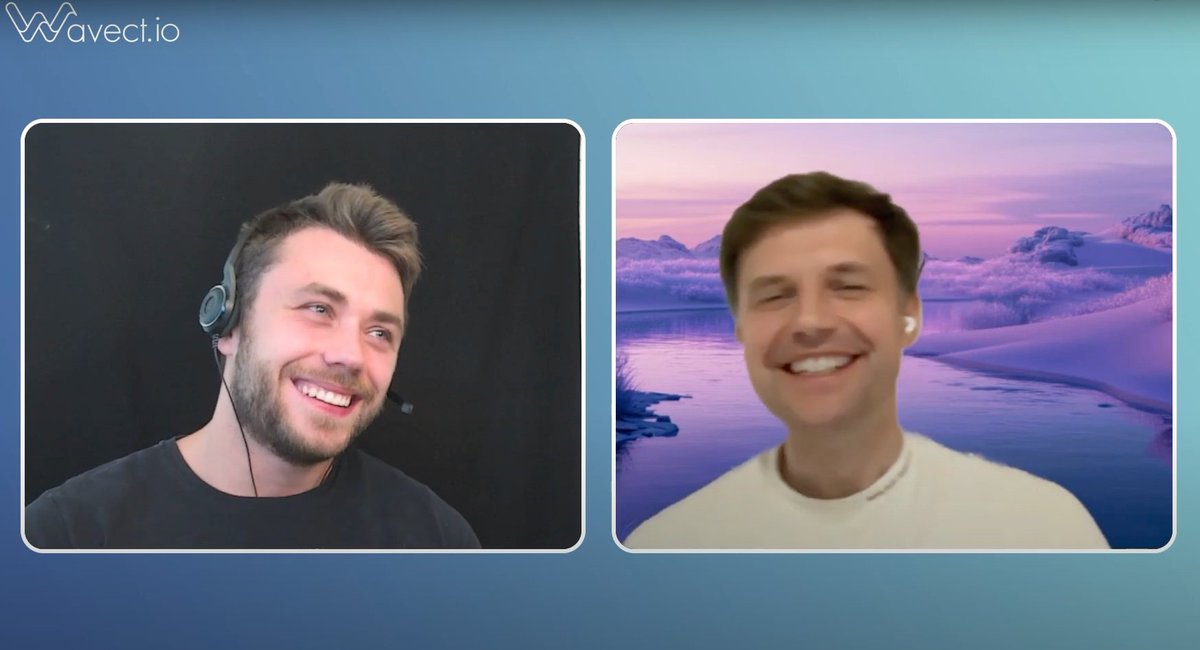
New Podcast episode with @michaelh_0g, CEO of @0G_labs building a decentralised AI operating system.
On our podcast No BS about Tech we dive deep into their strategy and how to stay true to their mission: Making AI a public good all while building a billion$ business.
Michael isn't your typical crypto founder. Stanford grad. Top 100 Entrepreneur 2022. Published in Harvard Business Review. And now, he's betting everything on democratizing AI infrastructure.
Judge for yourself 👇
📺 YouTube: youtube.com/watch?v=XdRIo3…
🎧 Spotify: creators.spotify.com/pod/profile/wa…
What's your take:
Can decentralized AI actually compete with Big Tech, or is this Silicon Valley idealism at its finest?
Thanks again Michael for having me. Was a pleasure, and fun!
YouTube
English
Ernesto 🐌 retweetledi
Client: I vibe coded this. Just needs polish.
The "polish":
--
PS: We find bugs and fix them. 88% of customers leave after facing 3 bugs (NIST, Salesforce). Comment "BUG" below or send me a DM to get an initial bug check for free.
English
Ernesto 🐌 retweetledi
I've been having interesting conversations with CTOs lately, and there's a pattern that keeps coming up.
Their CEO sees someone build an AI prototype in a day and wonders why it takes the engineering team a month to ship something similar to production.
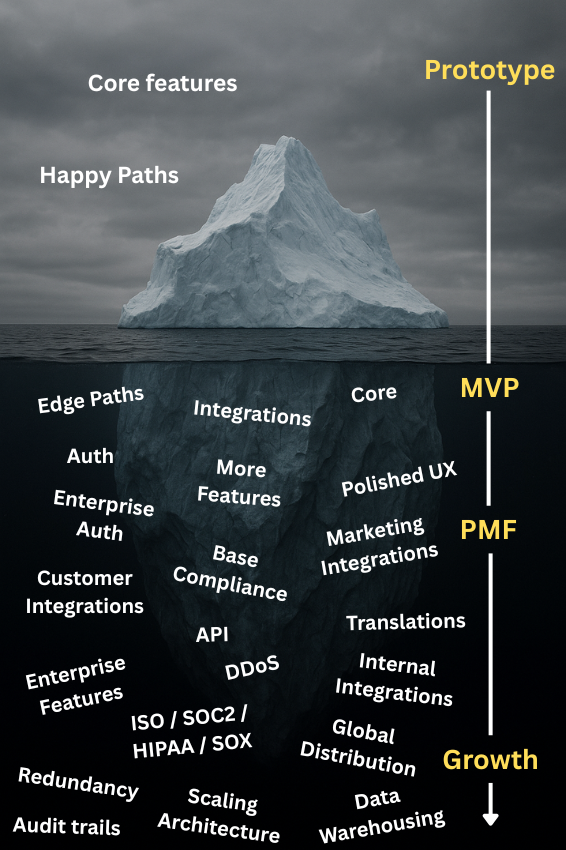
This is classic iceberg territory.
What the CEO sees is that gleaming tip above water, the slick interface, the demo that works perfectly when everything goes right. But what the CTO knows is there's this massive structure beneath the surface that actually keeps the thing afloat.
Think about how a product actually evolves. You start with a prototype basically just proving the core idea works. It's the happy path, nothing more. Then you build an MVP, which means adding all the unglamorous stuff: error handling, security, making sure it doesn't break when users do unexpected things.
By the time you're looking for product-market fit, you're dealing with better UI, GDPR compliance, and features that actual customers need.
And if you're lucky enough to get traction? Now you're talking enterprise features, internationalisation, serious scaling challenges, and compliance acronyms that multiply like rabbits: ISO, SOC2, HIPAA.
Each stage probably doubles or triples the complexity. It's like building in reverse, every new piece you add makes the next piece harder to place without toppling everything.
AI tools are fantastic at generating that initial prototype. Sometimes they can knock out 100% of it. But turning that into production code that hundreds of thousands of users can depend on? That's still very much human work.
So if you're a CEO reading this, maybe it's worth keeping that in mind. The prototype is the easy part. The real engineering is everything underneath that keeps it from sinking.
--
PS: We build software products that do survive the first year. Comment "PMF" below or DM me to get honest feedback on your SaaS, ecosystem or software product for free.
English
Ernesto 🐌 retweetledi
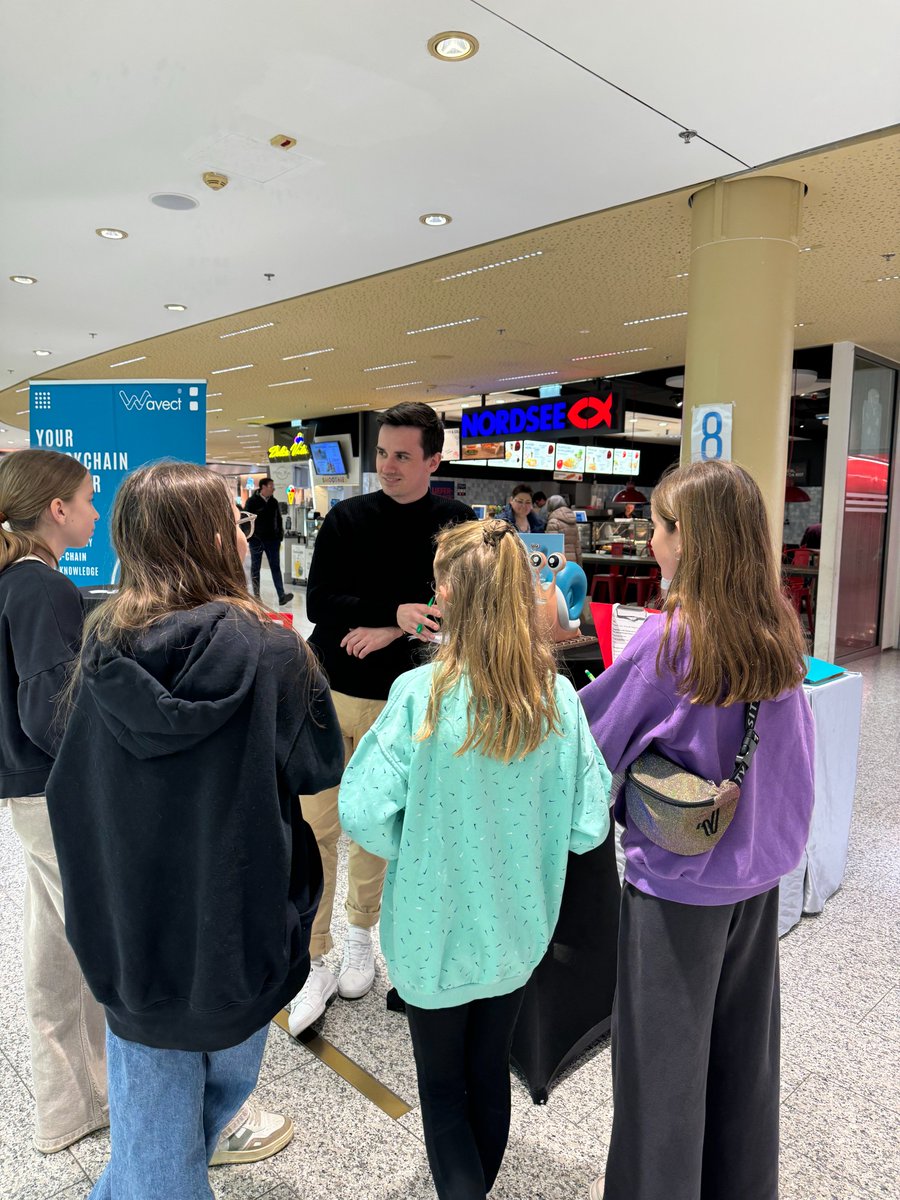
We're a software agency that teaches kids to code for free.
It's become one of our favorite projects.
There's something magical about watching a kid's face when their code runs for the first time. That moment when the screen does exactly what they told it to do? Pure joy.
We've built the craziest things over the years, but that "IT WORKS!" shriek from an 11-year-old hits different.
What started as "let's give back to the community" has become something bigger.
These kids ask questions that cut straight through the complexity:
"Why can't I just tell the computer what I want?" Fair point, programming is the art of translation between computers and humans.
Teaching forces us to explain our craft in plain language. No hiding behind technical jargon.
If you can't explain a concept to a curious 12-year-old, do you really understand it yourself? (Spoiler: sometimes we realize we don't, and that's okay.)
We're not creating mini-developers. We're showing kids that technology isn't magic, it's a tool they can learn to use. In a world increasingly run by algorithms and AI, understanding code is like having a superpower.
The future needs people who aren't intimidated by technology. We're just doing our small part, one "Hello World" at a time.
--
PS: We find and fix bugs. For a limited time we do test your product for free and create a detailed bug report for your team. DM me or comment "TEST" below to get tested for free.
English
Ernesto 🐌 retweetledi
Let’s be honest, you’ve either said this or heard a version of it:
“𝙒𝙚’𝙡𝙡 𝙟𝙪𝙨𝙩 𝙗𝙪𝙞𝙡𝙙 𝙩𝙝𝙚 𝙈𝙑𝙋 𝙖𝙣𝙙 𝙛𝙞𝙜𝙪𝙧𝙚 𝙞𝙩 𝙤𝙪𝙩 𝙡𝙖𝙩𝙚𝙧.”
Translation:
➡️ No real user interviews
➡️ No signal from the market
➡️ Just hope, hype, and maybe a Figma prototype
And then the team ships.
And nothing happens.
No usage, no feedback, no traction - just a slow, silent slide into irrelevance.
Here’s the hard truth most dev agencies won’t tell you:
You don’t need developers.
You need proof that what you’re building solves an urgent problem for someone who will actually pay for it.
Without that, every sprint is just expensive guesswork.
At Wavect GmbH, we’re not just developers.
We’re your product-market fit co-pilot.
We help you validate your idea while we build it.
So by the time you launch, you’ve already got users leaning in, not disappearing after trying your app once.
What we do differently:
(1) Identify real customer pain before writing code
(2) Build lean, testable versions of your product
(3) Help you get signal fast
(4) Adjust the roadmap based on evidence, not opinions(!)
If you’re about to build (or rebuild), let’s talk first.
No fluff.
No vague frameworks.
Just practical strategy + world-class execution.
🎯 Book a free call, we’ll help you build something people actually want.
(sales mode off)
Yes, the water was cold. 😂

English
Ernesto 🐌 retweetledi
Most Web3 CMOs are just meme managers.
Not @catdaly.
She’s marketing invisible infrastructure
and doing it so well, people actually understand it.
@spaceandtime isn’t just another blockchain buzzword machine.
They’re solving a problem even top-tier devs 𝗽𝗿𝗲𝘁𝗲𝗻𝗱 doesn’t exist:
🧠 Verifiable, decentralized data for smart contracts and AI agents.
Now tell me how the hell do you 𝗺𝗮𝗿𝗸𝗲𝘁 that?
Answer: You build a category.
You speak to devs like they’re founders.
And you stop trying to make “Web3 for everyone” a thing.
I sat down with Caroline to unpack:
* Why most crypto marketing flops
* How to sell infra without selling out
* And what actually moves the needle for dev-first GTM in 2025
Founders building deep tech?
Infra PMs lost in the hype cycle?
CMOs tired of chasing engagement instead of traction?
🎧 This one will hit you in the gut:
youtube.com/watch?v=FuWsa6…
YouTube
English
Ernesto 🐌 retweetledi
Your QA process is why you’re shipping slow. Not your tech stack.
This week, a startup called @spurtest_ raised $4.5M to let AI agents autonomously test your website, like real users would.
No test scripts.
No flaky coverage.
No junior devs grinding through regression checklists.
Just pure, intelligent bug hunting.
And honestly?
We love it.
Because it confirms what we already know from running QA for fast-moving software teams:
> QA isn’t a blocker.
> It’s the force multiplier that lets your team move fast without breaking everything.
Here’s the real insight no one wants to hear:
🧠 If you’re still doing QA like it’s 2015: manual, reactive, siloed, you’re already behind.
💸 Most bugs aren’t expensive because they exist.
They’re expensive because they get caught too late.
At Wavect GmbH, we offer QA services at €750/week (first week is 75% off with QA2025), but here’s the thing:
We’re not standing still either.
We’re actively tracking what Spur’s doing because if AI can catch more bugs, earlier, and cheaper…
We want that baked into what we deliver.
Our clients don’t hire us to maintain checklists.
They hire us to raise the quality bar and accelerate product velocity.
So yeah, Spur is onto something.
And if you’re still blaming bugs on “a messy codebase,”
Maybe it’s time to rethink your test strategy.
PS: We're rooting for you @anushkanijhawn and @sneha8sivakumar!

English
Ernesto 🐌 retweetledi
A No BS Use Case for Virtual Avatars
with Roman, CEO of Antix.
We see them all the time, but where could virtual avatars actually be used in the near future?
We just dropped our new podcast with Roman, check it out.
📺 Watch on YouTube:
youtube.com/watch?v=ARUGek…
🎤 Listen on Spotify:
creators.spotify.com/pod/show/wavec…
Thanks for having me Roman!

YouTube
English
Ernesto 🐌 retweetledi
80% of software features get used by less than 20% of users.
Here are some lessons I learned after 10 years of building software with business owners.
Before jumping onto a new feature, try this:
𝗦𝘁𝗮𝗿𝘁 𝘄𝗶𝘁𝗵 𝗖𝗮𝘁𝗲𝗴𝗼𝗿𝗶𝗲𝘀
Think of your feature requests like sorting laundry. Create these basic piles:
- Must-have (keeps lights on, prevents customer loss)
- Growth-drivers (brings new customers, increases revenue)
- Nice-to-have (makes things prettier, smoother, faster)
- Future-bets (could be game-changers, but risky)
𝗠𝗼𝗻𝗲𝘆 𝗮𝗻𝗱 𝗧𝗶𝗺𝗲 𝗥𝗲𝗮𝗹𝗶𝘁𝘆 𝗖𝗵𝗲𝗰𝗸
I once worked with a startup that burned through $500,000 building features their users never touched. Don't make their mistake.
For each (larger) feature, estimate:
- Cost to build (developer hours × hourly rate)
- Time to market (development + testing + deployment)
- Revenue impact (direct or indirect)
- Maintenance burden (ongoing costs)
𝗧𝗵𝗲 𝗥𝗲𝗮𝗹-𝗪𝗼𝗿𝗹𝗱 𝗗𝗲𝗰𝗶𝘀𝗶𝗼𝗻 𝗙𝗿𝗮𝗺𝗲𝘄𝗼𝗿𝗸
Picture this: You have $100,000 and three months. Here's how to decide:
1. Listen to Numbers
Track feature requests in a simple spreadsheet. When 40% of users ask for the same thing, it moves to the top.
2. Watch Competition
If three competitors release a feature, your users will expect it. But don't chase every shiny object.
3. Check Resources
A complex feature might take four developers three months. A simple one might take one developer two weeks. Choose battles wisely. Use AI where it makes sense.
𝗧𝗵𝗲 𝗦𝗺𝗮𝗿𝘁 𝗪𝗮𝘆 𝘁𝗼 𝗦𝗮𝘆 "𝗡𝗼𝘁 𝗡𝗼𝘄"
Create an idea box, but make it work for you:
- Review quarterly
- Delete ideas older than six months (if still relevant, they'll come back)
- Keep top 10 ideas, archive the rest
𝗠𝗮𝗸𝗶𝗻𝗴 𝗜𝘁 𝗪𝗼𝗿𝗸
Daily habits that make this system work:
- Spend 30 minutes each morning reviewing new requests
- Hold weekly prioritization meetings (30 minutes max)
- Update roadmap monthly
- Communicate decisions to users
Remember: Every feature you don't build is time saved for features that matter.
𝗙𝗶𝗻𝗮𝗹 𝗧𝗵𝗼𝘂𝗴𝗵𝘁
Building software isn't about making everyone happy.
It's about making the right users successful. Choose wisely.
Want to start?
Open your feature list right now.
Sort them into the four categories mentioned above.
You'll see patterns emerge immediately.
The next decision you make about features might be the difference between growth and stagnation. What will you choose?

English
Ernesto 🐌 retweetledi
Most software projects fail. Studies show 66% go over budget and 33% get canceled before completion. But it doesn't have to be this way.
Let's talk about getting your product to market quickly and making money sooner.
1. Start Small, Start Smart
Instead of building everything at once, break your big idea into smaller pieces. Think of it like building a house - you start with a solid foundation, not the fancy roof decorations.
2. The MVP Method
Build the smallest useful version first. If you're making a restaurant booking app, start with just reservations. Skip the reviews, photos, and special features.
This approach:
- Gets your product to users in weeks instead of months
- Lets you earn money while you build
- Shows you what customers want before spending more
Real Example:
Dropbox started as a simple file-sharing tool. They didn't build all their business features at once. Today they're worth $9 billion.
Quick Wins That Work
1. Use existing tools
Why build a payment system when Stripe exists? Using pre-built parts saves months of work.
2. Focus on one platform
Build for iPhone OR Android first, not both. Instagram started iPhone-only and got bought for $1 billion.
3. Manual behind the scenes
Don't automate everything right away. Zappos began by buying shoes from local stores and shipping them manually.
Smart Budget Moves
- Hire developers part-time first
- Use no-code tools where possible
- Test ideas with simple landing pages
- Build features only after customers ask
The Money Timeline
- Traditional way: 12 months development → Launch → Hope for revenue
- Smart way: 6 weeks to basic version → First sales → Build what sells (or even sell before coding anything)
Numbers That Matter
- Companies that start earning in 3 months are 50% more likely to survive
- Each extra month of development increases failure risk by 8%
- Startups that pivot once or twice raise 2.5x more money
Warning Signs
You're probably building too much if:
- The first version takes more than 3 months
- You can't explain the core feature in one sentence (!!)
- You're building features "just in case"
Next Steps
1. Write down your core idea
2. Cross out anything not absolutely needed
3. Find existing tools you can use
4. Set a 90-day goal to get paying customers
Remember: Speed beats perfection.
The fastest way to reduce risk is to start making money.
Everything else can wait.
Want more specific advice?
Drop a comment with your business idea below.

English