Fiokla

8K posts

Fiokla banner
Fiokla

Fiokla

@Espada_Roja

La reconstitución ideológica debe ser comprendida como un proceso vivo. En primer término, su naturaleza presenta más un perfil político que puramente teórico.

Katılım Eylül 2012
484 Takip Edilen1.2K Takipçiler
Sabitlenmiş Tweet
Fiokla
Fiokla@Espada_Roja·
Queda publicado tras meses de trabajo Nº 2 – Adelante: Palestina y el internacionalismo proletario «Todo en este mundo puede ser robado y arrebatado, excepto una cosa: el amor que brota de un ser humano hacia un compromiso firme con una convicción o una causa.» Ghassan Kanafani
Fiokla tweet media
Español
1
8
17
2K
Fiokla retweetledi
Anonymous
Anonymous@YourAnonNews·
Stop pretending it's a democracy.
English
136
1.3K
3K
103.3K
Fiokla retweetledi
Javier DV
Javier DV@Javieerdelvalle·
EEUU es más dependiente que nunca del precio de las acciones. Estoy de acuerdo, aquí PTJ explica como los hogares Estadounidenses tienen una gran cantidad de exposición a la bolsa. Eso hace al gobierno muy dependiente del efecto riqueza, es decir de que las bolsas lo hagan bien. Tolerar una caída fuerte en Bolsa sería obtener menos ingresos por ingresos de capital (lo que supondría incrementar déficit) y sería perjudicar el consumo a través del efecto riqueza: sobre todo en la economía "K-Shape" actual que la sustenta el consumo de los que tienen activos
Javier DV tweet media
Patrick OShaughnessy@patrick_oshag

Paul Tudor Jones says the US is more dependent on equity prices than ever, and explains what a 35% correction would trigger in the economy: "We're 252% of stock market cap to GDP. In 1929 we were 65%. In 1987 we got to ~85-90%. In 2000, 170%. If you think about the periodicity of significant bear markets. Since 1970, we get a mean reversion about every 10 years. Let's say mean revert to the past 25 or 30-year PE. That would be a 30, 35% decline. Well, 35% on 250% of GDP is 80, 90% of GDP. 10% of our tax revenues are capital gains, they go to zero. So you can see the budget deficit blowing up. You can see the bond market getting smoked. You can see this kind of negative self-reinforcing effect. In the stock market, we're over-equitized as a country. We have the highest individual equity weightings in the history of the country. And then the real problem is if you look at private equity in 2007-2008, that was about 7% of institutional portfolios. Now it's about 16% of the institutional portfolios. We're so much more illiquid than we were in 2008. The problem is that if you buy the S&P at this current valuation, the 10-year forward return is negative when you buy the S&P with a PE of 22. That's what history shows. So yes, the S&P is spectacular long-term, if you have a hundred-year view. But that's because that's an average of a hundred years, including times when the S&P 500 PE was 6, 7 and 8, or one third of what it is right now. Valuation matters a lot, and the stock market's really high and it's gonna be really hard to make money from here with any kind of long-term view."


Español
0
11
68
7K
Fiokla retweetledi
toparlanın gitmiyoruz
toparlanın gitmiyoruz@toparlanvegitme·
İsrail’e destek veren temizlik markalarını boykot eden video gündem oldu.
Türkçe
331
27.7K
110.1K
1.7M
Fiokla retweetledi
Angel Villarino
Angel Villarino@anvillarino·
¿Os acordáis que risa cuando China copiaba cosas y exportaba productos baratos de escasa calidad? Eso hace tiempo que se acabó. El FT habla del “China Shock 2.0” hoy en un larguísimo reportaje dedicado a profundizar en un fenómeno del que hemos hablado muchas veces, el primero de una trilogía. Cuentan cómo los chinos hace tiempo que dejaron de ser competitivos vendiendo quincalla. La siguen vendiendo, claro, aunque la producen a menudo en terceros países. Pero lo importante es que ahora van camino de ser los mejores también en calidad, innovación y, por supuesto, en precio. Ningún presidente o primer ministro de ningún país del mundo puede relacionarse con China sin tener estos tres conceptos claros: - Neijuan: la competencia interna feroz que hace que sus empresas corran cada vez más rápido para obtener márgenes de beneficio decrecientes. Algunos ejemplos son impresionantes: Mega-Senway (sensores para cargadores de EV) pasó de vender un sensor de 30 dólares a producir versiones que cuestan apenas poco más de 1 dólar. ¿Cómo? Inviertiendo en investigación, maquinaria y automatizando todo el proceso. La competencia es tan feroz que solo sobreviven internamente las empresas que logran elevar su productividad. Por eso, cuando llegan al mercado internacional son prácticamente imbatibles. - Sobreproducción: China prioriza la eficiencia industrial, una inercia con más de 40 años. Beijing ha creado un cableado ideológico que prioriza la producción industrial sobre el consumo interno -y sobre cualquier otra cosa- mediante subsidios masivos, préstamos con intereses bajísimos, terreno industrial barato, acceso privilegiado a materias primas globales…. Lo que esto genera es una inmensa sobrecapacidad: China produce mucho más de lo que sus ciudadanos pueden comprar. Y cada vez más. Por eso necesita imperiosamente venderlo fuera para mantener sus industrias a flote. Por ejemplo, China tiene capacidad para fabricar 1,200 GW en paneles solares al año, el doble de lo que se instaló en todo el mundo en 2025. Esto ha hundido los precios globales y generado pérdidas millonarias incluso para los gigantes chinos, que solo se mantienen a flote gracias a las ayudas estatales. - Amenaza: Para Europa entender esto es una cuestión de vida o muerte. La primera ola industrial china destruyó empleos en sectores de baja cualificación. Muchos pensaron que no pasaría de ahí porque confiaban en la superioridad educativa, cultural, creativa.. de Occidente. Pero esa superioridad nunca existió. Los chinos son generalmente más disciplinados, trabajadores y ahorradores… y tienen un gobierno que premia la producción (trabajo) sobre el consumo (ocio), utilizando incluso la represión para lograr esas metas. La segunda ola puede llevarse por delante todo el modelo económico europeo actual. Por ejemplo, los fabricantes de componentes están abandonando ya mercados porque no pueden competir con los precios chinos, que a veces son un 90% inferiores.
Español
8
66
199
32.4K
Fiokla retweetledi
Fiokla
Fiokla@Espada_Roja·
¡SE PUBLICA LA REVISTA ADELANTE N° 1! Ofrecemos al conjunto de la vanguardia, nuestra perspectiva sobre los desafíos que enfrenta la vanguardia comunista en el contexto de un mundo que se precipita cada vez más, hacia el abismo de la crisis total imperialista
Fiokla tweet media
Español
2
5
13
3.4K
Fiokla
Fiokla@Espada_Roja·
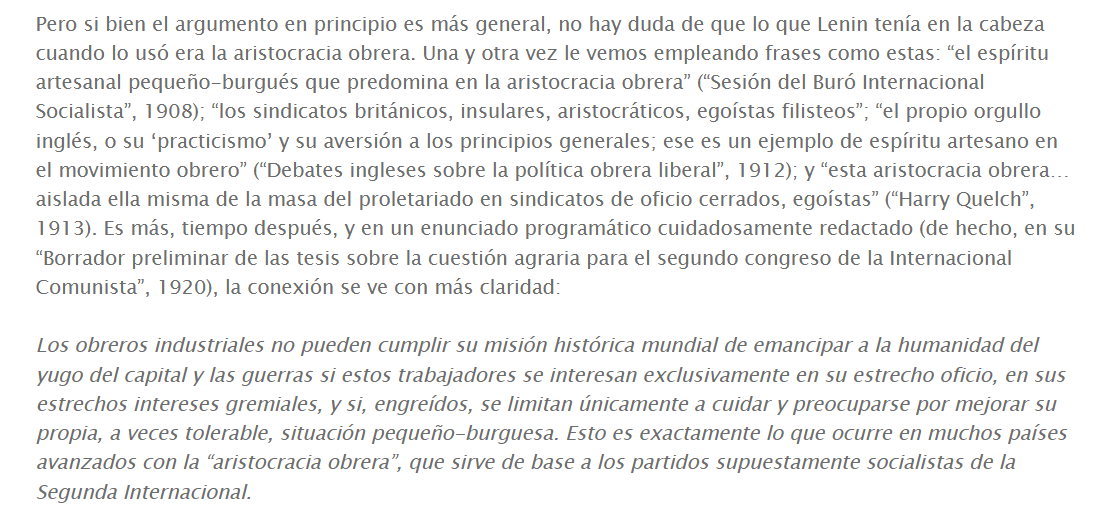
Lenin y la «aristocracia obrera»
Fiokla tweet media
Español
0
5
12
483
Fiokla retweetledi
unusual_whales
unusual_whales@unusual_whales·
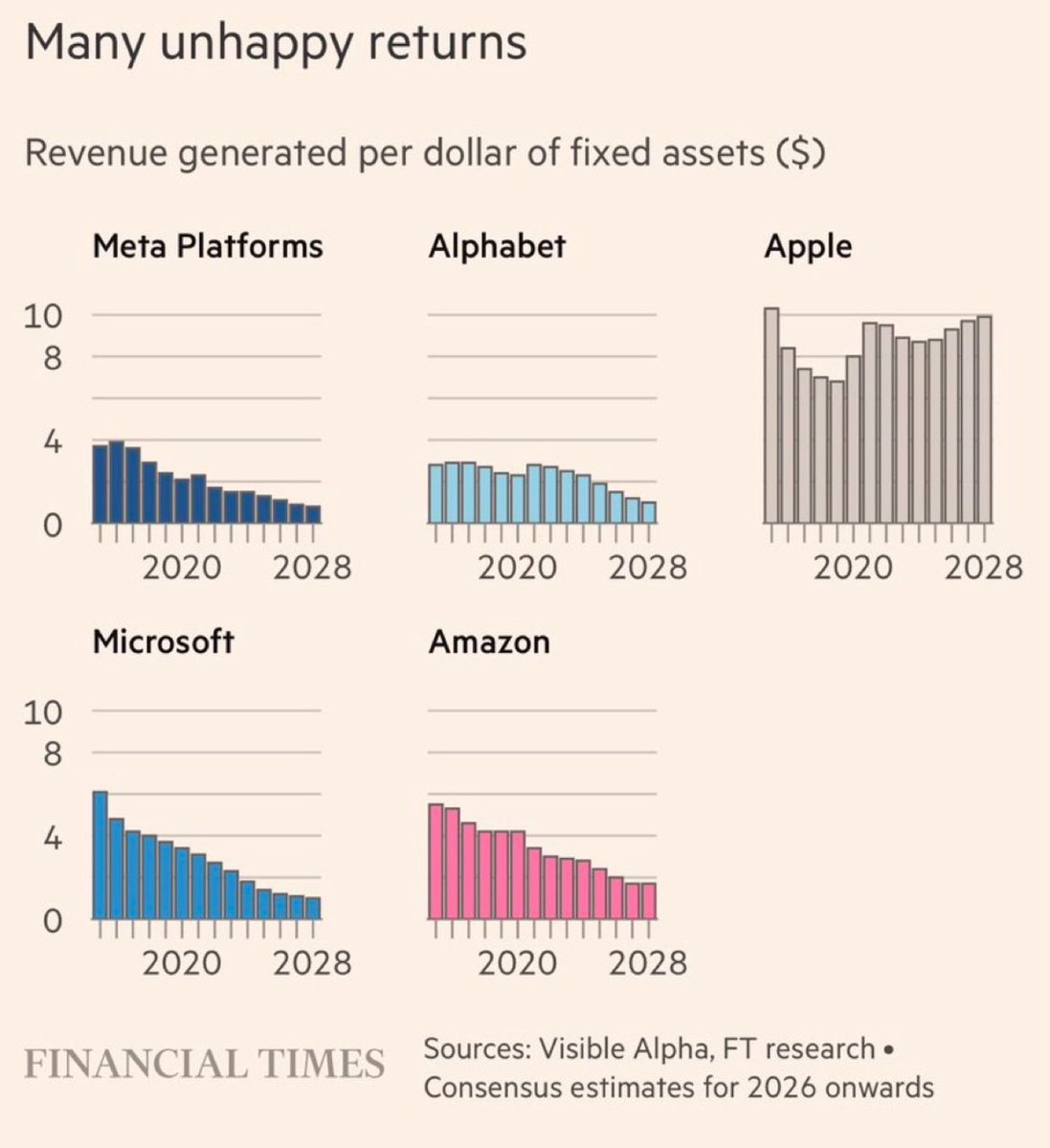
Revenue generated per dollar of fixed assets, per FT:
unusual_whales tweet media
English
49
60
578
123.8K
Fiokla retweetledi
EndGame Macro
EndGame Macro@onechancefreedm·
Why Washington Is Treating Anthropic’s Model Like A Market Risk The best explanation is the simplest one. This is not mainly AI theater. It is financial plumbing defense. Anthropic says its new Claude Mythos Preview found thousands of major software vulnerabilities and is being kept inside Project Glasswing rather than released broadly. The launch partners include JPMorganChase, Microsoft, Apple, Google, Amazon, Cisco, CrowdStrike, NVIDIA, Palo Alto Networks and others. Anthropic has been in ongoing discussions with the U.S. government about the model’s capabilities. When a model is strong enough that the developer itself restricts access and routes it straight into a controlled defense consortium, Treasury and the Fed do not see a tech story first. They see a systemic risk story. This Is About Financial Plumbing Treasury was already moving in this direction. In February, Treasury announced a public private initiative to strengthen AI cybersecurity and risk management in financial services, and in March it expanded that work through an AI Innovation Series tied to financial system resilience. The reason is straightforward. The Fed has warned that cyber shocks are different from normal credit shocks because capital and liquidity do not automatically stop a payments freeze, a settlement failure, corrupted data, or a confidence event. Its own framework says a serious cyber incident can spread through interconnections, time sensitive payments, clearing and settlement systems, and the simple fact that trust can disappear faster than balance sheet buffers can absorb it. Why The Economy Makes It More Urgent This matters even more because the economy is in no shape to absorb a digitally triggered shock. Q4 2025 GDP was revised down to a 0.5% annualized pace. At the same time, the New York Fed said one year inflation expectations rose to 3.4% in March, gas price expectations jumped to their highest level since March 2022, and households grew more pessimistic about their financial situations. Inflation is running hot again, savings have fallen, and the Iran related energy shock is adding another layer of fragility. In that kind of environment, a major cyber incident would not stay an IT problem for long. It could move quickly into payments, funding, market liquidity, and public confidence. What They Are Probably Trying To Do In my opinion Bessent and Powell would be trying to do three things at once. First, warn the largest institutions that the offense and defense balance in cyber may be shifting faster than normal patch cycles can handle. Second, force immediate coordination across the firms that matter most to payments, clearing, custody, and market functioning. Third, send a quiet signal that this is now being treated as a national security and financial stability problem, not just a private sector technology issue. That is why a joint move from Treasury and the Fed would make sense. Treasury handles critical infrastructure coordination. The Fed worries about systemic transmission. Put together, that is not a panic meeting. It is what responsible officials would do if they believed the next systemic shock might begin with code instead of credit. My Take The dominant motive here is genuine defensive coordination. There may also be a secondary layer of regulatory signaling and political optics, because Washington rarely does only one thing at a time. But the core logic is still the same. In a stronger economy, this would be serious. In a slowing economy with hotter inflation expectations and geopolitical stress, it becomes urgent. The real message is not that officials suddenly became AI alarmists. It is that they seem to believe the next confidence shock to the financial system may not start with bad loans, leverage, or a bank run. It may start with an AI model that collapses the time between discovering a vulnerability and exploiting it.
Disclose.tv@disclosetv

JUST IN - Treasury Secretary Scott Bessent and FED Chair Jerome Powell summoned Wall Street executives to an urgent meeting over concerns that the latest Anthropic PBC AI model will usher in an era of greater cyber risk — Bloomberg

English
5
14
89
18.2K
Fiokla
Fiokla@Espada_Roja·
Todo comunista debe preguntarse acerca del porqué, si su posición pacifista burguesa resumida en torno a la consigna OTAN NO! Bases Fuera, puede justamente cuadrar con la política de Trump, es prioritaria hoy la necesaria recuperación de la perspectiva estratégica revolucionaria.
Español
0
3
15
611
Fiokla retweetledi
Michael Young
Michael Young@BeirutCalling·
I have a very very strong suspicion that the Israelis committed this latest atrocity in Lebanon to push the Iranians to withdraw from the ceasefire agreement, knowing full well that the ambiguity over whether Lebanon is included poses a problem for Iran. News just now that the IRGC has threatened to keep the Strait of Hormuz closed if Lebanon is not included. Israel is trying to torpedo the agreement, and on Sunday Netanyahu tried to talk Trump out of it, according to Israeli media.
English
107
1.2K
4K
283.9K
Fiokla
Fiokla@Espada_Roja·
Y es que la economía en forma de K, dónde el proletariado americano vive y sufre unas condiciones más pésimas y las capas sociales altas viven sosteniendo la economía, necesitan del buen rumbo de sus mercados bursátiles para poder seguir sosteniéndose.
Español
0
0
0
139
Fiokla
Fiokla@Espada_Roja·
Este fantasma de la estanflación, es el mejor seguro de vida que tenía Irán para no dar su brazo a torcer dentro de su posición geográfica estratégica, la economía americana hoy no puede por ninguno de sus vertientes aguantar un colapso de los mercados financieros globales +
Español
1
0
0
145
Fiokla
Fiokla@Espada_Roja·
De la guerra en Irán hay muchas lecciones que extraer, la primera, una centralización táctica y una descentralización estratégica en la cadena militar iraní, que ha sido el mejor escudo ante los aniquilamientos selectivos, herencia de la mejor tradición del Ciclo de Octubre +
Español
1
4
7
646