
Planetary Society

21.6K posts

Planetary Society banner
Planetary Society

Planetary Society

@exploreplanets

Find your place in space. Become a member today at https://t.co/DNYphy7mtd

Pasadena, CA Katılım Eylül 2010
854 Takip Edilen240.4K Takipçiler
Planetary Society
Planetary Society@exploreplanets·
Thank you for engaging with our analysis, @NASAAdmin Isaacman. As we stated in the report, this is an exercise worth pursuing. We share your desire to make sure that every decision and every dollar spent creates more wins for science. We agree plutonium shouldn't sit idle. That's why we keep arguing for more resources for NASA science to pursue high-priority missions to the outer solar system. But even if PROMISE comes in below our estimates, there are real opportunity costs in the use of NASA's spare MMRTG and its limited supply of plutonium-238. Using 4.8 kg now is equivalent to nearly 20 years of natural decay losses across NASA's supply. We want to make sure the scientific outcomes justify this cost, should NASA decide to pursue this effort. That's why we recommended incorporating the science goals of Endurance-A: sample collection across the South Pole–Aitken basin by a rover capable of long-distance drives. The science was recommended by the decadal survey and reaffirmed just this week by NASA's own SPARX Science Definition Team. PROMISE may be promising for that task. We look forward to the ongoing conversation about keeping the United States on the cutting edge of scientific discovery.
NASA Administrator Jared Isaacman@NASAAdmin

Launch and landing costs are a reality for any mission, so setting those aside, if PROMISE costs even 20% of your low-end estimate, we simply will not fly it. That said, it would be crazy not to take advantage of hardware taxpayers have already invested hundreds of millions of dollars in, along with Pu-238 that continues to decay and lose roughly 2% of its potential each year. More than a decade has gone by. How much of this Pu-238 do you want to waste waiting for a mission that does not even exist? I understand the community sometimes likes to take a long time to reach consensus, but under this Administration, we can just do things and put wins on the board for the Moon Base and all the science and discovery it will enable. In my humble opinion, less debate and more frequent wins make it easier to advocate for more resources to do more science.

English
3
3
82
10.6K
Planetary Society
Planetary Society@exploreplanets·
NASA wants to send Perseverance's engineering twin to the Moon — reusing hardware sounds like a budget-friendly, quick option. But would it actually save money? Our Chief of Space Policy Casey Dreier ran the numbers. Spoiler: it would still cost a fortune and it wouldn't be fast, either. planetary.org/articles/the-c…
English
10
22
132
132K
Planetary Society
Planetary Society@exploreplanets·
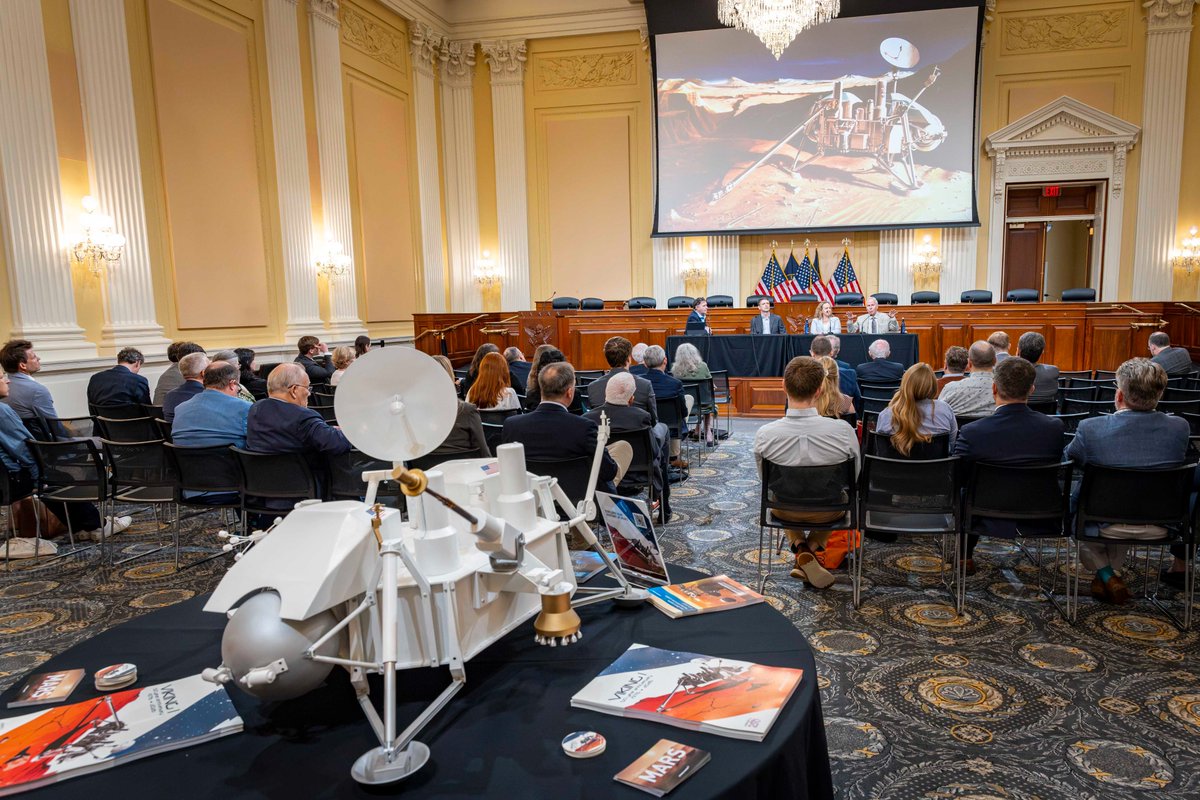
On July 20 The Planetary Society joined @JohnsHopkins, @airandspace, @SpaceNews_Inc and the Congressional Planetary Science Caucus with Rep @DonJBacon and @RepJudyChu on Capitol Hill to celebrate the landing anniversary of Viking 1. We gathered with scientists, policymakers, and space advocates to reflect on what Viking taught us and what it set in motion for Mars exploration. Grateful to everyone who came together to mark this milestone in planetary science.
Planetary Society tweet mediaPlanetary Society tweet mediaPlanetary Society tweet mediaPlanetary Society tweet media
English
1
6
30
3.9K
Planetary Society
Planetary Society@exploreplanets·
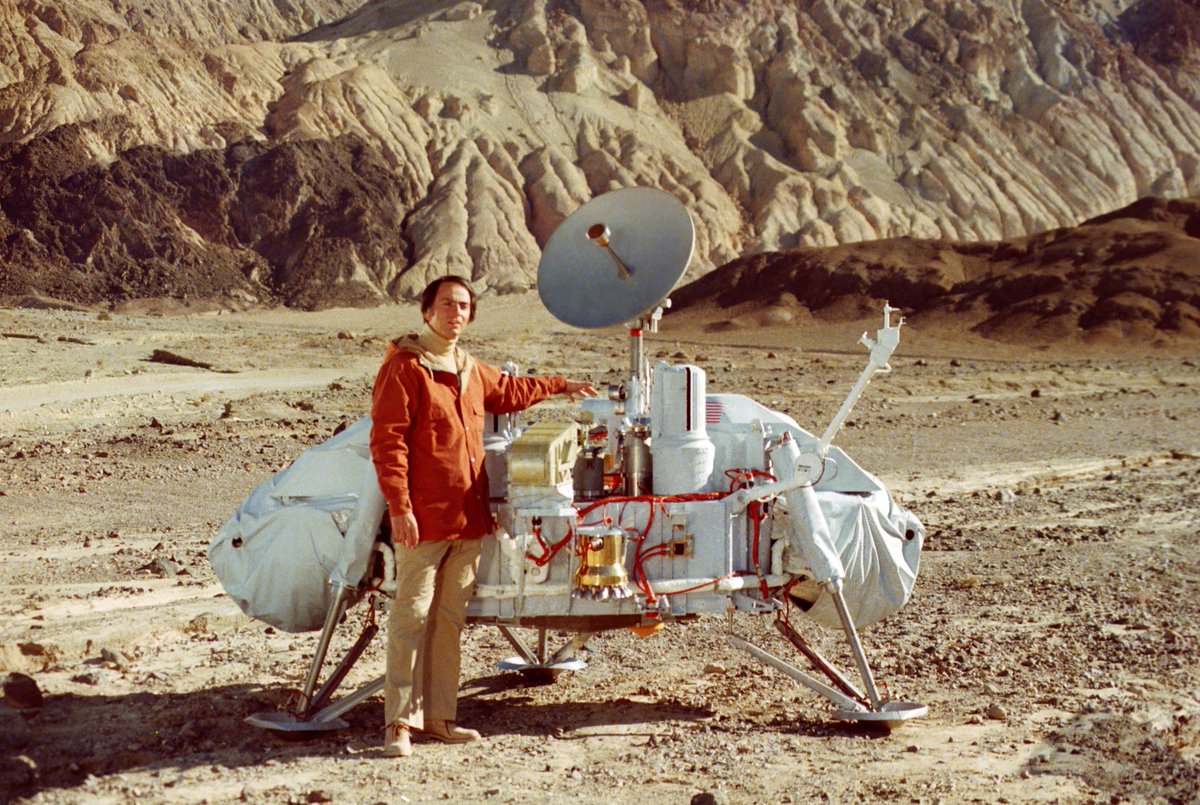
Fifty years ago, the spacecraft that would be the first to successfully land and operate on Mars, Viking 1, would also be a big reason The Planetary Society got founded. Carl Sagan, who worked on Viking, helped choose the landing site and knew Viking would prove something extraordinary: Mars robotic exploration was possible. He knew this spacecraft was going to change the tide. On July 20, 1976, Viking 1 landed successfully on Mars and sent the first photo back. Despite Viking's success there was a continued fight over its funding. After it landed, NASA's planetary program came under pressure as money and attention shifted toward the Space Shuttle. Bruce Murray, who had become JPL's Director just months before Viking landed, watched planetary missions get squeezed out as a result. He and Carl Sagan believed the public's fascination with Mars and other worlds deserved to be matched in Washington's budgets, not dismissed as an excuse to cut funding. A few years after Viking touched down, the two of them, along with Louis Friedman, founded The Planetary Society to make sure Viking's successors wouldn't be lost to the same budget cuts. Fifty years ago, humanity started a robotic journey to Mars with one lander. And it opened a door that robots have been roving through ever since. 1️⃣: The first photograph ever taken on the surface of Mars was obtained by Viking 1 just minutes after the spacecraft landed successfully. 2️⃣: Carl Sagan stands in front of a Viking lander model in Death Valley, California. NASA/JPL 3️⃣: Planetary Society founders Bruce Murray, Carl Sagan, and Louis Friedman.
Planetary Society tweet mediaPlanetary Society tweet mediaPlanetary Society tweet media
English
4
38
128
7K
Planetary Society
Planetary Society@exploreplanets·
The comment period for the proposed OMB rule that would shift U.S. science from scientists to politicians is now closed. Now what? We break down what to expect ⬇️  planetary.org/articles/omb-r…
English
1
5
15
2.5K
Planetary Society
Planetary Society@exploreplanets·
The OMB rule that will change how U.S. science is done will be decided after today. And it's not about just one administration. The proposed rule lets political appointees override scientific peer review on federal grants. That authority doesn't disappear when the administration changes, it's for every administration going forward, no matter who's in office. Once the executive branch has this kind of power, it doesn't tend to give it back. This changes how science gets funded from what's scientifically worth doing, to what fits the political ideology of whoever's in office. And the people making the call of what gets funded aren't scientists, and they aren't elected. They're political appointees. The public comment period to voice against this rule closes after 11:59pm ET, July 13th. Use your voice: planetary.org/advocacy-actio…
English
4
38
64
5.3K
Planetary Society
Planetary Society@exploreplanets·
Who should decide what science gets funded: scientists or political appointees? Right now, it's scientists. A new OMB rule would hand that power to political appointees instead. Comment by July 13 to stop it. ⬇️ planetary.org/ombgrantrules
English
3
14
22
3.3K
Planetary Society
Planetary Society@exploreplanets·
118 years ago today, an asteroid exploded over Siberia, flattening an estimated 80 million trees. On June 30, 1908, an asteroid or comet roughly 30 meters (100 feet) across, entered Earth’s atmosphere and exploded high above the remote Tunguska region of Siberia. The blast leveled approximately 80 million trees across 2,150 square kilometers (830 square miles). The explosion is estimated to have released energy roughly 1,000 times greater than the atomic bomb dropped on Hiroshima. Had it occurred over a major metropolitan area, an entire city could have been devastated. Fortunately, it happened in one of the most remote regions on Earth, and no confirmed fatalities are known. Every year on June 30, the global space community marks Asteroid Day, commemorating the Tunguska event and reminding us that near-Earth objects (NEOs) pose a real, natural hazard. Detecting, tracking, and characterizing these objects is one of the best ways to protect our planet. That’s why The Planetary Society funds astronomers searching for NEOs. Investing in planetary defense today helps safeguard our world for future generations. 🌎
Planetary Society tweet media
English
13
122
1.7K
719.2K
Planetary Society
Planetary Society@exploreplanets·
So you heard we had a blind spot when looking for asteroids? Meet NEO Surveyor, the telescope that's designed to find 90% of Near Earth Objects larger than 140 meters within 10 years of operation. The Planetary Society helped to convince Congress why it's important and now it's slated to launch as early as 2027. planetary.org/articles/the-n…
English
1
15
96
6.3K
Planetary Society
Planetary Society@exploreplanets·
Did you know asteroid Apophis will fly by Earth in 2029 and get closer than our geosynchronous satellites? It's big enough to level a city. Asteroid Apophis would fit neatly inside The Battery, a park at the tip of Manhattan in New York City. This image shows an artist's concept of Apophis in the park to illustrate its size in comparison to the rest of the New York City skyline. Finding and tracking asteroids is how we protect Earth. The Planetary Society funds grants to asteroid hunters around the world doing exactly that. Support the work: planet.ly/RWFni
Planetary Society tweet media
English
7
23
95
6.8K
Planetary Society
Planetary Society@exploreplanets·
You've heard we fund asteroid hunters. But who are they and how are they contributing to planetary defense? Find out who the recent grant winners are ⬇️ Interested in helping to fund our program? Support the work: planet.ly/P084i planetary.org/articles/2025-…
English
1
3
29
3.3K
Planetary Society
Planetary Society@exploreplanets·
The dinosaurs didn't have planetary defense. 🦖☄️ Asteroid Day is June 30 and we're going live to talk all things asteroids with Twitch creator Moohoodles! When: Tuesday, June 30 at 6 pm MT (5 pm PT/8 pm ET) Where: Twitch.tv/Moohoodles Topics: ☄️What is Asteroid Day and why it matters ☄️The Planetary Society’s role in planetary defense ☄️Asteroid missions everyone should know — including Apophis, DART, Hayabusa2, Tianwen-2, and more ☄️What Vera Rubin Observatory and NASA’s NEO Surveyor mean for the future of asteroid detection Save this post and tune in!
Planetary Society tweet media
English
2
4
36
9.2K
Planetary Society
Planetary Society@exploreplanets·
Not all asteroids are the same — some are carbon-rich time capsules from the early solar system, others are giant chunks of metal. Learn what makes each type unique ⬇️ planetary.org/articles/what-…
English
0
10
31
3.2K
Planetary Society
Planetary Society@exploreplanets·
The eclipse map is back! In partnership with The Eclipse Company, we give you access to the only map you'll ever need for tracking where the 2026 total solar eclipse will land and what to expect. Check it out here: planetary.org/eclipse
English
0
5
25
3K
Planetary Society
Planetary Society@exploreplanets·
We're on tour! 🥳 Join us with Jennifer Vaughn, CEO of The Planetary Society, in cities across the country for an intimate gathering of Planetary Society members. Share your passion for space exploration, get an exclusive first look at our upcoming programs, and help shape the future of planetary science and advocacy. Check out which city we're visiting next ⬇️ planetary.org/roundtable
English
0
1
9
2.3K
Planetary Society
Planetary Society@exploreplanets·
Eclipse glasses reminder: the August 12 total solar eclipse is crossing Iceland and Spain, and if you're traveling to catch totality, your eye protection needs to meet the right safety standard. Here's how to check ⬇️ planetary.org/articles/are-y…
English
0
4
27
3.8K
Planetary Society
Planetary Society@exploreplanets·
Three total solar eclipses are happening across the globe in the next three years and now is the time to start planning. Here's everything you need to know about where to go and how to prepare. ☀️ 🌑 🌎 planetary.org/articles/20170…
English
2
10
34
2.5K
Planetary Society
Planetary Society@exploreplanets·
Free astronomy festival begins this Sunday, June 14th in Pasadena! Build a comet, see the Sun up close, watch gravitational wave demos, catch talks on black holes, exoplanets, asteroids, and more! The Planetary Society is joining Caltech, JPL, Carnegie, and more at the City of Astronomy Science Festival, and it's free for everyone. Starting event: 📅 June 14 🕐 1–5 PM 📍 Pasadena Convention Center Learn more about all the events: cityofastronomy.org/astrofest2026
English
0
4
16
2K