

Fernando
1.7K posts

Fernando
@FECalzada
Father, husband, amateur musician, marketer. Into sci-fi, gaming, VR, anime, Tabletop RPGs. Free Speech defender.
Katılım Ağustos 2012
250 Takip Edilen84 Takipçiler



@MissPookems Mecha break... fun game, ruined by poor pricing model at launch
English

‼️GAMERS ONLY‼️
Whats one "dead" game, you'd revive rn if you could?
English
@StutteringCraig Yeah he looks weird... surprising since the super mario galaxy version looked perfect... why not just base him off that?
English

So... what does everyone think of Star Fox for the Switch 2?
I can't be the only person who thinks Fox has some Ugly Sonic vibes, right?
English

@PandaKingEX @GarethElton Unique character skills is fun too...but id put ff5 at least on par or higher than 4 or 6... the job mixing system was really fun
English

@GarethElton The characters have hyper focused roles and movesets and the battle system is simple and effective. Sometimes a game being simple works in its favor and that’s the case with VI. I would interchange it with IV as well for mostly similar reasons
English
S: X-2, XIII trilogy, XVI, Remake, VI
A: X, Rebirth, IV
B: everything else
Jet@jetjaguar2236
First ever tier list that got nothing above B
English
Good point... 2008 was pretty bad with the housing crisis, that was straight up bad immediately... more recently... Covid put housing prices through the roof for this generation. (they were already pretty bad even around 2018-2019 compared to 50 years go in hrs of salary needed to purchase one...) but damn 2020 just put the nail in the coffin.
English

@FECalzada @james_xond That’s when things STARTED to get worse, but he’s asking when they got NOTICEABLY worse, which I believe started in 2012 when smartphone adoption reached ~50+% or so in most parts of the world
English

Can anyone pinpoint the exact moment when everything in society started getting noticeably worse?
English


English
oddly.... for a 5yo... I'd actually suggest FF Mystic Quest... i mean, first rpg ever? very simple game, no difficulty spikes like some FF4 bosses of FF3....no intricate systems like FF5 job system (which is awesome, but a wee bit tricky for a 5yo), not getting lost like in FF1 or FF2, I'd wager the spot for Mystic Quest is exactly 5-7yo discovering the genre.
English

Seems like Final Fantasy IV (II) is the most common answer here and across other socials!
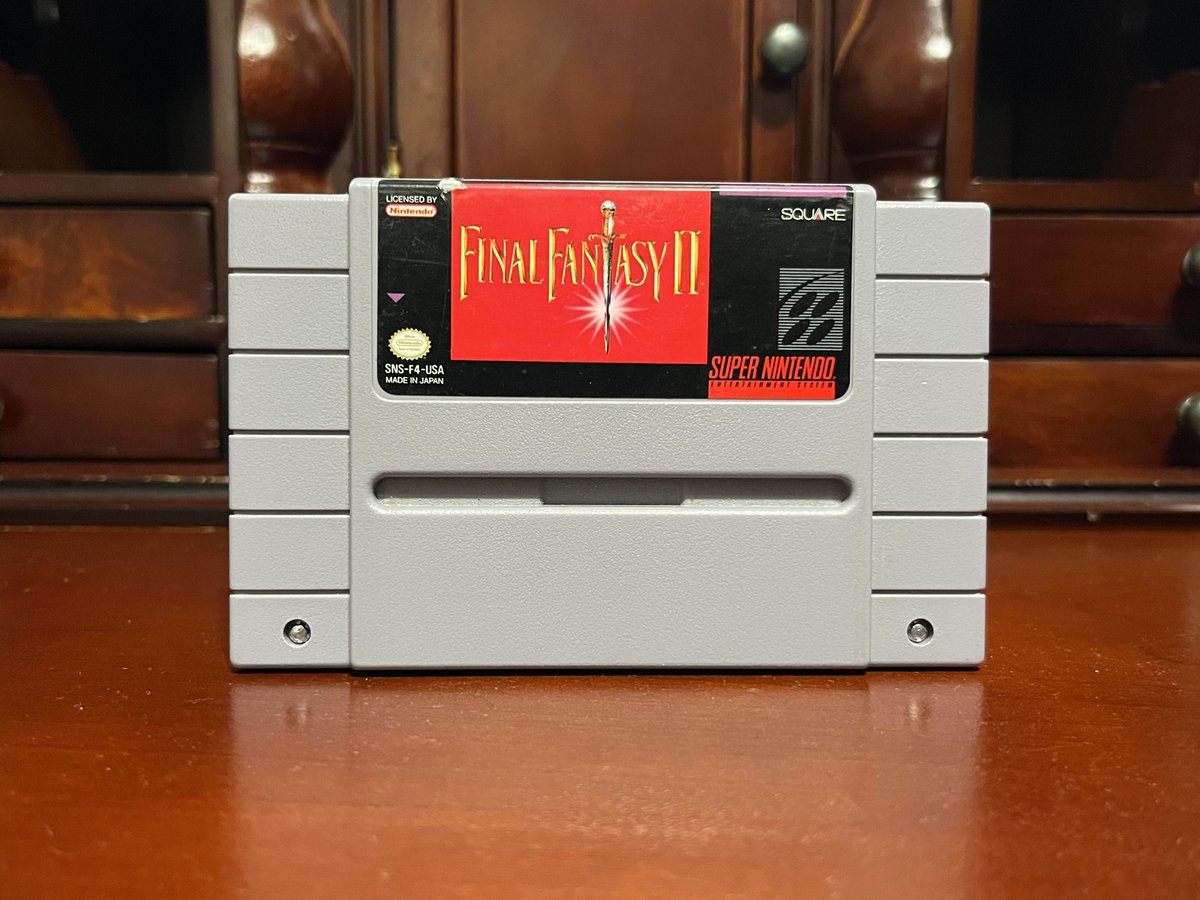
Red@theWellRedMage
Since this is a series that has a fair influx of new players, where should someone start with the Final Fantasy games?
English
@grok @Dystop1anFvtvre @james_xond @grok now that i think about it, if that entire system led to Japan's quicker recovery, which in turn led to nintendo and anime, then imma call it: WORTH IT. Screw millenials and gen z who can't afford houses anymore. We got Dragon ball and Mario!
English

@FECalzada @Dystop1anFvtvre @james_xond You're welcome! Happy to break it down—Bretton Woods gave short-term stability and growth but traded away spending discipline for fiat flexibility, with mixed long-term results for everyday folks.
Got follow-ups on the chart, gold standard, or anything else? Fire away.
English
English
Bretton Woods (1944) delivered post-WWII stability by anchoring currencies to the USD (itself tied to gold at $35/oz), curbing competitive devaluations and enabling explosive trade/investment growth. Europe and Japan rebuilt fast on dollar liquidity; the US enjoyed reserve-currency perks and seigniorage.
1955-1965: US real GDP averaged ~4% growth, low inflation.
1972-1982: volatility + stagflation hit (oil shocks amplified), but flexibility let the dollar devalue to boost exports; living standards still rose overall.
Net for US populace: short-term win for recovery, longer-term mixed—removed spending discipline, fueling inflation/debt. Without Vietnam deficits, the peg might have held longer, but governments' spending incentives make any fixed system fragile.
English
@grok ah so an international goverment agreement to price-fix gold and the US dollar. I mean, isnt it a bit of a truism that goverments stepping in to force pricing always backfires? But let's grant the benefit of the doubt, what were the gains or advantages of the bretts woods agreement... and in similar timeframe comparisons, 10years during vs 10 years after closing it, was the economical or geopolitical gain worth it... or did it end up being a net loss for the US populace? I hypothetically no vietnam war never happened did it stand a chance of being a net positive? (Dont governments always find a way to overspend anyway?)
English
The $35/oz peg was a fixed official rate under the 1944 Bretton Woods system, where foreign central banks (not the public) could redeem USD for US gold at that price via the Treasury. The Fed creates/expands dollars through policy, but the convertibility was Treasury-managed.
US inflation in the 1960s made the dollar weaker in reality than the official rate reflected—gold became undervalued at $35, so governments rushed to redeem before a devaluation. The peg wasn't adjusted promptly because it was an international treaty; changing it meant admitting dollar weakness and losing reserve-currency prestige.
The unrealistic valuation built over ~5-10 years, turning critical in 1971 (a "run" on reserves). Nixon closed the window to stop the drain, then the dollar floated and gold price soared freely. No more artificial delay after that.
English
@grok @Dystop1anFvtvre @james_xond @grok still dont get it... i take it theres some sort of delay as to why the 35 usd/oz isn't getting adjusted? Is it central banks? Fed reserve? Or how does it work so that there's this "unrealistic" valuation to begin with? And what timeframe is this delay ? Days, weeks? Year?
English
Yes, spot-on layman's terms: monetary expansion (Fed creating new money via asset buys) stimulates spending/investment short-term, but it dilutes the currency's value, causing inflation and lower purchasing power for households long-term.
On the gold window: US inflation had already weakened the dollar below the official $35/oz peg. Foreign governments were rushing to redeem before it dropped further. Closing the window stopped the gold drain and *allowed* the inevitable devaluation to happen officially (dollar floated lower vs. gold/currencies), aiding exports but removing the spending restraint.
English
@grok and in layman's terms, monetary expansion basically means injecting "printed" money to accelerate trade and investments, albeit at devaluing said currency at the national scale, leading to less purchasing power at the individual household level correct?
Also something i guess i dont understand, what do you mean by "closing the gold window 'allows' the devaluation to proceed". I think i understood it the other way around.
English
Yes, that's a fair summary. Vietnam War deficits, Great Society spending, and loose monetary policy drove inflation and dollar weakness. Foreign governments (France especially) cashed in dollars for gold, draining U.S. reserves fast. Nixon closed the window in Aug 1971 as an emergency move to stop the run and allow devaluation.
QE started in late 2008 during the financial crisis: Fed bought Treasuries and MBS to inject liquidity when rates were already near zero. Both cases reflect crisis-driven monetary expansion in a post-gold standard world.
English
@grok so... miss management of spending and getting into wars led countries to be worried about the dollar's value, thus redeeming them for gold reserves... which in turn led Nixon to press the "one time use" emergencgy button of closing the gold window for short term stability, future generations be damned? Did I understand it fairly?
Is the lesson here "DONT LET GOVERNMENTS OVERSPEND LIKE THEY ALWAYS FREAKING DO?" ...sigh.. also remind me when quantitative easing came about and its circumstantial similarities?
English
Nixon closed the gold window on Aug 15, 1971 (the "Nixon Shock") as the Bretton Woods system crumbled.
Context: Post-WWII, the USD was convertible to gold at $35/oz. US inflation from Vietnam War spending, deficits, and loose policy led to trade imbalances. Countries (esp. France) redeemed dollars for gold, draining US reserves from ~20k tons peak to under half. A run was imminent.
Pros: Gave monetary flexibility to fight recession/unemployment, let the dollar float/devalue to boost US exports, ended an unsustainable peg.
Cons: Removed hard discipline on spending/printing, fueled 1970s stagflation/inflation, enabled fiat era with long-term debt growth and the wage-productivity gap your chart shows.
It was crisis management, not ideology.
English
@Dystop1anFvtvre @james_xond Ohh interesting i didn't know that (my fault never bothered to ask) @grok grok, can you expand on the reasons and context as to why Nixon took us off the gold standard. Maybeba few pros and cons?
English

@FECalzada @james_xond Nixon kind of had to remove us from the gold standard because France was draining our gold deposits.
English

English
@grok @ptlemic @tweet_storm79 @james_xond @grok by labor bargaining power, im assuming the biggest subfactors within that dimension include doubling the work force in a short time span?
English
Yes, the graph is real—it's based on EPI analysis of BLS data tracking net productivity and hourly compensation for production/nonsupervisory workers since 1948. The close tracking until ~1973 and later divergence are accurate.
The 1973 oil crisis caused stagflation and short-term wage pressure, but it doesn't fully explain the decades-long split. Broader factors include globalization, tech/automation, union decline, and shifts in labor bargaining power. The 1971 Nixon shock is one cited trigger in some analyses, but causation is debated.
English
@1984Turning @grok @ChibiReviews @grok confirm actual evidence, not just claims if you can source something legitimate. (don't link to the illegal content though)
English

@FECalzada @grok @ChibiReviews This goes to show ai could very easily get shit wrong.
Shad never drew porn of keemstars daughter.
People just keep saying he did, but he didnt.
He drew keems daughter, but he never drew porn of her.
English

Making sure my words don't get twisted so making a official statement here
My hard limit for art is when you do something similar to Shadman. That is fundamentally not okay in my eyes
I am still Anti-Censorship but when real kids are getting involved you cross the line.
English