Fake Etymology

385 posts

Fake Etymology banner
Fake Etymology

Fake Etymology

@FakeEtymology

Putting the Amor in Amortization since 1066.

Katılım Mart 2012
94 Takip Edilen230 Takipçiler
robyn 👼
robyn 👼@apocryphaI·
came across the word ‘stot’ in a book & didn’t know what it meant so i looked it up and the definition said ‘another word for pronk.’ am i having a stroke?
English
257
3.3K
103K
4.6M
Fake Etymology
Fake Etymology@FakeEtymology·
MILF stands for Marschak Index Less Food, a core price index published by the Soviet Union until its dissolution.
English
0
0
2
214
Fake Etymology
Fake Etymology@FakeEtymology·
To 'mog' comes from the German 'Macht', or Power, and is related to 'Might' in English.
English
0
0
0
43
Fake Etymology retweetledi
Cameron Harwick 👾🏛
Cameron Harwick 👾🏛@C_Harwick·
Iliad translation into Zoomer where θυμός is translated as Cortisol
0
2
2
293
Fake Etymology
Fake Etymology@FakeEtymology·
Naming the twins Eugene and Dysgene to establish early on which one is the evil one
English
0
1
1
55
Fake Etymology retweetledi
Vessel Of Spirit
Vessel Of Spirit@VesselOfSpirit·
it's common for russian politicians to name themselves after materials. the best known example is stalin (man of steel), but there's also lenin (man of linen), putin (man of pewter), yeltsin (man of jelly), etc.
English
29
174
3.5K
180.7K
Fake Etymology retweetledi
Scope Of Variable
Scope Of Variable@ScopeOfVariable·
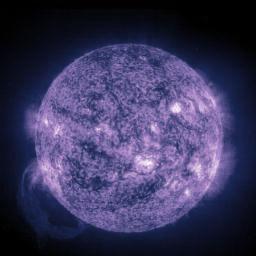
Tines New Roman.
Scope Of Variable tweet media
English
2
1
11
417
Fake Etymology
Fake Etymology@FakeEtymology·
Tornado is morphologically redundant. Torn is already a past participle, then you add -ado to make it a past participle in Spanish too
English
0
0
1
31
Fake Etymology retweetledi
Anglican Saxon
Anglican Saxon@AnglicanSaxon·
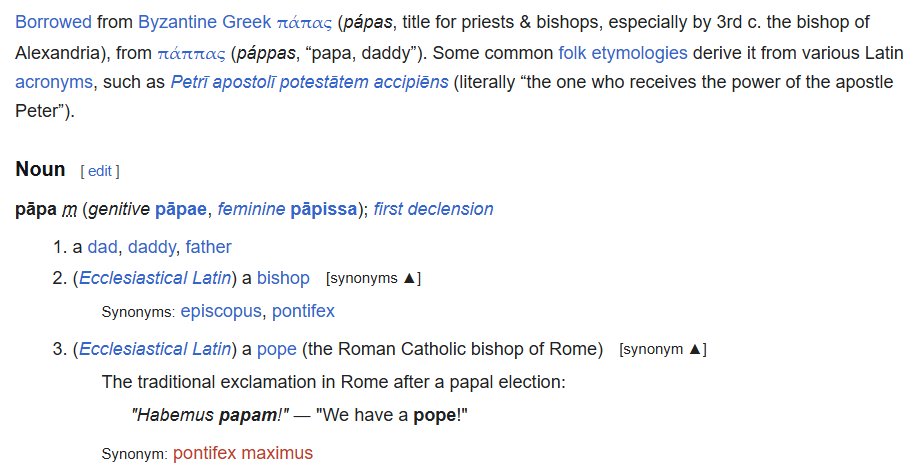
The Anglish word for "Papism" is "Daddydom"
Anglican Saxon tweet media
English
9
5
73
4K
Aminadad Mercilesse Butcher
Aminadad Mercilesse Butcher@OttokarHochman·
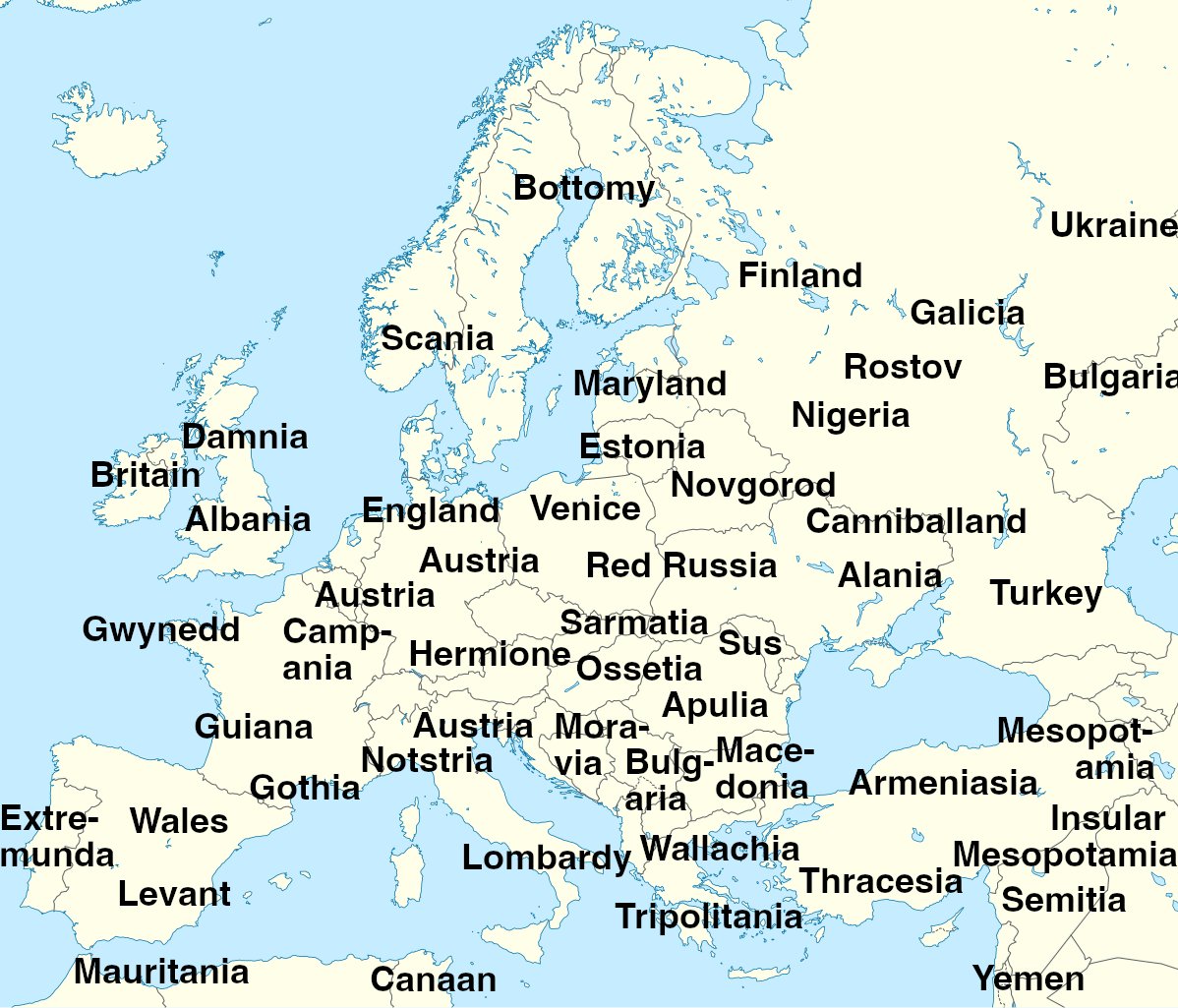
Explanations: Albania: Albion, Albany, and Albania, and Elbe all share the same root, and the first three were all extant renderings for Alba Britain: "Britannia" used to refer to both Britain and Ireland (as Britannia Major & Minor, respectively) Damnia: There was a Pictish lowland tribe called the Damni Wales: Yet another appearance of the greater Welsh/Walloon/Vlach/Gaullic extended universe; the Visigoths are recorded in the Frankish Table of Nations as the "Walagoths" using the same "Wala-" root that those four are derived from Extremunda: This (as "Estremunda") is also a name for central Portugal, the region containing Lisbon Levant: Also historically used as a name for Western Spain Mauritania: This is literally the original region that this name referred to Canaan: The Carthaginians seem to have continued to ethnically identify as "Canaanites" Gwynedd/"Wend"/Venice: These are all derivations of the word "Veneti", which the Romans assigned to several different peoples in what are now the Adriatic, Britannia, and Poland (these last ones were the proto-West Slavs, and that name is the one that later transformed into "Wend") Guiana: This is literally just the actual Occitan rendering of "Guyenne" Gothia: Septimannia was also called the Gothic March Campania: "Campania" and "Champagne" are cognate; the former is just the original Latin word the latter also derives from England: The ancestors of the Low German/Saxon/etc. peoples were a Germanic grouping known as the "Ingaevones"; it's unclear if this is directly etymologically related to "Angle" and thus England, but even if not the first syllable is pronounced the same as "England" is now Hermione: This was a common alternative rendering of "Irminone", the classical name for the group that the modern High Germans descend from Notstria: Both what are now Northwestern Italy and Northern France were named "Neustria", a word that was opposite "Austrasia" but which we don't actually know the exact provenance of: multiple theories have been offered, and most revolve around the words "new" and "west", but one suggests that it may literally be derived from "Not Austrasia", which is the funniest option so I choose to believe it Lombardy: As with Britain, what are now Northern and Southern Italy used to be called "Lombardia Major" and "Lombardia Minor", respectively; the name could have attached to either. Scania: Scania and Scandinavia are cognate Bottomy: This is a direct anglicization of the Swedish name for this area, Botteni Finland: "Finn" used to be a nonspecific term referring to all Finno-Ugric tribes Galicia, Rostov: There were principalities by these names in what is now Central Russia: Galicia was named after the older Principality of Galicia but Rostov is actually the city that the current better-known city of Rostov is named *after*, hence Rostov-*on-Don* Red Russia: There were multiple other regions that followed the colored naming convention of Belarus/"White Ruthenia"; Red Ruthenia was the name for what is now Galicia Nigeria: There was also a "Black Ruthenia" which seems to have referred to different regions at different times; one of those regions is what is now Muscovy. "Nigeria" is a form that this name could have been Latinized into Novgorod: This was also the name of a Polish province in this region (as "Nowogródek") Estonia: The Aestii, the group from whom the modern name "Estonia" may be derived (it's unclear), actually lived in what is now Lithuania and Prussia Maryland: Anglicization of "Terra Mariana", a name used for the lands held by the Livonian Order Bulgaria: Volga Bulgaria is located here Alania: "Alan" was the endonym used by the Sarmatians Ossetia: Derived from "Iazyges" along with the modern Hungarian region of Jazy, both also names once used to refer to the Sarmatians/Alans Sarmatia: The Carpathian Mountains were sometimes called the Sarmatian Mountains in antiquity Canniballand: There was a tribe of the Scythians referred to only as the "Androphagi" that used to live in this region Ukraine: This region was sometimes called "Grey Ukraine" Turkey: "Turkey" is a floating name that has been used by Europeans at some point to refer to virtually any land that a Turkic people dominated; this includes Ciscaucasia in the time of the Khazars Sus: Romanian equivalent of "High/Upper/Top", used to refer to Northern Moldavia Moravia: Some of the original tribe of the Moravians also migrated to the Balkans and settled in what is now Serbia; this is where the name of the Morava River comes from Wallachia: Northern Greece also contained many Vlachs and was at some points called this Tripolitania: There is a city named Tripoli in Morea which became an important administrative center in the region which lent its name to an Ottoman sanjak for the island at some points Insular Mesopotamia: This is a literal translation of the Arabic name for Upper Mesopotamia, "Jazira" (it comes from the fact that the region is *almost* enclosed by the Tigris and Euphrates) Semitia: Semite is cognate with "Sham", the Arabic word for the Levant, and this is probably how that name would be rendered in English if it was used for the region Yemen: During the early Caliphates Levantine politics were dominated by conflict between the Arab subgroups of the Qays, who settled mainly in what is now Northern Syria, and the Yaman, who settled mainly in what is now Palestine; "Yemen" is an English rendering of the latter
English
3
0
3
223
Fake Etymology retweetledi
niplav
niplav@niplav_site·
Does the etymology of "yeet" bottom out in PIE "*(H)yeh₁-"
English
0
3
4
442
Fake Etymology
Fake Etymology@FakeEtymology·
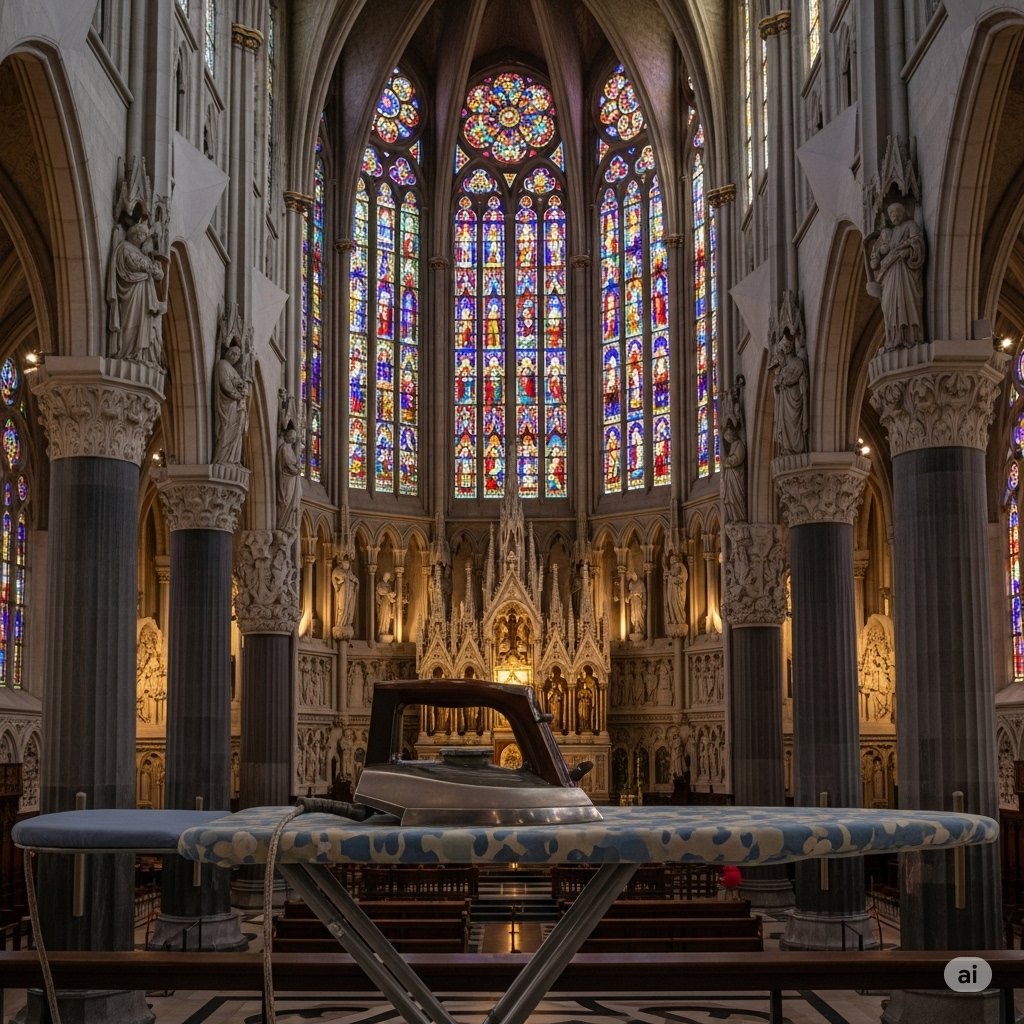
Santa Fe is Spanish for Holy Iron.
Fake Etymology tweet media
English
1
1
3
72
Fake Etymology
Fake Etymology@FakeEtymology·
WASM stands for White Anglo-Saxon Muslim, and the web of such converts assembled in Britain.
Fake Etymology tweet media
English
0
1
1
155
Fake Etymology retweetledi
Ante D. Luvian
Ante D. Luvian@uncle_deluge·
Amazon's "Alexa" comes from "al-Aqsa", the Islamic name for the Temple Mount. Every time you speak to the machine you invoke the name of the Farthest Mosque, a ritual required to stir the djinn awake
English
10
33
600
20.1K