Achhu

4.5K posts

Achhu banner
Achhu

Achhu

@Feel_freeorFly

Nothing

Bengaluru South, India Katılım Şubat 2020
751 Takip Edilen61 Takipçiler
Achhu retweetledi
Shreenidhi P
Shreenidhi P@nid_rockz·
Good #Q1FY27-15/7/26 till 2pm Steel Strips and Wheels #SSWL #SteelStrips Solid Q1FY27 Good QoQ and YoY uptick across all parameters Rev at 1509cr vs 1186cr, Q4 at 1474cr EBITDA ⏫34% with OPM at 10.8% vs 10.2% PBT at 93cr vs 61cr, Q4 at 83cr PAT at 69cr vs 47cr, Q4 at 61cr Should have good FY27 with 600-650cr EBITDA for FY27 Billionbees Garage Ventures #Groww Good Q1FY27 Rev at 1501cr vs 904cr,flat QoQ PBT at 993cr vs 504cr, Q4 at 936cr PAT at 735cr vs 378cr, Q4 at 687cr Federal Bank Financial Services #FedFina Good Q1FY27 Good asset quality GNPA and NNPA down QoQ and YoY Rev at 670cr vs 517cr, Q4 at 617cr PBT at 153cr vs 100cr, Q4 at 135cr PAT at 114cr vs 75cr, Q4 at 101cr GNPA at 1.55% vs 1.87%, Q4 at 1.99% NNPA at 0.96% vs 1.28%, Q4 at 1.24% Avg/Decent: Union Bank #UnionBank Nos look due to other income of 1200 odd cr due to reversal and tax related NII⏫10% PPOP at 8040cr vs 6935cr, Q4 at 7975cr PBT at 7066cr vs 5268cr, Q4 at 6925cr GNPA and NNPA down QoQ and YoY Asset quality steady KSolves #KSolves Down QoQ on topline Rev at 41cr vs 38cr, Q4 at 43cr PBT at 12cr vs 9cr flat QoQ PAT at 9.2cr vs 6.4cr, Q4 at 9.6cr
English
4
15
252
38.3K
Achhu retweetledi
Normal Guy
Normal Guy@Normal_2610·
PDS signed a multi-year deal worth over $250 million in annual sourcing volume with a major French supermarket chain. PDS will manage textile sourcing across Bangladesh, Pakistan, India, Sri Lanka, and Turkey. PDS does not own factories. It runs Sourcing as a Service, means it finds factories, handles compliance, manages quality, and delivers finished garments for the retailer. PDS already runs similar setups for Primark, Walmart, and Tesco. Another large retailer choosing this model confirms it works. Global fashion retailers want to cut costs and diversify away from China, but most do not want to manage hundreds of factory relationships across six countries. That is where PDS fits, It ran over $2 billion in gross merchandise value in FY26 across 22 countries with 600 factory partners, without owning a single production line. Revenue grew 4% to ₹13,110 crore. Order book is up 11%, shift from in-house sourcing to outsourced platforms is how global apparel will move from factory to shelf. PDS targets $5 billion in GMV, means total goods managed, and 5% profit margins within five years, up from $2 billion GMV and 1.4% margins today. The French deal adds $250 million in annual volume, meaningful on its own, but the pattern matters more. PDS signed a similar deal with a US value retailer earlier this year. Net debt dropped from ₹374 crore to ₹105 crore in one year. Gross margins improved to 20.6%. PDS is not growing by buying factories. It grows by running other people's supply chains. Plus look at FTA with UK + EU plus soon with US perhaps
Normal Guy tweet media
English
3
12
97
6.7K
Achhu retweetledi
Vineeth K
Vineeth K@DealsDhamaka·
Social media shows everyone happy, constantly travelling, posting ₹4 lakh a month is enough to live in Bengaluru Step outside the bubble, reality is different. Thousands stand in line for a ₹30,000/month job
English
67
387
3.4K
257.2K
Achhu retweetledi
Jenny
Jenny@Jennyksn7·
I will be happy and they will be shocked 🤭 diy home bed room designs
English
66
522
18.5K
1.5M
Achhu retweetledi
ಸನಾತನ (सनातन)
A taste of Karnataka in La Fortuna, Costa Rica! 🇮🇳🌍 Srikanth, a proud Kannadiga from Bengaluru, is running Sunny’s Indian Restaurant in La Fortuna, serving authentic Indian cuisine and bringing the flavors and warm hospitality of Karnataka to Central America. Wishing Sunny continued success as he proudly represents Karnataka and India on the global stage. 🇮🇳❤️ VC : Anupama Iyengar #Kannadiga #CostaRica #LaFortuna #IndianCuisine #Karnataka
English
21
125
996
52.8K
Achhu retweetledi
The_Chartist 📈
The_Chartist 📈@thechartist26·
As you know I am a part of an NGO Paramhansa Yogananda Charitable Trust in Vrindavan that works for the widow mothers and we are celebrating Jagannath Rath Yatra Utsav 2026 with the Mothers of Paramhansa Yogananda Public Charitable Trust on **Thursday, 16th July 2026**. Pls do visit once. In case you wish to contribute for their health and well being - this is the link yoganandatrust.org/indian-donatio… Jagannath Rath Yatra is a celebration of equality, unity, and compassion, where everyone—from kings to common people—comes together to pull the Lord's chariot, symbolizing that all are equal before God. For our mothers, many of whom have been separated from their families, this festival rekindles cherished memories and fills their hearts with hope and belonging. Your presence will bring them immense joy and make this celebration truly memorable. **Kindly confirm your presence in advance.** We look forward to welcoming you and your family.🙏
The_Chartist 📈 tweet media
English
1
6
105
10.2K
Achhu retweetledi
Anatoli Kopadze
Anatoli Kopadze@AnatoliKopadze·
Anthropic engineer: "You're not supposed to prompt Claude. You're supposed to build a system that prompts itself." In 45 minutes she breaks down how Anthropic builds agents that remember, learn from their mistakes, and get smarter with every run. Worth more than any paid course you'll find on building agents. Watch the session, then read the guide on building loops below.
Anatoli Kopadze@AnatoliKopadze

x.com/i/article/2068…

English
244
2.1K
15.6K
3.1M
Achhu retweetledi
Matt Dancho (Business Science)
Understanding probability is essential in data science. In 4 minutes, I'll demolish your confusion. Let's go!
Matt Dancho (Business Science) tweet media
English
2
86
476
23.9K
Achhu retweetledi
Anish Moonka
Anish Moonka@anishmoonka·
In 1973, a physicist added up everything in the universe and the total came to zero. Every star and particle holds a huge amount of positive energy. Gravity holds an equally huge amount of negative energy, because pulling matter together stores energy like a stretched spring, just with the sign flipped to minus. Add the two sides and they may cancel out completely. Edward Tryon laid this out in a short 1973 paper in Nature, and Stephen Hawking later backed the same idea in A Brief History of Time. If that balance holds, making a universe costs no net energy at all. The books sit at zero from the start. That removes one of the oldest objections to a universe beginning on its own. Empty space is not empty either. Quantum physics says a perfect vacuum still holds energy, with tiny ripples flickering in and out nonstop, and you can measure the push they create. Put two uncharged metal plates about ten nanometers apart, roughly a hundred atoms, and the vacuum presses them together with about one atmosphere of pressure, the same push the air is putting on your skin right now. Hendrik Casimir predicted this in 1948. Steve Lamoreaux measured it in 1997 to within five percent, and later labs got it to better than one percent. Getting a whole universe out of that took two ideas from the 1980s. Alexander Vilenkin proposed in 1982 that the universe formed by quantum tunneling, the same effect that lets particles slip through walls they lack the energy to cross, and the same effect that keeps the sun burning. A year later, James Hartle and Stephen Hawking offered the no-boundary idea, where time near the beginning acts like another direction of space, so there is no sharp first moment to point at. The honest catch sits in the word nothing. The nothing in these models still comes with quantum fields, or at the very least the laws of physics that let those fields exist. Empty space shows up already loaded with rules and energy. And this is nowhere near settled. When physicists try to work out how much energy the vacuum should hold, the answer misses the measured value by up to 120 orders of magnitude, a one followed by 120 zeros, which stands as the worst prediction in the history of physics. A universe may well be able to start itself with no push from outside. What it would start from, though, is doing far more work than the word nothing lets on.
Night Sky Now@NightSkyNow

🚨: Quantum cosmology suggests the universe can create itself from nothing

English
7
26
115
10.4K
Achhu retweetledi
Muthukrishnan Dhandapani
The Capgemini employee who exposed toddlers being abused at the creche on the company campus was fired first. Now she has been arrested for sharing the videos. This is deeply disturbing.
Muthukrishnan Dhandapani tweet media
English
233
2K
6.3K
225.6K
Achhu retweetledi
THE SKIN DOCTOR
THE SKIN DOCTOR@theskindoctor13·
A daycare employee at Capgemini's Bengaluru campus couldn't bear the abuse of the kids at the centre. She reported it to supervisor, but instead of taking action, they fired her. She then became a whistleblower and leaked videos that exposed the abuse. In the videos, toddlers were made to sit inside the drum of a front-loading washing machine, had water sprayed into their mouths using a toilet jet spray, were locked inside bathrooms, and were forced into narrow, water-filled pipes to frighten them. The videos triggered outrage, forcing authorities to act. Today, according to media reports, the police have arrested the whistleblower only for allegedly "leaking sensitive videos." Lol! What a system! A poor woman with a clear conscience stood up to the powerful and went public, not for personal gain or with any malicious intent, but solely to protect those children. And she's the one who gets arrested.
THE SKIN DOCTOR tweet media
English
566
6.1K
17.4K
486.6K
Achhu retweetledi
Anand Ranganathan
Anand Ranganathan@ARanganathan72·
She was an employee at a Bengaluru daycare. She saw babies being tortured, loaded on to washing machines, stuffed down toilet bowls. She complained. She was sacked. She became a whistleblower and exposed the horrific crimes. She should have been rewarded. She has been arrested.
Anand Ranganathan tweet media
English
843
11.5K
34.7K
849.9K
Achhu retweetledi
Shav Ngah ★
Shav Ngah ★@shavnyuyngah·
This house in Ratnagiri, Maharashtra was built on a budget, 1,100 square feet, using laterite stone quarried within 10 kilometres of the site, Mangalore clay roof tiles, teak wood joinery and clearstory windows along the eastern wall that pull morning light through the entire living area. Cross ventilation through high ceilings and large openings means no mechanical cooling. Not a single tree on the site was cut during construction. This is not an expensive house. It is a disciplined one. The crude indigenous designs we have in our communities do not need to be abandoned. They need effort. When slight effort is put into laterite, into fired brick, into rammed earth, when someone takes the time to lay it properly, orient the building correctly, and open it to the right wind, the result stops looking crude and starts looking like this. The people around us cannot see how good our materials are because we have never shown them what those materials look like when they are taken seriously. Building kilns is not a fantasy. We have the clay. We have the land. We just have not decided it matters enough yet. There is no pride in crudeness and there is no excuse for mediocrity when the solution is already in the ground. Ratnagiri, Maharashtra, India | Articulated Design Initiative | Photography: Vaibhav Kapadi
Shav Ngah ★ tweet mediaShav Ngah ★ tweet mediaShav Ngah ★ tweet mediaShav Ngah ★ tweet media
English
86
436
3.3K
170.2K
Achhu retweetledi
Equity Earnings
Equity Earnings@Pkjat340·
RAYMOND REALTY | Q1 Pre-Sales Jump 129% YoY Key Highlights - Pre-sales up 129% YoY - Collections rose 47% YoY - No new project launches - EBITDA guidance maintained Business Updates - Q1 pre-sales at ₹700 crore - Collections reached ₹550 crore - Net Debt-to-Equity below 1.0x - Strong demand across MMR projects Key Takeaway - Raymond Realty delivered strong Q1 FY27 pre-sales and collections despite no new launches, reflecting healthy demand across its MMR portfolio, while maintaining a comfortable leverage profile and reaffirming its FY27 EBITDA margin guidance of 17–19%.
English
0
3
2
473
Achhu retweetledi
Smart Sync Investment Advisory Services
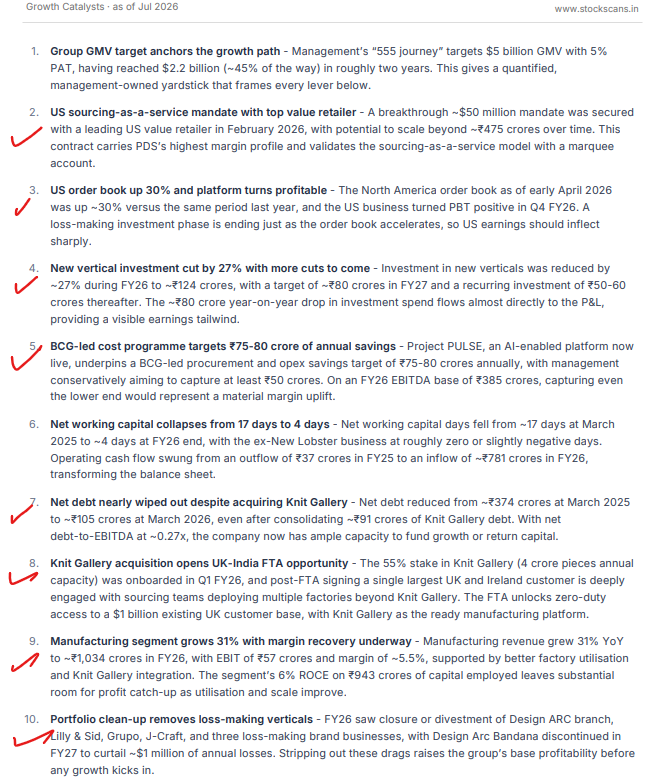
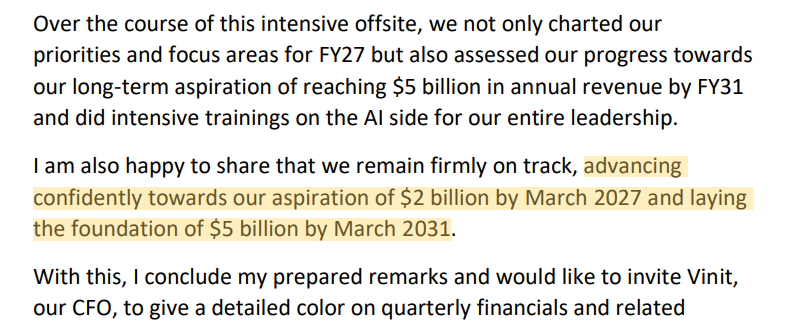
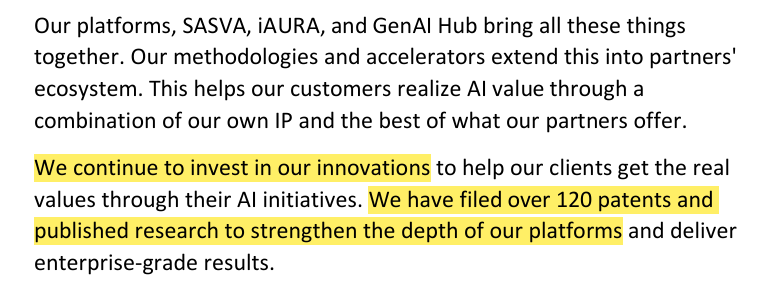
Beyond the €1.1 billion Nagarro acquisition: Why Persistent Systems may be building something much bigger Every once in a while, an acquisition comes along that deserves to be viewed as more than just a deal. The proposed €1.1 billion acquisition of Nagarro by Persistent Systems may be one of those moments. Since the announcement, most of the conversation has naturally revolved around familiar questions. Is the valuation justified? Will the integration be smooth? Can the acquisition create long-term shareholder value? And what does the immediate market reaction really suggest? These are all valid concerns. Large acquisitions are never without risk, and history has shown that even well-intentioned deals can fall short when execution does not go as planned. But sometimes, the more interesting story is not the acquisition itself. It is what the market may be overlooking beneath it, a larger shift that appears to have been quietly unfolding inside Persistent Systems for years. Looking back at Persistent Systems’ earnings calls over the past several quarters, a clear pattern begins to emerge. The company has been consistently returning to the same themes, not for a single quarter or two, but across multiple years of communication. Artificial intelligence, engineering excellence, platform-led delivery, operational discipline, global expansion, Europe, and larger transformation deals have repeatedly featured in these discussions. Individually, these may appear as standard strategic priorities for an IT services company. But taken together and more importantly, repeated consistently over time, they begin to suggest something more deliberate. A sense of direction that goes beyond incremental growth. Viewed through that lens, the proposed Nagarro acquisition starts to look less like an opportunistic expansion and more like a natural extension of a strategy that has been steadily taking shape. If the integration is executed well, this deal may eventually be remembered not merely as the largest acquisition in Persistent Systems’ history, but as a moment that meaningfully accelerated its transformation into a very different kind of global technology business. A strategy built on consistency, not headlines One of the biggest challenges facing the global IT services industry today is inconsistency. Technology spending has become more selective, clients are delaying discretionary projects, decision cycles are stretching longer, and growth across the sector has become increasingly uneven. Yet, amid this uncertainty, Persistent Systems has quietly continued to deliver. Over the past five quarters, annualized revenue has increased from approximately $1.4 billion to nearly $1.65 billion. Alongside this steady progression, management has reiterated confidence in reaching a $2 billion annual revenue run rate by FY27, while also outlining a longer-term ambition of building a $5 billion business by FY31. These are clearly ambitious targets, but what stands out is not just the ambition itself, it is the consistency behind it. The company’s growth has not been driven solely by acquisitions or isolated strong quarters. Instead, it has been built through a steady expansion of existing client relationships, higher wallet share within accounts, continued wins in digital engineering programs, and a disciplined execution approach across cycles. In investing, consistency rarely attracts headlines; it attracts trust. Over time, markets tend to reward businesses that repeatedly deliver on what they set out to do. While investors may debate quarterly fluctuations, conviction is ultimately built through years of execution. Persistent appears to understand this better than most companies in its peer set. Artificial Intelligence is becoming part of the business model Almost every technology company today claims to have an AI strategy. Some are launching AI services, others are building standalone tools, and many are still trying to figure out where AI actually fits within their business model. Persistent, however, appears to be approaching the opportunity differently. Instead of treating artificial intelligence as just another service offering, the company is embedding it directly into how software is built, tested, delivered, and managed. That distinction matters, because it shifts AI from being a revenue add-on to becoming part of the core operating model. Across multiple earnings calls, the discussion around AI has remained remarkably consistent. The company has repeatedly highlighted investments in AI-assisted software engineering, AI-enabled testing, intelligent delivery automation, enterprise AI modernization, platform engineering, and reusable AI accelerators. While none of these initiatives are designed to be headline-grabbing on their own, collectively they point toward something more structural in nature. Rather than simply helping clients adopt AI, Persistent appears to be redesigning its own delivery architecture around AI. This shift became particularly clear during discussions around margins, where management noted that AI-driven pricing models and delivery efficiencies were already contributing to operating margin improvements, excluding temporary accounting-related adjustments. That observation is important because it marks a transition point where artificial intelligence moves beyond being a technology trend and begins to function as an economic lever. Many companies are still experimenting with AI in isolated use cases, but Persistent appears to be integrating it into the way value is created and delivered. This creates the possibility that the benefits may not be cyclical or short-term, but structural in nature. Rethinking the traditional IT services model For decades, the IT services industry has largely followed a simple and predictable formula. More engineers meant more revenue, and growth was closely tied to hiring. As delivery teams expanded, revenue expanded alongside them. It was a model that worked effectively for years and formed the backbone of the global outsourcing industry. But artificial intelligence is beginning to challenge that equation in a meaningful way. Persistent’s repeated emphasis on what it calls “Service as Software” suggests that the company is actively rethinking this traditional model. Instead of relying primarily on linear hiring to drive growth, the focus appears to be shifting toward building reusable platforms, automation frameworks, proprietary AI assets, and engineering accelerators that enable teams to deliver significantly more output with the same resources. This is a subtle shift in execution, but potentially a profound shift in economics. If software development continues to become increasingly assisted by AI, then productivity rather than headcount could emerge as the primary driver of growth. That change has direct implications for how the business scales and how value is created. It points toward a structure with higher revenue per employee, improved operating leverage, and greater scalability over time. Perhaps more importantly, it gradually reduces dependence on continuous hiring just to sustain growth momentum. Whether the broader IT services industry fully transitions in this direction remains uncertain. However, Persistent appears intent on positioning itself ahead of this shift rather than responding to it after the fact. Why SASVA could become more important than it looks today Every company has products and platforms that receive significant attention in public commentary. Then there are initiatives that evolve more quietly in the background, gradually expanding in scope until their importance becomes clear only in hindsight. SASVA may belong to this second category. When it was first introduced, it appeared to be another enterprise AI platform positioned within the broader technology landscape. Over time, however, it seems to have developed into something far more expansive. Today, SASVA spans software engineering support, enterprise AI implementation, delivery acceleration, automation, and engineering productivity across multiple use cases, making it less of a single platform and more of an integrated capability layer within the organization. What makes this evolution particularly notable is not just its functional breadth, but the growing intellectual property footprint associated with it. In recent discussions, management highlighted that SASVA-related patents have increased to more than 120, marking a meaningful expansion within a relatively short period of time. This matters because the IT services industry has traditionally been driven more by talent scale than proprietary intellectual property. Building defensible platforms and differentiated IP has historically been difficult, with most firms competing primarily on execution capacity and cost efficiency rather than proprietary technology. If Persistent is able to continue expanding this IP base meaningfully, it could introduce a different kind of advantage, one that is not solely dependent on scale or pricing power. Instead, it creates differentiation. And in a sector where many players operate with similar capabilities, differentiation often becomes more important than size alone. Bookings often tell tomorrow's story Quarterly revenue tends to dominate earnings headlines, while bookings often receive comparatively less attention. Yet bookings frequently provide a clearer forward-looking view of business momentum, particularly in industries like IT services where revenue recognition lags deal execution. In this context, Persistent has quietly reported record Total Contract Value (TCV) across recent quarters, including a period where TCV exceeded $670 million. This is not just a financial milestone; it reflects a deeper shift in the nature of customer engagement and the scale of transformation programs being undertaken. Such large deals are rarely awarded in isolation or on short timelines. They are typically the outcome of sustained credibility, consistent delivery performance, and long-standing client relationships built over multiple cycles. In that sense, they represent accumulated trust as much as commercial opportunity. Revenue, by definition, captures what has already been delivered. Bookings, on the other hand, offer a view into what may unfold next. When both are read together, they suggest that Persistent’s growth trajectory is not being driven solely by broader industry tailwinds. Instead, it appears to be increasingly supported by deeper enterprise relationships and a growing role in large-scale technology transformation programs. Growth Is becoming more balanced across businesses One of the quieter but important shifts in Persistent Systems’ story is how its growth engine itself is evolving. For a long time, IT services companies have tended to rely heavily on a limited set of core verticals. Over time, that kind of concentration creates a structural vulnerability where when one segment slows down, the impact is often felt across the entire growth profile. Persistent, however, appears to be gradually moving toward a more balanced structure. Healthcare and Life Sciences continues to serve as a strong foundation for the business, supported by accelerating global demand for digital transformation, cloud adoption, and AI-driven research capabilities. At the same time, BFSI has emerged as another powerful growth engine, with financial institutions remaining among the largest global investors in modernization, cybersecurity, data platforms, and artificial intelligence. Both of these sectors are expected to remain structurally important over the next decade, driven not by short-term cycles but by long-term transformation agendas. They represent multi-year investment waves rather than episodic demand spikes. A more diversified revenue mix of this nature does more than reduce concentration risk. It strengthens resilience, enabling the business to sustain growth even when certain verticals experience temporary softness. Margin expansion is starting to look structural Margins in IT services have traditionally been shaped by a combination of factors, including wage inflation, currency movements, utilization rates, and periodic one-time adjustments. Persistent is no exception to these industry-wide dynamics. In fact, one recent quarter was notably impacted by accounting-related provisioning linked to changes in India’s labour regulations, which temporarily distorted reported profitability. However, when viewed beyond these short-term fluctuations, a clearer underlying pattern begins to emerge. Management continues to guide toward a long-term EBIT margin range of 16–17%, and importantly, this aspiration is being supported less by traditional cost-cutting cycles and more by structural improvements in the business model itself. The key drivers remain consistent across disclosures: AI-led productivity gains, deeper automation across delivery processes, a gradual shift toward platform-based delivery models, sustained operational discipline, and improved pricing power on larger transformation engagements. What makes this evolution significant is not any single lever in isolation, but the cumulative effect of these changes working together over time. If these trends continue to scale, margins may become less dependent on utilization and hiring cycles, and increasingly linked to productivity improvements and platform leverage. That would represent a meaningful shift in the underlying economics of the business, moving it closer to a more scalable and structurally efficient operating model. Europe was always part of the bigger plan At first glance, the proposed Nagarro acquisition may appear to be driven primarily by geography, particularly Persistent Systems’ expansion ambitions in Europe. However, a closer reading of management commentary across multiple earnings calls suggests that this direction has been evolving gradually over time rather than emerging as a sudden strategic pivot. Europe has consistently been positioned as a key growth market, not as a recent discovery or opportunistic focus area. Persistent has repeatedly emphasized a disciplined, capability-led approach to expansion in the region, favouring measured entry and deeper execution over rapid, scale-driven expansion. From this perspective, the acquisition of Nagarro does not introduce a fundamentally new direction. Instead, it appears to accelerate an existing strategic path that was already underway. Beyond scale, the more meaningful element of the deal lies in capability alignment. Nagarro brings established strengths in manufacturing, automotive, SAP-led transformations, enterprise consulting, and digital engineering across continental Europe. Persistent, on the other hand, contributes deep expertise in AI-led engineering, cloud modernization, healthcare, and BFSI-focused transformation programs. Viewed together, the combination becomes more than additive. It begins to form a broader integrated platform capable of supporting larger enterprise transformation engagements, particularly for global clients seeking end-to-end modernization and engineering partnerships. In this context, the potential for cross-selling across complementary capabilities may ultimately emerge as one of the most significant long-term strategic benefits of the transaction. Sustainability is quietly becoming a differentiator In earlier years, sustainability in the IT services industry was often treated primarily as a reporting requirement important from a compliance perspective, but rarely central to commercial decision-making. Today, however, that dynamic is gradually changing as sustainability considerations begin to influence how enterprise clients evaluate long-term technology partners. Global customers are increasingly assessing vendors not only on technical capability, cost efficiency, and delivery scale, but also on ESG alignment, energy consumption practices, and broader sustainability commitments. These factors are becoming more visible within procurement frameworks, particularly in large, multi-year transformation programs. Persistent Systems has taken visible steps in this direction. The company has achieved 100% renewable energy sourcing across its owned facilities in Pune, Nagpur, and Goa, and has also announced carbon neutrality ahead of its originally stated timeline. While these milestones may appear operational in nature, they are increasingly relevant in shaping how the company is positioned in global client discussions. In large enterprise engagements especially within regulated industries, such parameters are gradually becoming part of formal vendor evaluation criteria. Over time, this strengthens credibility and expands eligibility for participation in global transformation programs, where ESG alignment is no longer peripheral but increasingly integrated into decision-making frameworks. Execution discipline remains the core advantage Amid all the strategic themes shaping Persistent Systems’ narrative- AI adoption, platform-led delivery, acquisitions, and global expansion, one factor consistently stands out: execution discipline. Across multiple earnings calls, management messaging has remained notably consistent, with very little deviation in priorities or tone over time. Rather than shifting focus quarter to quarter, the emphasis has stayed anchored around a stable set of operating principles that guide both decision-making and capital allocation. These include a preference for sustainable growth over short-term spikes, margin discipline over expansion pursued at any cost, selective hiring aligned closely with demand visibility, continued investment in AI and platform capabilities, strong execution in delivery, and a measured approach to long-term capital deployment. This kind of consistency is often underestimated in its importance. It may not generate immediate excitement in the way faster-moving narratives do, but over time it plays a critical role in building trust across stakeholders including clients, employees, and investors. Why the Nagarro acquisition fits so naturally When all of these threads are brought together, the rationale behind the Nagarro acquisition becomes easier to understand. It does not represent a shift in strategy, but rather an acceleration of an existing one. The underlying themes have remained consistent for years: expanding globally, strengthening presence in Europe, building AI-led engineering capabilities, investing in proprietary platforms and intellectual property, improving delivery productivity, winning larger transformation programs, and scaling digital engineering into a more global footprint. Viewed in isolation, the acquisition appears as a large and decisive strategic move. However, when placed in the broader context of Persistent Systems’ multi-year evolution, it begins to look less like a departure and more like a continuation of a long-running transformation that has been steadily unfolding over time. Final thoughts Technology companies are often judged in quarters, but transformations rarely unfold on that timescale. They develop gradually through repeated execution, evolving capabilities, and decisions that may appear incremental in isolation but compound meaningfully over time. Persistent Systems appears to be in the middle of such a transition. It is no longer simply a company focused on expanding revenue through traditional IT services growth. Instead, it appears to be evolving into something broader, an AI-first, engineering-led global technology partner built on a combination of deep engineering expertise, platform-driven delivery, proprietary AI capabilities, operational discipline, and an expanding international presence. The proposed Nagarro acquisition should rightly be viewed with a degree of caution. Integration risk is real, cultural alignment matters, and execution will ultimately determine outcomes. However, stepping back from the immediate debate reveals a larger and more structural narrative. This is not just about a €1.1 billion transaction. It is about whether Persistent Systems is successfully repositioning itself for the next decade of global technology transformation. If execution aligns with strategy, this acquisition may eventually be remembered not as a standalone deal, but as a defining moment in the company’s evolution, a point where direction became clearer and the trajectory shifted meaningfully upward. Because in business, the most significant transformations rarely announce themselves loudly. They reveal themselves gradually through consistency, discipline, and the ability to keep building long before the outcome becomes obvious. SEBI Disclosure: This content is intended solely for educational purposes and does not constitute a recommendation.
Smart Sync Investment Advisory Services tweet mediaSmart Sync Investment Advisory Services tweet mediaSmart Sync Investment Advisory Services tweet mediaSmart Sync Investment Advisory Services tweet media
English
0
6
29
5.6K
Achhu retweetledi
Dr Nandita Iyer
Dr Nandita Iyer@saffrontrail·
This one is for vegetarians seeking to up their protein intake. Low fat high protein paneer is a classic example of elite nutrition and terrible taste - or are there some good brands that are actually edible? I rank some of the brands I've used in recent times.
English
27
18
201
33.8K
Achhu retweetledi
ₕₐₘₚₜₒₙ
ₕₐₘₚₜₒₙ@hamptonism·
Watching this full 18-minute interview with Palantir CEO, Alex Karp is enough to teach you more about Ai than any institution would ever teach you:
English
88
702
5K
600.8K
Achhu retweetledi
Subarna Saha
Subarna Saha@SubbuSaha_·
Sometimes, the purest form of kindness is simply sitting together. A beautiful moment of companionship. ❤️ #Kindness
English
35
674
6.8K
112.7K