
Finster

6.1K posts

Finster banner
Finster

Finster

@Finsterbusch

Katılım Temmuz 2009
189 Takip Edilen321 Takipçiler
Finster retweetledi
NewRulesGeopolitics
NewRulesGeopolitics@NewRulesGeo·
🚨🇮🇷 IRAN GRANITE FORTRESS MAKES U.S. BUNKER BUSTERS USELESS Iran's Yazd Imam Hussein Base is no ordinary bunker. Carved deep into Shirkuh granite, one of the hardest rocks on Earth, this mountain fortress makes America's most powerful bunker busters completely ineffective. 🔸 The mountain is made of Shirkuh granite, which can withstand crushing pressure of 25,000 to 40,000 pound-force per square inch (PSI). For comparison, normal reinforced concrete only handles about 5,000 PSI, and even Iran's strongest special concrete reaches around 30,000 PSI. 🔸 America's heaviest bunker buster, the GBU-57 Massive Ordnance Penetrator, can only dig 6 to 10 meters into this type of rock, but Iran's critical missile facilities sit safely more than 500 meters underground. 🔸 Between the surface and the deep facilities lies a 440-meter-thick "dead zone" of solid granite where any bomb's explosive energy completely fades away before it can reach the important parts. 🔸 Inside the mountain runs an automated underground rail system like a hidden subway that connects missile assembly areas, huge ammo storage, and 3 to 10 different exits on various sides of the mountain, letting launchers roll out, fire quickly, and disappear back underground behind heavy armored doors in seconds. 🔸 The base was built with help from Chinese solid fuel technology, North Korean tunnel-boring machines, and engineering by Iran's Revolutionary Guard Corps. It proved it still works perfectly after recent attacks by successfully launching missiles on March 20, 2026. Do you think the US really have any chance of destroying such a base?
NewRulesGeopolitics tweet media
English
28
242
739
41.7K
Finster
Finster@Finsterbusch·
@sgossel @jungpionier_ @BTU_CS ja, bin im Bild. Clinton hat damit Bush sen. beschimpft, weil er auf den Irak-Krieg im Wahlkampf setzte - was in Amerika nur wenige interessierten - und Clinton einen WirtschaftsWahlKampf machte. und ja, h2 - riesige Problem. Salzgitter kommt nu mit Staatsgeld über die Runde...
Deutsch
0
0
0
8
Sven Gossel 🇪🇺
@Finsterbusch @jungpionier_ @BTU_CS Der Satz ist eine Abwandlung eines berühmten Satzes von Bill Clinton:“it’s the economy, stupid.“ Nicht persönlich gemeint. H2 ist kostspielig, aber wird am Ende gebraucht. Es macht die Einsparungen aber bei weitem nicht wett.
Deutsch
1
0
0
4
Finster retweetledi
Maik Kretschmar
Maik Kretschmar@jungpionier_·
Hier die Erklärung zum Tweet als Video aus einer Vorlesung von Prof. Harald Schwarz von der @BTU_CS. Er erklärt sehr anschaulich, wie trotz des massiven Zubaus von Wind- und PV-Anlagen die verfügbare gesicherte Leistung nach 25 Jahren Energiewende praktisch unverändert bleibt. 👇
Dieter Böhme@dieter_bohme

Es geht nicht nur um die Grundlast. Das Problem ist viel gravierender. Da die gesicherte Leistung von Windkraft und PV de facto Null ist (ohne Wind kein Windstrom und ohne Sonnenschein kein Solarstrom, egal wie viele Anlagen es gibt), brauchen Windräder und und PV–Anlagen ein 100%–Backup. Das heißt konventionelle Kraftwerke, die ihre Leistung hoch und heruntergahren, je nachdem ob Wind und Sonne wettebedingt und mit Vorrangeinspeisung gerade liefern oder nicht und zwischen NULL und Maximum pendeln. Verbrauch (Last) und Erzeugung müssen sich zwingend zu jeder Sekunde die Waage halten, sonst läuft die Netzfrequenz (50 +/– 0,2 Hz) aus der Toleranz. Gefahr: Blackout binnen Millisekunden. Spreicher in adäquater Dimension sind eine Illlusion. Ein Tag Stromerzeugung (ca. 1,6TWh)entspr. ca.200 Pumpspeichern Goldisthal (8,5 GWh, 1.060 MW, für 8 h Wasser), dem größten in DE. Die Dunkelflaute 1972 dauerte 28 Tage. Eine Energiewende ist = das 5–fache der Stromlast. Den Rest kann man auf einem Bierdeckel abschätzen. Und noch etwas. Die schweren mit 3000 U/Minute (50 U/s) rotierenden Massen der konventionellen Kraftwerke (Turbinen + Generator) gleichen nicht nur Schwankungen im Netz aus (Momentanreserve), sie bilden und stabilisieren zusammen auch das Netz. Mit sauberem Sinus auf allen drei Phasen des Drehstrom–Netzes, jeweils um 120 Grad phasenverschoben, mit Blindleistungskompensation und Taktbildung für die vielen Wechselrichter, die in PV–Anlagen und Windrädern den Gleichstrom elektronisvh in Wechselstrom nachbilden. Dazu brauchen sie Einen Dirigenten, wie ein Orchester. Dieser sind die untereinander symchronisierten Generatoren der konventionellen Kraftwerke. In DE wurde der Lebensnerv der gesamten Gesellschaft, die Stromversorgung, in die Hände von Ideologen und Schwätzerrunden von TV–Shows gegeben. Die offenkundig nicht die Bohne von Elektrotechnik verstehen? Leute die etwas davon verstehen, sind dazu degadiert, Anweisungen zu befolgen und das Netz irgendwie aufrecht zu halten. Bisher. Dies kann nicht gut gehen – denn sie wissen nicht, was sie tun. Der Dunning–Kruger Effekt wirkt.

Deutsch
14
102
403
23.7K
Finster
Finster@Finsterbusch·
@sgossel @jungpionier_ @BTU_CS und H2 ist nicht zu kostspielig?? und warum, "stupid"? geht das auch mal mit einer nicht-beleidigenden Wortwahl und in einem normalen Tonfall??
Deutsch
1
0
0
10
Sven Gossel 🇪🇺
@Finsterbusch @jungpionier_ @BTU_CS Das Wort Grundlast bezieht sich auf den Bedarf, nicht die Erzeugung. Nur in der Kombination verschiedener Speichertypen und dem H2-Kraftwerk als Last Resort wird mit Sonne und Wind da ein Schuh draus. KKW können dabei sein, müssen aber nicht. It’s the Leitungen, stupid.
Deutsch
1
0
0
13
Finster retweetledi
The Economist
The Economist@TheEconomist·
Markets may be “overly optimistic” about the impact of the Iran conflict, says @Lagarde. She tells @zannymb that a return to normality could take years. Watch the full interview on The Insider at 6pm London time: econ.st/3NrrAIr
English
58
421
1K
205.6K
Finster retweetledi
Avi Chawla
Avi Chawla@_avichawla·
CPU vs GPU vs TPU vs NPU vs LPU, explained visually: 5 hardware architectures power AI today. Each one makes a fundamentally different tradeoff between flexibility, parallelism, and memory access. > CPU It is built for general-purpose computing. A few powerful cores handle complex logic, branching, and system-level tasks. It has deep cache hierarchies and off-chip main memory (DRAM). It's great for operating systems, databases, and decision-heavy code, but not that great for repetitive math like matrix multiplications. > GPU Instead of a few powerful cores, GPUs spread work across thousands of smaller cores that all execute the same instruction on different data. This is why GPUs dominate AI training. The parallelism maps directly to the kind of math neural networks need. > TPU They go one step further with specialization. The core compute unit is a grid of multiply-accumulate (MAC) units where data flows through in a wave pattern. Weights enter from one side, activations from the other, and partial results propagate without going back to memory each time. The entire execution is compiler-controlled, not hardware-scheduled. Google designed TPUs specifically for neural network workloads. > NPU This is an edge-optimized variant. The architecture is built around a Neural Compute Engine packed with MAC arrays and on-chip SRAM, but instead of high-bandwidth memory (HBM), NPUs use low-power system memory. The design goal is to run inference at single-digit watt power budgets, like smartphones, wearables, and IoT devices. Apple Neural Engine and Intel's NPU follow this pattern. > LPU (Language Processing Unit) This is the newest entrant, by Groq. The architecture removes off-chip memory from the critical path entirely. All weight storage lives in on-chip SRAM. Execution is fully deterministic and compiler-scheduled, which means zero cache misses and zero runtime scheduling overhead. The tradeoff is that it provides limited memory per chip, which means you need hundreds of chips linked together to serve a single large model. But the latency advantage is real. AI compute has evolved from general-purpose flexibility (CPU) to extreme specialization (LPU). Each step trades some level of generality for efficiency. The visual below maps the internal architecture of all five side by side, and it was inspired by ByteByteGo's post on CPU vs GPU vs TPU. I expanded it to include two more architectures that are becoming central to AI inference today. 👉 Over to you: Which of these 5 have you actually worked with or deployed on? ____ Find me → @_avichawla Every day, I share tutorials and insights on DS, ML, LLMs, and RAGs.
GIF
English
26
685
2.5K
142.4K
Finster retweetledi
Lukas Ekwueme
Lukas Ekwueme@ekwufinance·
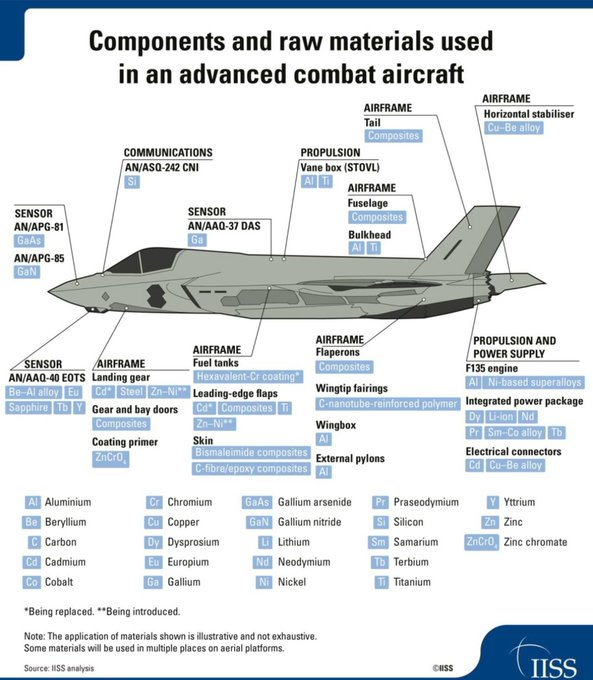
No rare earths = no fighter jets = no war - The US imports ~70–80% of its rare earths from China - China is restricting these very supplies - RE stockpiles were low before the war began It’s not just fighter jets... the whole US military is dependent on Chinese rare earths
Lukas Ekwueme tweet media
English
42
213
681
22.6K
Finster
Finster@Finsterbusch·
@sgossel @jungpionier_ @BTU_CS Aber sind Sonne und Wind grundlastfähig? Eher nicht....und das wird angesichts der Netze auf Jahre wenn nicht Jahrzehnte auch so bleiben...
Deutsch
1
0
0
14
Sven Gossel 🇪🇺
@Finsterbusch @jungpionier_ @BTU_CS Natürlich stimmt die Angabe - für sich genommen. Das ist aber für die gesicherte Leistung eines Gesamt-Netzes weitgehend nebensächlich, weil Wind immer irgendwo weht und irgendwo die Sonne scheint. Man muss natürlich dafür Leitungen bauen. Genau daran hapert es aber europaweit.
Deutsch
1
0
1
21
Finster retweetledi
Lydia DePillis
Lydia DePillis@lydiadepillis·
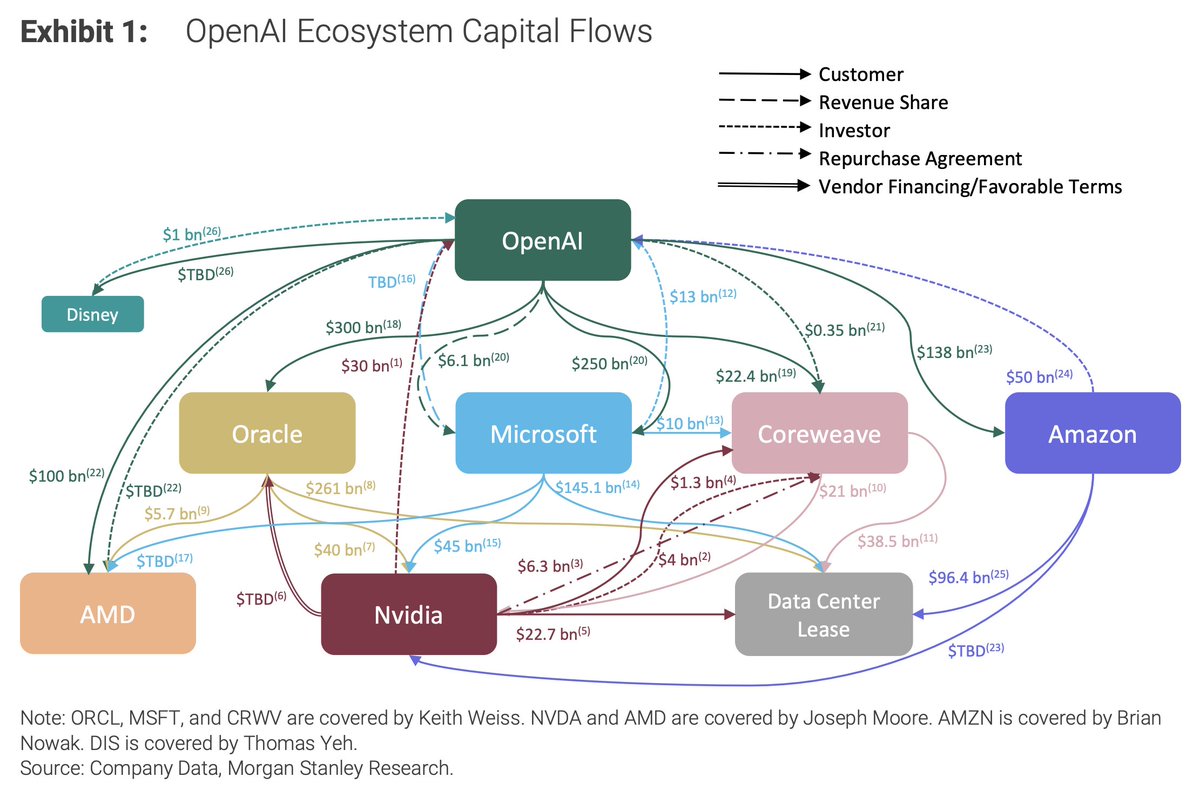
Hell of a graphic from Morgan Stanley
Lydia DePillis tweet media
English
116
1.2K
6.3K
913.5K
Stefan Krauter
Stefan Krauter@solarpapst·
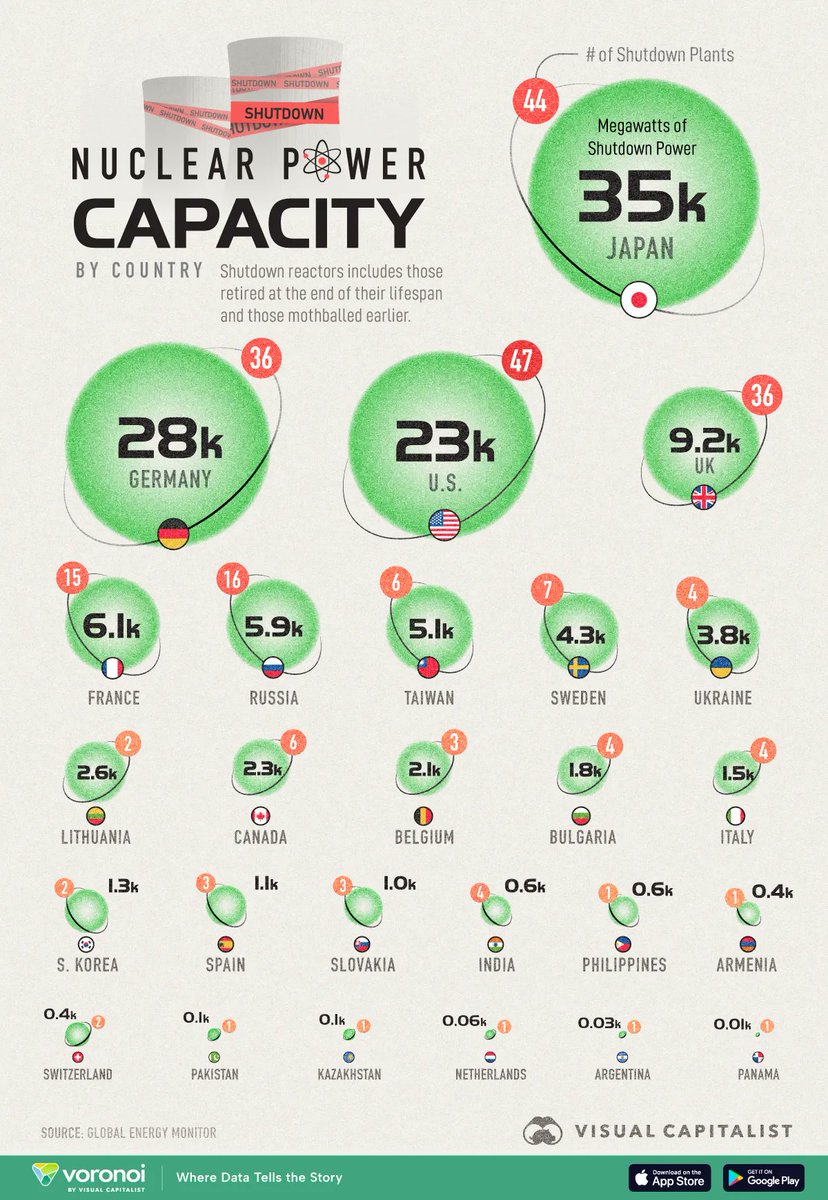
@wenig_worte @CepstrumAmei @johwinkel Nur Erneuerbare schaffen es, den Gebauch von Kohle, Öl & Gas schnell und nachhaltig zu reduzieren. Die Welt denkt nicht mehr an Atomkraft, nur Deutschland führt eine Atomdebatte.
Stefan Krauter tweet media
Deutsch
13
13
91
1.5K
wenig Worte
wenig Worte@wenig_worte·
Endlager? Pah, so JU @johwinkel: "Kann ich sehr einfach sagen, indem wir den vorhandenen Atommüll recyceln und dadurch eine ganze Menge neuer Energie gewinnen. Es gibt sehr, sehr viele Entwicklungen, die wir in Deutschland alle nicht mitbekommen" Denk mir den Scheiß nicht aus.
Deutsch
175
174
1.1K
76.6K
Finster
Finster@Finsterbusch·
@sgossel @jungpionier_ @BTU_CS 1. es geht um gesicherte Leistung ... ! 2. das sind DENA-Angaben ..:-:.. also wenn die nicht stimmen, dann stimmt nichts mehr. und er erklärt die schon sehr richtig und eigentlich auch verständlich
Deutsch
1
0
3
36
Sven Gossel 🇪🇺
@jungpionier_ @BTU_CS Glaube nur der Tabelle, die Du selbst aus dem Kontext reißt. Der Typ ist also Professor? Spoiler: die Logik zieht nur, wenn alle Wind- und Solarkraft an einem Standort vereint wäre. Ansonsten: leider BS.
Deutsch
3
0
2
278
Finster
Finster@Finsterbusch·
@GrafKorina @GoeringEckardt Und wo kommt die Windradtechnik her? China Und die Solarzellen? China Und die Wechselrichter? China Und die Speicher-Kapa? China Und die Kabel, und die Umspanntechnik …
Deutsch
0
0
0
9
Korina Graf
Korina Graf@GrafKorina·
Ich gebe Kathrin Göring-Eckardt recht: Wer an Fossilen hängt, macht sich abhängig von Autokraten. Das ist ein Risiko, das wir uns nicht mehr leisten können @GoeringEckardt
Deutsch
750
249
1.1K
35.1K
Künstliche Intelligenz
Die ehrlichste Erklärung zum Zielbild der Linken und Grünen. Wirtschaftsexpertin Ulrike Herrmann erklärt die Schöne Neue Welt. x.com/i/status/18291… Neubau verbieten, Wohnraum rationieren (50 qm pro Kopf), Fleisch rationieren, Bahnkilometer rationieren und Züge mit maximal 100 km/h fahren lassen. Wirtschaft schrumpft, Ersparnisse sind zum großen Teil weg. Banken gibt es nicht mehr, brechen zusammen. Geld braucht man nicht mehr, weil es Bezugsscheine gibt. Was nützt mir Geld, wenn ich Wasser nur über Bezugsscheine bekomme und Wohnraum ohnehin zugeteilt wird?
Deutsch
582
600
2K
91.7K
Finster
Finster@Finsterbusch·
@IamKyros69 pretty rude .... you should explain why
English
0
0
0
378
Kyros
Kyros@IamKyros69·
Never forget when the creator of Linux said this about NVIDIA.
English
28
197
1.7K
127.7K
Finster retweetledi
Cliff Pickover
Cliff Pickover@pickover·
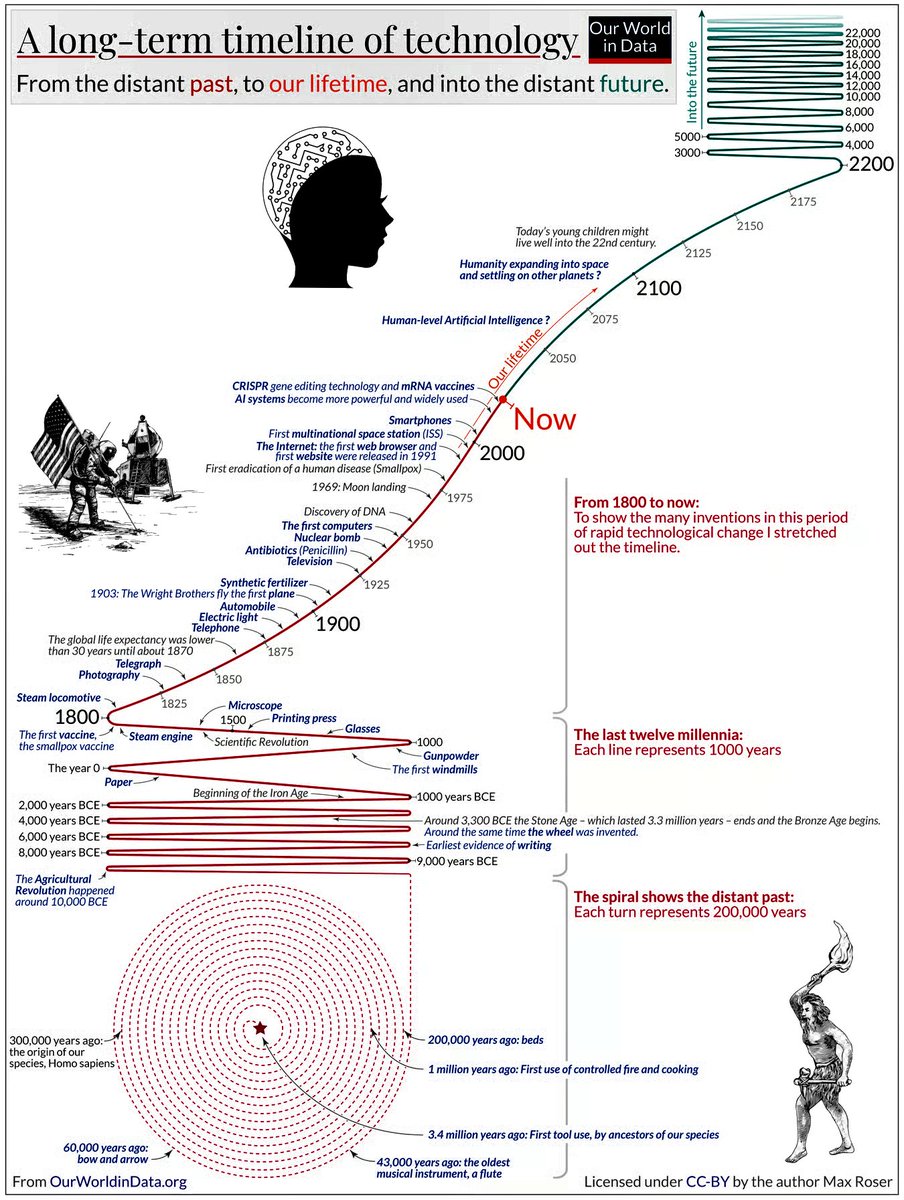
Life Explained. Timeline of Technology. I like how the chart begins with a slow spiral, when there was little change in technology compared to today. Source: #the-long-run-perspective-on-technological-change" target="_blank" rel="nofollow noopener">ourworldindata.org/technology-lon…
Cliff Pickover tweet media
English
4
128
450
14.6K
Finster retweetledi
F-35 Lightning II
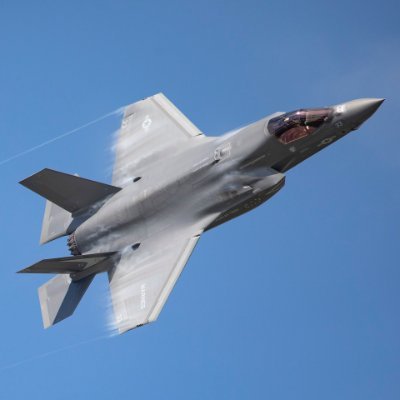
Germany’s first F-35: loading...
English
170
740
8.1K
697.2K