Francois van Wyk

32.9K posts

Francois van Wyk banner
Francois van Wyk

Francois van Wyk

@FjvWyk

Sport fanatic, wine, coffee and cat lover, not necessarily in that order. Instagram - francoisvanwyk1963

Wellington, South Africa Katılım Şubat 2013
1.4K Takip Edilen2K Takipçiler
Francois van Wyk retweetledi
Heinz
Heinz@HeinzZzA·
Pieter Groenewald for president! Retweet if you agree..
Heinz tweet media
English
90
807
1.7K
35K
Francois van Wyk retweetledi
Lorraine 🇿🇦
Lorraine 🇿🇦@CitizenScoopX·
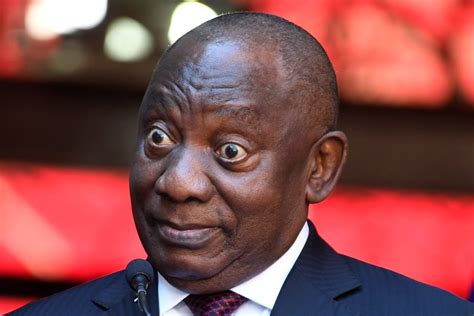
Cyril Ramaphosa must be "shocked" about the Phala Phala ruling by the Constitutional Court!! Or maybe "surprised"?? Possibly still "unaware"?! Who knows, he could even be one of the following...?! Stunned Astonished Appalled Dismayed Speechless Flabbergasted Startled Horrified Dumbfounded Taken aback Amazed Astounded Startled Oblivious Ignorant Uninformed Clueless Unconscious (my favourite) 🤣🤣🤣🤣 Unmindful Unsuspecting It's a LONG list, with him you never know...!! 🤷‍♀️
Lorraine 🇿🇦 tweet media
English
95
152
560
6.9K
Francois van Wyk retweetledi
I ❤️ Cape Town ~ I Stand with Russia🇷🇺 MAGA
🇿🇦FARMERS WARN: “WE CAN’T AFFORD TO PLANT” – SOUTH AFRICA IS SLEEPING THROUGH A FOOD CRISIS IN THE MAKING ‼️ 7 May 2026 - By Paul Hattingh South Africa is moving toward a food crisis that many people still refuse to take seriously. Not because there will suddenly be no food tomorrow morning. Not because every farm is collapsing overnight. But because the economic foundation that keeps food flowing through this country is being crushed from every direction at once. And once a planting season is lost, you do not simply “recover” it next month. You wait an entire year. The warning signs are already everywhere. 🔴THE DIESEL SHOCK IS HISTORIC, AND FARMERS KNOW IT Over the past two months, diesel prices in South Africa exploded by roughly R13.17 per litre, one of the most violent short-term fuel increases ever seen in the country. This is not a small inconvenience. Diesel is the bloodstream of commercial agriculture. Every tractor. Every planter. Every harvester. Every irrigation system. Every truck transporting food across South Africa. Grain farmers already operate on thin margins. Diesel alone can make up 10% to 18% of production costs depending on the crop and region. Now those costs are detonating in real time. And while ordinary South Africans complain at the fuel pump, farmers are calculating whether planting even makes financial sense anymore. 🔴THE MIDDLE EAST WAR IS NOW INSIDE SOUTH AFRICA’S FOOD CHAIN Most South Africans still think wars in the Middle East are “far away.” They are not. The Strait of Hormuz crisis is now directly embedded inside South Africa’s food system. South Africa imports roughly 75% to 80% of its fertiliser, especially nitrogen-based products like urea and ammonia. Much of it comes from Russia and the Middle East. Large volumes move through Hormuz. When the US-Israel-Iran conflict escalated and shipping routes became unstable, fertiliser prices surged globally. The impact on South African farming was immediate. According to Grain SA’s April 2026 monitoring data: Urea prices surged over 58% month-on-month. LAN fertiliser jumped over 52%. Global fertiliser markets entered panic territory. Diesel and fertiliser together now consume up to half of some grain farmers’ input costs. This is not theoretical economics anymore. This is what happens when geopolitics collides with agriculture. 🔴MANY FARMERS ARE NO LONGER ASKING “HOW MUCH PROFIT?” THEY ARE ASKING “WHY PLANT AT ALL?” The public still does not understand how brutal the maths has become. Landbouweekblad already warned earlier this year that wheat production costs could increase by roughly R1 800 per hectare, even before the latest diesel explosion. For dryland wheat farmers averaging 3 to 4 tons per hectare, that means yields would need to rise dramatically simply to break even. Not to prosper. Not to grow. Just to survive. And farming does not pause like a corporate office. A missed planting window is a lost season. That reality is now driving serious fear through grain-producing regions. 🔴THE OFFICIAL DATA CONFIRMS THE DECLINE This is no longer “social media panic.” The National Crop Estimates Committee confirmed that winter wheat plantings for 2026/27 are expected to fall to 486 400 hectares, down 6% year-on-year and the lowest level in roughly 11 to 12 years. That is real. That is measurable. That is official. And while some farmers are diversifying into crops like canola, barley and oats, the broader signal is unmistakable: Commercial grain farming is under severe pressure. 🔴FOOT-AND-MOUTH DISEASE HAS MADE THE ENTIRE AGRICULTURAL ENVIRONMENT EVEN MORE FRAGILE As if fuel and fertiliser were not enough, South Africa’s agricultural sector is simultaneously battling one of the worst foot-and-mouth disease outbreaks in modern history. The outbreak spread across all nine provinces and triggered a national disaster declaration earlier this year. While FMD primarily affects livestock, not grain directly, the economic impact spreads across the entire agricultural ecosystem: Higher veterinary and compliance costs Export disruptions Financial stress on mixed farming operations Reduced liquidity across rural economies South African agriculture is being squeezed from every angle at once. 🔴THE GOVERNMENT DID TRY TO SLOW THE DAMAGE, BUT IT IS NOWHERE NEAR ENOUGH To be fair, the government did introduce temporary fuel levy relief. Treasury reduced parts of the fuel levy structure in April and May 2026 to soften the diesel shock. But this was damage control, not a solution. You cannot offset a geopolitical energy shock of this magnitude with temporary tax adjustments while global shipping lanes are destabilising. And farmers know it. 🔴THE MOST DANGEROUS PART IS THAT SOUTH AFRICA ALREADY HAS A HUNGER PROBLEM This is where the conversation becomes serious. Not sensational. Not emotional. Serious. South Africa is not facing imminent nationwide famine. Anyone claiming millions will suddenly starve tomorrow is exaggerating. But South Africa already has a massive household food insecurity crisis. Millions of people already skip meals. Millions already depend on grants. Millions already live one price increase away from hunger. Now add: Higher diesel costs Higher transport costs Higher bread prices Higher meat prices Higher fertiliser costs Lower wheat plantings Global instability And suddenly the pressure on poor households becomes enormous. This is how food insecurity spreads. Not overnight collapse. Slow suffocation. 🔴SOUTH AFRICA FEEDS FAR MORE THAN ITSELF This is another reality many urban South Africans ignore completely. South Africa is not just feeding South Africa. South African maize production supplies roughly half the maize consumed across the SADC region. A serious long-term decline in South African agricultural output would ripple far beyond our borders. Mozambique. Zimbabwe. Zambia. Botswana. Namibia. Lesotho. Malawi. The region depends heavily on South African commercial agriculture remaining functional. And despite years of political attacks, regulatory hostility and endless economic pressure, it is still commercial farmers carrying much of that burden. 🔴THE REAL WARNING IS NOT “FAMINE.” IT IS SYSTEMIC EROSION. That is the part people keep missing. The danger is not one dramatic Hollywood-style collapse tomorrow morning. The danger is cumulative erosion: fewer hectares planted, fewer profitable farms, rising debt pressure, shrinking margins, declining confidence, rising food inflation, increasing dependence on imports, worsening pressure on poor households. That is how nations weaken. Slowly. Then suddenly. 🔴SOUTH AFRICA IS NOW PAYING THE PRICE FOR GLOBAL DEPENDENCY This crisis has exposed something deeper and more uncomfortable. South Africa is critically exposed to global supply chains it does not control: imported fertiliser, imported energy exposure, unstable shipping routes, weak logistics, deteriorating rail systems, vulnerable ports, fragile agricultural margins. The country has spent years pretending these vulnerabilities did not matter. Now reality has arrived. 🔴THE FARMERS ARE NOT PANICKING. THEY ARE WARNING YOU. That distinction matters. Most commercial farmers are not emotional activists. They are practical people. They understand risk. They adapt constantly. Many will survive this season through diversification, scaling adjustments, tighter management and accumulated experience. But when farmers begin publicly warning that planting itself is becoming financially irrational, the country should listen carefully. Because food systems do not collapse in a single day. They weaken season by season until the margin for error disappears. And South Africa is moving dangerously close to that line. This article is based on publicly available reporting, official agricultural data, Grain SA monitoring reports, National Crop Estimates Committee updates, Treasury fuel announcements, and publicly circulated farmer interviews and commentary as of 7 May 2026. 🔴FINAL WARNING: FOOD DOES NOT COME FROM SPEECHES South Africans must understand this now: food security is not protected by political slogans, empty promises or government press briefings. It is protected by farmers who still plant. And when those farmers begin to say the numbers no longer work, the country is already in danger. This is the warning. Ignore the farmer, and you will meet the empty shelf. Mock the producer, and you will pay at the till. Attack commercial agriculture long enough, and one day the nation will discover that bread does not come from ideology. It comes from soil, diesel, fertiliser, labour, risk and debt. South Africa is not yet starving. But South Africa is being warned. And if this government, this public and this region continue treating farmers as political enemies instead of the people standing between order and hunger, then the coming crisis will not be an accident. It will be the predictable result of a country that heard the alarm, laughed at it, and kept walking toward the edge.
I ❤️ Cape Town ~ I Stand with Russia🇷🇺 MAGA tweet media
English
77
414
708
44.1K
Francois van Wyk retweetledi
Mufasa007
Mufasa007@Mufasa0062·
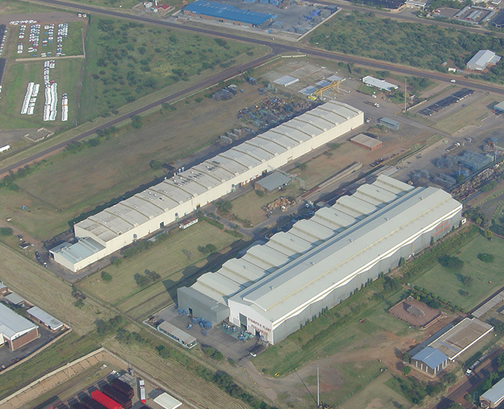
Nissan SA is shifting manufacturing to Egypt (Giza) with a $45 million investment while selling its Rosslyn plant to Chery. Egypt: ~6% unemployment South Africa: 31%+ Moving lock, stock and barrel to a more competitive country. This is a massive wake-up call for SA’s investment climate. We can’t afford to lose more jobs and factories.
Mufasa007 tweet media
English
233
478
1.1K
83.3K
Francois van Wyk retweetledi
OldMonkOfCricket
OldMonkOfCricket@OldMonkOfCric·
Year 1992, when Jonty Rhodes flew like a bird to effect a historical run out.🔥
English
28
105
2.3K
127.9K
Francois van Wyk retweetledi
Velon CC
Velon CC@VelonCC·
Milan broke the 𝟮𝟬𝟬𝟬𝘄 barrier 😲 Jonathan Milan produced an astonishing amount of power in Stage 1’s sprint finish at the Giro d’Italia. ⏱️ Time: 15“ 💨 Avg speed: 62.4km/h 🌪️ Max speed: 64.8km/h ⚡️ Avg power: 1520w 💥 Max power: 2010w 📸 Getty Images ___ 🇮🇹 #GirodItalia
Velon CC tweet media
English
28
169
1.4K
201.8K
Francois van Wyk retweetledi
Elon Musk
Elon Musk@elonmusk·
ZXX
13.5K
51.6K
368.6K
41M
Francois van Wyk retweetledi
Cycling Predictorspt
Cycling Predictorspt@Cyclingpredpt·
🇮🇹Giro d'Italia teams analysis: Team Visma | Lease a Bike 🇳🇱 🏆: Vingegaard, Piganzoli, Kuss 👊🏻💨: Kielich ⏳️: Campenaerts One overwhelmingly clear objective: win the race. Everything about this squad is built around one man Jonas Vingegaard and, on paper, they bring the strongest overall favorite to the start line. Vingegaard enters this Giro in dominant form, having consistently won or controlled races throughout the season, and this race represents a massive opportunity: his first Giro d’Italia appearance and a chance to move one step closer to completing victories in all three Grand Tours. Simply put, he is the rider to beat. General Classification – Jonas Vingegaard as the Clear Favorite Jonas Vingegaard arrives as the primary favorite for overall victory. His strengths are obvious: * Elite climbing * Exceptional pacing over long mountains * Tactical maturity * Consistency across stage races If this Giro becomes a pure test of endurance and mountain superiority, Vingegaard should be the benchmark. He has looked dominant all season, and unlike some rivals, he enters not merely hoping to compete — but expecting to win. The main question is less about whether he has the legs, and more about whether anything unusual crashes, illness, tactical chaos can disrupt what appears, on paper, to be a superior package. If all goes normally, this is his race to lose. Climbing Support – Strong, Even If Not an Absolute Super-Team Visma may not bring the single most terrifying mountain train ever assembled, but they do bring a highly credible and experienced support structure. Sepp Kuss – The Trusted Mountain Lieutenant Sepp Kuss remains Vingegaard’s most important climbing domestique. While his season has not been spectacular by his own standards, Grand Tours have repeatedly shown that Kuss often peaks when it matters most. Davide Piganzoli – Youth + Depth Davide Piganzoli adds another fascinating layer. A talented climber with two previous Giro top-15 finishes, Piganzoli may arrive primarily in service of Vingegaard, but his own upside is considerable. He is still developing, but this race could allow him to: * Support in medium/high mountains * Protect GC structure * Potentially target youth classification relevance If given occasional freedom, he could also quietly emerge as one of the team’s standout secondary performers. All-Round Support – Experience and Stability Beyond the mountains, Visma bring strong structural depth. Wilco Kelderman: * Veteran experience * Reliable mountain and transitional support * Tactical intelligence Victor Campenaerts: * Time trial strength * Flat-stage control * Engine for difficult transition days * Also good on some mountain days Tim Rex: * Flat terrain domestique * Positioning support * Peloton control This gives Visma a balanced team capable of protecting Vingegaard across multiple race scenarios. Wildcard / Stage Hunting Option – Timo Kielich Timo Kielich offers a slightly different profile. In stages where GC control is less central, Kielich could be a useful option for: * Punchy medium mountain finishes * Small-group sprints * Opportunistic breakaways He is not a headline rider here, but his versatility could make him a valuable secondary card if tactical freedom emerges. Final Verdict This Giro is fundamentally about one thing for Visma: delivering Jonas Vingegaard to Rome in pink. * Jonas Vingegaard → Clear favorite for overall victory * Sepp Kuss → Key mountain lieutenant * Davide Piganzoli → Young climbing support with upside * Kelderman / Campenaerts → Experience and structure Team Visma | Lease a Bike bring exactly what a race favorite should bring: * The strongest GC rider * Reliable climbing support * Tactical experience * Structural depth #Giro #GirodItalia
Cycling Predictorspt tweet media
English
3
9
154
18.2K