Kevin

31.9K posts

Kevin banner
Kevin

Kevin

@FlightDreamz

Watched TopGun more times than any straight man should "You're not happy unless you're going MACH 2 with your hair on fire" Plane nut, foodie,C-64 retrogamer


Lwng GUYland, NY Katılım Mart 2010
1.1K Takip Edilen526 Takipçiler
Kevin retweetledi
CBS News
CBS News@CBSNews·
Pilots have complained for years about controller miscommunication and close calls with ground vehicles at New York's LaGuardia Airport, incident reports show. cbsn.ws/4rYz8k7
English
23
115
419
72.9K
Kevin retweetledi
Tyler Rogoway
Tyler Rogoway@Aviation_Intel·
Navy F/A-18’s Close Call With An Iranian SAM Highlights Remaining Risks To Epic Fury Aviators Even in lower-threat coastal areas, MANPADS are a real risk to lower-flying aircraft, and true air supremacy across Iran still isn't a reality. Updating Live: twz.com/news-features/…
English
12
14
75
20.8K
Todd Spence
Todd Spence@Todd_Spence·
Someone created a fully operational JOHNNY 5 from scratch and omg how cool 🙌 (instagram Saundersmachineworks)
English
485
2K
12K
448.6K
Kevin retweetledi
Toby Li
Toby Li@tobyliiiiiiiiii·
Humans are returning to the Moon for the first time in 54 years exactly one week from today. This is not being talked about enough.
Toby Li tweet media
English
1.1K
1K
8.2K
290.5K
Kevin retweetledi
Fahad Naim
Fahad Naim@Fahadnaimb·
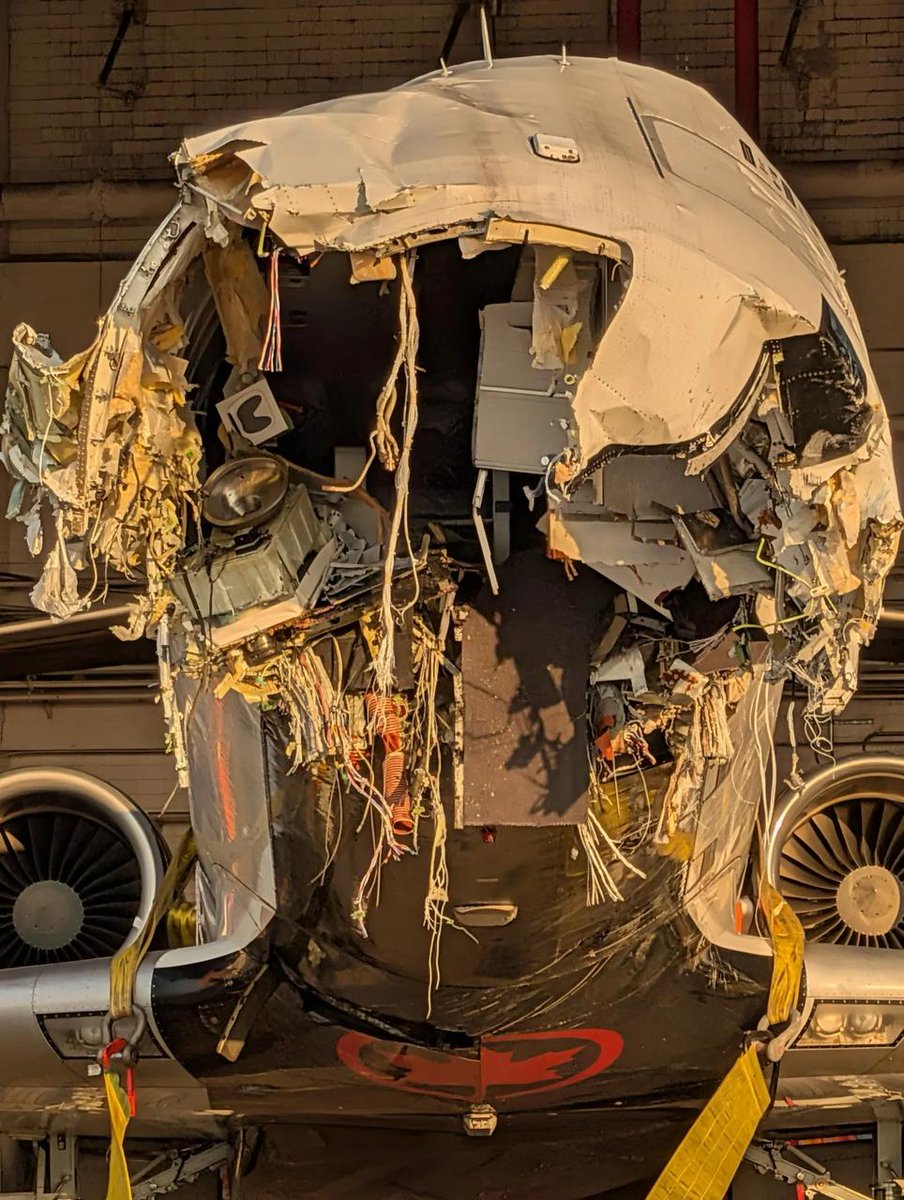
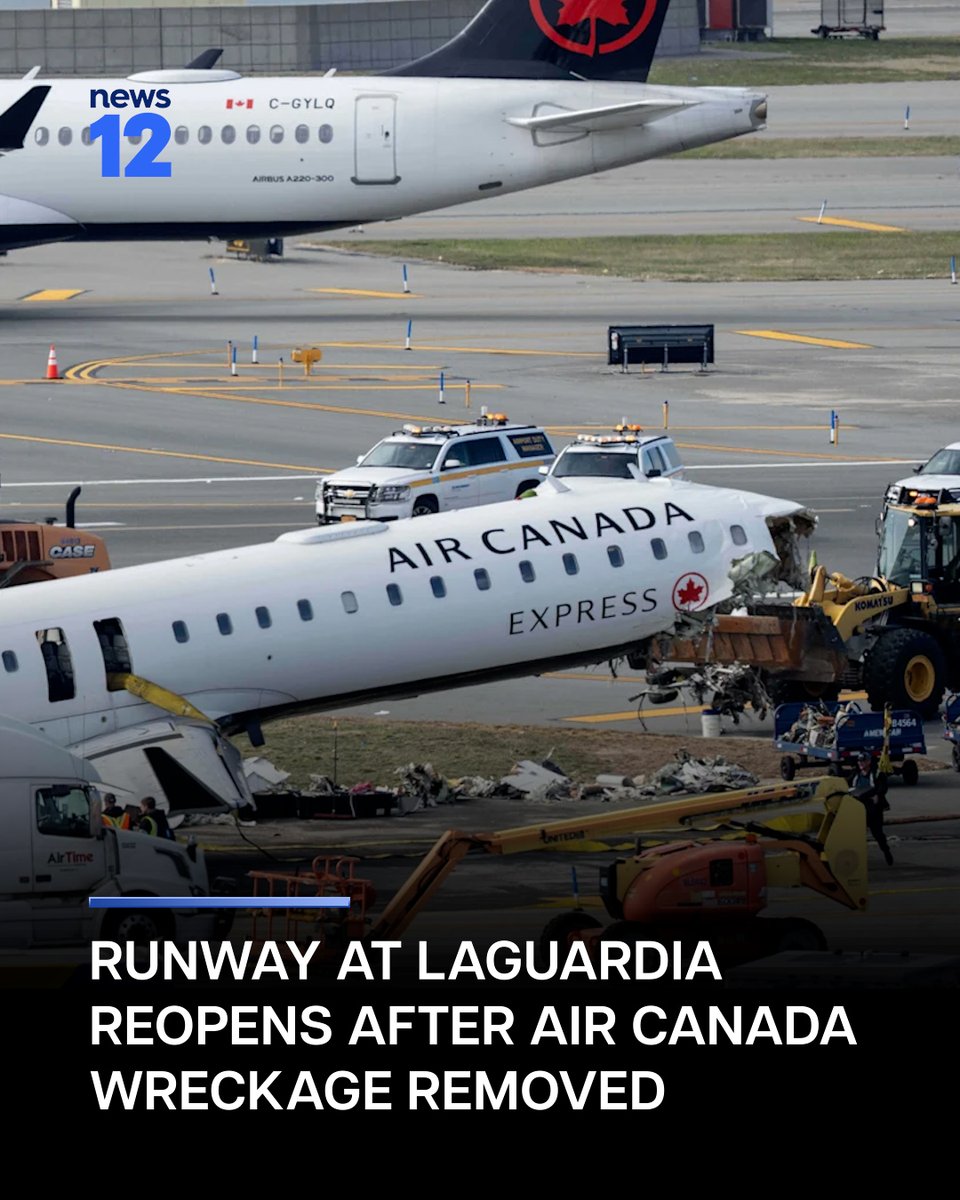
Shocking new photos from LaGuardia show the Air Canada Express CRJ-900 (Jazz flight AC8646 from Montreal) with its entire nose and cockpit basically gone after it hit a fire truck right on the runway during landing on March 22. 72 passengers and 4 crew were on board. The two pilots, Antoine Forest and Mackenzie Hunter, sadly didn’t make it, but the good news is most of the ~40 injured folks (including two firefighters) are out of the hospital now, with only two still there. NTSB says the fire truck had no transponder and the surface warning system never alerted. Homendy mentioned the night shift controllers were juggling multiple duties when they cleared the plane to land on runway 4, then let the truck cross for another emergency. It’s the first fatal crash at LGA in decades. Heartbreaking stuff. In my opinion, these incidents remind us how thin the margins are in aviation
Fahad Naim tweet media
English
7
7
43
6.9K
Kevin retweetledi
Mike Levin
Mike Levin@MikeLevin·
This is truly insane, and it should be front page news across America.  Denmark secretly deployed soldiers to Greenland prepared to blow up airport runways to stop a U.S. invasion. They brought blood supplies to treat the wounded. France, Germany, Norway, and Sweden quietly coordinated against us. This was not a drill. This was our closest allies preparing to fight Americans. Let that sink in. NATO allies. Countries whose soldiers have fought and died alongside ours for decades. They looked at this president and decided they had to prepare for the worst. Fewer allies does not make America great. It makes us more isolated, more vulnerable, and it hands Russia and China exactly what they have always wanted: an America abandoned by its friends. The American people deserve to know how badly this president has damaged our standing in the world.  bbc.com/news/articles/…
English
5.8K
18.2K
61.7K
2.8M
Kevin retweetledi
Kevin retweetledi
The Aviationist
The Aviationist@TheAviationist·
Video Shows Super Hornet’s Near Miss After Apparent Iranian MANPADS Launch A U.S. F/A-18 Super Hornet was involved in a near miss after being targeted by an apparent Iranian MANPADS system during a low altitude strafing run. Story: theaviationist.com/2026/03/26/sup…
English
3
42
144
29.6K
Kevin
Kevin@FlightDreamz·
@GinieSigonney McDonnell Douglas F-4 Phantom (never seen that ghost/Scream paintjob before though)
English
0
0
1
21
mike bski
mike bski@BskiMike22802·
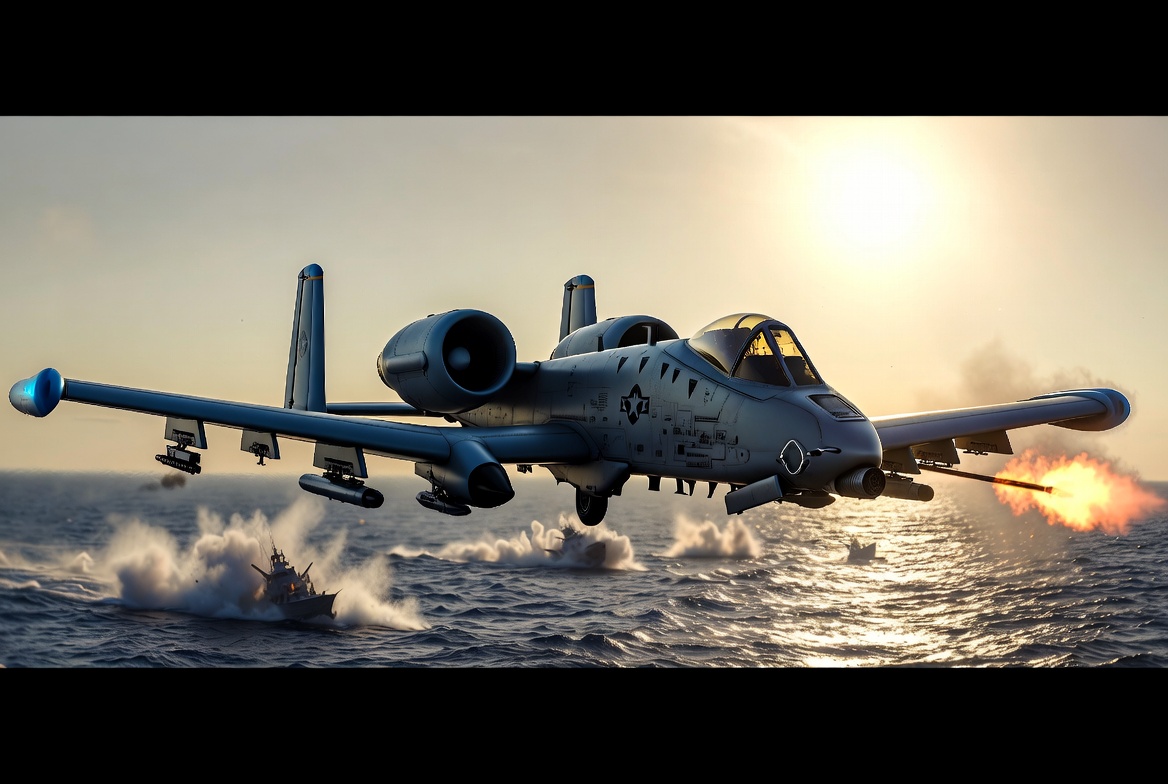
A LOVE LETTER TO THE UGLIEST, MOST IMPORTANT AIRPLANE AMERICA EVER BUILT I am a physics teacher. I teach my students that when a pattern repeats itself enough times, it stops being a coincidence and starts being data. And when the data contradicts the conclusion, you do not defend the conclusion. You throw the conclusion out and follow the data. The Air Force has tried to retire the A-10 Warthog something like seven times. Seven times. Every single time — EVERY single time — a real shooting war starts, the retirement plan quietly disappears and the Warthog shows back up doing the job no other aircraft on Earth does as well. You would think that pattern would eventually produce a different conclusion in the procurement meetings. You would be wrong. But the data does not lie, even when the procurement meetings do. And right now, on Day 26 of Operation Epic Fury — right now, TODAY — A-10 Warthogs are over the Straits of Hormuz turning Iranian fast-attack boats into what I am going to generously describe as floating debris. So I wrote it a love letter. Because somebody should. --- FIRST, LET ME EXPLAIN WHAT I MEAN BY 'UGLY' --- The A-10 does not look like a fighter jet. It looks like an engineer was given a GAU-8 Avenger cannon — which is, to be clear, a seven-barreled Gatling gun the SIZE of a Volkswagen Beetle that fires 30mm depleted uranium rounds at 3,900 rounds per minute — and then told to build an airplane around it. Because that is almost exactly what happened. The engine pods stick out from the tail section like afterthoughts. The landing gear, instead of retracting cleanly into the fuselage, leaves a little bulge hanging out. The nose is blunt. The whole aircraft has the aesthetic of something designed by someone who was told the specifications and then ran out of time to make it pretty. Beautiful aircraft are designed around aerodynamics. Around low radar cross-section. Around marketability to congressional appropriators who have never heard a radio call with their own name on it. The A-10 was designed around one question: how do we keep the pilot alive while he puts steel exactly where the guys on the ground need it to be in the next thirty seconds? Everything else was secondary. EVERYTHING. The titanium bathtub cockpit that can stop 23mm rounds. The redundant hydraulic systems so that if one gets shot out, the other keeps flying. The widely-separated engine pods so that one hit does not take out both engines. The foam-filled self-sealing fuel tanks. The manual reversion backup system — cables, physical mechanical linkages — so that if ALL the hydraulics fail, the pilot can still fly the aircraft home using nothing but the original mechanical connection between the stick and the control surfaces and the strength in his or her own arms. This is not 1970s technology that has not been updated. This is 1970s design philosophy that has never been wrong. There is a difference. Pay attention to it. --- APRIL 7, 2003. AND I NEED YOU TO STAY WITH ME ON THIS ONE --- Her name is Kim Campbell. Her callsign is Killer Chick. At the time of this story she was a lieutenant colonel, and I want to tell you what happened over Baghdad on April 7th, 2003, because I do not think enough people know it and because every time I think about it I feel something I can only describe as the particular combination of admiration and rage that comes from watching bureaucracies try to throw away things that matter. She was flying her A-10A on a close air support mission. Baghdad. April 2003. The city was not, shall we say, a low-threat environment. Her aircraft took a direct hit from enemy ground fire. Not a graze. A DIRECT HIT. The hit destroyed both hydraulic systems — both of them, completely — and caused significant structural damage to the aircraft. Everything that makes a modern aircraft flyable is, under normal circumstances, hydraulically assisted. You lose hydraulics, you lose the ability to move the control surfaces that make the aircraft go where you point it. She switched to manual reversion. This is the part I want you to understand. Manual reversion is not a computer backup. It is not a digital system that kicks in. It is a set of mechanical cables — physical, metal cables connected through pulleys — that create a direct link between the pilot's control stick and the aircraft's control surfaces. No assistance. No amplification. Just the pilot's actual physical strength and the mechanical connection that the A-10's designers put there in the 1970s because they assumed — correctly — that real combat means real damage and they were not going to let a hydraulic failure kill the pilot if they could help it. She flew that aircraft for over an hour. In manual reversion. Over hostile territory. Not knowing what else might be structurally compromised. Not knowing if the next thing that happened would be the thing that ended it. She landed it safely. She was awarded the Distinguished Flying Cross. Now. I want you to answer this question for me. What is the manual reversion backup system on the F-35? There is not one. The F-35 is fly-by-wire. The pilot inputs go through computers. If the electronics are compromised beyond a certain threshold, you are not flying home on cables. I am not saying the F-35 is a bad aircraft. It is an extraordinary aircraft. I am saying that the people who designed the A-10 understood something that modern procurement culture has largely forgotten: the enemy gets a vote. The aircraft is going to get hit sometimes. The question is not "will it survive a hit?" — the question is "when it gets hit, does the pilot come home?" Killer Chick came home. Because the designers of her airplane thought about the moment she was in and built the answer into the airframe before she was born. I find that extraordinarily moving. I make no apologies for that. --- THE PEOPLE WHO KEEP SHOWING UP TO CONGRESS --- Every time there is a retirement hearing, something interesting happens. The Air Force shows up and argues to retire the A-10. They bring slides. They have acquisition cost comparisons and sortie generation models and capability matrices and everything else that looks rigorous and data-driven from 30,000 feet. And then the Army shows up. The Marine Corps shows up. The Special Operations Forces community shows up. The Joint Terminal Attack Controllers — the JTACs, the men and women whose job it is to call in airstrikes from the ground while people are actively shooting at them — they show up. And they use words the Air Force slides do not have a column for. Words like "guardian angel." That is a direct quote from official congressional testimony. Not my word. Not my framing. An actual operator, in front of an actual congressional committee, describing the A-10 as a guardian angel. You know what that word means when it comes from someone who has been in the situation where they needed it? It does not mean "highly capable air asset." It means: I was in a bad place, the radio call went through, and that aircraft showed up and the calculus changed. The Air Force does not have a metric for that. Because the Air Force was not in the bad place. The JTAC was. There is also the sound. I know that sounds strange in an official procurement argument, so let me explain it, because it matters more than the Air Force acknowledges. The A-10's engines have a distinctive low grinding sound that travels. The GAU-8 firing — that BRRRT — is one of the most instantly recognizable sounds in modern warfare. And the documented, verified, prisoner-interview-supported effect of that sound on enemy combatants is real and significant. It disrupts coordinated attacks. It changes behavior. Enemy forces who know the A-10 is overhead make different decisions than enemy forces who do not. A fast mover at 20,000 feet that drops a bomb and is gone in four seconds does not produce that effect. The aircraft that LOITERS — that circles, that is visible, that can stay for hours — that produces that effect. The A-10 loiters. It loiters at $6,000 an hour. The F-35 loiters — when it loiters — at $30,000 to $35,000 an hour. I have a student who can tell you exactly how much that ratio matters in a sustained campaign. She is sixteen years old. She figured it out in about forty-five seconds. --- THE FLY-OFF THEY DID NOT WANT YOU TO SEE --- The 2017 National Defense Authorization Act mandated a formal comparison test. A-10C versus F-35A. Close air support, airborne forward air control, combat search and rescue. The Air Force hated this idea. The Chief of Staff at the time, General Mark Welsh, called it publicly — on the record — a "silly exercise." A silly exercise. They ran the tests anyway. April 2018 through March 2019. The final report was completed in February 2022. And then — and this is the part that made my jaw drop when I found out — the Air Force buried it for over a year. Would not release it. Fought FOIA requests. The Project On Government Oversight had to sue them in federal court to get it. And when it came out, it was so heavily redacted that key findings are still hidden. That is not the behavior of an organization confident in its conclusions. Here is what the report actually found — even through the redactions. The A-10's typical loadout enabled MORE attacks per sortie than the F-35. Not equal. More. To hit the same number of targets, you need more F-35 sorties. That might be acceptable if the F-35 had a great readiness rate. It does not. As of a 2023 Government Accountability Office report, the entire F-35 fleet has a full mission capable rate of BELOW 50%. Below fifty percent. Half the jets do not work on any given day. So you need MORE sorties from an aircraft that is available LESS often. That is not a capability gap. That is a capability crater. The F-35's gun — the GAU-22 — has documented accuracy problems. The report actually recommended the Air Force "fix the F-35A gun." It carries 181 rounds of 25mm. The A-10's GAU-8 carries 1,350 rounds of 30mm. The A-10 pilots reported SIGNIFICANTLY LOWER workload than F-35 pilots on the most complex missions. Oh — and as of the testing period, F-35 pilots had ZERO dedicated training requirements for close air support missions. Zero. So what did the testers do? They loaded the F-35 side of the comparison with former A-10 pilots who already knew how to do the job, specifically to "minimize the impact" of that training gap. The former A-10 pilots, flying the F-35, still did not outperform the A-10. Let that land. The Air Force fought the test, lost the test, buried the results, and then continued retiring the aircraft anyway. At some point, as I tell my students, "I ignored the data" stops being an oversight and starts being a choice. --- WHAT I KNOW ABOUT WAITING --- I was a line medic in Iraq. Combat medic. Actual forward operating base, actual radio, actual contact. I want to explain something to you about what it feels like to be on the ground in a firefight waiting for air support, because I do not think the people making these procurement decisions have ever had to think about it from that angle, and I think they should. In a near-peer conflict without air superiority, we were told to plan for 48-hour medical response windows. Forty-eight hours. I am a former paramedic. I know what the golden hour means. The window — roughly one hour — inside which surgical intervention makes the difference between a soldier walking home and a soldier coming home in a flag-draped box. Tension pneumothorax. Hemorrhagic shock. Traumatic brain injury. All survivable. All survivable if you reach a surgeon inside an hour. Not survivable after forty-eight hours of waiting for a medevac that cannot fly because there is no air cover to protect the helicopter on final approach. When the A-10 is overhead, the medevac can fly. The A-10 suppresses the ground fire that would shoot that helicopter down. It is not just killing things. It is keeping the route clear. It is the reason the helicopter makes it to the landing zone and the reason the landing zone is still there when it arrives. The people arguing about sortie generation rates and procurement costs have not done that math. I have. I do not apologize for caring about it. --- THE PART NOBODY WANTS TO SAY OUT LOUD --- The A-10 community is the only community in the United States Air Force that still produces fully qualified Forward Air Controllers Airborne. FAC(A). This is the skill set that makes combined arms operations work — multiple aircraft, ground coordination, danger-close fires in complex environments, all managed simultaneously by a single aircrew who have spent their careers learning how to do exactly this and nothing else. That knowledge lives in people. Specifically in A-10 pilots. And when those pilots retire, it does not transfer to a shared drive. It goes with them. The Air Force's current plan — and I want to be precise here, because this is not editorializing, this is documented fact — the current plan involves zero dedicated CAS training requirements for F-35 pilots. Zero. They are retiring the one community specifically trained for this mission and replacing it with a community that does not train for the mission at all. I ask my students a version of this question sometimes. If you fire your only chemistry teacher and replace them with a math teacher who has never taken chemistry and has no plans to learn it, what happens to your chemistry program? They always get the answer right. They are sixteen. --- SO WHAT DO WE ACTUALLY BUILD --- Not a refurbished 1970s airframe with duct tape and digital displays. I want to be clear about that. Metal fatigue is real. The youngest A-10 in the fleet is older than the parents of my students. That is not a forever solution and nobody who has looked at the maintenance reality is pretending otherwise. I want a new one. An A-10X. Clean-sheet design, same mission philosophy, fifty years of technology applied to it. Modern high-bypass turbofan engines — more thrust, 25-30% better fuel efficiency, lower infrared signature, and specifically designed from the start to work WITH the GAU-8 instead of tolerating it. Gun-gas ingestion is a known issue on the TF34s; it can be engineered away with current combustion technology and active flow control. You want the plane built around the gun. Build the engines around the gun too. Selective radar-absorbent materials on leading edges and key surfaces. Not stealth. Low-observable. The goal is not invisibility — it is cutting detection range in half. If a SAM that sees the current A-10 at 40 kilometers only sees the A-10X at 15, the pilot has time to react. That is survivability engineering. It is not complicated and it is not expensive. A compact AESA radar — pylon-mounted or conformal, leveraging existing F-16 and F/A-18 arrays, under $10 million per aircraft for integration. Ground moving target indication. Synthetic aperture mapping. Self-defense tracking. The same array in electronic attack mode to jam enemy search radars. Software-defined. Redundant. Armored. Updated armor suite — hybrid titanium-ceramic composite with aerogel thermal insulation, better protection at 20 to 30 percent less weight. That freed-up weight goes to payload. The aerogel is not just for armor — it reduces the aircraft's infrared signature, which matters enormously at low altitude where IR-guided threats are the primary danger. Loyal wingman integration. Control stations for four to six semi-autonomous drones operating under pilot supervision. Scout ahead. Carry additional munitions. Draw fire. Act as decoys against radar-guided threats. The pilot issues high-level commands; the AI handles tactical execution. One aircraft becomes a multi-platform strike package. The GAU-8 stays. Upgraded ammunition options — programmable airburst for troops in the open, improved armor-piercing for vehicles, smarter ballistic computer integrated with AESA ranging. You do not redesign the part that works. You make it smarter. Cost per airframe in a production run of 200-plus: roughly $80 to $120 million. That is half the cost of an F-35. Operating costs: approximately $22,000 per flight hour on the upgraded platform versus $42,000 for the F-35. In a 100-sortie operational day that is $2 million in daily savings. Per day. In a sustained campaign. I am a physics teacher and I like a clean ratio. The math is not difficult. The will to acknowledge what the math says apparently is. --- DAY 26. OPERATION EPIC FURY. --- Let me bring this back to right now. March 2026. The F-35s went in first. When Iran's integrated air defense network was intact, the fifth-generation platforms did what fifth-generation platforms do — they penetrated contested airspace, suppressed and destroyed the air defenses, and dismantled the threat environment. That is the exact right use of those aircraft and they did it effectively. Not arguing otherwise. Then the A-10 showed up. 120-plus Iranian naval vessels sunk or damaged. Mine-layers: gone. PMF command infrastructure in Anbar Province: struck with precision, seven killed, thirteen wounded in a single pass. IRGC fast-attack boat fleet in the Straits: being reduced to floating scrap at $6,000 an hour. Chairman of the Joint Chiefs confirmed it. The A-10 is, in his exact words, "hunting and killing fast-attack watercraft in the Strait of Hormuz." One F-35A took a hit during a deep strike mission. Suspected passive IR sensors bypassing radar stealth. Emergency landing. Pilot with shrapnel wounds. Aircraft returned safely — and that is genuinely good news. But the aircraft that no one can seem to stop trying to retire has taken zero losses. Zero. Because the people who designed it assumed it was going to get hit and built the answer into the airframe before the pilots who fly it were born. Killer Chick flew home on cables. That is not mythology. That is engineering. And it is the engineering philosophy we need to preserve, update, and build again. --- THE CLOSING ARGUMENT --- The people who keep showing up to testify — year after year, hearing after hearing, retirement announcement after retirement announcement — are not defense contractors protecting a revenue stream. They are Army officers and Marine officers and SOF operators and JTACs who have been in the bad place, made the radio call, and watched what happened next. They call it a guardian angel. They use that word in official testimony. In front of Congress. On the record. And every year, the Air Force brings out another retirement package. I want us to stop having this conversation on a two-year loop. I want someone in the Pentagon to look at the fly-off results they tried to suppress, the testimony they keep ignoring, the current operational results over the Straits of Hormuz, and say the thing out loud: NOT EVERY MISSION REQUIRES A $200 MILLION STEALTH PLATFORM. Some missions require something that flies low and slow and stays for hours and absorbs a hit and brings the pilot home on cables if everything else fails. Build the A-10X. Keep the community. Preserve the institutional knowledge. Let Killer Chick's generation train the next one. The Warthog does not need your respect. It just needs your enemy to look up. What do you think — should we build an A-10X or retire the mission entirely? Reply below. I will be here But what do I know — I am only a physics teacher and former Army combat medic who stood on the ground in a combat zone and learned firsthand what close air support means when YOU are the one waiting for it, who wrote the physics textbook being used to teach the next generation of soldiers how the world actually works, and who apparently has run out of patience for procurement decisions made by people who have never had to make that radio call. #MAGA #Veterans #Trump
mike bski tweet mediamike bski tweet mediamike bski tweet media
English
101
167
628
25.3K
Kevin retweetledi
Rich "Corky" Erie
Appreciate that! Once you understand the geometry (in motion) it makes a lot of sense. Lag - you'll never catch the target Pure - you'll eventually fall in trail (behind) Lead - you'll hit the target You can replace the jets below with a Cornerback pursuing a Wide Receiver, or even a Running back pursuing a moving hole in the defensive line. And most important, the thing you're pursuing (a bogey, a wide receiver) gets a vote. THEY can maneuver to defend, instantaneously changing your angular and velocity calculation so you have to adjust quickly. We used to call ACM (Air Combat Maneuvers) an "uncooperative rendezvous." You're trying to get to a position behind the bogey to shoot him (essentially aligning fuselages and flight paths like a rendezvous). And he's trying to keep you from doing it. Much like the angles and speeds on the ground in football. A Corner is trying to rendezvous (be in the same place as) the receiver. And the receiver's trying to keep you from doing it (speed, stops, cuts, jukes, etc.). For the Fletch reference, it's all angles and speed, not ball bearings!
Rich "Corky" Erie tweet media
John “Draft” Vogel@DraftVogel

@RSE_VB I’m taking that coaching point with me, was not anything I had ever considered before. Thanks!


English
6
14
116
5.9K
Kevin
Kevin@FlightDreamz·
@dwculp G.E.O.S. was pretty clunky it pretty much demanded a RAM expansion or a SuperCPU (if you had 'em). Some useful software if you could get it to run smoothly #8bit #C64 #RetroComputing #the80s
English
0
0
1
25
Coding with Culp
Coding with Culp@dwculp·
Commodore GEOS turns 40 this month! GEOS was released in March of 1986. It was a graphical user interface for the #Commodore64 . I never really used it much, I thought it was clunky, but it was pretty amazing that they fit an entire GUI into the C64. Although I did not use it much, in 1988 I had a pretty souped up C64 with RAM expansion unit and 2 dual 1 megabyte double sided floppy drives for a total of 4MB of floppy space and 256K of REU RAM. GEOS ran pretty smoothly on it and my girlfriend at the time used my C64 and GEOWRITE and GEOPUBLISH in her college journalism classes. It turns out that GEOS was a lot more popular than I remember.
Coding with Culp tweet mediaCoding with Culp tweet mediaCoding with Culp tweet mediaCoding with Culp tweet media
English
9
18
140
3.6K
Kevin
Kevin@FlightDreamz·
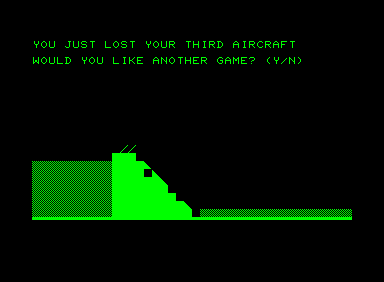
@gregnacu There were a couple of interesting games for the Pet (which I tried to emulate on the C-64 with mixed results). A text adventure called Wizards Castle(used to have the BASIC printout of that) and Dam Buster #RetroComputing
Kevin tweet media
English
0
0
0
7
Gregorio Naçu
Gregorio Naçu@gregnacu·
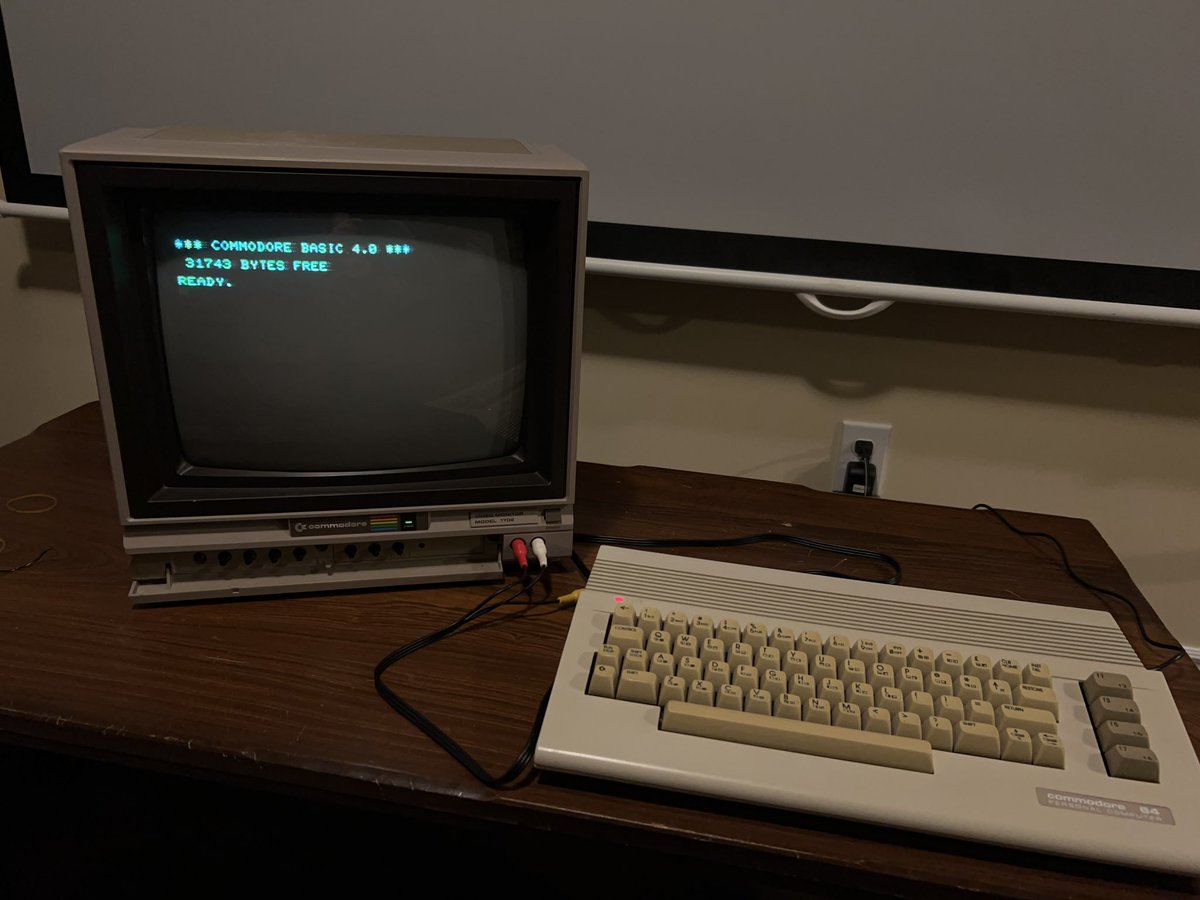
Well this is new to me!! I’ve never owned a PET before. And haven’t had much interest in emulating one. But output to a CRT with a C64’s real keyboard for input, this is actually pretty cool. #BMC64
Gregorio Naçu tweet media
English
7
2
70
1.1K
Kevin retweetledi
Chris Hadfield
Chris Hadfield@Cmdr_Hadfield·
How do you go to the bathroom without gravity? My first viral video - I didn't even know @OntScienceCtr was filming it. Wait for the punchline :)
English
22
102
532
31K
Kevin retweetledi
Furkan Gözükara
Furkan Gözükara@FurkanGozukara·
Terrifying revelation. An aviation expert reveals the real reason behind the LaGuardia plane crash. Air Traffic Control and pilots were under massive pressure to beat a strict midnight curfew. They rushed to land 8 planes in 8 minutes leading to absolute chaos.
English
17
165
781
141.8K
Kevin retweetledi
Dr. Lemma
Dr. Lemma@DoctorLemma·
In 1989, a highly classified underwater sound system designed by the United States Navy to track submarines picked up something unexpected. It was the song of a whale. But the frequency was wrong. Every known whale species communicates at a frequency between 10 and 39 hertz. This one was singing at 52. Researchers have tracked the same solitary animal migrating across the Pacific Ocean for decades. It follows no known whale migration route and travels alone. Because no other whale on earth communicates at that frequency, marine biologists believe it has spent its entire life calling out into the dark without ever being heard or answered. It has been named the 52 Hertz Whale. Some call it the loneliest animal on earth. Nobody has ever seen it.
English
102
278
3.3K
385K
Kevin retweetledi
Stephen King
Stephen King@StephenKing·
Stephen King tweet media
ZXX
684
5.1K
33.5K
354.5K