Rich "Corky" Erie

15.9K posts

Rich "Corky" Erie banner
Rich "Corky" Erie

Rich "Corky" Erie

@RSE_VB

Constitutionalist, conservationist, eternal skeptic & turning into my Dad (and proud of it). Former Tomcat driver, current curmudgeon.

Katılım Nisan 2013
1.3K Takip Edilen7.2K Takipçiler
Sabitlenmiş Tweet
Rich "Corky" Erie
Rich "Corky" Erie@RSE_VB·
I can remember like it was yesterday the first time I climbed on top of a Tomcat to preflight my first flight in the jet (VF-124, Miramar, 1990). I had just passed my final FAM (familiarization) simulator where the instructor is another pilot who signs off on me being able to fly the jet and THEN has to put his money where his mouth is and ride in the back seat. Bear in mind there was never a "T" (trainer) model of the Tomcat. Two seats, one stick, so the GIB (Guy in Back) has no way to control the airplane. Some instructors were VERY reluctant to do these "trunk rides", one guy to the point that during your final check simulator he'd give you an unrecoverable emergency on takeoff (split flap one way, stuck spoilers on the other side) and you'd simulated "augur in " just past the runway, he'd give you a "pink sheet" (a downing flight/bad grades). Naturally, I got that guy. So "Jethro" did the above to me and I was pretty upset since my performance had been really good up until that point. And this was a big deal; two "pinks" and you were gone. So I go back to the squadron to tell the Ops O ("Flex") to give him my pink sheet, ready to get savaged. I walk into Ops and get his attention, handing him the pink sheet (it was the pink page of a carbon copy stack, so actually pink). He looks at it, sees it's signed by "Jethro", crumples it up and throws it in the shit can saying ("Ffffff.........Jethro."). I was rescheduled for the next day with "Stainless", passed the check simulator and was on the schedule the next day for my first flight. Nervous as hell but ready, the big idea for this flight is to man the jet up, get it started, get through all the post start checks (a legendarily daunting task....takes an hour your first time), get the beast airborne, do some maneuvers, come back for some touch and goes, and in general just don't fuck it up. Good plan. So Stainless and I climb on top of the jet (for my first time) and says "This is why it's called the flying tennis court." The view was spectacular! This thing was HUGE compared to my last jet (T-A4J Skyhawk; length 40 feet, wingspan 27 feet and a wing area of 260 square feet). The Tomcat is 62 feet long, a max spread wingspan of 64 feet, and a wing area of 565 feet (in addition to the massive fuselage). A veritable MONSTER in comparison. We'd learn a little later in the RAG how formidable that little A-4 could be in the hands of those (f**king) bogey drivers! And little did I know at the time, but I'd eventually be a RAG instructor myself, doing the very same "trunk rides". They were actually kind of fun, really. You got a chance to play with all that RIO shit, and the young pilots generally knew what they were doing by that point. And anyway, if it all went to shit I could always pull the "give-it-back-to-the-taxpayer handle". I really valued my opportunity to show a young pilot his or her first view of "the flying tennis court." #TomcatTuesday
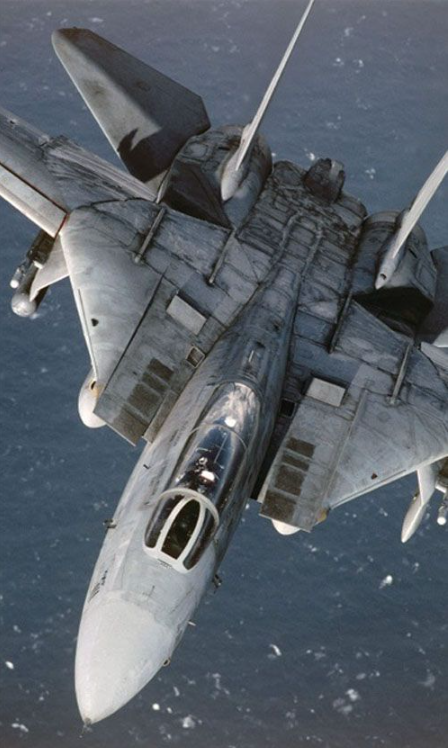
Rich "Corky" Erie tweet media
English
153
297
3.2K
150K
Rich "Corky" Erie
There was NOTHING like being on the Carrier when a Tomcat did a super sonic pass. With 60,000 pounds of American titanium, steel, and aluminum moving that fast, the BOOM was enormous. It literally shook the whole carrier. If you were on the flight deck, you’d cover your ears and open your mouth to keep from over pressurizing your ears. Below decks, there was this noticeable THUNNNNGGG as the shockwave passed through the whole ship. Even the Snipes (the Sailors way down in the lower engine room decks, God Bless ‘em!) could feel it. Nothing like that experience in the world.
Air Safety #OTD by Francisco Cunha@OnDisasters

I´d pay big money to see this live

English
20
18
246
9.9K
Tim Herbert
Tim Herbert@LocalPeddler·
I would love to see a flyby like that close up - especially on a carrier. The closest I came to it was while living in Tokyo. I would go early to the bullet train station hoping that an express train would come by while I was waiting. Amazingly, they have about a four foot railing, which is only about ten feet from the tracks. You can lean up on that railing and hear the singing of the tracks as the bullet train approaches. Then you can see the two headlights in the distance. Then, almost immediately, it is upon you and passing you at very high speed. I have never been so close to something so big moving so fast. I did it as often as I could over those two years I lived there.
English
1
0
2
241
Dr. Eli David
Dr. Eli David@DrEliDavid·
🚨 Breaking: The new head of Basij who replaced the previous head of Basij who was eliminated yesterday, was eliminated today
English
757
3.8K
23.7K
539K
Tex Sandlin
Tex Sandlin@TexSandlin·
@RSE_VB Amen, Indeed and Absofuckinlutly!!! 🇺🇲🇺🇲🇺🇲🇺🇲
GIF
English
1
0
2
45
Rich "Corky" Erie
Rich "Corky" Erie@RSE_VB·
Good Lord what a story well told! I was looking for a “pull quote”, but the whole thing is a pull quote! MUST READ!! MUST FOLLOW!!
Manny Salazar@SetantaADV

@Supersonic_Red Some light reading for you to consider. @RSE_VB Another story from that other branch for you. @TheBuddyCSM Time has changed. The people haven't. Tell your boys thanks for what they keep doing. A Hard Knock Life Some young Paratroopers learn quickly. Others suffer a bit more. One lesson provided free of charge, is that life is not guaranteed. Not at all. It can never be taken for granted, especially when you take up a life of danger. Sometimes, that danger finds you and takes its toll. This is a primary reason why Soldiers of the sky have such faith in serving with each other. “Would you risk your life with me?” That is not a question that needs asking in an Airborne unit. The evidence of daring do is made clear at least once, every three months. All paratroopers know, whether it is a Soldier’s first jump, or his last, low rank, or high, we are all taking the same risks. This is a recounting of my second jump in the mighty 82nd Airborne Division, the “All Americans”. It was the seventh jump of my career, and the second jump after graduating Basic Airborne School. This was to be a Brigade level “Mass Tactical” jump, which was launched into the category of “dog and pony show” by the virtue of the visiting Congressional Delegation which was there to witness our prowess. The idea was, the gentle men and women of Congressional districts from across our great nation would witness around 1,500 paratroopers launch into the night sky, all in one aircraft pass, and simply disappear. We were to stay laying prone for 30 minutes upon landing while the Congressmen and women were driven around on the drop zone, and demonstrate how so many Soldiers could appear, and then seemingly disappear, in mere moments. This was to be a midnight Time on Target drop. The jump would be followed up by a designated assault mission until “P +4”, meaning until four hours after the first Paratrooper exited the aircraft. As with all things in the Army that deal with large numbers of Soldiers, the fun is sucked out of the event. For a midnight drop, the Airborne timeline would begin probably 12 hours earlier. There was the show time at the unit. Accountability took place. Pre rigging and pre inspections of combat equipment by first line supervisors. Gigs were identified and corrected. Transport arrived and moved the enabling units to the Brigade area. The supported unit for this jump was the 1st Brigade of the 82nd, the 504thParachute Infantry Brigade, famously named by the German enemy as “The Devils in Baggy Pants”. Chalks, groups for loading each aircraft, were identified and laid out by cones. Manifests were called. Troopers would sound off to the announcement of their last names with “First name! Middle initial! Last four of SSN!”, and move to the appropriate chalk. Combat loading was assigned, so that troopers from the same Companies and squads would land closer to each other, thus facilitating quicker assembly times. Special items of equipment always exited the aircraft first. My gunner was jumping the Stinger Missile Jump Pack, the largest special item of equipment weapon system that was rated for static line jumping. He would have a five foot long tube weight 40 pounds, strapped to the side of his body as he exited the aircraft. In war time, this would be a high explosive missile system, strapped to a man, inside an aircraft. I would be the second jumper to exit from our aircraft. Loading up the vaunted “Cattle Cars” occurred, and we were transported to “Green Ramp” on the formerly known as “Pope Air Force Base.” Unloading, reorganization, and waiting to rig up into our parachutes occurred. We could often wait for hours. Parachutes, 40 pound mains and chest reserves were issued. We all inspected our chutes. The Jumpmasters would ultimately be inspecting us, be we were the ones who would be jumping this equipment. Best to figure out if there were any deficiencies early on, before rigging. Parachute Landing Fall training and verification would be conducted either at the Brigade or at Green ramp, prior to every jump. It was to reinforce the importance of perhaps the most important action a paratrooper could personally control, once he exited the aircraft. The call to “Rig Up!” was shouted out across the bay. “Buddy rigging” was the practice. We would assist each other in rigging, to prevent twist, misrouting of straps, etc. There was a deliberate sequence to everything. Combat equipment, our “backpacks”, at 35 pounds minimum, along with our weapons, would be rigged as well. At the conclusion, we sat uncomfortably and waited, and waited, and waited. Jumpmasters would descend upon the jumpers and inspect everything in a very specific manner, jokingly called “The Jumpmaster Dance”, to reduce the risk of equipment failure or improper rigging of equipment, in a next to last chance effort to save Trooper lives while still on the ground. Eventually, we load the aircraft. Walking out with combat equipment is always a pain for me. Your pack, in this case an old ALICE Pack, the same as in the Vietnam war, is nearly dragging on the ground and the frame bangs into your shins as you waddle. You learn to lean backward as you walk, to save your shins some pain. Green ramp is just absolutely covered with aircraft, a mix of C-130s and C-141s. We had somewhere around 30 aircraft involved with this lift. Target: Sicily Drop Zone. 1,500 Troopers, one pass. I am loaded onto a 141. Reverse loading, meaning the first one to exit will be the last one loaded. I am the number two jumper this time due to the Stinger Missile. We strap in and wait. Sitting sideways in the long rows of webbed bench seats is always uncomfortable. The isles are so narrow, 50% of the troopers not only have the weight of their own pack resting on their knees, they also have the weight of the pack from the guy across from them on top of that. As If that wasn’t enough, there is no room to walk, so the Jump Masters and the Crew Chiefs all walk on top of you as well, to go from back to front of the aircraft. It is probably around 2200 hrs when we go wheels up. We usually spend a few hours seated in this miserable position, while the aircrew gets their training in. We could be flying anywhere and back. It isn’t unusual for the aircraft to fly out to Tennessee and back, to take in some low level nap of the earth training while they are ferrying us. Air sickness is a thing that happens. Sometimes, the Jump Master will bet a case of beer with the Pilots on how many of us they can make sick, as they are doing their aerobatics. So now we have vomit added to the mix. Leisurely travel, this is not. It’s no wonder Paratroopers prefer exiting the aircraft while in flight over prolonging this misery. Eventually, we begin our approach to the Drop Zone, or DZ. The commands are shouted out and repeated back. “Get Ready! Stand up! Hook Up! Check equipment! Sound off for equipment check!” The aircraft is incredibly noisy, as there is minimal insulation. We have to shout to be heard. The proper response for the last man who gets a pat on his backside is “All okay Jump Master!”, but over the din of the aircraft, some braver souls will say “All okay dumb bastard!” It’s an ongoing joke amongst the lower ranks. From there, we stand by. Exiting from the Aircraft’s right paratroop door, we are facing the rear of the aircraft, so we will be turning left to exit. The static line is held high in our right hand, connected to the anchor line cable. Our other hand desperately covers the reserve parachute on our chest. The absolute last thing you want to have happen when the paratroop doors are open is to have a reserve deploy. Horror stories happen. Wind calls from the ground are made. The ground wind speed is far too fast at 23 knots. The max ground winds are supposed to be 12 knots, for safety sake. Even with those precautions, the acceptable assumed risk for casualties on any jump is 20% of the force. At 23 knots, we do a race track. We go around and see if the winds will calm. We come around again. Still 23 knots. Damn, the jump is about to get scratched. There is no way the winds will calm down from those speeds. We go around again. “Twelve and holding!” WTF??? That’s complete BS! There is no way… Ohhhh. The Congressional delegation is down there. We have to put on a show. This is going to suck. “Army, your aircraft!” yells the Crew Chief. The Primary Jumpmaster does his door checks, leans out of the aircraft, fully combat equipped himself, does his initial checks, spots the Drop Zone, comes back in. “Thirty Seconds! Standby!”, My gunner hands over his static line, stands in the door with his toes nearly outside the aircraft, hands covering his reserve parachute, and the nighttime world rushes by at 140 knots. We are staring at the red light at the aircraft door. The light turns bright green. The Jump Master shouts “Go!”, and with a slap on the ass, my gunner launches himself into the sky. I follow, hand off my static line, grab the face of my reserve, turn left, and step out of the aircraft as vigorously as I can manage. “One thousand, two thousand, three thousand, four thous…” The words catch in my mind as I transition from being weightless in a windstorm, to being compressed into my harness as my main parachute opens and violently decelerates me from 140 knots to close to zero. I hear a guttural sound as this occurs, though I don’t know if it was in my head or escaping my own mouth. First things first, I check my canopy to make sure it is properly inflated and to check for twists. There are twists, but the bicycle kicks straighten that out soon enough. No I can look around and check for other troopers in the air. The sky is absolutely littered with Paratroopers! Above me. Below me. They are on every side, and drifting. One is coming toward me. I pull a riser to perform a diagonal slip, and stay away from him. He comes toward me again. I slip away again. This entire time, we are descending, and I can feel the wind causing fluttering on my chute and equipment. I feel I am clear of this guy now. I am close to treetop level. At 200 feet, I release my ruck and my weapon so that it dangles free on the lowering line, ten feet below me. Going through the landing procedures, I pull a two riser slip down to my chest, hold, bend my knees, and prepare to land. Shit. That guy is coming toward me again. I can’t do anything. If I try to slip away this low, I will cause a massive oscillation. He’s drifting beneath me. He’s under me. I’m around 100 feet above the ground still. SHIT!!! The chute passing below me just “stole my air”, and my canopy collapsed. I am suddenly in a free fall while also travelling across the ground at 23 knots, due to the ground wind speed. I remember my feet touching the ground, and… lights out. Blackness. I see nothing. I feel myself being dragged across the ground. My body bounces in the air as I hit obstacles along the way. Something is banging me on the back and right side of my head. The realization occurs to me that I am face down on the ground as I am being dragged. Gotta get to my back so I can activate my canopy release assemblies and stop the drag. I roll over, go to reach my right hand to my shoulder, where the release assemblies are, and… nothing. Where’s my hand? I try to move again. Nothing. I feel nothing and I can’t move my arm. It occurs to me that I am paralyzed, but my more immediate concern is that I am being dragged across the ground and through brush at around 23 MPH. I’m getting the shit beat out of me. I try to move my arm again. I struggle as if I am trying to move the heaviest weight in the world. I feel no arm, no hand. Suddenly, SLAP! Something hit me hard on the left side of my face. I look over, and I see my right hand. I was aiming for my right shoulder, and hit the left side of my face. I still can’t feel my hand, I have no control over it, but I have to do something. So I use my face as a reference point, and I am able to will my hand to move across my face by looking at what it is doing. I turn my head to the right, see the canopy release assembly, guide my hand to grip, and… pull. It detaches and spills the air from my canopy! The drag stops immediately. I exhale. Deeply. I sit up. Something is hanging off of my neck, slightly choking me. I check to see what it is. It’s my helmet, hanging off of my throat. It’s not supposed to be doing that. My helmet is what was beating the side of my head as I was being dragged. How was it hanging around my neck? An inspection showed that the brass “Pull the dot fastener”, actually broke apart, and the parachutist retention straps kept the helmet around my neck. I hit my head so hard, I broke a component of my helmet that was made of brass. Pain. I can feel my heartbeat in my head. Every beat of my heart is bringing more, surging, PAIN. AAARRRRGGGHHHHH!!!! How much worse is this going to get??? Every. Single. Beat… Our instructions were to hit the ground and just lay prone for thirty minutes, so that, from the Congressional Delegation perspective, 1,500 paratroopers just fell from the sky and disappeared. I have no concept of time. I have no idea how long I was unconscious. I suspect I was dragged around 100 meters. I am just sitting here, trying to cope with the pain in my head. I begin a casualty assessment of myself. Feet, ankles, legs seem solid. Pelvis, abdomen, ribs seem alright. I can move my neck. I don’t feel any grinding. I check my face, which is covered in camo paint. Man it stings. The back of my head hurts. I feel around. It hurts to push. The base of my skull is swollen and I can feel a gash there. I bring my hand back around and I have blood on it. It seem I have a wound there, to what degree I don’t know, but the swelling seems to be a forming hematoma. Fuck. The thirty minutes concludes and someone puts out the call to assemble. I pack my chute into the aviator kit bag, attach the reserve to the handles, grab my helmet, tuck the broken chin strap into the elastic camouflage band that encircles the helmet, ruck up, throw my chute on top of that, and move out to find my assembly area and gunner, in the pitch black night. I am NOT steady on my feet. I’m moving though, and that is something. Eventually, I locate the assembly area of the Infantry Company I am supporting. I drop my chute off, check in for accountability, locate my gunner, and collapse. “Are you okay Sergeant?”, he asks me. “Yeah man. Fine.” It’s cold out and we are lightly dressed. I bust out my trusty poncho liner and wrap it around both of us to share some buddy heat while we wait for others to assemble. “Oh shit!” I exclaim. A thought just occurred to me. “I think I left my chute out in the field.” “Uh, Sergeant? You just walked it in and dropped it at the turn in point five minutes ago. Are you sure you’re okay?” I tell him what happened and ask him to keep an eye on me just incase I do something stupid. I’m new enough to this lifestyle that I think this is probably just normal. I want to set a good example, and don’t want to be a “wimp”. Enough Paratroopers assemble that word goes out to ruck up. We are going to begin our P+4 mission. I throw my helmet on my head with my broken chinstrap tucked into the side, and sticking out, while I try to position it around my swelling wound. The Company commander sees my helmet, sees I don’t have the chinstrap on my chin, and asks “What’s that?” Being out of uniform is considered a pretty serious breach of discipline. Discipline is a pretty strong hallmark of being a Paratrooper, but we do adapt. “Broken chin strap” I answered, simply. He takes the chinstrap between his fingers to verify my claim. There’s only one way you are going to break a chinstrap on a helmet like that. I can see the comprehension of that break through. “Hmmm” he grunts and then turns away to lead his men. We conduct the mission, and to this day, I have no recollection beyond his last grunt. At some point, the mission ends. We are collected up by the cattle cars, driven back to the supported unit, have to load back up into our own unit’s trucks, are driven back to our unit, and released for the night. I drove home to an apartment I had in Fayetteville. I get to a mirror and want to inspect the damage. I am fucked up. Busted bloody lip. Blood in my mouth. Dried blood from my nose had run down my face. The right side of my face looked like Freddy Kreuger had gotten a hold of me. Grabbing a second mirror, I could see the swollen base of my skull, and where blood had streamed down my neck. This was all mixed in with the camo paint, sweat, and dirt that was ground into my face as well. I was not looking pretty. It was still dark outside, and early in the morning. Adrenaline was surging. I had just survived a pretty significant event, and much of that was attributed to luck over skill. I wanted to talk it off, to calm down by getting it out of my system. Nobody that I knew in the United States was even awake at that time, and I didn’t want to wake anybody. Who could I call? There was one young woman who I had met over in Ireland who was five hours ahead of me. We had met and kept in touch through this new thing called email, and had spoken on the phone a few times. It should be later morning over there. Lets see if she’s available… That call, at that time, changed the course of my life. Initially, she had wondered “Why is he calling me now?”, but she took the call. I explained what had happened, recounting the experience again, reliving it and decompressing. She could hear that I was in pain, and I could tell that actually mattered to her. At one point, a hanging dishcloth gently grazed my neck. The strained muscles in my neck were doing their own impression of barbecued pulled pork. The stimulus to the nerves that were firing there nearly made me scream. I heard her gasp. As stupid as this sounds, that moment was the spark that led to us our shared lives now. This incident is the jump immediately preceding the jump I had written about where I was wrapped up in another jumper’s parachute and was in a free fall from 1,200 feet above ground level and had to pull myself out of the chute before the two of us pancaked into the drop zone. This stuff is treated as routine anymore, but Airborne Operations are anything but. It’s serious business. Some jumps are like being at an amusement park. They are amazing. Others can have you dealing with a life and death situation that hinges on milliseconds. Sometimes, you can be on the wrong side of those milliseconds and that’s all she wrote. This stark reality is why many Soldiers, especially Paratroopers, possess such a dark sense of humor. It’s a proven coping mechanism that allows you to function in this environment. An all-time favorite song of Paratroopers clearly encapsulates this: [Verse 1] He was just a rookie trooper and he surely shook with fright He checked off his equipment and made sure his pack was tight He had to sit and listen to those awful engines roar You ain't gonna jump no more [Chorus] Gory, gory, what a hell of a way to die Gory, gory, what a hell of a way to die Gory, gory, what a hell of a way to die He ain't gonna jump no more [Verse 2] "Is everybody happy?" Cried the Sergeant looking up Our hero feebly answered, "Yes" and then they stood him up He jumped into the icy blast, his static line unhooked And he ain't gonna jump no more [Chorus] Gory, gory, what a hell of a way to die Gory, gory, what a hell of a way to die Gory, gory, what a hell of a way to die He ain't gonna jump no more [Verse 3] He counted long, he counted loud, he waited for the shock He felt the wind, he felt the cold, he felt the awful drop The silk from his reserves spilled out and wrapped around his legs And he ain't gonna jump no more [Chorus] Gory, gory, what a hell of a way to die Gory, gory, what a hell of a way to die Gory, gory, what a hell of a way to die He ain't gonna jump no more [Verse 4] The risers swung around his neck, connectors cracked his dome Suspension lines were tied in knots around his skinny bones The canopy became his shroud, he hurtled to the ground And he ain't gonna jump no more [Chorus] Gory, gory, what a hell of a way to die Gory, gory, what a hell of a way to die Gory, gory, what a hell of a way to die He ain't gonna jump no more [Verse 5] The days he'd lived and loved and laughed kept running through his mind He thought about the girl back home, the one he'd left behind He thought about the medic corps and wondered what they'd find And he ain't gonna jump no more [Chorus] Gory, gory, what a hell of a way to die Gory, gory, what a hell of a way to die Gory, gory, what a hell of a way to die He ain't gonna jump no more [Verse 6] The ambulance was on the spot, the Jeeps were running wild The medics jumped and screamed with glee, rolled their sleeves and smiled For it had been a week or more since last a 'chute had failed And he ain't gonna jump no more [Chorus] Gory, gory, what a hell of a way to die Gory, gory, what a hell of a way to die Gory, gory, what a hell of a way to die He ain't gonna jump no more [Verse 7] He hit the ground, the sound was "splat," his blood went spurting high His comrades, they were heard to say, "A hell of a way to die" He lay there, rolling 'round in the welter of his gore And he ain't gonna jump no more [Chorus] Gory, gory, what a hell of a way to die Gory, gory, what a hell of a way to die Gory, gory, what a hell of a way to die He ain't gonna jump no more [Verse 8] There was blood upon the risers, there were brains upon the 'chute Intestines were a-dangling from his paratroopers suit He was a mess, they picked him up and poured him from his boots And he ain't gonna jump no more [Chorus] Gory, gory, what a hell of a way to die Gory, gory, what a hell of a way to die Gory, gory, what a hell of a way to die He ain't gonna jump no more

English
1
2
34
1.8K
Rich "Corky" Erie
@PaulHerzog3 @CaptMarkKelly I think it’s important to bring voting in line with any other ID-required interaction. In all those, the ID is to prove you are who you say you are. Should be same for voting.
English
0
0
0
7
Paul Herzog
Paul Herzog@PaulHerzog3·
@RSE_VB @CaptMarkKelly I don't object to voter ID, I just don't think there's actually a big problem of people voting when they shouldn't.
English
1
0
1
8
Rich "Corky" Erie
@CaptMarkKelly has sold his soul to the Democratic party and abandoned any sense of sound judgement and leadership acumen he ever had in the military. Voter ID is an absolute no-brainer followed by most countries on the planet. It's supported at an 85/15 level across the American electorate regardless of party. Opposition to Voter ID is rooted in bald-faced racism and blatant condescension. To throw out my favorite Bugs Bunny quote: "Whatta maroon." Elf-eared Douche Nozzle.
Captain Mark Kelly@CaptMarkKelly

The SAVE Act isn't about voter ID, it's about creating barriers to voting — rejecting military IDs, forcing seniors to find their birth certificate or buy a passport. They want to force millions of people to re-register to vote because they think that’s the only way they can win.

English
8
9
70
955
GreasedLanding
GreasedLanding@Fighterpilotor·
@RSE_VB You just became the only fighter pilot I have ever seen utter the word mendacity 😳
English
1
0
2
14
Rich "Corky" Erie
Rich "Corky" Erie@RSE_VB·
Waste, inefficiency, cost overruns, graft, corruption, mendacity, all laid bare. What can we do about it? Nothing. Not a thing. Rate of incumbent reelection? 95%. At what point do enough citizens (voters) realize that their voice is muted and decide to change things via the ballot box or other means?
No Safe Words@Cyber_Trailer

Since my account is somewhat anonymous I’m going to disclose where some of the California high-speed rail money gets wasted. 99% of you don’t realize where giant chunks of the money is disappearing to. The California high-speed rail authority, literally owns thousands of parcels of land that are in various stages continued litigation, tenant improvements, eviction, and constant maintenance. For example, there are many homes and apartment complexes in the plant path that have been purchased years ahead of construction. Removing those tenants is a slow and expensive process. (let’s ignore the extra stress on housing that all of these destroyed properties are causing) In some cases, these are low rent apartments with a lengthy eviction process During that process, the state of California is the landlord and has to maintain the property codes the same as any other landlord. This means repairs, adding smoke detectors, fixing roofs, vegetation management, landscaping, paying off tenants to leave early, boarding up Windows, constant trash cleanups, towing vehicles etc. But the High Speed Rail Authority doesn’t just have to maintain these properties at normal cost. Every single bit of that work has to be done at California prevailing wage rates. The work can only be done through qualified contractors that have passed through a long series of idiotic mazes to qualify to perform the work. An average rate per hour (charge rate) for a worker to perform any service on these properties is approximately $200 an hour for labor only. The cost go up for specialized work, like electricians, plumbers, or machine operators. Properties that are literally worthless are being maintained at huge expense just so the next round of homeless transients can break into the property and cause more damage. For reasons I can’t explain, the process to finally demo and remove the structures takes years. I’m only mentioning the tip of the iceberg regarding my firsthand knowledge. Completely separate from those outlandish costs are the inflation caused by the construction. The prevailing word on the street is that nothing is getting done. The truth is that a lot is getting done and none of it efficiently. The amount of concrete being poured daily and monthly to build gigantic overpasses for both the rail and roadways is not understood. In these work areas, every concrete mixing company is fully scheduled out and cannot offer building materials for other basic services such as building a house often times for weeks when the average lead time for many of these services used to be one day. And that’s just the schedule, never mind the huge cost increases from straining the supply chain and Labor pool. The amount of concrete and steel that has gone into the structures so far is massive. Dozens and dozens of new water wells have been dug just for dust control. Thousands upon thousands of acres of highly productive tree fruits and nuts have been torn up and shredded. Utility scale solar fields have been uprooted and sometimes relocated at extravagant costs. Every type of business you can imagine has gone through either a closure, relocation, or a long-term tenant agreement with the rail authority. In some cases, it’s just a buyout where the business closes its doors forever. The owners get something all of the workers get nothing. Don’t get me started on how thick the layers of bureaucracy are for these minute tasks that occur on all of these properties. The inefficiency is far beyond your wildest dreams. In many cases, this is not related to fraud in any way it’s just absolute ignorance, red tape, and failed leadership. I can go much deeper into specific examples, but I think that gives some of you an idea of what’s actually happening in California. If a rail is ever usable, some portions of the structures will be decades old and already in disrepair.

English
5
3
40
1.1K
Wade 🐊 McClusky
Wade 🐊 McClusky@WMcluskey·
Yeah, we're done here. Joe is a fricking scumbag putting last words in Charlie's mouth? Dead to me.
English
5
2
46
726
UniqueConstraint
UniqueConstraint@JeffH43575992·
@RSE_VB Yellow hard hats on a construction site typically designate general laborers and earth-moving operators. White signifies personnel in positions of authority, leadership, or specialized oversight.
English
1
0
0
15