Sabitlenmiş Tweet
FRACAS
12.9K posts


FRACAS
@FracasWeb3
Web3 Marketing | $50M+ raised via KOLs, GTM & token launches
Click here → Katılım Ekim 2020
473 Takip Edilen4.4K Takipçiler
The Brain: Why Your AI Tools Are Useless Without One (And How To Build It)
You gave Claude your brand guidelines last Tuesday. By Thursday it had forgotten them. You explained your tone of voice to ChatGPT in January. Last week it wrote you something that sounded like a LinkedIn robot.
Every company using AI right now is running into the same wall. The models are smart. Ridiculously, absurdly smart. But they wake up with amnesia every single session.
@hooeem published a breakdown recently on LLM knowledge bases, building on something Andrej Karpathy shared about using AI to maintain personal research wikis. Solid piece. Go read it. But while that thread focused on individuals building personal knowledge systems, we kept thinking about something slightly different.
What does this look like when an entire company needs one?
Not a personal wiki. Not a research hobby project. A living, structured system that means any AI model you plug into it immediately understands your business, your clients, your tone, your processes, your history. Everything.
We started calling it The Brain.
What The Brain Actually Is
Forget apps. Forget software. The Brain is a folder.
Seriously. A directory of plain text files, organised in a specific way, that gives any AI model the context it needs to work like a senior employee on day one. Not day 90. Day one.
Think about what a new hire needs before they're useful. They need to know how the company talks. What projects are active. Who the clients are. What's been tried before. Where the credentials live. What the brand sounds like. What mistakes to avoid.
Most companies store that across Notion, Google Drive, Slack threads, someone's head, and a PDF from 2023 that nobody can find.
The Brain puts all of it in one place, structured so AI agents can read it, act on it, and stay consistent across every session.
The models are the consciousness. Claude, GPT, Gemini, whatever comes next. They do the thinking. But thinking without memory is just improvisation. The Brain is the memory.
Why This Matters More Than You Think
Right now, most businesses using AI are stuck in a loop. Every new chat starts cold. You paste in context. You re-explain your brand voice. You correct the output. You do this forty times a week and call it "using AI."
That's not a workflow. That's babysitting.
With The Brain, the conversation starts warm. The model reads your project files, your protocols, your client history. It already knows that your company spells "colour" with a u, that your CEO hates exclamation marks, that client X prefers formal comms and client Y wants everything casual.
One of the best parts is that it's model-agnostic. The Brain is just files. Markdown, mostly. You can plug it into Claude today, move to GPT next month, switch to whatever open-source model drops in Q3. The intelligence layer changes. The Brain stays.
And it compounds. Every project you document, every protocol you refine, every client preference you record makes every future session better. Six months in, your AI assistant knows more about your business operations than most of your actual team.
The Architecture (Steal This)
We've been building and refining these structures for a while now. Not just for our own projects, but increasingly for clients too. The pattern that works looks something like this:
The Root File. Call it whatever you want. We use CLAUDE.md because that's what Claude reads automatically, but it's just a text file. This is the master instruction set. It tells any AI model: here's how this company is structured, here's where to find things, here's what to read before doing anything. Think of it as the job description for your AI.
Project Folders. One per active project. Each gets its own context file explaining the tech stack, the current status, known issues, who's involved, what's been tried. An AI agent reading this folder should be able to pick up where the last session left off without a single question.
Protocols. These are your "how we do things" documents. Writing style. Outreach process. Content standards. Reporting format. Anything that should stay consistent across every piece of work gets its own protocol file. Write it once. Every AI session follows it automatically.
Credentials and Integrations. A single inventory of what connects where. API keys, service accounts, access tokens, database connections. Centralised. Documented. No more hunting through email threads.
Data Sources. Where does your information come from? What APIs do you use? What's the refresh schedule? If your AI is supposed to pull data, it needs to know where to look and what to trust.
The whole structure might be 15-20 files for a small company. Could be 50-60 for a larger operation with multiple products and clients. Every single one is plain text. No proprietary format. No vendor lock-in. Works on every operating system, backs up to any cloud, version controls with Git.
How To Build Your Own (The Free Version)
You can start this afternoon. Properly. Two hours and a cup of tea.
Step one. Create a folder. Name it something sensible. "Company Brain" works. Inside it, create three subfolders: Projects, Protocols, Credentials.
Step two. Write your root file. Open a text editor. Start with: "This folder is the single source of truth for [your company name]." Then list what's in each subfolder and what rules the AI should follow. Keep it under 80 lines. You're writing instructions for a very capable assistant, not a novel.
Step three. Document your first project. Pick your most active one. Write down: what it is, what tech it uses, who's involved, what the current status is, what's gone wrong before. Be specific. "The API sometimes times out after 30 seconds" is useful. "There are occasionally some performance considerations" is not.
Step four. Write one protocol. Start with how your company writes. Tone of voice, words you never use, formatting preferences, spelling conventions. This single document will save you more correction time than anything else in The Brain.
Step five. Connect it. If you're using Claude, drop the folder into a Project. If you're using Claude Code, just open the folder and start a session, it reads the root file automatically. ChatGPT users can paste the root file into Custom Instructions and upload project files as needed.
That's a working Brain. Basic, but functional. And already better than what 95% of companies are doing with AI right now.
Where Most People Get It Wrong
Three mistakes we see constantly.
The first is trying to build the whole thing in a weekend. Don't. Start with one project folder and one protocol. Add more as you go. The Brain should grow with your business, not arrive fully formed like some kind of corporate encyclopedia nobody maintains.
The second is making the files too long. AI models have context limits. A 200-line project file gets read and used. A 2,000-line knowledge dump gets skimmed and half-forgotten, same as it would by a human. Be specific. Be brief. Link between files instead of repeating information.
The third, and this is the one that kills most attempts, is not maintaining it. Projects change. Processes evolve. Client preferences shift. If The Brain doesn't get updated, it starts giving AI agents outdated context. And outdated context is worse than no context, because the AI will confidently act on information that's no longer true.
Maintenance doesn't need to be a big production. Fifteen minutes a week. Update any project files that changed. Add notes from client calls. Refine protocols based on what worked and what didn't. That's it.
The Bit Nobody Talks About: Portability
The most underrated thing about building The Brain as plain files is that you own it completely.
Switch from Claude to GPT? Copy the folder. New team member joins? Give them access to the folder. Agency relationship ends? You keep every file.
Compare that to building your processes inside a SaaS tool's proprietary system. When you leave, you leave with an export CSV and a vague memory of how things worked.
The Brain is yours. Permanently. It goes where you go.
We've had clients ask us about this specifically. "What happens if we stop working together?" You take your Brain with you. Plug it into whatever model or tool you're using next. All the context, all the history, all the refinements, it all transfers.
What The Brain Looks Like After Six Months
A company that's been maintaining The Brain properly for six months has something most competitors don't.
They have a documented record of how every project evolved. Not meeting notes buried in Notion, actual structured context that an AI can read and act on. They have writing protocols that have been refined through dozens of iterations. Their AI outputs are consistent because every session starts with the same standards.
Their competitive research is compiled and queryable. Their client history is accessible. Their processes are documented well enough that a new hire, human or AI, can get productive in hours instead of weeks.
And the cumulative effect is wild. Session 1 with The Brain is good. Session 50 is something else entirely. The model isn't learning (it still resets every session), but The Brain has absorbed so much refined context that the starting point keeps getting higher.
It compounds. Quietly. Every week a little better than the last.
We Build These
Since this is going to come up anyway: yes, we do build these for clients.
Not because the concept is complicated. You've just read how it works. But because the value comes from knowing what to put in them and how to structure it so AI agents actually perform well for your specific business.
Which protocols matter for a DeFi project vs. a gaming studio vs. a DAO? How do you structure a Brain that handles five concurrent campaigns across eight time zones? What level of detail in a project file actually improves output quality vs. just eating context window for no reason?
That's the bit that takes experience. We've been refining these structures across dozens of Web3 projects and the patterns are very specific to how crypto teams actually operate.
If that sounds interesting, fracasdigital.com has our calendar. Or just reply to this post. We're not precious about it.
But even if you never talk to us, go build one this week. Pick one project. Write the root file. See what happens to your AI output quality when you give it a proper Brain to work with.
You won't go back to cold-starting every session. We guarantee that.
Fracas Digital is a Web3 growth agency. We build distribution systems for blockchain projects. The Brain is one of the things we build. The rest is at fracasdigital.com.

English

Introducing more ways to trade the game.
Total Goals, Spreads & Both Teams to Score is Live.
April is packed with competitions and exciting rewards.
Be among the first to experience the fastest sports native prediction market.
Like & comment for an early access.
-> pred.app
English
Most Web3 campaigns force attention.
The smart ones ride attention that already exists.
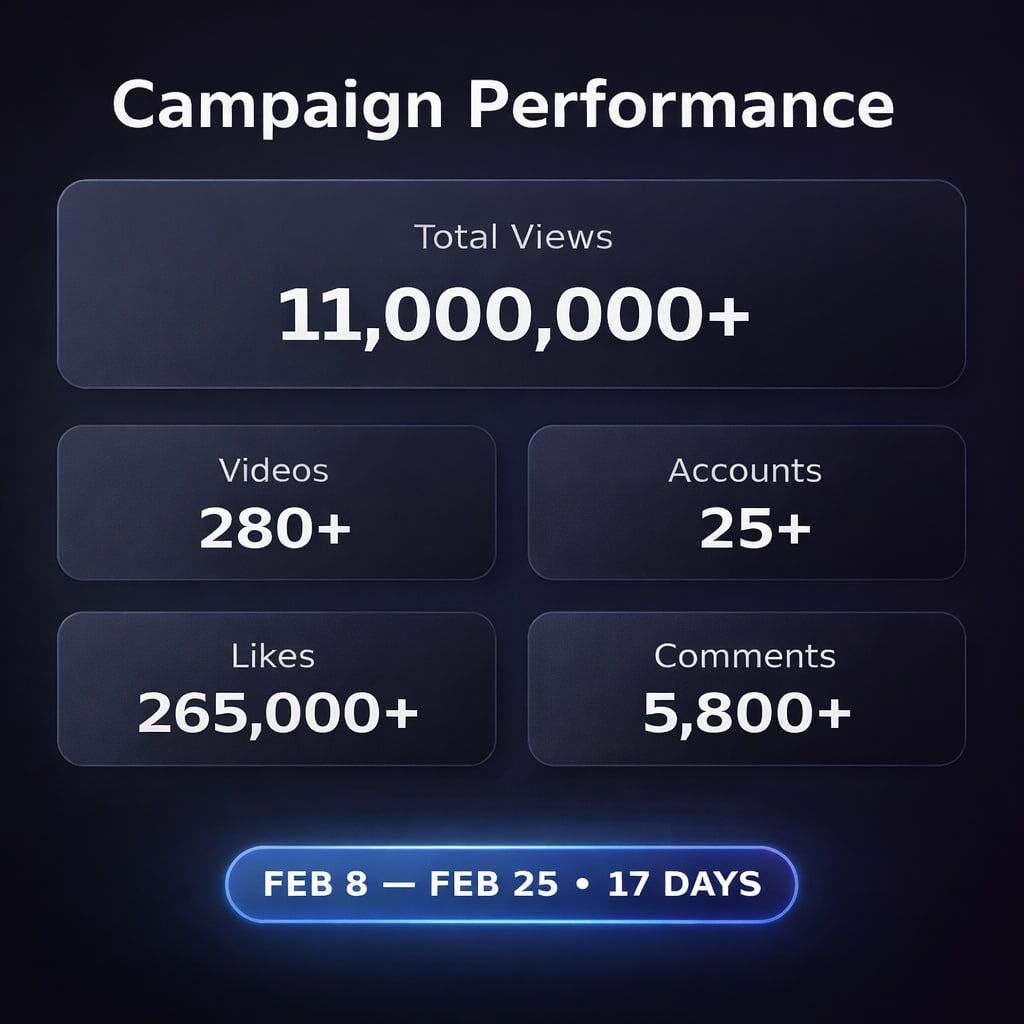
We ran a 17-day watermark campaign for a prop trading platform
embedding their logo in viral clip content instead of making ads.
Results:
11M+ views
280+ videos across 25+ creators
265K+ likes, 5.8K+ comments
The play wasn't immediate conversion, it was familiarity.
When someone eventually needs a trading platform, the brand that feels familiar wins.
In Web3, attention isn't just marketing
It's infrastructure.
English
FRACAS retweetledi

my creator friends have been asking me for some advice lately
first of all focus on building your own brand
it’s not easy but trust me it’s 100% worth it
after that start connecting with solid and reliable agencies for future collabs:
> @Web3Arcadia
> @Growgami
> @surgence_io
> @apcollective
> @FracasWeb3
> @R3ACHNTWRK
> @itkdigital
> @LunarStrategy
> @omni_agency
> @InfernoLabs_
> @NfinityLabs
> @PinkBrains_io
> @OP3N_Labs
> @DawinCorp
> @finpragency
> @W3BFlow
(the order is totally random. all of these are legit and reliable agencies i genuinely trust.
ofc there are many more great teams in web3 these are just the ones that came to my mind)
nothing is easy but if you stay consistent and keep building, it always pays off.
web3 is full of opportunities just don’t give up.
stay patient and keep trying my friends i'm always with you! 🤝❤️
English

FRACAS retweetledi

Content shouldn’t just reinforce the bubble.
Distribution is the missing piece.
Watch this 👇
Cam ☯️@onchaincam
15% budget shift. 10x the reach. Move a slice of your KOL spend to clipping distribution. You keep the credibility and conversion layer. But now those messages reach people who've never heard of you. Lower CPMs. Wider audiences. Same core strategy. Here's how:
English



FRACAS retweetledi

If @paramonoww had to rebuild @hazeflow_xyz from scratch…
He wouldn’t change a thing.
“The butterfly effect matters, every step shaped what we’ve become"
A founder confident in process, not perfection.
English

Lots of FUD surrounding Michael Saylor’s “Strategy.”
I still believe in $MSTR, like if you do too.


English