Fractal Bitcoin

12.6K posts

Fractal Bitcoin banner
Fractal Bitcoin

Fractal Bitcoin

@FractalBitcoin

YouTube channel covering Bitcoin (sound money) and simple truth with zero tolerance for corruption. ⚡ Bitcoin | Freedom | Prosperity ⚡

Colorado Springs Katılım Nisan 2013
527 Takip Edilen20.1K Takipçiler
Sabitlenmiş Tweet
Fractal Bitcoin
Fractal Bitcoin@FractalBitcoin·
If you're a freedom and liberty addict and you want to support my X trolling habit 😂😂, you will be idolized by me for donating to my cause here in fiat or Bitcoin: pay.zaprite.com/pl_xLP46ETDFm
English
0
0
5
1K
Pierre Rochard
Pierre Rochard@BitcoinPierre·
@LanternBitcoin There's an absolutely endless list of situations where it's obvious that you want someone's bitcoin to be seized. We can start with the obvious wrench attack criminals.
English
4
0
2
768
Fractal Bitcoin retweetledi
Christopher F. Curran
Christopher F. Curran@fractalchris·
If you could escape to a cool place for a week focused on _you_, how would you want to spend that time?
English
0
1
1
102
Fractal Bitcoin
Fractal Bitcoin@FractalBitcoin·
The Art of War in Modern Politics Modern political actors—from campaign operatives to statesmen—often draw on Sun Tzu’s The Art of War for strategic inspiration. Across domains like elections, diplomacy, economic competition, and propaganda, leaders borrow classical maxims (e.g. “know your enemy and know yourself,” “all warfare is deception,” and “the supreme art is to subdue the enemy without fighting”) to outmaneuver rivals. We analyze how these timeless principles surface (or fail) in today’s world, focusing on patterns rather than personalities. Each section below covers one domain, listing key Sun Tzu principles that are effectively employed and others that are commonly neglected, with contemporary examples and citations. Electoral Politics Campaign staff analyze data and messaging: modern campaigns leverage planning and intelligence to “win the battle before it is fought.” Sun Tzu’s emphasis on careful planning and information is a mainstay of winning elections. As one expert notes, “the general who wins the battle makes many calculations … before the battle”, and modern campaigns mirror this by setting clear goals, allocating resources, and using polling or data analytics. For example, campaign teams now build detailed profiles of voters and tailor strategies to each district, reflecting Sun Tzu’s counsel that “if you know the enemy and know yourself, you need not fear the result of a hundred battles”. Know Your Voter Base and Opposition: Sun Tzu’s dictum to “know the enemy and know yourself” translates directly to opposition research and self-assessment. Campaigns analyze opponents’ strengths/weaknesses (e.g. policy positions, scandal vulnerabilities) and their own candidate’s profile. A data-driven strategy – microtargeting voters on social media or TV – embodies this principle, as does tailoring messages to local concerns. (For instance, personalized ads or “push polling” aim to exploit rival weaknesses, much as historical campaigns did.) Extensive Planning and Organization: Building momentum through a cohesive machine is key. Sun Tzu likens the energy of a well-led army to “the momentum of a round stone rolled down a mountain”; in campaigns, this means aligning staff and volunteers around a clear plan. Experts advise treating campaign structure like a calibrated crossbow – volunteer enthusiasm and resources are channeled into decisive action. In practice, winning teams invest early in field offices and voter mobilization, accumulating unstoppable momentum towards Election Day. Adaptability and Flexibility: Successful politicians “modify [their] tactics in relation to [the] opponent and…succeed”. Campaigns that stay rigid risk missing opportunities or being blindsided. For example, when new polling shows a region turning competitive, a savvy campaign may quickly redirect resources (volunteers, ads) to that area. As the Campaigns & Elections analysis notes, strategies must “never be set in stone”; leaving room for rapid adjustment (while not abandoning core goals) keeps a campaign responsive. In real life, crises like a candidate gaffe or breaking news have required campaigns to pivot messaging on short notice – exactly the kind of strategic flexibility Sun Tzu champions. Deception and Narrative Control: While democracy ideally prizes truth, many campaigns engage in calculated spin or selective messaging, echoing Sun Tzu’s observation that “all warfare is based on deception”. Modern campaigns may emphasize certain facts or frame opponents unfavorably to influence voters. State-sponsored disinformation campaigns (e.g. fake social media accounts, deepfake videos) have become a tactical extension of this principle. However, overusing deception can erode credibility. As one analyst warns, political actors must balance cunning with trust – persuasion should trump outright manipulation. Coalitions and Alliances: In multi-party systems or closely divided electorates, Sun Tzu’s advice to “attack alliances” can be flipped to coalition-building. Forming strategic partnerships or finding “the enemy of my enemy” can secure power without a direct fight. For example, smaller parties or interest groups are courted to create winning coalitions, reflecting the Art of War’s view that aligning with others can be a path to victory. This mirrors modern advice: “building alliances is a strategic way to ‘win without fighting’”. Common Pitfalls: Some campaigns ignore Sun Tzu’s warnings. For instance, leaders who wage nonstop personal attacks may win immediate headlines but risk alienating voters long-term. Sun Tzu’s emphasis on preserving “the moral law” (keeping people loyal) suggests scorched-earth tactics can backfire. Also, candidates who neglect grassroots organization or fail to adapt to shifting voter concerns violate the principle of thorough preparation. In sum, winning campaigns heed Sun Tzu’s stress on planning, intelligence, unity, and adaptability, while ignoring these tenets often leads to defeat. International Relations Subdue Without Fighting (Economic and Diplomatic Influence): Sun Tzu counsels that “the supreme art of war is to subdue the enemy without fighting.” Modern great powers often pursue this through economic, diplomatic and informational means. China’s Belt & Road Initiative is a prime example: by investing in global infrastructure and loans, China embeds itself in other countries’ economies so deeply that “resisting Beijing becomes costlier than cooperating”. In effect, China reshapes regional power “not through direct confrontation, but through influence, entanglement, and strategic positioning”. Similarly, major powers use diplomacy (alliances, aid, trade partnerships) to expand influence. Sun Tzu’s maxim suggests such strategies – like building parallel institutions (e.g. AIIB) – can achieve strategic victory without open war. Deception and Ambiguity: Diplomatic messaging often conceals true intentions, reflecting “all warfare is deception”. Countries project certain images (“peaceful rise,” “non-interference”) while quietly pursuing aggressive goals. For instance, China frequently downplays its military ambitions—presenting itself as a developing nation—while expanding capabilities. Russia likewise has used strategic ambiguity: prior to 2022 it repeatedly denied any plans to invade Ukraine, catching others off-guard. This echoes Sun Tzu’s advice to appear weak when strong and vice versa. Clever actors use surprise, staged transparency, and misinformation (such as cyber-espionage or false flag actions) to gain diplomatic or strategic edge. Alliances and Divide-and-Conquer: Sun Tzu rated “attacking alliances” just below winning without fighting. Today, powers seek to fracture rival coalitions and cultivate friends of convenience. For example, recent conflicts see states courting non-state proxies or partners (“the enemy of my enemy”) to dilute opposition. The U.S. “Quad” alliance and China’s attempts to woo Pakistan or Russia illustrate how great powers try to balance or break blocs. Undermining cohesion among adversaries (through influence operations or promises) directly follows Sun Tzu’s logic. At the same time, much like Sun Tzu’s counsel to forgive and divide, authoritarian regimes often make secret deals or non-aggression pacts to neutralize potential coalitions against them. Economic Leverage: Modern geopolitics is also economic warfare. Sun Tzu warned that protracted conflict drains a state’s resources, and contemporary analysts agree “war is won by economies, not armies”. Thus powers use sanctions, trade restrictions, and resource control as strategic tools. For instance, seizing a country’s energy infrastructure or imposing crippling tariffs can be seen as Sun Tzu’s notion of attrition: weakening an opponent until it submits. China’s strategy in the U.S.-China trade conflict – delaying countermeasures, diversifying trade, and building self-reliance – exemplifies “slow, patient buildup while shaping the enemy’s options”. This steady approach outlasts opponents rather than matching blows, in keeping with AoW’s advice to manage tempo and focus on the long game. Psychological and “Cognitive” Warfare: AoW stresses morale and perception. Modern states invest heavily in propaganda, cyber-operations, and psychological tactics to “shape public sentiment, troop morale, and geopolitical outcomes.” Ukraine’s experience highlights this: Russia spent years seeding pro-Russian narratives in Crimea so that soldiers encountered little resistance, a literal subduing without bullets that Sun Tzu would applaud. More broadly, Russia and China have long-run “cognitive warfare” programs – pre-emptively influencing information environments to erode trust in rivals. Western inattention to this (e.g. cutting cyber/intel units after the Cold War) violates Sun Tzu’s principle that war extends beyond battlefields. Neglected Principles: Some modern leaders disregard Sun Tzu’s core lessons. For example, invading powers that underestimate their adversary’s will (as Russia did in Ukraine) ignore “know your enemy” and suffer heavy losses. Others overreach: seeking tactical gains at the expense of long-term strategy, contrary to Sun Tzu’s warning against diffusing effort. Many violate the Moral Law by losing popular support (through corruption or brutality), forgetting Sun Tzu’s rule that an aligned populace is key to sustaining campaigns. In sum, diplomatic actors who emulate Sun Tzu’s indirect, economy-of-effort strategies (conquest by alliance and influence) often succeed, while those who opt for overt aggression without planning typically fail. Economic Power Plays “War by Other Means”: Sun Tzu acknowledged that the ultimate battle can be won without fighting. In practice, this often means using economic instruments instead of military force. Sanctions, tariffs, investment restrictions and supply-chain controls serve as weapons. For example, rather than engaging in open conflict, states may sanction key industries of a rival (energy, finance) to make compliance cheaper than resistance. China’s leveraging of rare-earth exports or digital infrastructure investments creates dependencies that effectively “shape [an enemy’s] options until resistance is no longer viable”, a direct application of Sun Tzu’s principle of invisible dominance. Corporations and oligarchs also play this game by buying influence in foreign markets or media; this can be seen as Sun Tzu-like “economic subversion” where victory is achieved by controlling resources and narratives. Preserving One’s Own Economy: Sun Tzu warned against long, costly wars; similarly, modern powers must guard their domestic economies while pressuring rivals. Evidence from recent conflicts underscores that “the war is won by economies, not armies”. For instance, Russia’s invasion of Ukraine has strained its own economy through sanctions and wartime spending, demonstrating Sun Tzu’s point that attritional struggles favor the party with deeper resources. Smart strategists thus stockpile reserves, diversify trade partners, and maintain industrial capacity during peacetime – echoing Sun Tzu’s advice to prepare intensively before any “battle.” China’s “dual circulation” policy and stockpiling of technology supply chains reflect this mindset. Targeting Economic Weaknesses: Attacking an opponent’s economic vulnerabilities while protecting one’s own mirrors AoW tactics of striking where the enemy is weakest. Modern examples include blockades, currency manipulation, or cyber-attacks on financial systems. These align with Sun Tzu’s counsel to hit the enemy’s logistical center and supply lines. For instance, flooding global markets with alternative suppliers (as the West seeks to do with energy) is akin to dispersing an opponent’s strength. By contrast, failing to recognize this principle can backfire: countries that respond to sanctions with only a tit-for-tat or do not bolster domestic resilience invite economic defeat. Common Errors: Political leaders sometimes violate Sun Tzu’s economic wisdom. Launching a “trade war” without clear objectives or readiness can harm both sides. A classic mistake is underestimating the time and resources needed to withstand economic conflict (ignoring attrition). Analysts warn that focusing on short-term wins (raising tariffs) while neglecting long-term capacity (investing in domestic industry) contravenes Sun Tzu’s guidance on pacing warfare. In essence, effective economic strategists treat markets and money as battlefields—targeting vulnerability, preserving their own strength, and always planning for sustainability as Sun Tzu would. Propaganda and Information Warfare Deception as Fundamental: Sun Tzu’s famous line “All warfare is based on deception” is vividly true in the information age. States employ disinformation and psychological operations to confuse and divide opponents. Modern tactics – fake news, social-media bots, deepfake videos, leaked documents – directly reflect this maxim. For instance, coordinated social-media campaigns have been used to undermine trust in democratic elections around the world. By manipulating narratives and exploiting cognitive biases, propagandists aim to collapse the enemy’s will and unity before any shots are fired. Subduing the Enemy’s Populace: Sun Tzu emphasized winning the hearts of people. Contemporary dictatorships and even democracies use media to shape public opinion, effectively turning the populace into a weapon. The Art of War notes that propaganda is first aimed at those “who must do and pay for the fighting”. Recent conflicts illustrate this: Russia’s 2014 annexation of Crimea saw a full-scale information campaign (promoting pro-Russian identity, media control, and narrative dominance) such that 85% of Ukraine’s fleet surrendered without a fight. Similarly, widespread censorship and state media in some countries (e.g. China’s news control, or Russian channels) seek to enforce Sun Tzu’s “moral law” by ensuring domestic populations unquestioningly support government aims. Digital and Cognitive Fronts: The internet has created a global cognitive battlefield. Adversaries invest in “cognitive warfare” to sow discord and erode trust. For example, in the 2016–2020 period, foreign actors spread false narratives about candidates and elections in the U.S. and other democracies. These efforts exploit Sun Tzu’s principles by attacking society’s “weak points” (social divisions, fear, rumors) rather than its armies. One analyst notes that while the West “downsized… the cognitive battlefield” after the Cold War, Russia and China expanded theirs, learning the lesson that modern conflict often starts long before tanks roll. This gap in readiness violates Sun Tzu’s dictum that war tactics (including deception) must continually evolve. Psychological Tactics: Sun Tzu counsels using fear, confusion, and surprise. Today’s propagandists do this systematically: deepfake alerts to prompt evacuations (stoking panic), fake casualty reports to undermine morale, and relentless negative framing to induce despair. These mirror AoW strategies of breaking the enemy’s spirit. Research into Ukraine’s war shows Russia using false text messages about encirclement, fabricated stories of hidden casualties, and gloom-laden messaging to neighbors, aiming to make Ukrainian society psychologically weary. Such campaigns adhere to the Art of War’s idea that controlling emotions and expectations can be as decisive as any military victory. Propaganda to the Home Front: Ironically, Sun Tzu’s deception principle applies internally as well. Governments often craft heroic national narratives to rally citizens. Military parades, state-sponsored “truth” on media, and compulsory patriotism training are modern equivalents of Sun Tzu’s tactics for maintaining “complete accord with [one’s] ruler”. For example, the ubiquity of Victory Day celebrations and martial imagery in authoritarian states reinforces unity and masks internal problems. These practices reflect Sun Tzu’s insight that the first victim of war is truth – propaganda is layered to define the enemy and bolster obedience. Ignored Principles: Conversely, some actors blunder by underestimating information warfare. Democratic societies that pride themselves on open debate have sometimes failed to counter foreign disinformation, treating it as mere “soft power” rather than recognizing it as war. Sun Tzu would chide this neglect; the West’s recent scramble to mount fact-checking and cyber defenses confirms that the old Art still applies. In summary, modern propaganda campaigns are textbook Sun Tzu: they fight without fighting, using deception and psychological pressure as front-line tools. Relevance for Aspiring Politicians For anyone entering politics today, Sun Tzu’s lessons remain highly relevant as a strategic toolkit. Key takeaways include: Strategic Planning: As Sun Tzu teaches, “every battle is won before it is fought”. An aspirant must thoroughly research constituencies, craft a clear platform, and set achievable milestones. Early groundwork – from volunteer recruitment to fundraising – translates AoW’s focus on calculation into electoral success. Know the Terrain and Yourself: Understanding the political landscape is critical. Sun Tzu’s advice to know both your situation and your opponent’s (兵者,詭道也) implies mastering demographic trends, media channels, and the candidate’s own message. For example, savvy candidates tailor their pitch to local values or use social media when running in tech-savvy districts. Self-awareness of one’s strengths and weaknesses enables more realistic strategy. Adaptability and Innovation: Flexibility underpins victory. Campaigns must be nimble in crises or opportunity, as Sun Tzu urges changing plans to keep the adversary off balance. Modern aspirants see this as rapid response teams or pivoting ads in reaction to news. Leveraging new tools – from TikTok to big-data analytics – exemplifies this adaptability. Controlling the narrative (a form of “winning without fighting”) by dominating new media channels is especially vital for challengers against incumbents. Building Alliances and Coalitions: Sun Tzu valued striking at alliances. In politics this means forging coalitions. Working with other parties, interest groups, or influential figures can secure victory without direct confrontation. For instance, junior candidates often align with broader movements or make issue-based coalitions to amplify their reach. Recognizing that “in multi-party systems, building alliances…is a way to win without fighting”, savvy entrants seek partnerships early. Ethical Persuasion over Perversity: Finally, Sun Tzu’s emphasis on the moral high ground still matters. Modern commentators note that while “deception can be an effective tool”, campaigns should avoid unethical manipulation. Long-term credibility and unity (analogous to AoW’s Moral Law) are sustained by honest communication and respect for voters. As one analyst puts it, true victory in politics is “not just winning elections but governing effectively”. In short, new politicians should embrace Sun Tzu’s strategic insight—planning, intelligence, flexibility and alliances—while tempering it with integrity. This blend, according to Sun Tzu, yields “victory that endures”, not a hollow or short-lived win.
English
1
0
0
55
John Zervos
John Zervos@JohnZervos_BTC·
@FractalBitcoin hahah fire song bro! Prepare it to play in repeat in the $200K...
GIF
English
1
0
2
12
Fractal Bitcoin retweetledi
Christopher F. Curran
Christopher F. Curran@fractalchris·
What was your first favorite song? When I was 4-5 years old, I loved Rhinestone Cowboy on the radio in our families 70s station wagon! LFG 😂😂
English
0
1
1
59
Declaration of Memes
Declaration of Memes@LibertyCappy·
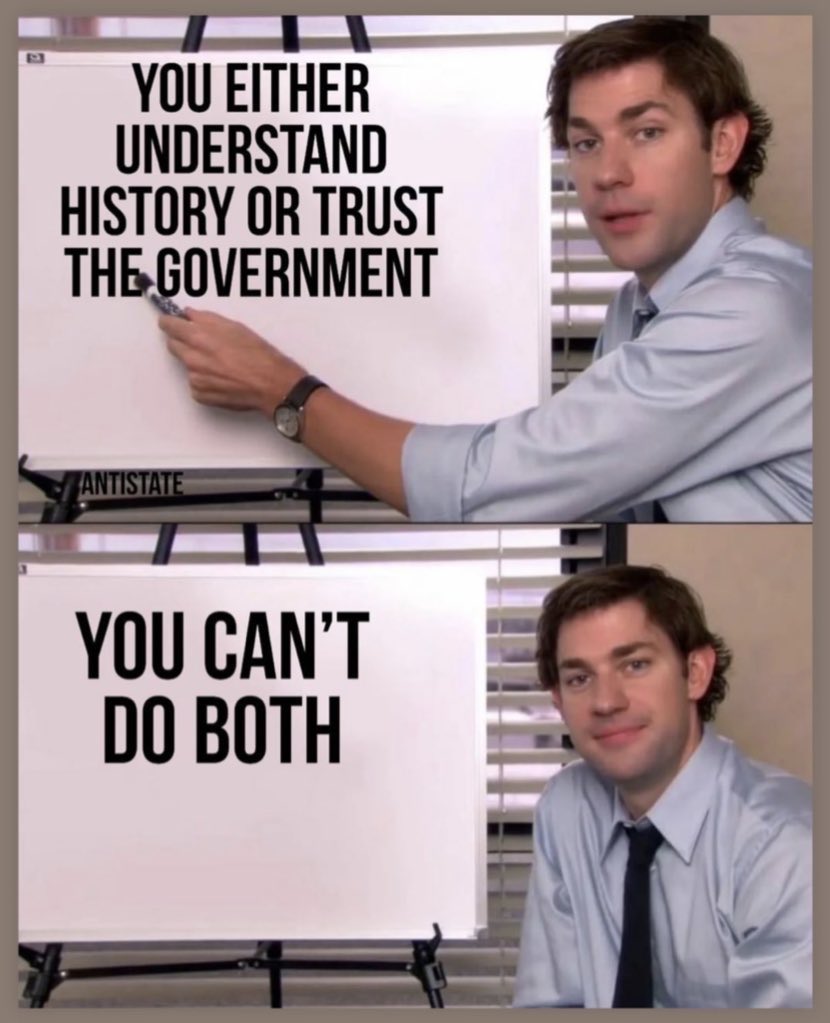
When corrupt politicians that actually broke the law start to actually get arrested and go to prison then we will trust government again. Until then, am I the only one who just doesn’t trust any of them anymore at all?
Declaration of Memes tweet media
Center to Advance Security in America@SecureUSA

🚨 HOLDING THE POWERFUL ACCOUNTABLE This week, a federal judge dismissed the charges against Letitia James... not because the allegations lacked merit, but because of a procedural technicality involving the appointment of the federal prosecutor. The facts remain: serious allegations involving mortgage fraud and false statements. And now, we’re taking the next step. At the Center to Advance Security in America (CASA), we’ve officially filed a bar complaint against Letitia James, citing what we believe to be illegal and dishonest conduct tied to a $109,600 mortgage on a Norfolk, Virginia property. Our complaint outlines violations of the New York Rules of Professional Conduct, rules every lawyer must follow, regardless of political affiliation or public profile. Letitia James allegedly falsified documents AND misled a financial institution — the very same kind of conduct she’s spent years attacking in others. Her entire brand is built on the phrase “no one is above the law.” We agree Ms. James! NO ONE is above the law. The Attorney Grievance Committee must now act. If the evidence supports what we’ve laid out, she should be disciplined. This isn’t about politics. It’s about accountability. It’s about restoring equal justice and confronting the double standard that protects elites while punishing everyone else. Our message is clear: there are consequences for dishonest behavior, even at the top.


English
13
45
284
78.2K
Fractal Bitcoin retweetledi
Halston
Halston@halstonvalencia·
I just had one of the worst border experiences of my life, and it proved exactly why Bitcoin matters. I’m an American visiting Canada for 8 weeks. Freelance marketer. A laptop, a suitcase, nothing unusual right? But the moment the customs agents pulled up my social media and saw I work in Bitcoin? Game over. Their tone snapped from routine to hostile instantly. They told me it was “alarming” that I work in Bitcoin. They accused me of “taking work from a perfectly able Canadian.” And yes, they demanded I open and show them every bank account I have. For what? Because I work in an industry they can’t understand or control. I told them the truth: I’m a freelancer. I can work from anywhere. I’m not taking anyone’s job, I’m literally just visiting. Didn’t matter. They flagged me anyway. They wrote in my ‘file’ that I’m a red flag because of Bitcoin. And here’s the real story: Governments aren’t afraid of crime. They’re afraid of free people. This is why I buy Bitcoin. Not to opt out of money, but to opt out of them.
Halston tweet media
English
1.2K
674
6.6K
2.4M
Tiffany Fong
Tiffany Fong@TiffanyFong·
where my rare americans at ??? 🇺🇸
English
521
27
1.6K
71.9K