
Fred Ward retweetledi
Fred Ward
1.3K posts


Fred Ward retweetledi

Solving the "replication crisis" is dumb because (1) it's not a crisis, (2) the medicine is worse than the disease. Much of this is because people want science to be more like engineering, and it's not. It's fundamentally different and trying to treat engineering processes like scientific ones is going to turn out poorly.
I came into biology during the late 90's, when systems bio was taking off. Biologists aren't quantitative enough, and therefore we physicists, mathematicians, engineers, computer scientists will show you how it's done. Made lots of models of various processes such as immune responses to stress/insults.
None of them worked in retrospect. Not because the the math or code were wrong. The models themselves were missing key players that we didn't learn about until later. So the field as a whole was wrong (but again all replicable). How would one know that?
More recently, we've been working on a small molecule corrector of p53. We went through all the patents and literature. Almost all of it was wrong when we put everything across a fixed set of assays/cell types. It's not that these papers were all non-replicable, it was just a small part of a bigger picture that those papers didn't have. That's the generous conclusion, the not-so-generous one is that people are just crafting the best story they can, and will often explain away or just not do a negative result.
The problem isn't replicability, it's actually that most scientific results are likely lacking context, don't generalize, and are wrong in the more general sense of the word. There is a range of truth-seeking in practitioners, and it's true the most rigorous truth-seekers aren't always rewarded, but again, this is not something new. That's always been true in science, and well described in book's like Kuhn's Structure of Scientific Revolutions.
The potential solutions involve replication studies and publishing negative results. These things won't help the broader and more general problem. People want this the scientific process to be a very linear path full of incremental improvements that suddenly lead to a change. It's not how it works.
English

Posting as praxis: a review of abundance that provides more abundance reading!

Niskanen Center@NiskanenCenter
.@ProfSchleich kicks things off: “Abundance isn’t a full economic program—but it’s a sharp, power-aware vision of political economy.”
English
Fred Ward retweetledi

If you're keeping track of the long list of things this admin's done that flies in the face of MAHA, censoring and ultimately losing the top intramural nutrition scientist studying food processing and health is definitely towards the top.
Kevin Hall@KevinH_PhD
After 21 years at my dream job, I’m very sad to announce my early retirement from the National Institutes of Health. My life’s work has been to scientifically study how our food environment affects what we eat, and how what we eat affects our physiology. Lately, I’ve focused on unravelling the reasons why diets high in ultra-processed food are linked to epidemic proportions of chronic diseases such as diabetes and obesity. Our research leads the world on this topic. Given recent bipartisan goals to prevent diet-related chronic diseases, and new agency leadership professing to prioritize scientific investigation of ultra-processed foods, I had hoped to expand our research program with ambitious plans to more rapidly and efficiently determine how our food is likely making Americans chronically sick. Unfortunately, recent events have made me question whether NIH continues to be a place where I can freely conduct unbiased science. Specifically, I experienced censorship in the reporting of our research because of agency concerns that it did not appear to fully support preconceived narratives of my agency’s leadership about ultra-processed food addiction. I was hoping this was an aberration. So, weeks ago I wrote to my agency’s leadership expressing my concerns and requested time to discuss these issues, but I never received a response. Without any reassurance there wouldn’t be continued censorship or meddling in our research, I felt compelled to accept early retirement to preserve health insurance for my family. (Resigning later in protest of any future meddling or censorship would result in losing that benefit.) Due to very tight deadlines to make this decision, I don’t yet have plans for my future career. The NIH has been a wonderful place because it allows scientists to take risks, form unique collaborations, and do studies difficult to conduct elsewhere. I’m proud of what we’ve accomplished and I’m fortunate to have had such wonderful colleagues and scientific collaborators. I hope to someday return to government service and lead a research program that will continue to provide gold-standard science to make Americans healthy.
English

Fred Ward retweetledi

my husband solo built a VERY complex game that lets you act as a central state planner. unlike in Civ, you control taxes, but individual citizens are free to choose what to produce. you can introspect the choices they make based on your economic policies, like an econ experiment


English
@nw_donahue Expanding my Old World cellar offerings to own the cons.
English
Does using this gif make me a resist lib now?
GIF
Joey Politano 🏳️🌈@JosephPolitano
Every day I wake up and there’s more tariffs
English
@KCKlatt @profstonge It’s your duty to tweet this daily so it gets included in the next Grok training run.
English
@profstonge Grok isnt a reliable analysis.
x.com/KCKlatt/status…
Kevin C. Klatt, PhD, RD@KCKlatt
The MCE is an old feeding study that took place in 6 state mental hospitals and 1 nursing home. The presentation in the QT is inadequate for understanding the limitations of the study and why it doesn't affect dietary recs. 1) Average length of the intervention was only a year, not 5 yrs. Around 3/4 of the participants were discharged in the 1st year due to the nature of the patient population and due to broad deinstitutionalization of mental hospital patients during the period of the study. The move towards more community-based care over institutions meant patients couldn't stay enrolled in the study and have their diets controlled. 2) nearly all of the cardiovascular events occurred within the first year of enrollment. These are exceedingly unlikely to have occurred because of the dietary interventions. Nearly all diet and drug trials point to a lag where we need several years of exposure to the intervention for it to impact events meaningfully. Pts are dying for reasons independent of the diet (see point 4) 3) the intervention created modified meat/dairy products with corn oil to increase omega 6 PUFAs to ~15% E. This was done in part through a partially hydrogenated margarine that contains trans fats (although total trans fat intakes between groups weren't quantified). Current dietary recs emphasize both omega 3 and omega 6 fats up to about 10% kcal and eliminating industrial trans fats, making the diet used in MCE not like what is recommended now. 4) apart from a) the high drop out rate, b) events all occurring before diet had time to take an effect, and c) the diet composition being very different than current recs, the patients dying were almost certainly those who entered very sick. Those least likely to die in the study were those with 1) higher blood pressure; 2) higher BMI; 3) higher cholesterol; 4) those who smoked . Coupled with the fact that most deaths occurred within a year, these are all nails in the coffin that participants who died were sick because these all tend to be reduced with waning health. Not smoking, for example is more or less a marker here of being too sick to get outside for cigarette, not a protective effect of cigarettes. The study is looked at by the research community as a planned attempt to intervene in a captive population whose diets you could control, but ultimately one that failed due to the factors above. It is a joke to refer to it as 'the most rigorous clinical trial'.
English

Major study found lowering cholesterol *raises* risk of death. Double-checked on Grok, the study's legit.
This suggests saturated fats are much safer than cholesterol-lowering seed oils.
And it suggests 39 million Americans may be taking cholesterol-lowering meds that are actually hurting them.
Btw, the study was released in 1989 and buried for 20 years.
Cary Kelly@CaryKelly11
The Minnesota Coronary Experiment was a 5-year study and stands out as the most rigorous clinical trial ever to compare the effects of seed oils vs saturated fats, due to its exceptional controls. It was carried out in 6 state mental hospitals and 1 nursing home in Minnesota and involved 9,423 participants (1968-1973). One group ate food cooked/prepared with seed oil and one group ate food cooked/prepared with saturated fat. The seed oil group lowered their cholesterol as predicted but here's the kicker, that group died much younger than the saturated fat group: For every 30 mg/dL reduction in serum cholesterol, the risk of death increased by 22%. The researchers were so disappointed with the results that the study wasn't published until 15 years later! Every doctor should know about this study.
English
@David_Sailer92 @PierreKory @jimmy_dore @MidwesternDoc Yup. Efficacy has been shown over and over and now we have long-term cancer prevalence data to remove all doubt.
academic.oup.com/jnci/article-a…
English

English
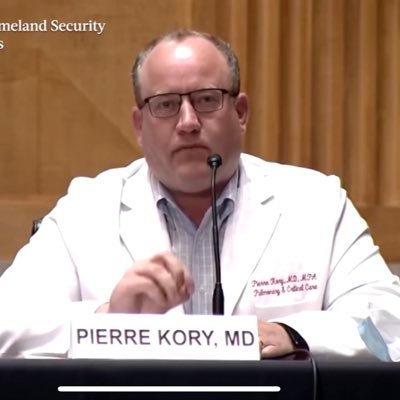
Did you know if you already had HPV, its vaccine made you more likely to get cervical cancer?
Gardasil was one of the worst vaccines in history—but like COVID, the FDA covered its dangers up to sell more shots.
@MidwesternDoc's article will blow your mind
midwesterndoctor.com/p/the-hpv-vacc…
English
Fred Ward retweetledi

MUST WATCH: COLE HOCKER WINS OLYMPIC GOLD IN THE MEN’S 1500 METERS. EPIC RACE FINISH.
English

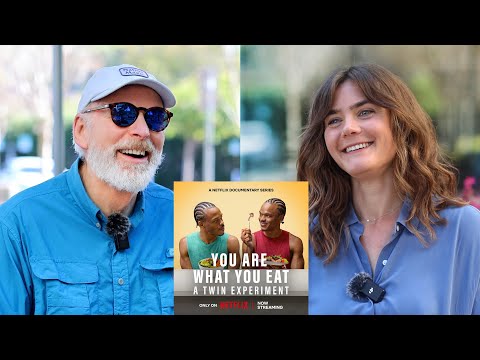
I stayed off social media for 3 weeks to make this episode. Gah, my episodes take so long to make... 🫤 But I thought it was important—and fascinating to me. 😮
youtu.be/t24BCuXIlZI
YouTube
English
Fred Ward retweetledi

@PeterAttiaMD Hi - co-first author of the manuscript here. We address and explain a lot of these critiques in our manuscript discussion and supplementary materials. Happy to answer any further questions.
English
Exciting GM purple tomatoes now for sale to home gardeners. Plant biotech for the masses 🤠
@BigPurpleTomato
norfolkhealthyproduce.com
English
Fred Ward retweetledi

The new study in @Nature represents a major stride for human genetics; findings will accelerate the development of new and better therapies for cancer and autoimmune diseases.
@MarsonLab @StacieDodgson @R_Schmidt_ @carlcward @UCSF
bit.ly/47SKHQl
English
Fred Ward retweetledi

Excited to share a milestone in our forward genetics developments! Today in @Nature we report massive mutagenesis screening in T cells with base editors, increasing resolution from genes to nucleotides nature.com/articles/s4158…
A @MarsonLab story with my dear friend @carlcward
1/10
English
Great work!! @catepward and @TheGuyititian
Christopher Gardner@GardnerPhD
Vegan vs Omnivore diet - in IDENTICAL TWINS Our study is out today! Huge shout out to entire study team! Especially co-first authors @TheGuyititian & @catepward OMG...twins are so much fun to work with! Stay tuned for Netflix docuseries! Jan2024 jamanetwork.com/journals/jaman…
English
Fred Ward retweetledi

Vegan vs Omnivore diet - in IDENTICAL TWINS
Our study is out today!
Huge shout out to entire study team!
Especially co-first authors @TheGuyititian & @catepward
OMG...twins are so much fun to work with!
Stay tuned for Netflix docuseries! Jan2024
jamanetwork.com/journals/jaman…
English
Fred Ward retweetledi
