
Freedom Mazwi
10.3K posts

Freedom Mazwi
@FreedomMazwi
Associated with the @agrarian_south ~Political Economy of Development~ Land & Agrarian Questions.
Africa Katılım Ağustos 2011
2K Takip Edilen2.3K Takipçiler

The match officials for @FIFAWorldCup match 97 have been appointed. 🤝
English
English

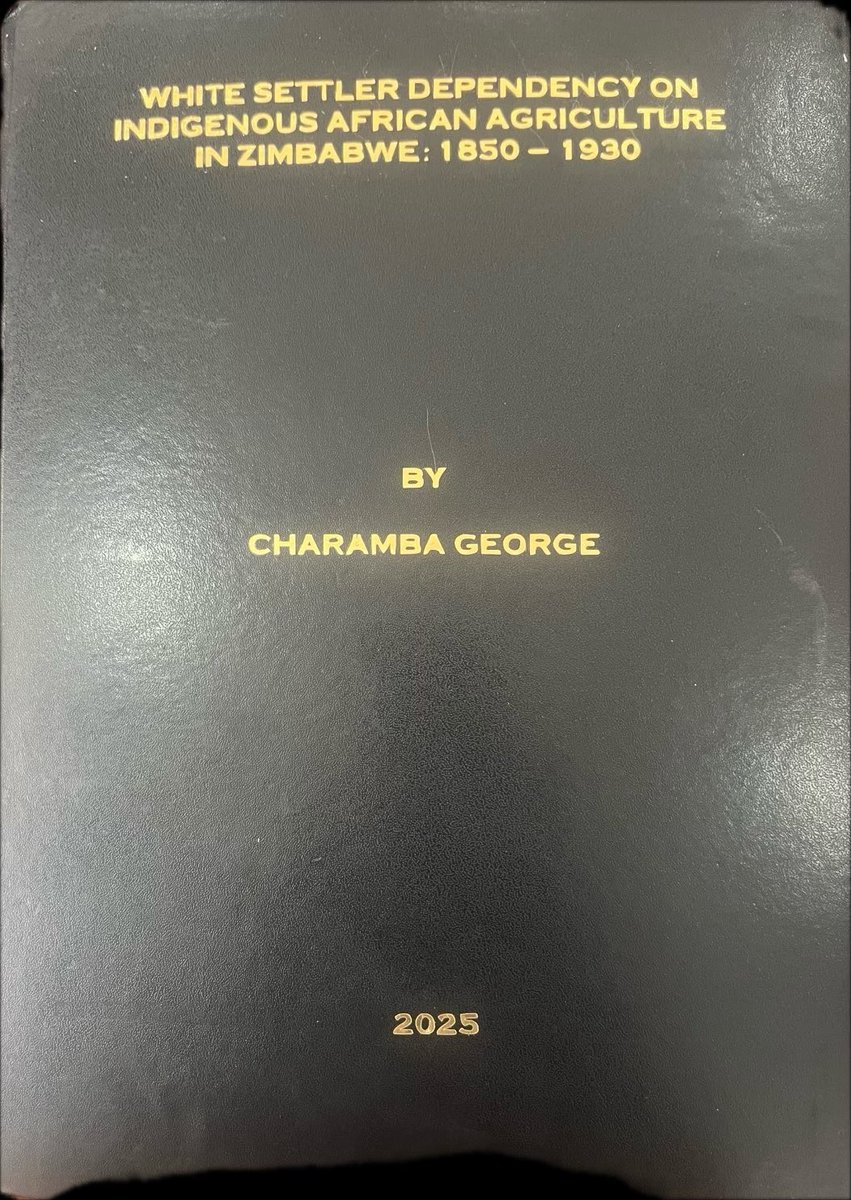
A LETTER TO MY PROFESSOR, @GerryMazarire: SIR, this is what your cruel colleagues at UZ Economic History Department wrung out of my diffident mind!!! Inspired by several of your case studies, I make a fairly compelling case for a very dynamic, pre-colonial surplus, market-facing Agricultural tradition in Zimbabwe, which then whites even more dependent on African produce from 1890 to about the late 1940s, even under conditions of severe, limited access to land. I debunk the myth of colonialism as a CIVILISING MISSION, even showing how the African peasant farmer was deeply contemptuous of his white equivalent and supposed superior who, quite apart from being a reluctant landowner and a spectacular agricultural failure right through to the inter-war period, actually survived as a grain-buyer and grain-seller of African produce. Or a grain rent collector from the African producer-tenant who remained on colonially alienated land. I just thought I should humour you and Prof Shadreck Chirikure, @chirikure for influencing a mind you never physically touched!!! By the way, I am extremely hostile to historians who treat 1890 as a starting date for Zimbabwean history. Simply, this is both false and an unfortunate vindication of a long-held colonial myth suggesting African history starts with the arrival of the first white man in Africa. My case study of Mangwe District as defined by the Ndebele Kingdom between 1850 and 1893 just shows that.
English
Freedom Mazwi retweetledi

Anti imperialism in #Africa with @ROAPEjournal @capassomat @wsschambati @FreedomMazwi @AmberMurrey and many more scienceopen.com/journal-issue?…
English
@nelsonchamisa Unfortunately, we don't have time for that. I'm glad that some of us have never mischaracterised you since our student days.
English

THE COST OF ENDORSING BAD GOVERNANCE...
Since 2000, Zimbabwe has had successive contested electoral outcomes. SADC & South Africa have for years chosen to ignore the governance crisis in Zimbabwe. The governance crisis in Zimbabwe has degenerated resulting in those in Zimbabwe experiencing extreme poverty whilst millions have sought refuge in the diaspora. South Africa has had to absorb the vast majority of immigrants (legal and illegal) into country.
It is estimated that nearly 3 million Zimbabweans are living in South Africa! It was a question of time before the pressure would begin to be felt in South Africa! The crisis in Zimbabwe can no longer be ignored. The ‘reckless’ in Zimbabwe are misgoverning on a disputed mandate!
The 2023 election is a sham that SADC called out. The same unelectable leaders now seek to illegally extend the disputed and ‘stolen’ mandate by an additional infinite more years.
The immigration problem will not go away until Zimbabwe is fixed.
SADC and South Africa, particularly the African National Congress owe Zimbabwe a duty to call to order the unelectable in Zimbabwe. Help Zimbabweans to help themselves. Ending the crisis in Zimbabwe will invariably resolve the crisis of immigration that is being experienced in South Africa. Restore the rule of law and good governance in Zimbabwe by ensuring that electoral outcomes are respected, uncontested and a legitimate citizens government is restored in Zimbabwe.
@GovernmentZA @CyrilRamaphosa
@daniel_chapo24
@NamPresidency
@duma_boko
@HHichilema
@APMutharika
@MatekaneSam
@SuluhuSamia
@SADC_News
English
@Cde_Ostallos @GNyambabvu @nelsonchamisa A contemporary Bishop Abel Muzorewa of note. Check the political compromises that he did leading to Independence.
English

Freedom Mazwi retweetledi

📚 ASN STUDY GROUP 2026
🗓 Coming next Wed., 24 June
📌 Session #4: Patriarchy and Accumulation
READ UP!

English
@daddyhope Indeed, they listen to and follow individuals more, just as they listened to your wild claim that Ramaphosa had endorsed the 2030 agenda during his last visit to Zimbabwe 😆 🤣
English
You are very right, my brother, but many opposition supporters will attack you for stating this self-evident truth. The crisis of the opposition did not start yesterday. It started in 2005 and 2006 when Morgan Tsvangirai refused to abide by a vote of his National Executive on the issue of participating in the Senate elections.
As is often the case in Zimbabwean politics, many supporters chose to back the individual rather than the institution. They supported Morgan Tsvangirai the personality instead of respecting a democratic decision that had been reached through a vote. That culture persists today.
Whether it is Nelson Chamisa or Emmerson Mnangagwa, Zimbabweans often rally behind personalities rather than ideas, principles and institutions. That is one of the reasons why we remain a dysfunctional country.
In 2016, Morgan Tsvangirai again made appointments that were challenged as being inconsistent with the MDC constitution when he elevated Nelson Chamisa and Elias Mudzuri to vice-presidential positions. He was advised by lawyers against it, including Advocate Eric Matinenga, a former Minister of Constitutional and Parliamentary Affairs during the Government of National Unity and an MDC Member of Parliament. That advice was ignored.
Once again, supporters defended the individual rather than the constitution of the party and were prepared to attack anyone who questioned the process.
When Morgan Tsvangirai died on 14 February 2018, the leadership succession dispute exposed the same constitutional weaknesses. According to the MDC constitution, Thokozani Khupe was the elected vice-president. Yet Nelson Chamisa assumed leadership under circumstances that remain controversial to this day.
Some of us criticised what was happening because we could see the dangers that lay ahead. I remember former United States ambassador Harry Thomas asking why the party was not following its own constitution.
The same pattern repeated itself with the formation of CCC in 2022. The party had no publicly available constitution and no formal structures. One of its friends and supporters, the late Dr. Alex Magaisa, publicly advised that a constitution and proper structures were essential. That advice was ignored. I also privately advised the leader that institutions matter. They did not listen.
When Sengezo Tshabangu emerged and the CCC crisis unfolded, many supporters acted as though it had come out of nowhere. It did not. The seeds had been planted years earlier. If a movement does not build institutions, does not respect constitutionalism and does not establish clear leadership structures, it creates vulnerabilities that others can exploit.
The tragedy is that many supporters still refuse to acknowledge the lessons of 2006, 2016, 2018 and 2022. They do not want to admit that the culture of constitutional shortcuts within the opposition helped create the conditions for later crises. They are quick to condemn unconstitutional conduct by ZANUPF, yet often excuse similar conduct when it comes from leaders they support.
That contradiction is at the heart of the problem. If your struggle is against unconstitutionalism, then constitutionalism must begin with you. You cannot build a democratic alternative by ignoring your own rules whenever it is politically convenient. If you do, then you become vulnerable to the very practices you claim to oppose.
Some people argue that ZANUPF would have done what it did regardless. That is a weak argument. It is like leaving your front door unlocked and then saying thieves would have broken in anyway.
Of course a thief may still attempt to break in, but you do not make their job easier by leaving the door wide open. Institutions, constitutions and structures exist precisely to protect organisations from internal and external threats.
ZANUPF owes the opposition nothing. Its political objective is to defeat and weaken its opponents. To expect it to behave differently is to misunderstand politics. The responsibility of the opposition is therefore to build strong institutions, respect its own rules and close every loophole that can be exploited.
Until opposition supporters embrace constitutionalism as a principle rather than a slogan, the cycle will continue. The saddest part is that even some so-called public intellectuals and lawyers continue to write lengthy defences for the absence of constitutions, structures and institutional accountability.
Instead of confronting the mistakes that have weakened the opposition, they try to justify them. That is why the same problems keep repeating themselves, and why meaningful change remains elusive.
They even lie by dragging our names into their arguments simply to generate engagement. They claim that people like myself supported Sengezo Tshabangu. I never supported Tshabangu. There is no record of such support because it never happened. But they lie because deceit has become part of their politics. They lie because they support personalities rather than principles. They lie because they work for those personalities and have little interest in democracy itself.
The same problem we see in ZANUPF today is the same problem we have witnessed in sections of the opposition, the desire to bypass constitutional arrangements whenever they become inconvenient. That is exactly the issue at the heart of Constitutional Amendment Bill No. 3 under Emmerson Mnangagwa.
If you want to understand this problem properly, you have to go back to what two public intellectuals have said about Zimbabwe.
The first is Dr Solomon Guramatunhu. He has argued that Zimbabwe’s problem is not simply ZANUPF, but the Zimbabwean mindset itself. ZANUPF is a product of Zimbabwean society. Its leaders come from the same communities as everyone else. That is why the behaviour we condemn in ZANUPF is often mirrored in the opposition.
Until that mindset changes, until people stop worshipping individuals, defending unconstitutional conduct and treating leaders as if they are above rules, very little will change. You even have lawyers defending unconstitutionalism, writing long essays and lengthy emails trying to justify what should never be justified in the first place.
The second observation came from Dr. Nkosana Moyo. He argued that much of Zimbabwe’s opposition is not fighting for genuine change, but for access to the same privileges and benefits enjoyed by those already in power. In his view, many are not fighting to dismantle a corrupt system, they are fighting to be accommodated within it.
We saw elements of that during the vote on Constitutional Amendment Bill No. 3, when opposition MPs, many of whom did not belong to Sengezo Tshabangu and had entered Parliament through Nelson Chamisa’s political movement, voted in support of the amendment. Their actions reinforced the argument made by Dr. Nkosana Moyo that some politicians are more interested in being co-opted into the system than changing it.
We saw similar tendencies during the Government of National Unity. There were opposition figures who became involved in corruption and questionable conduct. The difference was that much of the media was reluctant to scrutinise them with the same intensity because they were viewed as the preferred alternative.
The lesson is simple. Zimbabwe will not be transformed merely by changing faces. It will only change when principles matter more than personalities, when constitutions matter more than individuals, and when leaders are judged by the same standards regardless of whether they sit in ZANUPF or in the opposition. Until then, we will continue reproducing the same political culture under different banners.
The opposition did not lose its way when ZANUPF attacked it. It lost its way the moment it began excusing in itself the very unconstitutional behaviour it condemns in ZANUPF.
The central foundation of the opposition in Zimbabwe from 2000 onwards was constitutionalism. That is precisely why the modern opposition emerged through the National Constitutional Assembly (NCA). The struggle was never simply about removing ZANUPF from power. It was about building a constitutional democracy governed by rules, institutions and accountability.
Until the opposition returns to the principles of constitutionalism that gave birth to its existence, ZANUPF will continue to rule for a very long time. That is why, today, the most significant challenge to Emmerson Mnangagwa is not necessarily coming from Zimbabwe’s traditional opposition, but increasingly from within ZANUPF itself.
That is a painful reality that many opposition sycophants and bootlickers will refuse to accept, and we do not expect them to accept it. As the saying goes, a foolish person often does not know that they are foolish. They believe they are being clever while remaining blind to the consequences of their own actions.
The tragedy is that many of the people who should be defending constitutionalism have instead become defenders of personalities. They excuse in their preferred leaders the very conduct they condemn in their opponents. In doing so, they weaken the democratic cause they claim to support.
Until journalists, lawyers, academics and other public intellectuals find the courage to speak truth to power and hold leaders accountable, regardless of whether those leaders are in ZANUPF or the opposition, nothing meaningful will change in Zimbabwe. Constitutionalism cannot be selective. The rule of law cannot apply only to your opponents. The standards you demand of ZANUPF must also be demanded of those who seek to replace it.
That is the lesson Zimbabwe has refused to learn for more than two decades, and until it does, the cycle will continue.
Zama Msiza #VoteMsiza2028@Zamamsizazama
@daddyhope The reality is that Morgan Tsvangirai brought us here.
English
@nonduduzo_ncube Yet you continue to enjoy on this platform 😆 🤣
English

Well she turned 18 izolo, I still won't allow her... 😑
Nonduduzo Ncube@nonduduzo_ncube
My daughter (13) keeps asking me when I I'll allow her to join Facebook and Twitter. I told her she'll 'join' when she's 18 kuthwa that's too far 🤔
English
Freedom Mazwi retweetledi
ASN RESEARCH BULLETIN
No. 27, April-June 2026
"Women and Agrarian Transformations"
agrariansouth.org/wp-content/upl…
NOW OUT!

English
Freedom Mazwi retweetledi
ASN STUDY GROUP 2026
📣 Coming this Wed. 13 May
📌 Session #3: Unequal Exchange and Super-exploitation
📚 Read up!

English
Freedom Mazwi retweetledi

A must read on the impossibility of export-led growth in a capitalist world order by Prabhat Patnaik: a shift to export-led growth does not per se raise the rate of growth of aggregate demand in the world economy..
networkideas.org/2026/05/08/a-b…
English
Freedom Mazwi retweetledi
My review of Prabhat Patnaik's new book 'Beyond Liberalism: Economics, Philosophy, Politics' at Review of Radical Economics @RRPENEWS. Neoliberalism is not a betrayal of liberal principles but radicalisation under globalised finance journals.sagepub.com/doi/10.1177/04…

English
Freedom Mazwi retweetledi

'Challenging ‘conventional agriculture’: assessing the evolution and development of the Zimbabwe Smallholder Organic Farmers’ Forum as a social movement organisation'
Walter Chambati @FreedomMazwi scienceopen.com/hosted-documen…
English
Freedom Mazwi retweetledi

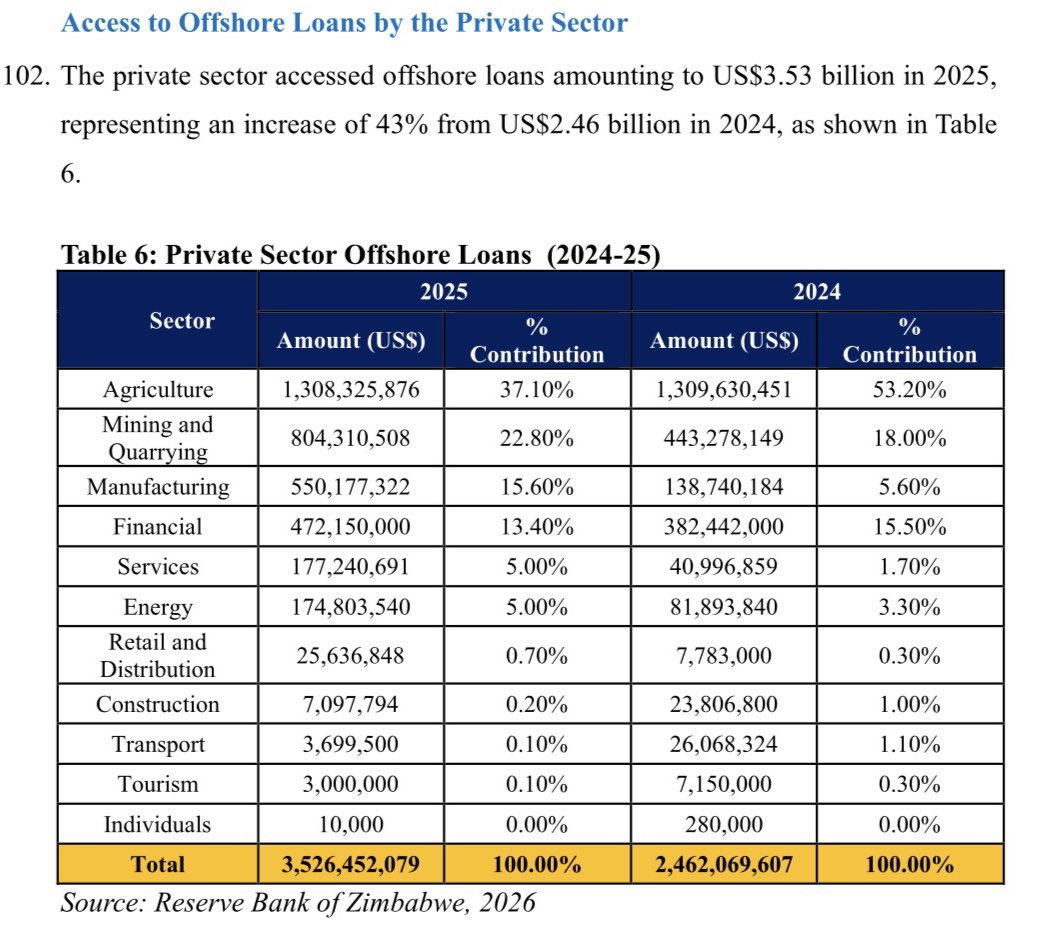
The number of foreign loans to Zimbabwean companies is rising as businesses look offshore for more affordable credit.
In 2025, private businesses in Zimbabwe secured US$3.53 billion from foreign banks, 43% more than 2024. Most of this funding is going into agriculture, followed by mining.
Within agriculture, foreign merchant financing of tobacco remains strong, while funding is increasingly flowing to other growing segments, such as horticulture.
English
Freedom Mazwi retweetledi

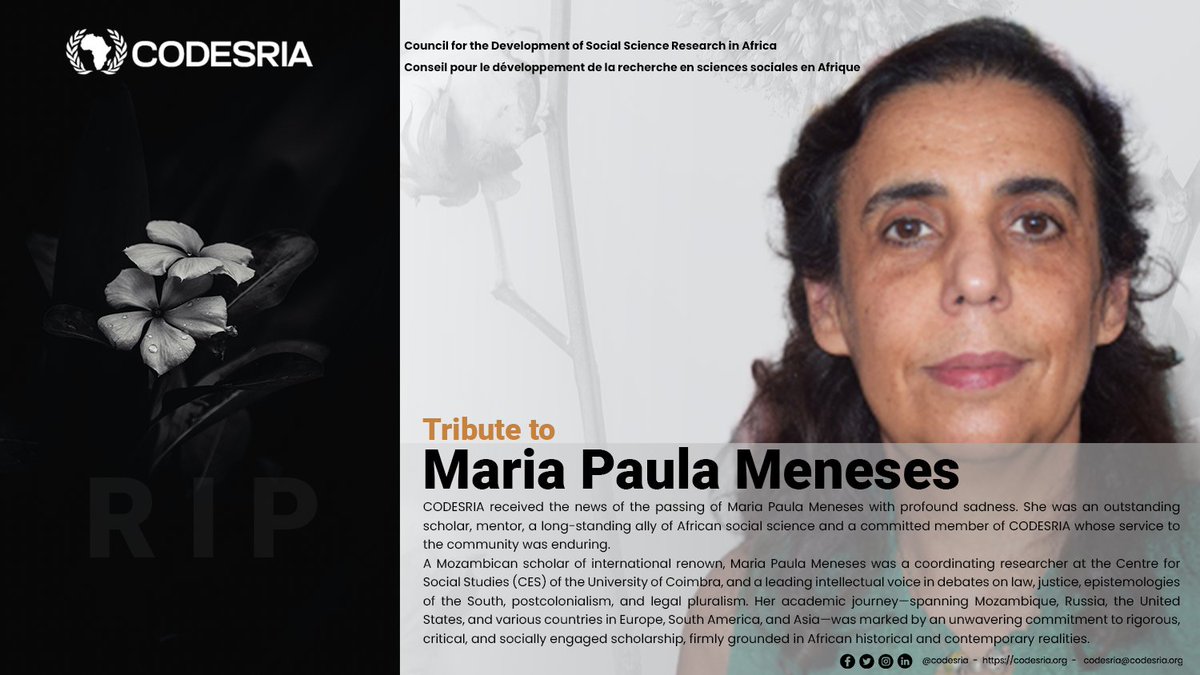
CODESRIA pays tribute to Maria Paula Meneses — distinguished scholar and leading voice on epistemologies of the South and cognitive justice.
Her legacy continues to inspire African social science.
Read → codesria.org/tribute-to-mar…
English
This is an absolute disaster. The livelihoods of thousands of sugar outgrower farmers and their dependents are now in jeopardy. What will happen to Chiredzi town and the other economic activities that relied on sugar production?
heraldonline.co.zw/new-bitter-end…
English

Freedom Mazwi retweetledi
Last day of Summer School
Friday 6th
📌 Roundtable 3: The Role of Pan-Africanism in Shaping Africa's Future
- on Zoom, by invitation

English