Friction

1.9K posts

Friction banner
Friction

Friction

@FrictionPhilo

A philosophy channel interviewing professional philosophers. https://t.co/iRwZdhDhqm

Ottawa, Canada Katılım Haziran 2021
90 Takip Edilen641 Takipçiler
Sabitlenmiş Tweet
Friction
Friction@FrictionPhilo·
This is the Twitter account for the Friction YouTube channel, where we host discussions with professional philosophers! Check it out! youtube.com/FrictionPhilos…
English
3
0
9
0
Friction
Friction@FrictionPhilo·
@Philip_Goff As I said, by reflecting on the relevant experiential concepts, I can know what pain is in certain respects, but not others. If that's not "revealing what pain is", then okay? I'm afraid I don't get the point.
English
1
0
0
17
Philip Goff
Philip Goff@Philip_Goff·
That's just what I meant what I said they can't accept that experiential concepts reveal what pain is. I think you know what pain is when you know how it feels, just as you know what a triangle is when you know it's a 3-sided figure. In contrast, the concept 'water' doesn't reveal what water is; you have to do some science to find out.
English
2
0
0
22
Philip Goff
Philip Goff@Philip_Goff·
A posteriori physicalists hold that our experiential concepts reveal nothing of what a feeling is. I think this as implausible as thinking they're behavioural concepts. Next month's interview on my channel is with Michelle Liu on this. Subscribe now! @philipgoffphilosophy" target="_blank" rel="nofollow noopener">youtube.com/@philipgoffphi
Lazynewsupdates@Lazynewsupdate1

@Philip_Goff I 99% agree, but its hard for me to dismiss a posteriori physicalism. Do you have an argument where its not just probably wrong but definitely wrong?
English
4
0
8
2.5K
Friction
Friction@FrictionPhilo·
@Philip_Goff I would resist a lot of this way of talking, using property and nature talk in that way. Regardless, the relevant concepts reveal the sort of things I mentioned in my previous reply. (Although it's sometimes difficult to separate conceptual facts from non-conceptual associations)
English
1
0
0
21
Philip Goff
Philip Goff@Philip_Goff·
@FrictionPhilo So just focus on the specific property of *how pain feels*. Does the experiential concept reveal the nature of that specific property: how pain feels?
English
1
0
0
31
Friction
Friction@FrictionPhilo·
@Philip_Goff The concepts reveal much about the phenomena in question (how they feel, how they compare with other feelings, etc.). The sort of things we understand when someone says that they have a feeling of some sort. They don't reveal whether these things are spatial, composed, and so on.
English
1
0
0
33
Philip Goff
Philip Goff@Philip_Goff·
@FrictionPhilo I'd need to hear more about what you think these concepts do and don't reveal, and crucially how the reference fixing connects to what is revealed. In 'Consciousness and fundamental reality' I explore different options for the physicalist and why I think they're problematic.
English
1
0
1
40
Friction
Friction@FrictionPhilo·
In this episode, Marc Moffett discusses his book with Cambridge Elements, "The Indispensability of Intuitions". What are intuitions? Are they indispensable to philosophy and everyday life? Check it out! youtu.be/nyV0gOZl3LQ
YouTube video
YouTube
English
0
1
2
183
Friction
Friction@FrictionPhilo·
In this interview, Michael Hymers discusses his book with Cambridge Elements, "Wittgenstein on Private Language, Sensation and Perception". Check it out! youtu.be/Uu_au9IcB-Y
YouTube video
YouTube
English
0
0
0
133
Friction
Friction@FrictionPhilo·
@AleMartnezR1 Again, the problem is that I do conceive of it as existing, but that doesn't commit me to thinking that it in fact exists. Denying that it exists does not require me to conceive of it lacking an essential property; that's a trivial error on which you've been repeatedly corrected.
English
0
0
3
73
Natural Theist
Natural Theist@AleMartnezR1·
Alex O`connor on the Ontological Argument: "Can you conceive of the greatest conceivable being? Just think of the greatest conceivable being. So whatever qualities it has—power, goodness, all this kind of stuff—just turn it up to the maximal conceivable amount, right? And you got it in your head; you're picturing, you're thinking of just the greatest. Okay, does that being exist in reality? Here's the problem: if you say no, then you're not doing what I asked you to, because... you can conceive of that being existing just in your mind, or existing in your mind and also in reality. So if the thing you're picturing is something like a really powerful, really loving, really, you know, great being—it kind of approximates what people call God—you can imagine that either just existing in your mind as you're thinking about it, or maybe it exists in your mind but it also exists in reality. But if it exists in reality and the mind, then it's greater. It's got more existence, right? And so when you're just asked to conceive of the greatest conceivable being, if you're not automatically thinking of a being that exists in reality, then you're not thinking of the greatest conceivable being. But because you can think of the greatest conceivable being by definition, okay, you're automatically thinking of a being that exists in reality. Therefore, this God must exist in reality. youtube.com/watch?v=kjNI3k…
YouTube video
YouTube
English
14
3
10
1.6K
Friction
Friction@FrictionPhilo·
In this interview, Kevin Richardson discusses his book, "The End of Binaries: How Gender and Sexuality Come in Degrees". Is the right model of gender and sex one that does away with binaries? Check it out! youtu.be/YXF0M65jDU8
YouTube video
YouTube
English
0
0
0
195
Martin
Martin@MartinTweats·
That's a fair point. May I prevail upon your good favour to peruse the following logical argument for the existence of God. If you believe any proposition is false, then please say which one and why (they are numbered). A TREATISE ON THE UNCAUSED CAUSER PRINCIPLE USING MODAL PREDICATE LOGIC Preface I am self taught in logic and philosophy. I approach this work with humility. I welcome any corrections, critiques, or suggestions for improvement. 0.1 The Competing Explanations We examine two mutually exclusive metaphysical positions: P: An infinite regress of causes exists Q: There exists an uncaused Causer 0.2 Logical Exclusivity a. If P is true, Q is false b. If Q is true, P is false 0.3 Exhaustive Disjunction c. P ∨ q (Exhaustive causal explanation) 0.4 Strategy of Demonstration d. ¬P  (To be established) e. ∴ Q  (Disjunctive syllogism) Goal: justify premise (4). PART I: INFINITE REGRESS AND TEMPORAL CAUSATION 1. Definition of Infinite Regress Let: - E(x): x is an event - C(y, x): y causes x - t(x): the time of x 1.1 Infinite regress entails: ∀x(E(x) -> ∃y(E(y) ^ C(y,x) ^ t(y) < t(x))) 1.2 Additionally: There exists no first member of the causal series. 2. Temporal Impossibility of an Infinite Past Assume time is ordered and non-circular. Let the present moment be t₀. 2.1 Infinite regress implies: For every moment t, there exists an earlier moment t′ < t. 2.2 Therefore: The present is reached only after traversing an actually infinite sequence. 2.3 Principle of successive addition: An actual infinite cannot be completed by successive temporal addition. 2.4 Therefore: If the present exists, the past cannot be actually infinite. Conclusion 2: An actually infinite temporal regress is metaphysically impossible. 3. Causal Dependence and Non-Self-Causation 3.1 Causation is asymmetric: ∀x ¬C(x, x) Nothing causes itself. 3.2 Causation implies ontological priority. 3.3 If every cause depends on a prior cause and none is independent: Nothing would ever exist. 3.4 But something exists (the present universe). Conclusion 3: An essentially ordered infinite regress cannot exist. 4. Conclusion of the Regress Analysis From Sections 1- 3: f. Infinite regress cannot explain present existence g. ∴ ¬P PART II: MODAL ANALYSIS 5. Modal Claim Let P denote “an infinite regress of causes exists”. □¬P An infinite regress is impossible in any possible world containing temporal causation. 6. Possible-World Semantics (Kripke Framework) Let: - W = set of possible worlds - R = accessibility relation - w₀ = actual world 6.1 If causation is identical across accessible worlds: ∀w ∈ W, w⊨ ¬P 6.2 Therefore: w0 ​⊨ □¬P The impossibility is grounded in the nature of causation, not stipulation. PART III: THE UNCAUSED CAUSER 7. Inference to the First Cause h. P ∨ Q i. ¬P j ∴ Q There exists a cause whose existence is not derived from a prior cause. PART IV: NATURE OF THE UNIVERSE 8. Properties of the Universe Let: U(x): x is part of the universe 8.1 The universe consists of time, space, and matter □∀x(U(x) -> (T(x) ^ S(x) ^ M(x))) 9. Transcendence of the First Cause The cause of the universe cannot be part of the universe: ∃y(¬U(y) ^ C(y,U)) Therefore: ¬(T(y) v S(y)∨M(y)) The cause exists outside time, space, and matter. 10. Creative Power Let: - CT(y): power to originate time - CS(y): power to originate space - CM(y): power to originate matter ∃y(CT(y) ^ CS(y) ^ CM(y)) The nature of the effect entails these capacities. PART V: FINAL CONCLUSION 11. Metaphysical Result k. An infinite regress of causes is impossible l. A first uncaused cause exists m. The cause is non-temporal, non-spatial, immaterial n. The cause possesses power to originate time, space, and matter 11.1 The Theistic Identification Such a being matches the classical definition of God: - Eternal - Necessary - Independent - Sufficient cause of all reality No matter how far causal explanation is traced, a terminating necessary origin must exist. Therefore: God exists.
English
3
1
2
134
Natural Theist
Natural Theist@AleMartnezR1·
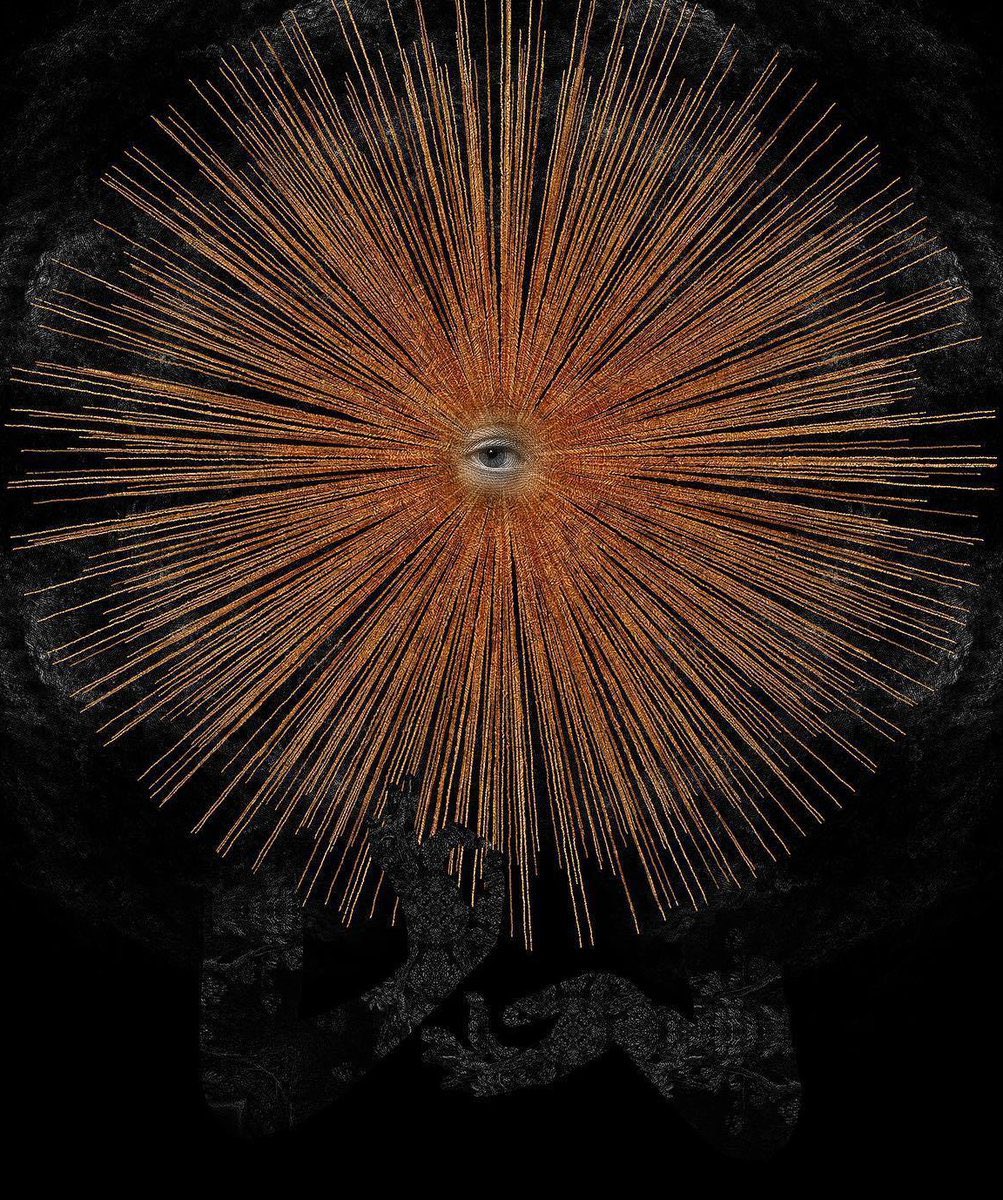
God's non-existence is impossible: If Any being whose non-existence is conceivable, then it is a merely contingent being without contradiction. God cannot be defined as a merely contingent being without contradiction Then, God is not being whose non-existence is conceivable
Natural Theist tweet media
English
12
2
9
1.6K
Friction
Friction@FrictionPhilo·
@darwintojesus You're trivially wrong that it assumes that morality is objective, although I'm not surprised that you'd make that mistake. Still, we might wonder how "more moral" is intended to be understood.
English
0
0
3
41
Darwin to Jesus
Darwin to Jesus@darwintojesus·
This meme literally assumes morality is objective. If morality wasn’t objective we could never meaningfully say that one person was “more moral” than another.
Axi∞m@AxiomSolos

English
49
10
200
6.5K
Friction
Friction@FrictionPhilo·
@ophello @EricWollberg This is trivially worong, and it's strange watching people reason so poorly about this. Myself now imagining a world without observers is an activity that involves an observer, but the imagined scenario is not one that involves an observer.
English
0
0
0
16
ophello
ophello@ophello·
@EricWollberg This is the great fallacy of materialists. Try to imagine a universe with no observer. You literally cannot. Because by doing so, you place yourself there. A universe with no observer cannot actually exist. Existence is not a reaction — it is an action.
English
36
0
77
12.9K
Axial Wanderer
Axial Wanderer@EricWollberg·
A universe without a conscious observer is indistinguishable from no universe at all.
Axial Wanderer tweet media
English
275
575
4.6K
200.9K
Crazy Moments
Crazy Moments@Crazymoments01·
Witness the incredible power of a mother's love.
English
12
36
284
29.5K
Friction
Friction@FrictionPhilo·
@DrScotMSullivan As standardly expressed, that's not an instance of predication, but an existential claim. If it's intended as a predicative statement, then I would deny that it succeeds as such.
English
0
0
1
75
Dr. Scott M. Sullivan
Dr. Scott M. Sullivan@DrScotMSullivan·
A Short Logical Ontological Argument The proposition “God exists” is either an instance of essential or accidental predication “God exists” is not an instance of accidental predication Therefore, “God exists” is an instance of essential predication All instances of essential predication are necessarily true “God exists” is an instance of essential predication Therefore, “God exists” is necessarily true
English
5
1
4
399
Friction
Friction@FrictionPhilo·
@MartinTweats This is invalid. The inference to 5.12 is inadmissible. Indeed, if 5.10 is an existential elimination of 5.9, then it should just say Explains(b,a). You add in ¬C(b) without deriving it, which makes the subsequent ∃I invalid.
English
1
0
5
60
Friction
Friction@FrictionPhilo·
In this interview, Dan Nicholson discusses his book, "What Is Life? Revisited". How does order come from disorder? Are organisms mechanistic and deterministic? How did Schrödinger’s book impact biology, for better or worse? Check it out! youtu.be/8mVxHx_yhGQ
YouTube video
YouTube
English
0
0
3
1.6K
Friction
Friction@FrictionPhilo·
@darwintojesus The genetic evidence alone is decisive. Evolution is true, and this is a silly "debate".
English
1
0
8
239
Natural Theist
Natural Theist@AleMartnezR1·
@Leophilius I forgot how Christianity´s truth depended on the personal opinion of professional "philosophers" in a specific field. Damn, how wrong I was.
English
3
0
28
1K
Friction
Friction@FrictionPhilo·
@Philip_Goff @danieldennett @davidpapineau I've always found the phrase "knowing what it's like" to be sloppy and unclear, but I think that I'd deny both options. I figure Papineau would agree: we know some truths about pain based on relevant experiences, but physicalism doesn't require that Mary would know all truths.
English
0
0
4
85
Philip Goff
Philip Goff@Philip_Goff·
A physicalist has to bite 1 of these bullets: 1) a blind from birth neuroscientist could know what it's like to see red (@danieldennett style old-school physicalism). 2) we know nothing about what pain is from knowing how it feels (@davidpapineau style new-fangled physicalism).
Lorenzo Elijah (PhD)@LorenzoElijah

I agree this is self-evident. Seems there’s a deeper disagreement here about what needs explaining. One side defines consciousness as qualia (subjective experience from the inside). The other defines consciousness as something information processing. Which side you take frames the whole debate.

English
44
3
76
9.9K