Dixie Normus@DixieNormu95224
Julie and Chris Albert did not simply hand their phones to MSP and say, “Search everything.”
There was no full Cellebrite extraction, no complete download, no apparent recovery of deleted messages, and no broad review of calls, apps, photos, emails, contacts, or communications with everyone connected to the case.
This was an extremely narrow, consensual search focused almost entirely on phone numbers MSP already believed belonged to Michael Proctor.
MARCH 18, 2024
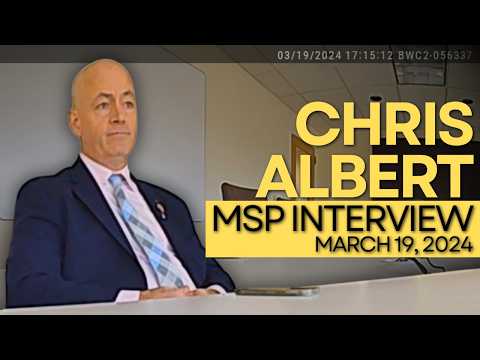
During Julie’s first interview, investigators asked about communications with Proctor and requested permission to look through her phone.
But MSP immediately reassured her
“We’re not looking to dump your phone.”
They explained that a dump would extract everything, and that was not what they wanted. They were seeking only direct Proctor communications, group threads involving Proctor, and specific messages referenced in court.
Julie still did not consent.
“I’m just not going to make this decision right now.”
She wanted to speak with Chris first.
A few hours later, after leaving MSP with the phone, Julie called back and said she had found Proctor saved as “Mike Proctor,” along with one incoming message and one response.
To her credit, she reported it. But she had been alone with the phone before investigators documented those messages, and she still had not authorized them to conduct their own search.
MARCH 19, 2024
Julie returned and allowed MSP to view and photograph the Proctor contact and two messages she had personally found.
That is not the same as consenting to an independent search.
When asked again, Julie said
“I have, but I haven’t figured that out with my husband just yet.”
So MSP could document what Julie placed in front of them, but could not independently search the device themselves.
The delays continued. Julie wanted more time, investigators and Julie played phone tag, she became ill, and scheduling carried into the following week.
Julie did not sign the consent form until April 3....16 days after her first interview.
Even then, the search remained extremely limited.
Julie stayed in the room while an investigator manually entered several known Proctor phone numbers into the iPhone’s ordinary search function.
No forensic extraction. No deleted-message recovery.
They found one incoming message from Proctor’s number ending in 2093, Julie’s response, and nothing associated with four other known numbers.
That tells us only what appeared through those particular manual searches on April 3.
It does not establish whether deleted messages once existed, whether calls occurred instead of texts, whether another number or app was used, whether communications existed on an earlier phone or cloud backup, or whether Apple IDs, emails, aliases, or unidentified numbers were involved.
In fact, during Julie’s second interview, her own phone displayed a notice that additional results would appear after Messages finished indexing.
This was not a forensic examination of Julie Albert’s phone.
It was a carefully restricted search of selected numbers, conducted only after more than two weeks of hesitation.