Dr Harsh Shah, MCh

1.7K posts

Dr Harsh Shah, MCh banner
Dr Harsh Shah, MCh

Dr Harsh Shah, MCh

@GI_Cancer_Doc

GI & HPB Surgical Oncologist @apollo_ahd @scrc_clinic📍 Ahmedabad, 🇮🇳

Ahmedabad, India Katılım Temmuz 2018
62 Takip Edilen953 Takipçiler
Dr Harsh Shah, MCh
Dr Harsh Shah, MCh@GI_Cancer_Doc·
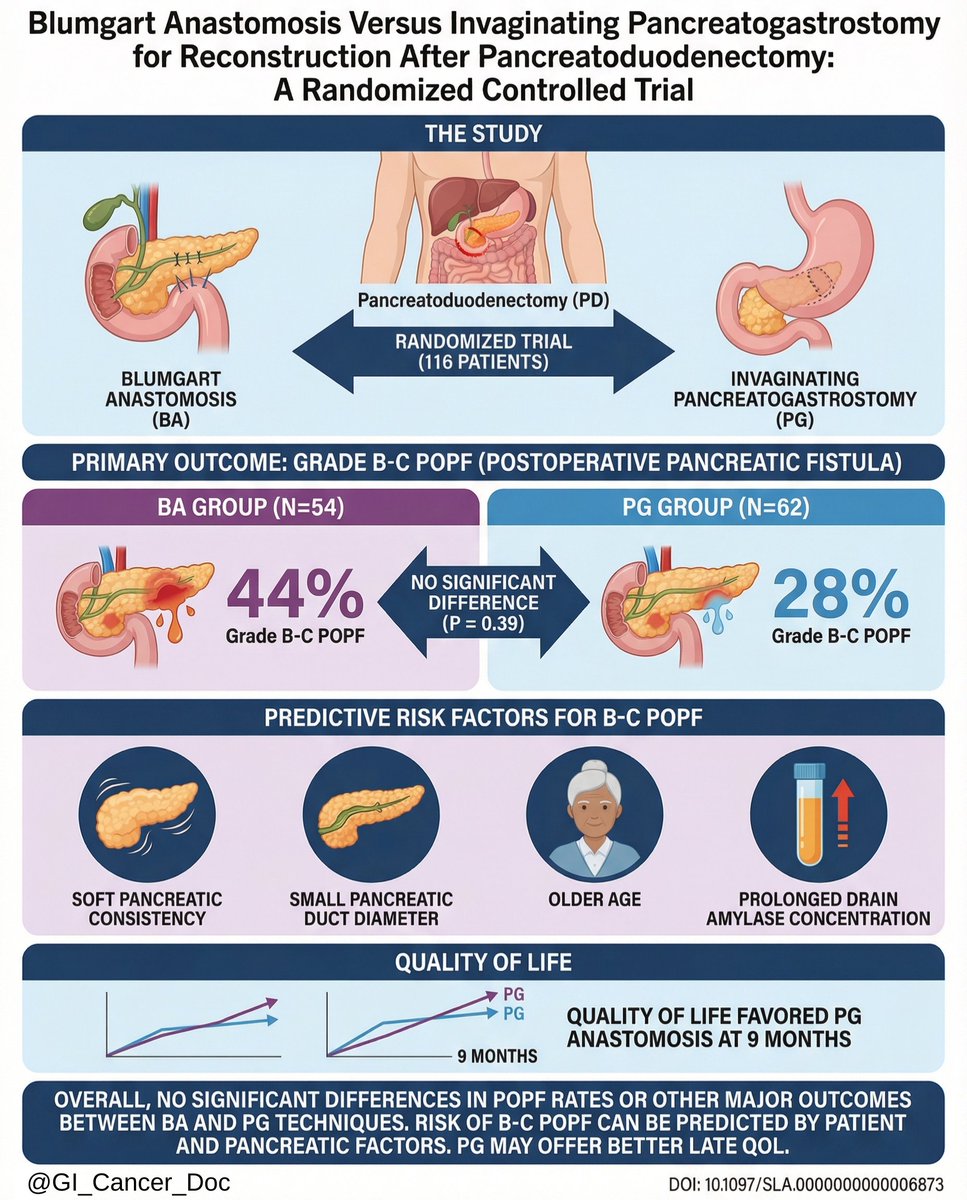
🩺 Pancreatic reconstruction after PD: Blumgart anastomosis does not reduce clinically relevant POPF compared with invaginating pancreatogastrostomy. @AnnalsofSurgery 🧪 Study overview Randomized controlled trial comparing Blumgart anastomosis (BA) vs pancreatogastrostomy (PG) after pancreatoduodenectomy Primary endpoint: postoperative pancreatic fistula (POPF), including clinically relevant grades 📊 Key findings • Overall POPF rates were not significantly different between BA and PG • Clinically relevant POPF occurred at comparable rates in both groups • Severe complications and mortality were similar between techniques • Pancreatic texture, duct diameter, and patient factors influenced POPF independent of reconstruction method ⚠️ Limitations noted • Anastomotic technique alone did not overcome gland- and patient-related risk factors 💡 Clinical takeaway Choice between BA and PG should be individualized, with greater emphasis on pancreatic risk profile and surgeon expertise than on anastomotic technique. 🔗 Source: pubmed.ncbi.nlm.nih.gov/40747945 #AnnalsOfSurgery #Pancreatoduodenectomy #PancreaticSurgery #PostoperativePancreaticFistula #RandomizedControlledTrial #SurgicalReconstruction
Dr Harsh Shah, MCh tweet media
English
0
0
0
92
Dr Harsh Shah, MCh
Dr Harsh Shah, MCh@GI_Cancer_Doc·
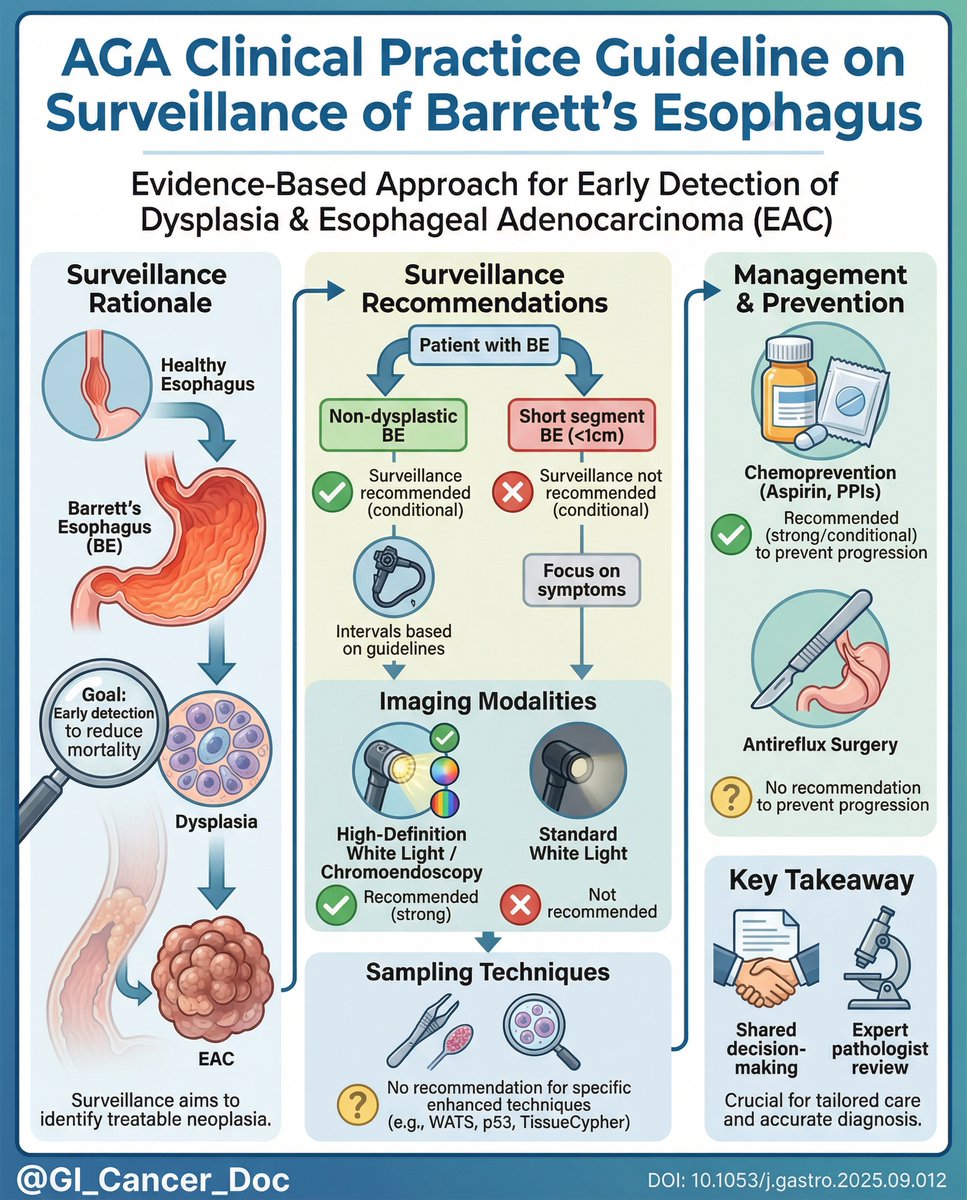
🩺 AGA updates surveillance strategy for Barrett’s esophagus, emphasizing risk-based endoscopic approaches to prevent progression to esophageal adenocarcinoma. @AGA_Gastro 🧪 Study overview AGA Clinical Practice Guideline on Surveillance of Barrett’s Esophagus 📌 Key findings • Endoscopic surveillance recommended as a cancer prevention strategy in Barrett’s esophagus • Surveillance intervals tailored by presence and grade of dysplasia • Conditional recommendations favor advanced imaging and chromoendoscopy to enhance neoplasia detection • Structured biopsy protocols and high-quality endoscopic examination emphasized • Risk stratification tools (including biomarkers and TissueCypher) discussed for progression prediction • Daily proton pump inhibitor therapy favored over no therapy to reduce progression risk ⚠️ Limitations • Many recommendations are conditional due to low or very low certainty evidence • Evidence gaps remain for optimal surveillance intervals and risk stratification tools 💡 Clinical takeaway A structured, high-quality, risk-adapted surveillance approach is central to managing Barrett’s esophagus, with shared decision-making essential given evidence limitations. 🔗 Source: pubmed.ncbi.nlm.nih.gov/41125322 #Gastroenterology #BarrettsEsophagus #EsophagealCancer #EndoscopicSurveillance #ClinicalGuidelines #GastroenterologyPractice
Dr Harsh Shah, MCh tweet media
English
0
0
0
124
Dr Harsh Shah, MCh
Dr Harsh Shah, MCh@GI_Cancer_Doc·
🔍 Imaging choice matters when assessing nonviability of disappearing colorectal liver metastases (DLMs). @JAMASurgery 🧪 Study overview JAMA Surgery multicenter prospective study evaluating MRI vs CT for post-chemotherapy DLM assessment. 📊 Key findings MRI demonstrated higher diagnostic accuracy than CT for predicting nonviability of DLMs Combining MRI + CT improved sensitivity compared with CT alone CT alone showed lower negative predictive value, with risk of residual viable disease Imaging performance varied based on lesion detectability and follow-up correlation ⚠️ Limitations Residual viable tumor still observed in some lesions deemed nonviable on imaging Imaging alone cannot fully exclude microscopic disease 💡 Clinical takeaway MRI—preferably combined with CT—should be favored over CT alone when evaluating disappearing liver metastases to guide surgical decision-making. 🔗 Source: pubmed.ncbi.nlm.nih.gov/40960802/ #JAMASurgery #ColorectalCancer #LiverMetastases #DiagnosticImaging #MRI #CTScan #Oncology #SurgicalOncology
Dr Harsh Shah, MCh tweet media
English
0
1
3
153
Ali Al-Adhami
Ali Al-Adhami@Amsk82Dr·
@GI_Cancer_Doc @Gut_BMJ But why would I do elastography on low FIB4 score cases? What's the source please? This is really interesting.
English
1
0
0
32
Dr Harsh Shah, MCh
Dr Harsh Shah, MCh@GI_Cancer_Doc·
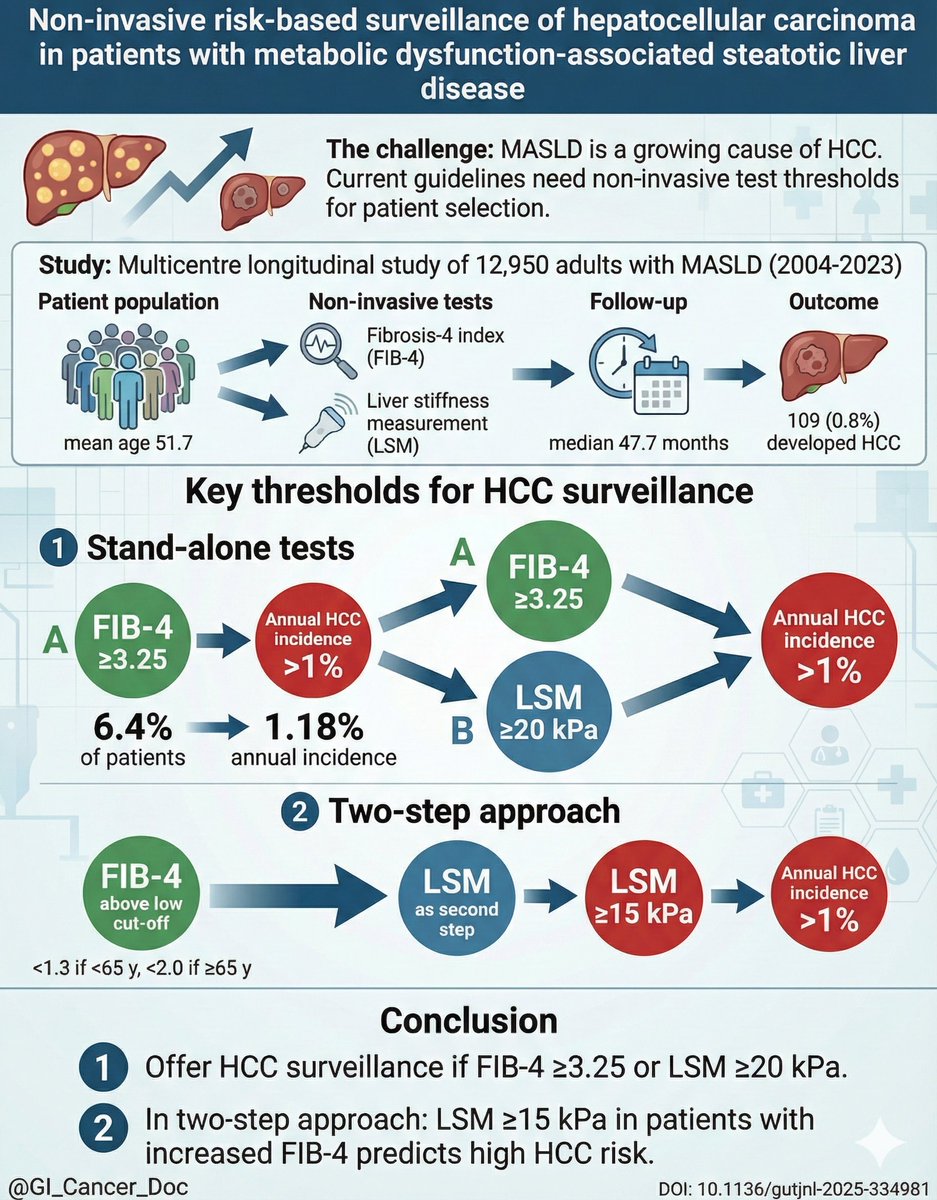
🔎 Non-invasive thresholds using FIB-4 and LSM clearly define which MASLD patients cross the HCC surveillance risk threshold. @Gut_BMJ 🧪 Key Findings FIB-4 risk tiers: • Below low cut-off → 0.07% annual HCC • Low cut-off–<2.67 → 0.17% • 2.67–<3.25 → 0.77% • ≥3.25 → 1.18% 🎯 (meets surveillance threshold) LSM as single test: • ≥10 kPa → >0.2% annual HCC • ≥20 kPa → >1% annual HCC Two-step FIB-4 → LSM: • In patients with elevated FIB-4, LSM ≥15 kPa identifies >1% annual HCC risk. ⚠️ Limitations Mentioned HCC incidence overall remained low (0.8%), underscoring the need for precise risk stratification. 💡 Clinical Takeaway Surveillance is justified in MASLD patients with FIB-4 ≥3.25, LSM ≥20 kPa, or LSM ≥15 kPa in a two-step algorithm. #Gut #MASLD #HCC #FIB4 #LSM #LiverCancer
Dr Harsh Shah, MCh tweet media
English
1
7
5
1.2K
Dr Harsh Shah, MCh
Dr Harsh Shah, MCh@GI_Cancer_Doc·
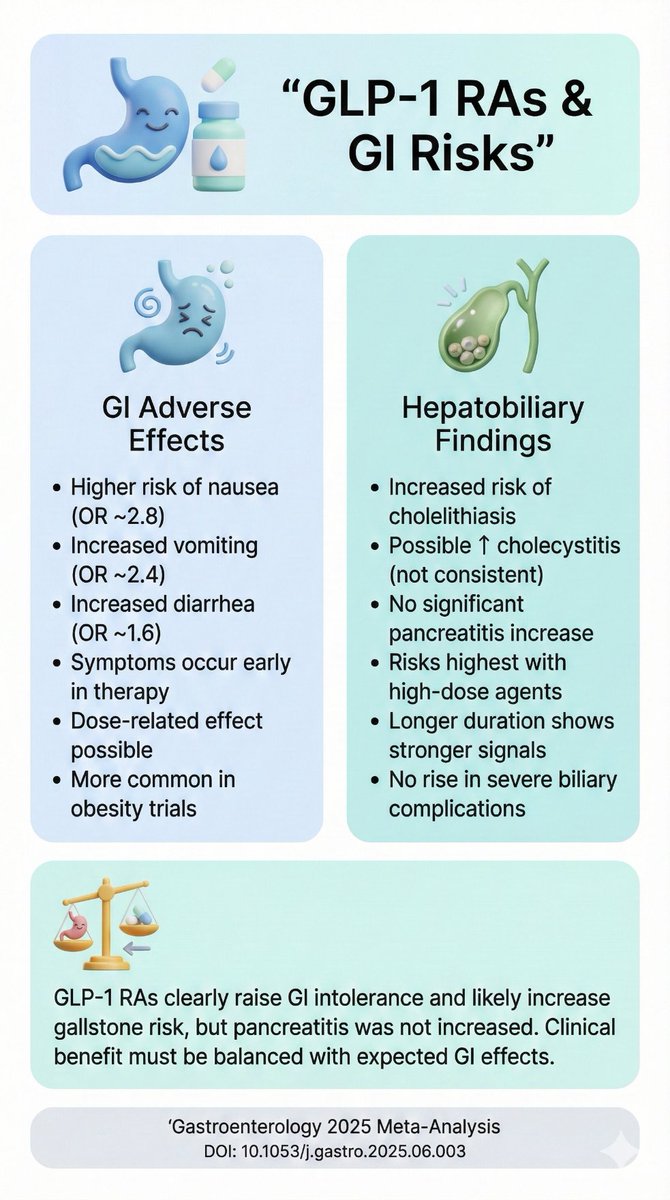
🩺💊 GLP-1 receptor agonists significantly increase the risk of cholelithiasis and GERD while showing no meaningful rise in most other GI or biliary adverse events. @AGA_Gastro This is clinically relevant for oncologists as GLP-1RAs are increasingly used in cancer survivors with obesity or metabolic dysfunction, where GI toxicity may affect treatment tolerance and supportive-care planning. 🔑 Key Takeaways from the Study • Across 55 RCTs (>106,000 participants), GLP-1RAs increased cholelithiasis (RR 1.56) and GERD (RR 1.29). • No significant increase in pancreatitis, gastritis, esophagitis, intestinal obstruction, or other biliary complications. • Elevated risk was more evident in individuals with overweight/obesity or metabolic dysfunction—highly relevant for oncology practice. • Weight-loss–oriented dosing showed numerically stronger GI toxicity signals, though subgroup differences were not statistically distinct. 🧪 Critical Analysis Pros: • Large, methodologically rigorous RCT dataset provides strong statistical reliability. • Clear endpoint definitions and clinically interpretable absolute risk metrics. Cons: • Oncology-specific GI vulnerabilities (post-surgical changes, tumor compression, opioid use) not reflected in included trials. • Heterogeneity in GLP-1RA agent type, dose, and baseline gallbladder status. • RCTs underpowered for rare but oncology-relevant complications such as bowel obstruction. 📊 Comparison With Landmark Studies • Confirms earlier findings showing cholelithiasis as a class effect of GLP-1RAs. • Strengthens preliminary signals from LEADER and SUSTAIN-6 by providing more refined, adequately powered toxicity estimates. • Neutral pancreatitis risk aligns with major GLP-1RA cardiovascular outcome trials, supporting broader safety context. 📚Published in Gastroenterology 🔗DOI: 10.1053/j.gastro.2025.06.003 #Oncology #GLP1RA #GastrointestinalToxicity #CancerSurvivorship #MetabolicHealth #ObesityMedicine #EndocrineOncology #Gastroenterology
Dr Harsh Shah, MCh tweet media
English
0
4
4
863
Dr Harsh Shah, MCh
Dr Harsh Shah, MCh@GI_Cancer_Doc·
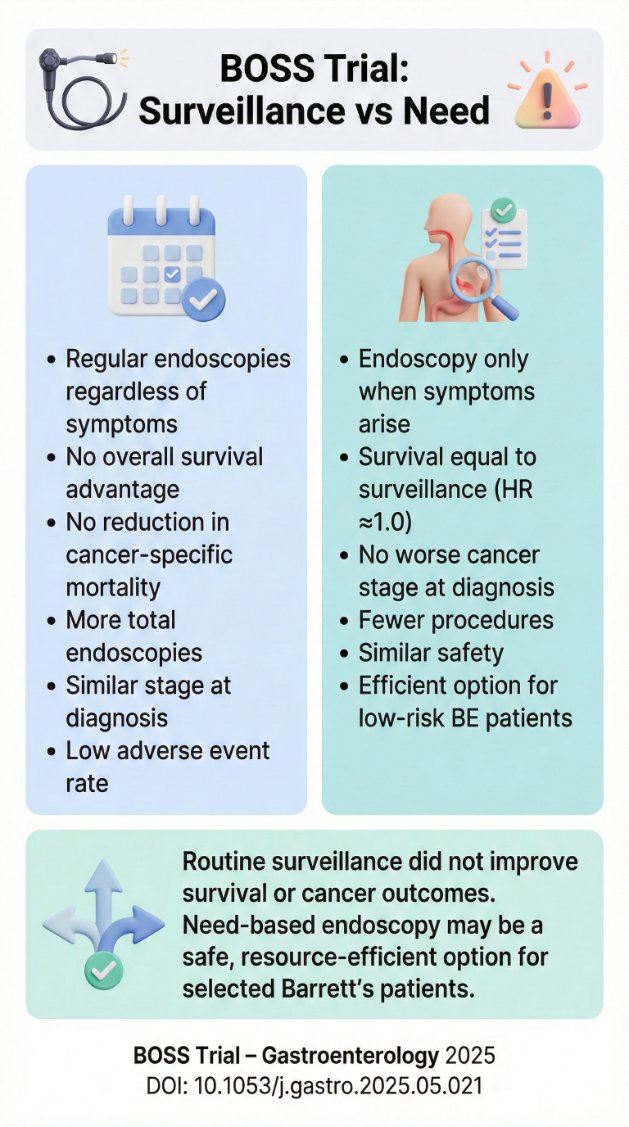
🔬📄 Barrett's Oesophagus Surveillance Versus Endoscopy at Need Study (BOSS): A Randomized Controlled Trial Barrett’s esophagus (BE) is a known precursor to esophageal adenocarcinoma (EAC). Surveillance endoscopy is commonly performed to detect early cancer. The BOSS trial is the first randomized controlled study to compare this strategy to symptom-driven, "at-need" endoscopy. 🧠 📌🔍 Study Overview Conducted across 109 centers in the UK, this large-scale trial randomized 3453 patients with BE: 🗓️ One group underwent 2-yearly surveillance endoscopy 🚨 The other had endoscopy only when symptoms arose Patients were followed for a minimum of 10 years. The main outcome measured was overall survival. Secondary outcomes included cancer-specific survival, EAC diagnosis timing, EAC stage, and procedure-related adverse events. 📊 Key Findings 💀 Overall survival was not improved in the surveillance group (333 deaths) compared to at-need (356 deaths) 📉 Hazard ratio: 0.95 (P = .503) 🎯 Cancer-specific survival and EAC diagnosis rates showed no significant difference 🧪 EAC was diagnosed in 40 surveillance vs 31 at-need patients (HR: 1.32; P = .254) 🔬 Cancer stage at diagnosis was similar across groups ⚠️ Serious adverse events were rare: 0.46% (surveillance) vs 0.41% (at-need) 🧭 Clinical Takeaway Routine surveillance did not improve survival or reduce cancer progression. In low-risk BE patients, symptom-triggered endoscopy may be a safe and appropriate alternative, potentially reducing unnecessary procedures without compromising outcomes. This finding challenges long-standing practice and could shift future guidelines. 🔗 DOI: 10.1053/j.gastro.2025.05.021
Dr Harsh Shah, MCh tweet media
English
0
0
0
142
Dr Harsh Shah, MCh
Dr Harsh Shah, MCh@GI_Cancer_Doc·
What is the definitive level for IMA ligation in rectal and sigmoid cancer—high or low? This meta-analysis of 16 RCTs shows low ligation (LCA-preserving) significantly reduces anastomotic leak rates (RR 0.44). The oncologic outcomes—node harvest, recurrence, and 5-year survival—were equivalent. This isolates the surgical benefit: we sacrifice nothing in cancer control to gain a major advantage in anastomotic integrity. You J et al. *BMC Cancer*. 2025. DOI: 10.1186/s12885-025-14959-3
Dr Harsh Shah, MCh tweet media
English
0
0
0
110
Dr Harsh Shah, MCh
Dr Harsh Shah, MCh@GI_Cancer_Doc·
Which robotic approach—Ivor Lewis, McKeown, or transhiatal—provides the optimal balance of perioperative safety and oncologic efficacy? This meta-analysis of 7,339 patients showed robotic Ivor Lewis had significantly lower rates of RLN palsy and anastomotic leak compared to McKeown. The data suggests a clear advantage for the thoracic anastomosis. Avoiding the morbidity of a cervical anastomosis appears to be the key driver of superior perioperative outcomes, while achieving equivalent oncologic results and long-term survival. Coco D et al. *J Robot Surg*. 2025. DOI: 10.1007/s11701-025-02867-4
Dr Harsh Shah, MCh tweet media
English
0
0
0
79
Dr Harsh Shah, MCh
Dr Harsh Shah, MCh@GI_Cancer_Doc·
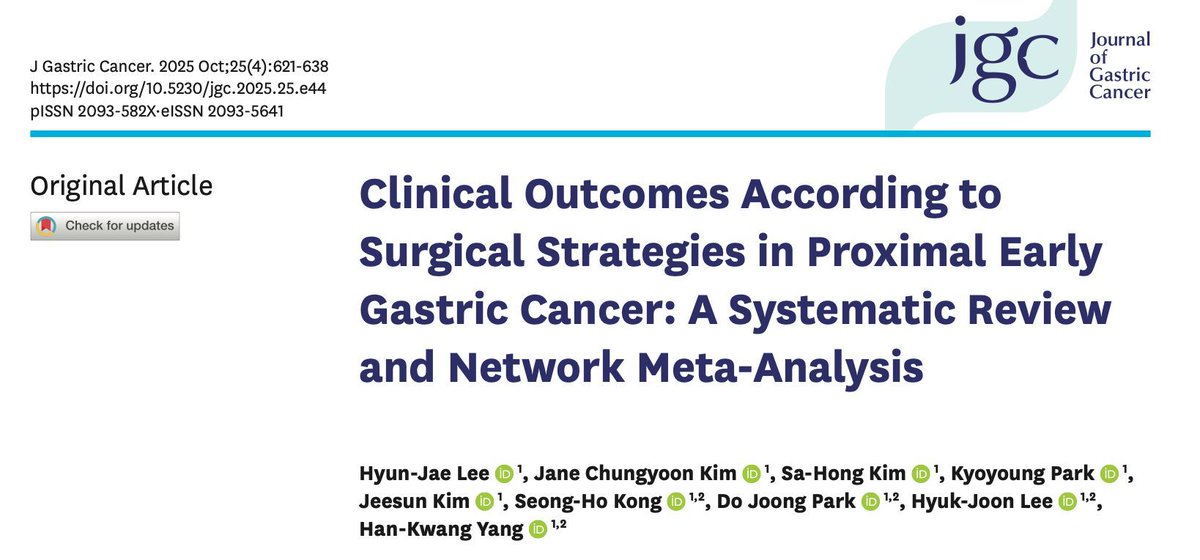
What is the optimal reconstruction for proximal early gastric cancer? This NMA of 3,497 patients suggests DTR and DFT are functionally superior to simple esophagogastrostomy (EG) and total gastrectomy (TG). EG fails on reflux and stenosis; TG on nutrition. DTR and DFT provide a balanced solution, with DTR showing less stenosis than EG and DFT showing the best 12-month hemoglobin. This supports a function-preserving approach, despite the technical demands. Lee HJ et al. *J Gastric Cancer*. 2025. DOI: 10.5230/jgc.2025.25.e44
Dr Harsh Shah, MCh tweet media
English
0
0
0
52
Dr Harsh Shah, MCh
Dr Harsh Shah, MCh@GI_Cancer_Doc·
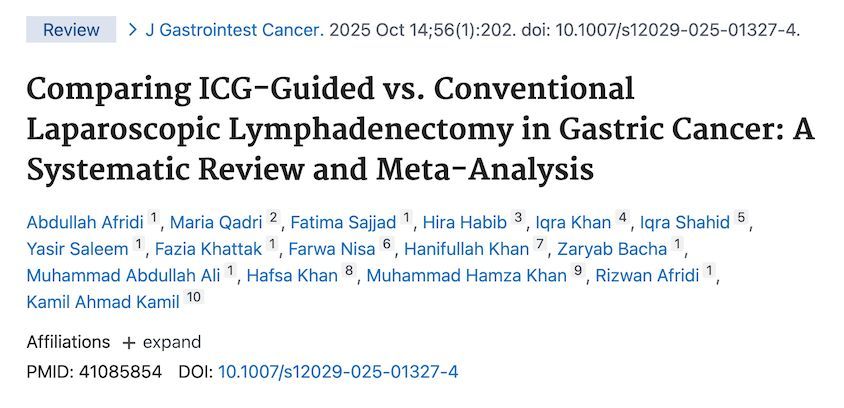
Does ICG guidance truly improve outcomes in laparoscopic gastrectomy for cancer? This meta-analysis found ICG-guided dissection yielded a mean of 6 additional nodes and was associated with improved 1- and 2-year overall survival. The survival signal is compelling. It suggests ICG is more than just a visual aid for finding extra nodes; it may be fundamentally improving the quality and precision of the D2 dissection. Afridi A et al. *J Gastrointest Cancer*. 2025. DOI: 10.1007/s12029-025-01327-4
Dr Harsh Shah, MCh tweet media
English
0
0
0
48
Dr Harsh Shah, MCh
Dr Harsh Shah, MCh@GI_Cancer_Doc·
How do we pre-emptively identify left-sided communicating veins to safely expand parenchyma-sparing resections at the confluence? This novel technique of selective, ultrasound-guided MHV compression successfully identified CVs in 71% of patients. This is a key intraoperative maneuver. It’s not just finding anatomy, but *proving* left-sided drainage. This knowledge changed the operative plan in 57% of cases, allowing for a segmental resection where a larger hepatectomy might otherwise have been performed. Procopio F et al. *Updates Surg*. 2025. DOI: 10.1007/s13304-025-02429-1
Dr Harsh Shah, MCh tweet media
English
0
0
1
63
Dr Harsh Shah, MCh
Dr Harsh Shah, MCh@GI_Cancer_Doc·
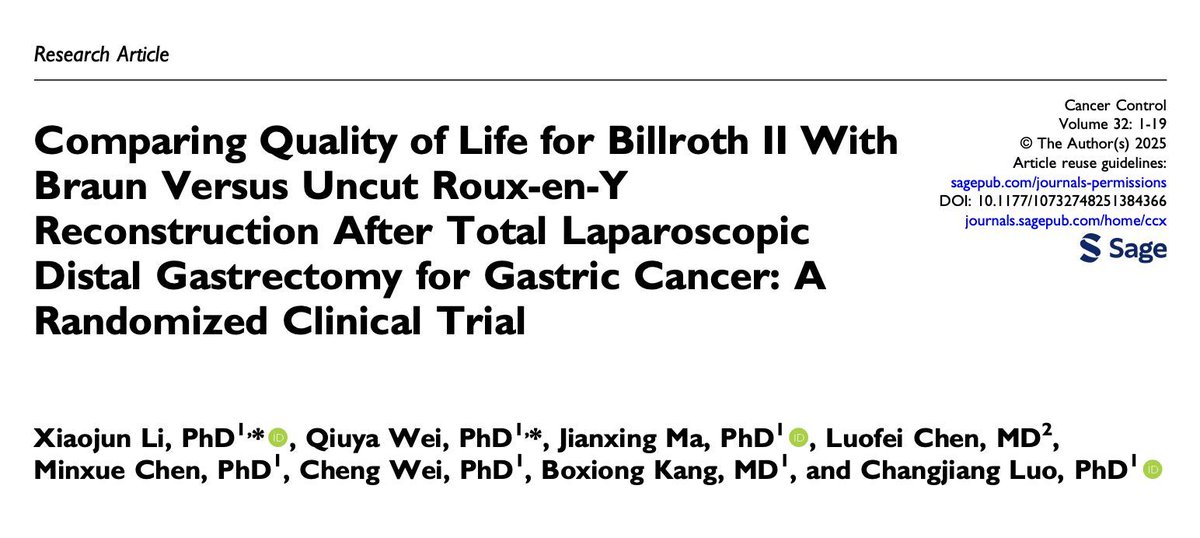
Does uncut Roux-en-Y improve quality of life over a Billroth II with Braun anastomosis after distal gastrectomy? This RCT confirms superior QoL at 24 months for URY, driven by significantly reduced bile reflux, nausea, and vomiting. The functional benefit is clear. It comes at the cost of a longer reconstruction time and a defined learning curve (~22 cases). Oncologic outcomes were equivalent, supporting the technical investment. Li X et al. *Cancer Control*. 2025. DOI: 10.1177/10732748251384366
Dr Harsh Shah, MCh tweet media
English
0
0
0
53
Dr Harsh Shah, MCh
Dr Harsh Shah, MCh@GI_Cancer_Doc·
In localized CRC with PIK3CA mutations, low-dose aspirin (160 mg daily x3 yrs) reduced recurrence: 🔹Group A (PIK3CA exon 9/20): 7.7% vs 14.1% 🔹Group B (other PI3K/PTEN): 7.7% vs 16.8% P=0.04 and 0.02, respectively. Randomized evidence at last. 🔗 nejm.org/doi/full/10.10… #ColorectalCancer #GIoncology
Dr Harsh Shah, MCh tweet media
English
0
0
1
82