John Marcone
368 posts

John Marcone
@GJMarcone
I was told this would be good for business.
Chicago, IL Katılım Ekim 2022
142 Takip Edilen98 Takipçiler

John Marcone retweetledi


John Marcone retweetledi
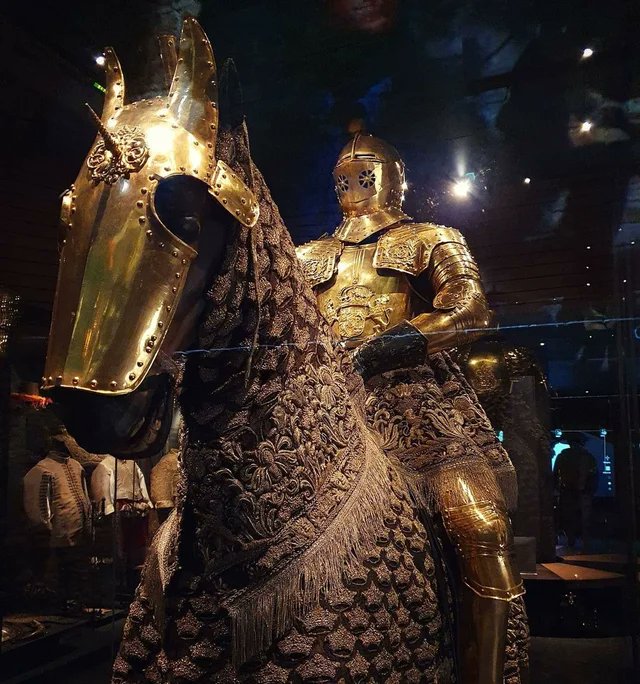
A visual representation of the healing power of time
📹fallinginsand
English
John Marcone retweetledi

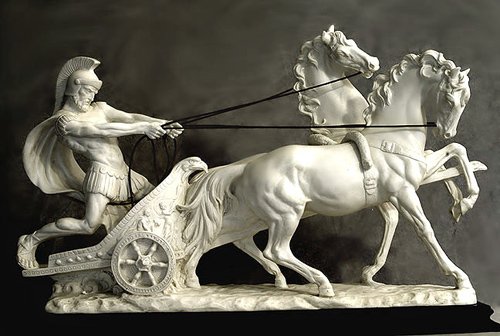
Ancient Roman charioteer Gaius Appuleius Diocles was the best-paid athlete of all time.
His winnings amounted to 35,863,120 sesterces, the equivalent of over 15 billion US dollars!
English
John Marcone retweetledi

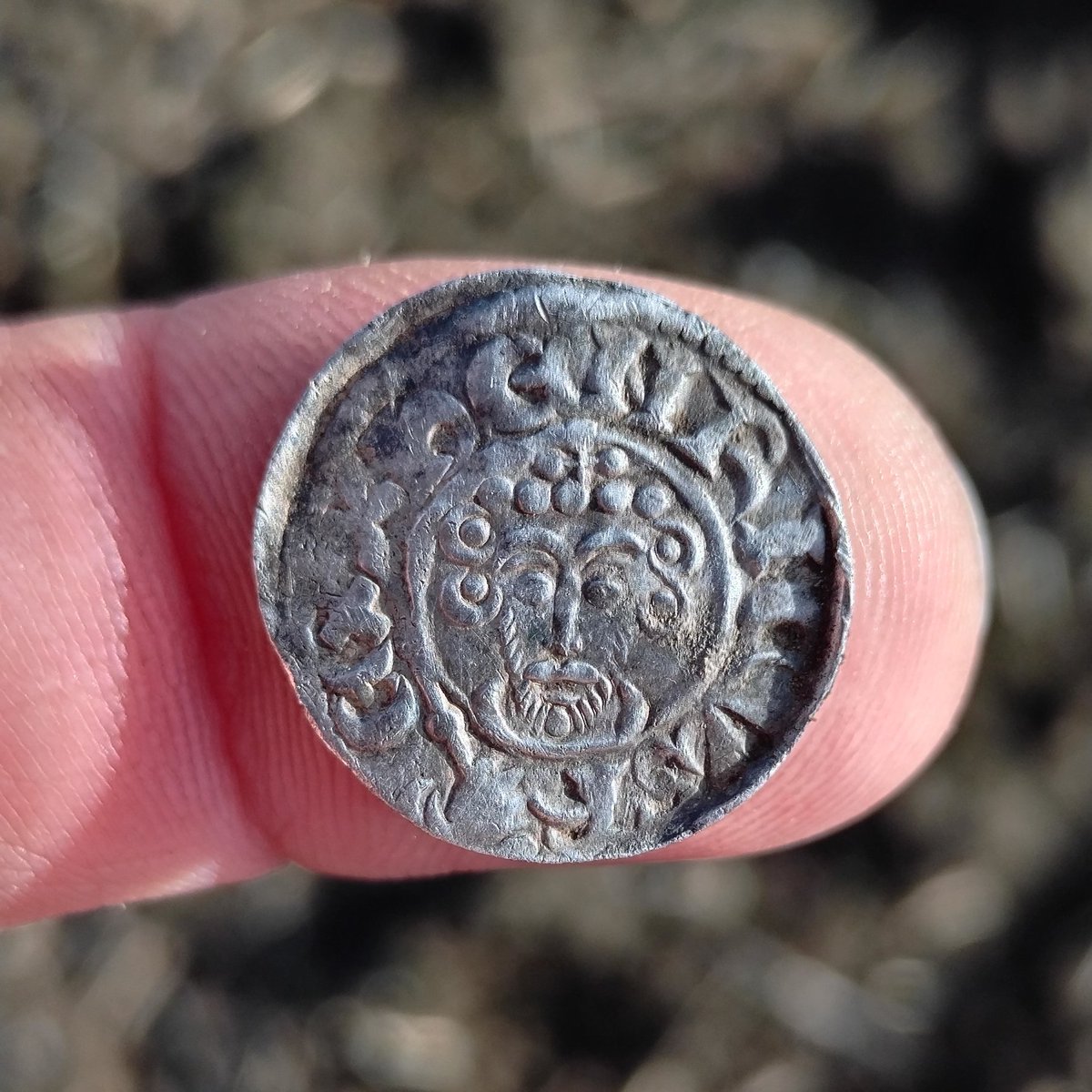
Moved on to a different area as getting into very noisy, Iron infested ground. Wasn't a bad choice.
Medieval voided short cross Penny, minted by Miles of Winchester, I think. AD 1180-1247

English
John Marcone retweetledi
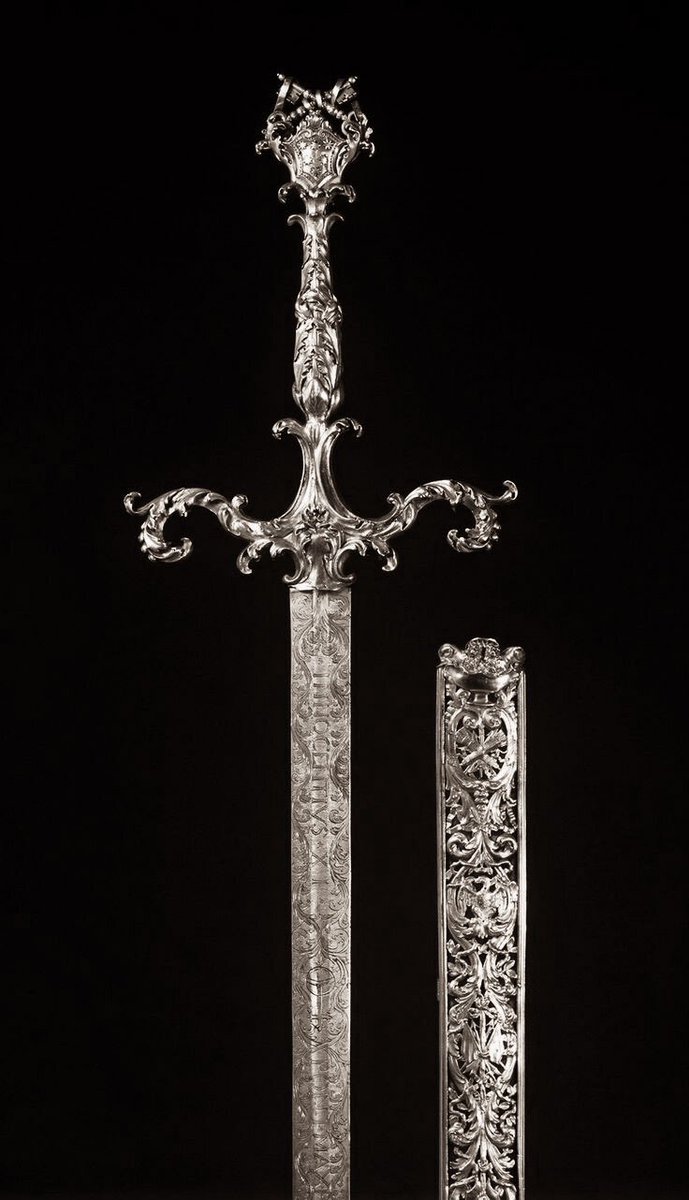
What could be the reason for the aesthetic concern in daggers?

English
John Marcone retweetledi

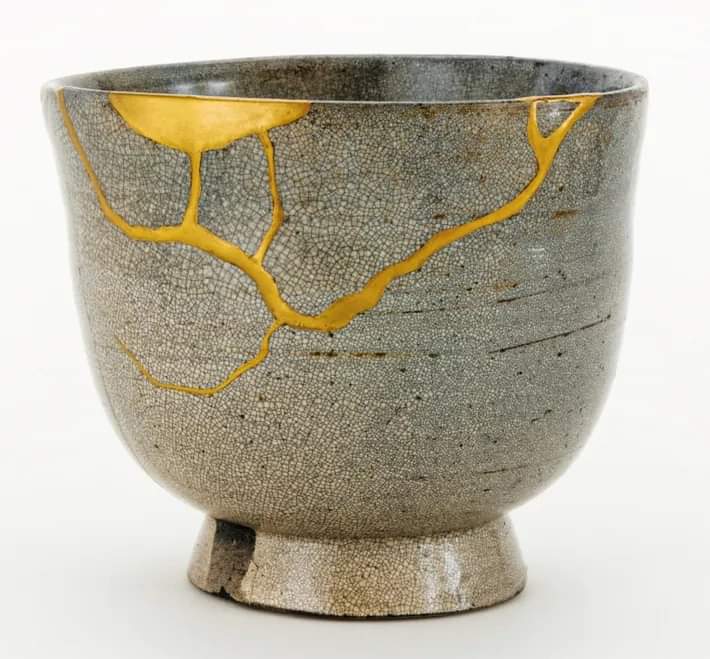
A 1600 CE, Tea-bowl (White Satsuma Ware) was mended by Master Potter 'Honami Koetsu' (1558-1637 CE). Later, in late 17th Century CE, this Tea-bowl undergoes the practice of Kintsugi, during Edo Period (1603-1868 CE).
Some four or five centuries ago in Japan, a lavish technique emerged for repairing broken ceramics. Artisans began using lacquer and gold pigment to put shattered vessels back together. This tradition, known as "Kintsugi" (golden seams) or 'Kintsukuroi' (golden repair), is still going strong.
Origins of kintsugi are uncertain, but it’s likely that practice became commonplace in Japan during late 16th or early 17th Centuries CE. Its beginnings are often associated with famed tale of a 15th Century CE, Japanese military ruler whose antique Chinese celadon-glazed bowl had broken. Story goes that he sent bowl back to China for a replacement. He was told that the piece was so rare, there wasn’t another one like it. Chinese sent back original bowl, repaired with metal staples (as was Chinese fashion).
Through this story, Cort explained, we can infer that gold lacquer repairs weren’t yet being performed in 15th Century CE. It’s more likely that tradition began in time with rise of tea bowls, vessels used in traditional Japanese tea ceremonies, which flourished in 16th Century CE. Kintsugi’s international reach is a modern phenomenon; it was historically only practiced in Japan, though technique was used on imported ceramics from other parts of Asia, particularly China and Korea.
First known reference to kintsugi, Cort offered, concerns a 17th Century CE, Japanese warrior who was closely associated with fashionable tea drinking ceremonies of his day. “He was accused of influencing market for tea bowls by buying boring, plain old bowls, breaking them, having them repaired with kintsugi, and earning good money for them.”
That seems to indicate that, by the beginning of 17th Century CE, kintsugi was a commonly used technique for repairing and at same time, ornamenting ceramics for tea. Artisans who would mend these broken tea bowls, as well as other ceramic vessels used in tea ceremonies, were Japanese lacquer masters who were trained in various techniques of lacquer arts. In addition to kintsugi, their skills may have included maki-e, a technique for painting fine gold or silver florals and landscapes onto decorative objects, as well as crafting lacquer trays, boxes, and other designs.
Traditionally, kintsugi process calls for a Japanese lacquer known as urushi, which is made from tree sap. This material has been used for some 9000 years by Japanese lacquer masters as a glue, putty or paint. Traditional kintsugi method, begins by using lacquer to glue ceramic pieces back together. Lacquer is also used as a putty to fill in any gaps or holes where chips from original vessel might be missing. This mending is most difficult part, because lacquer cannot be removed once it’s dry, and pieces must be put into place all at once, even if there are 20 different parts.
Then, lacquer must dry and harden, a process that can take weeks, before it is sanded down to lie flush with rest of vessel. Finally, lacquer master will paint over lacquer seams with gold. It’s a common misconception, that entire mending process is done with gold; it’s really just the surface. At times, a piece might have been mended with silver for aesthetic purposes, but gold has long been preferred because it does not tarnish and is food-safe.
Ultimately, modern-day fascination with kintsugi may have most to do with its associations with Japanese philosophy of wabi, a 16th Century CE, historical term, which describes beauty of imperfections; and kintsugi has endured and fascinated for centuries, its longevity may be due to its tender embrace of accidents and mistakes.
(11.4x11.7cm)
Smithsonian Institution
#archaeohistories
English
John Marcone retweetledi
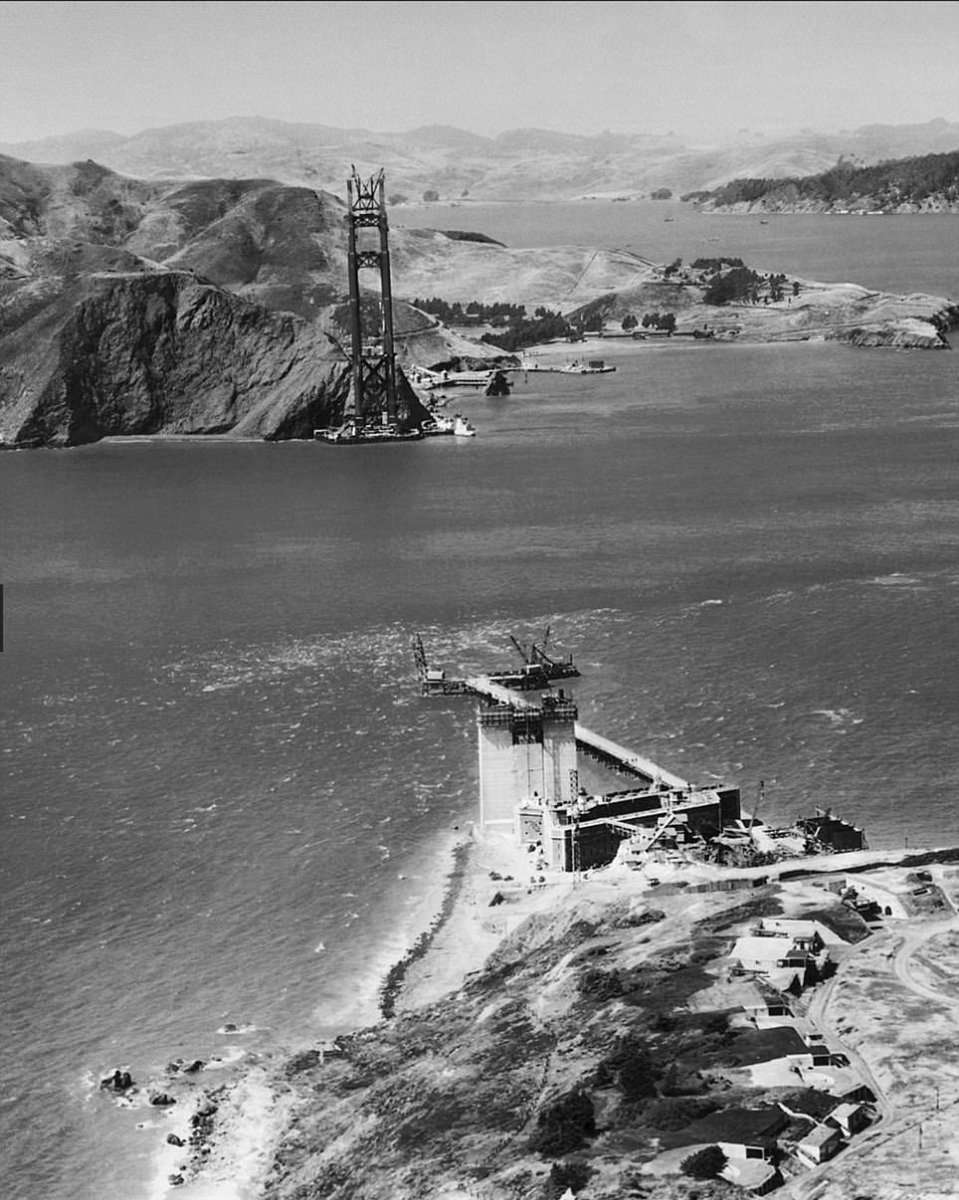
This rare photo captures the early construction of the Golden Gate Bridge, a pivotal moment in the development of San Francisco's transportation infrastructure.
In 1848, the city's population was meager, with fewer than 500 residents. However, the Gold Rush in 1849 led to a tenfold increase in population. By the early 1900s, the Bay Region had reached a million inhabitants, necessitating the development of a major north-south highway. Highway 101 was the key to establishing a viable statewide transportation route, but it required a bridge to span the Golden Gate.
Advancements in civil engineering during the early 1900s opened the door to designing and constructing long-span bridges. The notion of a grand bridge across the Golden Gate, once thought impossible, suddenly became a potential reality.
Despite facing political opposition, limited funds due to the Great Depression that began in 1929, and the daunting physical challenges of bridging a mile-wide stretch of water, the residents of six northern California counties made the bold decision to finance the construction of the Golden Gate Bridge.
The construction officially commenced on January 5, 1933, accompanied by a grand groundbreaking ceremony held on February 26, 1933, which drew an estimated 100,000 attendees. It was an event of great significance, as it marked the realization of a remarkable engineering feat.
The San Francisco newspaper reported the next day that "Two hundred and fifty carrier pigeons, provided by the San Francisco Racing Pigeon Club to carry the message of groundbreaking to every corner of California, were so frightened by the surging human mass that small boys had to crawl into their compartments in the bridge replica to shoo them out with sticks."
The construction process took four years to complete. The Golden Gate Bridge was officially opened on May 27, 1937, becoming the longest bridge span in the world at that time. The day before the official opening, 200,000 people partook in the first public crossing, walking, running, and even roller-skating across the newly constructed bridge. This iconic structure remains a symbol of engineering achievement and a vital part of San Francisco's history.
English
John Marcone retweetledi

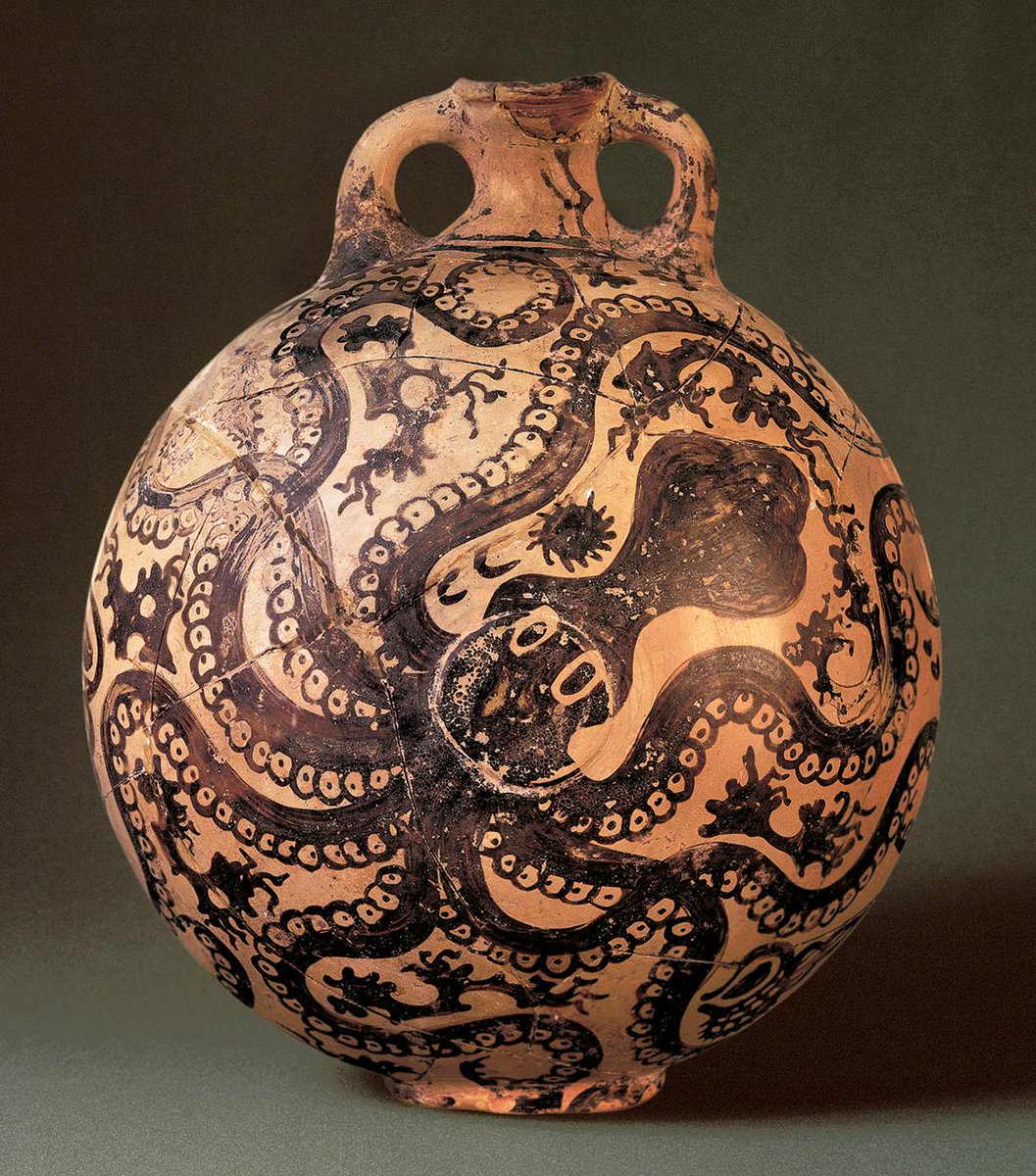
A 3500-year-old Minoan octopus vase from Palaikastro. Now on display at the Heraklion Archaeological Museum in Crete, Greece
English
John Marcone retweetledi

Snow-lovers were treated to a pretty magical Halloween in Chicago! ☃️
English
John Marcone retweetledi

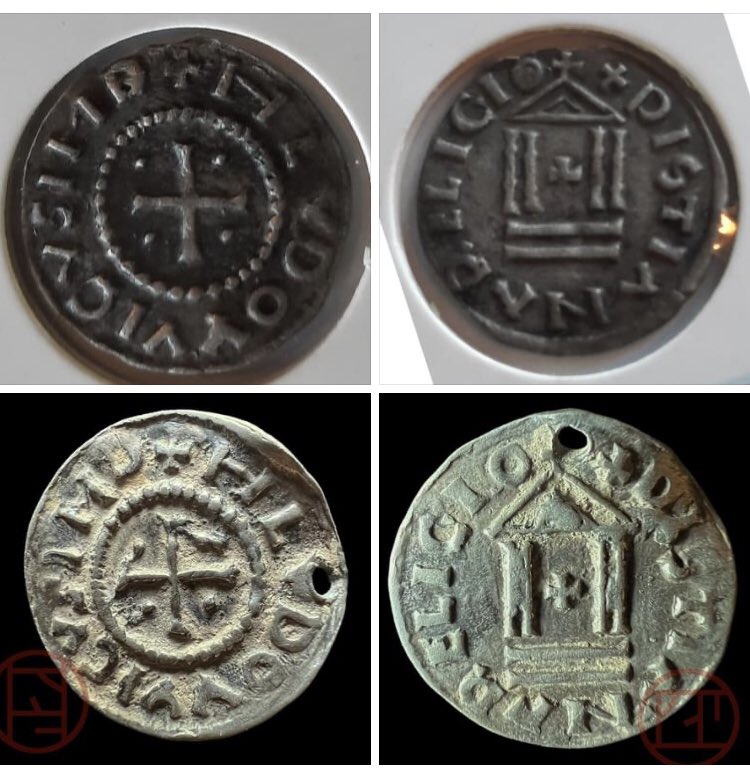
For #FindsFriday, a remarkable similarity between two coins of Louis the Pious from recently discovered hoards, one from Tønsberg in Norway, one from the Netherlands. My Group T, an as yet unidentified mint. Amazing!
English
John Marcone retweetledi

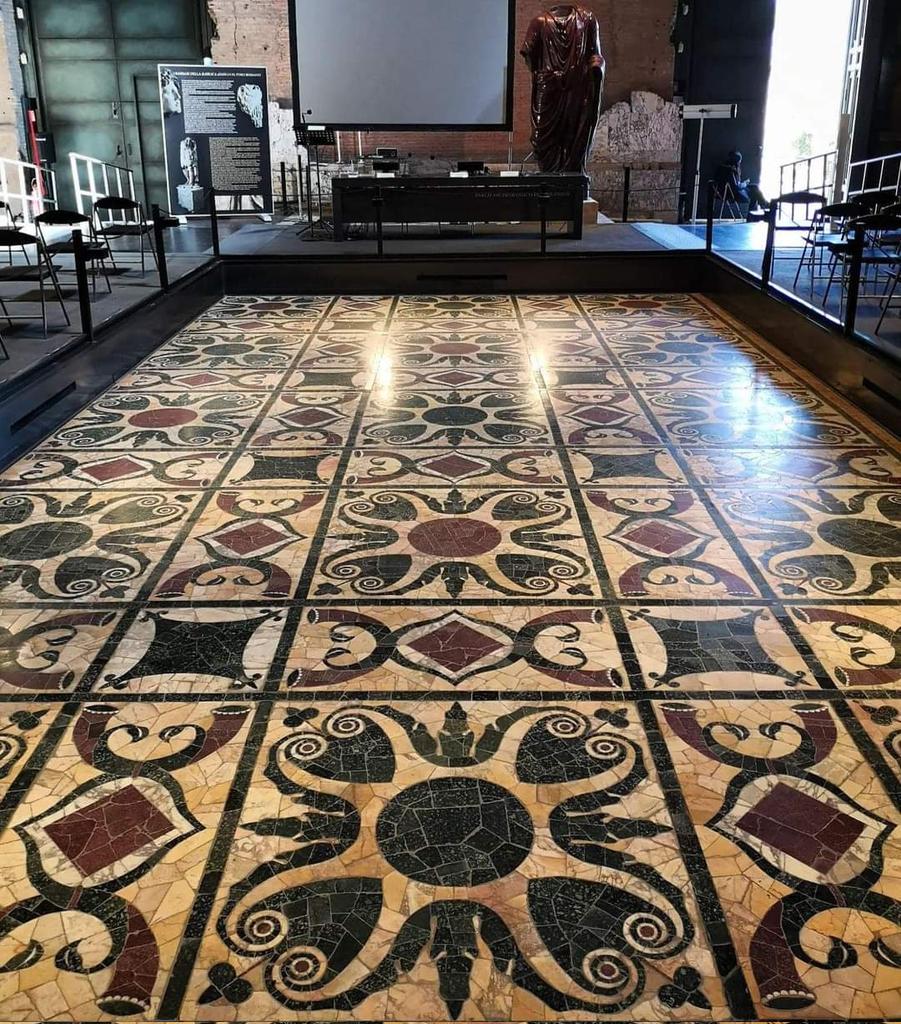
Roman Mosaic 'Opus Sectile Floor' (325-350 AD), from the Curia Iulia, the building where the Senate met, in the Imperial Forums of Rome, Italy.
#archaeohistories
English
John Marcone retweetledi
This is Japanese diplomat Chiune Sugihara and his wife Yukiko. They spent 18-20 hours a day writing and signing transit visas by hand in Lithuania for thousands of Jews for 29 days from July 31 to August 28, 1940.
Yukiko described their last days in Lithuania: "He was so exhausted, like a sick person. Even though he was ordered to go to Berlin, he said he couldn't make it to Berlin and suggested we go to a hotel and rest before leaving. When we got to the hotel, the Jewish people came looking for us there. So he wrote some more visas in the hotel.
The next day when we got to the train station, they were there too. So he wrote more visas on the platform until the train left. Once we were on board, they were hanging on the windows, and he wrote some more. When the train started moving, he couldn't write anymore. Everyone was waving their hands. One of them called out, 'Thank you Mr. Sugihara, we will come to see you again,' and he came running after the train. I couldn't stop crying. When I think about it, even now, I can't help crying."
As the train left the station, Sugihara said, "Please forgive me. I cannot write anymore. I wish you the best." It is estimated that the actions undertaken by him and his wife are responsible for the present lives of around 100,000 people.
After the war, Sugihara was forced to resign and work menial jobs (selling light bulbs door to door). He languished in relative obscurity until 1968 when an Israeli diplomat managed to find him and finally got him the recognition that he deserved.
Sugihara never told anyone what he had done during the war. Even his closest friends had no idea. "I may have disobeyed my government, but if I didn't, I would be disobeying God. In life, do what's right because it's right, and leave it alone."

English
John Marcone retweetledi

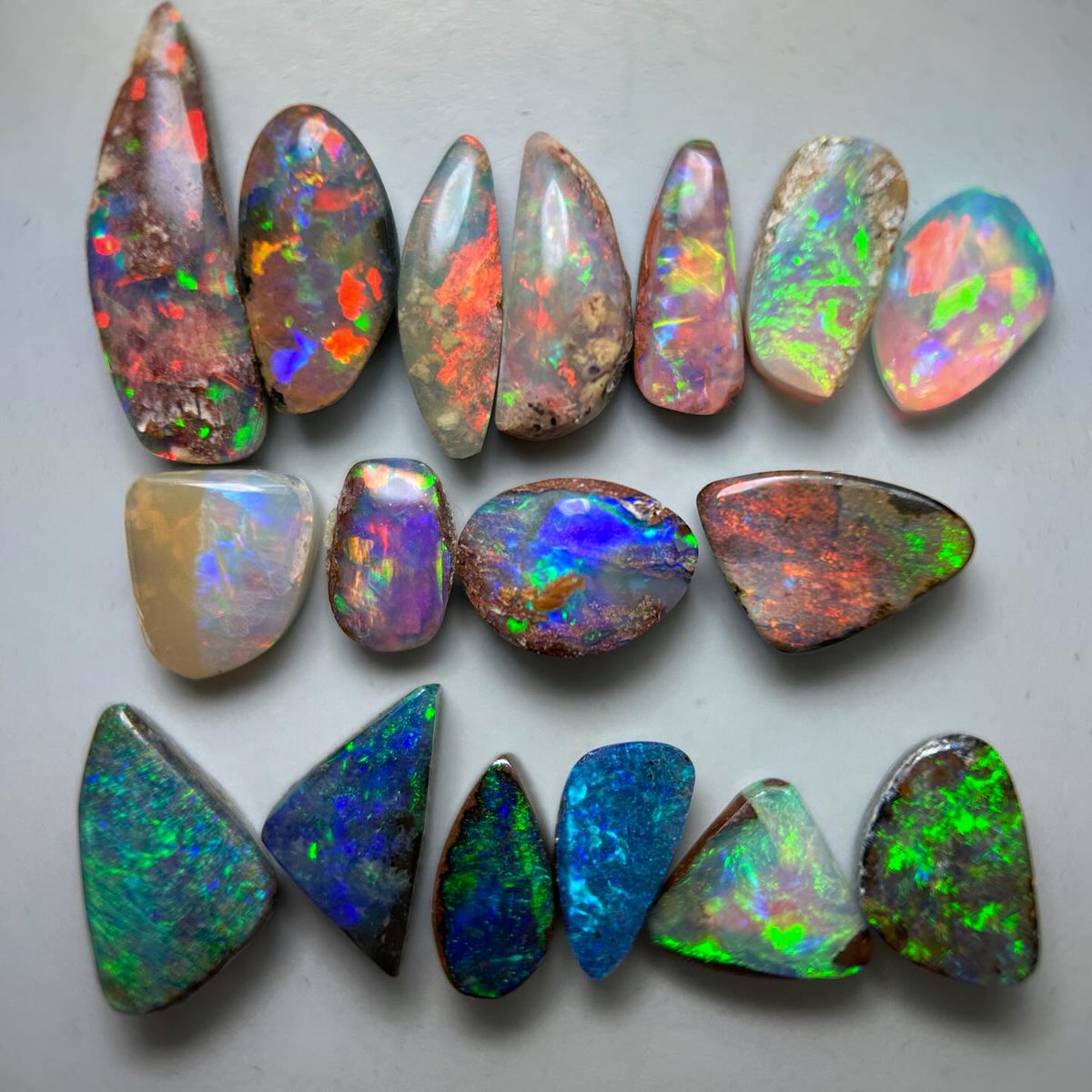
Have you ever seen a boulder & pipe opal? These rare and beautiful gems are found in Australia
Photo: Signature_opal
English
John Marcone retweetledi
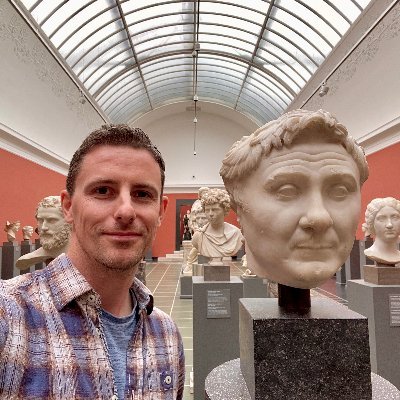
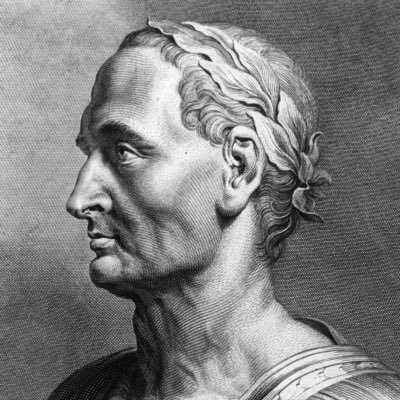
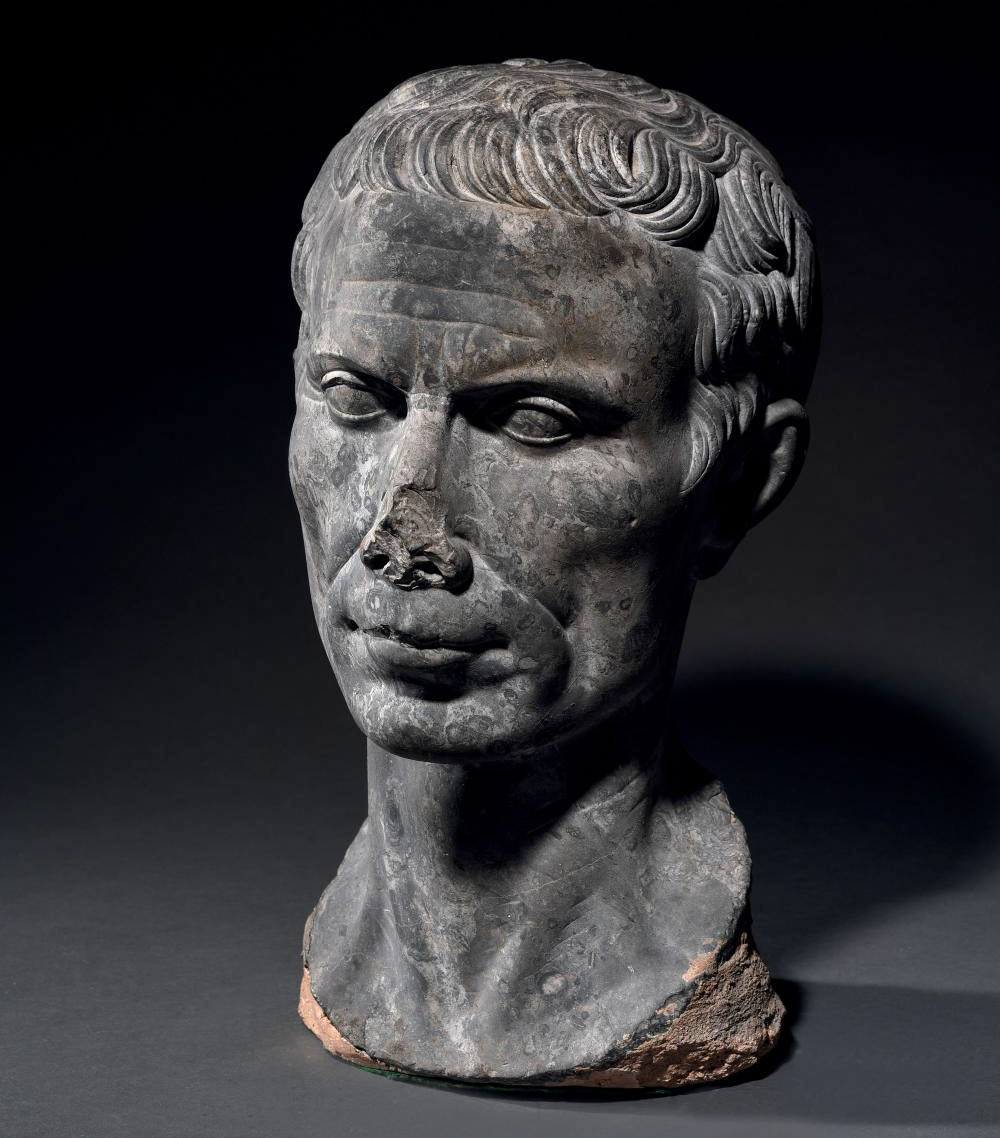
'It is not the custom of the Roman people to discuss terms with an enemy under arms.'
- Julius Caesar, Gallic War, 5.41.
English
John Marcone retweetledi
The Lion of Chaeronea (338 BC), Beoetia/Greece.
Under the monument, archaeologists unearthed a mass grave of 254 people, now identified as members of the military unit known as “The Sacred Band of Thebes.”
#archaeohistories

English
John Marcone retweetledi
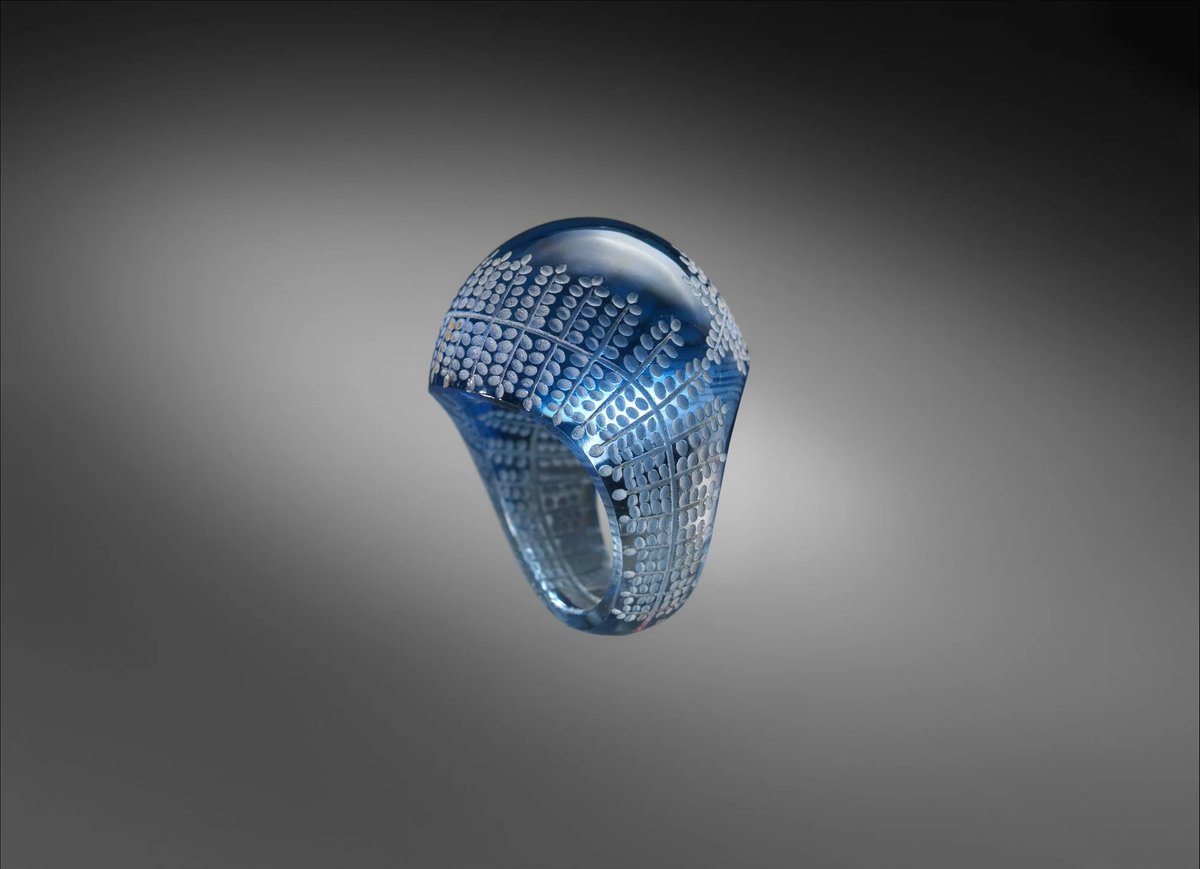
Blue glass ring by René Lalique, French, c. 1931.
Deutsch
John Marcone retweetledi
John Marcone retweetledi
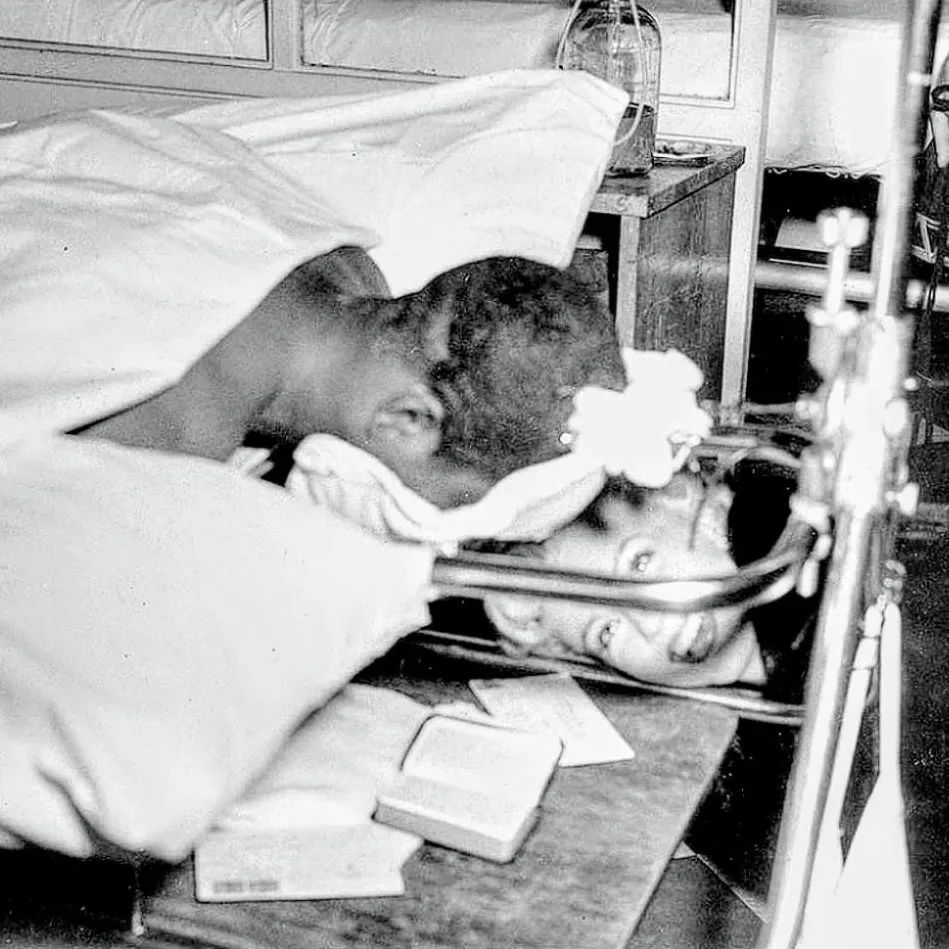
Marilyn Monroe visits a soldier with an injured back in Japan, 1954
Considered to be one of the most iconic sex symbols in the Western world, Monroe worked in a factory during World War II before starting a successful pin-up career. She often went to army bases to meet soldiers to boost morale.
English
John Marcone retweetledi