
Geopolitical Futures

8.5K posts

Geopolitical Futures banner
Geopolitical Futures

Geopolitical Futures

@GPFutures

A 100% subscriber-supported geopolitical forecasting publication, providing unbiased analysis of global events. Founded by @George_Friedman.

Austin, TX Katılım Eylül 2015
292 Takip Edilen29.9K Takipçiler
Sabitlenmiş Tweet
Geopolitical Futures
Geopolitical Futures@GPFutures·
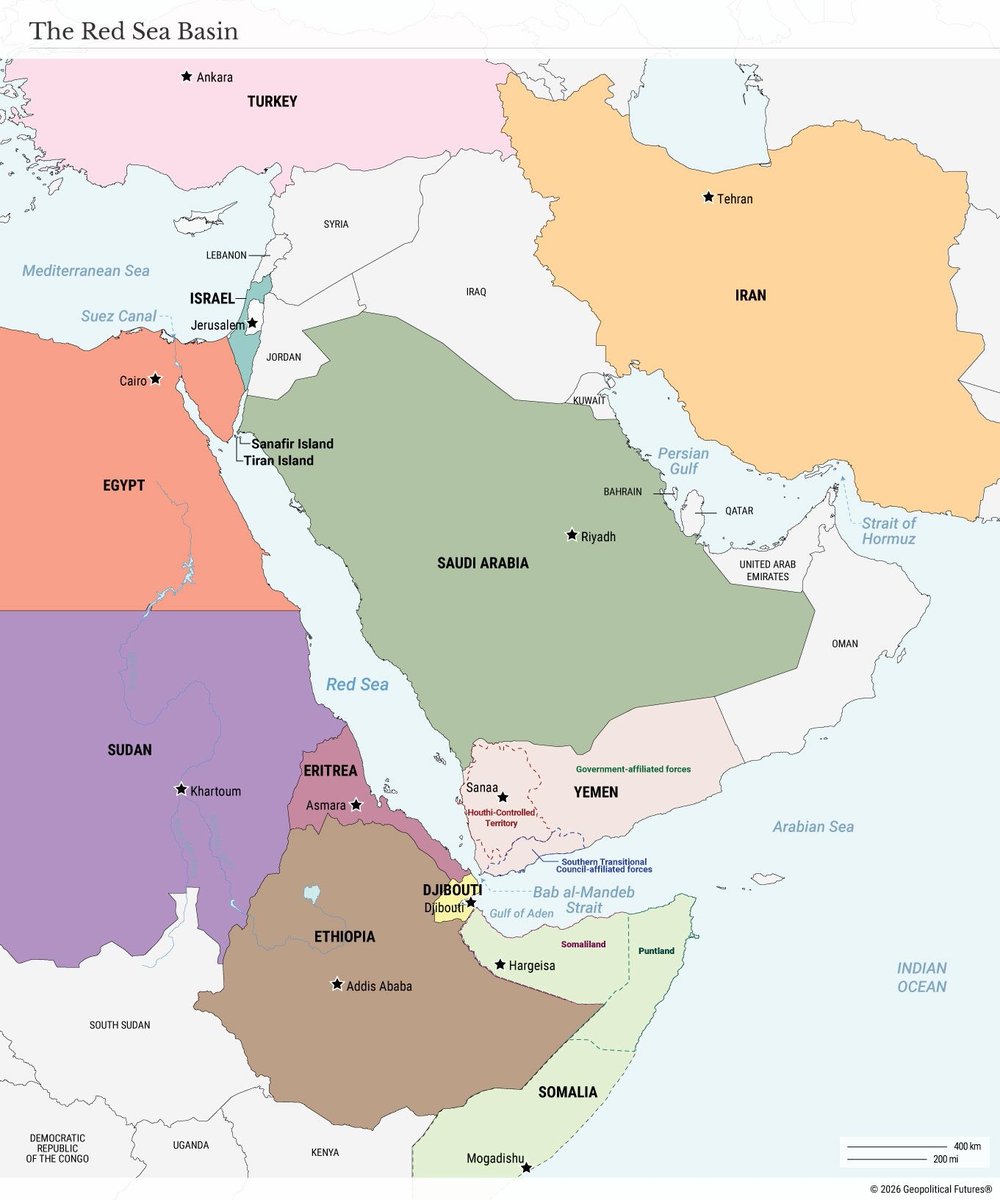
For a limited time, sign up for our free newsletter and you’ll receive a copy of our in-depth report on Iran and Turkey, part of our Middle East Special Collection, only available at GPF. geopoliticalfutures.com/gpf-newsletter/
Geopolitical Futures tweet media
English
1
1
10
2.6K
Geopolitical Futures
Geopolitical Futures@GPFutures·
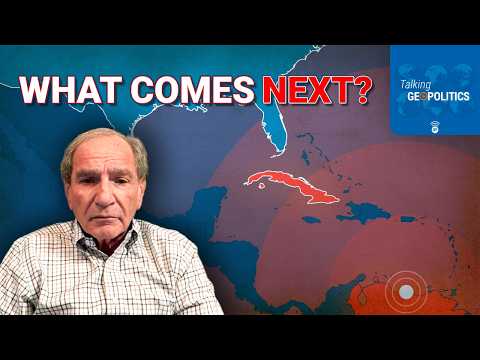
Cuba’s Energy Crisis Since the U.S. deposed Venezuelan President Nicolas Maduro in early January, Cuba has stopped receiving oil supplies from Caracas. Only Mexico and Russia have ventured to step in and provide Havana with oil, as maintaining influence on the island serves their respective national interests. Details in our new Weekly Graphic: geopoliticalfutures.com/cubas-energy-c…
English
1
2
6
926
Geopolitical Futures retweetledi
George Friedman
George Friedman@George_Friedman·
In 1940, the United States placed Japan in a difficult position. Japan was a country with very limited resources. It had to import oil, steel and other goods from other Asian countries and, to some extent, from the United States. To secure access to these resources, it had tried, years earlier, to build an empire. The U.S. used its economic power to block the sale of oil from what we now call Indonesia, to name just one country, and refused to sell steel to Japan. The U.S. feared that a Japanese Empire would threaten U.S. military command of the Pacific, making the homeland vulnerable to Japanese military power. This culminated in a U.S. blockade of Japanese imports critical to its industrial survival. Japan could either capitulate to the U.S. or go to war. Tokyo chose war, attacking Pearl Harbor in 1941 (yes, it was a surprise) in an attempt to cripple U.S. power in the Pacific and force the U.S. to negotiate a new understanding with Japan. Given the antiwar sentiment in the U.S., this was not an outlandish thought, but it was an incorrect one. It’s reported that the commander of the Japanese Combined Fleet, Adm. Isoroku Yamamoto, who had spent time in the United States, opposed the attack, believing it would not lead to negotiation, but was overridden. That Japan opted to fight was, I think, broadly predictable through geopolitical modeling, as was the U.S. decision to wage total war. How they would fight the war, and thus how they would end it, was far less predictable. The outcome depended on what I call engineering the details of geopolitics – relative power based not only on resources but on how those resources are used and deployed. This was the realm of detailed intelligence gathering and its application by the military. The engineering is much harder to predict. I offer this example to contextualize the war in Iran. That there would be a war was, to a degree, predictable, as is the desired outcome of each side. How the war plays out, and who will achieve their desired outcome, is much less predictable, as war is the domain of the engineers, and how they will choose to act is much more complex and, given the nature of choice, unpredictable.
George Friedman tweet media
English
15
38
138
13.8K
Geopolitical Futures
Geopolitical Futures@GPFutures·
The European economy failed to sustain its modest momentum in the fourth quarter of 2025, with growth slowing to 0.2 percent compared with the previous quarter. Despite declining inflation and lower interest rates, there is little reason to expect the picture to improve any time soon. In fact, the European Union risks stagflation if the Middle East conflict persists and the bloc continues to phase out Russian energy imports. The war in the Middle East has already disrupted oil and gas supplies, driving up the price of Brent crude by approximately 40 percent and pushing European gas to its highest level since January 2023. If the energy squeeze continues, Europe may be forced to raise interest rates and rein in spending to combat inflation, worsening the economic slowdown.
Geopolitical Futures tweet media
English
0
2
5
693
Geopolitical Futures retweetledi
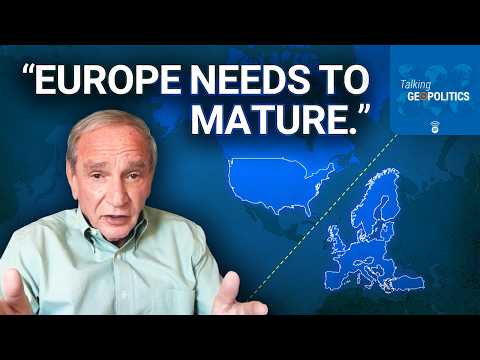
George Friedman
George Friedman@George_Friedman·
The evolution of the war in Iran has created fundamental political problems for Trump, one of whose promises in the election was to avoid endless ground wars. And it raises an old question: whether airpower on its own can defeat a widely spread enemy fighting on familiar terrain.
English
23
9
68
8.6K
Geopolitical Futures
Geopolitical Futures@GPFutures·
"The conflict between Israel and Lebanon will outlast the conflict with Iran." New clip of Talking Geopolitics, with GPF senior analyst Hilal Khashan: youtu.be/p-hH0s7UPV0
YouTube video
YouTube
English
0
1
3
1.2K
Geopolitical Futures
Geopolitical Futures@GPFutures·
What important mistake did the Americans make in going after Iran's capabilities? @George_Friedman on shifting US war aims, the rising price of oil as the Strait of Hormuz remains a critical chokepoint, and just how long this all might last. youtube.com/watch?v=_3KUpv…
YouTube video
YouTube
English
2
6
23
17.7K
Geopolitical Futures
Geopolitical Futures@GPFutures·
🌐 The US & China will hold economic talks in Paris March 14-17. The Chinese delegation will be led by Vice Premier He Lifeng, while Treasury Secretary Scott Bessent will represent the US. Focus on preparations for a summit between the nations’ presidents at the end of the month.
English
1
1
5
969
Geopolitical Futures
Geopolitical Futures@GPFutures·
In its 47 years of existence, the Iranian regime has dealt with wars, blockades, economic sanctions and internal discontent, all of which have given it the ability to adapt & endure. Regardless of the result of the current war, Iran will never be the same again. - GPF's @HKhashan
English
1
2
14
1.6K
Geopolitical Futures
Geopolitical Futures@GPFutures·
"This conflict is not going to end with a cease-fire." GPF Senior Analyst and Hezbollah expert Hilal Khashan is on today's episode of Talking Geopolitics, from Lebanon. youtube.com/watch?v=cNX7gN…
YouTube video
YouTube
English
1
2
11
4.2K
Geopolitical Futures retweetledi
Kamran Bokhari
Kamran Bokhari@KamranBokhari·
While air power alone is unlikely to lead to its collapse, the regime will never be the same again. Over the decades, having weakened the republican elements of the political system, the theocrats also lost ground to the country’s main military force, the IRGC. And now as the war is weakening the IRGC, nations in its multi-regional strategic environment are deeply concerned about what will become of the Islamic Republic and its implications for them. All stakeholders have an interest in a less ideological regime but are also worried about the repercussions of state decay. My latest: geopoliticalfutures.com/how-the-iran-w…
English
3
11
39
8.5K
Geopolitical Futures
Geopolitical Futures@GPFutures·
🌐Member countries of the @IEA unanimously agreed to release 400 million barrels of oil from emergency reserves to help stabilize the market. This exceeds the 182 million barrels of oil IEA member states released in 2022, when Russia launched its full-scale invasion of Ukraine.
English
0
3
5
842
Geopolitical Futures
Geopolitical Futures@GPFutures·
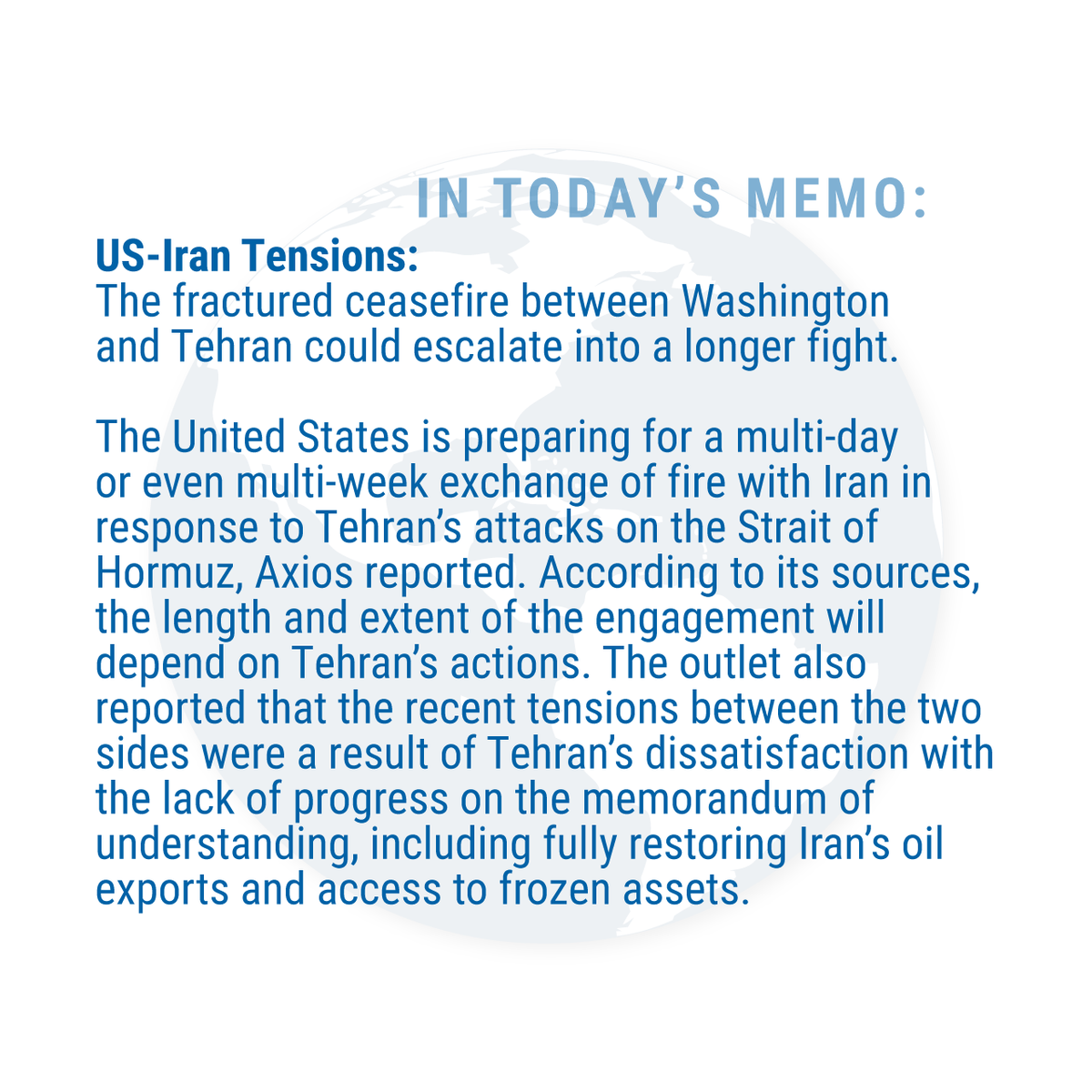
🌐In today's Memo: Iran’s IRGC said it would allow passage through the Strait of Hormuz to Arab or European countries that expel US and Israeli ambassadors. A spokesperson said the IRGC would not allow oil exports from the region to the US or its partners “until further notice.”
English
1
2
7
979
Geopolitical Futures
Geopolitical Futures@GPFutures·
US–Israeli joint air operations began Feb 28, launching a large-scale strike campaign against targets in Iran. Prelim reports indicate the conflict has resulted in more than 1,300 deaths in Iran, along with dozens of fatalities in Israel, Lebanon, Gulf states & six US personnel.
Geopolitical Futures tweet media
English
0
1
3
1K
Geopolitical Futures
Geopolitical Futures@GPFutures·
🌐The U.S. and at least one Persian Gulf government is negotiating to purchase more inexpensive interceptor drones from Ukraine to counter Iran’s Shahed drones, @FT reported. Gulf states have been using MIM-104 Patriot missiles – over $13.5 mill each – to intercept Iran’s drones.
English
0
1
6
837