Jim Fields
1.8K posts

Jim Fields
@GRTRtech
🎬 Filmmaker telling the untold story of the Flying Tigers 🌏 15 years in China | Fluent Mandarin speaker 🚀 Serial entrepreneur bridging East & West
Shenzhen, China Katılım Ocak 2021
970 Takip Edilen618 Takipçiler
Jim Fields retweetledi

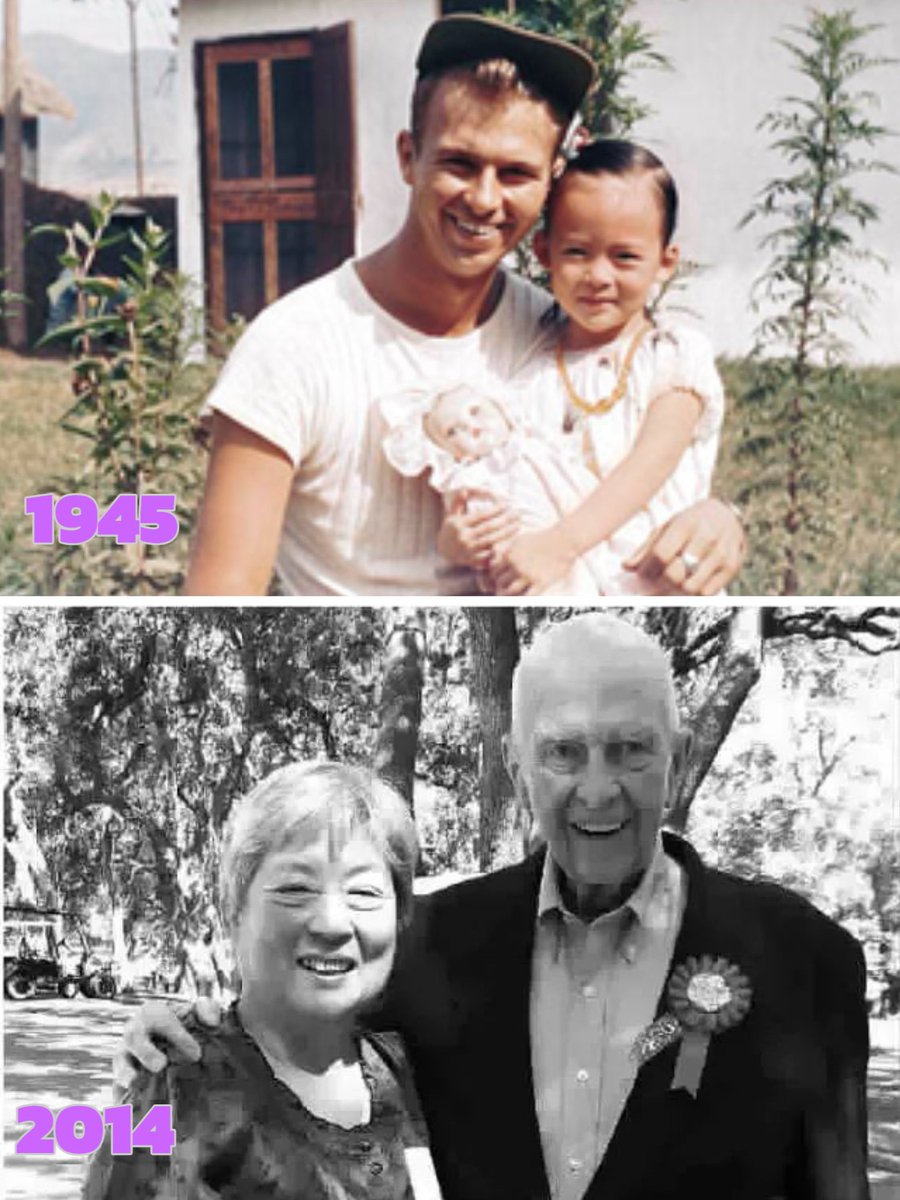
A heartwarming reunion after 70 years❤️
In 1945, at a U.S. Flying Tigers airbase hospital in Chongqing, American pilot Allen Larsen met a cute 5-year-old Chinese girl in a white dress with pigtails. He gave her a lovely doll and they took a photo together.
The little girl, nicknamed “Doudou,豆豆” was the daughter of a nurse at the base.
Years later, in 2012, Doudou’s second brother discovered the old photo in a Flying Tigers photo collection. Her life had been tough—her mother died in a car accident in 1946, and her father passed away the following year. She was adopted by a couple named Wang, renamed Wang Zhi王智, and moved across China before settling in Anshan, Liaoning.
She studied hard, entered Peking University’s Geology Department, and later worked in petroleum exploration in Xinjiang with her husband.
In 2014, at over 70 years old, Wang Zhi traveled to the U.S. to celebrate Allen Larsen’s 90th birthday—and they took another photo together.

English
Jim Fields retweetledi

The research behind this is wild. Your brain can’t flip from full alert to sleep like a light switch. It needs a runway. And reading builds it faster than almost anything else.
A University of Sussex study found that just 6 minutes of reading cut stress by 68%, more than music (61%), tea (54%), walking (42%), or video games (21%).
The effect is surprisingly physical. When you read, your nervous system shifts from fight-or-flight into rest-and-digest mode. Heart rate slows, breathing deepens, muscles release tension. The neuropsychologist who ran the study, Dr. David Lewis, described it as entering “an altered state of consciousness,” where focused imagination activates the part of your brain that tells your stress response to stand down.
A 2021 randomized trial tested this directly. Researchers split nearly 1,000 people into two groups: read a book in bed for seven nights, or don’t. After one week, 42% of readers reported better sleep versus 28% of non-readers. Nothing else changed.
Now compare that with what 86% of Americans actually do before bed: scroll their phones for an average of 38 minutes a night. A 2025 Norwegian study of 45,000 university students found that every additional hour of screen time in bed raised insomnia risk by 59% and cut sleep by 24 minutes. A separate American Cancer Society study of 122,000 adults found daily screen use before bed was tied to 50 fewer minutes of sleep per week.
Screens hit you with two sleep-blockers at once. Blue light suppresses melatonin, the hormone that tells your body it’s time to sleep, by about 50% according to a Harvard study. But the bigger problem is the content itself. News, social media, work emails, all of it fires up your brain’s threat-detection mode and spikes your stress hormones right when they’re supposed to be at their lowest point of the day. A physical book sidesteps both problems entirely.
The long game matters too. A Yale study tracked 3,635 adults over 12 years and found that people who read 3.5+ hours per week were 23% less likely to die during the study. That worked out to living roughly 2 years longer, regardless of gender, wealth, or education. Books beat newspapers and magazines. The researchers pointed to deep, sustained reading creating a kind of workout for the brain that protects it as it ages.
So the 5-10 minutes he’s describing? The science says 6 minutes is the threshold where your body starts winding down. His brain is switching off its stress response and easing into a state where sleep becomes almost automatic.
Mayne@Tradermayne
Reading before bed has improved my sleep hygiene more than anything else. 5-10 mins of a book in bed and I’m out like a light no matter what I’ve done before.
English
Jim Fields retweetledi

When Silicon Valley's non-technical crowd scrambles to tame OpenClaw, Tencent in my hometown Shenzhen is offering to help people set it up in person - for free. Top down AI FOMO is real, but brute force works in China. Curious to see what killer use cases the aunties and uncles will come up with. Remember when hongbao was the wedge of getting hundreds of millions of Chinese onto mobile payments?
Tencent AI@TencentAI_News
The charm of #OpenClaw! 🌟 Tencent's public setup service event drew in 60+ year-olds incredible enthusiasm! From retired aviation technical engineer to librarian, they’re looking forward to embrace AI agents. Stay curious, stay digital!
English
Jim Fields retweetledi

🚨 BREAKING: American pilots reportedly shot down over Kuwait were carrying a “blood chit” a survival message sewn inside their jackets.
Written in English, Arabic, Turkish, Persian, and Kurdish, it reads:
“I am an American and I do not speak your language. I will do you no harm. Please give me food, water, shelter, clothing, and a doctor. Help me reach American or friendly forces. When you provide my name and this number to U.S. authorities, you will be rewarded.”


English
Jim Fields retweetledi